Inari Sauna Guide: Which Saunas Suit Your Winter Evenings
Plan a sauna evening in Inari, from private sauna studios with large windows to rented wilderness saunas, and how to pair one with aurora watching.
On this page
Inari in winter is a village wrapped around a frozen lake, and a sauna is how most evenings here end: heat first, then cold air, then a dark sky overhead. The appeal is simple — a hot room, a snowbank or a cold plunge, and a short walk to somewhere with no streetlight. It suits travelers who want an evening activity that does not depend on the aurora forecast, and who like the idea of stepping straight from warmth into the Arctic night.
Inari sits well north of the Arctic Circle, so winter nights are long and dark enough for aurora watching from late August into early April. A sauna does not create a sighting, but it puts you outdoors, warm and unhurried, at exactly the hour you would otherwise be inside. Pair it with a walk to the lake shore and you have a low-cost evening that works whether the sky is clear or not.
How the Inari sauna scene is laid out
Inari village is compact: Hotel Inari and Holiday Village Inari sit within a few hundred metres of each other, with the safari office and restaurants along the same stretch of road. That means you can choose your sauna by type rather than by transport. Private studios and cabin saunas cluster around the holiday village, shared and bookable saunas are scattered through the wider municipality, and rented wilderness saunas sit out along the lake and rivers.
The practical split is between three things: a sauna inside your own accommodation, a public or bookable sauna you visit for an hour or two, and a wilderness sauna you rent for an evening with a group. Each gives a different evening. The first is private and flexible, the second is social and cheap, and the third trades convenience for silence and dark surroundings.
Private sauna studios and cabins in Inari village
Holiday Village Inari runs a set of cabins and studios, each with its own sauna, so the heat is yours for the night rather than a booked slot. The Aurora Cabin, Shoreline Cabin, Panorama Cabin and Inari Sauna Suite all belong to the same family of accommodation, and the Inari Sauna Studio is the smallest and simplest of them. Booking direct with the village also covers breakfast and activities in one place.
If you want the sky in view while you sit in the heat, the studio's large windows are the detail that matters, and the same design idea runs through the Aurora Cabin and Panorama Cabin. This is the option to pick when you would rather not walk back from a shared sauna in the cold at midnight. The trade-off is cost and a minimum stay in the peak winter weeks.
Inari Sauna Studio: what the room includes and what it costs
The studio is 31 square metres with two single beds plus a convertible chair bed for a third guest, so it works for a couple or a small family. Inside you get an electrically heated sauna, a bathroom with shower and toilet, air-conditioning and heating, a kitchenette with fridge, induction hob, microwave, coffee maker and tableware for three, and a terrace. It is non-smoking and pet-free.
Rates run by season. From 1 December 2025 to 3 April 2026 the studio is 325 € per night for one or two people, and from 1 December 2026 to 31 March 2027 it is 336 € per night. Outside those winter windows, from 4 April to 30 November 2026 and from 1 April to 30 November 2027, the rate drops to 160 € per night. An extra bed is 46 € per night per person in the 2025–2026 periods and 48 € in the 2026–2027 periods.
Breakfast is not included. Guests at the holiday village can add it for 10 € per person, served at the village in winter and at Hotel Inari, about 500 metres away, in summer. The minimum stay is three nights from 22 December 2026 to 10 January 2027, and two nights from 11 January 2026 to 14 March 2027 and across the event weekends: Ijahis Idja, Skábmagovat and Porokuninkuusajot.
Wilderness and rental saunas around Lake Inari
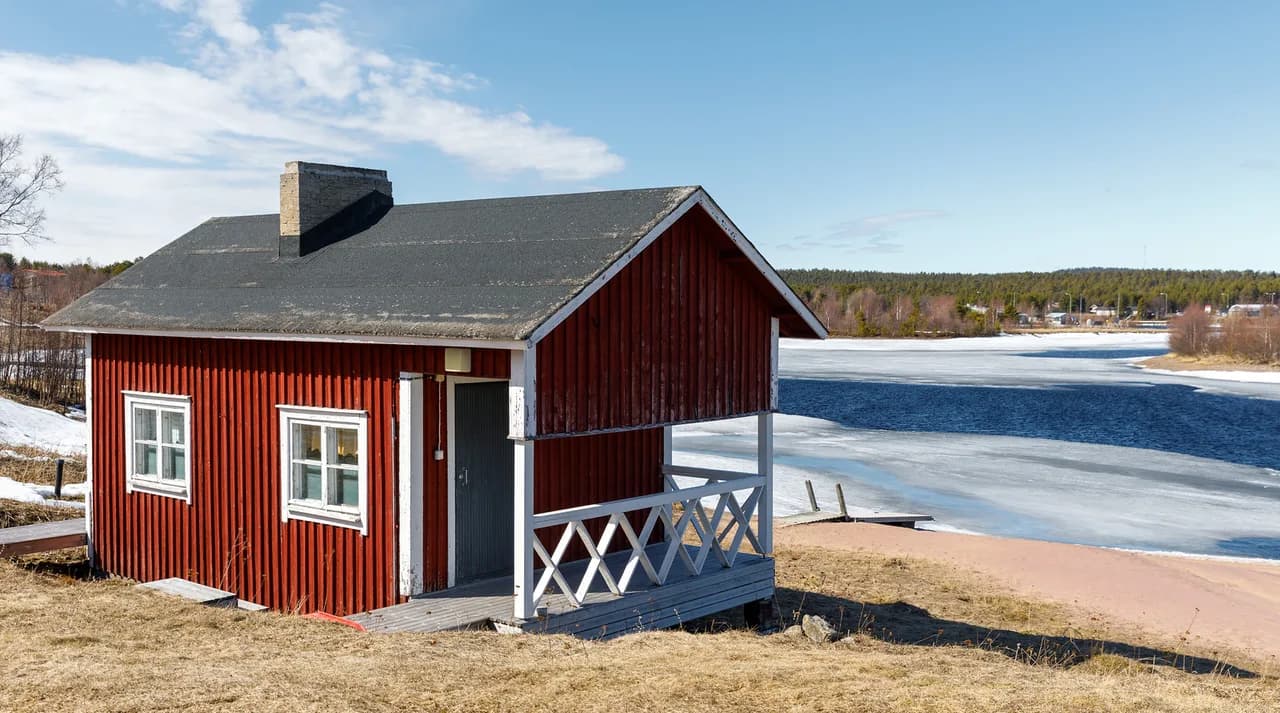
Beyond the village, the municipality holds a scatter of rentable saunas tied to huts, rented cabins and riverbanks — names such as Morgamojan Kultala, Härkäkoski, the Mahlatti rental cabin on the lake and Vaskojoki. These are wilderness saunas in the literal sense: you heat them, you carry in what you need, and the reward is a shoreline or forest setting with no light around it. Skip them if you want a sauna handed to you ready and warm.
Rental saunas of this kind usually come as part of a cabin booking rather than as a standalone drop-in visit, and the arrangements vary from one property to the next. Ask the property directly about heating, water, firewood and whether the sauna is included in the cabin rate or charged separately. Those details decide whether a wilderness sauna is a relaxing evening or an hour of work.
Public and bookable saunas in the Inari area
For a shared sauna, Inari and the surrounding area offer public and bookable rooms, including a beach sauna at Vasatokka and saunas attached to activity centres and restaurants. These are the evenings to choose if you are travelling alone or want the social side of a Finnish sauna rather than a private room. They are typically booked by session, so the sauna fits around dinner rather than replacing it.
Guided sauna experiences also exist in the Inari municipality, and some combine several heat types in one visit — electric saunas, an outdoor panoramic sauna and a smoke sauna — usually with transfers and food built in. That format suits travelers who want the ritual explained and do not want to arrange anything themselves. It costs more than a simple public session and runs on the schedule set by the company offering it rather than yours.
Sauna etiquette and how a Finnish sauna evening runs
A Finnish sauna evening is a loop rather than a single sitting: ten to fifteen minutes in the heat, out to cool in the air or snow, a drink of water, then back in for another round. Two or three rounds is normal. Talk quietly, sit on a towel, and expect the room to be mixed and unclothed, with separate times or sections for men and women at public saunas.
Cooling off is the part visitors underestimate. Stepping outside in a towel works for a minute or two at these temperatures, but a proper cold plunge or a roll in the snow is what many Finns go for, and a hat and slippers make the walk out bearable. Keep the door closed, pour water on the stones sparingly at first, and leave when you have had enough rather than proving a point.
Pairing a sauna with aurora watching
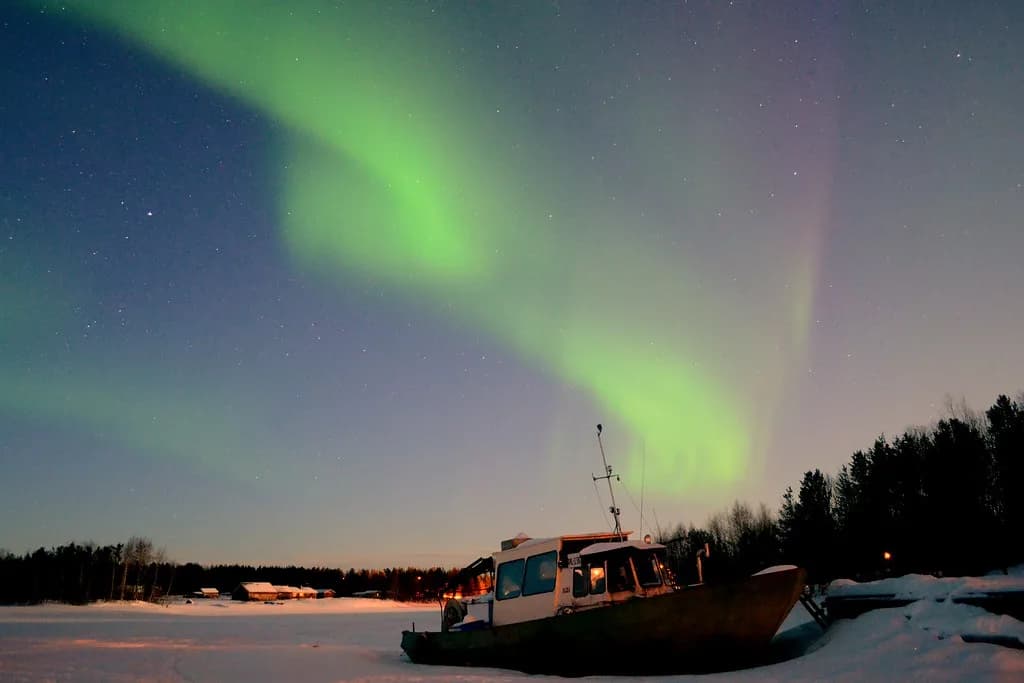
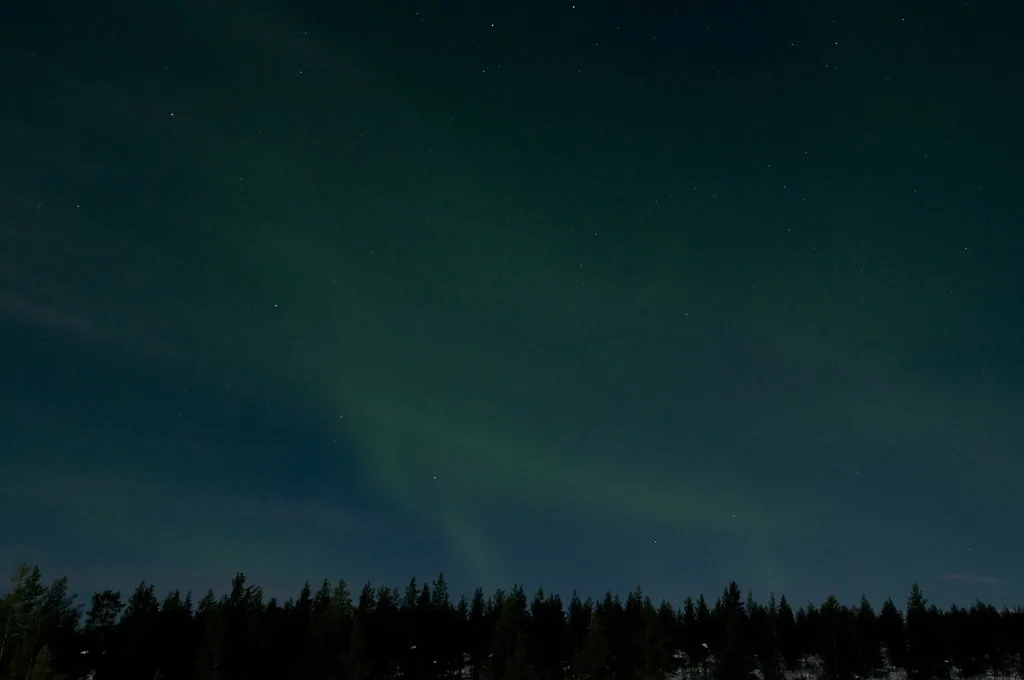
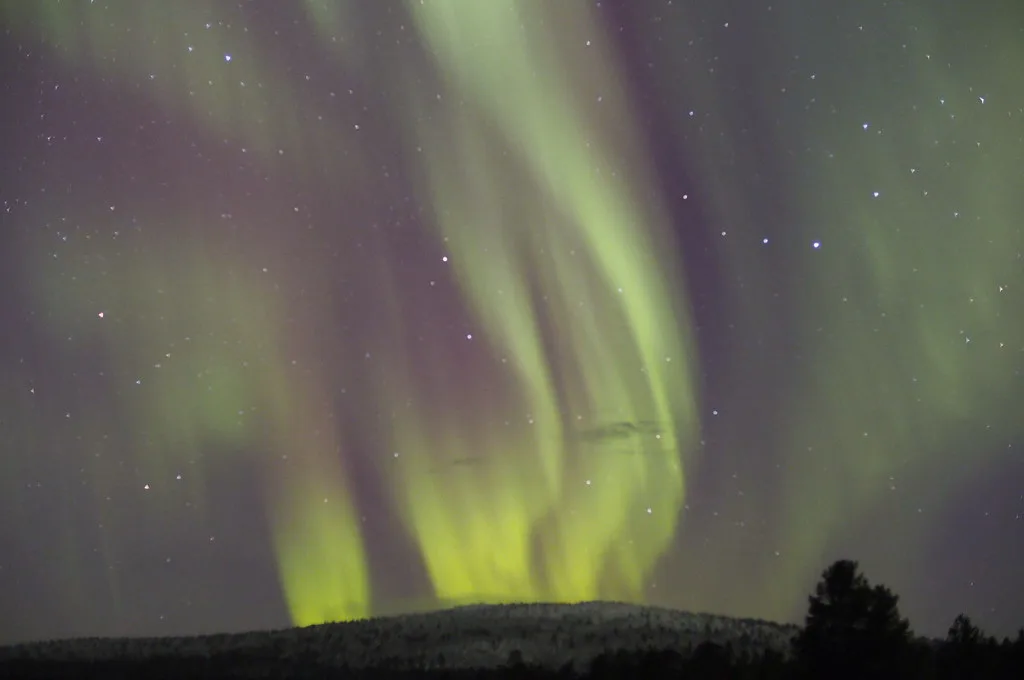
The link between a sauna and the aurora is timing. Warm up, cool off outside, and if the sky is clear you are already outdoors and dark-adapted, which is exactly the state you want for looking up. The lake shore beyond the village is the obvious spot, and the further you walk from the hotel lights the better the contrast. A sighting still depends on solar activity and cloud, so treat it as a bonus rather than the plan.
Kp values are guidance only, and they say nothing about the cloud sitting over Inari on a given night. Check the forecast in the afternoon, keep the sauna flexible, and be ready to go out at short notice; a clear gap of twenty minutes is enough. A sauna studio with large windows lets you watch while you sit, which is the most comfortable way to wait for a gap.
Sauna, cold air and snow between rounds
Between rounds, the cold is the point rather than something to endure. At Inari's winter temperatures a minute outdoors drops your skin temperature fast, and the return to the heat feels sharper for it. Build the loop so the outdoor part is short and close to the door: a terrace, a snowbank, a short walk to the lake edge.
If you are staying somewhere with an ice hole or a cold plunge, use it in short bursts and go back inside promptly, and never combine the cold water with alcohol. Operators who run guided sauna and winter-bathing evenings lend thermal gear where the format needs it, which saves you packing for a ten-minute walk.
When the aurora season runs in Inari
Inari's aurora season spans roughly late August to early April, when nights are long enough to be properly dark. Midwinter brings the shortest days and the longest nights, with only a few hours of twilight around noon; by March there is enough daylight to ski or drive in comfort and still have a dark evening. That makes February and March a good balance for sauna-plus-sky evenings.
Cloud is the variable that decides most nights, and coastal or lakeside locations can differ sharply over a few kilometres. Inari sits inland and away from the coast, which brings colder, clearer-feeling winter air on many nights but no guarantee. Plan for several evenings rather than one, and treat each clear night as a chance to use.
Where to watch near town
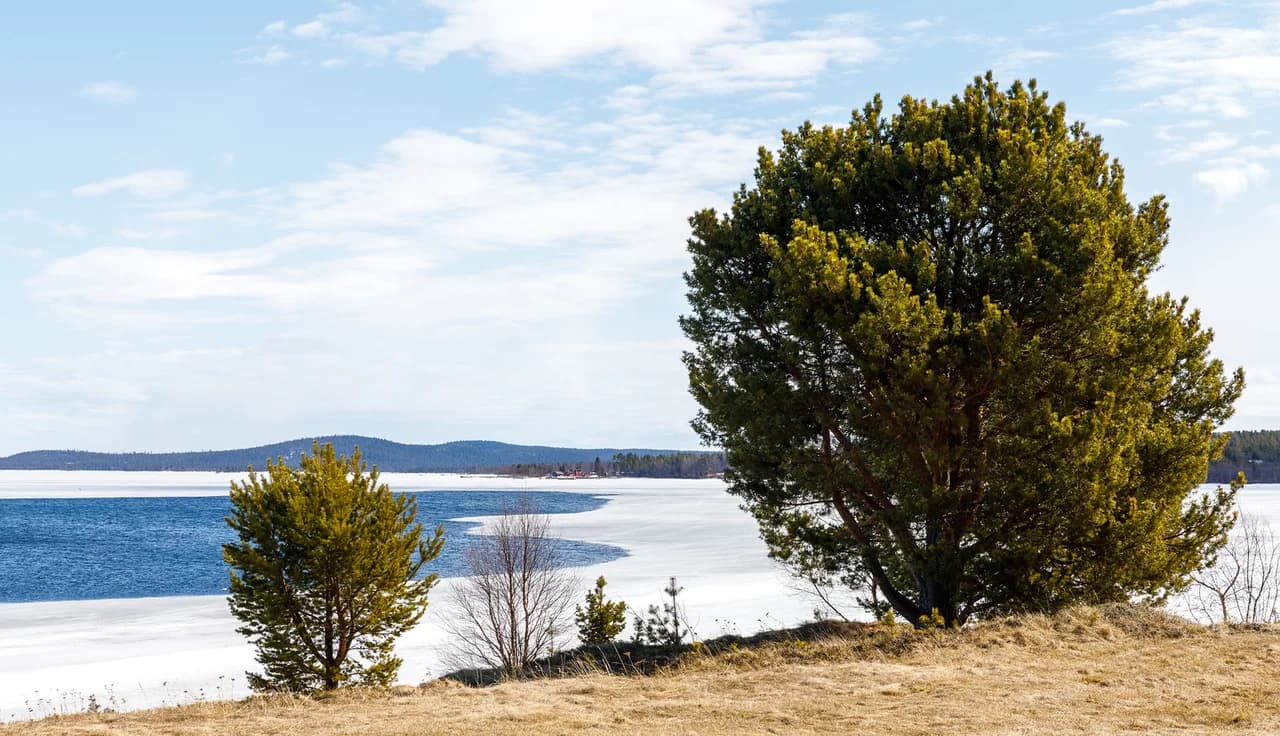
The most convenient dark-sky spot is the frozen lake itself, reached by walking down from the village and out past the last buildings. A headlamp on a low setting lets you find your way back without ruining your night vision. Other options include the roads and trails beyond the village, which are quiet at night and have open sky over the water.
Light pollution in the village is modest but real, so a ten-minute walk gets you noticeably darker sky. If you are staying further out, ask your accommodation where the nearest open shoreline or clearing is. Staying closer to Ivalo Airport cuts your transfer time but puts you in a larger settlement with more lights.
Cabins and aurora accommodation
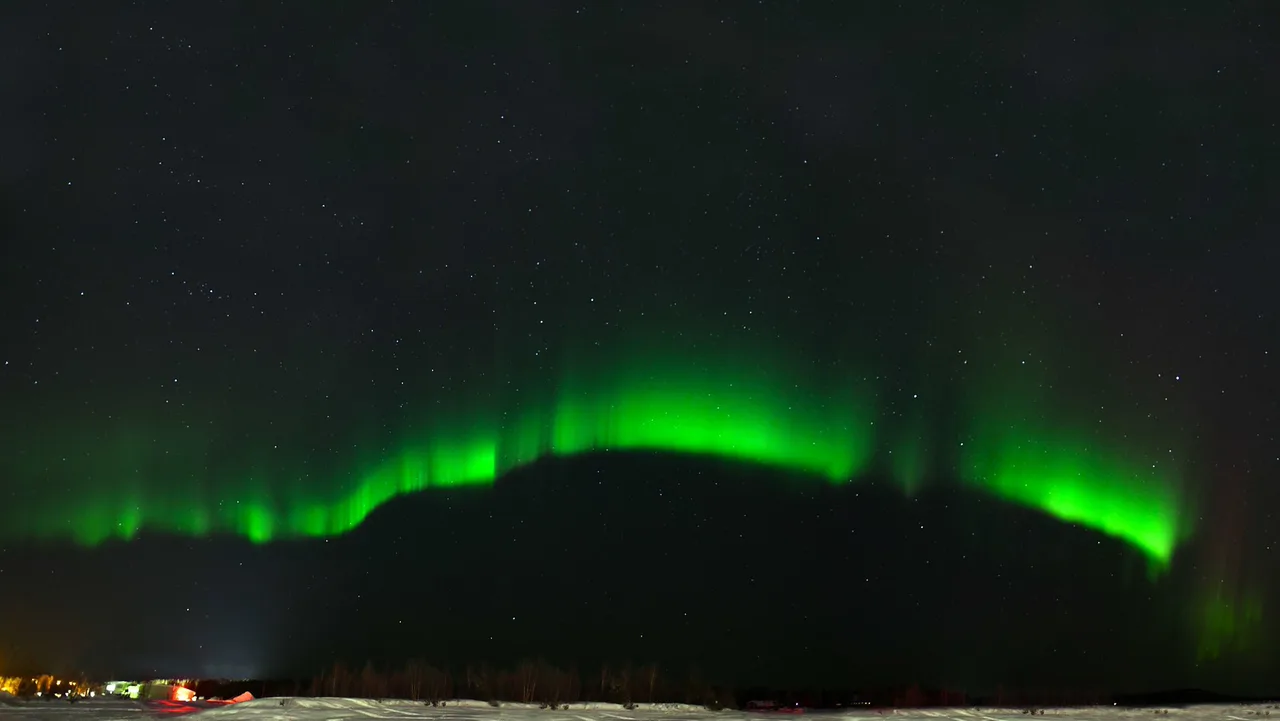
Accommodation choice shapes the whole evening. A private sauna studio keeps the loop indoors and out on your own terrace; a cabin with a sky-facing window lets you wait in warmth; and a wilderness hotel outside the village trades convenience for darker surroundings. Each works, provided you accept the trade-off between privacy, comfort and distance from the village lights.
Further from the village, Wilderness Hotel Nellim sits on Lake Inari with its own dark surroundings and sauna facilities for guests. It is the option for travelers who want the lake and forest on the doorstep and do not mind being a drive from Inari village centre or Ivalo Airport. Book the sauna time with the room, since the evening slots are the ones that disappear first.
If your trip also includes the Rovaniemi area, sauna options there run larger and more spa-like than Inari's small rooms. That is a different kind of evening and a useful comparison when you are deciding where to spend your sauna nights. Our Rovaniemi Sauna Guide covers lakeside saunas, ice swimming and aurora evenings for that side of the trip.
How many nights to plan around sauna and sky
Give Inari three or four nights if the aurora is a priority alongside the sauna. Cloud can close out a whole week, and a single night leaves no room to move your sauna to a clearer evening. Three nights lets you have one sauna evening that is purely about the heat and two that you keep flexible for a gap in the cloud.
If you are booking the Inari Sauna Studio, note that the winter minimum stay is already two or three nights depending on the dates, so the trip length is partly set by the booking rules. A longer stay also gives you a spare evening if your first choice of sauna slot is taken.
Booking timing and minimum stays in winter
Book the accommodation and its sauna together and as early as you can for December, January, the February school break and March. The peak weeks carry minimum stays, and the event weekends around Ijahis Idja, Skábmagovat and Porokuninkuusajot fill the village quickly. Confirm the rate period that applies to your dates at the time of booking, because the seasonal prices change on fixed dates.
For public and guided saunas, book the session a day or two ahead rather than on the night, and ask what the session includes: towels, transfers, food and whether the sauna is mixed. For a rented wilderness sauna, settle the heating and water arrangements when you reserve, since those are the details that make or break an evening out of town.
Plan Your Visit
The simplest strong plan for Inari is three or four nights in the village, one private sauna studio or cabin booked for the whole stay, and one guided or public sauna evening for the social side. Keep your evenings flexible enough to step outside when the cloud breaks, and treat a sighting as a gift rather than the schedule.
Choose the Inari Sauna Studio if you want heat, kitchen and a big window in one compact room; choose a wilderness rental if silence matters more than convenience; choose a public or guided sauna if you would rather not run the stove yourself. Whichever you pick, the loop of heat, cold air and dark sky is the same, and it is the best-value evening Inari offers in winter.
Frequently Asked Questions
Can you do a sauna in Inari without staying at a hotel?
Yes. Inari has public and bookable saunas in and around the village, plus rented wilderness saunas tied to cabins and huts, so you can visit for a session without being a hotel guest. Book the session ahead and ask what is included, such as towels, transfers or food.
How much does a private sauna studio in Inari cost per night?
Inari Sauna Studio prices by season, with a higher winter rate and a lower rate across late spring to autumn, and an extra-bed charge for a third guest. The current figures for your dates are on the Visit Inari booking page, along with the breakfast charge and minimum stays.
Do Inari saunas have windows facing the northern sky?
Some do. The Inari Sauna Studio is built around large windows that bring the arctic sky close, and the Aurora Cabin and Panorama Cabin follow the same idea. Public and wilderness saunas usually have small or no windows, so pick your accommodation with sky-watching in mind.
What is the difference between a public sauna and a rental wilderness sauna in Inari?
A public sauna is a shared room booked by session, usually in or near the village, with heat and water handled for you. A rental wilderness sauna is a cabin or hut out on the lake or riverside that you heat and supply yourself, which gives silence and dark surroundings at the cost of more work.
Can you combine a sauna evening with aurora watching in Inari?
Yes, and it is the natural way to spend the evening. Warm up, cool off outside, and walk to the lake shore or another dark spot to look up. A sighting depends on solar activity and clear skies, so keep the plan flexible and use the forecast rather than relying on Kp values alone.
How long should you stay in Inari for sauna and northern lights?
Three or four nights gives you room for a sauna evening and at least one clear night, with a spare to absorb cloud. Winter minimum stays at Inari Sauna Studio already run two to three nights depending on the dates, so the booking rules push you toward a multi-night stay anyway.
Sources
Notes for your Arctic winter trip
Optional updates to our northern lights guides.
You might also like
Continue reading
More guides you'll find useful