Northern Lights in Rovaniemi: Where to Go and Stay
Rovaniemi sits on the Arctic Circle, so auroras can show from late August to early April. Here is when to go, where to watch and how many nights to plan.
On this page
Rovaniemi gives you something few aurora destinations can: a town with an airport, hotels and restaurants sitting directly on the Arctic Circle, with dark forest and frozen riverbanks starting a short drive from the streetlights. Winter here runs from the first lasting snow through the polar night and into a bright, snowbound March, and the same long nights that make the season cold also make it the reason travelers come. It suits people who want a comfortable base with real infrastructure rather than a remote cabin, and who accept that a sighting depends on skies they cannot book.
The aurora season on the Arctic Circle starts in late August and continues until early April, so you have roughly seven months of dark enough nights to work with. Within that window, cloud cover is the variable that decides most evenings, which is why a trip built around one night is a gamble and a trip built around four or five is not. Use the town as a launching point, keep your evenings flexible, and treat a low Kp number as guidance rather than a verdict.
Why the aurora shows over Rovaniemi
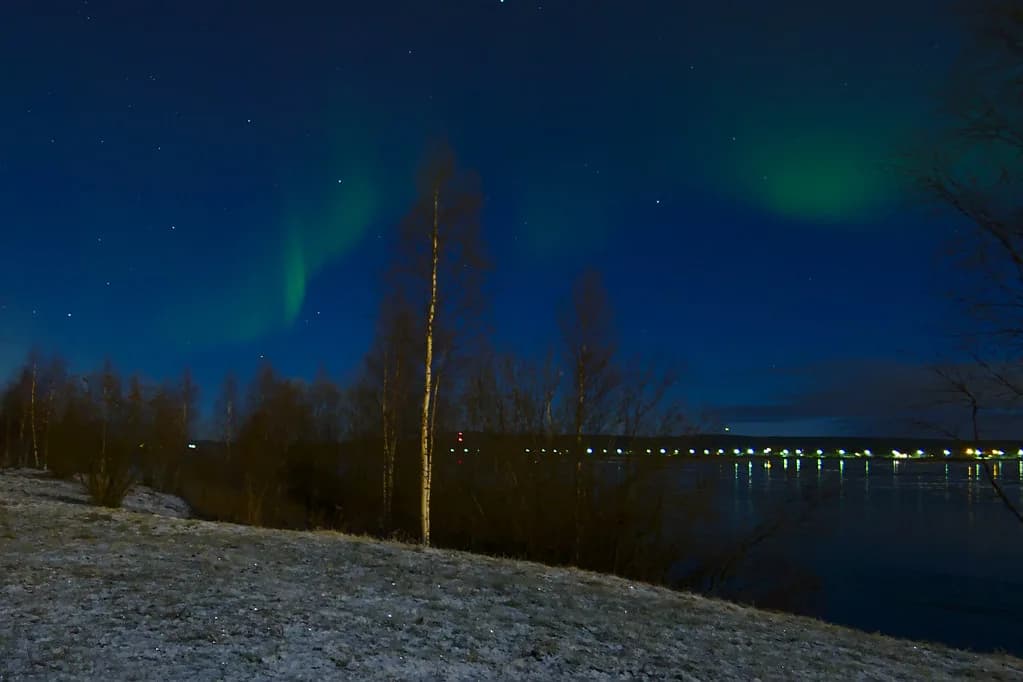
Rovaniemi sits at the Arctic Circle, around 66 degrees north, close enough to the auroral oval that displays frequently reach overhead rather than staying pinned to the northern horizon. That position changes how you read forecasts: auroras can often be seen here at a Kp index of 2 or lower, a Kp of 3 to 4 produces clearly visible displays, and higher values bring genuinely spectacular nights. Travelers arriving from mid-latitude cities often assume they need a solar storm, but at this latitude an ordinary quiet night with clear skies can deliver.
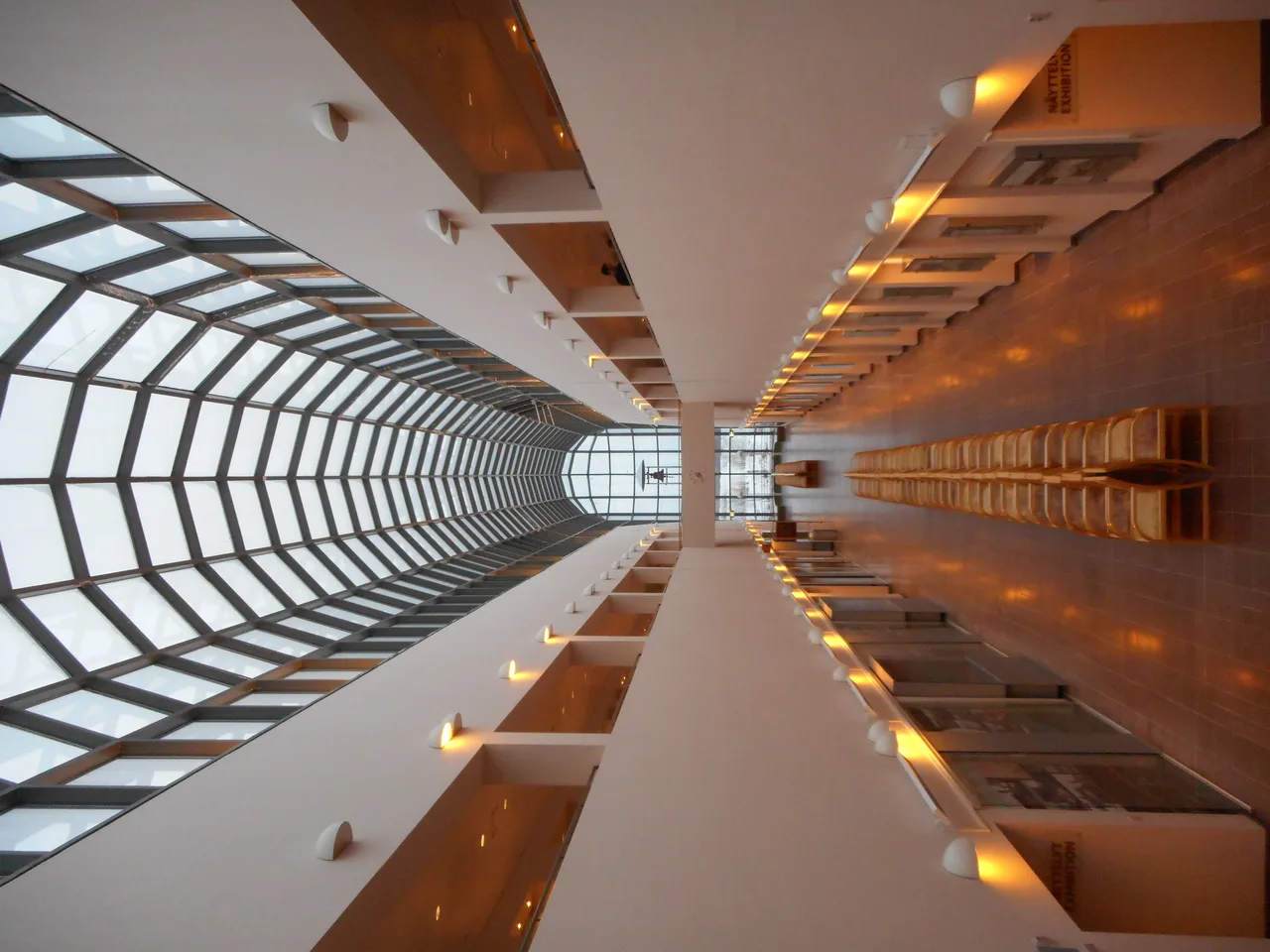
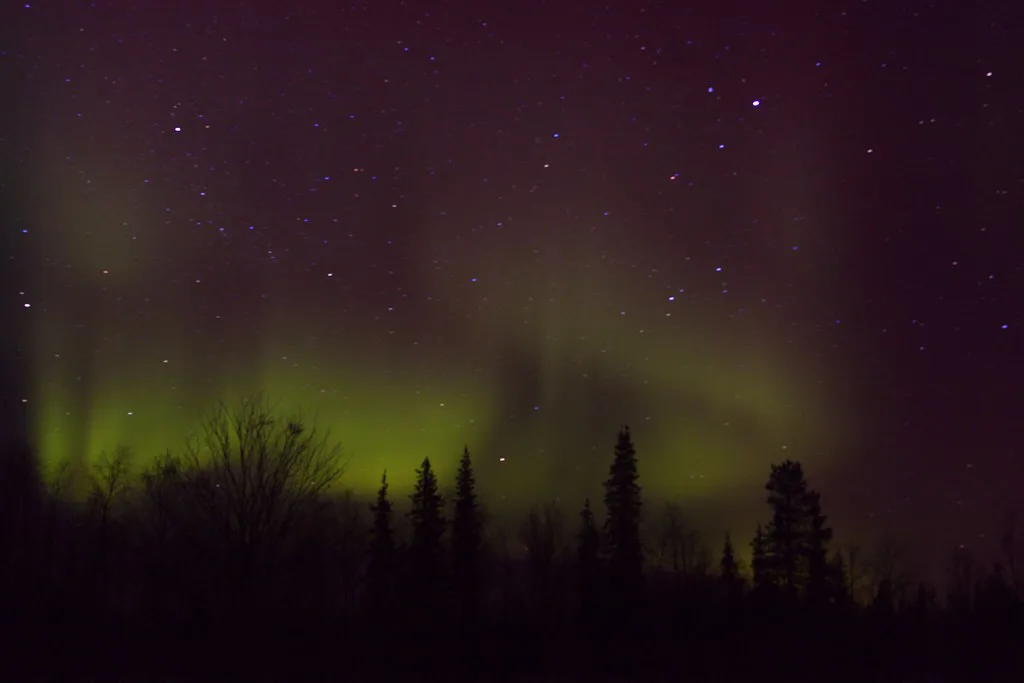
The physics behind the show is the reason the town's museums are worth a daytime slot. Charged particles carried on the solar wind meet gases in the upper atmosphere and release light, most often green, with pink, violet, red and blue appearing under the right conditions. Finnish folklore called the lights revontulet, fox fires, from a tale of a fox sweeping sparks into the sky with its tail, and the Arktikum Science Centre and Museum in Rovaniemi covers both the science and the stories for visitors of all ages.
When the aurora season runs
The season opens in late August and runs until early April, defined simply by when nights are dark enough for the lights to be visible at all. Summer is out of the question because the midnight sun keeps the sky bright, and by the time darkness returns in autumn the first displays can appear. Book within that window and you are at least in the game; book outside it and no amount of chasing helps.
The Finnish Meteorological Institute finds auroras occur slightly more often in spring and autumn than in summer or winter, and the equinox periods in September and March are traditionally cited as the strongest stretches. That does not make December a poor choice, since the nights are long and dark, but it does mean the popular Christmas weeks are not automatically the best aurora weeks. Plan around darkness and cloud, not around the calendar's most photographed month.
Month by month at the Arctic Circle
September and October are the underrated stretch. Nights darken quickly, autumn colors frame the forests, and in September open water around Rovaniemi can still reflect a display for a double image on calm nights. Daytime temperatures run about 5 to 15 degrees Celsius in September and 0 to 10 degrees in October, cold enough for winter layers but not the deep freeze of midwinter, and crowds are thinner than in December.
November brings early winter and long nights, with daytime temperatures typically between -10 and 5 degrees Celsius; December is the darkest month, with only about two and a half hours of daylight and typical daytime temperatures of -20 to -10 degrees. January is colder still, around -30 to -15 degrees, with roughly four hours of light, and February eases to -20 to -15 degrees with about eight hours of daylight. Those short days are not a problem for aurora watching, since darkness is what you want, but they do compress the daytime activities you can fit in.
March and early April are the connoisseur's window. March brings about twelve hours of daylight and milder daytime temperatures of -15 to -5 degrees, so you can run husky sleds or snowshoes in proper light and still have a long dark evening. Once weather is taken into account, the Finnish Meteorological Institute rates March and early April as generally the best time for auroras in Northern Finland, which is why operators and lodge staff tend to name March when asked for their own preference.
Daylight, snow and temperatures by month
Build your days around the light you will actually have. December and January give you two and a half to four hours of daylight, enough for a single excursion and a late lunch, while February doubles that and March gives you a full working day outdoors. Snow lies on the ground in Rovaniemi for roughly six months of the year, so a snow-dependent activity booked in the depth of winter is rarely a gamble.
Temperature planning matters more than most first-timers expect, because standing still under a clear sky is far colder than moving through the same air. Typical January daytime figures of -30 to -15 degrees are a reason to book accommodation with indoor warmth and short transfers rather than long exposed waits, and a reason to value a lodge where you can watch from inside. Operators on night safaris lend thermal suits and boots, which is exactly the gear that makes a two-hour vigil comfortable.
Watching from Santa Claus Village and the Arctic Circle
The Santa Claus Village, Rovaniemi sits right on the Arctic Circle at Napapiiri, a short bus or taxi ride north of the city centre, and its operators run aurora safaris into the surrounding nature. Guides take groups to places with little artificial light and clear northern views, tell the stories behind the lights and help with camera settings when something appears. Staying at the village also puts glass igloo-style accommodation at the edges of the resort within walking distance of your own bed.
For a wider choice of cabins, restaurants and activities on the Arctic Circle itself, the Santa Claus Holiday Village, Rovaniemi makes a practical family base with the village's services on the doorstep. The trade-off is that the village is a lit, built-up resort, so you will still want to walk or drive a short way from the buildings for a genuinely dark view. Treat the village as your bed and your dinner, not as your observatory.
Dark-sky spots close to town
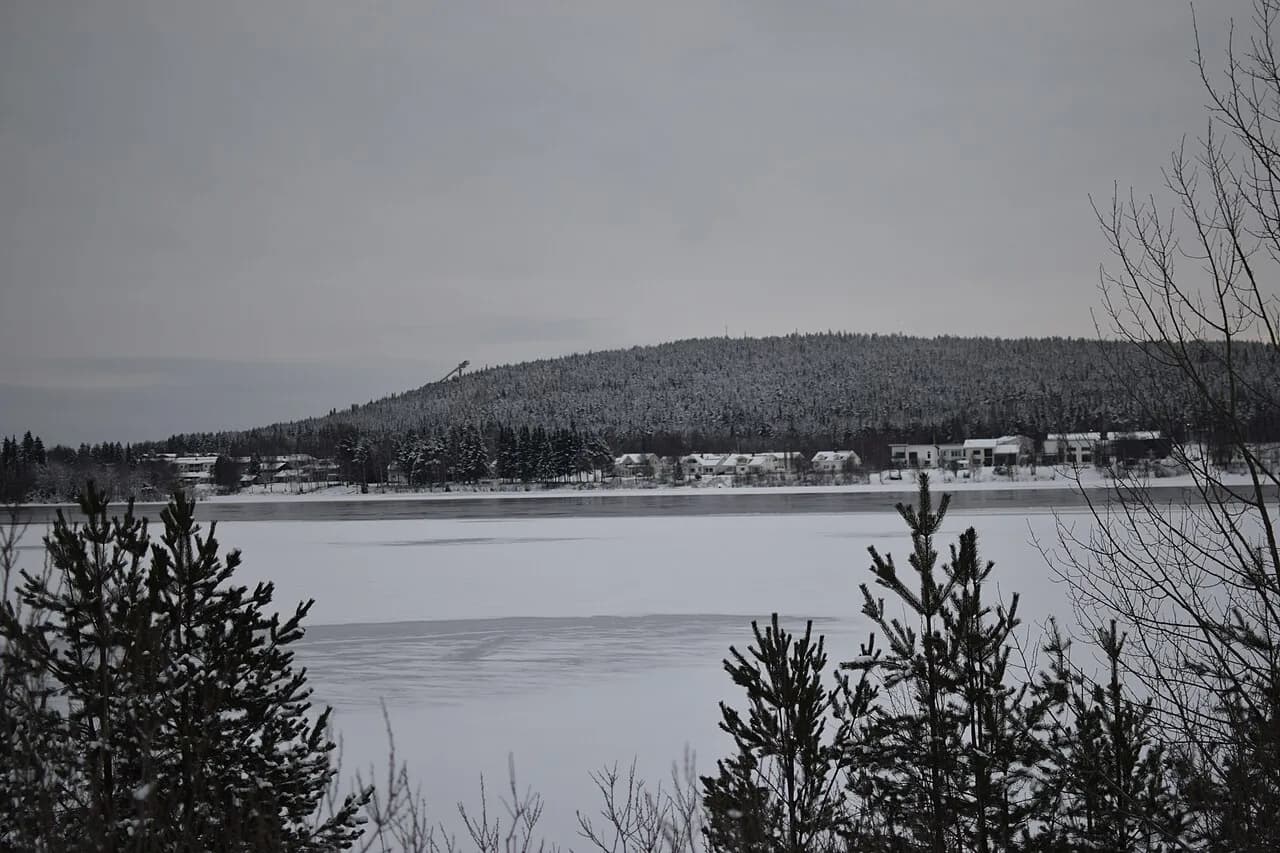
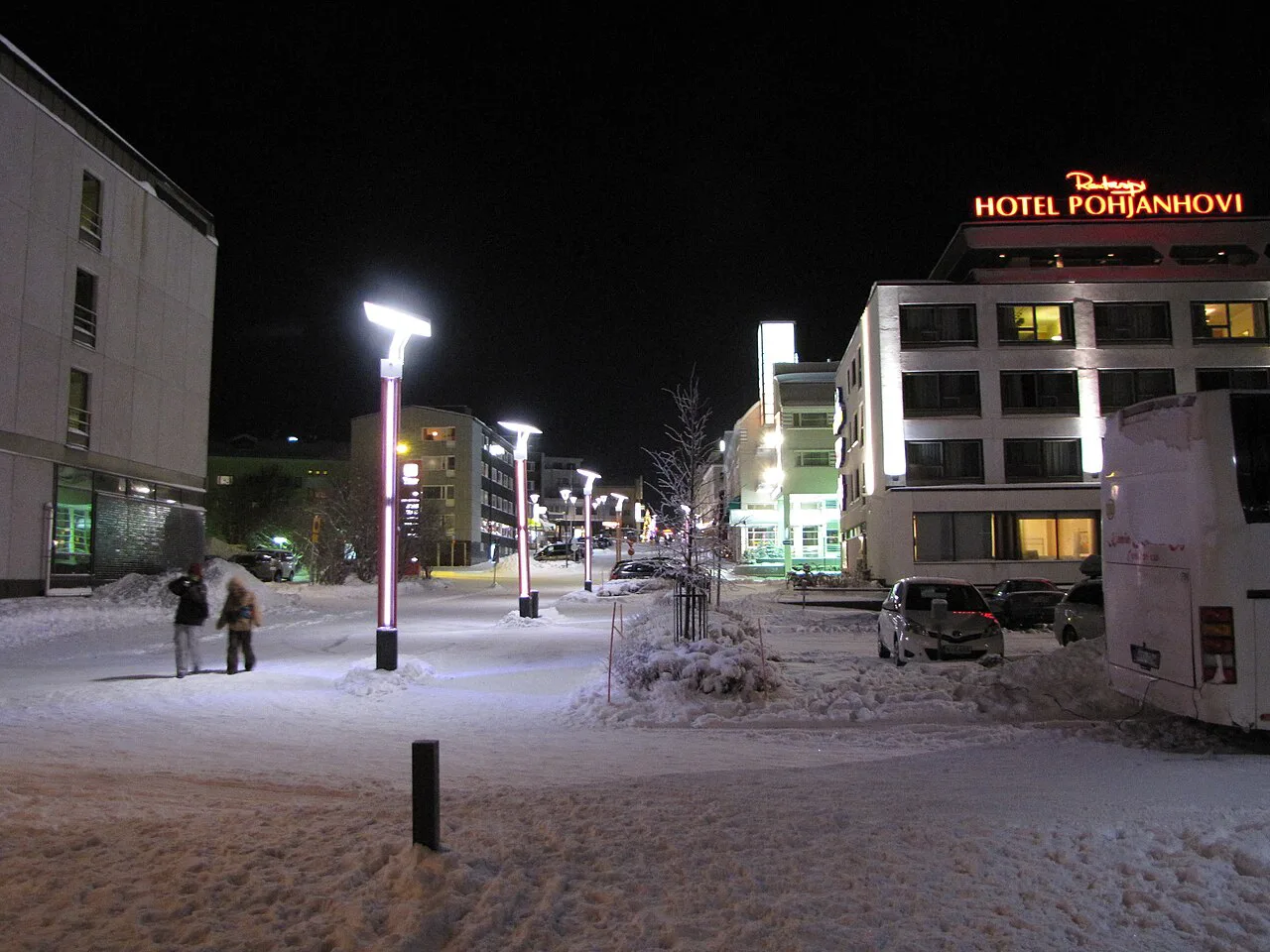
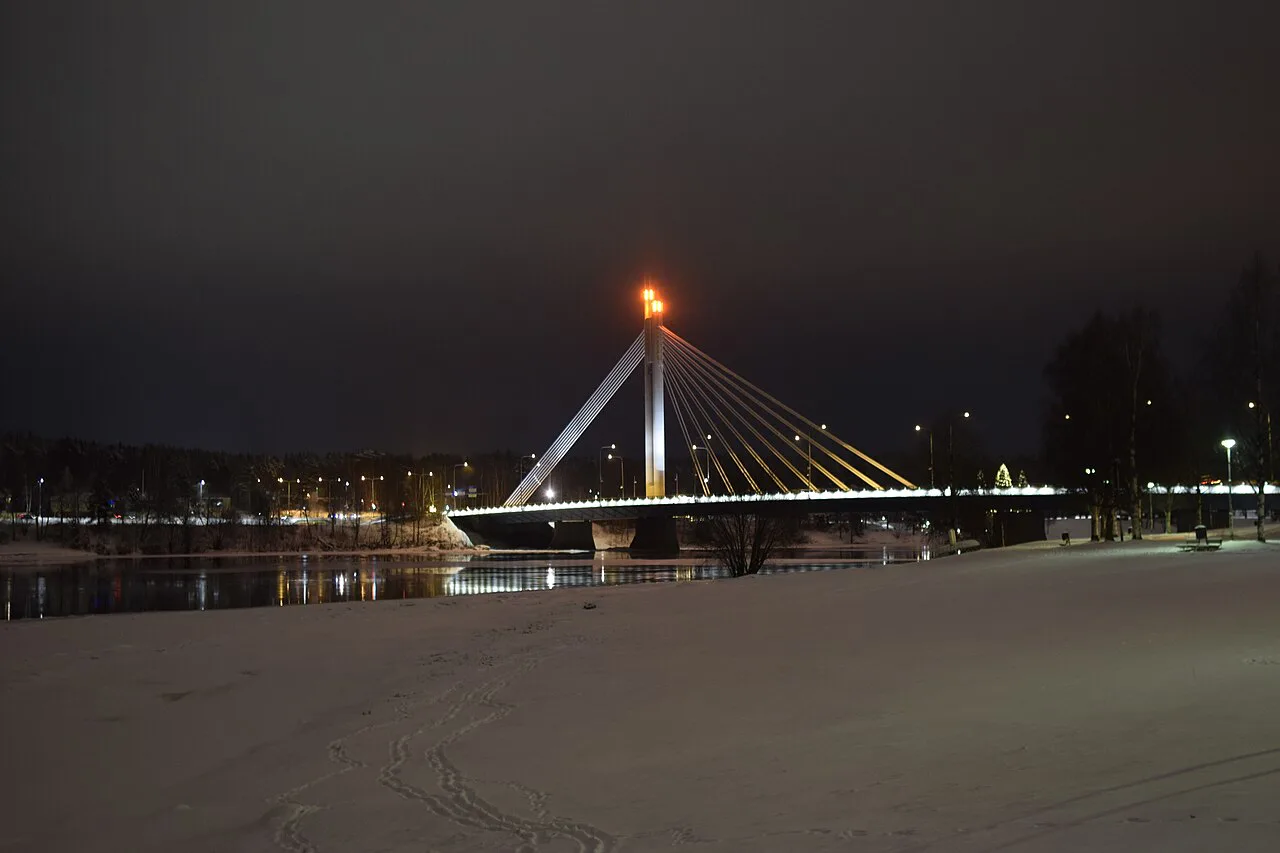
You do not need to leave the city far, but you do need to leave its lighting. Around Rovaniemi there are quiet wilderness spots and riverbank locations within a short walk or drive of the centre, and the practical rule is to get out of street lighting rather than out of the municipality. A frozen river with an open northern horizon is often better than a forest clearing, because trees block the low glow that precedes a display.
Accommodation outside the centre does much of the work for you. The Invisible Forest Lodge sits about ten minutes from the city centre on the banks of a forest river, with aurora huts built around panoramic heated glass so the sky is part of the room, and guests can step onto a terrace or into an outdoor hot tub rather than boarding a minibus. Booking a place like this is the simplest way to remove light pollution from the equation without giving up a short transfer into town.
Self-guided aurora watching versus a guided safari
If you are staying away from city lights, you do not need a tour to see the northern lights; the practical advantage of a guided safari is mobility and weather reading, not access. Guides watch the cloud forecast through the evening and can drive to a clearer patch, which matters on a marginal night, and they bring local knowledge of which forest tracks and lake shores give an open northern view. On a crisp, clear, moonless night, your own terrace does the same job for free.
The case for booking a safari is strongest on a short trip where every evening counts. Local operators such as Visit Lapland Tours, a family company running aurora hunting and snow activities in the Rovaniemi countryside, put you in a vehicle with someone who knows the road network and the forecasts, and photography help is part of the package on most nights. If your stay is three nights or fewer, one guided night is a sensible insurance policy against spending all of them in cloud.
What a guided safari includes and how the night runs
A typical aurora safari collects you in the evening, drives to a dark site away from village lighting, and sets up with hot drinks while the guide watches the sky and the forecast. Thermal suits and boots are usually lent, which removes the need to buy expedition clothing for a single night, and guides will help set cameras or take photographs of the group with the aurora behind them. Everything depends on conditions, and reputable operators say plainly that no company in Lapland can guarantee a sighting.
Expect to be out late, because aurora probability peaks around magnetic midnight, roughly 11:30 pm, when disturbances in Earth's magnetic field related to the lights are at their highest. That timing is why safaris return in the small hours and why a rest day after a late night is worth building into the itinerary. Ask your operator about minimum ages and group sizes when you book, since these vary by company and by season.
Glass igloos and aurora cabins around Rovaniemi
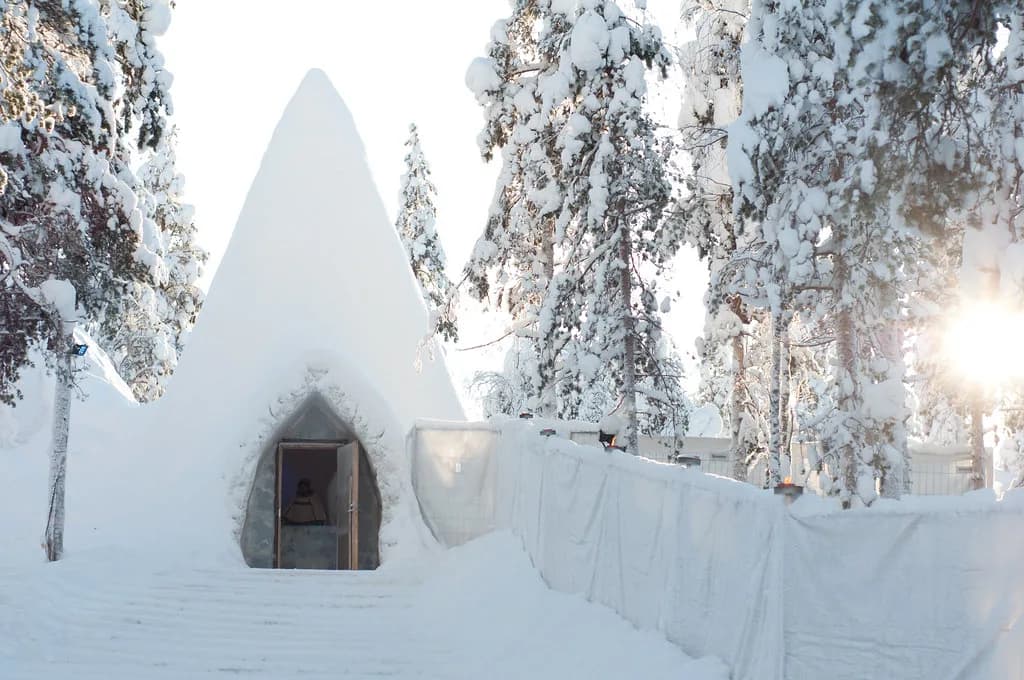
Glass-roofed accommodation turns aurora watching into something you do lying down, and Rovaniemi has a growing cluster of options. The Arctic Snowhotel & Glass Igloos Rovaniemi, about 30 km from Santa Claus Village, offers a night under a 360-degree glass roof or, for a different experience entirely, a room built of snow and ice, with a sky bar on the shore of Lake Lehtojärvi a 30-minute drive from the village. It is a resort rather than a wilderness cabin, so weigh the comfort and the glass roof against the transfer time.
Closer in, the aurora huts at Invisible Forest Lodge put heated panoramic glass over the bed in a dark forest setting, with a private outdoor hot tub and a maximum of two guests for full privacy. The huts are climate controlled even at -25 degrees outside, which matters on a January night, and the lodge's reception stays open until 23:00 with staff monitoring conditions so guests know when to look up. The trade-off is a compact hut rather than a full hotel suite, which suits couples and photographers more than families.
Hotels, wilderness lodges and forest spas as an aurora base
The Arctic TreeHouse Hotel, Rovaniemi is another design-led option on the Arctic Circle edge of town, with suites built on stilts among the trees and a restaurant on site. Its position combines the convenience of a short transfer into Rovaniemi with a forest setting that is dark enough for casual sky-watching from the window, and it works well for travelers who want a proper hotel rather than a glass pod. Compare it against a central hotel if you plan to spend your evenings on guided safaris anyway.
Apukka Resort, Finnish Lapland pairs lakeside wilderness with an easy run into town, sitting about 10 km and a 10-minute drive from Santa Claus Village, with a restaurant in a century-old timber log building. Farther out, Lapland Deluxe occupies a 160-year-old country estate by Lake Vanttausjärvi around 50 km from the village, which buys you deeper darkness at the cost of a longer transfer. Choose Apukka for convenience and Lapland Deluxe for remoteness, and compare winter age policies before booking either with children.
A spa makes the waiting easier. The Arctic Forest Spa at Invisible Forest Lodge has outdoor hot tubs with forest views, a large sauna, a Blue Lagoon pool and a lounge with an open fireplace, so a cloudy evening still has somewhere to go. Families should note that the lodge applies a winter age limit of 14 and over from November 1 to March 15, with all ages welcome from March 16, and the private suites accommodate up to four guests.
Timing your night: magnetic midnight, forecasts and cloud cover
Treat forecasts as short-range tools. The NOAA aurora outlook looks roughly 30 to 90 minutes ahead, and Kp predictions are only dependable a few hours out, so read them on the morning of your viewing night and again in the early evening rather than weeks in advance. Cloud cover is the single biggest reason aurora trips fail, so read a local cloud forecast alongside the activity forecast and be ready to move.
On the night, aim to be in position before 10 pm and plan to stay out until around 2 am, since the best window sits between those hours. Give your eyes 15 to 20 minutes to adapt to the darkness, and remember that a full moon can wash out a faint display even when activity is decent. Keep your evening plans loose so a cloudy forecast does not strand you at a fixed location.
Husky, reindeer and snowmobile nights under the sky
Rovaniemi's winter menu is built around the dark hours as much as the daylight ones. Husky safaris, snowmobile tours through old-growth forest, reindeer farm visits, ice fishing, snowshoeing and cross-country skiing all run through the season, and several can be timed for the evening so the ride doubles as a way of getting away from town lights. Snowmobiles in particular cover ground quickly, which lets an operator reach a genuinely dark site and still have you back for a late supper.
Book these for the daylight hours if you want photographs, and for the dark ones if you want atmosphere. A husky run at midday in February gives you a couple of hours of usable light, while a snowmobile night run gives you distance from the city and a sky overhead. Neither replaces a dedicated aurora watch, so avoid scheduling an exhausting activity on the same evening you plan to stay up until 2 am.
How many nights to plan for a fair chance of clear skies
Three nights is the minimum worth booking, and four to five is better, because cloud is unpredictable and each extra evening is another independent chance at a clear window. A lodge that monitors conditions and alerts guests makes those extra nights pay off, since you are not relying on your own vigilance after a long day outdoors. Travelers who build a week into the trip give themselves room for a run of poor weather and still come home with a story.
Spend those nights in one place rather than splitting a short trip between two bases, because every transfer eats an evening. If you want both town convenience and dark skies, choose accommodation on the edge of Rovaniemi and use the centre for dinners and the Arktikum, keeping the night free. For the wider regional picture beyond this one town, the northern lights in Finland guide covers how other Lapland bases compare, and if you are weighing a more northerly base, the inari northern lights guide shows what that trade-off looks like. For a coastal alternative still within reach of the same forecasts, our Kemi northern lights guide sets out when to go and where to watch there.
Realistic expectations: equinox peaks, moon phase and no guarantees
No one can promise you a display. Visibility depends on space weather and cloudiness, and even a strong forecast can sit behind a solid overcast all night; the appeal of the trip is partly the anticipation. Any operator advertising a guaranteed aurora night weeks ahead is overpromising, because the science does not support that lead time.
What you can control is the number of attempts, the darkness of your base and your willingness to move. Septembers and Marches carry an equinox boost, deep winter brings the longest nights, and a new moon leaves the sky darker than a full one. Stack those factors in your favor, then accept that the weather has the final word and enjoy the snow, the saunas and the sled dogs regardless.
Getting to Rovaniemi in winter and moving between town and forest
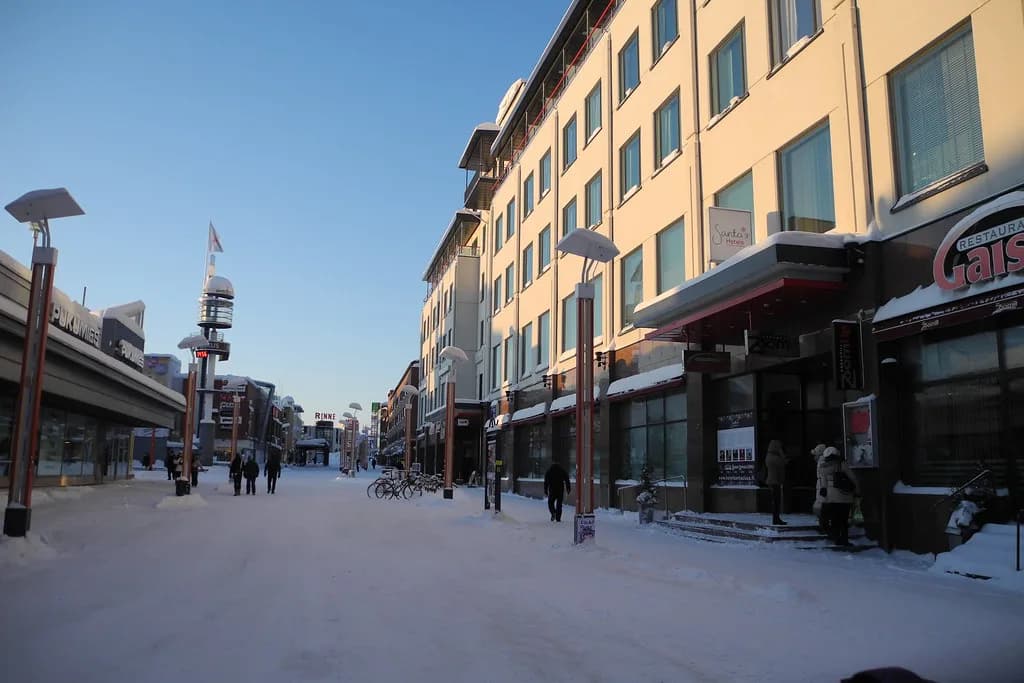
Rovaniemi has its own airport with direct winter flights, and the town's compact layout means most hotels, restaurants and the Arktikum are within easy reach of the centre. Santa Claus Village sits on the Arctic Circle a short ride north, served by local buses and taxis, so you can stay in town and still spend an evening at the village. Tourist information on Koskikatu in the centre is the place for local transport questions and current timetables.
If you are staying in the forest, arrange your transfers with the property rather than relying on late-night buses, since safaris and aurora watches finish long after normal service hours. Distances are short by Arctic standards, with Apukka about 10 minutes from the village and the Arctic Snowhotel around 30 km out, but a taxi at 1 am in -20 degrees is not the moment to improvise. Build one transfer into your booking and keep the rest of your evenings local.
Plan Your Rovaniemi Aurora Trip
Aim for three to five nights between late August and early April, favor September or March if your dates are flexible, and choose accommodation that puts dark sky within a few steps of your bed. Use a guided safari for one night to buy local weather knowledge, keep the other evenings free, and read the activity and cloud forecasts on the day rather than months ahead. Rovaniemi rewards travelers who give the sky several chances.
Book the warm base, the late-night transfer and the daytime activities first, then leave room for a clear night to change your plans. If the lights appear, you will be glad you stayed up; if they do not, the frozen river, the sauna and the sled dogs are a decent consolation. That is the honest bargain of an Arctic winter trip.
Explore more Rovaniemi northern lights guides
- Apukka Resort
- Arctic Light Hotel in Rovaniemi
- Arctic SnowHotel & Glass Igloos
- Arctic TreeHouse Hotel
- Arktikum in Rovaniemi
- Christmas in Rovaniemi
- Crossing the Arctic Circle in Rovaniemi
- Glass Igloos in Rovaniemi
- Glass Resort Rovaniemi
- Lapland Hotels Sky Ounasvaara
- Nova Skyland Hotel
- Ranua Wildlife Park
- Rovaniemi Aurora Forecast
- Rovaniemi Husky Safari
- Rovaniemi Northern Lights Tours
- Santa Claus Holiday Village
- Santa Claus Post Office in Rovaniemi
- Santa Claus Village, Rovaniemi
- SantaPark Rovaniemi
- Snowman World Rovaniemi
- Arctic Fox Igloos, Ranua
- Octola Lodge
- Reindeer Farms in Rovaniemi
- Rovaniemi in December
- Rovaniemi in February
- Rovaniemi in January
- Rovaniemi in March
- Rovaniemi in November
- Rovaniemi in October
- Rovaniemi in Winter
- Rovaniemi Reindeer Safari
- Rovaniemi Snowmobile Safaris
- Sauna in Rovaniemi
- A Rovaniemi Winter Itinerary
- Best Time to See the Northern Lights in Rovaniemi
- How Many Days in Rovaniemi
- Ice Fishing in Rovaniemi
- Levi vs Rovaniemi
- New Year in Rovaniemi
- Polar Night in Rovaniemi
- Rovaniemi in September
- Snowshoeing in Rovaniemi
- Where to Stay in Rovaniemi for the Northern Lights
Frequently Asked Questions
When is the best month to see the northern lights in Rovaniemi?
Once weather is taken into account, the Finnish Meteorological Institute rates March and early April as generally the best time for auroras in Northern Finland, and September and October are close behind thanks to fast-darkening nights and the equinox effect. December and January bring the longest, darkest nights, so they remain a reasonable choice for anyone who wants deep winter. Whichever month you pick, book several evenings rather than one, because cloud cover decides individual nights.
Can you see the northern lights from Rovaniemi city centre?
Street lighting in the centre washes out weak and moderate displays, so the centre is a place to sleep, eat and visit the Arktikum rather than your viewing site. Walk or drive a short way to a frozen riverbank, forest clearing or an accommodation on the edge of town, and you remove most of the problem. Santa Claus Village sits on the Arctic Circle a short ride north, but it is also a lit resort, so step away from the buildings for a dark northern horizon.
Do you need a guided tour to see the northern lights in Rovaniemi?
Not if you are staying somewhere dark outside the city lights; a terrace, a hot tub or a forest hut does the job. A guided safari earns its place on a short trip or a marginal forecast, because the guide reads the cloud situation through the evening and can drive to a clearer patch. Rovaniemi operators also lend thermal suits and boots and help with camera settings, which makes a night out more comfortable.
How many nights should you book for a fair chance of auroras in Rovaniemi?
Three nights is the realistic minimum and four to five is better, since each evening is a separate chance at a clear, dark window. A single night gives the weather the deciding vote. Accommodation that monitors conditions and alerts guests makes those extra evenings work harder, and a week-long stay leaves room for a run of overcast nights without losing the trip.
What Kp index do you need in Rovaniemi?
Because Rovaniemi lies close to the auroral oval, auroras can often be seen at Kp 2 or lower, a Kp of 3 to 4 produces clearly visible displays, and higher values bring spectacular nights. A low Kp number is not a reason to stay indoors here. Treat Kp as guidance only, and pair it with a local cloud forecast, since overcast skies hide a strong display just as effectively as a quiet one.
Are northern lights guaranteed on a Rovaniemi safari?
No company in Lapland can guarantee a sighting, because visibility depends on space weather and cloudiness. Be wary of any safari sold weeks ahead with a guaranteed aurora night, since forecasts only become dependable a few hours out. What a good safari delivers is transport to a dark site, local weather reading, hot drinks, thermal gear and photography help, plus a flexible plan that can move if the sky clears elsewhere.
Sources
Notes for your Arctic winter trip
Optional updates to our northern lights guides.
You might also like
Continue reading
More guides you'll find useful