Northern Lights in Sweden: Where, When and How to See Them
Plan a Swedish Lapland aurora trip: season months, why Abisko stays clearer, named viewing spots, night tours with starting prices and how many nights to book.
On this page
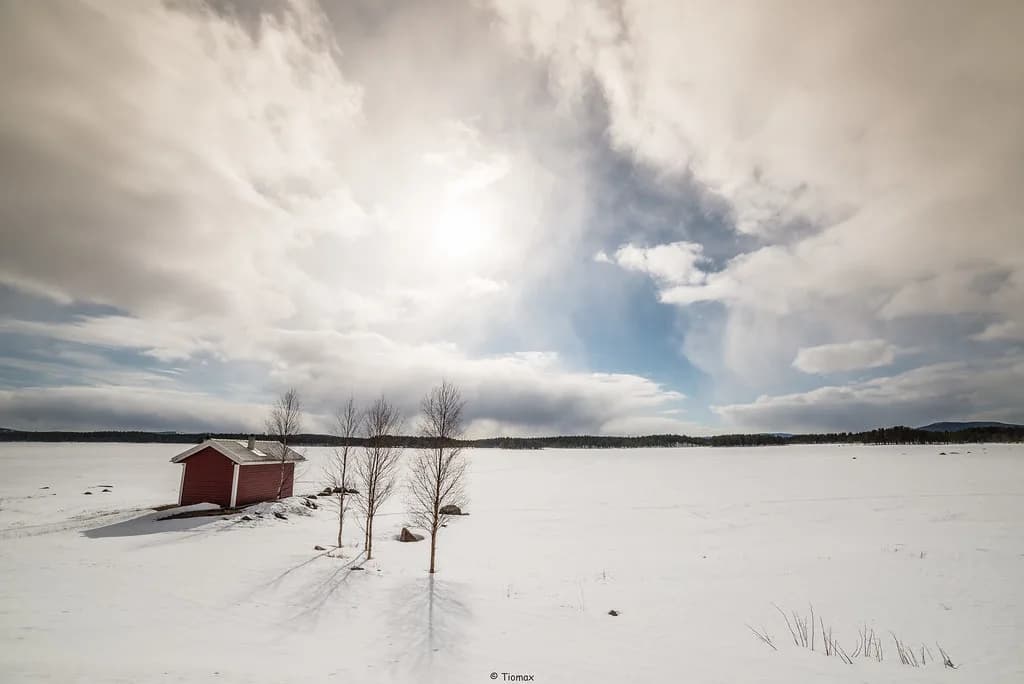
Swedish Lapland is Arctic Sweden: a stretch of birch forest, frozen lakes and mountain shoulders that sits beneath the auroral oval, the band where charged solar particles most often collide with the upper atmosphere. Winter here delivers long nights, low light pollution outside the few towns and a choice of bases built around aurora watching rather than tacked onto it. It suits travelers who want a real Arctic winter alongside the aurora, and who accept that clear skies, not effort, decide the outcome.
The practical decision is where to sleep and how many nights to give the sky. Abisko trades town comforts for a mountain setting with a reputation for clearer nights, Kiruna and Jukkasjärvi pair viewing with ice hotels and dog sledding, and Jokkmokk offers a quieter inland alternative with strong Sámi culture. Get the base and the nights right and the rest of the trip, from tours to the drive between stops, falls into place.
Why Swedish Lapland sits under the auroral oval
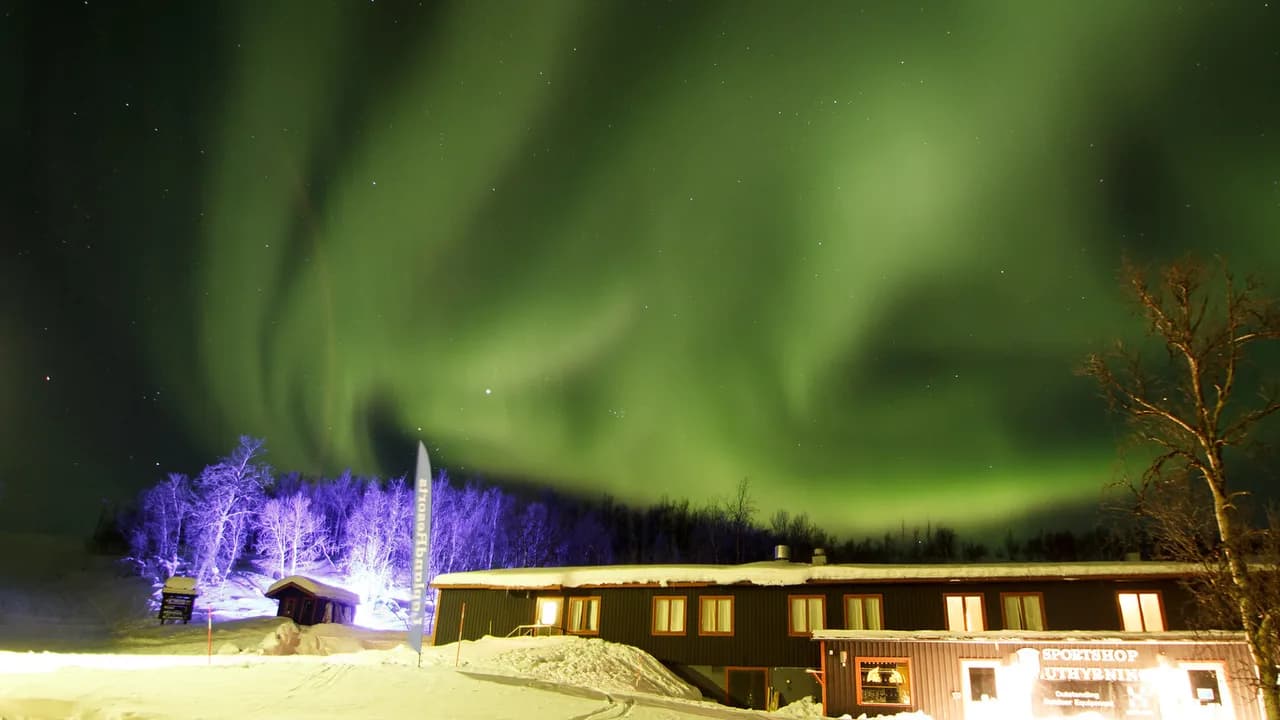
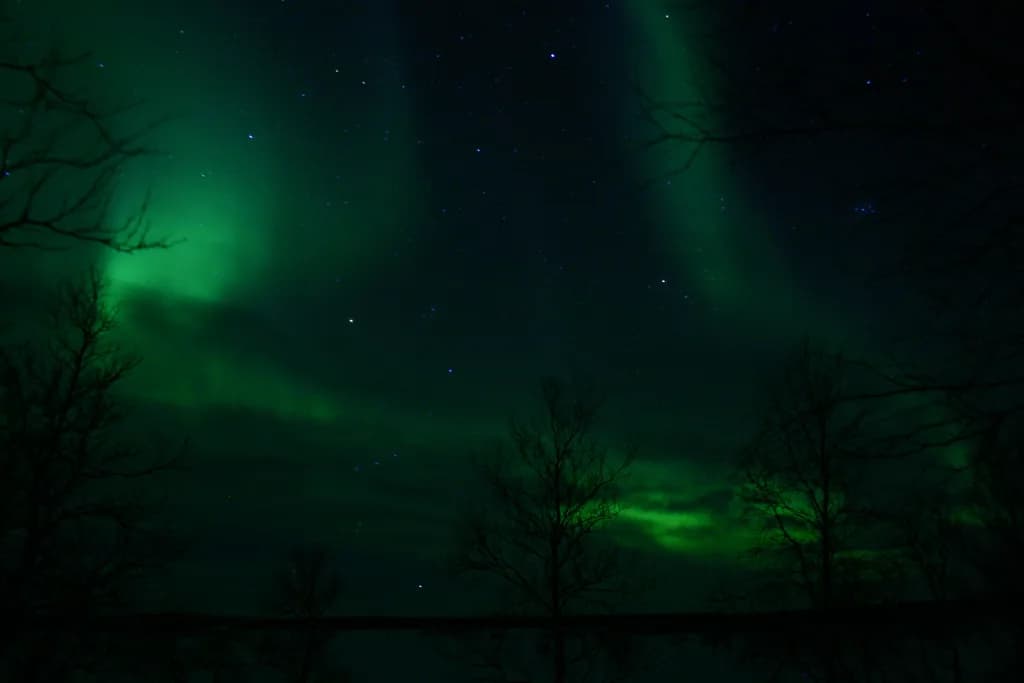
The aurora appears when charged particles streaming from the sun are captured by Earth's magnetic field and driven toward the poles, where they collide with atoms in the upper atmosphere and release light. The most intense displays form at roughly 100 km altitude and appear mostly blue-green over northern Sweden, sometimes veined with red or lilac. Latitude matters because the auroral oval rings the magnetic pole, and Swedish Lapland lies inside it.
Being far north is necessary but not sufficient. Cloud cover and light pollution decide whether a substorm overhead ever reaches your eyes, which is why a forest clearing outside Kiruna can outperform a town square on the same night. Kp values are a forecast indicator of geomagnetic disturbance, not a promise that your patch of sky will be clear. Treat them as guidance when you pick a night, not as a verdict.
When the aurora season runs in Swedish Lapland
The season is best understood as the window when nights are dark enough to show the lights, roughly from late August or September through March or early April. Swedish Lapland's tourism site puts the best time between September and March while noting sightings as early as late August. The Swedish Tourist Association narrows its advice to mid-November through mid-March, and WildSweden describes visibility from late September to early April.
Those windows overlap rather than conflict: the earlier and later edges buy you dark nights with milder weather and fewer visitors, while the deep-winter core buys longer nights and snow. The light itself can occur around the clock but is only visible in darkness, with 9 pm to 2 am given as the ideal stretch. Cold, clear nights are often the best, since cloud cover insulates and clear skies usually run colder.
September and the early season
September brings lengthening nights, autumn color on the birch and relatively mild conditions, and WildSweden notes fewer tourists around. It is a good fit if you want to combine aurora watching with hiking or wildlife rather than commit to deep-winter activities. The trade-off is no snow: photographers get a dark backdrop, but the classic white landscape has not arrived.
If your trip depends on snow-dependent activities such as long dog-sled routes, treat September as a sky-first visit and plan days around the landscape instead. For the wider picture of how the region shifts from autumn into winter, see this guide to Swedish Lapland in winter.
October to November: dark nights before the snow
October and November deliver long dark nights and, in many places, ground that has not yet snowed over. WildSweden points to this as a favorite stretch for photographers wanting a dark backdrop without snow, and the aurora becomes more frequent as the nights lengthen. The trade-off is softer, sometimes wetter weather and darker daytime hours, so build in indoor time around Kiruna or Jokkmokk.
November sits awkwardly for some travelers: nights are generous but the full winter product, from ice structures to sledding on natural snow, is still arriving. Approach it as a value window for aurora-first trips, and let your lodge confirm what is running that week.
December to February: peak viewing and full winter
December, January and February are widely treated as the peak months, with the longest nights and the fullest winter conditions. Swedish Lapland's tourism site favors December and January if you want a dramatic snowy backdrop beneath the lights, since the long nights add to the experience. This is also when dog sledding, moose watching and ice-based stays are most reliably part of the trip.
Expect short daylight and plan days around activities rather than sightseeing drives. Temperatures can be severe, so check in advance what cold-weather gear your night-tour company provides on aurora outings. The nights are long enough that a storm overhead at 8 pm can clear by midnight, which is exactly why more nights beats more planning.
March to early April: longer days, dark nights
March and early April keep nights dark enough for the aurora while daylight returns, making daytime activity more comfortable and the landscapes brighter. WildSweden describes this as the end of the season but still an excellent window, with milder temperatures and snow-covered scenery in sunlight. If you want both a full winter look and tolerable days, this is the sweet spot.
By April the nights shorten quickly, so late-season trips should front-load aurora nights early in the stay. Cross-check the forecast each evening and keep one flexible night free for a tour or a drive to a dark spot.
Why Abisko stays clearer: the rain shadow and the blue hole
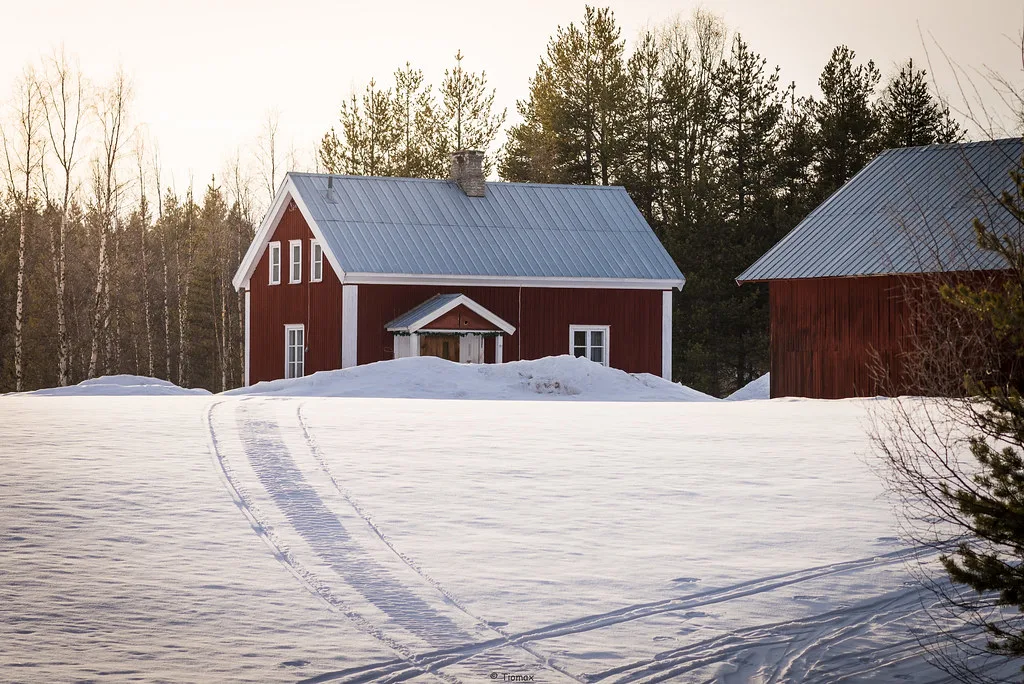
Abisko sits in a rain shadow that gives it one of the driest climates in the Nordic area, which translates into clearer nights and sometimes more than two weeks of consecutive aurora nights. The Swedish Tourist Association calls the effect the blue hole: skies frequently clear over Abisko even when surrounding areas are clouded in. That microclimate, plus negligible light pollution, is why Abisko is named among the world's best aurora locations. If you are weighing one specific base in the far north, this abisko northern lights guide covers the season, dark-sky spots and where to stay.
One reported figure worth knowing is that a three-day stay in Abisko is said to carry an 88% chance of seeing the lights, conditioned on clear skies. Treat it as a reported estimate for that specific place and season, not a booking guarantee. It does underline the main planning lesson: length of stay does more for your odds than any single choice of venue.
The trade-off is scale. Abisko is a small village with a railway station and limited beds, so book early in peak months, and expect a quiet base rather than a town's restaurant and bar scene.
Where to watch around Abisko: the park, Lake Torneträsk and Mount Njullá
Abisko National Park wraps around Lake Torneträsk with the mountain ridge of Lapporten as its signature horizon, giving wide open northern views from the shoreline and trailheads. The tourist station sits directly beneath that sky with views of the Abisko Alps and the lake, and it has its own railway station, so you can arrive by train and walk to your bed.
Mount Njullá, also called Nuolja, rises beside the station and offers panoramic views with even less light pollution than the village. The catch is the descent: you depend on the chairlift for the way up, so a mountain-top night means committing to the lift schedule and staying warm on an exposed ridge. The Swedish Tourist Association notes the chances of seeing the lights on Njullá are about as high as at the station itself, so go up for the view rather than out of superstition.
For a self-guided night, the flat lake shoreline and park trails are the simplest option: no lift, no schedule, and you can retreat to the station when you get cold. Check the Abisko National Park guidance for where walking is permitted after dark before you set out.
Aurora Sky Station: the chairlift, the viewing terrace and the café
STF Aurora Sky Station sits at the top of Mount Njullá inside the national park, reached by chairlift, and combines a viewing tower with a large outdoor terrace facing Lapporten and the Abisko mountains. There is a warming fire and a café for refreshments, which makes it the most comfortable mountain-top option in the area. Evening night visits start from 1,295 SEK, an aurora dinner from 2,395 SEK and a guided night hike from 950 SEK.
Book the night visit if you mainly want the panorama and a warm room to step into, the dinner package if you would rather make an evening of it, and the hike if you want to move through the birch forest instead of riding above it. The night visit starts from Abisko-Kebnekaise mountains with Abisko Turiststation as your starting point, so you can base yourself there without a car.
Watching around Kiruna, Jukkasjärvi and Camp Ripan
Kiruna is Sweden's northernmost town and works as a practical hub: more beds, more restaurants and easier transfers than Abisko, at the cost of more light pollution in the center. Camp Ripan in Kiruna and the ICEHOTEL in Jukkasjärvi are both named among the region's aurora venues, so you can sleep at a place set up for night sky viewing rather than drive out from a standard hotel.
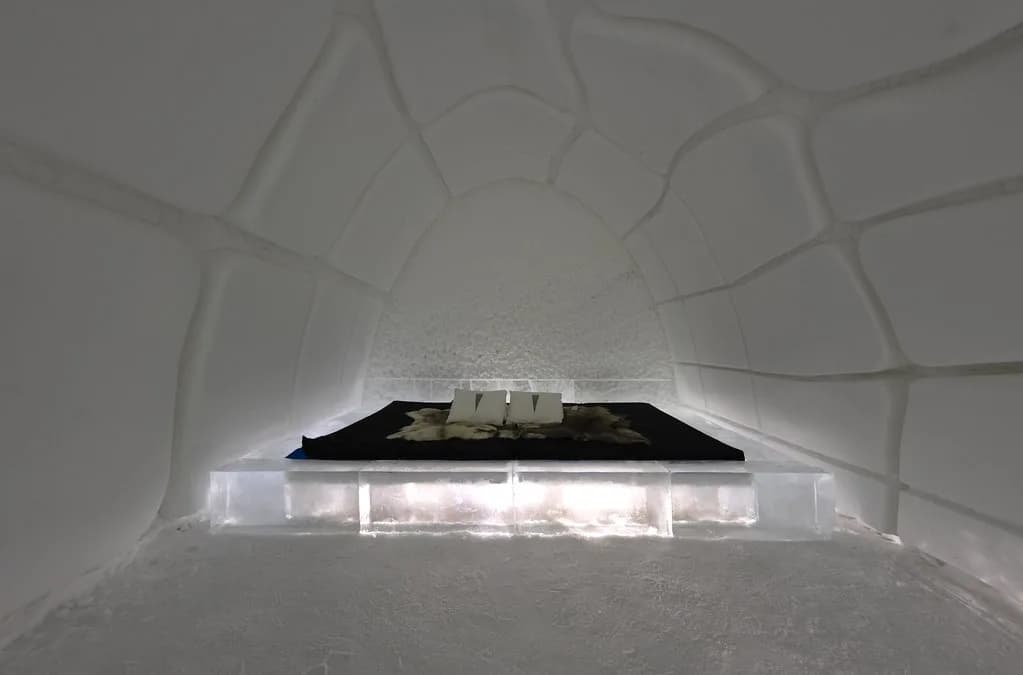
For the Icehotel in Jukkasjärvi, read this icehotel sweden guide to see how the cold rooms, warm cabins and riverside setting differ, and how the seasonal build fits a winter trip. Jukkasjärvi is a short transfer from Kiruna, which makes it easy to split a stay between town conveniences and a night on the river.
The permanent Icehotel 365 section and the winter build on the Torne River are worth understanding before you book, since they offer different room types and different levels of comfort. This icehotel 365 overview explains what the year-round structure adds to a winter stay.
Jokkmokk and the quieter inland spots
Jokkmokk offers a remote, authentic aurora base away from the main Abisko and Kiruna circuit, with Sámi culture and dark inland landscapes as its draw. WildSweden singles it out for travelers who want fewer crowds, and the trade-off is longer transfers and fewer facilities, so plan around a rental car or arranged pickups.
If your dates coincide with the town's famous winter gathering, the jokkmokk winter market adds a serious reason to choose this base, though it also fills beds. Book far ahead if market week is your anchor.
Aurora venues: Icehotel, Treehotel and Pinebay Lodge
Beyond Abisko, Swedish Lapland's aurora venues each solve a different problem. Camp Ripan in Kiruna gives you a town base with easy logistics, the ICEHOTEL at Jukkasjärvi gives you the ice experience plus riverside dark, Treehotel at Harads gives you a forest canopy room, and Pinebay Lodge offers a smaller-scale stay. Pick by what you want your nights to feel like, not by which sounds most exotic.
Treehotel and similar forest stays are usually several kilometers from town, which helps with light pollution but means a car or transfer for dinners and tours. Ice hotels put you close to the aurora but ask you to weigh a cold night against a warm cabin, a real trade-off rather than a gimmick.
Self-guided aurora chasing versus a guided night
If you have a car, self-guided chasing is straightforward in Swedish Lapland: leave town on a forest road, find a clearing away from lights, and watch for 20 to 30 minutes so your eyes adapt. Check road conditions before setting out, since plowed roads and lay-bys are limited away from the main routes. The reward is flexibility, and the risk is spending the clear window driving.
A guided night shifts the cloud decision to someone with local experience and a van. Operators in the region run photography-focused tours, and in Abisko, Lights over Lapland leads tours from STF Abisko Turiststation where you can borrow cameras and lenses set up for northern lights photography, with practical tips on locations in the national park.
Guided nights are best value when you have only a few nights, no car, or want photographs you cannot take yourself. Book the first clear-forecast night and keep a backup date, because a tour on a cloudy evening is a social evening, not an aurora one.
Photography tours and borrowing aurora-ready cameras
Aurora photography rewards a tripod, exposures of around 4 to 12 seconds, a wide-angle lens and manual focus set to infinity, according to the Swedish Tourist Association's guidance. Cold drains batteries fast, so bring spares and keep them warm. If you do not own the right gear, the borrowed-camera tours from Abisko remove the main barrier.
Guides who shoot the aurora for a living, including Lights over Lapland in Abisko, also run courses and rarely give up before the group has a shot, according to Swedish Lapland's tourism site. That persistence is the hidden value of a photography tour when the forecast is marginal.
How many nights to plan for a fair chance of clear skies
No one can promise a display, and the honest planning approach is to buy nights rather than certainty. Swedish Lapland's tourism site notes that your odds increase the longer you stay, and the reported Abisko three-day figure only holds with clear skies. Three to four nights is a sensible floor for a fair chance; a week is a genuinely better bet if the aurora is the point of the trip.
Build flexibility into the itinerary: put the aurora-focused base first, keep one unbooked evening for a tour, and do not schedule a long transfer the morning after a clear night. Deep-winter cold means the clearest nights are often the coldest, so a warm indoor base makes long nights out more realistic.
Getting to Swedish Lapland in winter and choosing a base
Abisko Turiststation has its own railway station on the line through the mountains, making a car-free aurora trip realistic: train to Abisko, walk to the station, and book the chairlift or a guided night from there. Kiruna works as the air hub for the region, with Jukkasjärvi, Abisko and Jokkmokk reachable by road or rail onward.
Choose Abisko for the clearest-sky reputation, dark shoreline and train access; Kiruna for services, tours and easy access to the Icehotel; Jokkmokk for quiet and Sámi culture. Whichever base you pick, book the aurora venue and the onward transfer before the winter season fills, and confirm transfer times with your lodge for the week you travel.
Plan Your Aurora Trip to Swedish Lapland
Aim for three to four nights minimum, lean toward December to March for long nights and full winter, and pick a base for its sky as much as its beds: Abisko for the blue hole and the lake shoreline, Kiruna for logistics, Jukkasjärvi for the ice experience, Jokkmokk for quiet. Book the night visit, aurora dinner or hike early, keep one flexible evening, and let the forecast decide the rest.
Explore more Swedish Lapland northern lights guides
- Icehotel 365
- Icehotel Jukkasjärvi
- Jokkmokk Winter Market
- Swedish Lapland in Winter
- Swedish Lapland Northern Lights Tours
- Husky Safaris in Swedish Lapland
- Nutti Sámi Siida in Jukkasjärvi
- Pine Bay Lodge
- Swedish Lapland Aurora Forecast
- A Swedish Lapland Winter Itinerary
- Best Time to See the Northern Lights in Swedish Lapland
- Glass Igloos in Swedish Lapland
- Ice Fishing in Swedish Lapland
- Polar Night in Swedish Lapland
- Reindeer Safaris in Swedish Lapland
- Swedish Lapland Snowmobile Safari
- Swedish Lapland vs Finnish Lapland
- Where to Stay in Swedish Lapland for the Northern Lights
Frequently Asked Questions
What month can you see the northern lights in Sweden?
Swedish Lapland's tourism office gives September to March as the aurora season, with sightings starting as early as late August; the Swedish Tourist Association favors mid-November to mid-March and WildSweden describes late September to early April. Nights are dark enough across that whole span, but clear skies decide whether you see a display. The weeks around December and January offer the longest nights and full snow, while March and early April bring milder days with dark nights.
Where in Sweden can you see the northern lights?
Swedish Lapland, the Arctic part of Sweden, is the aurora region, with Abisko, Kiruna, Jukkasjärvi and Jokkmokk as the main bases. Abisko National Park is singled out for its dry microclimate, low light pollution and mountain views over Lake Torneträsk and Lapporten. Kiruna offers town logistics and the ICEHOTEL at nearby Jukkasjärvi, while Jokkmokk is quieter and more remote.
Why is Abisko so good for the northern lights?
Abisko sits in the auroral oval but also in a rain shadow that keeps its skies notably clearer than surrounding areas, an effect the Swedish Tourist Association calls the blue hole. Light pollution is minimal, the tourist station has its own railway station, and a chairlift climbs Mount Njullá to the Aurora Sky Station viewing terrace. Clear skies still depend on the night, so stay several nights.
Can you see the northern lights in Sweden in November?
Yes, November falls inside the aurora season and offers long dark nights, and WildSweden highlights October and November for dark skies without snow. The trade-off is that full winter activities and deep snow are not yet guaranteed, so check with your lodge about what is running. November suits aurora-first trips and photographers who prefer a dark, snowless background.
Do you need a tour to see the northern lights in Swedish Lapland?
No, self-guided viewing works well if you have a car: drive a short way out of town, find a dark clearing and give your eyes time to adapt. A guided night helps if you have few nights, no car, or want photographs, since guides can move with the cloud forecast. In Abisko, the Swedish Tourist Association lists a night visit from 1,295 SEK, an aurora dinner from 2,395 SEK and a guided night hike from 950 SEK.
How many nights should you stay to have a fair chance of clear skies?
Treat three to four nights as a sensible floor and a week as a better bet if the aurora is the main reason for the trip. Swedish Lapland's tourism office notes that odds increase with a longer stay, and its reported figure of an 88% chance over three days in Abisko is conditioned on clear skies, not a guarantee. Keep one evening unbooked so you can move with the forecast.
Can you photograph the northern lights without your own camera?
Yes. In Abisko, Lights over Lapland runs tours from STF Abisko Turiststation where you can borrow cameras and lenses adapted for aurora photography, with tips on locations in the national park. If you shoot your own, plan for long exposures of roughly 4 to 12 seconds, a tripod, a wide-angle lens and spare batteries kept warm.
Will the northern lights be visible in Sweden in 2026?
Aurora visibility cannot be guaranteed for any date, because it depends on solar activity and local cloud cover. Solar activity is tracked by forecast services, and the Kp index indicates geomagnetic disturbance but says nothing about whether your sky will be clear. The practical approach is to travel in the dark season, stay several nights and check the forecast and cloud cover each afternoon.
Sources
Notes for your Arctic winter trip
Optional updates to our northern lights guides.
You might also like

Continue reading
More guides you'll find useful