Abisko Northern Lights: When to Go and Where to Stay
Abisko's rain-shadow micro-climate and low light pollution give the national park unusually clear skies. Plan the season, dark-sky spots and nights.
On this page
Abisko sits inside the Arctic Circle in Swedish Lapland, and winter here offers something rare: dark, quiet nights in a mountain valley that is known for keeping cloud at bay. Travelers who want a straightforward aurora base with national park trails on the doorstep, rather than a city break with a night tour bolted on, tend to find the village fits well.
The setup is simple. A small village, a national park along a long lake, a mountain ridge above it and a railway station in the middle, all within a short walk or a short drive of each other. That compact layout matters at 2am, when you want to step outside, look up and decide within minutes whether the sky is worth staying up for.
Why the aurora shows in Abisko
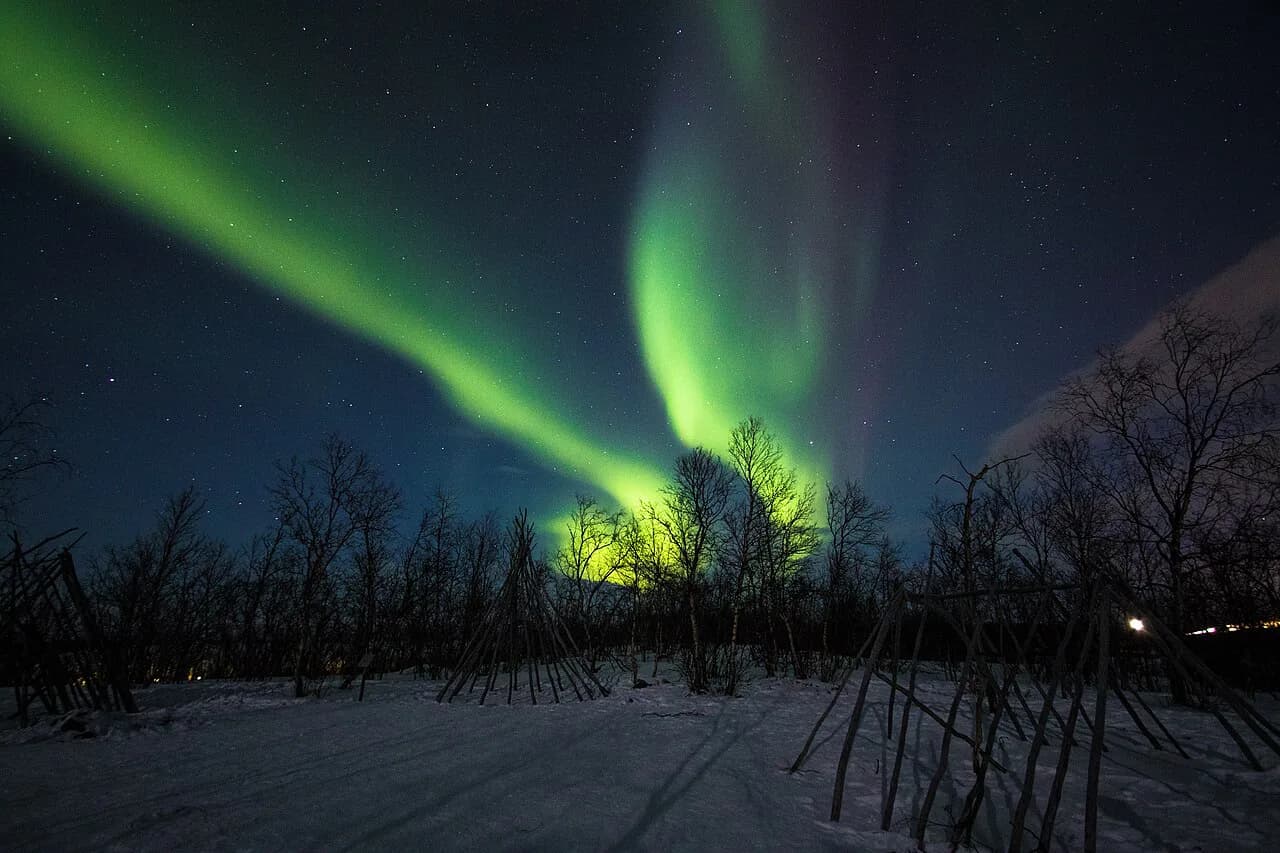
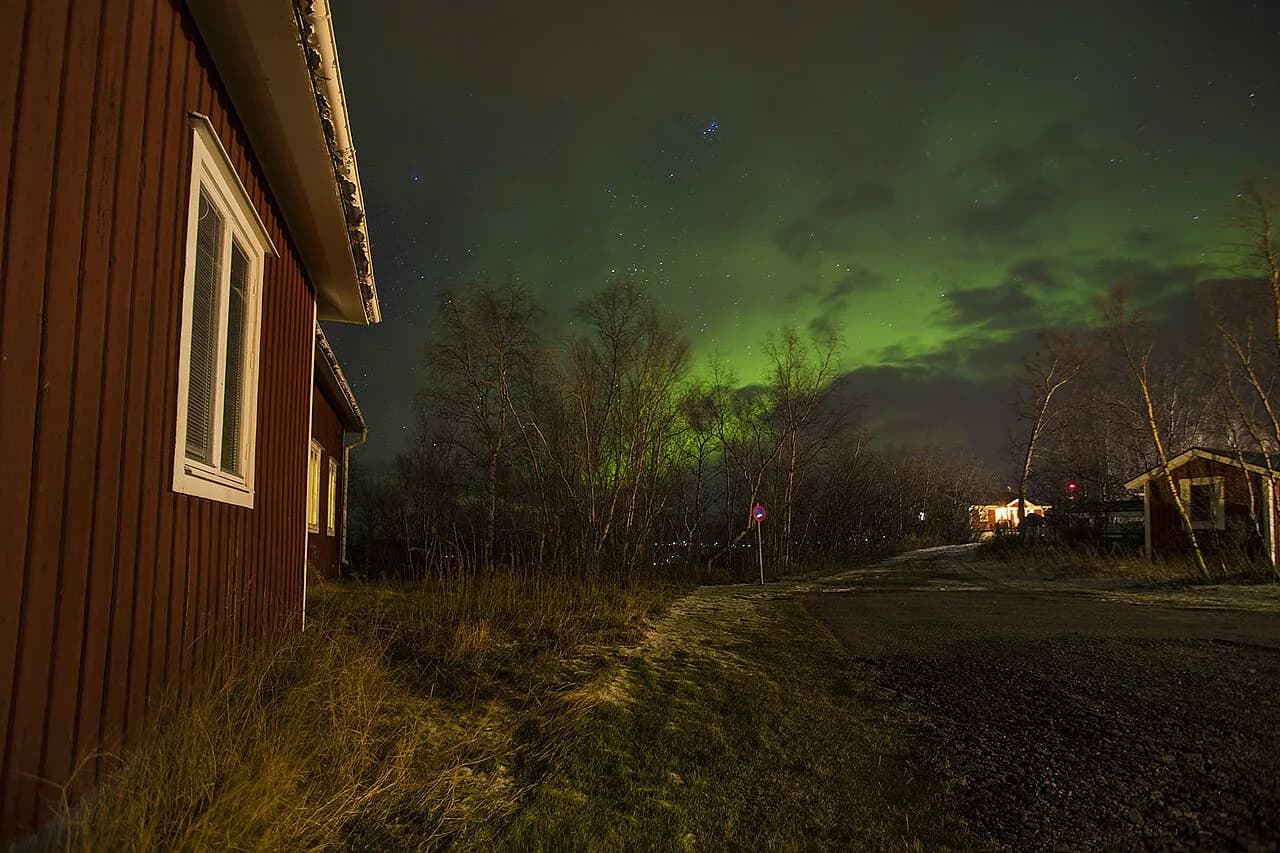
Abisko lies in the auroral oval, the ring of latitude where charged particles from the sun most often reach the upper atmosphere and light up the sky. Being this far north means the aurora can appear overhead on many dark nights rather than only low on the horizon, and it can be visible for long stretches of the night rather than in a brief burst.
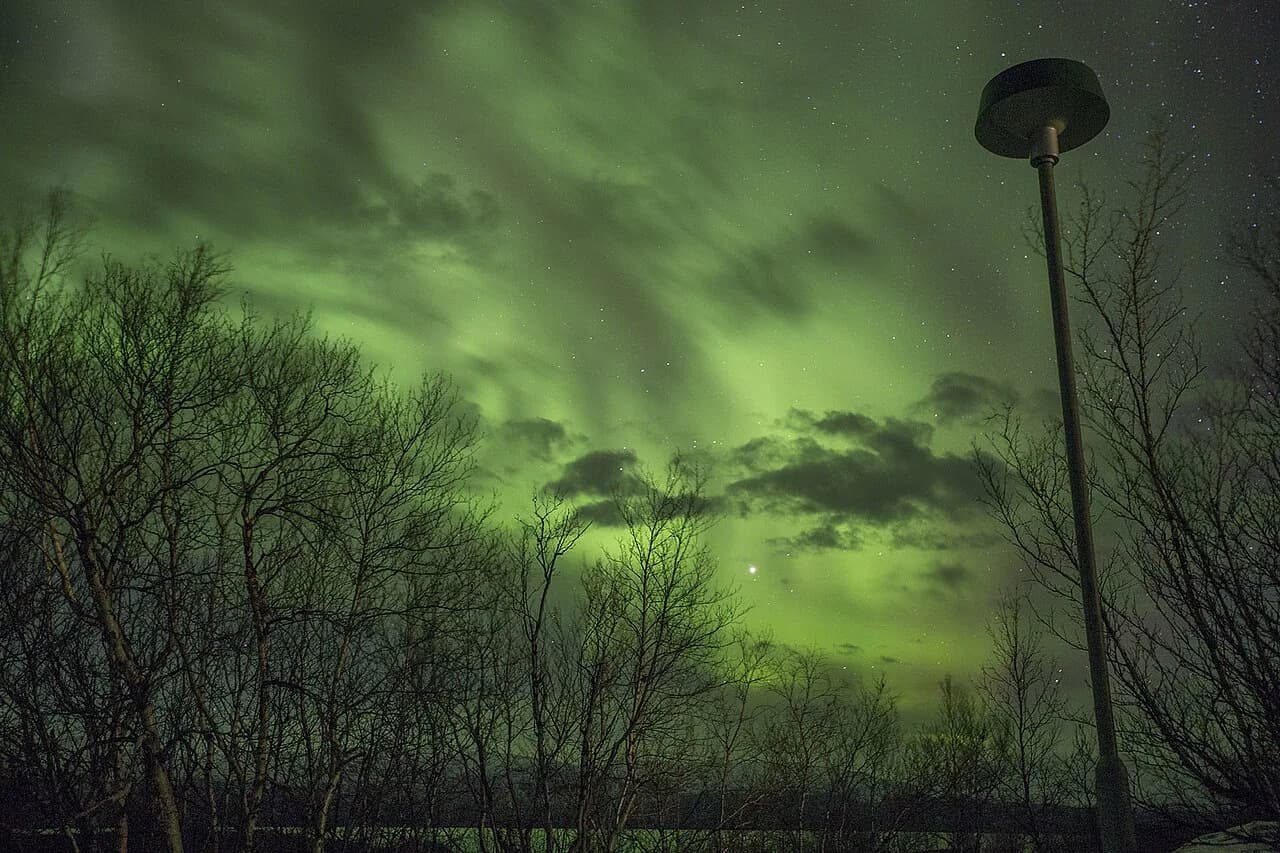
The second advantage is local weather. The mountains around Abisko create a rain-shadow effect that keeps much of the cloud cover away, so clear skies are more common here than in many other Arctic bases, and a cloudless sky means any aurora is less likely to be hidden. The national park area also has minimal light pollution, which makes faint displays easier to see.
Neither factor guarantees a display. Auroral activity rises and falls with solar conditions, and even a strong forecast is wasted under cloud. What Abisko offers is a better starting position: a northern latitude, long dark nights in winter and a valley that often sits under clearer sky than the surrounding region.
When the aurora season runs
The aurora season in Abisko runs from September to the end of March, the months when nights are dark enough for the northern lights to be visible against the sky. Outside that window the nights are too bright for a meaningful display, even when auroral activity is present.
Within the season, the darkest weeks fall around the winter solstice in December and early January. That is also the coldest and most snow-covered period, so you trade comfortable temperatures for maximum hours of darkness. September and late March sit at the other end, with dark nights returning or retreating but longer, milder days for other activities.
For planning purposes, treat the season as a broad window rather than a fixed calendar of good and bad weeks. Solar activity varies on its own cycle, so no single month is reliably better than another for auroral strength. The decision that matters more is how many dark nights you give yourself in a place with a decent chance of clear sky.
Daylight, snow and temperature through the season
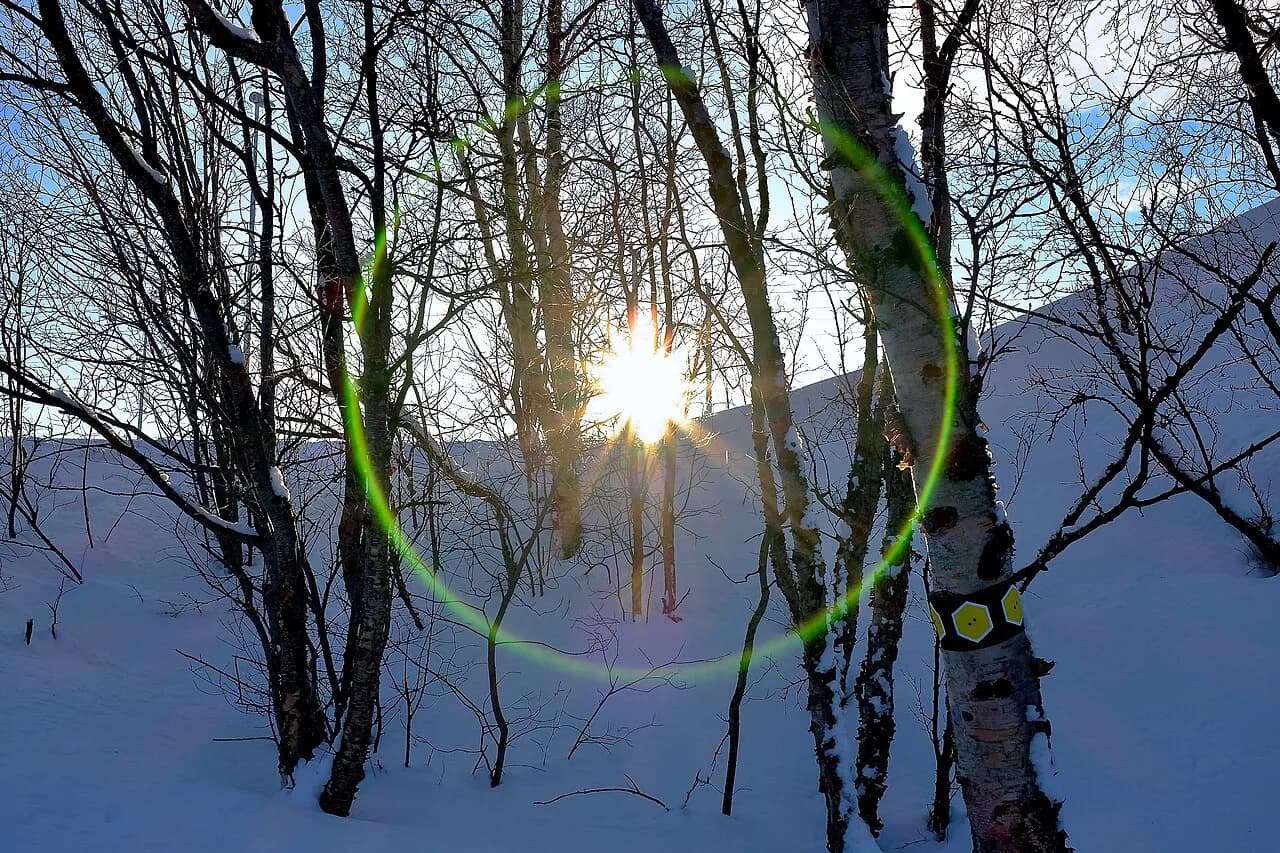
Daylight shrinks steadily from September into December, when the sun barely clears the horizon and the days are short and blue. By late March the light has returned in force, with long days and a softer, spring-like feel in the valley. This matters for planning: an early or late-season trip gives you usable daylight for skiing or park walks alongside the night-time aurora watch, while midwinter gives you very little of either.
Snow cover builds through the winter and typically lasts well into spring, and temperatures drop furthest in the midwinter weeks around the solstice. Exact figures vary from year to year, so plan around the pattern rather than a single number: expect cold, dry, often clear conditions in the heart of winter, and changeable, milder weather at the edges of the season.
The practical consequence is that your evening schedule should follow the darkness, not the clock on the wall. In December you can be out watching soon after an early dinner, while in September and March the aurora window sits later and you may need to set an alarm for the small hours.
Where to watch near town
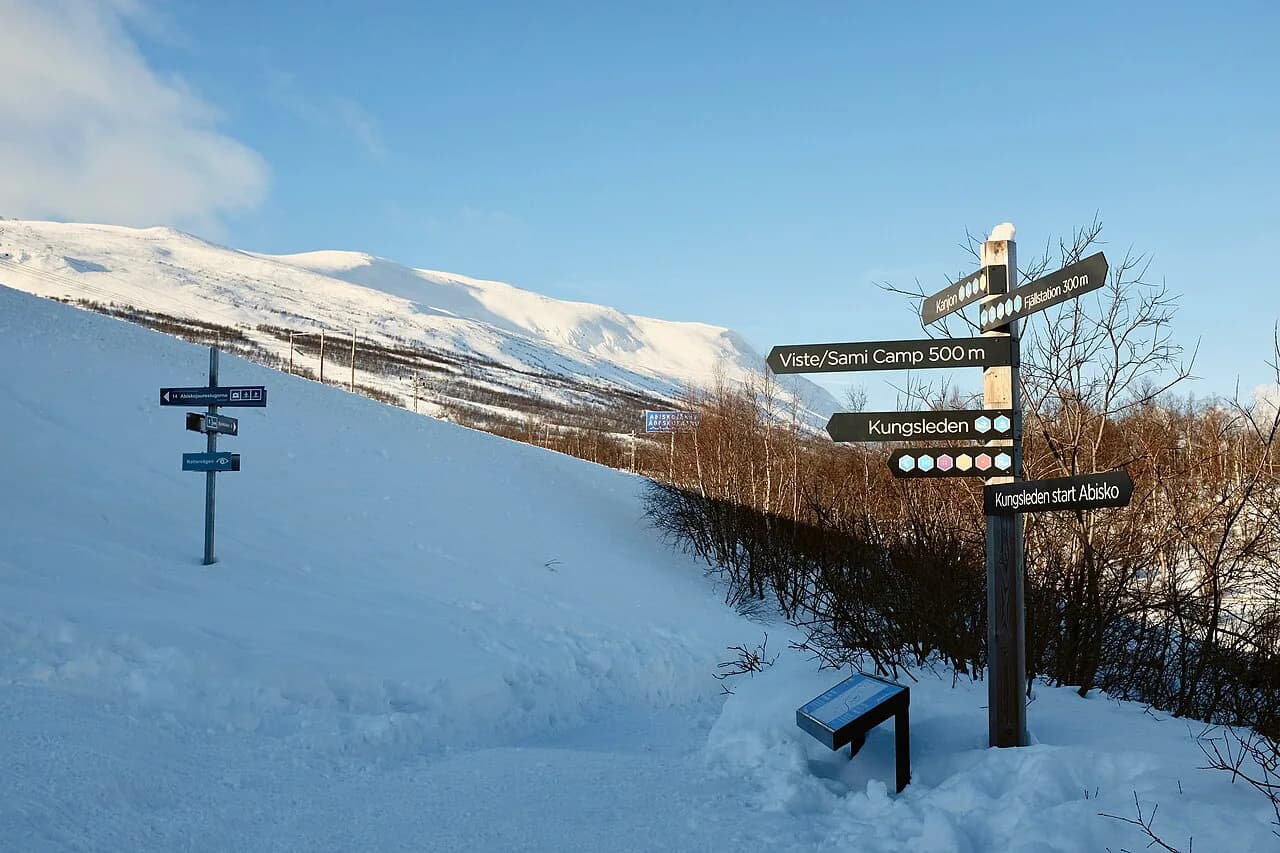
The easiest viewing is the national park itself, which begins a short walk from the railway station and the main lodging. Trails run along the lake and into the birch forest, so you can be away from village lights within minutes and find a dark patch of sky without arranging transport.
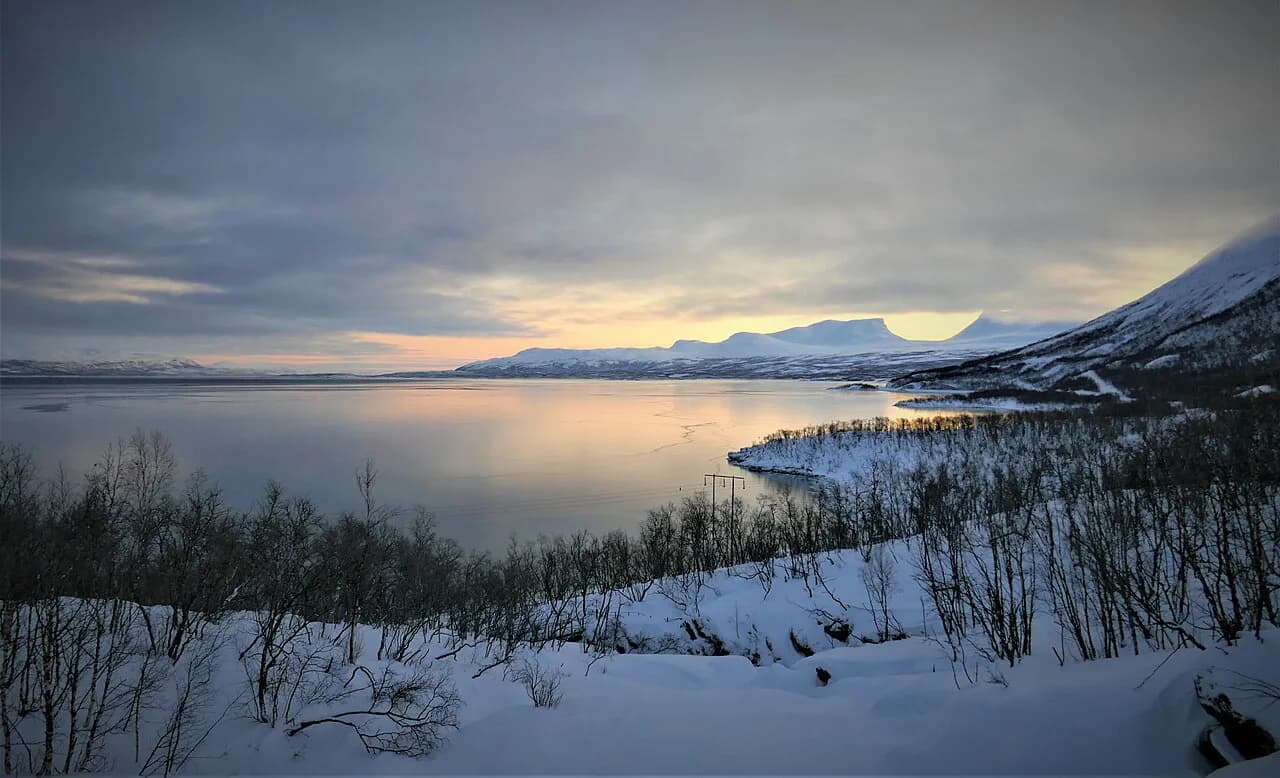
The lake itself, Lake Torneträsk, is a wide, open expanse beside the park, and its frozen surface in midwinter gives an uninterrupted view of the northern sky. Standing on the ice away from shore lights is one of the simplest dark-sky options in the area, though you should follow marked routes and local advice about ice conditions.
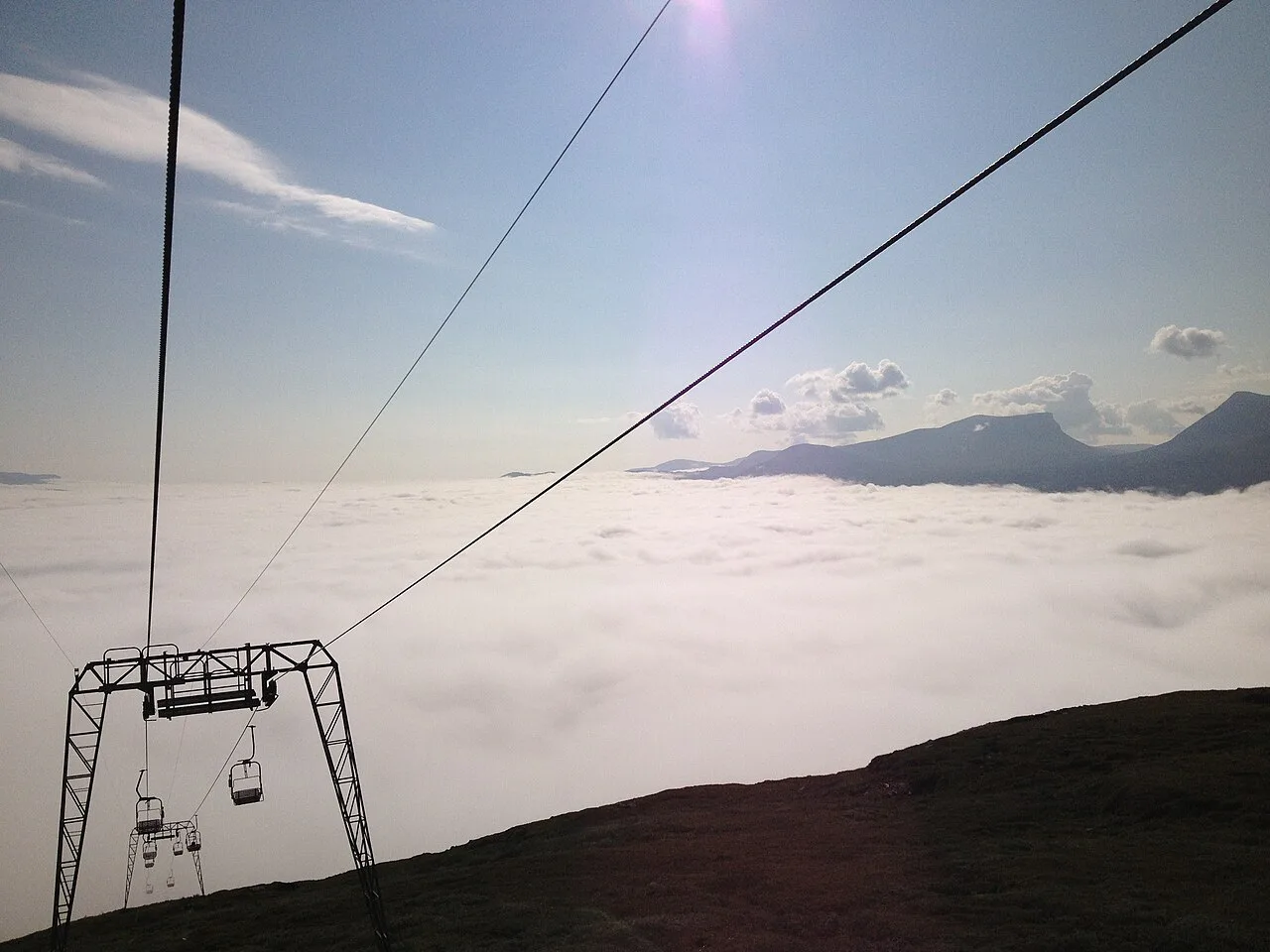
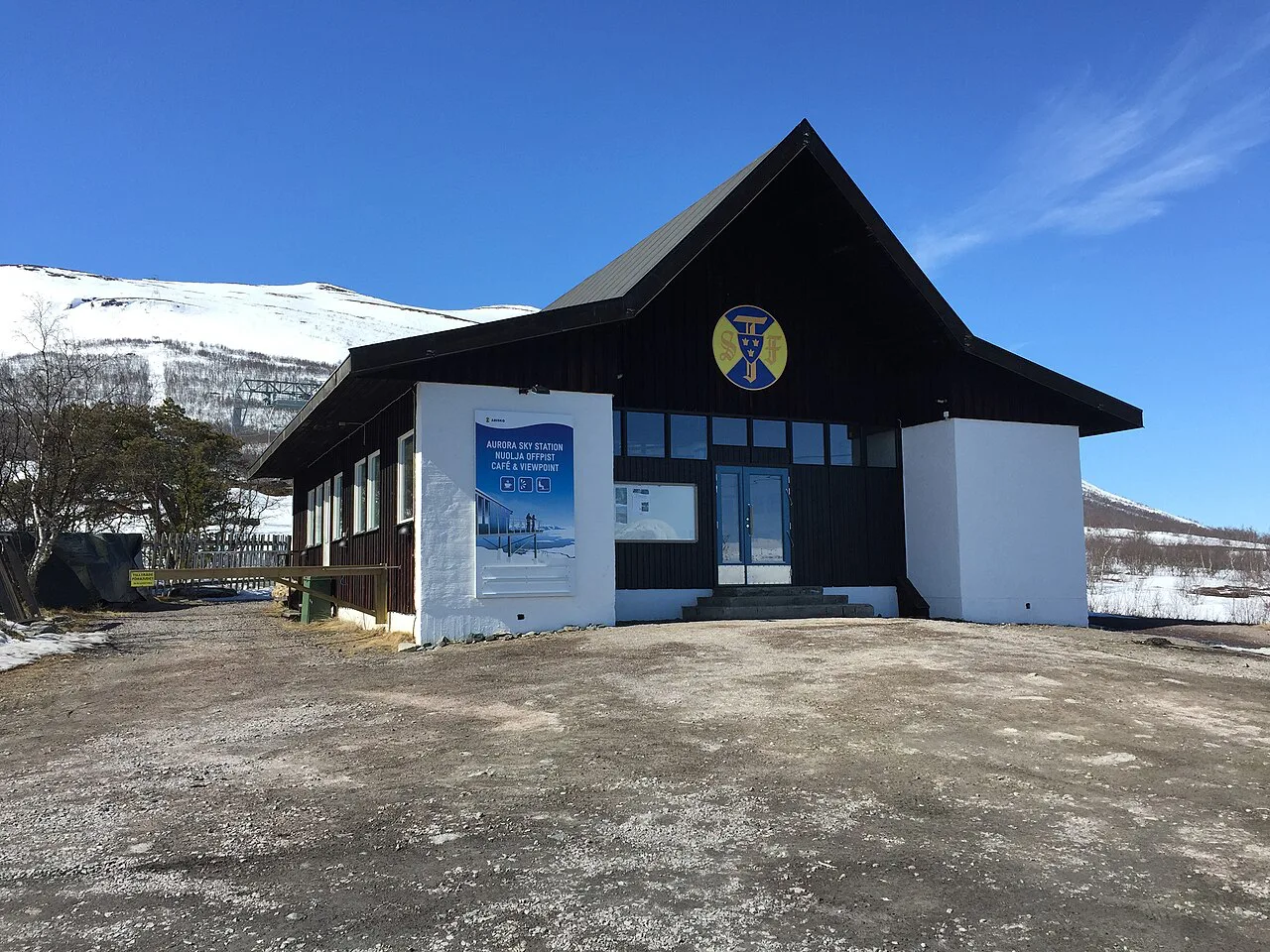
Above the village, the ski lift up to the Aurora Sky Station on Mount Nuolja is the classic high-altitude option, taking you above much of the valley cloud and light. It is a very different night out from a walk in the park: a planned excursion with a fixed lift schedule rather than something you can improvise at midnight.
Cloud moves, and so should you. A patch of clear sky can open over the lake while the village sits under cloud, or the reverse. Give yourself a couple of vantage points within walking distance, check the sky before committing to a spot, and be willing to walk ten minutes to a darker stretch of shore.
Self-guided chasing from Abisko versus booking a small-group night tour
Abisko is one of the better Arctic bases for doing the aurora on your own. The park, the lake shore and the trails are close to the accommodation, there is little light pollution, and you do not need a vehicle to reach dark sky. If you are comfortable reading a cloud forecast and standing around in the cold, a self-guided night costs nothing beyond your time.
A tour buys you local knowledge and mobility. Operators can drive to a different valley when cloud settles over Abisko, and they handle the navigation, the waiting and the warmth. Listed products for the national park include night tours run in small groups of no more than eight people, which keeps the experience quiet and the guide accessible.
The trade-off is cost and fixed timing against flexibility. A tour commits you to someone else's schedule and route, while self-guided chasing commits you to your own judgment and your own transport. Many travelers do both: a tour on the first night to learn the terrain, then independent walks once they know where the dark spots are.
Small-group aurora tours: group sizes, inclusions and how a night is run
Night tours from Abisko generally follow the same rhythm. You meet in the evening, get driven or walked to a viewing area, and wait with hot drinks while the guide watches the sky and the cloud forecast. When the aurora appears, the guide helps with camera settings, and many tours include photographs of the night.
Group size is the clearest way to tell products apart. A small-group format, such as the eight-person maximum on national park night tours, means less crowding at a viewpoint and more attention from the guide, which matters when you are asking for help with a camera in the dark. Larger coach-based tours cost less per person but move more slowly and give you less flexibility.
Check what a tour includes before booking: transport from your accommodation, thermal suits and boots, hot drinks, tripod use and photography are the usual variables, and not every product bundles them. Where operators lend thermal suits, you can travel lighter, but you still need your own warm base layers for the walk to the meeting point.
Duration and departure time shift across the season with the darkness. A December tour can start early in the evening, while a September or March departure may run late into the night. Confirm the meeting point and pickup arrangement when you book, and keep your evening free rather than scheduling a dinner that runs into departure.
Where to stay in Abisko
Accommodation clusters in two areas: around the railway station and visitor centre at the national park entrance, and in the village itself. Staying near the park puts the trails and the lake within a short walk, which is the main reason to choose it if you plan to chase the aurora on foot.
The STF Abisko Turiststation is the best-known base at the park entrance, with a range of room types, a restaurant and direct access to the trail network. Its position makes it a practical choice for travelers arriving by train and for anyone who wants to step out of the door and be in dark sky within minutes.
Smaller lodges and guesthouses, including the Abisko Mountain Lodge, offer a quieter, more informal stay with meals on site and easy access to the park. Cabins and self-catering options suit longer stays, when you want the flexibility to cook and to head out at any hour without depending on a hotel schedule.
Whichever you choose, ask about two things: how far the walk is to unlit ground, and whether the property has somewhere warm to wait indoors between aurora checks. A lodge a few minutes from the trailhead is worth more than a plusher room in a lit-up cluster, and a warm lobby makes a long night far more comfortable.
Getting to Abisko in winter
Most travelers fly into Kiruna airport and transfer from there, a journey of roughly one hour to Abisko by road. The same road continues to the ICEHOTEL in Jukkasjärvi, about 1 hour 30 minutes from Abisko, which makes it easy to combine the two in one trip.
The railway is the other main option, with the station sitting beside the national park entrance and the main lodging. Arriving by train removes the need for a car and puts you within walking distance of both the trails and the lake shore, which is a real advantage for a short aurora-focused stay.
Winter road conditions can slow transfers, so build some slack into arrival days rather than booking a tight connection to a night tour. If you are driving yourself, check road conditions with the Swedish road authority before setting out, and allow more time than a summer map would suggest.
How many nights to allow for a fair chance of clear skies
No one can promise a sighting on a given night, because the aurora depends on solar activity and on cloud that moves independently of any forecast. What you can control is how many nights you give yourself. Three nights is the practical minimum for a fair chance of at least one clear, active night, and four or five materially improves the odds without requiring you to do anything differently.
Think in terms of a buffer. If your first night is cloudy, you still have two more attempts; if you book a single night and the cloud sits low over the valley, you go home without a display. The rain-shadow effect that makes Abisko attractive does not eliminate cloud, it just tilts the odds, so treat each night as an independent attempt.
A sensible structure is to book a tour for your first full night, when you are still learning the area, and keep the remaining nights free for independent walks to the lake or the park. That way a cloudy first night does not waste your trip, and a clear one gives you the confidence to go out alone afterwards.
Reading forecasts and Kp values
Aurora forecasts combine two things: the expected level of geomagnetic activity, often expressed as a Kp value, and the cloud forecast for your location. Kp is guidance only, an indicator of how far south the aurora might reach, not a promise of what you will see overhead. A high Kp under thick cloud gives you nothing, while a modest Kp under a clear sky can produce a memorable display.
In practice, cloud is the factor you can act on. Check the cloud forecast for the valley and the surrounding area in the afternoon, decide whether to stay near the park or move to a different viewpoint, and keep an eye on the sky after dark. Abisko's live camera, where one is available, lets you see conditions in the valley before you commit to a night out.
Give your eyes time to adapt, and remember that cameras pick up colour and structure the eye cannot. A faint white arc overhead can become a green band on a long exposure. If you are photographing, a tripod and a wide, fast lens matter more than a high Kp number.
Combining Abisko with Kiruna, ICEHOTEL and other Swedish Lapland bases
Abisko works well as one leg of a longer Swedish Lapland trip. Kiruna, about an hour away by road, is the natural arrival hub and a base for its own activities, while the ICEHOTEL at Jukkasjärvi adds an art-and-ice overnight roughly 1 hour 30 minutes from Abisko.
Other Lapland bases offer different trade-offs: more amenities and family activities, or a different balance of coast and inland weather. If aurora is the priority, keep your Abisko nights intact and treat the rest as additions rather than substitutes, since the valley's clear-sky reputation is the reason to be here.
For a wider view of the region's aurora options, including how Abisko compares with other Swedish bases and with destinations in Finland and Iceland, it helps to read around before committing. For a broader picture of northern lights in sweden, that comparison is worth making. The key questions are always the same: latitude, dark hours, cloud patterns and how many nights you can give the sky. If you plan to shoot what you see, our guide to photographing the northern lights in Europe covers camera versus phone.
Plan Your Abisko Aurora Trip
Abisko gives you three things that matter for aurora travel: a latitude inside the auroral oval, long dark nights from September to the end of March, and a mountain valley that often keeps cloud away. Add low light pollution and a national park within walking distance of the station, and you have one of the most straightforward aurora bases in Swedish Lapland.
Book at least three nights, put a small-group tour on your first full night and keep the rest free for walks to the lake and the park. Check the cloud forecast each afternoon, treat Kp as a hint rather than a verdict, and let the sky decide your evenings rather than the other way around.
Explore more Abisko northern lights guides
- Abisko Mountain Lodge
- Abisko National Park in Winter
- Aurora Sky Station
- STF Abisko Turiststation
- Björkliden in Winter
- Lights Over Lapland
- Abisko Aurora Forecast
- Abisko Husky Safari
- Abisko in December
- Abisko in February
- Abisko in January
- Abisko in March
- Abisko in November
- Abisko in October
- Abisko in September
- Abisko in Winter
- Abisko Northern Lights Tours
- Abisko vs Kiruna
- Christmas in Abisko
- Glass Igloos and Aurora Cabins for an Abisko Northern Lights Trip
- Ice Fishing in Abisko
- Polar Night in Abisko
- Saunas in Abisko
- Where to Stay in Abisko for the Northern Lights
Frequently Asked Questions
Is Abisko inside the Arctic Circle?
Yes. Abisko sits well inside the Arctic Circle in Swedish Lapland, which is why it has dark winter nights and a good position within the auroral oval. That latitude, combined with the valley's rain-shadow climate and low light pollution, is what gives the area its reputation for aurora watching.
When is the best time to see the northern lights in Abisko?
The aurora season runs from September to the end of March, when nights are dark enough for a display. Midwinter around the solstice offers the longest hours of darkness, while September and late March give you more daylight for other activities alongside your night-time watching.
Can you see the northern lights in Abisko without a tour?
Yes. The national park begins a short walk from the railway station and the main lodging, and the lake shore gives open views of the northern sky away from village lights. A tour adds mobility and local knowledge when cloud settles over the valley, but it is not essential.
How many nights should you stay in Abisko for the aurora?
Three nights is a sensible minimum, and four or five gives you a better buffer against cloudy nights. Each night is an independent attempt, so more nights mean more chances of at least one clear, active sky.
How do you get to Abisko in winter?
Most travelers fly to Kiruna and transfer by road, a journey of roughly one hour, or arrive by train to the station beside the national park entrance. The ICEHOTEL at Jukkasjärvi is about 1 hour 30 minutes from Abisko by road if you want to combine the two.
Is Abisko better than other Arctic bases for the northern lights?
Abisko's advantage is its mountain rain shadow, which keeps much of the cloud away, plus minimal light pollution in the national park. Other bases offer more amenities or a coastal climate, so the right choice depends on whether clear skies or convenience matters more to you.
What time do you go out to see the northern lights in Abisko?
The aurora is only visible after dark, so timing follows the season. In midwinter you can be out soon after an early dinner, while in September and March the window sits later and may run into the small hours. Tours adjust their departure times accordingly.
What Kp value do you need to see the aurora in Abisko?
Kp is guidance only. At Abisko's latitude even modest activity can produce an overhead display if the sky is clear, while a high Kp under cloud gives you nothing. Check the cloud forecast first and treat Kp as an indicator of how far south the aurora might reach.
Sources
Notes for your Arctic winter trip
Optional updates to our northern lights guides.
You might also like
Continue reading
More guides you'll find useful