Pyhä-Luosto National Park: Luosto Winter Guide
Plan a winter trip to Pyhä-Luosto National Park from Luosto: dark fell tops for aurora watching, snowshoe routes and how many nights to allow.
On this page
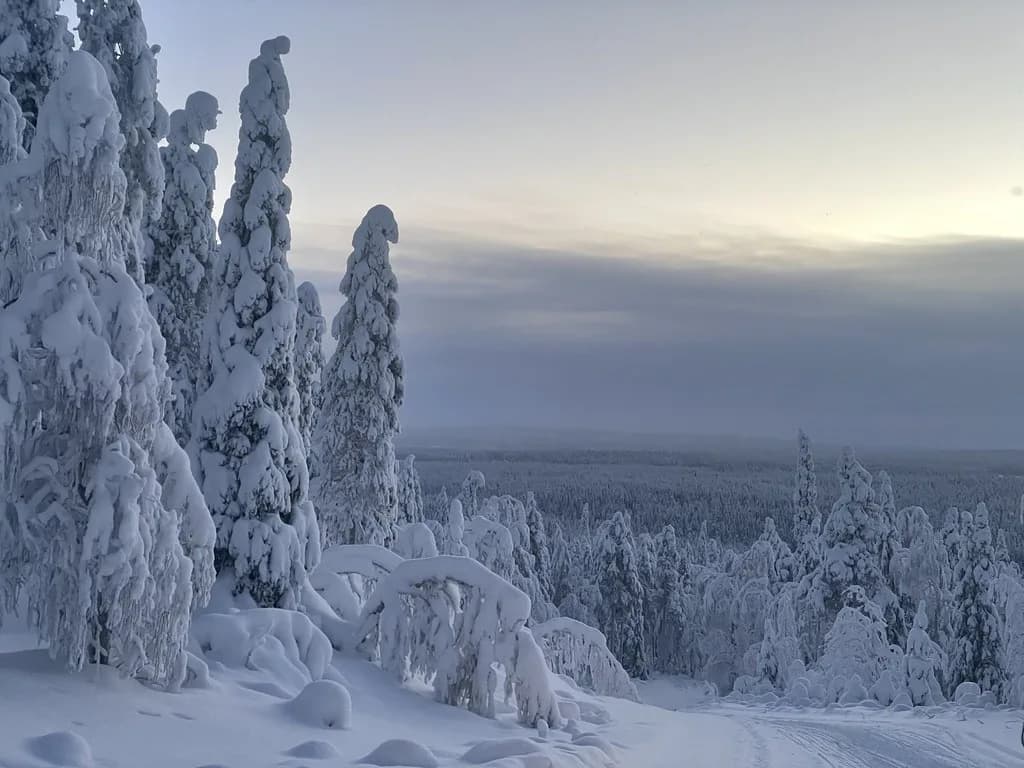
Pyhä-Luosto National Park gives a winter traveler something rare in Lapland: genuinely dark, treeless fell tops reachable from two small resort villages, Luosto and Pyhä, without a long expedition. The park sits in central Lapland, roughly 90 minutes north of Rovaniemi, and its trails, ski tracks and snowshoe routes give you several ways out onto open ridges after nightfall.
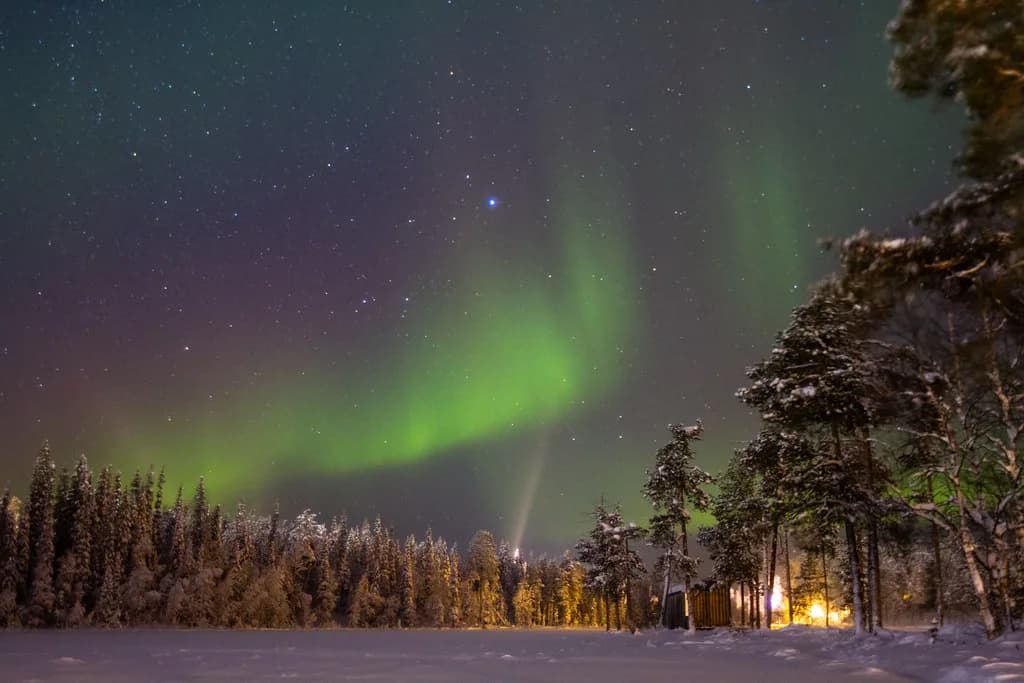
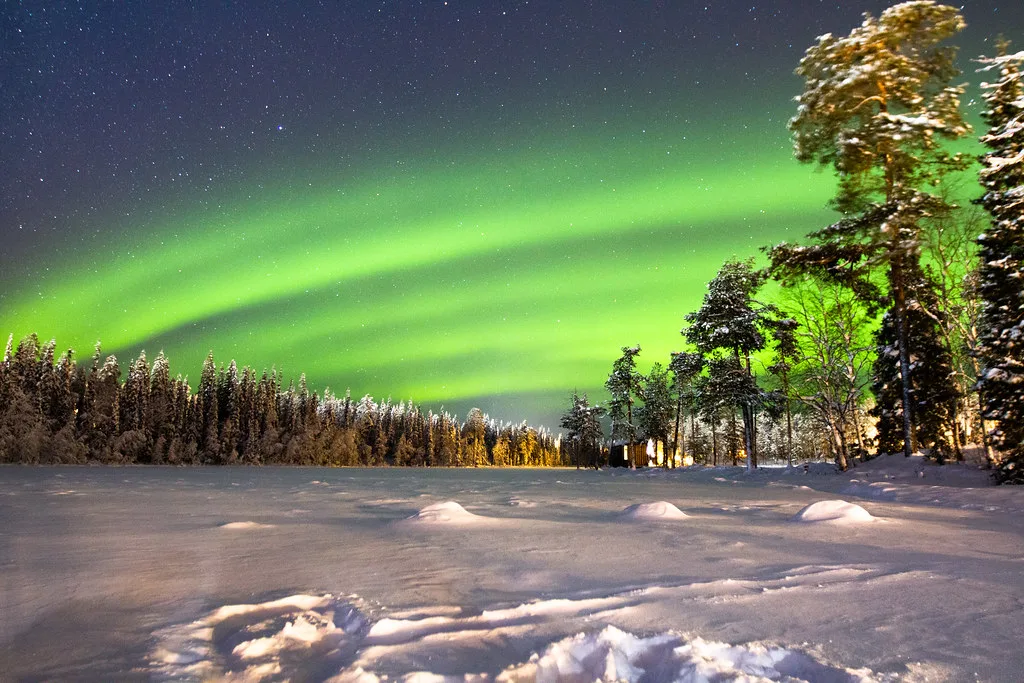
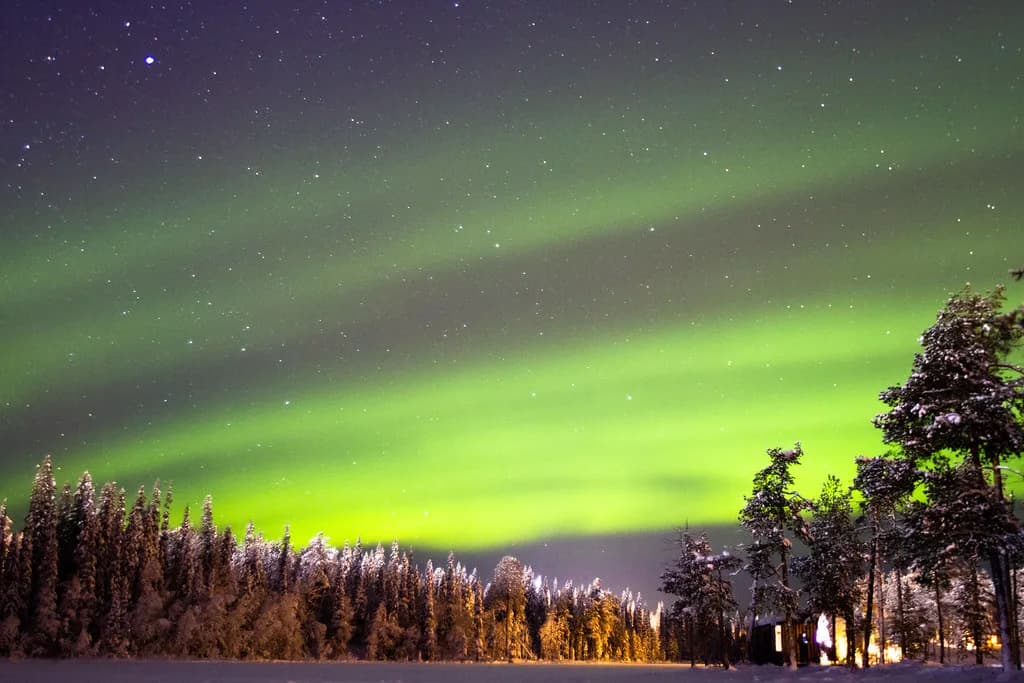
This is aurora country by geometry rather than guarantee. The fells rise above the surrounding forest, the villages are small enough that light pollution thins quickly once you climb, and a clear, cold night away from lamps is what actually improves your odds. Everything below is framed around conditions, not promises.
Where the park sits and how to reach it from Luosto, Pyhä and Rovaniemi
The park lies between the resort villages of Luosto and Pyhä in central Lapland, about 90 minutes north of Rovaniemi by road. Luosto sits at the western side near Ukko-Luosto, while Pyhä sits at the eastern side below Pyhätunturi, so your choice of base decides which fell tops you reach first.
You do not need a car. Trains and flights arrive at Rovaniemi and Kemijärvi, and a bus service runs from both towns to Pyhä and Luosto daily, with a bus line also connecting the two villages between the fells. Timetables and information sit with Matkahuolto, so check departure times there before you fix a night out on the fells.
Drivers can leave a car in Pyhä, in Luosto or at the parking places between the fells, which makes a self-guided evening flexible: you can drive to a trailhead, walk in, and return without waiting for a transfer. The trade-off is that winter road conditions and plowed parking are your responsibility, not an operator's.
Why the fells are dark enough for aurora watching
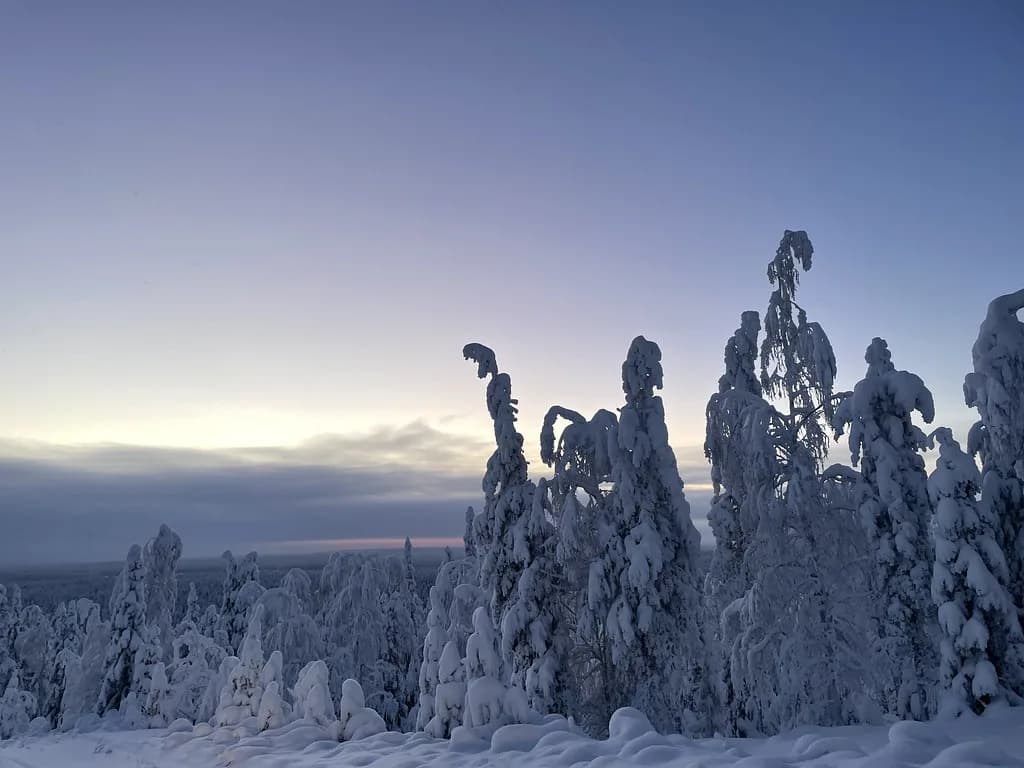
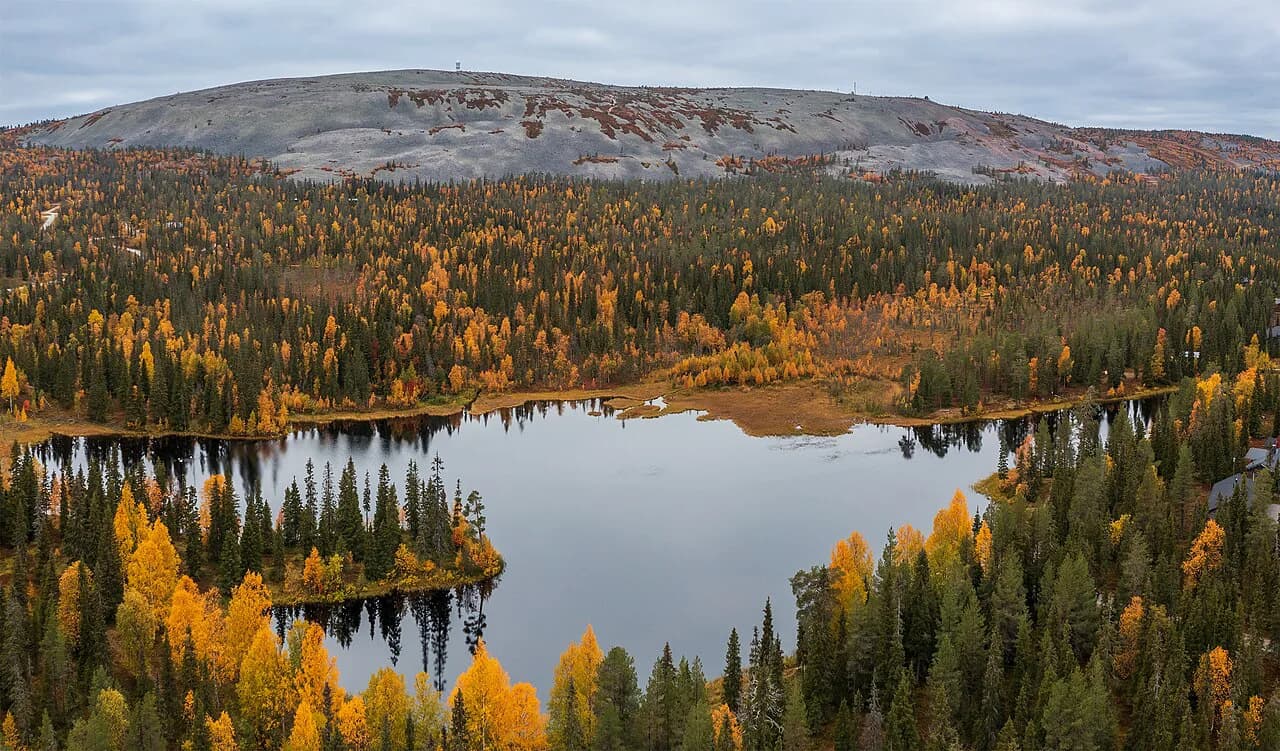
Pyhä-Luosto is the kingdom of two giant fells: Ukko-Luosto dominating the landscape in the west and the ancient Pyhätunturi standing in the east, with other peaks such as Noitatunturi in the area. Those treeless tops give horizon-to-horizon sky, which is exactly what you want when the aurora is low on the northern horizon.
The villages are small ski resorts rather than cities, so lamp glow drops off fast as you climb. The park's own trails are well marked and the dark fells are described as excellent aurora viewing away from light pollution, with marked ski and snowshoe routes for turning a light show into a proper winter night out.
Cloud is the variable you cannot control here. A fell top above a low cloud layer can be clear while the village below is grey, but the same open ridge is exposed when wind and snow move in; that exposure is the price of the view.
When the aurora season runs and what winter days look like
Aurora watching needs dark nights, and in this part of Lapland that means roughly late August and September through to early April, when the sun sets far enough below the horizon. Midwinter delivers the longest nights but also the shortest days, so you trade daytime activity time for more dark hours.
Winter days here shrink to just a few hours of dim light, which limits long hikes but opens the chance of northern lights, and the park is at its quietest for walkers outside the July and August hiking peak. Plan your outdoor miles for the middle of the day and keep the dark hours for the fells.
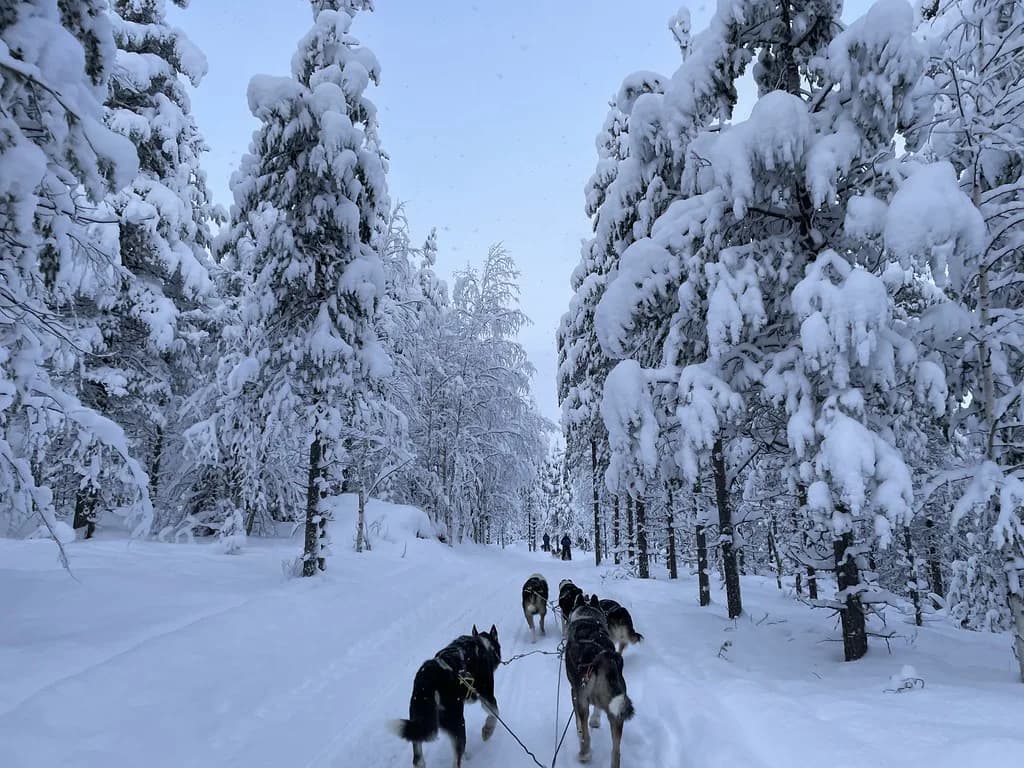
Snowshoers and fatbikers increasingly use the park in winter, and good marked routes with fireplaces support both short day trips and longer outings. Icy stretches are common on the busier trails, so traction matters more than distance on a cold morning.
Winter temperatures and daylight by month
Typical winter temperatures in Pyhä-Luosto run from about -10°C to -20°C, cold enough that a clear night is also a serious cold night. Treat those as normal ranges rather than forecasts and expect them to shift with each weather system.
The cold is the practical constraint on aurora watching: you may stand still for an hour or more on an exposed fell top, so the difference between a comfortable night and a short one is preparation, not luck. Operators that run night tours typically lend thermal gear, so ask what is included when you book.
For a realistic picture of a given week, including cloud and temperature, use a forecast for Luosto or Pyhä rather than a seasonal average. That is also the sensible way to pick which night to walk up onto the fells.
Where to watch the aurora near Luosto and Pyhä
From Luosto, the natural target is the open ground around Ukko-Luosto; the 6.5 km route circles the fell and touches the summit, making it a workable winter walk with a fell-top viewpoint at the end. From Pyhä, trails climb toward Pyhätunturi and the Isokuru rim, giving a second set of dark, elevated viewpoints.
Once you leave the marked trail, navigation in the dark on snow is a different sport: the fells are open but featureless in poor visibility. On a cloudy or windy night, a lower forest clearing near the trailhead is the safer choice and still far darker than the village.
Keep Kp values in perspective. They describe global geomagnetic activity as guidance, not a promise for a specific hour over Luosto, and a modest reading can still produce a visible arc if the sky is clear and you are away from lamps.
Ukko-Luosto summit and lookout
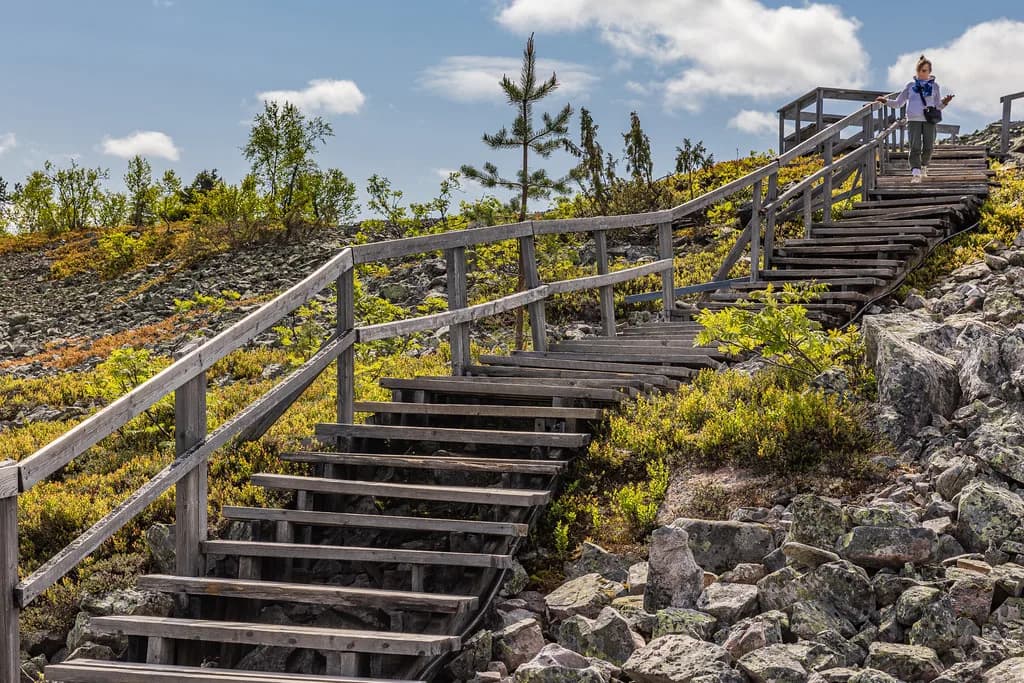
Ukko-Luosto is the western anchor of the park and the most straightforward fell objective from Luosto. A short climb leads to a wooden lookout tower with sweeping views over the fells and forests, and the loop around the fell covers about 6.5 km.
The tower is the point of the walk: it lifts you above the treeline for a wide view that is useful by day for spotting reindeer and by night for scanning the northern sky. Go early in the short daylight if you want the view, or late if you want darkness, but not both on the same winter day.
Isokuru gorge and its restricted zone
Isokuru is one of the most powerful landscapes in Lapland, a steep-sided gorge where the trail drops into a narrow cleft with sheer walls. It is the standout first-time sight in the park and the reason many visitors walk the Karhujuomalampi circle, about 10 km, which includes the gorge and the picturesque Pyhäkastelampi.
The whole Isokuru area is a restricted zone of the national park, and leaving the marked route there is prohibited. In winter that rule matters more than in summer, because snow hides the edges and the gully walls, so keep to the marked line rather than improvising a shortcut.
For a longer winter day, the Noitatunturi circle runs about 15 km across Isokuru, the Pyhäkaste waterfall and Karhunjuomalampi, and it is a demanding route rather than a casual stroll. Save it for a day with a stable forecast and enough daylight to finish comfortably.
Lampivaara amethyst mine
Lampivaara, on the slope of the fell above Luosto, is one of the few places in Europe where you can hunt for amethysts by hand. Guided visits explain the geology and let you try panning and digging, which makes a genuinely different half-day from the ski tracks.
It pairs well with a winter activity day, and third-party listings have packaged it with an electric fatbike ride up and back, a roughly three-hour outing listed from about 194 euros per person at the time of that listing. Confirm the current price and whether transport and gear are included when you reserve.
Snowshoe, ski and fatbike routes in the park
Winter routes in Pyhä-Luosto are graded from gentle to demanding. The Tunturiaapa nature trail, a 5-7 km circle across fell and marsh, includes a bird-watching tower, while the Karhujuomalampi circle of about 10 km takes in Isokuru and Pyhäkastelampi.
For a bigger objective, the through-route across the park runs about 28.6 miles with roughly 3,667 ft of elevation gain, taking most walkers around 12.5 to 13.5 hours. That is a summer-scale undertaking and not something to attempt in a few hours of winter daylight without a plan.
Guided snowshoeing out of Pyhä-Luosto has been listed from about 70 euros per person for a two-hour outing, and a private snowshoe tour in Luosto with an outdoor meal from about 105 euros for three hours. Group sizes and equipment vary by listing, so read the inclusions before you choose.
Self-guided chasing versus a guided aurora night
Self-guided works well here because the trail network is marked and the villages are close to the dark fells. You choose the night, watch the cloud yourself, and walk or drive to a trailhead, which is cheaper and more flexible than a fixed departure.
A guided night adds local knowledge and transport, and photography-focused tours in the area have been listed at around 80 to 91 euros per person for about two hours. That is worth it if you want help with camera settings or a driver for a longer chase, and less so if you already know the trails.
Either way, the guide cannot control the sky. Ask where the tour goes when cloud sits low, whether it drives to another area, and how long you spend outside, because those answers tell you more about your odds than any promised sighting.
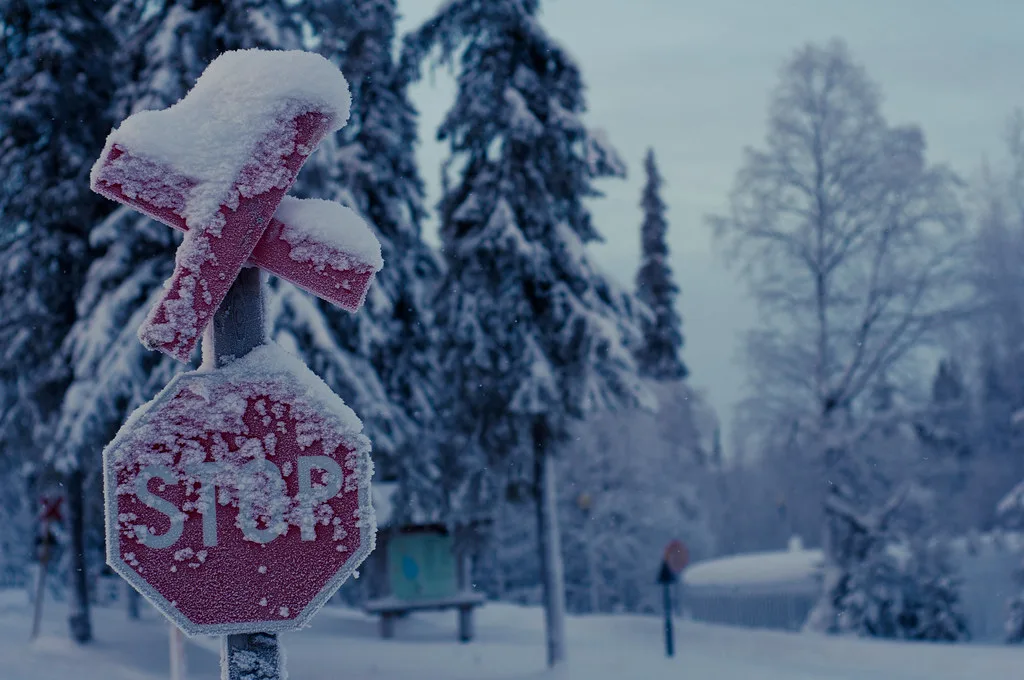
Nature Centre Naava and Torvisen maja cafe
At the base of Pyhätunturi, Nature Centre Naava has a lunch restaurant and a souvenir shop, and the surrounding Pyhä and Luosto area covers equipment rental, a reindeer farm, husky and snowmobile safaris and even ice climbing. It is the practical hub for a bad-weather day or for sorting gear before a night out.
Torvisen maja is a small cafe with no electricity or running water, and its appeal is exactly that quiet, simple atmosphere on the trail. Check its winter opening with the park or the cafe itself before you build a day around it.
Cabins, hotels and where to base yourself
Luosto and Pyhä are both small resort villages with cabins, hostels and hotels, and camping is possible with free lean-tos and basic huts in the park itself. Commercial cabins and ski hotels cost more and feel resort-like, so decide whether you want trailhead proximity or village comfort.
Cabin rentals are pitched as a base for hikers, with cottages around Pyhätunturi and Luosto letting you walk out early or return late without a drive. For a shorter aurora trip, a heated cabin near the trailhead is often the better value than a hotel night in the village center.
If you want a hotel base in Luosto with easy access to the fell trails, Santa's Hotel Aurora in Luosto is the obvious central choice, and glass igloos appeal to travelers who want to watch from a warm bed rather than a ridge.
How many nights to plan for a fair chance of clear skies
Cloud, not darkness, is usually what spoils a night, and no forecast is reliable far ahead. Give yourself at least three nights in Luosto or Pyhä in aurora season so a grey or snowy evening does not use up your whole trip, and add more if the aurora is your main reason for coming.
Spend those nights in different ways: one on a guided tour, one self-guided from the village, and one on a longer walk toward Ukko-Luosto or the Isokuru rim. That mix keeps you moving to clearer ground rather than waiting in the same spot.
If you have only two nights, treat the aurora as a bonus and plan daytime snowshoeing, the amethyst mine or a sauna instead. You will enjoy the trip more, and a clear sky becomes a gift rather than the measure of the whole journey.
Extending the Trip to Pyhä and Rovaniemi
Based in Luosto, Pyhä is a short hop by the bus that runs between the fells, and it opens up the eastern trails, Isokuru and Nature Centre Naava. Splitting two nights in each village gives you two different fell horizons without a long transfer.
Rovaniemi, about 90 minutes south, is the natural arrival and departure point for flights and trains, and its airport and rail links make it the practical last night before an early flight. If you would rather spend that final night chasing the aurora, our guide to the northern lights in Rovaniemi covers where to go and stay. Use the Finnish Lapland forecast tools to pick your final night rather than leaving the best chance to the drive out.
Frequently Asked Questions
Can you see the northern lights in Pyhä-Luosto National Park?
Yes, when the sky is clear and geomagnetic activity is high enough. The park's treeless fell tops and small resort villages mean you can reach genuinely dark sky quickly, and marked winter ski and snowshoe routes let you walk away from the lamps. Cloud is the main obstacle, so plan several nights and stay flexible.
How do you get to Pyhä-Luosto National Park without a car?
Fly or take the train to Rovaniemi or Kemijärvi, then use the daily bus service to Pyhä and Luosto. A bus line also connects the two villages between the fells, and timetables and booking are handled by Matkahuolto. Once in the village, the trailheads are walkable.
How cold is Pyhä-Luosto in winter?
Typical winter temperatures run from roughly -10°C to -20°C, so you should expect serious cold on any clear night. Treat those figures as normal ranges rather than forecasts, and check a local forecast for the week you travel before deciding how long to spend outside after dark.
How long is the Ukko-Luosto trail?
The route around Ukko-Luosto is about 6.5 km and includes a summit with a wooden lookout tower. It is the most straightforward fell objective from Luosto and a reasonable winter walk when conditions are stable, though ice on the trail can slow you down.
Is the Isokuru gorge restricted?
Yes. The whole Isokuru area is a restricted zone of the national park, and leaving the marked route there is prohibited. In winter this matters more because snow hides the edges and the gully walls, so stay on the marked line rather than taking a shortcut.
Is Luosto a good base for a winter aurora trip?
Luosto is a compact resort village at the western edge of the park, close to Ukko-Luosto and its dark open trails. It suits travelers who want a short walk from village to fell, with cabins and hotels nearby. Pyhä is the alternative base for the eastern trails and Isokuru.
How many nights do you need for a chance of aurora in Pyhä-Luosto?
Allow at least three nights in aurora season so a cloudy or snowy evening does not use up your trip. Mix a guided tour with self-guided walks to different trailheads, and keep in mind that no operator can promise a sighting because cloud and solar activity decide the outcome.
Sources
Notes for your Arctic winter trip
Optional updates to our northern lights guides.
You might also like
Continue reading
More guides you'll find useful