Luosto Aurora Forecast: How to Read It and When to Go Out
Learn how to read aurora and cloud forecasts for Luosto, Finland, which metrics matter at this latitude, and how many nights to plan for clear skies.
On this page
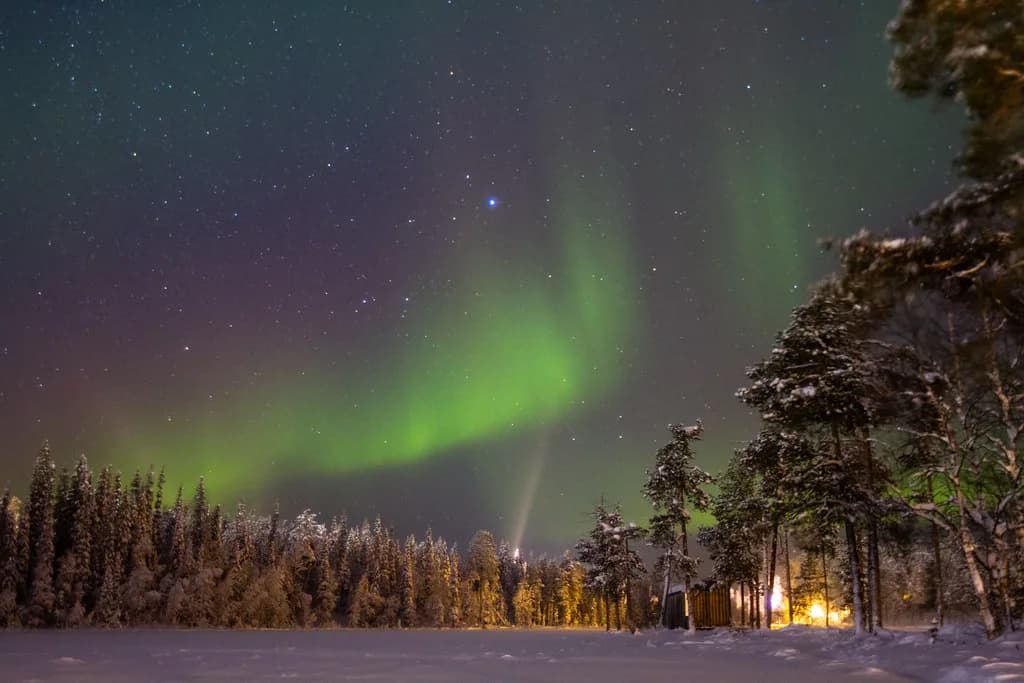
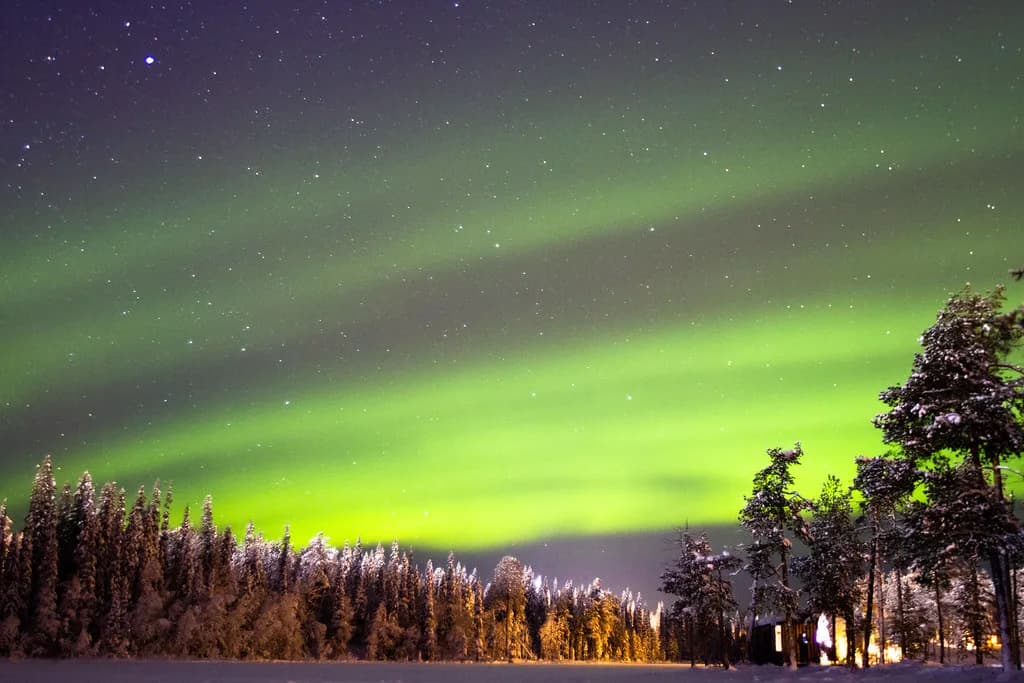
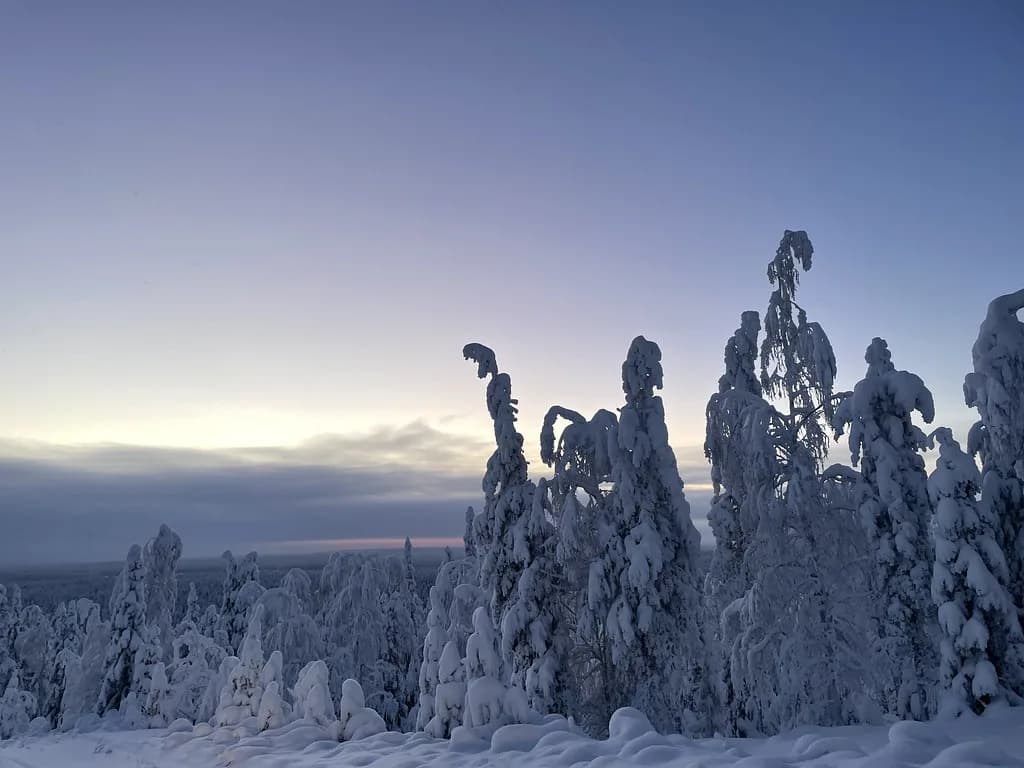
Luosto is a small fell resort in Finnish Lapland, wrapped by forest and sitting close enough to the auroral oval that the northern lights are a regular feature of dark, clear winter nights rather than a rare event. It suits travelers who want a quiet base with fell walks, snow and a handful of aurora-focused accommodations instead of a busy city. The skill worth learning before you go is reading the forecast correctly for this latitude.
A forecast for Luosto is really two forecasts stitched together: space weather that tells you how active the aurora is, and local weather that tells you whether the sky above the fells is clear. Get either half wrong and you stay indoors on a good night, or stand outside under cloud. The rest of this guide shows how to line both up.
Why Luosto sits inside the auroral oval
The auroral oval is a ring of enhanced aurora around the magnetic pole, and the fells of Finnish Lapland sit beneath it for much of the night during the dark season. Finnish Lapland locations in forecast tables carry magnetic latitudes in the mid-60s, which is why activity can appear here on nights when southern Finland sees nothing. Luosto's neighbors in those tables include Sodankylä, roughly 64.8° magnetic latitude, and Levi at about 65.2°.
Practically, that position means you are not waiting for a geomagnetic storm to push the lights south to you. You are standing under the oval, and modest stirrings in the solar wind can be enough. That is the single most useful mental shift for a traveler arriving from further south: the question is rarely whether the aurora exists overhead, but whether cloud lets you see it.
When the aurora season runs
Aurora viewing in Finland is framed around the dark months, and forecast guides commonly put the season at September through March, with the equinox periods around September and March noted for activity.
For trip planning, the shoulder months are the interesting ones. September and early October still have open fells, unfrozen lakes and a reasonable amount of daylight for other activities, while the nights are long enough for aurora. Late February and March bring longer daylight and often more stable weather, with deep snow still on the ground. Midwinter around December and January gives you the most darkness and the shortest days, which is a gift for aurora viewing and a constraint for everything else.
The forecast metrics that matter at Luosto's latitude
Forecast tools split into two families of metrics. Space-weather metrics describe what the aurora is doing: aurora strength, the Bz component of the solar wind, solar speed and the Kp index. Local metrics describe whether you can see it: cloud cover, moonlight and darkness. Run both, and treat them as equal partners.
The Kp index is a global measure of how far south the aurora reaches. That makes it a useful marker if you live further south, but less useful if you are already in the Arctic under the oval, where local measures carry more weight.
Bz is the sharpest short-term signal. When the interplanetary magnetic field points south, it couples efficiently with Earth's magnetic shield and the aurora brightens; a negative Bz reading on a live feed is the moment to put your boots on. Aurora strength gives a brightness reading tied to your location, refreshed minute by minute in the better apps, and solar speed hints at the overall energy arriving from the sun.
Kp values against a high magnetic latitude
Because Luosto is near the oval, you do not need a high Kp to see aurora overhead. Forecast tables for Lapland destinations list modest Kp thresholds for northern places, while southern Finnish cities need considerably more activity. That ordering, not a specific number for Luosto, is the thing to remember: in Finnish Lapland, a quiet-looking Kp night can still deliver, and a busy Kp night can still be hidden by cloud. If you want to see how those Lapland thresholds stack up across the region, the Finnish Lapland aurora forecast guide explains reading them night by night.
Treat any Kp value as guidance rather than a gate. Watch Bz and local aurora strength instead when you are already in Luosto, and use Kp mainly to sense whether a wider storm might make the lights visible from further south than usual. A high Kp with heavy cloud is no better than a low Kp with a clear sky over the fells.
How to combine aurora and cloud forecasts on the night
The practical routine is to check space weather first, then cloud, then darkness, and only then decide to go out. If Bz is negative and local aurora strength is climbing, look at the cloud map for the Luosto area. If the cloud is broken or thinning, plan to be outside within the hour. If it is solid, wait and re-check rather than driving far in hope.
Cloud is the primary obstacle; thick cover can hide even a strong display, though bright aurora may show through thin gaps. Use a cloud map to watch how cover is moving rather than staring at a single snapshot, and note whether the forecast for your location is refreshed often.
Re-check on the hour rather than the day before. The most reliable forecast is the one issued close to the time you go out, since live space-weather readings measure what is actually arriving. Long-range outlooks are for choosing your travel dates; they are not a plan for a specific night.
Forecast services and real-time alerts covering Luosto and Pyhä
Visit Finland lists a realtime aurora alert service that names Rovaniemi, Levi, Luosto, Pyhä and Ranua as its coverage areas, and it reports intensity along with the alert. That makes it the most directly relevant alert channel for a stay in Luosto or neighboring Pyhä, and it is a sensible thing to enable before your first night.
For the underlying data, Finland-wide forecast pages list Lapland destinations including Sodankylä, Levi, Rovaniemi and Ylläs with live status and viewing hours, which is useful for seeing how activity is distributed across the region around Luosto. Pair that with a forecast app for live solar and cloud data built around real-time, 27-day and seasonal outlooks plus alerts.
Where the dark sky sits around Luosto and Pyhä
Light pollution inside the resort is low, but the practical dark-sky strategy is the same anywhere: put distance between yourself and any lit buildings. Finland forecast guidance suggests driving 15 to 30 km from city light pollution for the clearest sky, which in the Luosto area means heading toward the open fells and away from the hotel and village lights.
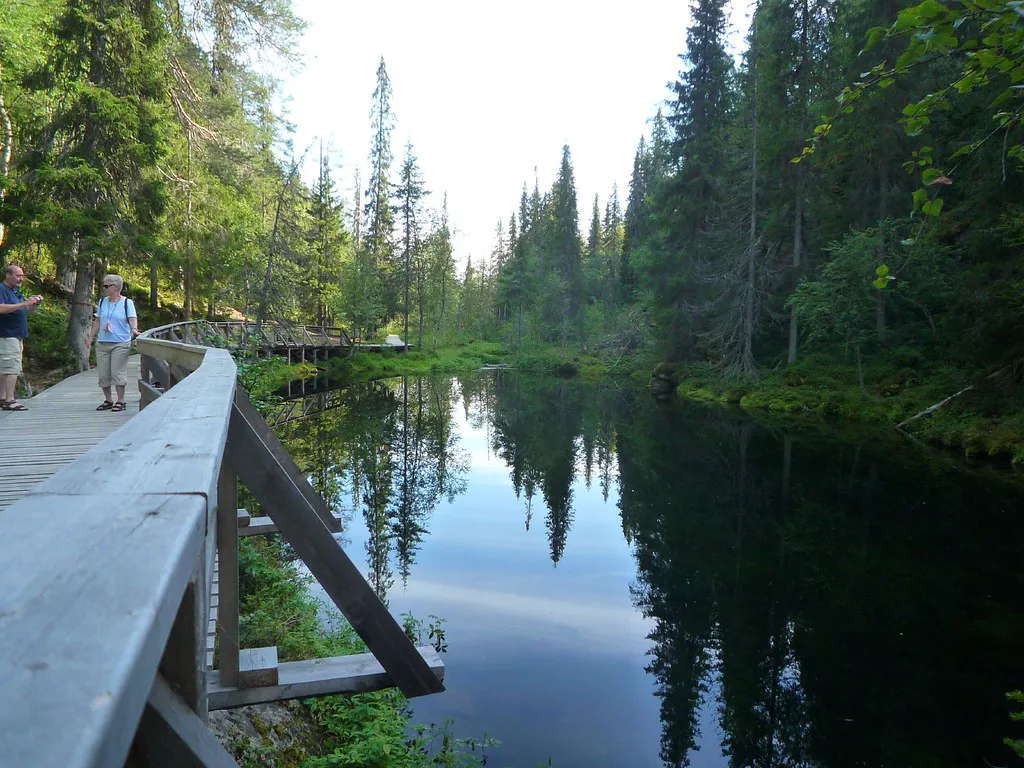
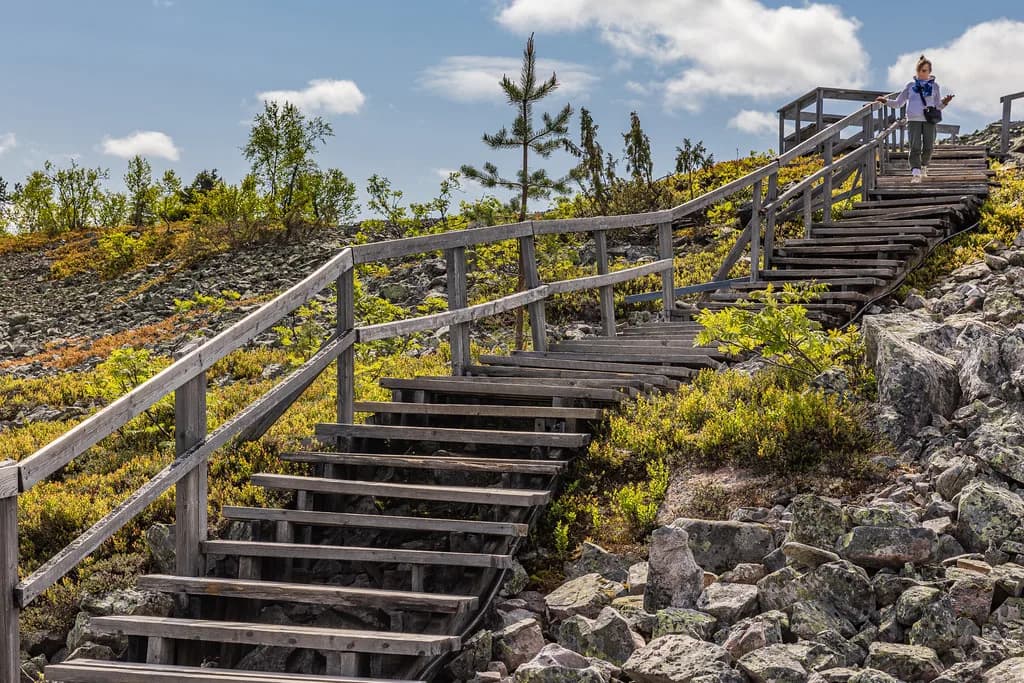
The fells themselves give you open horizons and snow that reflects light back up, which can brighten the foreground even when the sky is dim. A short snowshoe or ski out from the village can be enough on a clear night, but check the trail before dark and tell someone your plan. Much of the surrounding terrain falls inside Pyhä-Luosto National Park, where marked winter trails link the fell tops.
Self-guided chasing versus a guided night tour
Self-guided aurora watching suits travelers with a car and some tolerance for late nights. You can watch the forecast, decide at short notice, and stay put if the cloud sits over one fell but lifts over another. The trade-off is that you do all the reading and driving, and cloud can change while you are on the road.
A guided night tour removes that work: operators handle routing, timing and thermal suits, and often know which local spots clear first. In exchange, you go when and where the group goes, and a good forecast is still required. In Luosto, an operator-led night pairs well with a stay that keeps you close to the fells, which is where Santa's Hotel Aurora in Luosto sits as a base.
Glass igloos and aurora cabins split the difference: you stay warm and can glance up without a drive. Their appeal is real, but heat, condensation and interior lighting can interfere with the view, and you still need clear sky. If that style of accommodation is part of your plan, read up on glass igloos in Luosto before booking.
How many nights to plan for a fair chance of clear skies
Plan for several nights rather than one. Finnish aurora guidance suggests at least three to five nights, on the reasoning that modest activity occurs on many nights of the season, so a multi-night stay gives you more dark hours to match with clear sky.
In practice, a three-night stay gives you three independent chances, and the probability of at least one clear night rises quickly with each night added. Treat a cloudy first night as part of the plan, not a failure: spend it on the daytime activities you came for and keep the evenings flexible. Adding a night costs money and time, so decide based on how much aurora matters to your trip.
Moonlight, snow and the trade-offs of midwinter darkness
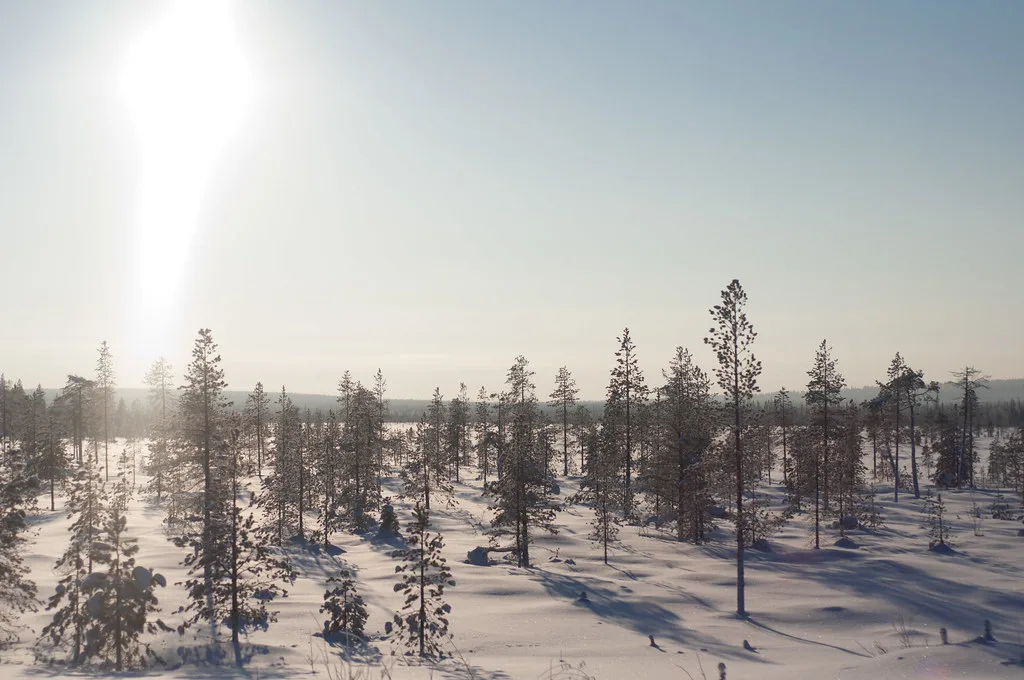
Moonlight is a genuine filter. A bright moon can wash out faint aurora even when activity is good, so check the moon phase for your dates and favor darker windows if aurora is the priority. The upside of midwinter is that there is no shortage of darkness: the nights are long, and you are not fighting a late sunset.
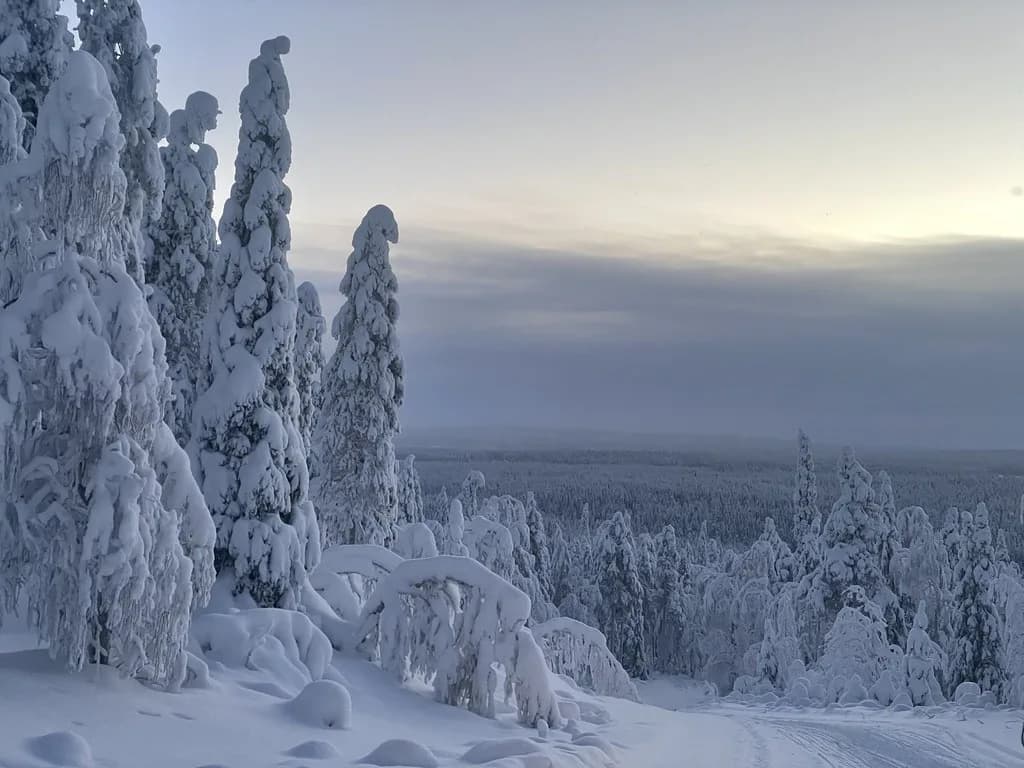
Snow and short days shape everything else. Deep snow reflects light and makes the fells feel brighter than the sky, and midwinter days are short enough that your waking hours are mostly twilight and dark. That is excellent for aurora but tough on sightseeing, so some travelers prefer February or March for balance.
Reading a forecast the night before versus the same hour
A forecast the night before is for rough planning: whether a solar stream is arriving and whether cloud is expected. Treat it as a hint, not a decision. The numbers that matter will be the ones at the hour you actually step outside.
Same-hour reading is where you decide. Check live solar wind values, aurora strength at your location and recent cloud movement in one pass, then commit to a spot for the next hour or two. If you book a guide, they will do this reading for you; if not, put a Luosto-area forecast on your home screen so checking is a two-tap habit.
Plan Your Visit
Luosto is a strong aurora base precisely because the fells and the oval do much of the work, letting you focus on cloud, moonlight and timing. Build a stay of several nights, keep the evenings loose, and rely on a live feed plus a Luosto alert to decide when to leave the fire.
Frequently Asked Questions
When is the best time to see the northern lights in Luosto?
Forecast guidance for Finland puts the aurora season around September through March, with the equinox periods noted for activity. September and March bring milder conditions and more daylight for other plans, while December and January offer the longest darkness and the shortest days.
Do I need a high Kp index to see the aurora in Luosto?
No. Luosto sits near the auroral oval, and Lapland destinations in Finland's forecast tables carry magnetic latitudes in the mid-60s, which means modest activity can be enough. Watch Bz and local aurora strength rather than treating Kp as a gate.
What time of night is the aurora most active in Luosto?
There is no fixed hour that works every night. Winter nights are long enough that a display can appear at many hours, so the better strategy is to check live activity and cloud cover and go out when both align rather than waiting for a specific time.
Can I see the aurora through cloud in Luosto?
Thick cloud blocks the view, while bright displays may show through thin gaps. Cloud is the primary obstacle, so check a cloud map alongside space-weather readings and favor gaps or breaks in cover over a single fixed spot.
How many nights should I plan in Luosto for a chance of clear skies?
Finnish aurora guidance suggests at least three to five nights, since modest activity occurs on many nights and a longer stay gives you more chances to match it with clear sky. Treat any single night as one attempt among several.
Is the aurora forecast reliable the night before?
Treat a forecast made the day before as planning guidance only. The most reliable reading comes on the night itself, from live solar-wind data, local aurora strength and current cloud, checked close to the time you go outside.
Sources
Notes for your Arctic winter trip
Optional updates to our northern lights guides.
You might also like
Continue reading
More guides you'll find useful