Snowshoeing in Levi: Guided Tours & Night Trail Tips
Snowshoeing in Levi, Finnish Lapland, means gondola-assisted fell descents, guided night walks and quieter trails around Kätkä and Pyhä fells.
On this page
Levi puts snowshoeing within walking distance of most beds in the village: the fell rises straight out of Sirkka, the gondola carries you to a 531 m summit, and marked trails leave from the resort edges. That compact layout suits travelers who want a half-day on snow without committing to a multi-day expedition. It also suits couples and families travelling with older children who prefer a guided format with transport and a warm break built in.
The trade-off is that Levi fell itself is busy and partly built up, while the quieter terrain around Kätkä and Pyhätunturi fells rewards anyone willing to drive or join a transfer. This guide separates guided day tours, night walks and self-guided options by effort, cost and payoff, and points you to where the aurora fits in around them.
Why snowshoeing suits Levi
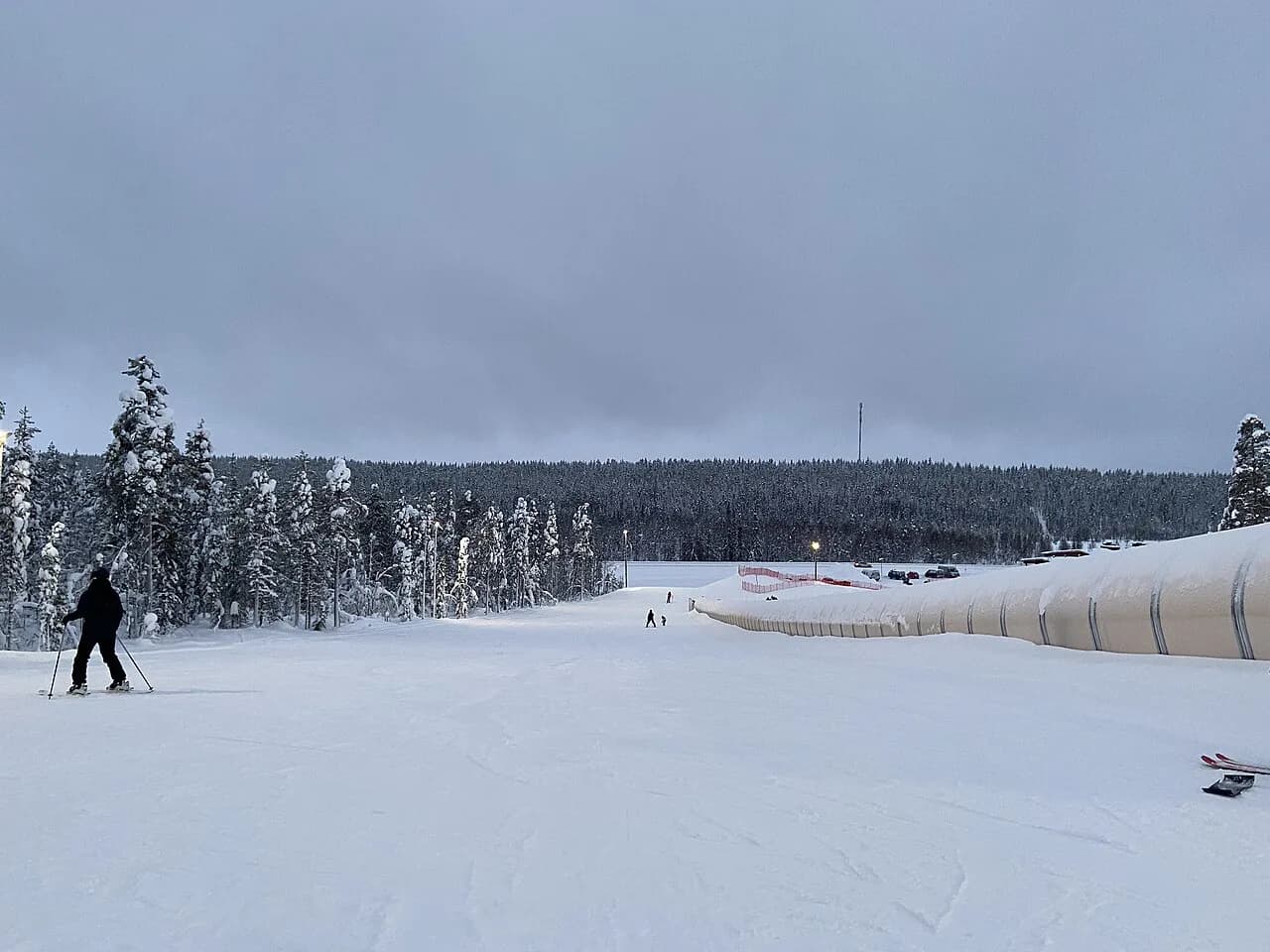
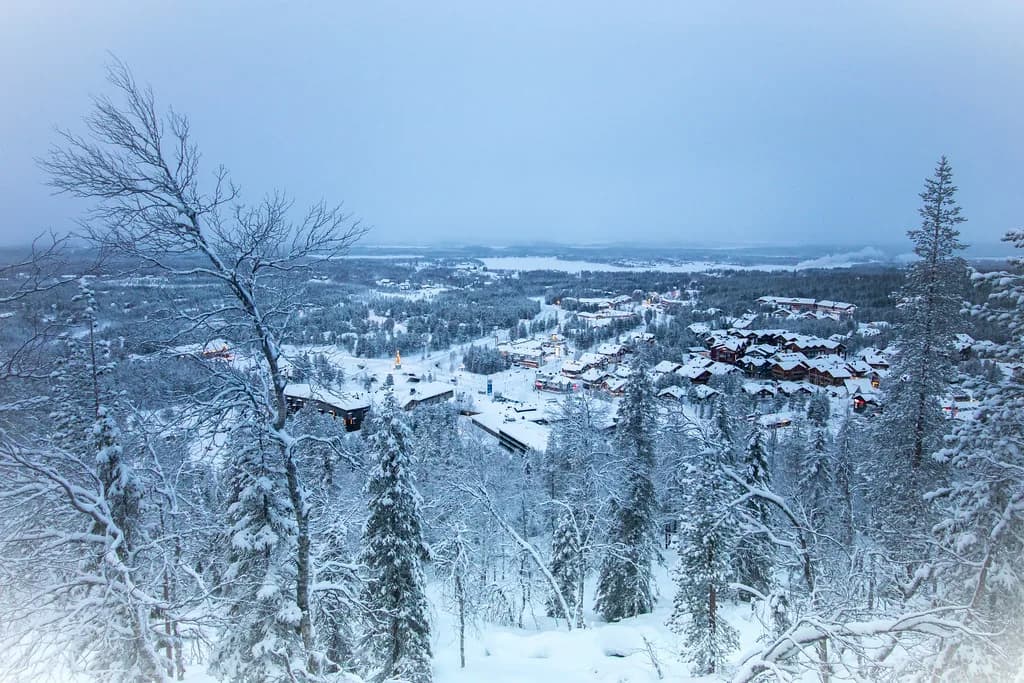
Levi is a fell resort in western Finnish Lapland, roughly 170 km north of the Arctic Circle, with the village of Sirkka at its foot. The fell terrain is open enough for panoramic views and low enough in gradient that snowshoeing feels like a hilly forest walk rather than mountaineering. On clear days the horizon takes in the fells of Ylläs, Pallas and Kätkä, and operators note that the view can reach as far as Sweden.
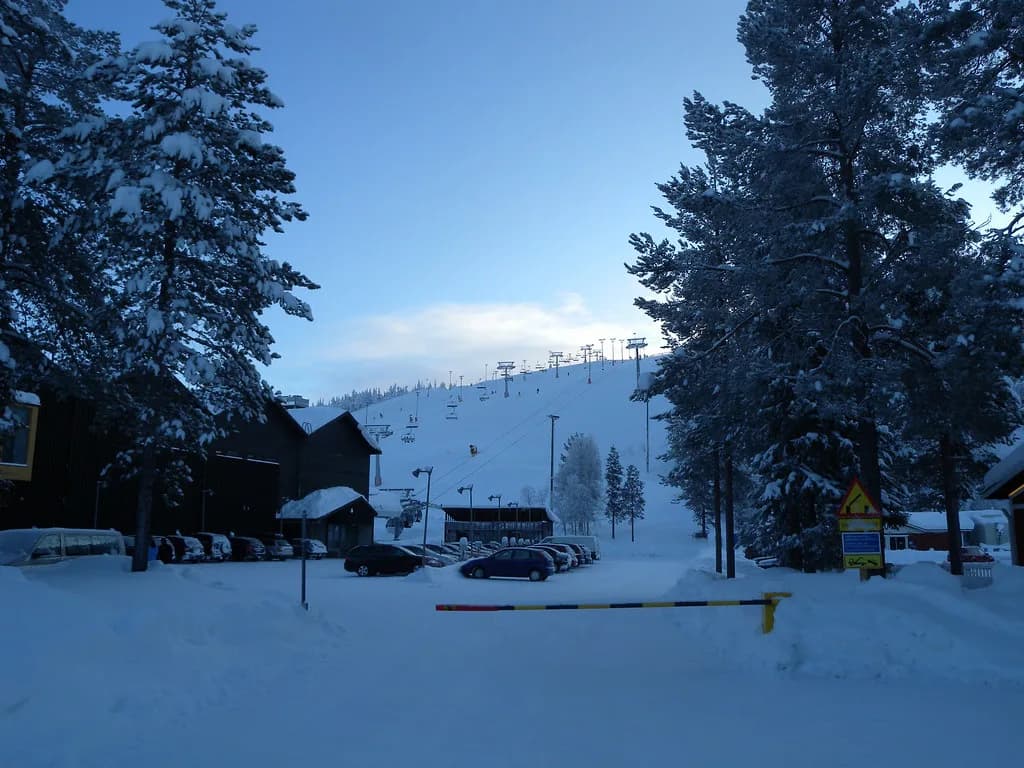
Everything sits close together: the gondola station, the ski slopes, the village restaurants and the main hotel and cabin clusters are minutes apart. That means you can snowshoe in the morning and still have daylight for a sauna or a husky visit. It also means light pollution near the village centre is real, so darkness improves quickly once you move onto the fell or out toward Kätkä.
When the snowshoe season runs
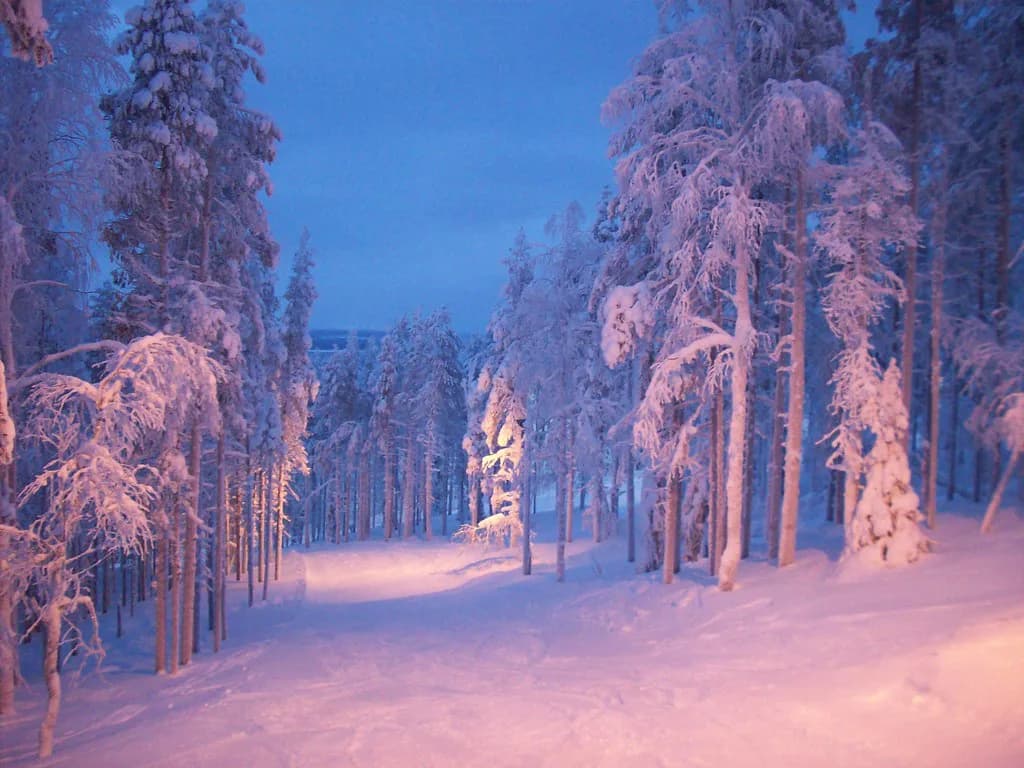
Snowshoe tours in Levi operate through the snow-covered winter, and the Santa's Cabin descent runs as a daytime program in December as well as later in the season. December brings kaamos, the polar night period when the sun barely clears the horizon and the light stays blue for hours. That soft light is the reason photographs of snow-laden cabins look the way they do.
Daylight shapes which tour makes sense. In midwinter, a daytime snowshoe gives you the few bright hours; by late February and March, days lengthen fast and afternoon tours return in good light. Night snowshoeing works best once the evenings are properly dark, which in practice means any winter month, with the aurora season running broadly from late August to early April.
Guided day tours: the gondola-to-summit descent
The signature Levi snowshoe format is a gondola-assisted descent. Scandinavian Travel Group runs a tour that fits snowshoes in the village, transfers you to the gondola station, rides to the summit of Levi fell at 531 m and then walks down through open fell terrain to Santa's Cabin, a small log hut made famous by the Finnish Christmas film Joulutarina. The route then continues into the forest to a lower parking area with a transfer back to Levi.
The tour runs about 2 h 30 min to 2 h 45 min and is rated moderate, with roughly 1.5 to 2 hours of active walking on uneven snow. Adult tickets are 89 € and children aged 8 to 14 pay 79 €, though the minimum age is 12 because there are no children's snowshoe sizes below EU 36. Included are the transfer, the gondola ride, snowshoes and poles, grilled sausage and hot berry juice at a kota hut. Warm winter clothing is not included but can be rented from Safarimarket in Levi centre for 10 €, and renters should arrive 20 minutes early. If weather closes the gondola, the group takes a car transfer as far up as conditions allow and walks about 500 m uphill to the snowshoe start. The cancellation ladder is steep: 100% within seven days, 50% within 21 days and 10% within a year.
The descent is continuous and downhill, which is harder on knees than flat walking despite the low overall effort. The tour is unsuitable for guests with knee problems, heart conditions or mobility limitations. Pickup is offered from a list of village and cabin addresses including Hotel Levi Panorama and the Golden Crown Igloo, so check whether your accommodation appears before booking a transfer separately.
Firelit breaks: kota huts and grilled sausage
The mid-descent stop is a traditional kota, a wooden hut with an open fire in the centre. The guide lights the fire and grills Finnish sausage, with a vegetarian option on request at booking, alongside hot berry juice. It is a proper rest rather than a quick photo stop, timed before the final leg down to the parking area.
The kota used on this route is a public one, so other groups may be inside at the same time. If the hut on the slope is closed, the break moves outdoors with a light snack and hot drink instead. That is the realistic version of a firelit fell break: warm, social and weather-dependent rather than private.
Night snowshoeing and aurora walks
Levi operators also run night snowshoeing billed as an aurora search, typically around 2 h 30 min and priced at 95 €, above the daytime Santa's Cabin tour. You walk with a guide and headlamps into darker terrain away from village lights, stop for a fire, and watch the sky. Treat the aurora as a possibility shaped by solar activity and cloud, not as the point of the outing.
What a night walk actually delivers is darkness, quiet and a guide who knows which directions stay open when cloud rolls in. Snowshoeing off-trail by headlamp also lets you reach clearings and fell shoulders that are awkward on foot. If the sky stays closed, you still get a fire, hot drinks and a couple of hours in the snow forest.
Where you sleep changes the odds of catching a gap in the clouds. Fell-side cabins and aurora cabins away from the village centre cut light pollution, which matters more than a short drive. Properties such as the Northern Lights Village Levi place guests in cabin accommodation outside the lit core, and the same logic applies when choosing between a village hotel and a fell cabin.
Self-guided snowshoeing around Levi, Kätkä and Pyhä fells
You do not need a guide to snowshoe in Levi. Marked winter trails and connecting routes leave the village and circle the fell, and the easiest huts are scattered around Levi fell itself. Snowshoes can be rented locally, and Safarimarket at Keskuskuja 2 B in Sirkka is one village-centre option for gear and clothing rental.
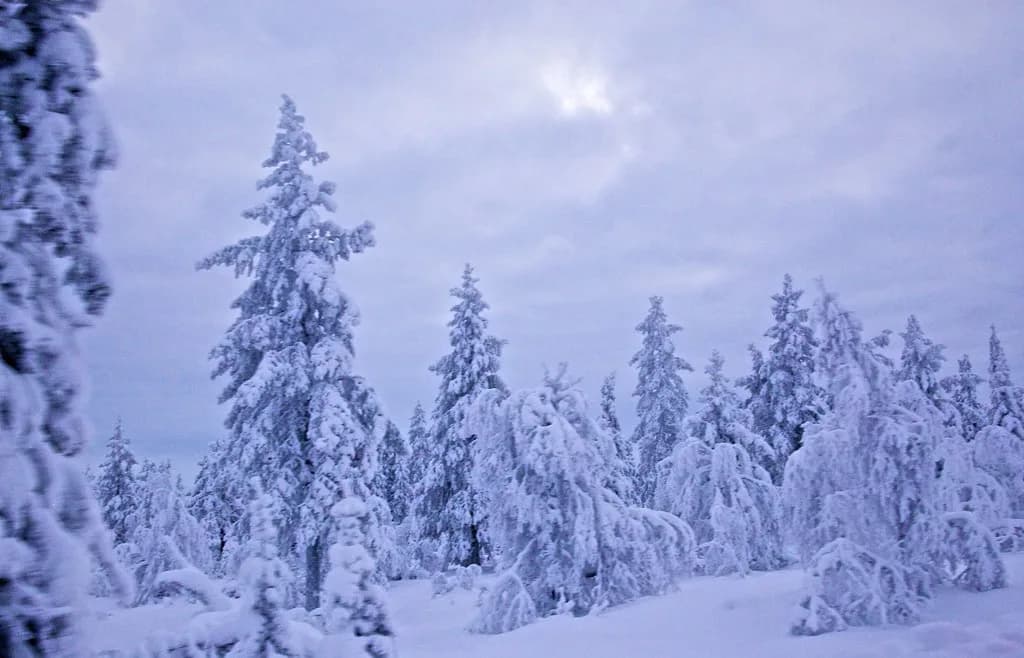
Travelers who want less development head for Kätkätunturi and Pyhätunturi, the fells flanking Levi. Local advice on the Levi forum favours the trails around those fells for unspoilt, unbuilt terrain compared with the busy routes on Levi fell. The catch is access: you need a car, a taxi or a transfer, and you should carry your own food and drink because services thin out fast away from the resort.
Self-guided routes suit confident walkers who can read a map and judge fading light. Snowshoeing on open fell is slow going in deep snow, so plan a shorter distance than you would on a summer hike. Tell someone your route and turn back early if cloud thickens or the wind picks up on exposed ground.
Rental, clothing and what to bring
Guided tours usually supply snowshoes and poles as part of the ticket, as the Santa's Cabin descent does. Clothing is the part you sort out yourself: the same operator rents warm winter clothing for 10 € from Safarimarket in Levi centre and nowhere else for that tour. Rental stock and sizes are worth settling when you book rather than on the morning of the tour.
Boots matter more than most gear, because snowshoes strap onto them and a loose fit causes blisters on a sustained descent. Sturdy insulated boots and layered clothing are recommended for the 1.5 to 2 hours of walking. If you wear a large boot size or travel with children, check the binding range fits before you commit.
Difficulty, minimum ages and who should pick an easier route
Snowshoeing is generally easier to learn than skiing: you strap in and walk, and the learning curve is minutes rather than days. The harder part in Levi is the terrain profile. The gondola descent is moderate but sustained downhill on uneven snow, which punishes knees and ankles more than flat forest walking.
Families with younger children should look at shorter, flatter options such as the easy snowshoe tours with a warm drink, listed at two hours, rather than the summit descent with its age 12 floor. The minimum age on the Santa's Cabin tour exists for shoe sizing, not stamina, so ask directly if your child has large feet for their age. Anyone with heart or mobility concerns is better served by a level forest route or a fireside program.
Private snowshoeing is available in Levi for groups who want their own pace, and Viator lists a small-group private option of roughly 2 h 30 min with pickup. That is worth the premium if you have mixed fitness levels or want to stop for photographs without holding up a group.
How many nights to plan for a fair chance of clear skies
Give Levi three to four nights if clear skies are the priority. Cloud cover, not latitude, is the usual limiting factor in western Lapland, and a single night is a coin toss whatever the forecast said a week earlier. Multiple nights let you pick the one with a gap, and ski-resort accommodation is easy to book for short blocks.
Pair the nights with different vantage points: one night snowshoeing on the fell, one at a dark cabin outside the village, one from a fell-top viewpoint you reach by gondola or car. Glass igloos in Levi give you a warm, dark place to watch from bed, though heat and interior lighting can hamper photography through the glass.
Where snowshoeing fits alongside huskies, reindeer and saunas
Levi works as a base for several snow activities in one trip. Husky safaris, reindeer farm visits and snowmobile tours all run from the village and can be slotted around a snowshoe morning. The Santa's Cabin operator lists husky and reindeer programs as separate products from the same booking desk, which makes combining them straightforward.
A Finnish sauna after a snowshoe descent is the standard local rhythm, and many cabins and hotels have one. Arrange the sauna for the evening rather than straight after a night walk, since a late return and a hot sauna leave little time for aurora watching. For a quieter cabin base with dark skies, an aurora cabin outside the lit centre is the version most aurora-focused travelers choose, and the same property network runs transfers to village activities.
Snowshoeing also opens up the wider Arctic Circle region if you are driving or continuing north. The Finnish Lapland snowshoeing guide covers longer routes and other bases, which is worth reading if Levi is one stop on a bigger loop.
Plan Your Snowshoe Trip to Levi
Levi suits travelers who want snowshoeing folded into a short Arctic break without long transfers: guided descents from the fell summit, firelit kota breaks and night walks are all bookable from the village. Choose the gondola descent for the views and the Santa's Cabin photograph, a night walk for darkness and a chance at the aurora, and self-guided trails around Kätkä and Pyhä fells for quiet snow.
Book the guided tour before you travel if December or a holiday week is on your calendar, and settle clothing rental and shoe sizes at the same time. Leave three or four nights so weather can move in your favour, and keep one evening free for the sauna.
Frequently Asked Questions
Is snowshoeing harder than skiing?
No. Snowshoeing is walking with extra surface area underfoot, so most people are moving comfortably within minutes, while skiing takes lessons and practice before it feels controlled. In Levi the challenge is terrain rather than technique: the gondola-to-summit descent is moderate but sustained downhill on uneven snow. Pick a flat forest route if you have knee or ankle problems.
What is snowshoeing in Levi like in December?
December is polar night in Levi, so daylight is short and soft, and photographs of snow-laden cabins come out in blue tones. A daytime tour makes the most of the few bright hours, while the cold is at its sharpest and warm clothing rental matters. Book early because the Christmas period fills the village.
Can you see the northern lights on a night snowshoe tour in Levi?
You might, but nothing guarantees it. Sightings depend on solar activity and clear skies, and cloud is the usual obstacle in western Lapland. A night snowshoe tour gets you away from village lights with a guide and a fire, which improves your chances of catching a gap in the cloud, but treat the aurora as a bonus.
Do you need a guide to go snowshoeing in Levi?
No. Marked trails leave the village and circle the fell, and snowshoes can be rented locally for independent outings. A guide adds transport, route knowledge, a fire break and, on night walks, safer navigation in the dark. First-timers and families often prefer the guided format.
How long does a guided snowshoe tour in Levi take?
Most run around two to three hours. The gondola descent to Santa's Cabin takes about 2 h 30 min to 2 h 45 min including transfers and the kota break, with roughly 1.5 to 2 hours of walking. Shorter easy tours last about two hours.
Where can you rent snowshoes in Levi?
Guided tours typically include snowshoes and poles in the ticket, so you only rent separately if you go out alone. Safarimarket in Levi centre handles gear and clothing rental for the Santa's Cabin tour, with winter clothing available for a small fee. Ask about binding sizes for large boots or children.
How many nights should I stay in Levi for aurora chances?
Three to four nights gives you a fair shot at a clear gap in the cloud. One night is a gamble whatever the forecast says. Use the extra nights for different vantage points: the fell, a dark cabin outside the village, and a guided night snowshoe walk.
Sources
Notes for your Arctic winter trip
Optional updates to our northern lights guides.
You might also like
Continue reading
More guides you'll find useful