Snowshoeing in Finnish Lapland: Which Trip Is Right for You?
Snowshoeing in Finnish Lapland suits beginners and families, with guided trips from Saariselkä and Rovaniemi. Compare durations, prices and terrain before you book.
On this page
Snowshoeing gives you a way into the Lapland winter that needs no lift pass and no previous skill: strap on a pair of modern shoes, take two poles, and walk into the snow at your own pace. It suits families with children, first-time winter travelers and anyone who wants quiet time in the fells and forests rather than speed. The terrain around Saariselkä and Rovaniemi is rolling rather than steep, which is why guided snowshoe trips here tend to be short, gentle and easy to combine with aurora evenings.
Why Finnish Lapland suits snowshoeing
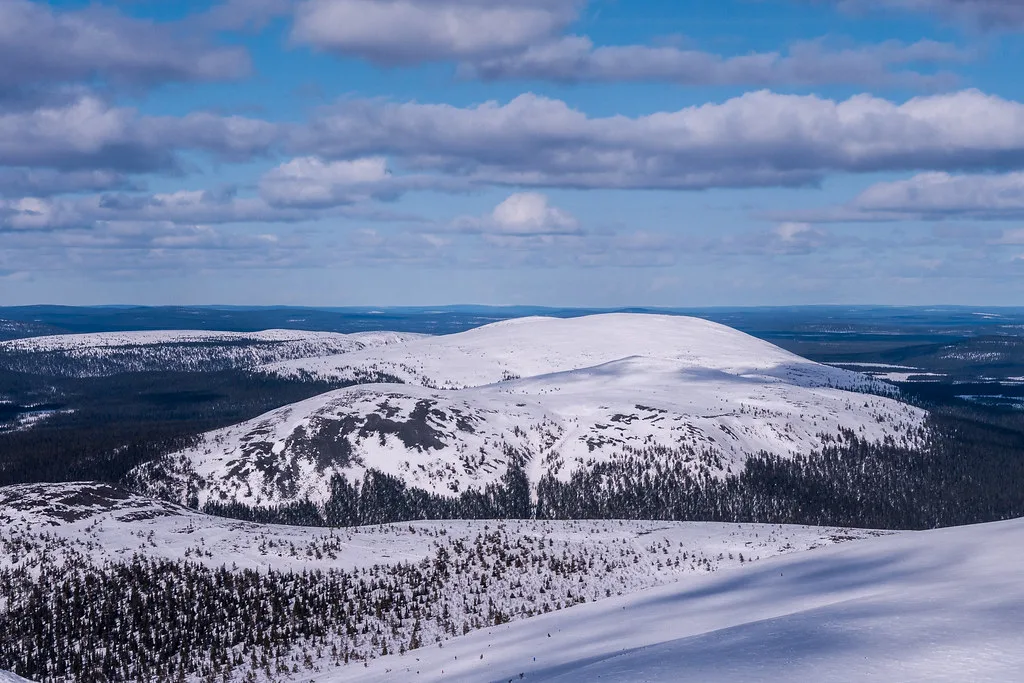
Lapland's snowshoe country is made up of fells, frozen lakes and open forest rather than alpine steeps, so you spend your energy moving through the landscape instead of climbing it. Snowshoes spread your weight over a wider area, letting you cross deeper snow without sinking far, which is what makes them workable for children and beginners on gentle routes. The result is a slower, quieter form of travel than walking: you can wander uphill, downhill or into fresh snow, and the pace leaves room to look around.
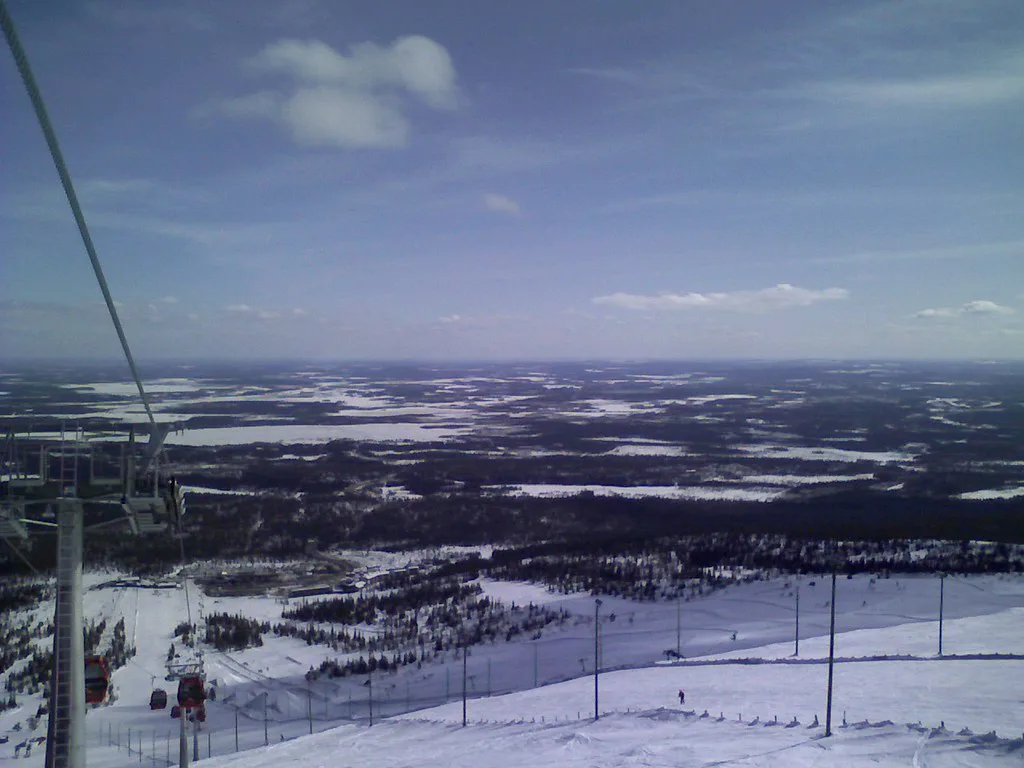
The far north of Finland holds snow for a long stretch of the year; Saariselkä, roughly 200km above the Arctic Circle, has around 200 days a year with snow, often starting in October. That long snow window means snowshoeing can sit alongside the northern lights in finland season rather than competing with it, and a snowshoe walk is one of the simplest ways to get away from village lights after dark.
When the snowshoe season runs
In the far north, snow cover often begins in October and Saariselkä sees around 200 snow days a year. Practical snowshoe days cluster in the months when the ground is snow-covered and organized trips operate, and a snowshoe walk needs far less snow than downhill skiing does. If snow is central to your trip, ask the activity company running your snowshoe trip which weeks its snowshoe departures run before you lock in flights.
Winter daylight shapes how you plan a snowshoe day. Short daylight hours mean a guided daytime walk is best scheduled around the brightest part of the day, while evening snowshoeing is a dark-sky activity suited to aurora watching rather than scenery. Check daylight hours for your travel dates and build the snowshoe outing around them.
Guided snowshoeing around Saariselkä
Santa's Lapland runs guided snowshoeing from Saariselkä on two products with different durations. With Santa's Magic, the one-hour version costs £39 per adult (12+) and £29 per child (6 to 11), while with Santa's Aurora the two-hour version costs £69 per adult and £49 per child. Both include modern snowshoes, two ski poles for balance and a technique briefing before you set off.
The routes explore some of the untouched spots around Saariselkä, and guides explain how the indigenous Sámi people used similar shoes for hunting and travel across difficult ground. Thermal suits are provided as part of the Santa's Lapland holiday, so you do not need to arrange winter outerwear separately. Book the snowshoe excursion alongside your holiday or add it afterwards through the booking management page.
Snowshoeing from Rovaniemi
Rovaniemi offers a two-hour snowshoeing trip into the Arctic wilderness, with roughly 1.5 to 2 hours of that spent walking, priced from €79. The longer walking time means it covers more distance than the one-hour Saariselkä product, and it is a reasonable fit for adults and older children comfortable on their feet for a couple of hours. If you are basing yourself in town and want a half-day outing, this format sits easily into a Rovaniemi itinerary.
How a guided snowshoe trip actually runs
Guided trips start with fitting: you secure the snowshoes to your boots with straps and take two poles for balance, and the guide explains how the shoes work and the best technique before you leave. Most modern snowshoes have spikes on the underside for grip and a raised front for descents, and your heel lifts as you walk so the motion stays natural. The group then moves at a pace set for the slowest member, which is why family routes stay gentle.
Beginners are best kept on marked trails at first, and a guide stays with the group throughout if you want to make fresh tracks through deep snow or climb a small peak for the view. Snowshoeing is slower than walking but lets you go almost anywhere quietly, so a guided trip doubles as a way to learn the terrain. On Santa's Lapland holidays, thermal suits are supplied when you arrive in Lapland.
Snowshoeing versus skiing for beginners
Snowshoeing asks for reasonable balance and little else; you walk rather than glide, and there is no lift, no downhill technique and no need to learn to stop. Skiing rewards practice and suits people who want speed and slope time, while snowshoes suit anyone who wants to move through forest, across frozen lakes and over fells at conversation pace. Families with children from six upward can join the Saariselkä routes, which makes snowshoeing the lower-commitment option for a mixed-ability group.
Night snowshoeing and aurora odds
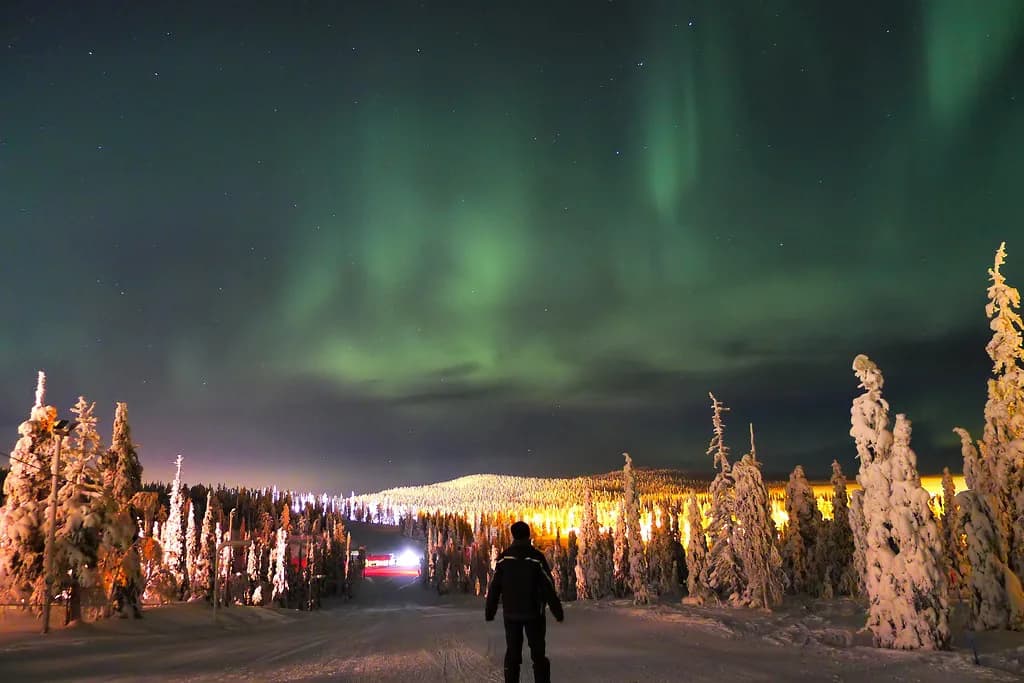
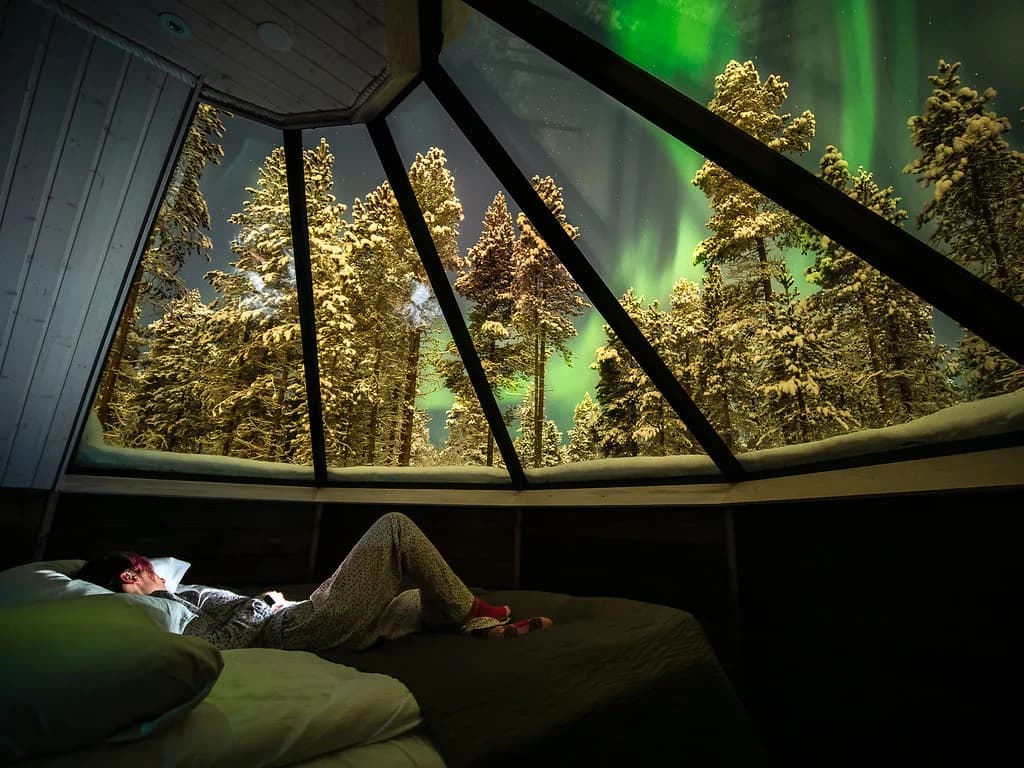
Snowshoeing is one of the most practical ways to get away from village lights after dark, because you can leave the road and cross open snow without needing a trail. That matters for Aurora watching: dark skies matter as much as solar activity, and a short walk away from lit buildings improves your view of the northern lights in Finnish Lapland when the sky is clear. No trip can promise a sighting; cloud cover and solar activity decide what appears, and Kp values are only guidance.
A guided evening snowshoe outing puts you in the hands of someone who knows the local trails, and some operators run dedicated aurora snowshoe trips alongside their daytime routes. If aurora is the priority, compare the finnish lapland northern lights tours on offer and book a snowshoe evening as one of several dark-sky nights rather than your only chance. Use the finnish lapland aurora forecast to judge which nights look clearer, and treat it as a planning aid rather than a promise.
Saariselkä and Rovaniemi compared
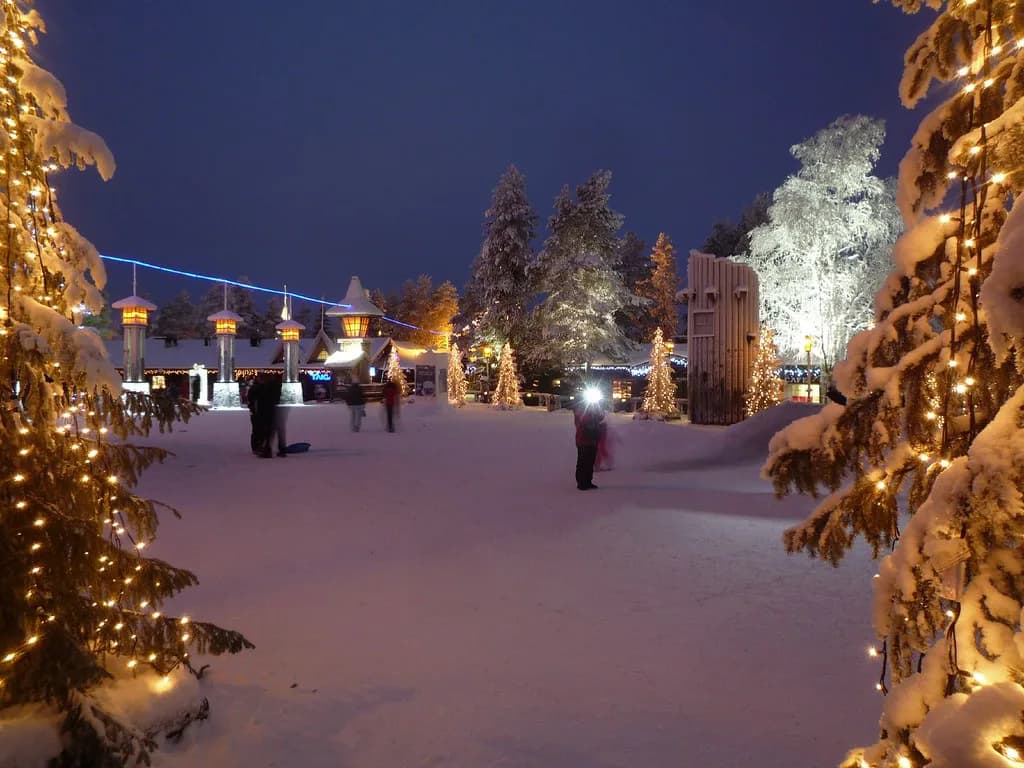
Saariselkä is a remote fell village in the far north, with snowshoe routes that head straight into untouched country and a one-hour family product that keeps children moving without tiring them. Rovaniemi is a larger town with a two-hour wilderness trip and more around it, including Santa Claus Village, but you trade some of the immediate quiet for amenities. Choose Saariselkä for remoteness and family pacing, Rovaniemi for a bigger base with more to fill non-snowshoe days. If you are weighing Saariselkä's routes at all, our guide to snowshoeing in Levi offers another fell village comparison point.
How many nights to plan around snowshoeing and aurora chances
Snowshoeing takes a morning or an afternoon, so it fits around other plans rather than dictating the length of your trip. Aurora is the variable: cloud cover can close out a whole evening, and the more nights you have, the more chances you get at clear sky. Three or four nights gives you room for a guided snowshoe walk, a ski day and at least two dark evenings, while a two-night break leaves little slack if the first night is overcast.
Family logistics and minimum ages
The Saariselkä snowshoe routes are built for families, with child pricing for ages 6 to 11 on both the one-hour and two-hour products, and snowshoes that spread weight so smaller legs can manage the snow. The one-hour version is the easier introduction for young children, while the two-hour version suits families whose children are comfortable walking for longer. If you are travelling over the holidays, christmas in finnish lapland packages pair snowshoeing with other winter activities.
Reading the weather before you book
Snowshoeing depends on snow cover rather than deep cold, and Saariselkä's long snow season gives you a wide window. Before booking, check with your snowshoe provider whether departures are running on your dates and how they handle days when conditions are poor, since a guided trip is only as good as the ground underfoot. Snowshoeing in Finland is often paired with sleigh rides and snowmobiling, so a snowshoe morning can slot into a wider winter itinerary.
Plan Your Snowshoe Trip
Snowshoeing is the lowest-barrier way to spend real time in the Lapland winter: one or two hours on gentle ground, equipment and poles supplied, and a guide to show you how it works. Use the one-hour Saariselkä trip for young families and the two-hour Saariselkä or Rovaniemi versions when you want more distance, then build the rest of your days around dark evenings. Pick your base for terrain and pace, allow enough nights for at least one clear sky, and treat every aurora sighting as a bonus rather than a guarantee.
Frequently Asked Questions
Is snowshoeing easy for beginners?
Yes. Modern snowshoes strap to your boots, spread your weight so you do not sink far, and most have spikes for grip. Guided trips include a technique briefing and poles, and beginners are best kept on marked trails at first.
Is snowshoeing harder than skiing?
Snowshoeing needs only reasonable balance and walking, while skiing rewards practice and technique. For a mixed-ability family or first-time winter traveler, snowshoeing is the simpler option.
How long does a guided snowshoe trip last in Lapland?
It depends on the product. Around Saariselkä, Santa's Lapland offers a one-hour and a two-hour snowshoe excursion, while the Rovaniemi wilderness trip runs two hours with roughly 1.5 to 2 hours of walking.
Can children join a snowshoeing trip in Finnish Lapland?
Yes. The Saariselkä snowshoe routes are family-friendly, with child pricing for ages 6 to 11 on both the one-hour and two-hour versions. The shorter trip suits younger children best.
Can you snowshoe at night to look for the northern lights?
Yes. Snowshoes let you leave lit trails and cross open snow, which helps you reach darker sky. A sighting still depends on solar activity and clear skies, so plan several evenings rather than a single one.
What is the snowiest month in Lapland?
Snow cover in the far north often starts in October and Saariselkä has around 200 snow days a year. Ask your operator which weeks their snowshoe departures run if snow conditions matter for your dates.
Sources
Notes for your Arctic winter trip
Optional updates to our northern lights guides.
You might also like

Continue reading
More guides you'll find useful