Finnish Lapland Aurora Forecast: Night-by-Night Guide
Read the Finnish Lapland aurora forecast like a local: FMI space weather, Kp limits, cloud cover and alerts, plus how to combine them for a dark, clear night.
On this page
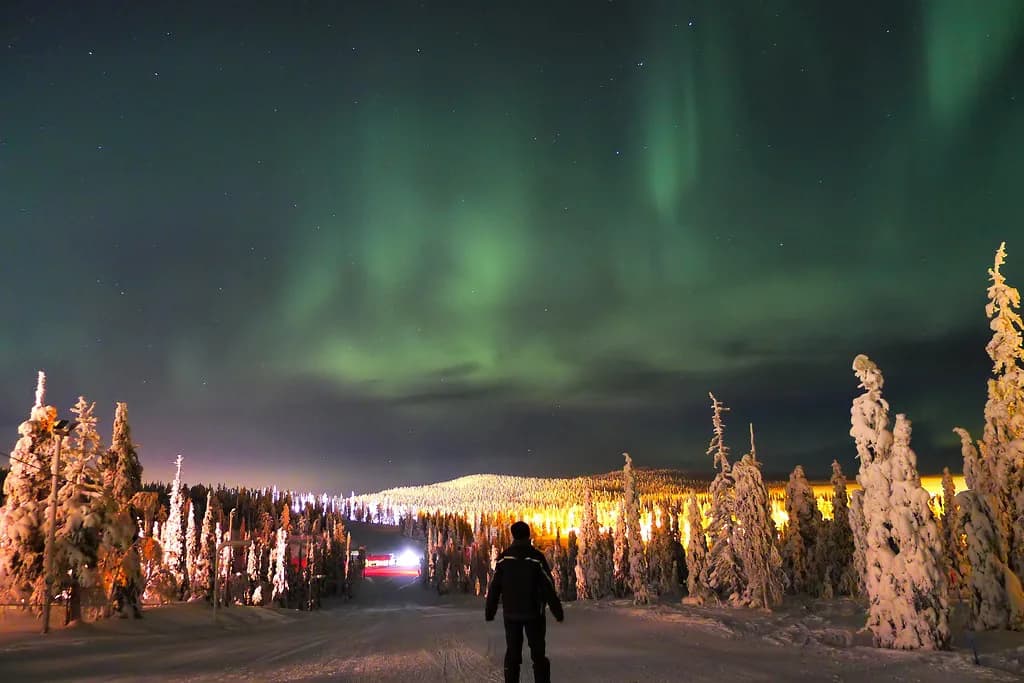
Finnish Lapland sits directly under the auroral oval, the ring of sky where solar particles funnel into the atmosphere, which is why a winter trip here is about timing clear nights rather than travelling to a special latitude. The region's aurora season and the long dark evenings give you many chances, and operators build their nights around two forecasts: geomagnetic activity and cloud.
This guide explains how to read each layer of the forecast the way a guide does, from the Kp index and the Finnish Meteorological Institute's station map to cloud cover, live cameras and alerts. It also shows how many nights to allow so a cloudy evening never defines your trip.
Why Finnish Lapland sits under the auroral oval
Auroras form above 100 kilometres, where charged particles from the solar wind collide with gases in the upper atmosphere. Because Earth's magnetic field steers those particles toward the polar regions, the band of frequent aurora hangs over northern Finland, and anywhere near or above the Arctic Circle puts you inside the main viewing zone.
That geometry is what makes a forecast meaningful here: you are not asking whether auroras exist over Lapland on a given night, but whether the sky above your base will be dark and clear when activity arrives. Southern Finland sees far fewer aurora nights than Lapland, which is why northern bases such as Rovaniemi, Levi, Ylläs, Saariselkä and Ivalo dominate winter itineraries.
When the aurora season runs and how dark nights shape viewing windows
Finland's aurora season runs from late August to early April, the window when nights are dark enough for the lights to show. Autumn and spring bring more frequent geomagnetic disturbances around the equinoxes, while midwinter offers the longest dark hours but the coldest conditions.
Within that season, the best viewing window on any given night is typically between 9pm and 2am, when activity often peaks and the sky is fully dark. Plan evening tours and self-guided drives around that block rather than an early dinner-and-bed schedule, and keep the following morning light.
If your dates fall near Christmas, expect short daylight hours and busy resorts, so book aurora nights early and treat the holiday itself as the anchor. A trip built around christmas in finnish lapland works best when you add several flexible evenings on either side for chasing.
What the Kp index tells you, and why it is only guidance at this latitude
The Kp index summarises how disturbed the Earth's magnetic field is on a scale from quiet to stormy, and forecast services derive their outlooks from it. In Lapland the auroral oval is already overhead, so even modest activity can produce displays, while a high Kp forecast still means nothing if cloud blocks the sky. Treat Kp as a hint about the night's potential, not a promise.
Local forecast pages are blunt about this: they warn that Kp-based forecasts are a guideline and not reliable enough to use as an alert mechanism on their own. Use Kp to decide whether a night is worth staying up for, then let cloud cover and real-time observations make the final call.
Reading the Finnish Meteorological Institute space weather page
The Finnish Meteorological Institute publishes a space weather page that shows geomagnetic disturbances over the last 24 hours as a bar chart, station by station. Its map uses an R-index, which measures how fast the magnetic field changes within a ten-minute interval, and colours each station according to two thresholds.
The colour code is the practical part: a yellow bar or square means auroras are possible but usually dim, while a red bar or rhombus means it is very likely you can see auroras at that station. Readings come from the institute's automatic magnetometers, with Sodankylä data produced by the Sodankylä Geophysical Observatory of the University of Oulu.
Because the map is observation-based, it tells you what is happening now rather than what might happen next week. Check it after dark, watch which stations turn red, and use it to decide whether to head out immediately or wait for the next pulse of activity.
Local Lapland forecasts by area: Rovaniemi, Levi, Ylläs, Saariselkä, Ivalo, Pyhä, Ruka and Muonio
Area-based forecast pages let you pick the district closest to your base instead of reading one number for the whole of Lapland. The Northern Lights Alert service covers Rovaniemi, Levi, Pyhä, Ylläs, Saariselkä, Ivalo, Ruka and Muonio, and within Rovaniemi it breaks the forecast down further to places such as Lapland Hotels Sky Ounasvaara and Ounasvaara Chalets. If Rovaniemi is your base, it also helps to know how to read the rovaniemi aurora forecast alongside these district pages.
Each area page pairs a short-term weather outlook with an activity rating, showing conditions now, three hours ahead and six hours ahead. That structure suits a night out: you can see whether cloud is expected to clear over your own resort rather than over a town an hour's drive away.
Use the area page for the resort you sleep in, and treat neighbouring districts as backup options if your base looks cloudy. In a region this large, the difference between a clear valley and a clouded one can be a short drive.
Long-range outlooks versus night-of nowcasts: how to use each
Forecast pages also publish a longer-term outlook that rates coming days from high to below average, which is useful for deciding which part of your trip to keep flexible. Those ratings shift as solar conditions change, so read them as a rough ranking of nights rather than a schedule.
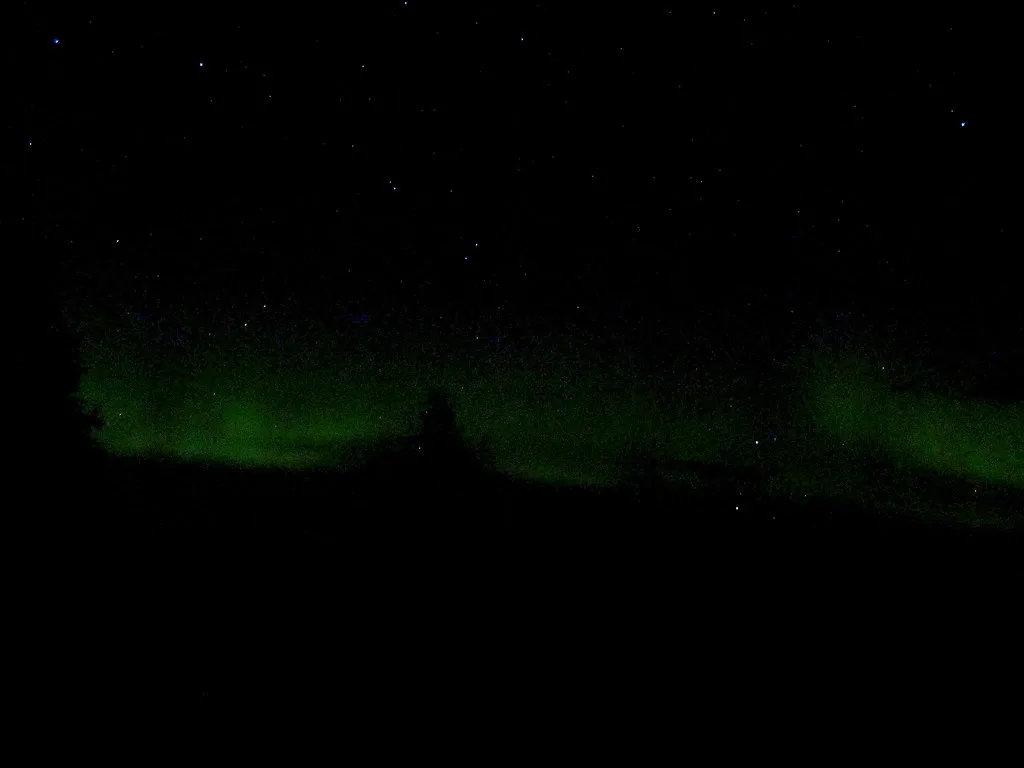
On the night itself, switch to nowcasts: the institute's station colours and any live aurora camera feed showing actual sky conditions. A camera pointed at the sky above Levi tells you more in ten seconds than any multi-day score.
Cloud cover is the deciding factor: pairing aurora activity with weather forecasts
Clouds are the most common reason people miss the northern lights entirely, so pair every activity forecast with an ordinary local weather forecast for your exact base. Be ready to move: activity can be intense in one spot and invisible a few kilometres away, which is why trained guides monitor conditions through the day and shift location when cloud rolls in.
A workable routine is to check cloud first, activity second. If the sky is forecast to stay overcast, a red station marker does you no good; if the sky is clear and the station has turned red, leave the lights of town behind and head for open ground such as lakeshores or hilltops.
Aurora alerts and live cameras as a backup to reading the forecast yourself
If you would rather not watch charts all evening, alert services can nudge you when the lights appear over your area. The Northern Lights Alert app uses a network of aurora cameras around Finnish Lapland and triggers alerts from real-time camera observations, and access requires a login key sold on the service's site for 9,90 €.
Visit Finland lists several alert options, including aurora alert apps and the Finnish Meteorological Institute's space weather pages. Alerts work best as a supplement: they tell you when to step outside, while your own reading of cloud and station colours tells you where to go.
Timing a night out: the typical best window and where to go from your base
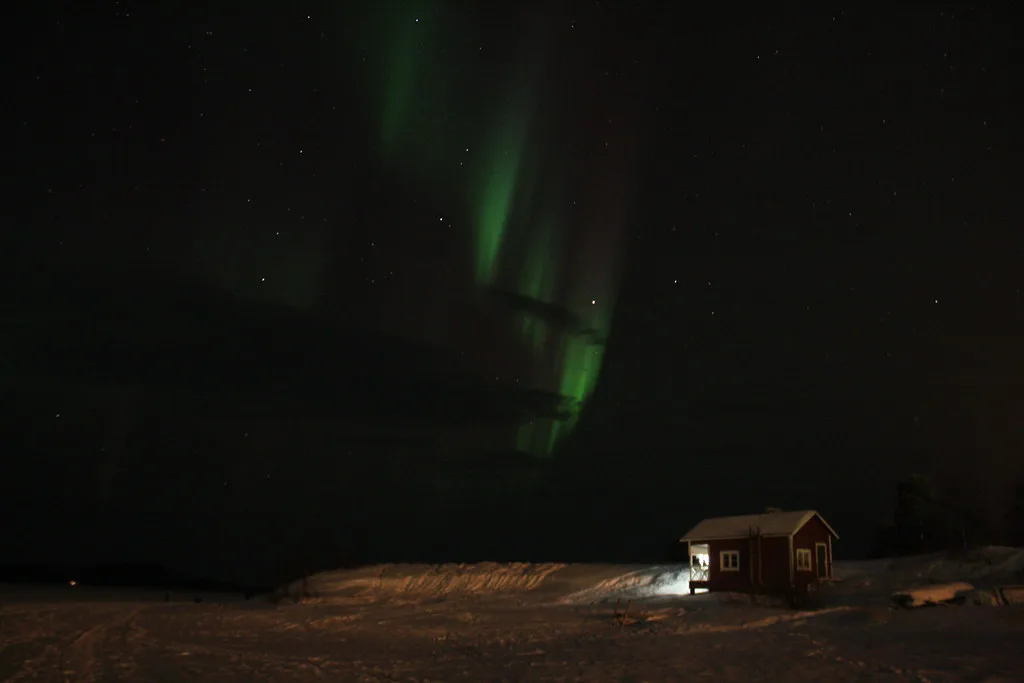
Build the evening around the 9pm to 2am window, with a plan for where you will stand. From Rovaniemi, hilltops such as Ounasvaara give you a wide sky close to town; from Saariselkä or Ivalo, the surrounding fells and national-park edges offer darker horizons a short drive from the village.
Wherever you are based, put distance between yourself and artificial light, then choose open ground with a clear view in all directions. Lakeshores and hilltops are the classic choices because they open up the horizon and let you follow activity as it moves.
Self-guided chasing versus guided tours when the forecast looks marginal
If you have a rental car, a clear sky and a modest activity rating, self-guided chasing is efficient: you can drive to open ground and wait without a schedule. On marginal nights, though, a guided tour earns its cost because guides know the local terrain, watch the forecasts all day and can move quickly when clouds arrive.
Tours in Lapland range from snowshoeing and snowmobiling to reindeer safaris and sauna evenings, and many operators lend thermal suits so standing outside for an hour stays comfortable. Compare group sizes, duration and what is included before booking, especially for family trips.
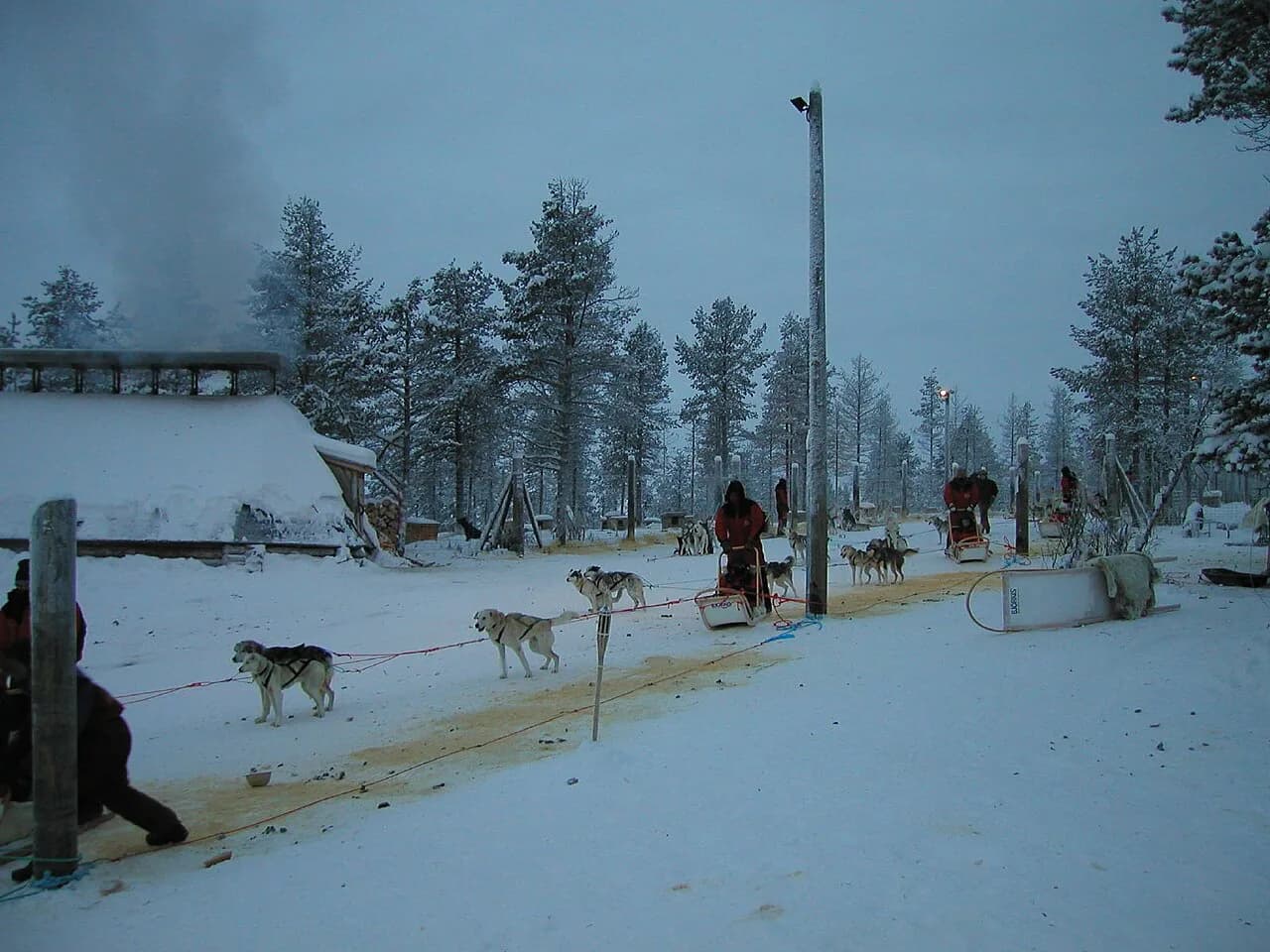
A husky safari is a strong choice when you want the aurora hunt folded into a daytime-style activity after dark. A finnish lapland husky safari typically runs with a guide and a team of dogs, and it pairs well with a flexible evening schedule.
How many nights to allow for a fair chance of clear skies
In Lapland, auroras appear on roughly every other clear night between August and April, and northern Finland records them on about 200 nights a year. Those figures describe the sky, not your trip: clouds, sleep and travel days all reduce the number of usable evenings.
A four-night stay near or above the Arctic Circle gives you several evenings to work with, and a week improves your odds of catching a clear, active night without turning the trip into a vigil. If your itinerary is tightly packed with daytime activities, keep at least two evenings free of early starts.
Glass igloos, aurora cabins and fixed viewpoints: when location beats chasing
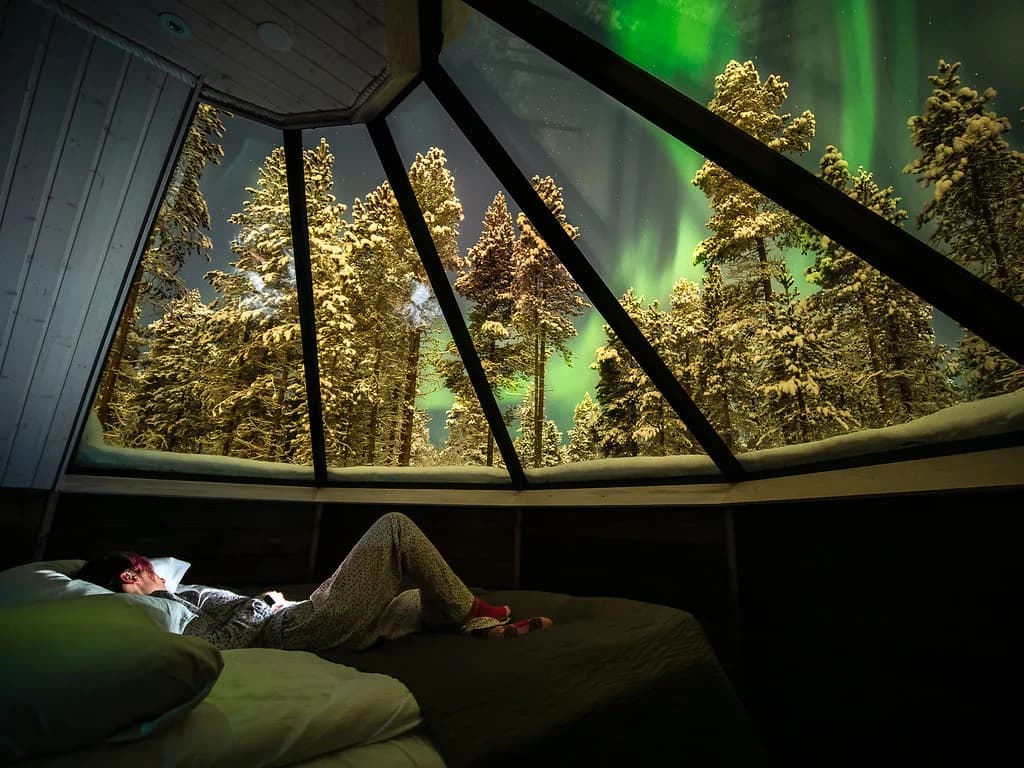
For travellers who prefer to stay warm, glass cabins and aurora igloos let you watch from bed, and Visit Finland lists them among the alternative aurora experiences. They suit short trips and mixed-weather nights, though you trade the mobility of a chase for a fixed view.
Fixed viewpoints work best when the property sits away from town lights and faces open sky, so check the surroundings rather than just the room. On cloudy nights, plan to join a tour from the same resort instead of waiting indoors.
Planning Around the Forecast
Treat the Finnish Lapland aurora forecast as a two-part decision: activity from the Finnish Meteorological Institute's station map and Kp-based outlooks, then cloud from an ordinary weather forecast for your resort. Check the area page for your base, keep several evenings free, and be willing to drive or join a tour when the sky clears.
Pick your nights around the 9pm to 2am window, stay near or above the Arctic Circle for the darker sky, and use alerts or cameras to know when to step outside. No forecast can promise a display, but a flexible plan in the right place gives the aurora the best chance to find you.
Frequently Asked Questions
How do I read the Finnish Lapland aurora forecast?
Read it in two layers. First, check geomagnetic activity using the Finnish Meteorological Institute's station map or a Kp-based outlook for your resort area. Then check cloud cover for your exact base, because a clear sky matters as much as activity. Combine the two just before you head out, and keep an eye on both through the evening.
What Kp index do I need to see the northern lights in Lapland?
Lapland sits under the auroral oval, so displays can appear at modest Kp levels, but no Kp number guarantees a sighting. Kp is guidance about how disturbed the magnetic field is likely to be, not a threshold you can rely on. Use it to judge whether a night is worth watching, then let cloud cover and live station readings decide.
Which aurora forecast covers Levi, Saariselkä or Rovaniemi?
Area-based forecast pages cover Rovaniemi, Levi, Pyhä, Ylläs, Saariselkä, Ivalo, Ruka and Muonio, with short-term weather and activity ratings for each. Choose the district closest to your accommodation, and check a neighbouring area if your own looks cloudy.
What time of night is best for auroras in Finnish Lapland?
The best viewing window on a given night is typically between 9pm and 2am, when the sky is fully dark and activity often peaks. Plan your evening around that block and keep the following morning relaxed.
Are aurora alerts reliable in Lapland?
Alerts based on real-time camera observations can tell you when the lights are visible overhead, but Kp-based forecasts are a guideline rather than a reliable alert mechanism. Use alerts together with your own cloud check and the station map.
How many nights should I plan for a chance of seeing the northern lights?
Allow at least four nights near or above the Arctic Circle, and a week if your schedule permits. In Lapland, auroras appear on roughly every other clear night, so more evenings mean more chances to catch a clear, active sky.
Sources
Notes for your Arctic winter trip
Optional updates to our northern lights guides.
You might also like

Continue reading
More guides you'll find useful