Oulanka National Park in Winter: Ruka Base Guide
Plan Oulanka National Park from Ruka: Karhunkierros scenery, frozen rivers and dark-sky aurora nights, plus how winter shapes a day in the park.
On this page
Oulanka National Park spreads high cliffs, open mires and sandy riverbanks across a stretch of northern Finland where the Oulanka river cuts through some of the country's most photographed scenery. In winter the park turns quiet and cold, with short daylight hours and long dark evenings that suit photographers, families on a snow day out and hikers who want the Karhunkierros landscape without the summer crowds. It works best as a day trip from a Ruka base, paired with an aurora night rather than treated as a standalone destination.
Where Oulanka sits and how it relates to Ruka, Kuusamo and Salla
Oulanka lies in North Ostrobothnia, with its main visitor services closest to Kuusamo, and the park's trails also reach toward the Salla side of the border country. From Ruka you drive into the Kuusamo area and continue to the park entrances, so a winter visit is a full day rather than an evening stroll. Salla markets the park as part of its own outdoor offering, which means you can approach Oulanka from either accommodation base depending on where you sleep.
The park is managed by Metsähallitus, the state body responsible for Finland's national parks, and the official Oulanka pages cover its nature, trails and services. Treat those pages as the source for any route, facility or rule you plan to rely on for a winter outing, because winter conditions can change what is open or usable.
Why Oulanka works as a winter day out from Ruka
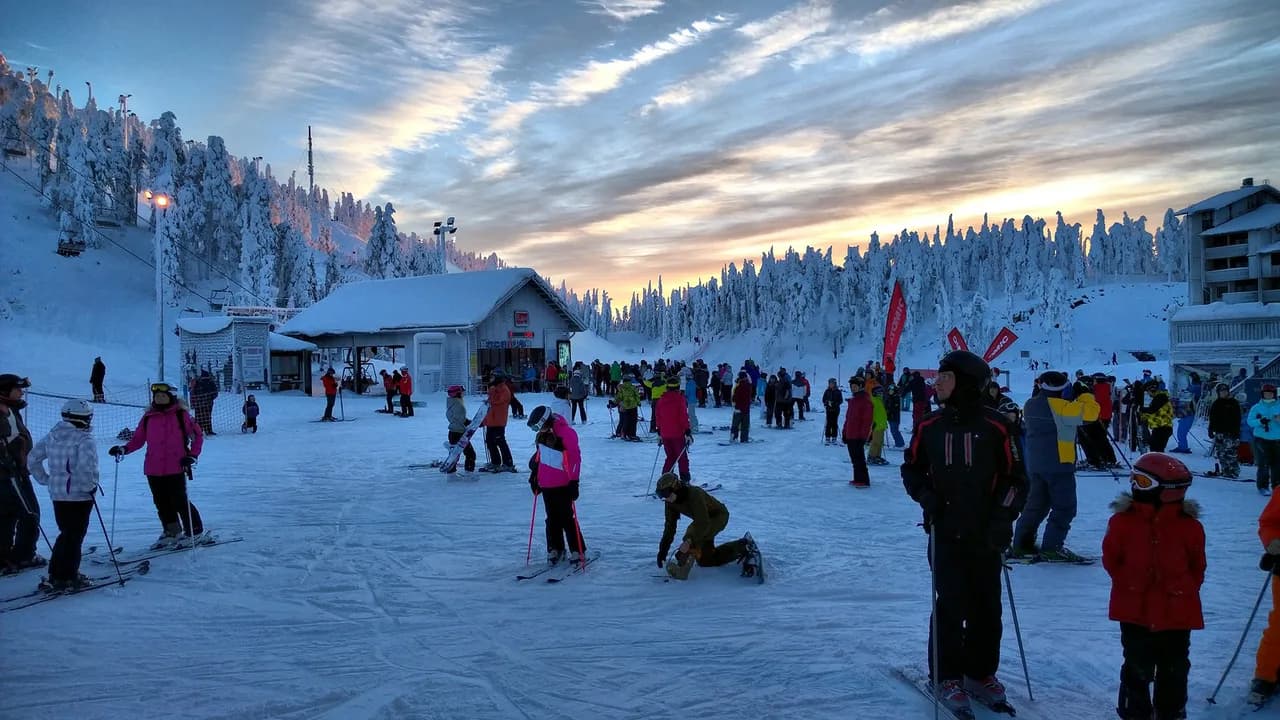
Ruka gives you ski slopes, lit village edges and a cluster of operators, while Oulanka gives you the opposite: unlit river corridors, snow-laden forest and cliffs that hold the cold. That contrast is the reason to make the drive. A morning start gets you into the park while daylight lasts, and the return leg leaves the evening free for a separate aurora attempt closer to your accommodation.
What the park protects: cliffs, mires, forests and rivers
Oulanka's appeal is the speed at which the landscape changes. High cliffs give way to open mires, soft sandy beaches sit beside lush forests, and the rivers thread through all of it. In winter the mires read as wide white plains, the cliffs as dark walls, and the forest as a dense, snow-holding canopy, which makes even a short walk feel varied.
The park also protects species that give the place its character: brown trout in the rivers, European dippers working the open water, and the calypso orchid among the summer flora. Winter hides most of that, but dippers can still be found along stretches of river that stay open through the cold.
Karhunkierros and the hanging bridges over the Oulanka river
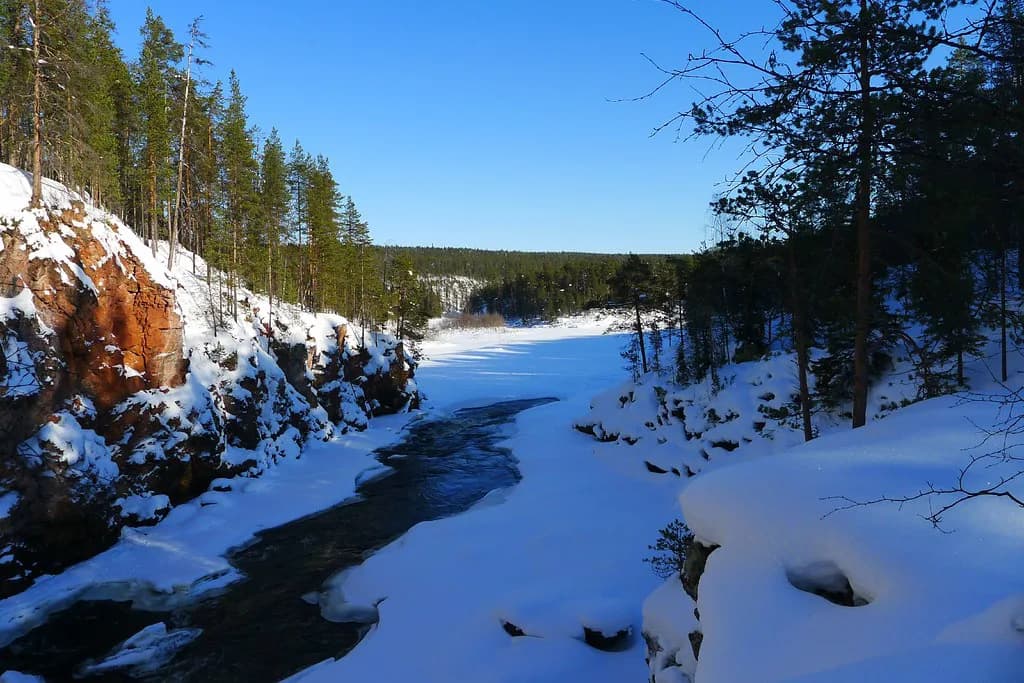
The Karhunkierros is Finland's most popular hiking route, and it passes through Oulanka's rugged terrain. The park's hanging bridges are the signature feature, carrying walkers over the river and connecting the trail options. In winter the bridges are a practical crossing point as much as a viewpoint, and the frozen river below them is one of the park's most striking winter sights.
You do not need to walk the whole route to get the flavour. A short out-and-back section that reaches a bridge and a river view delivers the scenery within the daylight window, which matters when the sun sits low for much of the day. Pick your turn-around point in advance rather than deciding on the trail.
Frozen waterfalls and rapids in a Lapland winter
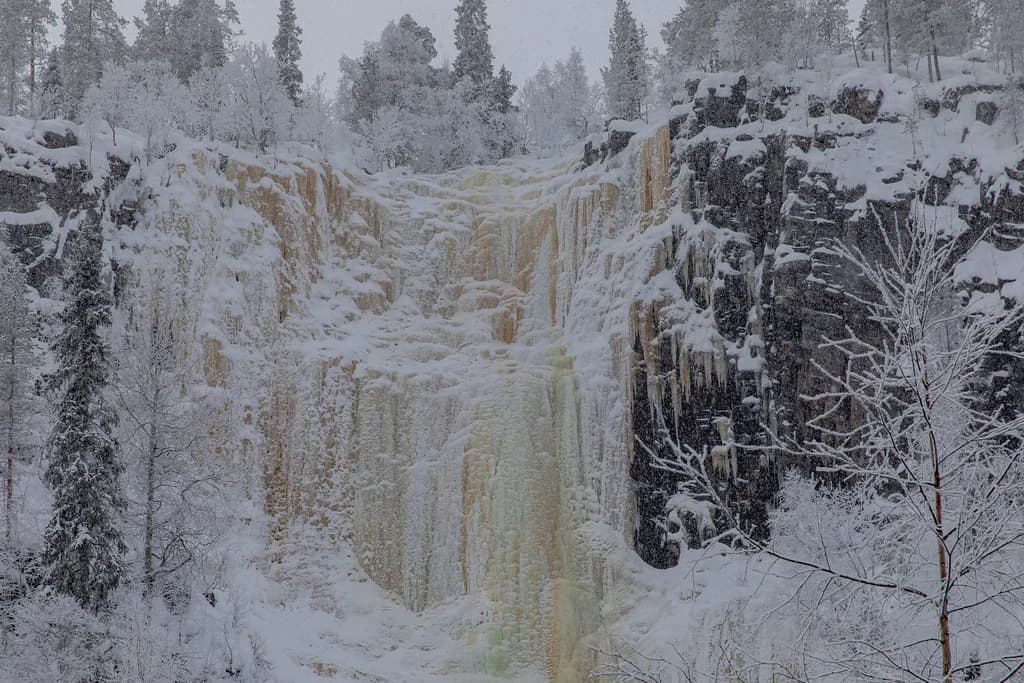
Water is the organising element of Oulanka, and visitors come for the waterfalls and the rapids that give the park its reputation. In deep winter the falling water freezes into blue-white curtains and the rapids narrow into dark, steaming channels. The sound of moving water under ice is one of the park's most memorable winter details, and the open stretches are also where wildlife concentrates.
If frozen waterfalls are the priority rather than the river corridor itself, Korouoma Canyon in Winter is the better-known destination in the wider region, with its own ice falls and a different approach. Oulanka rewards walkers who want variety across mires, forest and river in one outing; Korouoma rewards those who want the ice falls as the centrepiece.
When the aurora season runs over Oulanka
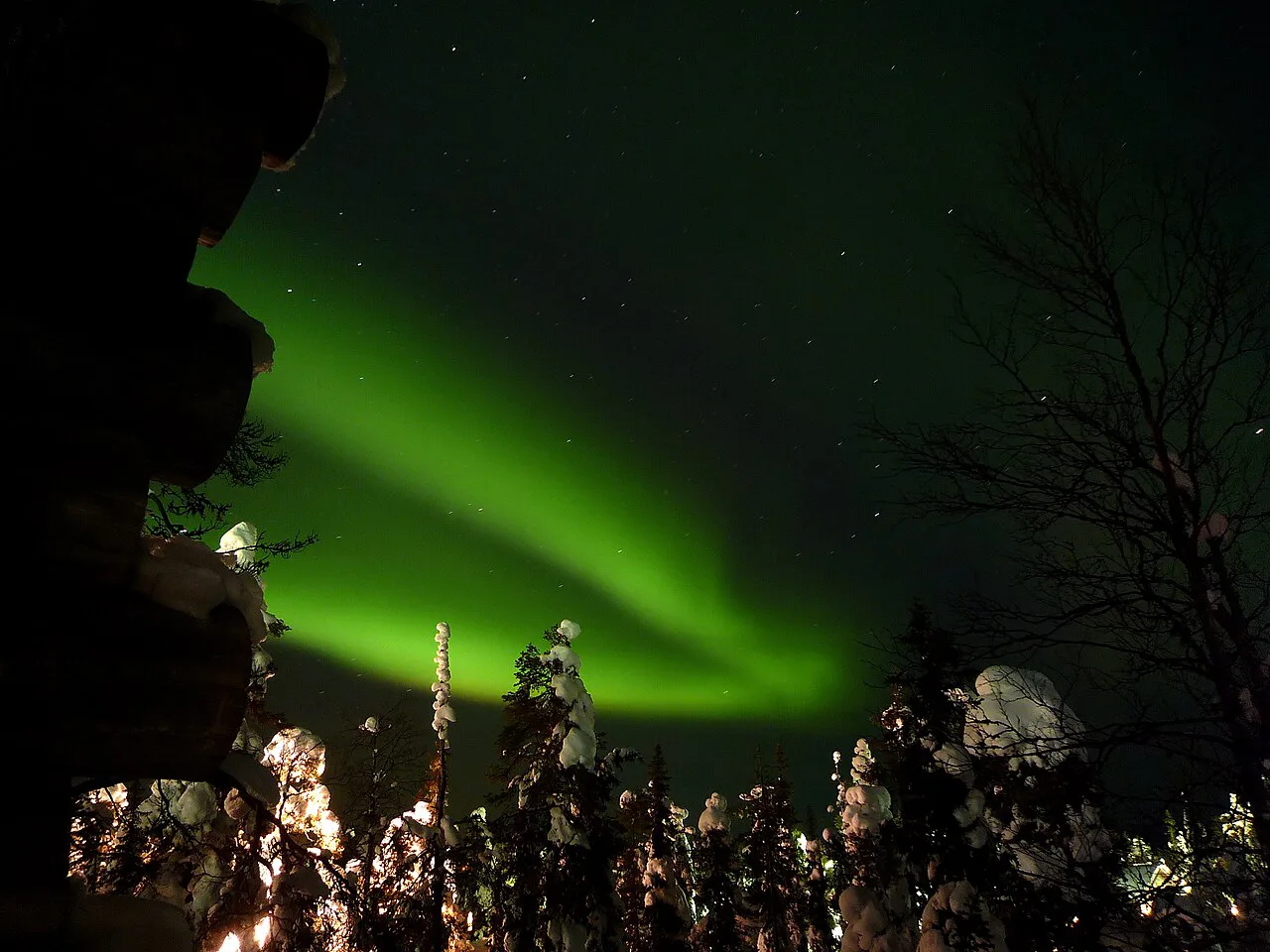
Oulanka sits far enough north that winter nights are long and dark, which is the basic requirement for seeing the aurora. The usable window runs roughly from late August and September, once nights lengthen, through to early April, when the dark hours fade again. Midwinter brings the longest nights and the coldest conditions, while the shoulder months bring more usable daylight for hiking.
A sighting still depends on solar activity and, more often, on clear skies. Cloud is the deciding factor on most nights in this part of Finland, so plan around the chance of a gap rather than a fixed date. Kp values are useful guidance for how active the geomagnetic field is, but they say nothing about whether the sky above the park is open — the same logic applies to the northern lights in Rovaniemi.
Where to find dark skies near Ruka and the park edges
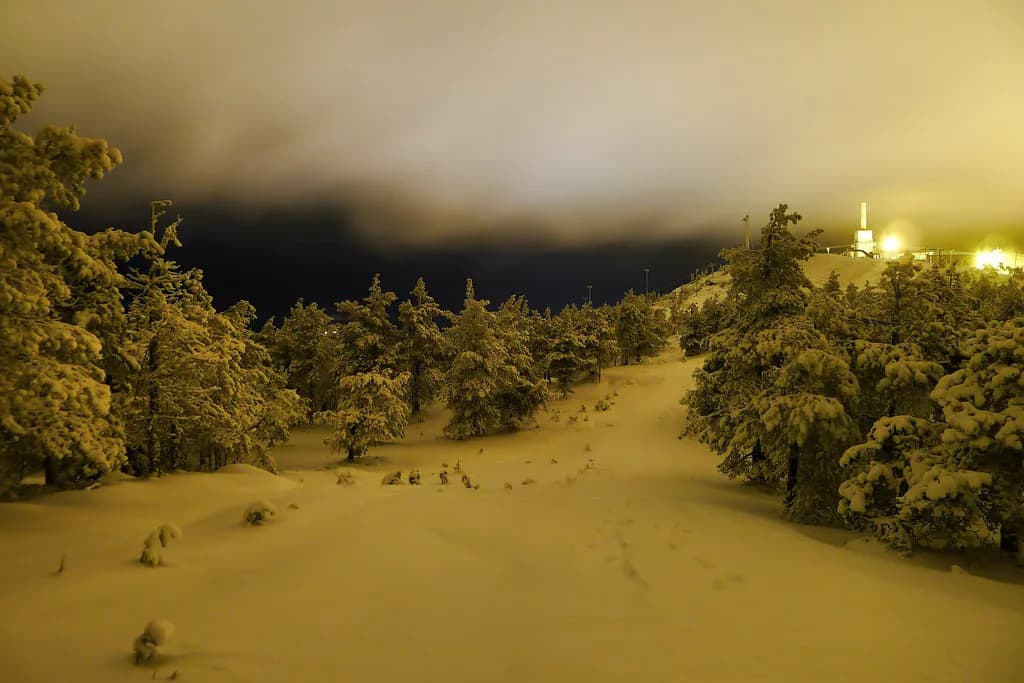
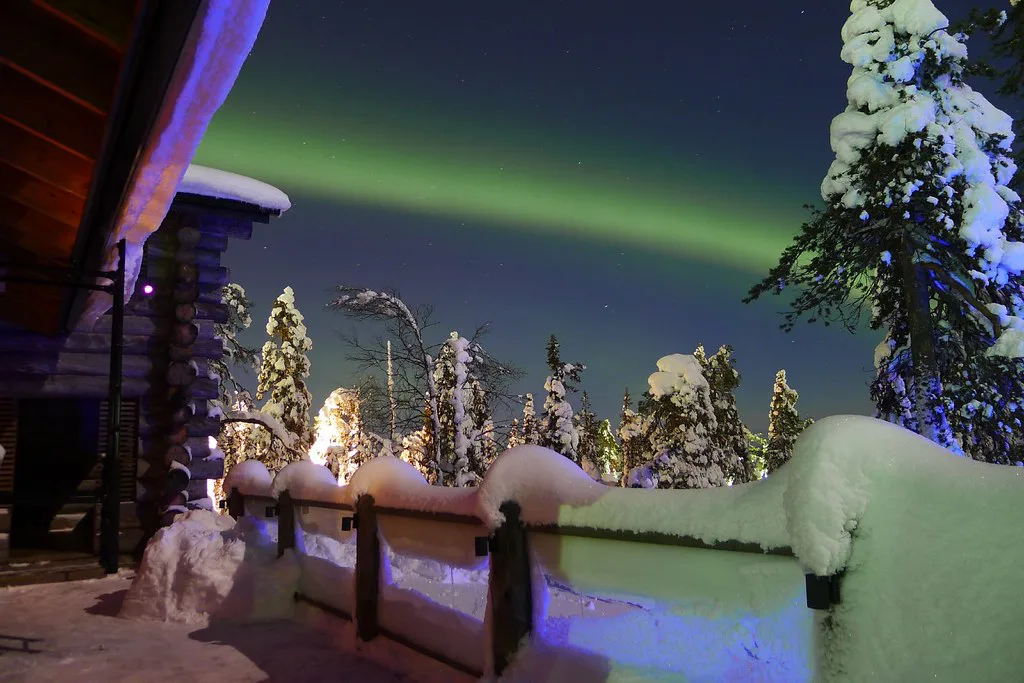
The darkest viewing is inside the park and along its unlit approach roads, where the river corridors open to the sky and village lighting falls away. Snow cover helps: it reflects even faint aurora light, so a weak display can read clearly over a white mire. The trade-off is access and safety after dark, since you are walking or driving on winter surfaces with no lighting.
Closer to Ruka, the lit slopes and village create light pollution that washes out faint displays, so a short drive away from the resort improves your view. For a lit, family-friendly evening that is not about the aurora at all, the Ruka Light Festival is worth a slot in the itinerary.
Self-guided night walking versus a guided aurora tour from Ruka
A guided night tour from Ruka handles the hard parts: transport, a driver who knows the road conditions, and a guide who reads the cloud and moves the group when the sky closes in. Operators typically lend thermal suits for the night, which matters when you are standing still for long stretches. Groups also tend to head for known open spots rather than improvising in the dark.
Self-guided chasing gives you flexibility and no fixed schedule, and it suits travellers with a car, winter driving confidence and several nights to spend. The trade-off is that you make every call yourself, from which road is ploughed to where you can safely park and walk. If you have only one or two nights, the guided option is usually the better use of them.
Winter trail options and how a short daylight window shapes the day
Oulanka offers many trail options, from short riverside paths to long sections of the Karhunkierros, and the hanging bridges link much of the network. In winter the constraint is not distance but light: the day compresses around a low sun, so a route that is comfortable in June can consume the whole usable window in January. Choose a short loop or out-and-back and start early.
Snow changes the effort as well as the view. Unbroken snow on the mires and side paths slows progress considerably, and marked summer routes are not automatically the easiest winter lines. Ask at the visitor services point which routes are being used in current conditions before committing to a longer walk.
Wildlife and winter quiet: trout, dippers and mires
Winter strips the park back to its essentials: open water, snow, and the animals that stay. Brown trout hold in the unfrozen stretches, European dippers fly low along the river, and the aapa mires become wide, trackless snowfields. The quiet is the point, and it is also why the park feels so different from the resort.
The calypso orchid and the summer plant life are dormant, so a winter visit is about landforms and water rather than botany. That makes the park a strong choice for photographers chasing texture and contrast, and a weaker one for anyone hoping for wildflower scenery.
Visitor services and the park's official contact point
Metsähallitus runs Oulanka's visitor services, and the park's contact address is Liikasenvaarantie 132 in Kuusamo, with a published phone line and email for enquiries. Use that channel for current trail conditions, winter route advice and anything that affects a planned day in the park.
National parks in Finland are nature reserves, and everyman's rights do not apply in the normal way inside them, so the rules of the destination govern what you can do. Read the Oulanka guidance before you go, since behaviour that is fine on ordinary forest land does not automatically carry over. The park is managed by Metsähallitus, whose Luontoon pages set out the current rules and any restrictions.
Who Oulanka suits: families, photographers and serious hikers
Families do well with a short riverside walk to a hanging bridge, combined with a lit evening back at the resort. Photographers get the most from the park in the low winter light and the long blue hours, with frozen rapids and open water as subjects. Serious hikers can use Oulanka as a winter training ground on the Karhunkierros terrain, provided they respect the shorter days.
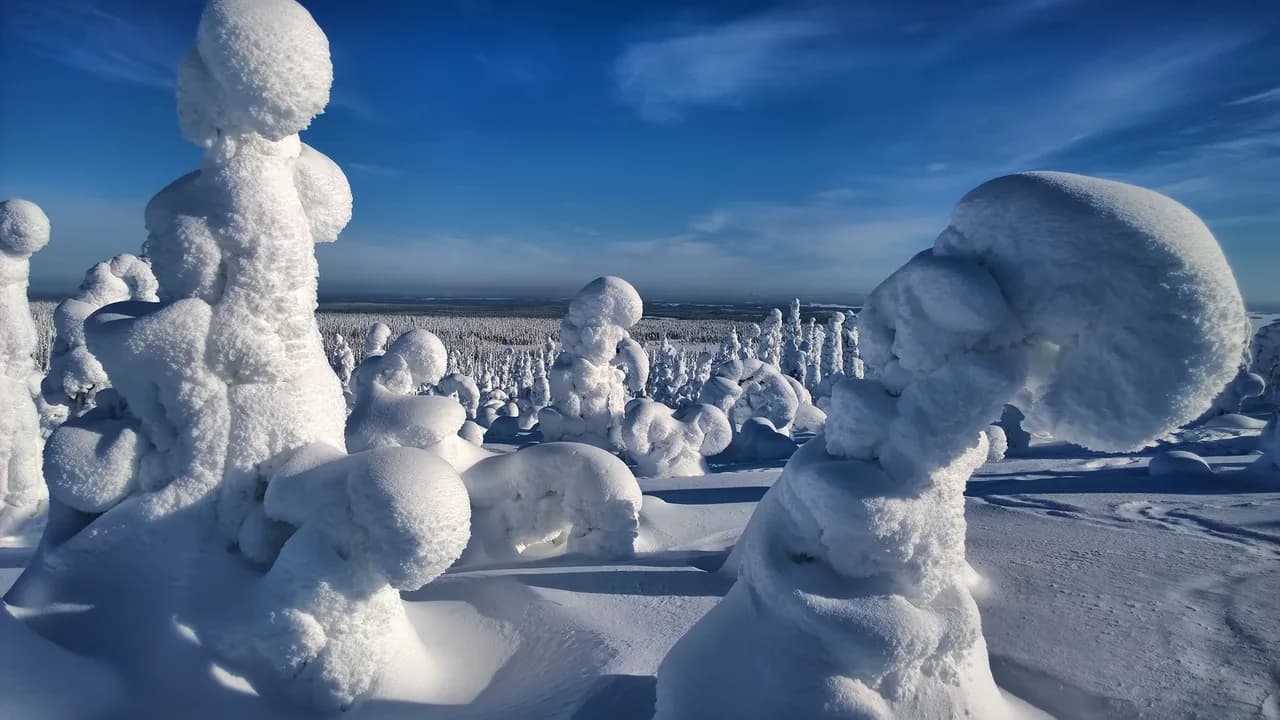
Travellers who want a single dramatic ice landscape rather than a varied river park may prefer Riisitunturi National Park, where the snow-covered trees are the draw. Accommodation such as Hotel Kirikeskus puts you closer to that landscape, and Riisitunturin Tupa is a recognised stopping point on the routes there.
Pairing Oulanka with skiing and other Ruka winter days
Ruka's slopes, ski trails and village make it a natural base for a mixed winter week, with Oulanka as one day among several. Give the park a day with good visibility, and keep the aurora nights separate so a cloudy evening in the park does not use up your best chance of clear sky. If your trip falls around the holidays, Christmas in Ruka brings its own programme and crowds, so book the quieter park day around it.
Ruka Valley is the hub for accommodation and services, and staying there puts the ski trails, restaurants and tour pickups within easy reach while keeping Oulanka a straightforward drive. Finnish Lapland rewards this kind of split base: resort comfort for the evenings, wilderness for the days.
How many nights to plan for a fair chance of clear skies
Cloud is the limiting factor on most nights, so the number of nights matters more than the number of tours. Four to five nights in the Ruka area gives you several separate attempts and room for a rest day; two nights leaves little margin if a front sits over the region. Build the Oulanka day into the middle of the stay so you can shift it to the clearer forecast.
Check the aurora and cloud forecasts each afternoon and keep your plans loose enough to move a guided tour or a self-drive evening by a day. A clear, cold night after fresh snow is the combination that makes the drive from Ruka worthwhile, and it is worth holding a spare evening for exactly that.
Plan Your Visit
Oulanka National Park gives a Ruka-based winter trip a landscape that the resort cannot: frozen rapids, hanging bridges, open mires and genuinely dark river corridors. Give it a full day with an early start, choose a route that fits the short daylight window, and keep your evenings flexible for whatever the sky does.
Book a guided night with a Ruka operator if you have only a night or two, and drive yourself into the darker edges if you have a car and several attempts to spend. Either way, treat a sighting as a bonus rather than the plan, and the park will still deliver the quiet, cold, snow-bound day that makes the trip worth it.
Frequently Asked Questions
Is Oulanka National Park worth visiting in winter?
Yes, if you want the Karhunkierros landscape without summer crowds and can plan around a short daylight window. Winter brings frozen rapids, snow-covered mires and hanging bridges over the Oulanka river, and the park's unlit corridors are genuinely dark after sunset. It works best as one full day from a Ruka base rather than a standalone destination.
How far is Oulanka National Park from Ruka?
The park sits in North Ostrobothnia with its main visitor services near Kuusamo, so a visit from Ruka is a full-day drive out and back rather than an evening trip. Plan to leave in the morning so you reach the trailheads while daylight lasts, and keep the return leg free of any fixed evening booking in case road conditions slow you down.
Can you see the northern lights from Oulanka National Park?
The park is far enough north for long dark winter nights, and its unlit river corridors and open mires are among the darkest viewing areas near Ruka. Whether the aurora appears depends on solar activity and, above all, on clear skies, so treat any sighting as a bonus. Allow several nights in the region and keep one evening flexible for a clear gap.
What is the Karhunkierros Trail?
The Karhunkierros is Finland's most popular hiking route, and it runs through Oulanka's cliffs, mires and river valleys, with hanging bridges crossing the water. In winter you do not need to walk the whole route: a short out-and-back section to a bridge and a river view delivers the scenery within the short daylight hours.
How many days do you need in Oulanka National Park?
One well-planned day covers a short riverside walk, a hanging bridge crossing and a look at the frozen rapids. If you want a longer section of the Karhunkierros or time to photograph in low winter light, split it across two days and keep the evenings separate for aurora attempts nearer Ruka.
Do you need a guide to visit Oulanka in winter?
No guide is required to walk the park's trails in daytime, but a guided night tour from Ruka handles transport, winter driving and cloud-reading, and operators typically lend thermal suits for the night. Self-guided chasing suits travellers with a car and several nights to spend, and it gives you the freedom to move when the sky clears.
Sources
Notes for your Arctic winter trip
Optional updates to our northern lights guides.
You might also like
Continue reading
More guides you'll find useful