Ruka Aurora Forecast: Decide Your Best Viewing Night
Read the Ruka aurora forecast like a local: Kp thresholds at 63°N, cloud cover, dark-sky spots near the village and how many nights to plan.
On this page
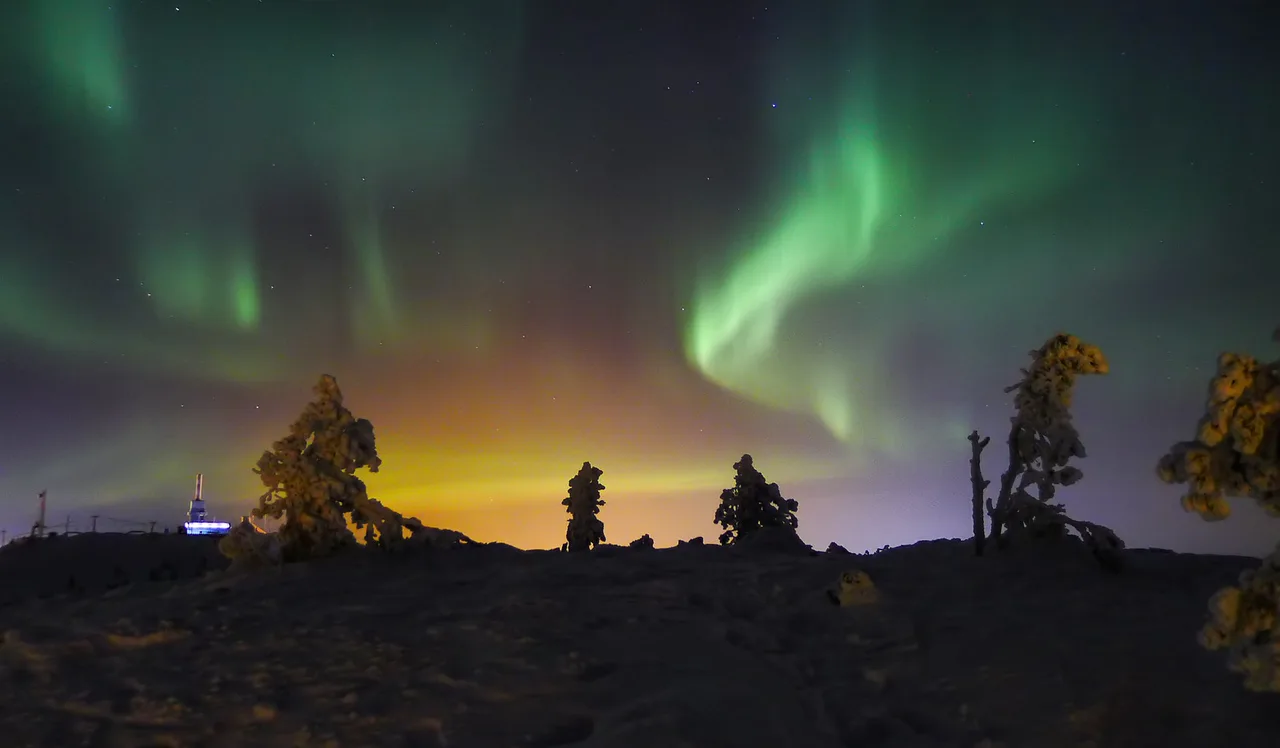
Ruka is a ski village in Kuusamo, eastern Finnish Lapland, set among fells and lakes roughly 63 degrees north. That latitude keeps it inside the auroral oval, so the northern lights can appear on many dark, clear nights without a major solar storm, which makes it a practical base for a winter aurora trip.
The forecast that matters is never a single number. You are combining geomagnetic activity, cloud cover, moonlight and true darkness, then deciding whether to walk to the fell edge or drive out to a darker lake shore. The sections below show how each piece works and where to watch near the village.
Why Ruka sits inside the aurora zone
The auroral oval is a ring of glowing atmosphere around the magnetic pole, and Ruka lies close enough to it that even moderate activity can produce visible arcs. Forecast services put Kuusamo's magnetic latitude at about 63 degrees, a band where aurora becomes a realistic prospect on many clear nights rather than a once-a-year event.
Solar wind drives that ring. When a stream of charged particles hits Earth's magnetic field, currents build in the upper atmosphere and the oval expands southward, which is when fells around Ruka start to glow. The Finnish Meteorological Institute describes aurora as the most visible form of space weather and tracks the magnetic disturbances behind it.
When nights are dark enough in Ruka-Kuusamo
Darkness is the first filter. Around Ruka, the aurora season effectively runs from late August and September, when nights lengthen quickly, through to early April, when twilight returns to the evening sky. Midwinter brings the longest nights but also the shortest days, so plan daytime activities around a few hours of usable light.
Summer is the opposite problem: the northern lights may occur all year, but bright nights and cloud make them impossible to see, as the local tourism office notes. That is why late August to early April is the window worth booking, and why the equinox months of September and March often pair long dark nights with decent weather.
What Kp value usually matters at this latitude
The Kp index is a global measure of magnetic disturbance, running from quiet conditions up to storm levels. At Kuusamo's latitude, forecasters put the rough threshold at Kp 3, meaning aurora becomes plausible overhead at that level and brighter displays appear as the index climbs toward 5 and beyond.
Treat that number as guidance, not a switch. Weaker disturbances can still show a faint arc low on the northern horizon, and a strong Kp reading means nothing if cloud sits over the fells. Check the forecast for the direction of the disturbance as well as its size, because aurora often builds on the northern sky before spreading overhead.
Reading the Finnish Meteorological Institute space weather page
The Finnish Meteorological Institute runs a national space weather service built on automatic magnetometer stations, including measurements for Sodankylä produced by the Sodankylä Geophysical Observatory. Its chart shows geomagnetic disturbances over the last 24 hours as bars, and the map shows the latest reading at each station.
The colour coding matters more than any single figure. Yellow bars and yellow squares mean a lower threshold has been crossed and aurora is possible but usually dim, while red bars and red rhombuses mean the upper threshold has been passed and a visible display is very likely at that station. Watching that page through an evening tells you whether activity is building or fading.
For a wider national picture, including how the activity band shifts across Lapland, the broader aurora forecast guide explains the same signals for other bases. It is a useful cross-check when Ruka's local readings look borderline.
Adding cloud cover and moonlight to the Kp picture
Once geomagnetic activity looks promising, cloud becomes the deciding factor. A clear or nearly clear sky is a precondition for seeing the lights, and the Ruka-Kuusamo tourism office points travellers to a live webcam from the area as one way to see what the sky is doing right now.
Moonlight is the secondary wash-out. A bright moon can dim faint arcs even on a cloudless night, so a dark-of-moon week gives you more contrast for subtle displays. Consumer forecast apps combine Kp, cloud, moon phase and darkness into one visibility reading, which is convenient but only as good as the cloud forecast behind it.
How a nightly forecast routine works
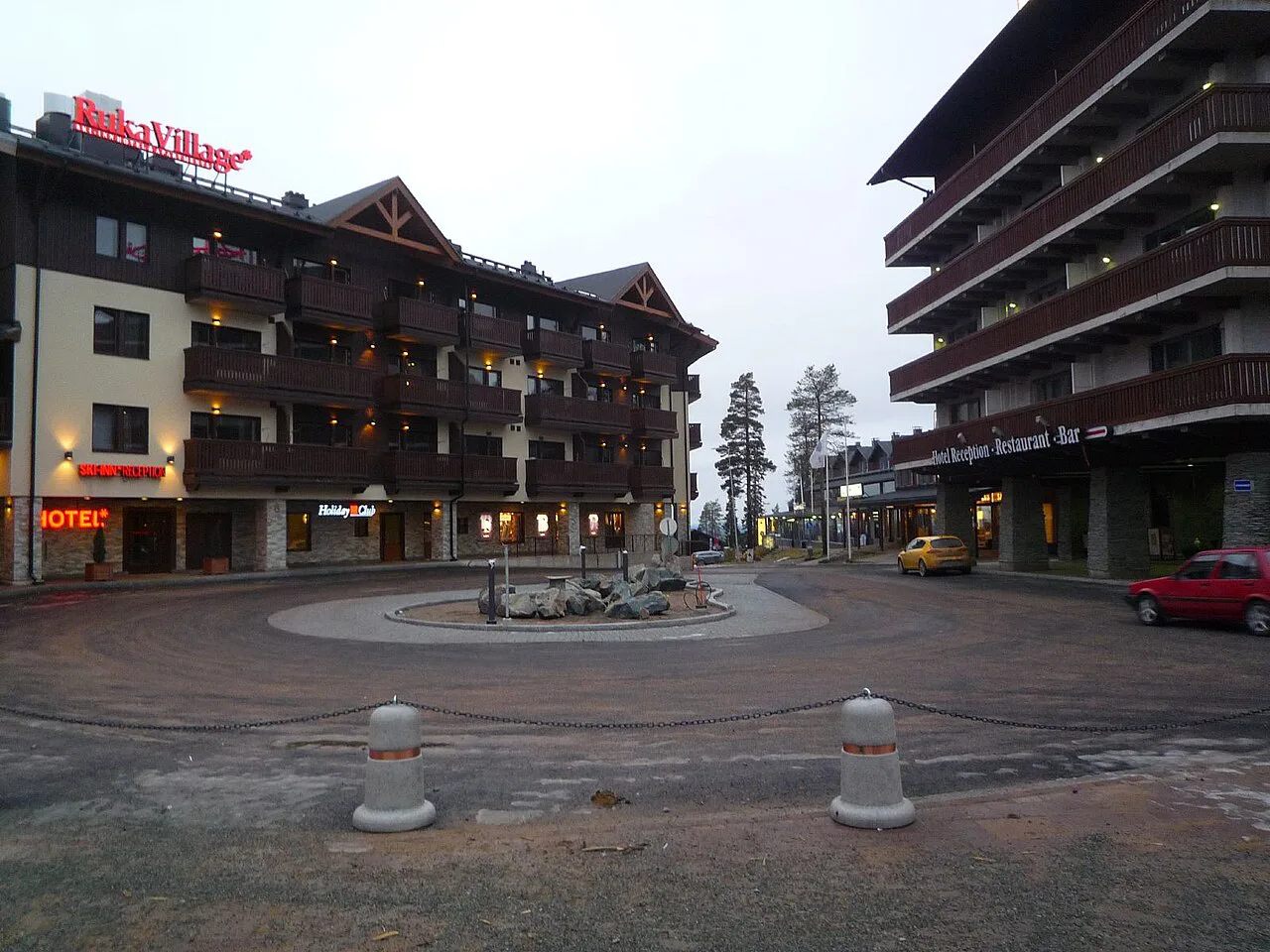
A simple routine beats frantic refreshing. In the afternoon, check the space weather chart and the evening cloud outlook; if both look reasonable, decide where you will watch and how you will get there before dark. Around Ruka, that might mean a short walk to a fell viewpoint, a drive to a trailhead, or a seat on a guided safari.
After dark, re-check the institute's live readings and the webcam. If the bars turn red and the sky is clear, head out promptly, because displays can build and fade within an hour or two. If activity stays quiet, set an alert on a forecast app rather than standing in the cold all evening.
Dark-sky viewing spots near Ruka village
The tourism office names its own favourites. Juhannuskallio is reachable by car, while the Valtavaara and Konttainen area offers open fell terrain where the horizon is wide; both sit outside the village lights, which is the point when you are chasing faint arcs rather than bright storms.
On the Posio side, Riisitunturi has a wilderness hut on the fell summit where an adventurous watcher can spend the night, according to the same local source. That is a bigger commitment than a roadside stop, but it puts you above the treeline and away from village glow for a whole night.
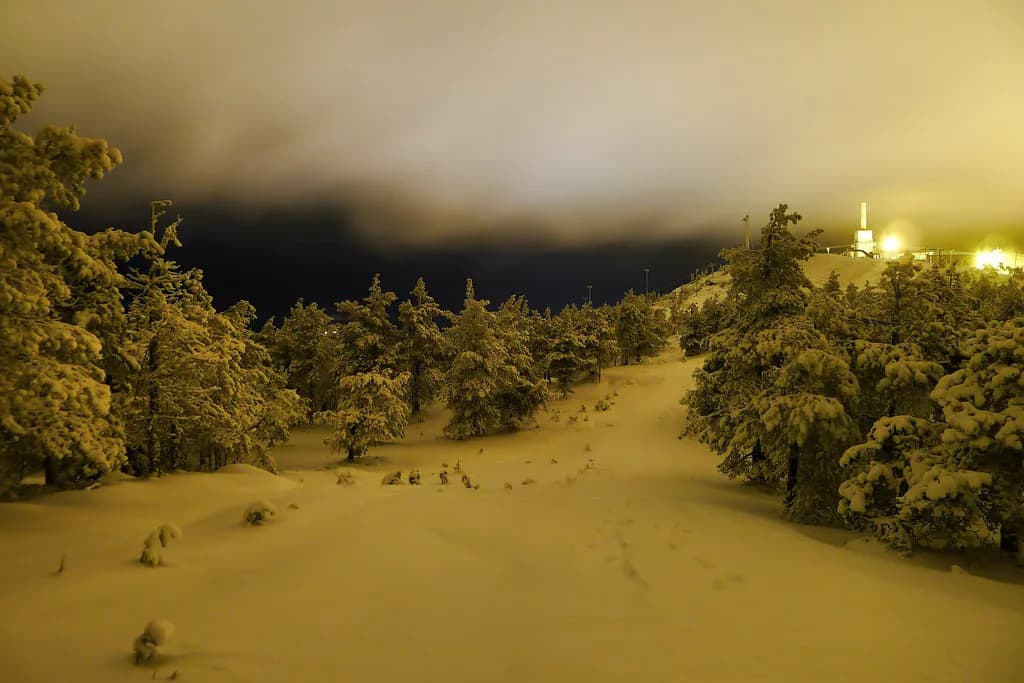
Wherever you go, pick a spot with an unobstructed northern horizon and minimal light pollution, and look 30 to 60 degrees above the horizon during moderate activity. Frosty trailheads and fell tops can be icy after dark, so a headlamp and a known route back matter more than the extra kilometre.
Self-guided chasing versus a guided aurora safari
Self-guided chasing works well near Ruka because the dark spots are close and the roads are straightforward in normal winter conditions. You keep your own schedule and can move when the webcam or the chart suggests a better window, which matters on nights when activity comes in short bursts.
A guided safari adds local driving, a route chosen for the night's cloud and often thermal suits, so you are not navigating unfamiliar snow roads at midnight. The tourism office lists operators including Ruka Adventures, Ruka Safaris, Rukapalvelu, MyTrail Finland, Northern Lights Expedition, Outdoor Passion Finland, Arctic Lumo Resort, Basecamp Oulanka and Kujalan Porotila reindeer farm, with options ranging from snowshoe and reindeer-sleigh outings to snowmobile safaris.
The trade-off is flexibility against convenience and cost. A tour gives you a driver, a fire and hot drinks on a cold night; a car gives you the freedom to abandon a cloudy spot and drive toward a gap in the cloud. Many travellers do one guided night early and then chase independently once they know the terrain.
Glass-roof and aurora-focused accommodation
Several accommodation providers around Ruka-Kuusamo specialise in northern lights holidays, from glass-roof rooms where you can watch lying on your back to larger log cabins and villas for groups. That range suits couples wanting a sky view and families or friends who prefer space and a shared kitchen.
A glass roof is a comfort choice, not a guarantee. You still need activity and a clear sky, and cabin lights, snow on the glass and interior warmth can all interfere with the view. Treat it as a warm place to wait between checks rather than a substitute for going outside.
Combining aurora nights with husky, reindeer and snowshoe trips
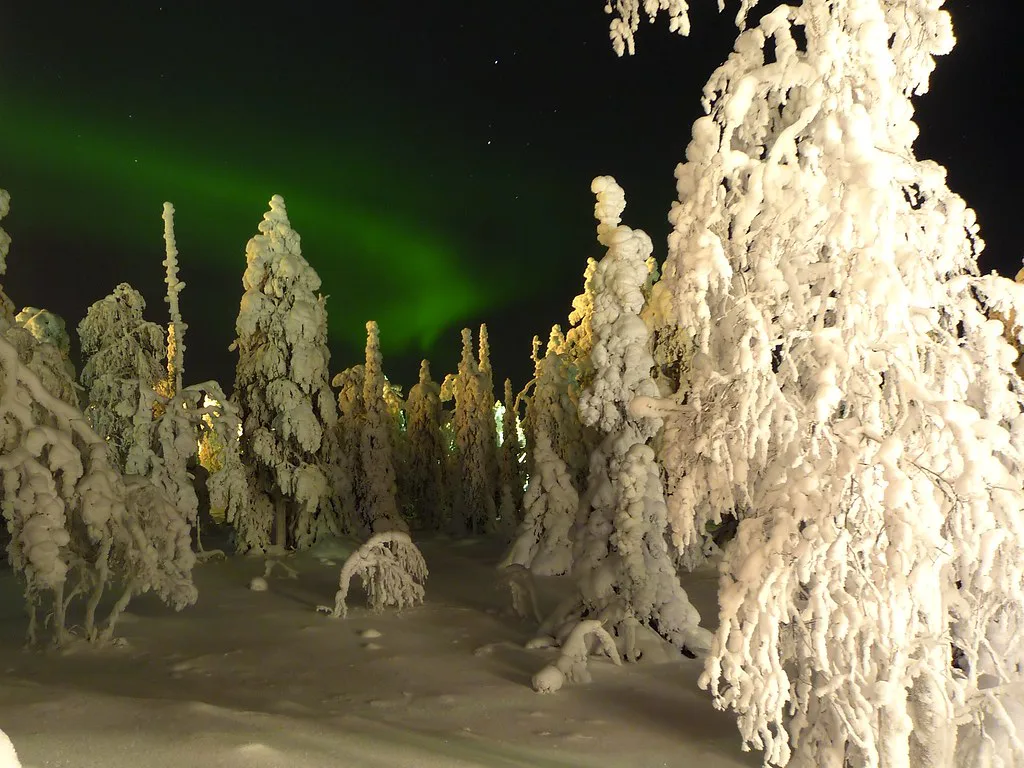
Aurora watching is a night job, so fill the daylight with something suited to short winter days. Reindeer-sleigh rides, Finnhorse outings and snowshoe adventures are all offered as northern lights safaris in the Ruka area, and they double as a way to reach quiet terrain without driving yourself.
Day trips also buffer against cloudy nights. Oulanka National Park, with the Karhunkierros Trail running through it, gives you a full day of river and forest scenery close to Ruka, and operators there run winter activities that pair well with an evening out.
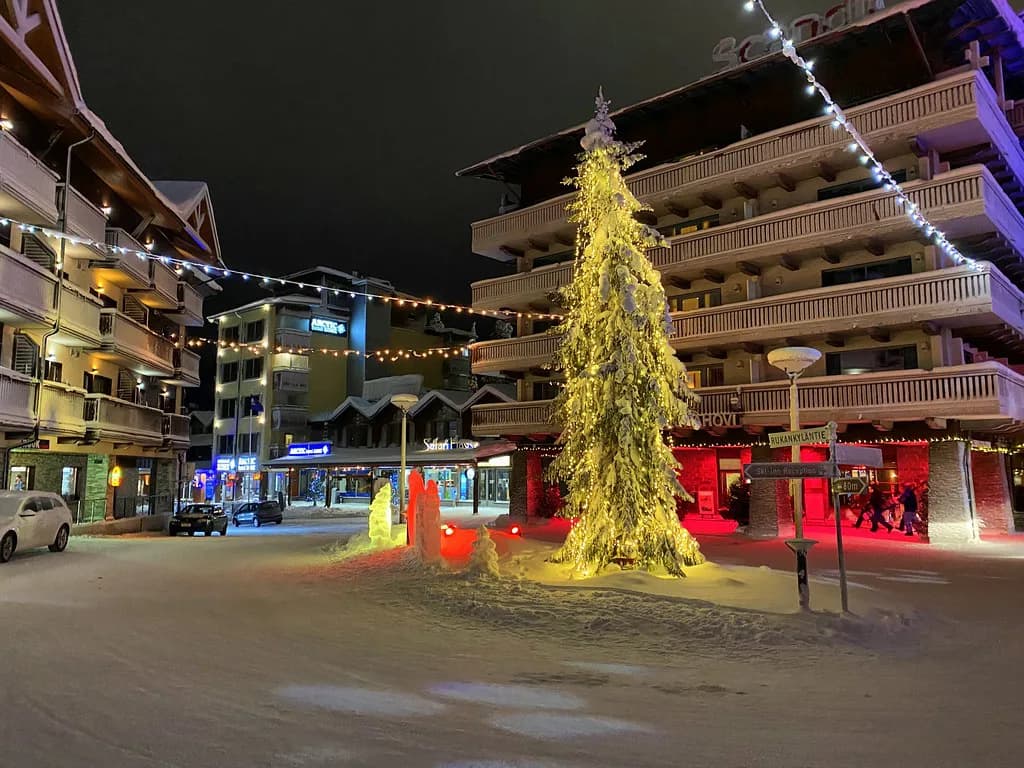
If you are staying over the Christmas period, the village fills with seasonal events and family activities, which changes the rhythm of a trip built around late-night sky watching. Plan at least one fully free evening so a promising forecast is not lost to a booked dinner or event.
How many nights to allow for a fair chance
Cloud is the most common reason people miss aurora even during strong storms, so nights matter more than any single forecast. Three to four nights in Ruka gives the weather a chance to break; a single night is a gamble even in a good season, because a front can sit over the fells for days.
If your trip is short, weight it toward the darker months and away from full-moon weeks, and keep one evening unplanned so you can move when the sky clears. Watching the webcam through the days before you arrive also tells you how often the area has been clear.
Autumn aurora and the double-aurora lake reflection
Autumn is an underrated window. The tourism office notes that a double aurora, where the lights reflect on calm water, is possible on Kuusamo lakes and ponds from August to November, before ice covers the water and snow buries the shorelines.
Those same weeks bring dark nights without deep cold, which makes standing at a lake edge far more comfortable than in February. Book early for the equinox period, when demand for autumn aurora trips is high and accommodation around the village fills.
Plan Your Visit
Build your Ruka trip around a handful of nights, a dark spot you can reach after dinner, and a routine of checking geomagnetic activity and cloud before you commit. The village and its fells give you several ways to watch, from a roadside viewpoint to a guided safari with thermal suits provided.
For the wider picture of operators, accommodation and season timing around the resort, the northern lights in Ruka guide pulls the pieces together. Then watch the sky, not the calendar, and let a clear night decide your evening.
Frequently Asked Questions
What Kp index do I need to see the northern lights in Ruka?
Around Kp 3 is the rough threshold at Kuusamo's latitude, when aurora becomes plausible overhead. Stronger disturbances toward Kp 5 and above produce brighter, more active displays. Treat Kp as guidance rather than a rule, since a clear sky and true darkness matter just as much as the index.
When is the best time to see the northern lights in Ruka-Kuusamo?
The dark season runs from late August and September through early April, and the northern lights can appear on any clear night in that window. September and March often combine long dark nights with workable weather, while midwinter offers the longest nights but the shortest days.
Where is the best place to watch the northern lights near Ruka village?
Local recommendations include Juhannuskallio, reachable by car, and the open fell terrain around Valtavaara and Konttainen, both away from village lights. On the Posio side, Riisitunturi has a wilderness hut on the summit where you can stay overnight. Pick anywhere with an open northern horizon and low light pollution.
Can I see the northern lights in Kuusamo in autumn?
Yes, autumn is a strong window. From August to November, calm lakes and ponds can reflect the aurora to create a double aurora, and nights are dark without the deep cold of midwinter. Book accommodation early around the equinox, when demand rises.
How many nights should I stay in Ruka to see the aurora?
Plan three to four nights if the aurora is a priority. Cloud is the main reason people miss displays, so extra nights give the weather a chance to clear. A single night is a gamble even in a good season.
Do I need a guided aurora tour in Ruka?
Not necessarily. Self-guided chasing works well because the dark spots near the village are close and the roads are manageable in normal winter conditions. A guided safari adds local driving, a route chosen for the night's cloud and often thermal suits, which helps if you would rather not drive at night.
Sources
Notes for your Arctic winter trip
Optional updates to our northern lights guides.
You might also like
Continue reading
More guides you'll find useful