Northern Lights in Ruka: Season, Viewing Spots and Tours
Plan northern lights nights in Ruka, Finland: when the skies are dark, where to watch away from village lights, and which guided safaris suit your trip.
On this page
Ruka is a fell resort in Kuusamo, on the southern edge of Finnish Lapland, wrapped in taiga forest, lakes and rounded fells. Winter here pairs a working ski village with genuinely dark country a short drive from the lifts, which suits travelers who want to mix skiing or snowshoeing by day with aurora watching after dinner. The lights are never guaranteed, but the setting gives you several ways to chase them.
What makes Ruka practical is that you are not tied to one viewing platform. You can drive to a roadside dark spot, hike onto a fell, join a guided safari that follows cloud forecasts, or simply watch from a bed under a glass roof. Each option trades comfort, cost and flexibility differently, and the best plan usually combines two of them across a few nights.
Why the aurora shows over Ruka and Kuusamo
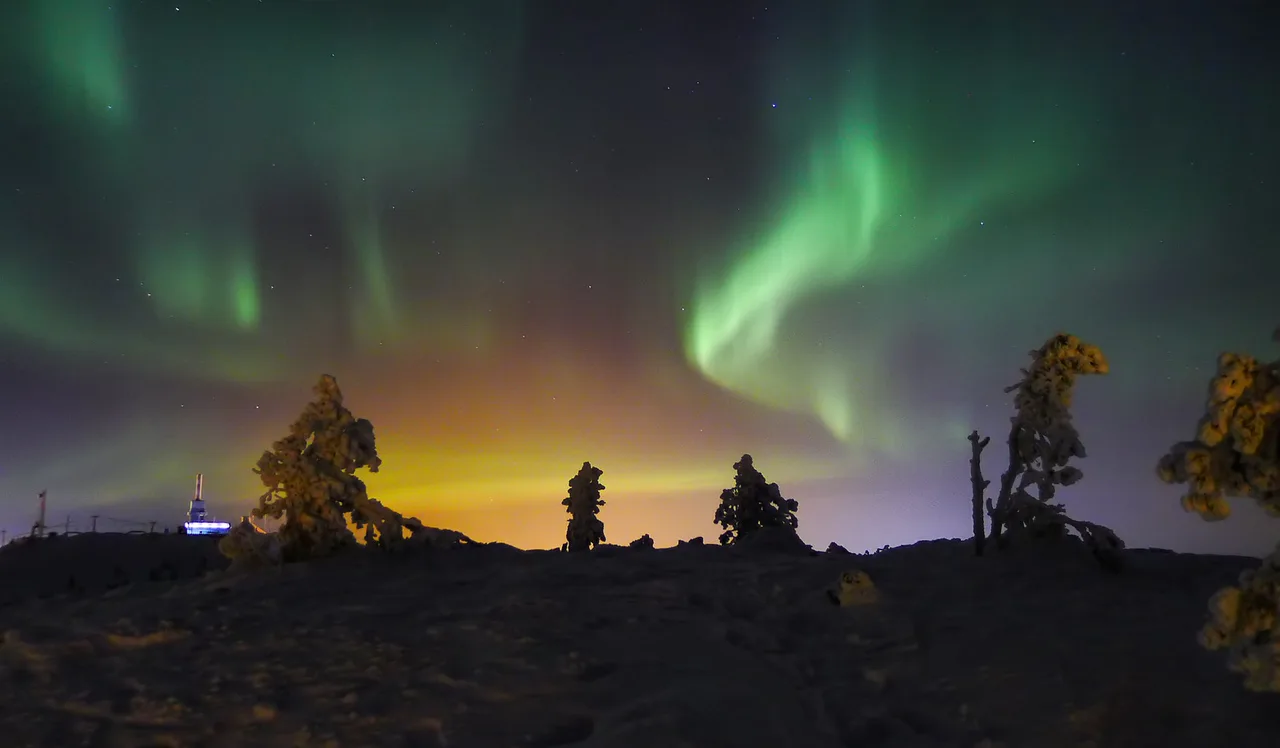
Ruka lies in northern Finland, close enough to the auroral oval that geomagnetic activity regularly lights the sky on clear nights. The surrounding landscape of low fells, frozen lakes and open bogs keeps artificial light low once you leave the village, so dark-sky viewing does not require a long expedition. The aurora appears year-round, but bright summer nights and cloud cover often hide it, which is why winter travelers plan around darkness and weather.
Activity forecasts such as the Kp index are guidance, not a promise. A high reading with heavy cloud gives you nothing, while a modest reading under a clear sky can produce a memorable display. Treat forecasts as a way to decide whether it is worth going outside, and let cloud cover make the final call.
When the aurora season runs and how dark the nights get
Dark enough nights return to Kuusamo in late August and last well into spring, with the deepest darkness in the polar-night weeks around midwinter. Outside that core, autumn and spring still deliver long nights, and the resort's own season pages describe aurora viewing as a year-round possibility limited by cloud and summer brightness. October in Ruka shows how fast daylight shrinks: one mid-October evening had a day of roughly nine hours, with nautical dusk falling before eight.
August to November is also the window for a double aurora, the northern lights mirrored on a calm lake surface. That reflection needs open water and still air, so early-season trips can deliver a scene that deep winter cannot. By contrast, midwinter brings snow cover, short days and long, cold nights that leave plenty of hours for watching but fewer daytime activities.
Cloud is the deciding factor in every month. Autumn and early winter tend to bring changeable skies with milder temperatures, while the coldest midwinter stretches can lock in clear, still air or sit under overcast for days. Build your trip around several nights rather than one, and use the Ruka webcam and local forecasts to judge whether to head out.
Juhannuskallio: the roadside dark-sky spot near Ruka village
For self-guided watchers, Juhannuskallio is the easiest option: a viewing point reachable by car and open enough to keep street glow behind you. It suits travelers with a rental car, families who want a short night out, or anyone unwilling to hike in the dark. Pack a headlamp and check the road before setting off, since winter conditions on minor roads vary.
The resort's guidance is straightforward: seek open or high ground outside residential areas, away from street lights, and expect cloud to decide the night. A car-accessible spot means you can move between locations quickly if a bank of cloud rolls in, which is a real advantage over a fixed cabin view.
Valtavaara and Konttainen: fell viewpoints for self-guided watchers
The Valtavaara and Konttainen area gives self-guided watchers higher ground and a broader horizon. These fell routes are close to the resort and are described as prime aurora-viewing terrain. A snowshoe or skin-based climb after dark requires navigation skills and a reliable headlamp, so go only if you are comfortable in winter terrain.
Guided snowshoe safaris cover similar fell scenery with a local guide who knows the terrain and current snow. That is a sensible choice on your first night in the area, when you have no feel for the trails or the weather. From there, you can decide whether to repeat the route independently later in the trip.
If you want to extend the fell country further, the trails and wilderness around Oulanka National Park sit nearby and offer their own winter walking. Read more about routes and conditions in Oulanka National Park in Winter before committing to a longer day out.
Riisitunturi on the Posio side and its wilderness hut
On the Posio side, Riisitunturi offers a more adventurous night: the national park has an open wilderness hut on the fell where a prepared watcher can spend the night. That puts you on the summit for the darkest hours instead of driving back to the village at midnight. It rewards planning, since you carry your own supplies and sleep in basic conditions.
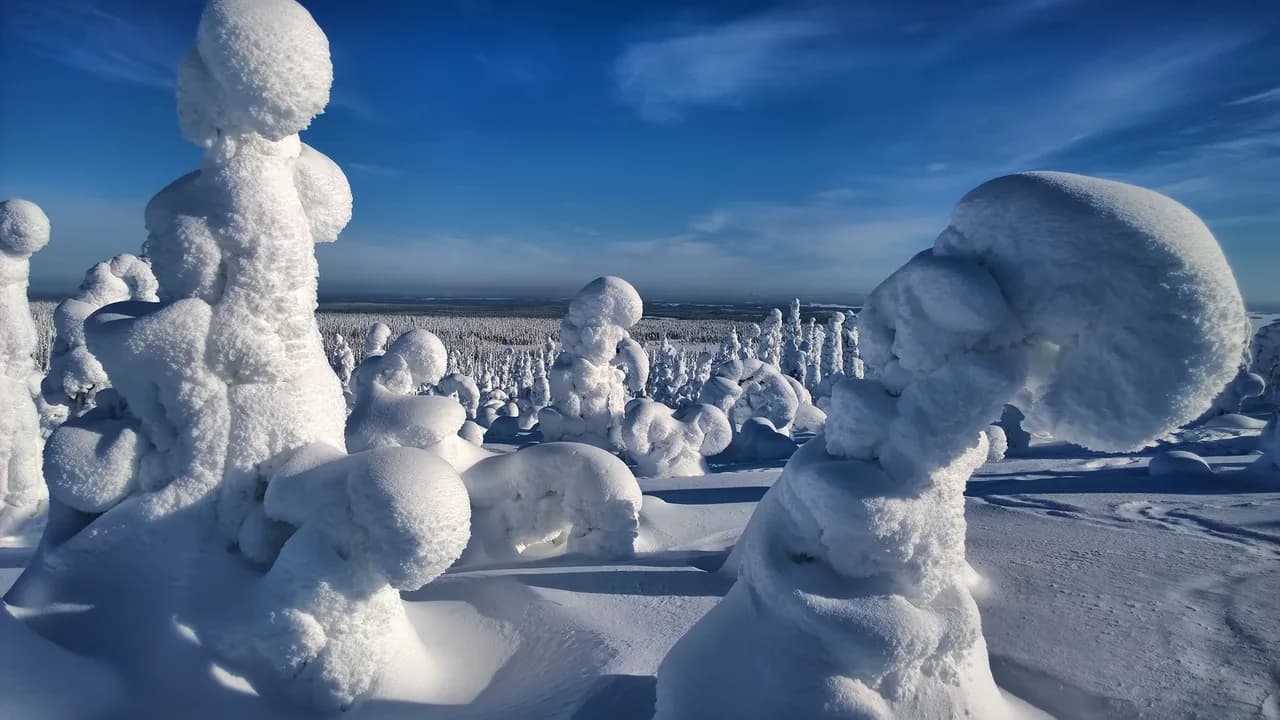
Riisitunturi is known for snow-laden trees and open fell tops, and the surrounding trails give you options for a daytime reconnaissance before a night out. Check the park's own guidance on hut use and winter access before relying on it. Our Riisitunturi national park guide covers the terrain and how to plan around it.
Reading cloud cover, the aurora forecast and the Ruka webcam
Forecasts are useful only when read together. The Ruka page on Yr shows aurora activity, a Kp index and current cloud cover for the location, so you can see at a glance whether the sky is worth watching. Use it alongside the Ruka webcam to judge actual conditions before you leave your accommodation.
Ruka's tourism pages point to free aurora apps, including My Aurora Forecast, as a simple way to track probability. Treat the numbers as a rough guide and the sky itself as the real test. If the forecast is middling but the webcam shows stars, go outside.
Guided aurora safaris from Ruka
Ruka's tourism office lists a spread of local operators, from Basecamp Oulanka and Ruka Adventures to Rukapalvelu, Arctic Lumo Resort and Kujalan Porotila Reindeer Farm. They run reindeer-sleigh, snowmobile and snowshoe safaris, and several offer aurora-focused accommodation. Booking through a listed operator gives you a guide who knows the local weather and terrain.
Ruka Safaris runs minivan hunts, reindeer-sleigh rides, snowshoe walks, starlight sledging and evening snowmobile trips. The company says its guides follow real-time forecasts to choose viewing spots, and warm clothing is included on its excursions. That combination suits travelers without a car or without winter driving experience.
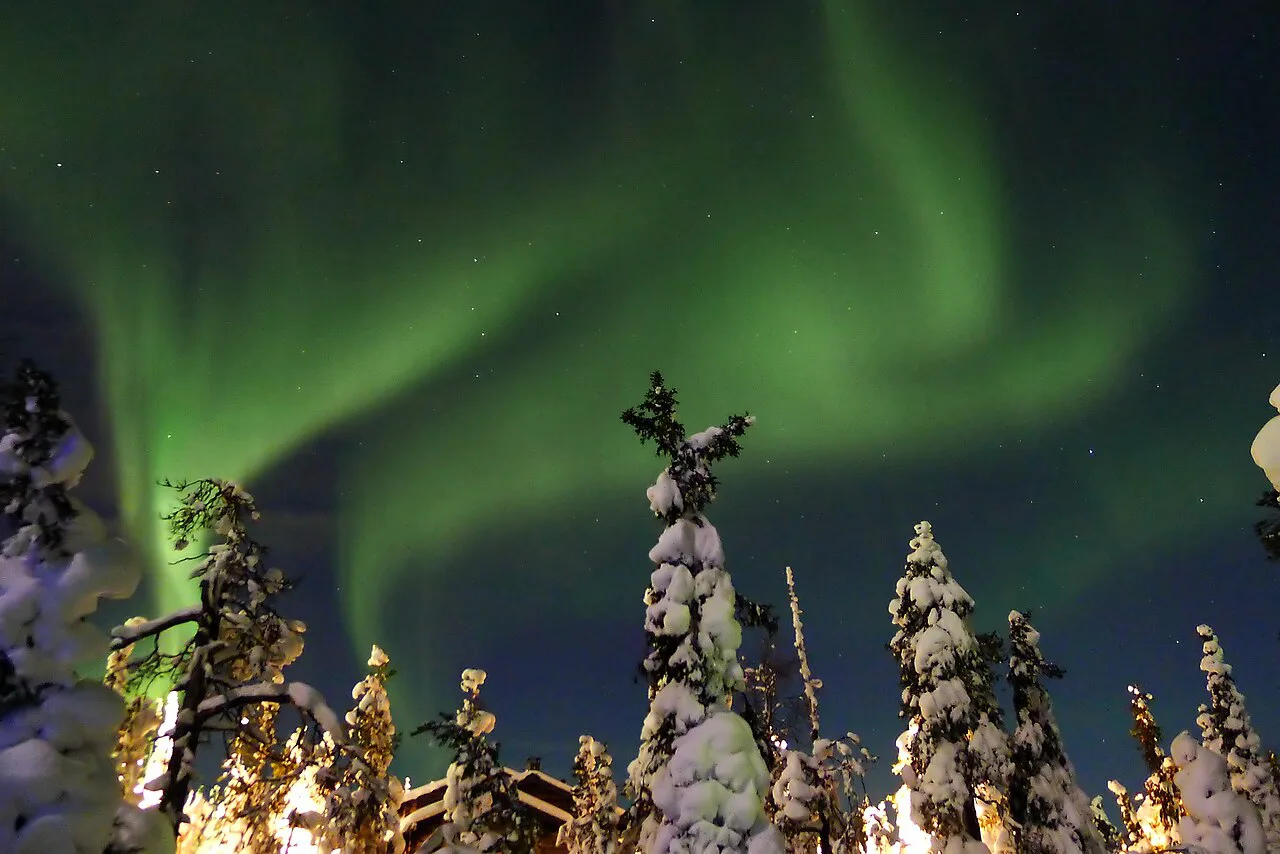
Minivan aurora hunting with real-time forecast routing
A minivan hunt is the most flexible format for a cloudy night. The guide can drive toward gaps in the cloud rather than staying tied to one spot, and you stay warm between stops. For a couple or a small group without a rental car, it is usually the simplest way to cover ground after dark.
The trade-off is that you share the vehicle and the schedule with other guests, so you cannot linger at a viewpoint as long as you like. If photography is the priority, ask Ruka Safaris about group size and whether tripods and photography stops are part of the format before you book.
Reindeer sleigh and Finnhorse rides under the night sky
Reindeer-sleigh and Finnhorse rides offer a slower, quieter way to be out after dark, with the animals setting the pace across snowy trails. Several Ruka-area operators, including Kujalan Porotila Reindeer Farm and Ruska Laukka Stables, run these experiences. They suit travelers who want atmosphere and local tradition more than active chasing.
Because the route is fixed, the outcome depends on the sky above the trail rather than on driving to clearer ground. Treat a sleigh ride as a memorable winter night with a chance of aurora, not a forecast-driven chase.
Snowshoe, starlight sledging and evening snowmobile options
Snowshoe walks head into fell terrain away from artificial light, and starlight sledging and night snowmobile safaris add speed or a towed sled to the evening. Ruka Safaris runs all of these formats and includes warm clothing on its excursions. Choose based on how much activity you want and how cold you are willing to be.
Snowmobiling requires a valid driving licence for the driver, and rules and age limits vary by operator and route, so ask when booking. Snowshoe and sledging formats are generally the most accessible for mixed-age groups.
Guided versus self-guided: cost, comfort and flexibility
Self-guided watching costs only your transport and time, and it lets you change plans at the last minute. You need a car, winter driving confidence and the ability to navigate to a dark spot and back safely. Guided safaris remove those burdens, include warm clothing on Ruka Safaris trips, and add local knowledge, at the price of a fixed schedule.
A good compromise is one guided night early in the trip to learn the terrain and the forecast routine, followed by self-guided nights from a car-accessible spot. If you are staying in a glass-roof cabin, you already have a fixed viewing position, so a mobile tour adds a second, different chance.
Sleeping under the aurora: glass-roof cabins and aurora-focused stays
Ruka-Kuusamo has a range of glass-roof and aurora-focused accommodation, from small villas to large log cabins, where you can watch the sky from bed. The tourism office notes that many of these providers pay particular attention to operating in a way that respects nature. That makes a cabin night a comfortable fallback when you do not want to drive.
The trade-off is that a heated glass roof can gather snow or condensation, and interior light reduces what you can see. Ask how the roof is kept clear and whether the cabin has outside access for a clearer view. Ruka Safaris lists Iisakki Glass Village among its own accommodation, alongside villas and apartments at Iisakki Village.
For a different base, Hotel Kirikeskus near Riisitunturi puts you closer to the Posio-side fells. Compare it with village stays if you want quieter surroundings and shorter drives to dark terrain.
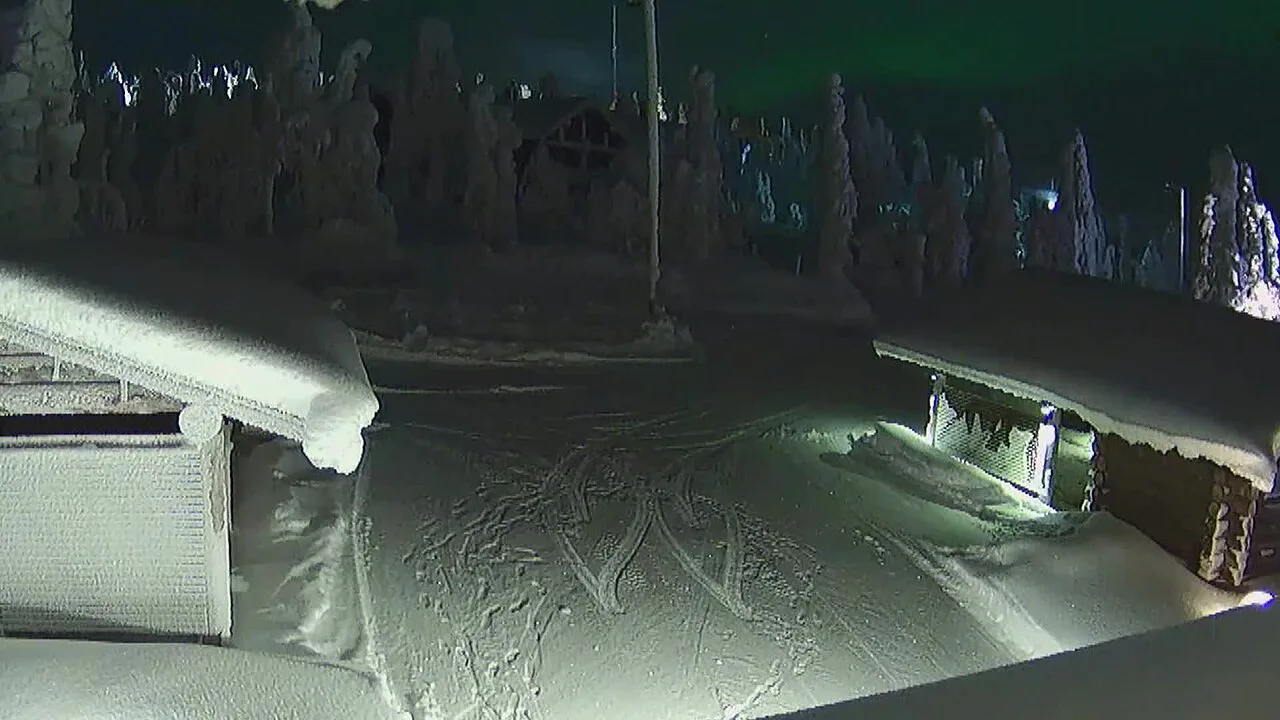
Where to base yourself in Ruka village and the valley
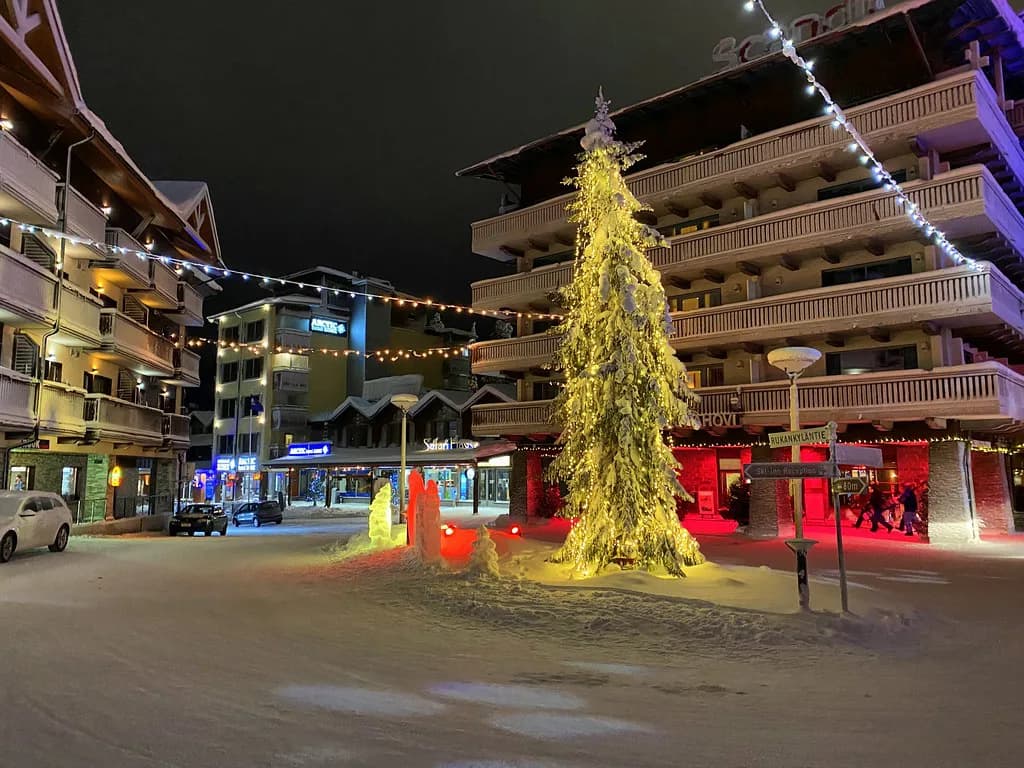
Ruka village sits at the foot of the slopes, with restaurants, ski services and the ski-in accommodation clustered together, while Ruka Valley spreads out a short distance away. A village base means you can walk to dinner and join a safari pickup without driving, but street lights and buildings limit the view from your window. A valley or cabin base trades convenience for darker skies.
If you plan to drive to Juhannuskallio or the fell trailheads, check that your accommodation has winter parking and that your rental car has proper winter tyres. If you plan to rely on tours, choose a base with easy pickup access and confirm the meeting point when you book.
How many nights to allow for a fair chance of clear skies
No one can promise aurora on a given night, and cloud is the usual reason a trip comes up empty. Three to four nights in Ruka gives you several independent chances and room to move a safari if the first night is overcast. A single night is a gamble whatever the forecast says.
If aurora is the main goal, weight your trip toward October to March, when nights are long and darkness is reliable. Add a guided mobile tour on one night to hedge against cloud near the village, and keep at least one night free for a self-guided drive if the sky clears.
Autumn versus midwinter aurora trips
Autumn brings the lake-reflection window from August to November, milder temperatures and a mix of hiking and aurora nights, though snow cover may be thin. The tourism office describes October and November as a sustainable choice that supports year-round tourism. Midwinter brings reliable snow, short daylight and the deepest nights, but colder conditions and fewer daytime options.
Aurora activity itself does not follow a simple seasonal rule, so the decision is mostly about the trip you want around the watching. If you want snowmobiling and skiing as well, midwinter fits; if you want open water and hiking, autumn does.
Getting to Ruka in winter
Kuusamo Airport is the closest gateway, and the resort publishes connections from Oulu and Rovaniemi by SkiBus as well as bus links from Kemijärvi and Kuusamo town. Flying in and taking the bus avoids winter driving entirely. Check the timetable for your arrival date, since services are seasonal.
If you drive, winter tyres and a check of road conditions before each leg are essential, especially on minor roads to viewpoints. A rental car gives you the flexibility that makes self-guided watching worthwhile, but only if you are comfortable on snow and ice at night.
Comparing Ruka with other Lapland aurora bases
Ruka sits toward the southern edge of Finnish Lapland, which means slightly shorter deep-winter darkness than far-northern bases but easier access and a fuller village. If you want the classic far-north experience, compare it with northern lights in Finland farther up, such as Lake Inari, where the season is longer and the terrain wilder, and see our guide to the inari northern lights for how that darker, wilder base compares.
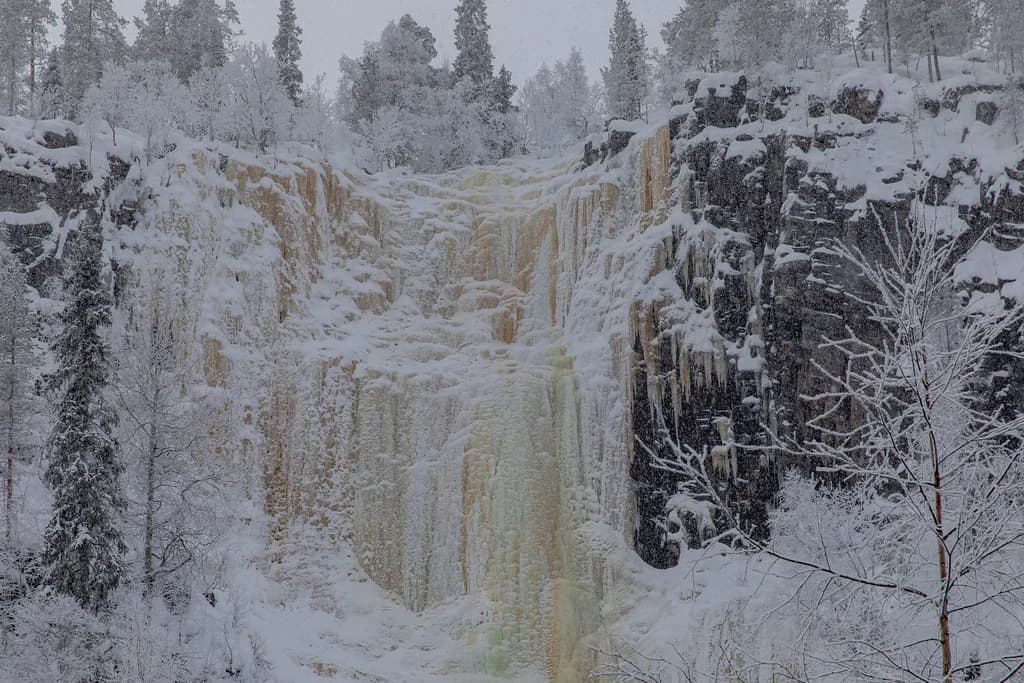
For a different kind of winter day, Korouoma Canyon in Winter offers frozen waterfalls within reach of southern Lapland bases. Norway's northern coast is another comparison point for coastal weather, though it is a different trip entirely.
Plan Your Ruka Aurora Nights
Build your Ruka trip around several nights, one guided mobile safari and at least one self-guided option, and you give yourself the best realistic shot at a clear sky. Use the Ruka webcam and the Yr aurora and cloud page on the day to decide when to head out.
Pair the watching with the rest of the area: fell trails, reindeer farms, glass-roof cabins and the Ruka light festival in midwinter. Book tours and accommodation early for peak weeks, and confirm pickup points and included gear with your operator before you travel.
Explore more Ruka northern lights guides
- Oulanka National Park
- Riisitunturi National Park
- Korouoma Canyon in Winter
- Christmas in Ruka
- Glass Igloos and Aurora Cabins Around Ruka
- Ice Fishing in Ruka
- New Year in Ruka
- Polar Night in Ruka
- Reindeer Safaris in Ruka
- Ruka Aurora Forecast
- Ruka Husky Safari
- Ruka in December
- Ruka in March
- Ruka in Winter
- Ruka Light Festival
- Ruka Northern Lights Tours
- Ruka Snowmobile Safaris
- Saunas in Ruka
- Snowshoeing in Ruka
Frequently Asked Questions
Is Ruka in Lapland good for seeing the northern lights?
Ruka sits in Finnish Lapland close enough to the auroral oval that geomagnetic activity regularly lights the sky, and dark fell and lakeside spots are a short drive from the village. Cloud cover is the main limit, so plan several nights rather than one.
What month is best for the northern lights in Ruka?
Dark nights run from late August into early April, with the deepest darkness in midwinter. August to November adds the chance of a lake reflection, while midwinter offers reliable snow and the longest nights. Choose based on the rest of your trip, not on a guaranteed aurora month.
Is Ruka inside the Arctic Circle?
Ruka lies in northern Finland near the southern edge of Lapland, close to but not inside the Arctic Circle. That still places it under dark winter skies with regular aurora activity on clear nights.
Can you see the northern lights without a tour in Ruka?
Yes. Juhannuskallio is reachable by car, and the Valtavaara and Konttainen fells give higher ground for self-guided watchers. You need a car, winter driving confidence and a headlamp, plus a check of cloud and aurora forecasts before heading out.
Where is the best northern lights viewing spot near Ruka village?
Juhannuskallio is the easiest car-accessible spot outside the village lights, while the Valtavaara and Konttainen area offers higher fell viewpoints. On the Posio side, Riisitunturi has a wilderness hut for an overnight stay on the fell.
How many nights should I plan in Ruka for a chance of auroras?
Three to four nights gives you several independent chances and room to shift a safari if cloud spoils the first night. A single night is a gamble whatever the forecast says, and no operator can promise a sighting.
What is included in a Ruka northern lights safari?
Ruka Safaris says its excursions include warm clothing and are led by local guides who follow real-time forecasts to pick viewing spots. Formats range from minivan hunts and reindeer-sleigh rides to snowshoe walks, starlight sledging and evening snowmobile trips.
Can you see the northern lights from a glass-roof cabin in Ruka?
Ruka-Kuusamo has glass-roof and aurora-focused cabins, from small villas to large log cabins, where you can watch from bed. A heated roof can gather snow or condensation, so ask how the roof is kept clear and whether you can step outside for a clearer view.
Sources
Notes for your Arctic winter trip
Optional updates to our northern lights guides.
You might also like
Continue reading
More guides you'll find useful