Rovaniemi in Winter: Aurora, Daylight and What to Book
Plan a winter trip to Rovaniemi with month-by-month daylight and temperatures, husky and reindeer rides, snowmobiling and realistic odds of seeing the aurora.
On this page
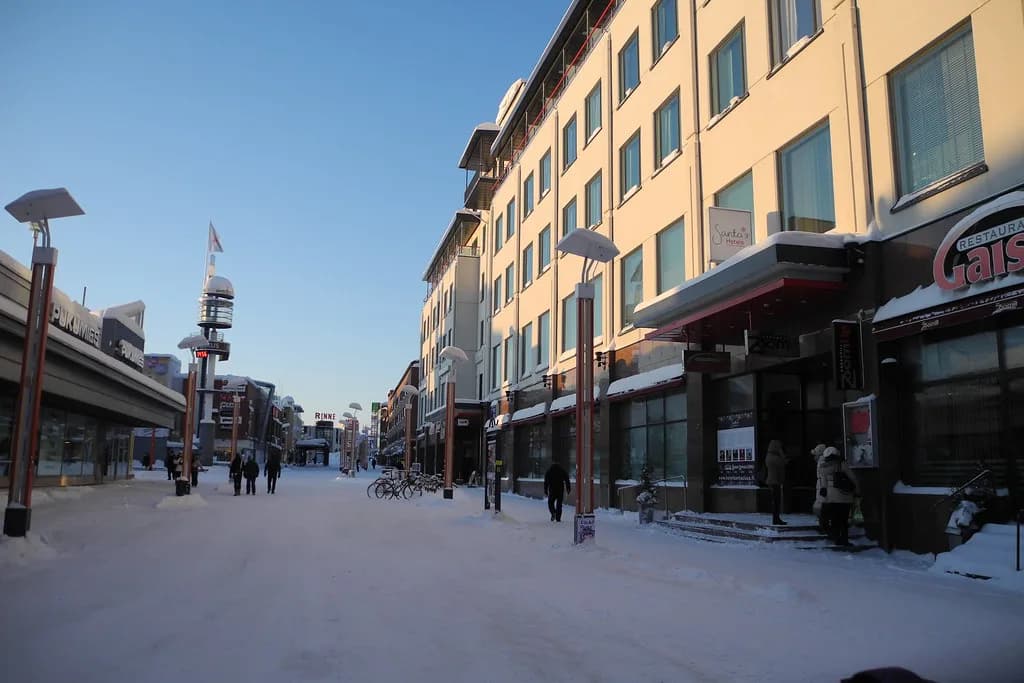
Rovaniemi packs an Arctic winter into a small, easy-to-reach city: frozen rivers, snow-laden pines, husky teams, reindeer sleighs and a festive village straddling the Arctic Circle line. Direct winter flights from several European cities and an overnight sleeper train from Helsinki make it one of the simplest gateways to Finnish Lapland for travellers who want big winter scenery without a long transfer.
It suits first-timers and families most of all. The city centre has hotels, restaurants and a science museum, while forest resorts and cabins a short drive away cut light pollution for aurora watching. If you want a base where a single short break can mix wildlife, snowmobiling, sauna and a realistic shot at the northern lights in Rovaniemi, this is a strong choice.
Why Rovaniemi suits a first Arctic winter
Rovaniemi sits almost exactly on the Arctic Circle, which is why the line is marked through Santa Claus Village 8km north of the centre. That latitude means long dark nights from autumn into spring, the basic requirement for aurora displays, and it puts you deep enough north that even a modest solar forecast can produce a visible arc.
Logistics are unusually simple for the far north. The airport lies around 8km northeast of the city centre, reached by an airport express shuttle or a taxi, and the centre connects to Santa Claus Village by local bus and the Santa's Express service. Trains from Helsinki run year-round, with daytime journeys of eight to nine hours and the overnight Santa Claus Express sleeper taking around twelve.
The trade-off is that Rovaniemi is a working town rather than a wilderness lodge. You gain shops, restaurants, buses and a museum, but the city glow washes out faint aurora, so most successful viewing involves heading out to the forest edge or booking a chase that drives you away from streetlights.
When the aurora season runs and what improves your odds
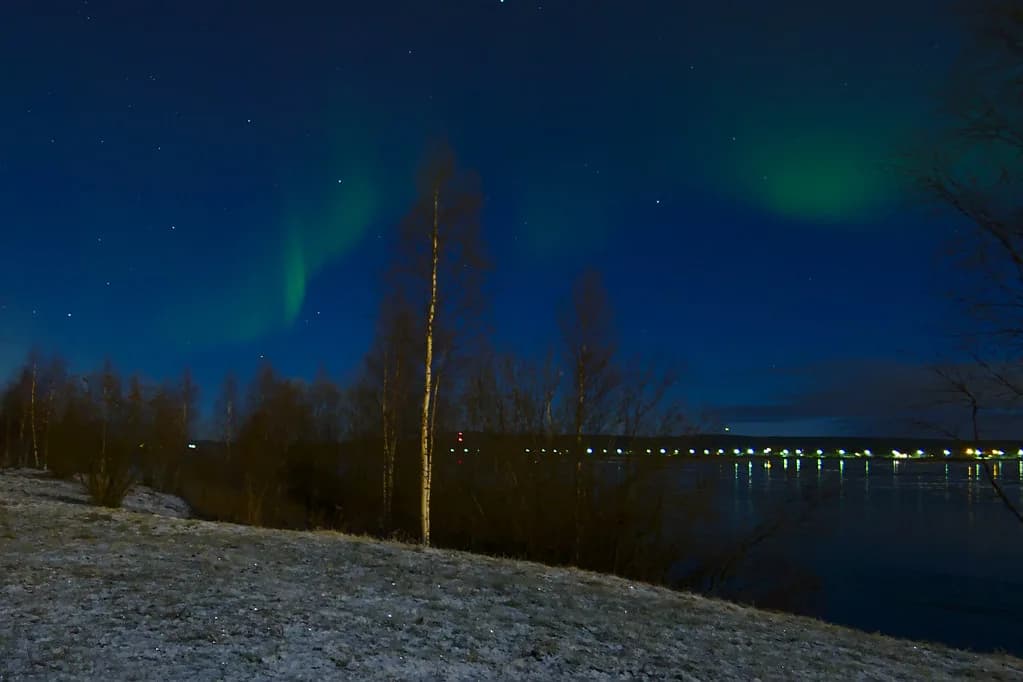
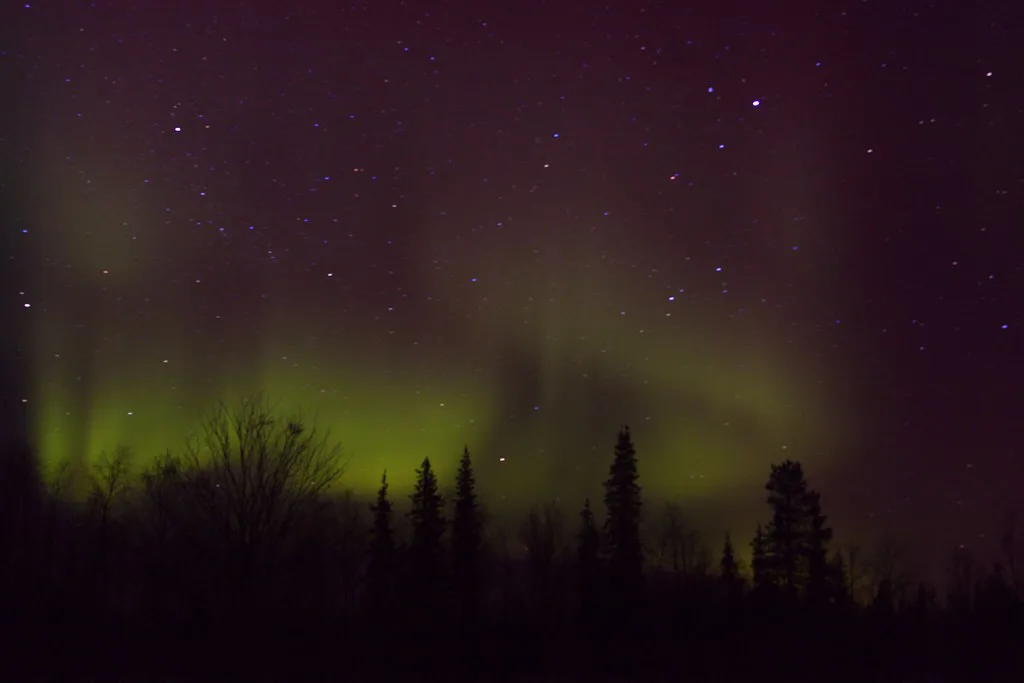
The aurora season in Lapland stretches from mid-August until early April, and displays are often favoured at the start and end of that window rather than in the depths of midwinter. Clear sky matters as much as solar activity, and January in particular combines long nights with frequent snow cloud that can hide an active sky.
To improve your chances, plan several nights rather than one, keep evenings flexible and watch cloud forecasts alongside aurora apps. Kp values are guidance only; a low Kp under a clear sky near the Arctic Circle often beats a high Kp under cloud. Moving a few kilometres away from streetlights is usually the fastest gain you can make on a given night.
Operators typically run chases that place no fixed limit on time or distance, sometimes with a refund if conditions look hopeless, which is worth comparing against shorter fixed-route tours. Read the cancellation terms before you book, because a snowed-out night is common and a flexible policy lets you rebook rather than lose the evening.
Daylight and temperature by month
Winter in Lapland effectively runs from December until March. Around the shortest day on 21 December the sun rises near 11am and sets around 1.20pm, giving under two and a half hours of full daylight, but the sky stays in twilight from roughly 9.30am to 3.30pm so the day never turns pitch black. Daylight returns quickly, reaching about nine hours by the end of February.
January and February are the coldest months, with average daytime highs near -7°C and night-time lows around -14°C, plus roughly 32cm of snowfall a month, so snow-dependent activities are reliably running. Early January gives only about three hours of daylight, rising to roughly six by the end of the month, which is why late January balances long dark nights with enough light to see the landscape.
November and December can be a gamble for snow-based tours, since dog sledding and snowmobiling may lack sufficient cover and get cancelled or refunded. December carries the heaviest Christmas crowds, while January and later bring calmer streets, more restaurant tables and easier tour availability. March appeals if you want brighter, longer days and a better chance of seeing the landscape on the move.
Where to watch near town
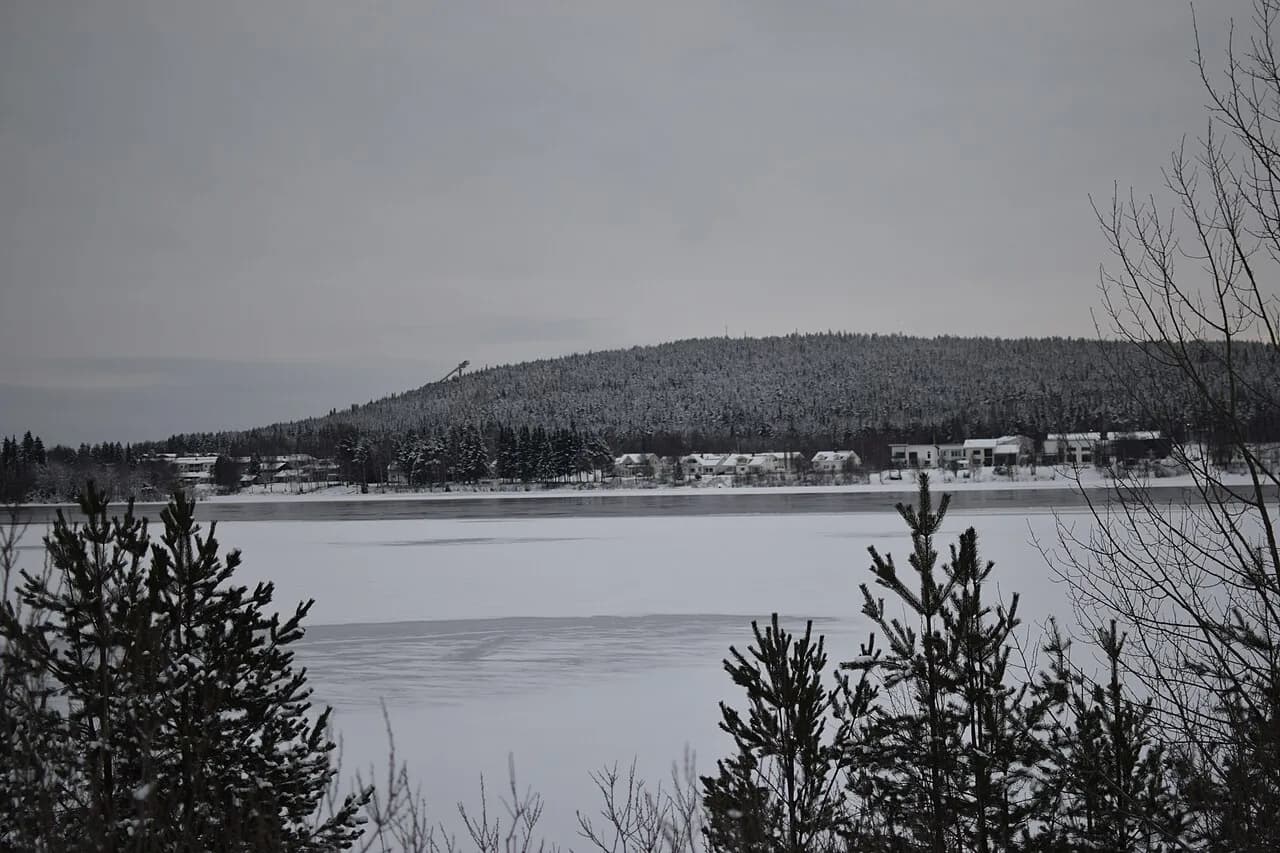
The city edge and the riverbank give you the quickest self-guided option: walk out from the centre toward the darker stretches beyond the streetlights and keep the town glow behind you. Ounasvaara hill, with its ski slopes across the river from town, sits above much of the light and is a practical short outing if the sky clears.
Santa Claus Village, 8km north of the centre past the Arctic Circle line, is darker than downtown and pairs a viewing walk with the village sights. Buses from the centre make it workable without a car, though you need to check the last return times rather than assume a late bus.
Staying outside the city, whether in forest cabins or glass-roofed rooms at Apukka Resort, removes the light-pollution problem entirely: you can watch from the doorstep and go back inside to warm up. The trade-off is dependence on transfers or a hire car for everything else, so weigh a few dark nights against convenience for daytime activities.
Guided aurora chases versus watching on your own
A guided chase buys you local knowledge of where the cloud breaks, a driver on icy roads and often thermal suits, campfire food or a snowmobile leg. Tours run from Rovaniemi to more remote areas and some combine the chase with a husky sleigh or a snowmobile ride, which is efficient if your time is short.
Doing it yourself costs little and suits confident drivers and flexible travellers. Use an aurora alert app and a cloud forecast, pick a dark road or trail out of town and give it a few hours rather than ten minutes. The limit is that you need a car for the darkest sites and you carry the risk of driving on snow at night.
Either way, treat any single night as a coin toss and build in repetition. Three or four evenings of opportunity, with a day activity planned for each morning, is a far more sensible structure than one expensive tour on one night.
Husky sledding: taster circuits and self-drive tours
At the Husky Park beside Santa Claus Village you can meet the dogs and take short circuits of 500 metres, 2km or 5km without booking ahead, which is ideal for families or a spontaneous day. Hold on tight: the dogs accelerate hard and the wind chill at speed is fierce.
Longer rides head out of the city, with Apukka Resort running routes of 5km to 10km through the trees where you can mush the team yourself and spend time with the dogs. Self-drive tours are hands-on and, because Finnish terrain is relatively flat, less physically punishing than mushing in hillier regions.
Young children generally cannot drive their own sled, so families should book a musher-led ride where everyone sits in the sled. By January there is usually enough snow for all sledding to operate, making midwinter to late winter the safest window for a husky day.
Reindeer sleigh rides and farm visits
Reindeer sleighs are the gentle alternative, gliding through snow at walking pace while you sit wrapped in hides. At Santa Claus Reindeer you can choose routes of 400 metres, 1km or 3km, and each sleigh takes up to two adults, which makes it the easiest winter activity for small children or anyone who wants scenery over speed.
For more substance, visit a reindeer farm outside Rovaniemi to hear how the animals are kept, feed them and take a short ride. Finnish Lapland has more reindeer than people, and a farm visit puts the herding culture into context in a way a village circuit cannot.
Snowmobiling and ice fishing for a longer day out
A snowmobile covers ground no sled can, reaching remote forests and frozen lakes in an afternoon. Driving one yourself requires a valid driving licence, while children and non-drivers ride in a sledge towed behind the guide's machine, so mixed-ability groups can still go out together.
Ice fishing adds a slower half-day: you drill through the ice, fish, and the catch is typically cooked over a fire. Night snowmobile tours also run, but many travellers find a daytime ride better value since you can actually see the landscape you came for.
Santa Claus Village and the Arctic Circle line
The Arctic Circle is marked through the middle of Santa Claus Village with a line of lanterns and a strip of blue light, and crossing it earns you a certificate if you want the ritual. Santa's office, the village post office with its Arctic Circle postmark and a Christmas exhibition fill an easy half-day.
The village is at its busiest in the run-up to Christmas and calms down after New Year, which makes January a far more comfortable time to wander the site. Husky sledding, reindeer rides and snowmobiling are all available in one place, alongside an ice bar and a Lappish teepee serving baked salmon.
It is easy to visit independently by shuttle or taxi from the centre, and a taxi ride runs to about €25 each way, so a bus is the cheaper choice if your timing fits. A guided combination tour is worth considering if you want reindeer and husky rides bundled into the same visit.
Day trips: Riisitunturi and Korouoma Canyon
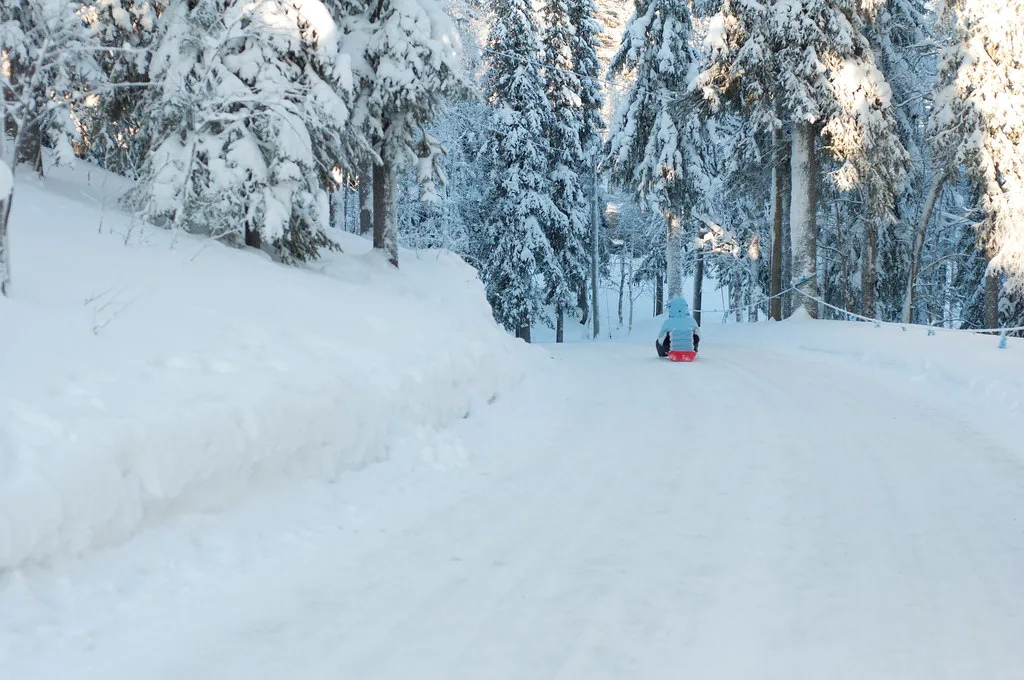
Riisitunturi National Park is the draw for its snow-smothered 'popcorn trees', which form when cold and heavy snow coat the pines. The effect is fragile: warm spells and strong winds strip the trees, so it appears most reliably in January and can vanish within days, which argues for booking a guided trip on short notice when conditions look right.
Korouoma Canyon is the other classic outing, a hike to frozen waterfalls that ice climbers scale in winter. The canyon floor runs noticeably colder than town, so plan for the temperature drop, and consider a guided tour if you are not an experienced winter driver.
Arktikum museum and Finnish saunas
Arktikum, in a granite-and-pine building overlooking the river, splits into natural history on one side and the culture and society of the Arctic on the other. It is the obvious warm indoor half-day when the sky is closed or you need a break from the cold.
Sauna is the other essential indoor ritual, and most hotels and apartment rentals have one. For the full circuit, heat up and then step into the snow, or book an excursion that pairs a sauna with an outdoor hot tub or an ice-cold lake plunge.
Where to sleep: city centre, forest igloos and aurora cabins
The city centre gives you shops, restaurants and transport on foot, with apartment-style rooms at HAAWE Boutique Apart Hotel and good-value private rooms and dorms at Hostel Café Koti. You trade the full winter-wonderland setting and darker skies for convenience and lower prices.
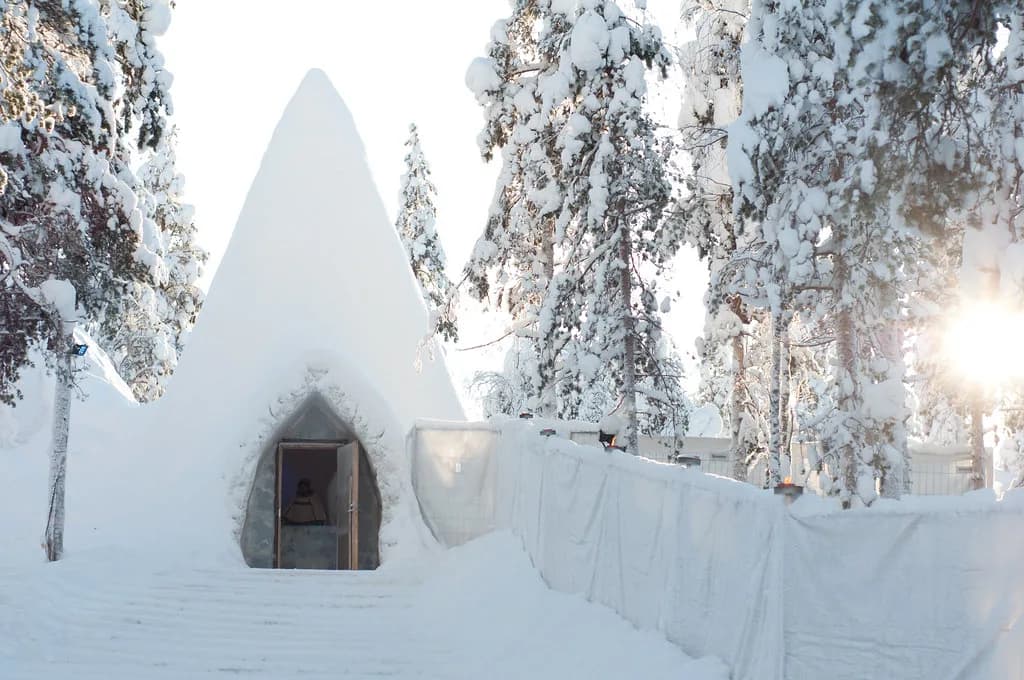
Outside town, Santa Claus Village is one of the biggest accommodation providers, mixing wooden cottages with hotel rooms, and a rented house within walking distance puts you in the forest with a sauna and far less light pollution. For a splurge, the Arctic TreeHouse Hotel offers glass-fronted cabins among the trees, and Arctic SnowHotel has glass-roofed igloos aimed at aurora watchers.
Glass roofs come with a trade-off: you watch from bed in warmth, but the glazing and interior lighting can dull faint aurora, and these rooms are the first to sell out. Book the coveted igloo nights and tours before you commit to flights, since availability drives the shape of the trip more than anything else.
How many nights to plan
Three nights is the minimum sensible stay: one evening for an aurora chase, one for a husky or snowmobile day plus sauna, and one for Santa Claus Village or Arktikum. Four to five nights let you add a Riisitunturi or Korouoma day trip and still keep a spare evening for a second chase if the first is clouded out.
Because cloud is the limiting factor rather than darkness, more nights matter more than a longer list of activities. If the aurora is the main goal, aim for four or more nights between September and early April and keep one evening deliberately unscheduled for a late decision.
Families and travellers who want a single base with everything on the doorstep can compress the trip, but anyone driving out to Riisitunturi or Korouoma should add a night to absorb a weather cancellation. Pairing Rovaniemi with a stay further north, as many travellers do in Finnish Lapland in winter, also spreads your chances across two weather patterns.
Getting around without a car
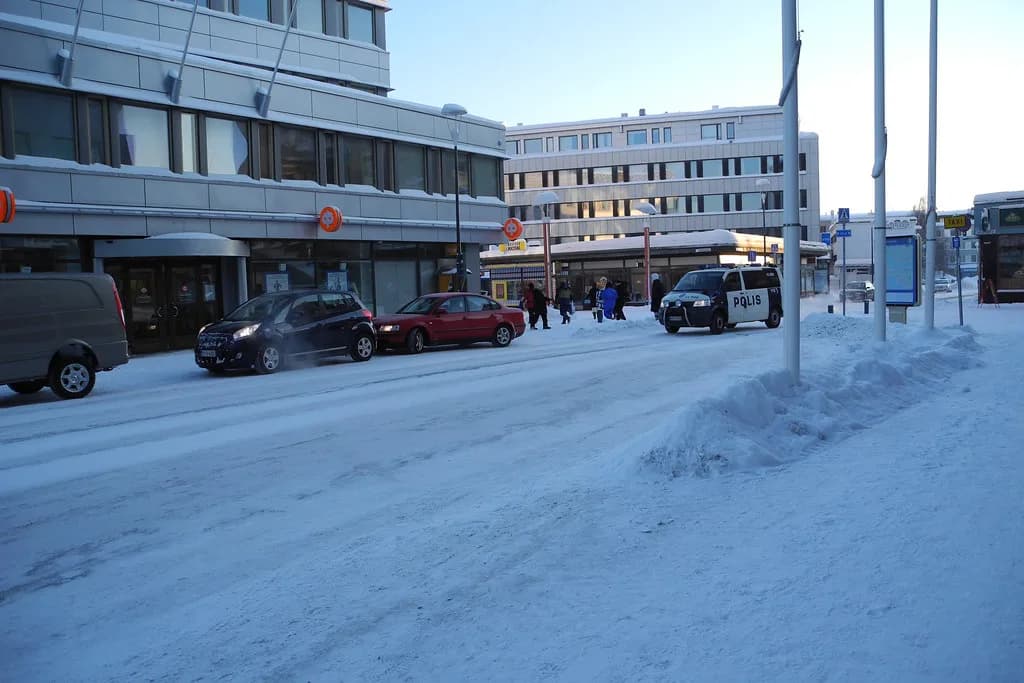
Buses cover the main tourist routes: the number 8 and Santa's Express link the centre and railway station with Santa Claus Village, with regular buses at €3.60 one way and Santa's Express at €4, or €2 for children under 16. Tickets can be bought on board with cash or card, and the airport express shuttle costs €7 per adult against roughly €28 for a taxi, while taxis in town run at around €2.50 per kilometre.
Hiring a car at the airport opens up Riisitunturi, Korouoma and dark roadside pull-offs, but only if you are comfortable on snow and ice; main roads are kept fairly clear, yet local traffic moves fast. Otherwise, base yourself near a bus stop and use guided tours for the out-of-town days.
Plan Your Visit
Rovaniemi works because it removes the friction from an Arctic winter: you land minutes from town, ride a bus to the Arctic Circle and can be on a husky sled or a dark forest road the same day. Choose late January or February for reliable snow and a balance of daylight and dark, or March for longer days and brighter landscapes.
Build the trip around several chances at clear sky rather than one headline night, mix one guided chase with self-guided evenings from a dark-edge cabin, and weigh a glass-roofed splurge against a simpler forest stay. Check availability for igloos and tours before booking flights, and confirm current prices and departure points with Visit Rovaniemi when you book.
Frequently Asked Questions
Is it worth visiting Rovaniemi in December?
December brings the shortest days, under two and a half hours of full daylight around the solstice, but also the heaviest Christmas crowds at Santa Claus Village. Snow cover can still be patchy early in the month, so snow-dependent tours may be cancelled. The days after New Year are calmer and usually better supplied with snow.
Which month is best to visit Rovaniemi?
Late January and February give the most reliable snow and a workable balance of dark nights and daylight, though January is also a cloudy month. March offers longer, brighter days if you want to see the landscape on activities. September and early spring favour aurora seekers who prioritise dark skies over deep snow.
How many days in Rovaniemi is enough?
Three nights covers one aurora chase, one husky or snowmobile day and Santa Claus Village or Arktikum. Four to five nights let you add a Riisitunturi or Korouoma day trip and keep a spare evening for a second chase if cloud ruins the first.
Can you see the northern lights in Rovaniemi?
The aurora season runs from mid-August to early April, and Rovaniemi sits on the Arctic Circle, so displays are possible whenever the sky is clear. Cloud is the main obstacle, especially in midwinter, so plan several nights and be ready to move away from town lights. No tour can guarantee a sighting.
How much daylight does Rovaniemi get in winter?
Around 21 December the sun rises near 11am and sets around 1.20pm, with twilight stretching from about 9.30am to 3.30pm. Daylight climbs quickly to roughly nine hours by the end of February, and early January gives about three hours against roughly six by the end of the month.
Do you need a car in Rovaniemi in winter?
Not for the core sights: buses and the Santa's Express connect the centre with Santa Claus Village, and the airport shuttle covers arrivals. A car helps for Riisitunturi, Korouoma and dark roadside aurora spots, but only if you are confident driving on snow and ice.
Sources
Notes for your Arctic winter trip
Optional updates to our northern lights guides.
You might also like
Continue reading
More guides you'll find useful