Ruka Northern Lights Tours: Sledging & Chase Guide
Compare Ruka northern lights tours, from guided sledging to small-group aurora chases, with season, duration, group size and what each night includes.
On this page
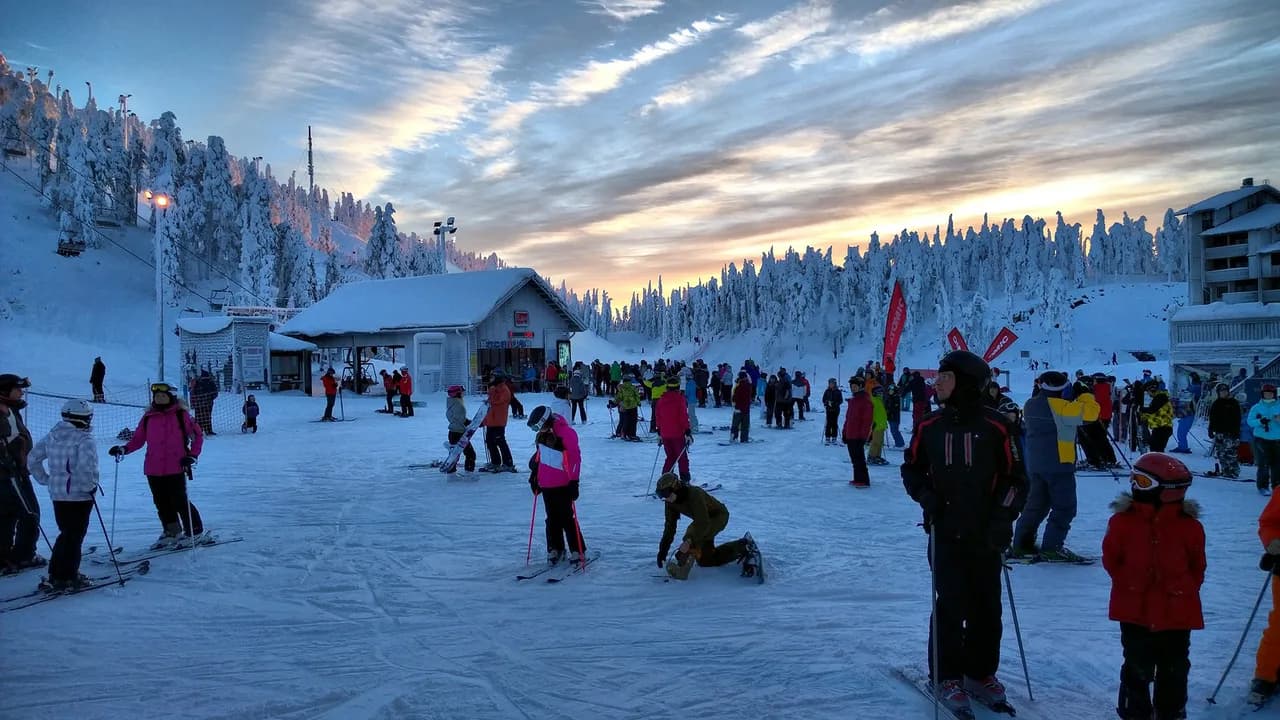
Ruka sits deep in Finland's northeast, close to the Russian border and well inside the auroral oval, so winter nights here can deliver northern lights directly overhead rather than low on the horizon. The resort village is compact, with ski slopes, hotels and cabins packed together, which makes it easy to walk to a meeting point and just as easy to see why tours drive out of town. Tour formats split roughly into two camps: slow, family-friendly nights like guided sledging, and active small-group chases that hunt clear sky by vehicle.
Why Ruka works for aurora nights
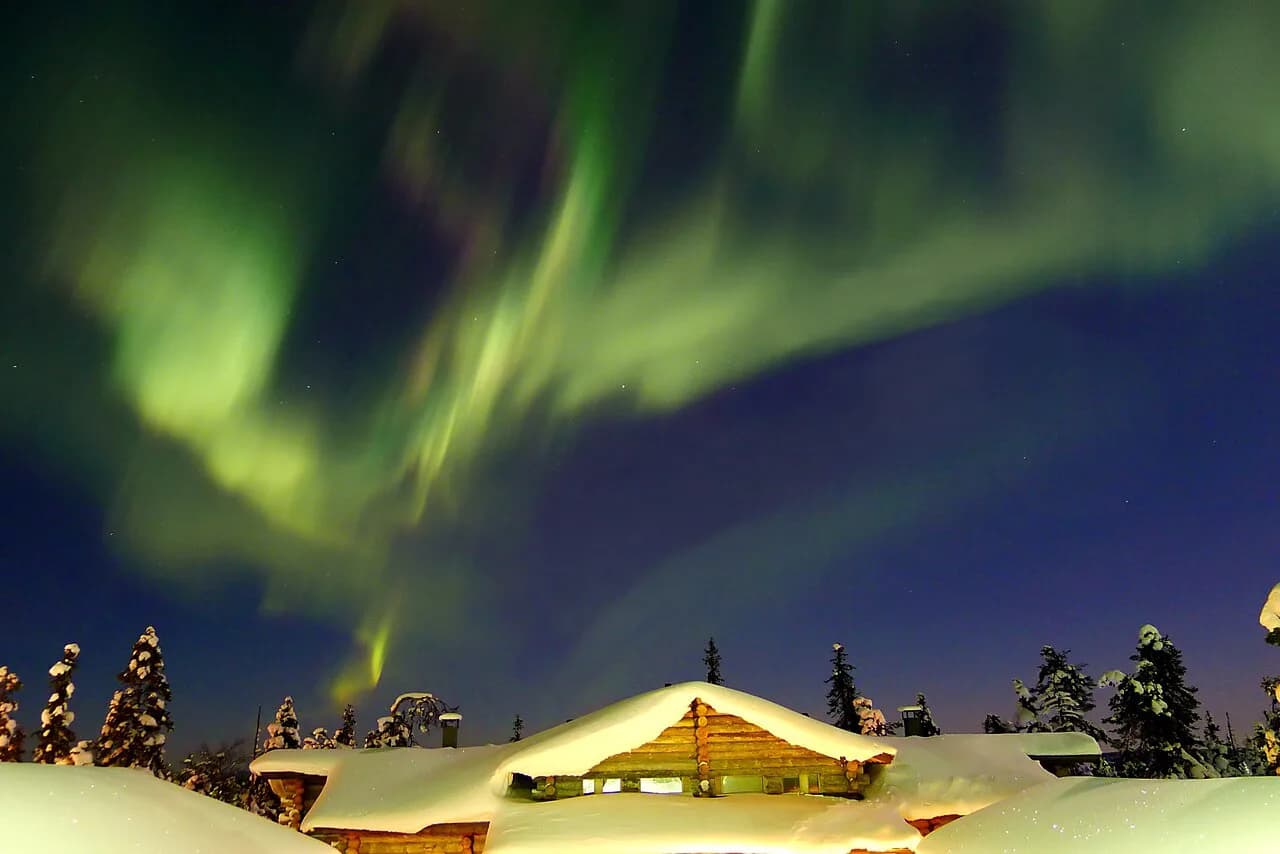
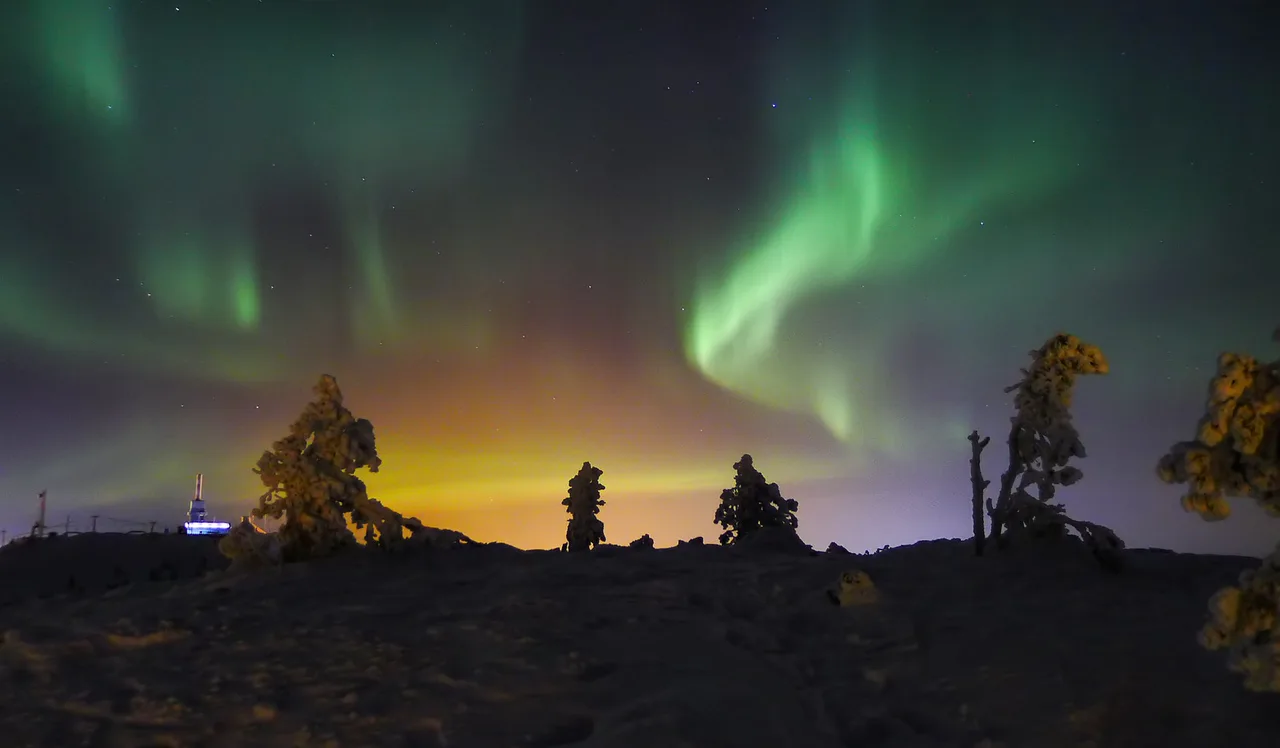
At roughly 66 degrees north, Ruka lies under the auroral oval, the ring around the pole where aurora appears most often. In practice that means displays can show even when activity is modest, and they frequently appear high in the sky rather than as a faint glow on the northern horizon. The long polar night period keeps evenings dark from late August through early April, giving plenty of window for a night out.
The village itself is the main obstacle. Slope lighting, hotel windows and street lamps brighten the lower sky, so a productive aurora night usually means travelling a short way into forest or across frozen lakes where the horizon opens up. That is precisely the logic behind most guided tours from Ruka: the guide handles transport, picks a direction based on cloud, and sets up somewhere genuinely dark.
When the aurora season runs in Ruka
Dark enough skies for aurora watching return in late August and last into early April, with the deepest darkness from November through February. Midwinter brings very short daylight, so daytime activities compress into a few hours around midday, while nights stretch long. September and March are the practical favourites: nights are dark, temperatures are less brutal than midwinter and daylight returns for other activities.
The guided starlight sledging tour from Ruka runs from December to March, depending on snow and weather conditions, so early-season travellers should not assume it is running in November. That window lines up with reliable snow cover for sledges rather than with the aurora season as a whole.
Starlight sledging: what the guided aurora sledging tour actually involves
Starlight sledging is the gentlest way to spend an aurora night in Ruka. You meet a guide who gives safety instructions and prepares the sledges, then set off along forest paths and across open ground, leaving the village lights behind. Sledging is passive travel, so it suits families, couples and anyone who wants to watch the sky rather than work for it.
Halfway through, the group stops at a scenic spot to rest and warm up with a hot drink by a small campfire, which doubles as the best sky-watching pause of the night. Guides use the stop to talk about aurora science and Lapland folklore, so the evening works even when the sky stays quiet. The whole excursion takes approximately three hours.
Duration, group size and what the sledging tour includes
The price covers a guide, all necessary gear and a winter outfit, so you do not need to source your own outer layer for the night. Groups are kept small for a cosy, authentic feel, and advance booking is recommended during peak aurora season. No previous experience is required and the activity suits all fitness levels.
The tour is described as suitable for all ages, with a recommended minimum age of six years. Sightings are not guaranteed, since the aurora depends on solar activity and clear skies rather than on anything an operator controls. Treat the sledging, the campfire and the forest as the certain parts of the evening.
Prices and minimum age for the sledging tour
Prices for the starlight sledging tour start from 69 EUR, and the exact figure varies with group size and any additional services you add. Booking direct through the EuropaAdventure tour page is the cleanest way to see the current rate for your date before you commit. Keep the age rule in mind when comparing family options: six years is the recommended floor for this tour.
Small-group aurora chases from Ruka
Vehicle-based chases take a different approach: instead of a fixed route, the guide reads cloud and drives toward gaps, sometimes crossing into different terrain entirely. In the Ruka and Kuusamo area these are run by small local companies that deliberately keep groups small so everyone gets attention and a clear view. A chase is the better choice if you have limited nights and want maximum flexibility on where you end up.
Expect a chase to run for several hours, often starting in the evening and returning after midnight, with warm clothing and hot drinks typically part of the package. Because the route is decided on the night, you cannot plan exactly where you will watch from. That unpredictability is the point: it gives you a real chance of finding clear sky when Ruka itself is clouded in.
Husky and reindeer nights: pairing wildlife safaris with aurora watching
Finnish Lapland tours commonly combine aurora watching with classic Arctic experiences, and most trips build in husky safaris of two to four hours plus visits to reindeer farms with sleigh rides. From Ruka you can book husky tasters, longer husky safaris and reindeer-farm visits as separate outings or as part of a multi-day package. A daytime husky run and a night chase on separate evenings often works better than trying to combine both in one go.
Wildlife nights add a campfire and a sled ride to the aurora watch but rarely stray far from the husky and reindeer operators' own trails, so they are less about cloud-chasing and more about atmosphere. If seeing a genuine dark sky is the priority, book the chase; if you want a gentler, animal-focused evening with aurora potential, the husky or reindeer formats deliver that.
Dark-sky spots around Ruka and how far operators drive
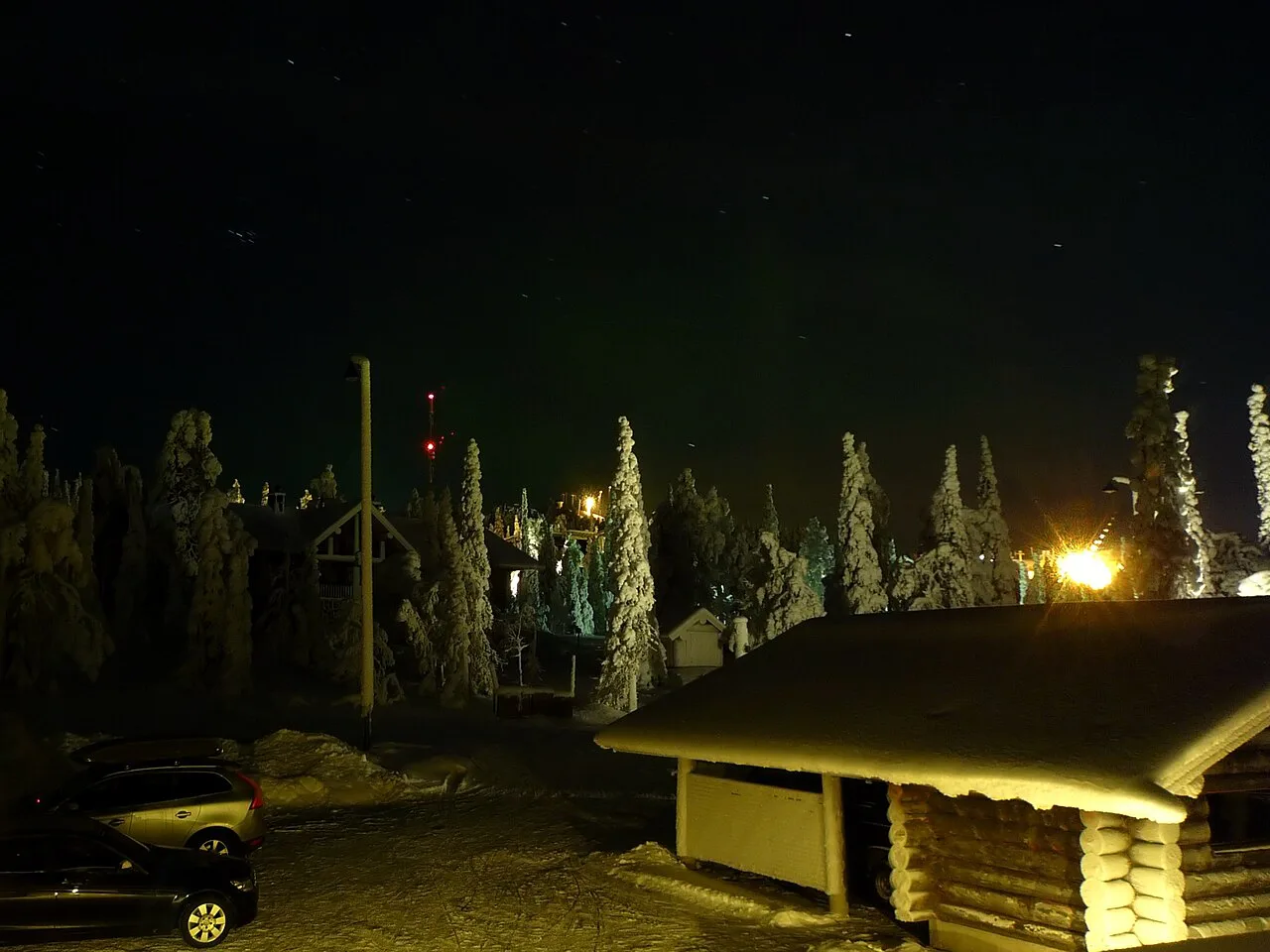
The terrain around Ruka is a mix of spruce forest, frozen lakes and low fells, all of which open up the sky once you are a few kilometres from the village. Operators typically head for lake shores and forest clearings where the horizon is unobstructed and no slope lighting interferes. Because the drives are short, most of a three-hour tour is spent watching rather than travelling.
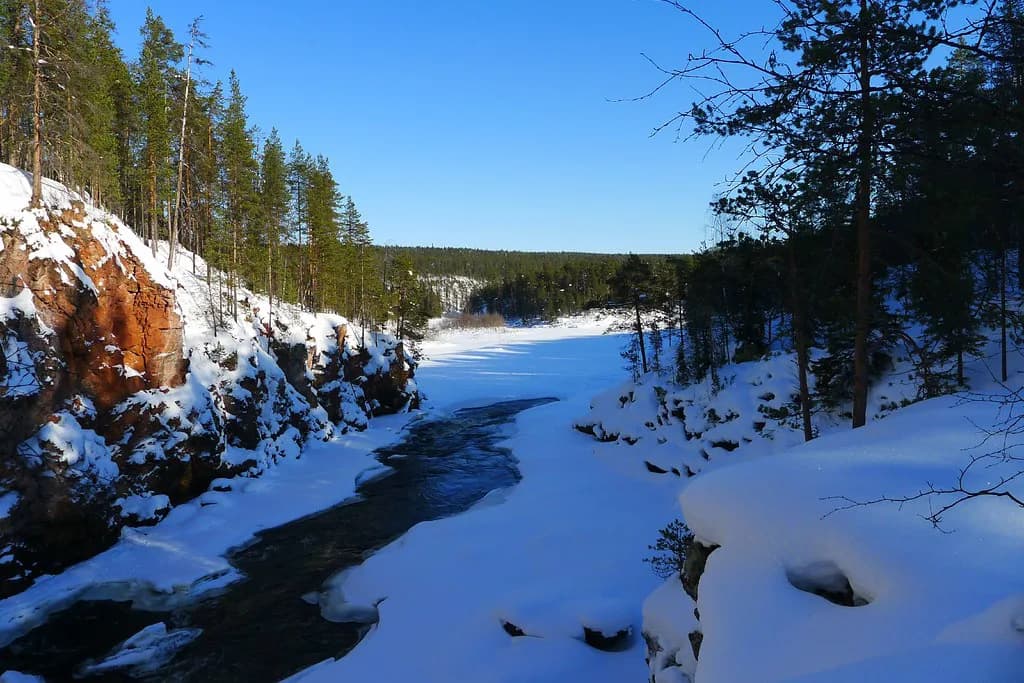
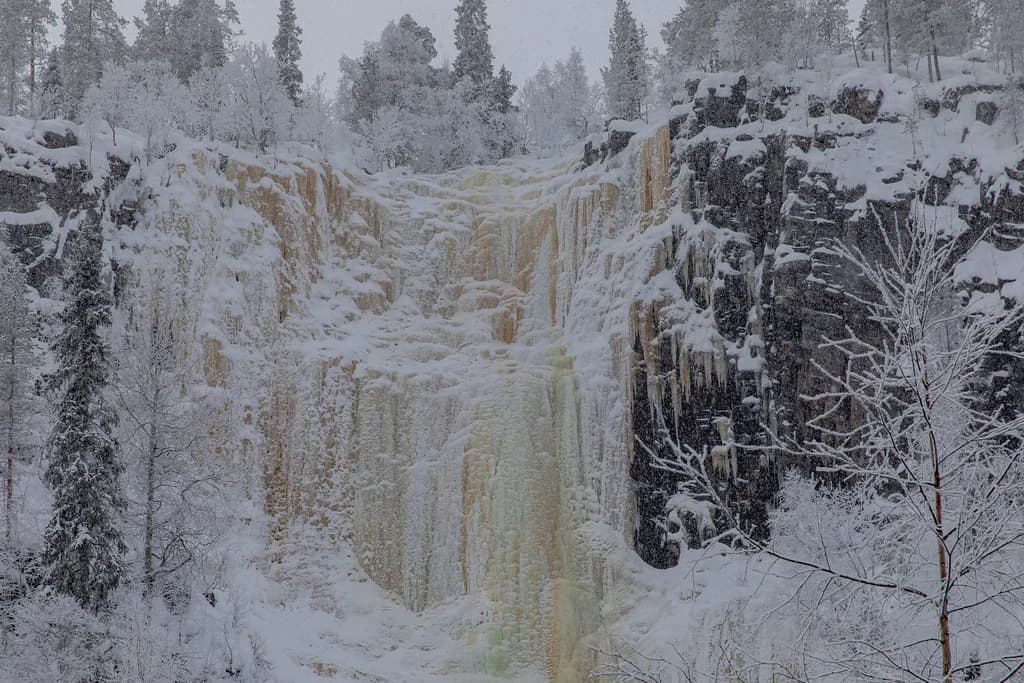
If you want to extend a trip beyond aurora nights, Oulanka National Park lies within reach of Ruka and offers frozen rivers, rapids and quiet trails by day. The Karhunkierros Trail crosses the park and gives a sense of the wilderness that surrounds the resort.
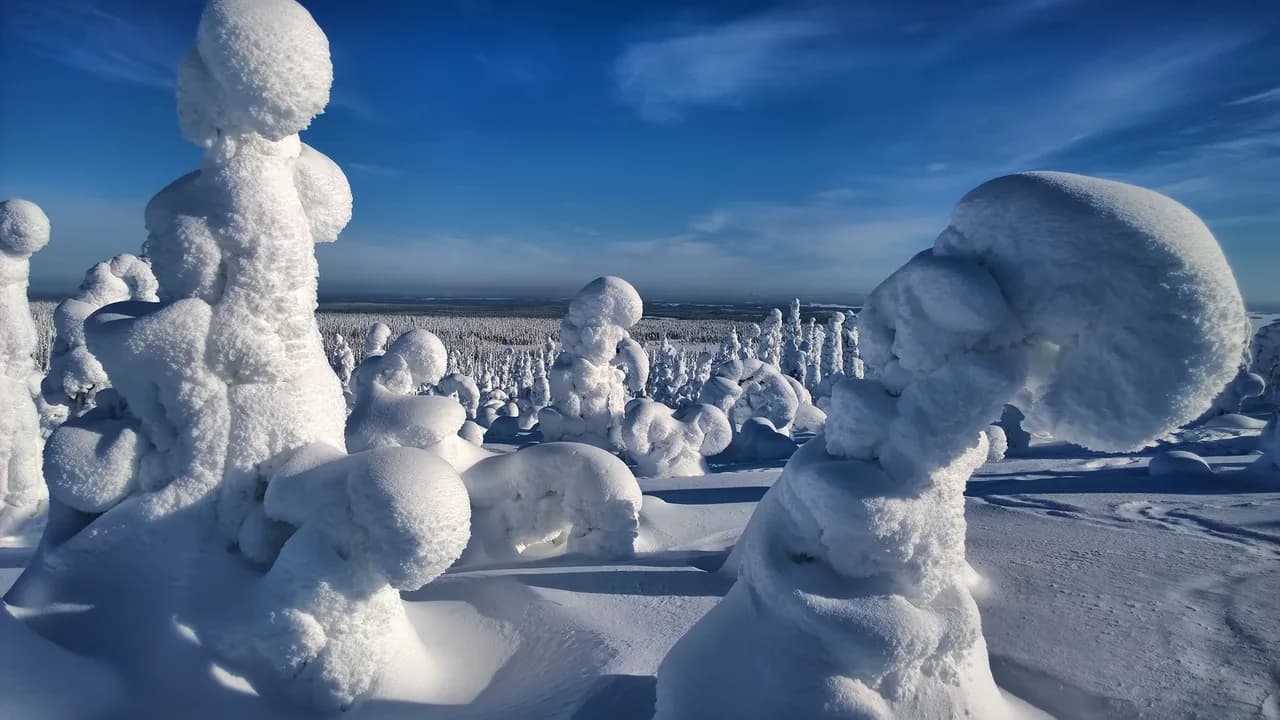
Riisitunturi National Park, with its snow-laden trees, is another day-trip option for travellers basing themselves in Ruka. Its winter landscapes are worth a separate outing from the aurora nights.
Self-guided aurora watching near Ruka versus booking a tour
You can watch the sky independently from the edges of Ruka, but the village glow and the lack of a car limit how far you can reasonably walk at night. A tour removes both problems: transport, a dark site and a guide who knows where the cloud is thinner. For a first aurora trip with two or three nights available, a guided night is usually the better use of time.
Book a tour if you want the campfire, the gear and the local knowledge bundled in; go self-guided if you have a rental car, a clear forecast and confidence on snowy roads. Either way, check the cloud forecast the same afternoon, since a clear sky matters more than a high activity number.
Snow, cloud and short winter days
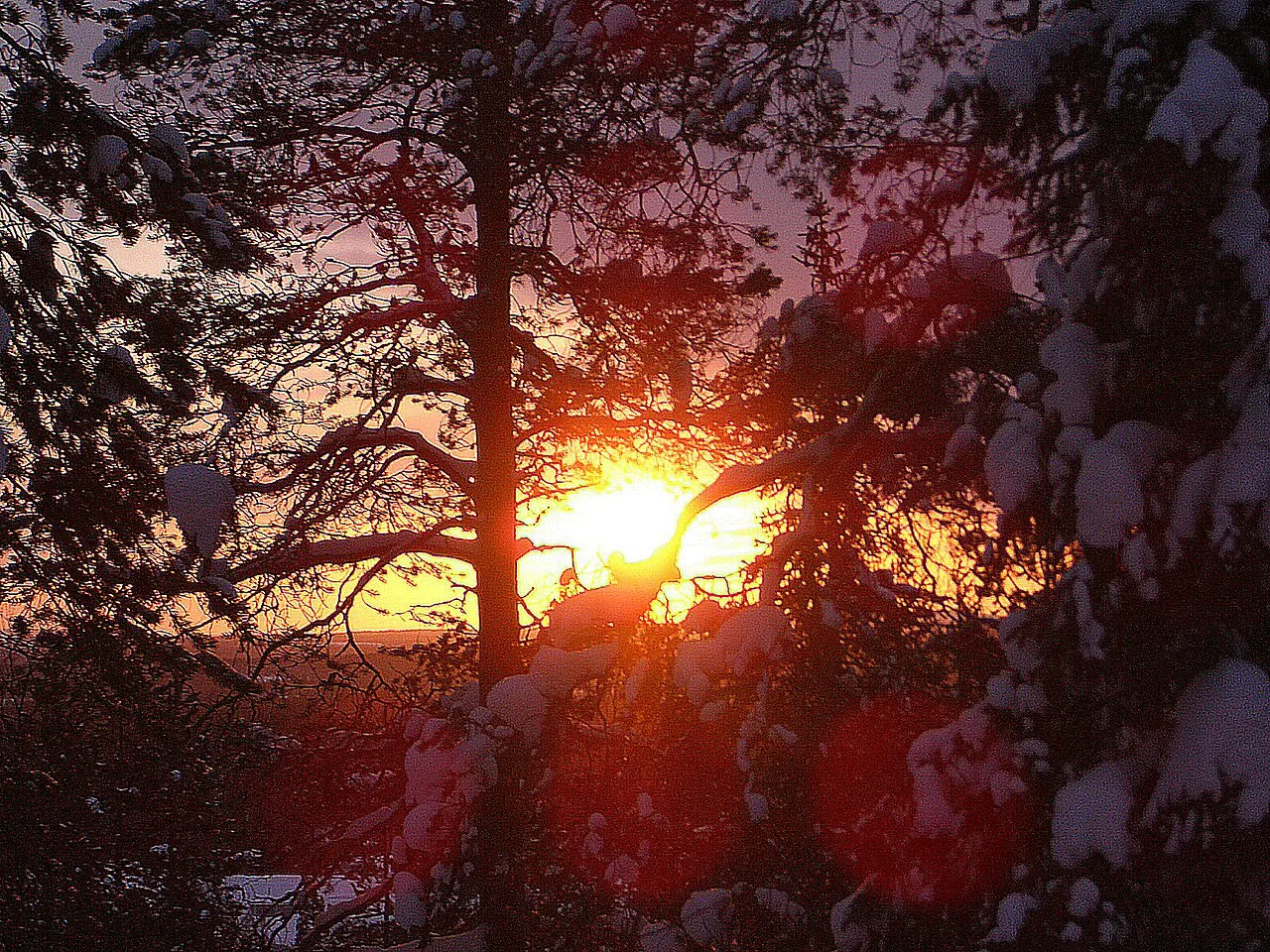
Ruka's inland location brings reliable snow and cold, clear spells, but also stretches of overcast weather that can last days. Cloud is the bigger variable for aurora watchers: a modest display under clear skies beats a strong one behind a solid deck. Midwinter days are very short, with only a few hours of daylight, so plan daytime activities like skiing or national-park walks around midday.
Temperatures in December to February regularly sit well below freezing, and the sledging tour's winter outfit exists for exactly that reason. Snow cover on the sledging route is why the tour operates from December rather than earlier.
How many nights to plan in Ruka
Three to four nights in Ruka gives you a fair chance of at least one clear night, even allowing for a couple of cloudy evenings. Two nights is a gamble, especially in November or early December when cloud can settle in for days. If aurora is the main reason for the trip, build in a spare night and keep one evening free for a last-minute chase.
Pairing a relaxed sledging night with an active chase on a different evening covers both moods and doubles your chances of catching a break in the cloud. It also hedges against a cancelled or rescheduled tour, since you still have another night in hand.
Choosing between a relaxed sledging night and an active chase
Choose sledging if you are travelling with children, want a fixed three-hour evening and prefer sitting to driving. Choose a chase if you have a short trip, care most about clear sky and do not mind a late return. Both formats cost money for an experience rather than a guarantee, so decide based on how you want to spend the night, not on the odds.
If you are in Ruka over the Christmas period, expect demand for evening tours to rise and book early. Christmas in Ruka brings extra visitors alongside the aurora season, which makes advance reservations more important than in quieter weeks.
Booking timing and peak aurora season in Ruka
Peak aurora season in Ruka runs through the darkest weeks from late autumn to early spring, and the sledging tour's December-to-March window sits inside it. Book the sledging night as soon as your dates are fixed, particularly around holidays and weekends. For chases, operators generally need a day or two of notice, so line one up for your first clear-forecast evening.
If you are comparing Ruka with other Finnish bases, wider northern lights tours in Finnish Lapland show how formats and inclusions vary between resorts. That comparison helps you decide whether Ruka's compact village and short transfers suit you better than a larger hub.
Plan Your Ruka Aurora Night
Start with the sledging tour if you want a gentle, family-friendly evening with a campfire and a fixed three-hour schedule, and add a chase if you have the nights to spare. Book early for December to March dates, keep one evening flexible for a clear-sky decision, and treat every sighting as a bonus rather than a promise.
However you plan, let the forecast guide your last choice: clear skies over Ruka beat a high activity number behind cloud every time.
Frequently Asked Questions
What northern lights tours run from Ruka?
Ruka's main guided option is a starlight sledging tour that runs for approximately three hours, with a guide, gear and a campfire drink included. Small local operators in the Ruka and Kuusamo area also run vehicle-based chases that hunt clear sky, and husky and reindeer safaris can be paired with aurora watching.
Is the Ruka starlight sledging tour suitable for children?
Yes. The tour is described as suitable for all ages, with a recommended minimum age of six years. It involves sitting on sledges rather than hiking, which makes it manageable for younger travellers.
How much does a Ruka northern lights tour cost?
The starlight sledging tour has a starting rate on the booking page; the exact figure varies by group size and added services. Chase and safari prices depend on the operator and format, so compare live rates on each operator's own booking page for your dates.
How long does a Ruka aurora tour last?
The starlight sledging excursion takes approximately three hours. Vehicle-based chases typically run longer into the night because the route is decided on the evening based on cloud cover.
When is the best time to see the northern lights in Ruka?
Dark skies return from late August to early April, with the deepest darkness from November through February. September and March are practical favourites because nights are dark while temperatures are milder and daylight returns for other activities.
Can you see the northern lights from Ruka village?
The village's slope and street lighting brighten the lower sky, so tours drive a short distance into forest or onto frozen lakes. Watching from the edge of the village is possible, but a dark site away from the lights gives a much better view.
When does the Ruka sledging tour operate?
The starlight sledging tour runs from December to March, depending on snow and weather conditions. Travellers arriving in November should not assume it is running, and can confirm dates with the operator before booking.
How many nights should I plan in Ruka for aurora watching?
Three to four nights gives a fair chance of at least one clear night, even allowing for cloudy spells. Two nights is a gamble, especially in early winter, so build in a spare evening if aurora is the main reason for the trip.
Sources
Notes for your Arctic winter trip
Optional updates to our northern lights guides.
You might also like
Continue reading
More guides you'll find useful