Levi in Winter: Ski, Aurora Nights & Activities Guide
Levi in winter pairs Finland's biggest ski resort with frozen lakes, husky safaris and aurora hunting above the Arctic Circle. Here is how to plan it.
On this page
Levi suits travellers who want a real ski resort and a genuine Arctic night in the same week. The village sits on a fell in Finnish Lapland with slopes running straight out of the centre, restaurants and hotels within walking distance, and dark forest and frozen lakes a short drive away.
Winter here is long and snow-reliable rather than mild. Snow covers the fells and trails from mid-November through April, and February and March combine longer daylight with full slope openings, which is why many visitors choose those months over the deep polar night of December and early January.
What Levi offers in winter and who it suits
Levi is a compact fell village built around skiing, and that shapes a winter trip here. You can walk from a hotel to a lift, a restaurant or a shop, then be in unlit forest within minutes, so days of downhill and cross-country skiing sit easily beside husky rides, reindeer visits and evening aurora outings. It suits families and mixed-ability groups because there is a ski school and terrain for beginners, while stronger skiers still get a large lift-served area.
Away from the slopes, the resort publishes roughly 230 km of cross-country trails and almost 1000 km of snowmobile trails in the Levi area, which is more than most visitors can cover in a short stay. Snowshoeing, winter biking on fat-bikes, ice-karting and spa and sauna time fill the gaps between ski sessions.
How far north Levi sits and why the aurora shows there
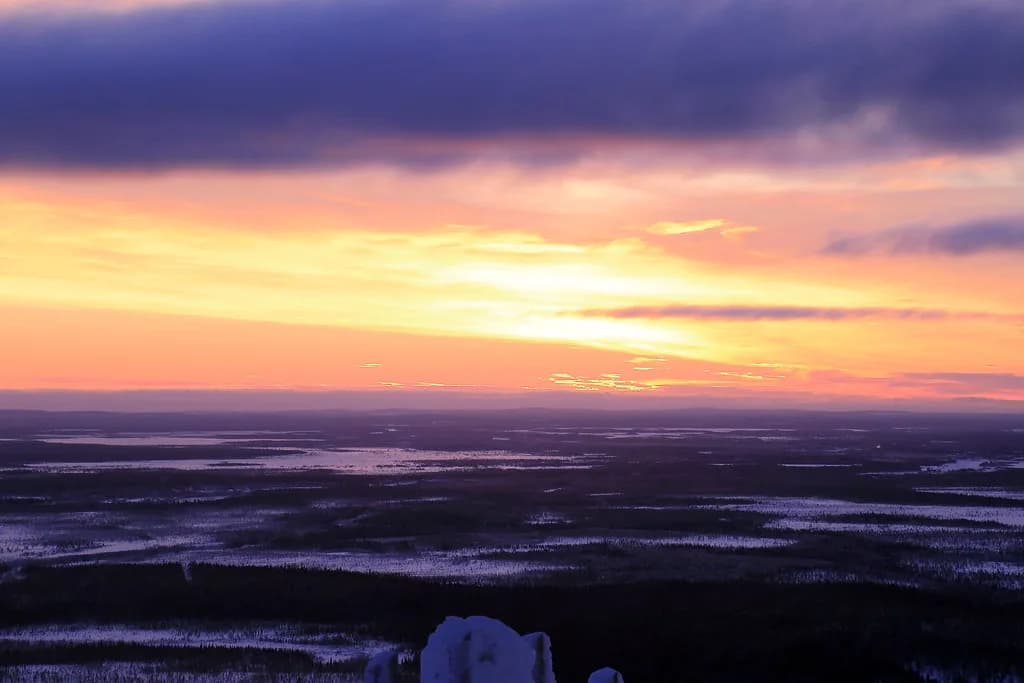
Levi lies roughly 170 km north of the Arctic Circle, which places it inside the auroral oval for much of the night during the dark season. At this latitude the northern lights can appear overhead rather than low on the horizon, and they can be visible for long stretches when the sky is clear and solar activity is up. Kp values are a rough guide only; local cloud cover decides far more about what you actually see.
The village itself is small and the surrounding fells block some horizon glow, but the main street and lit slopes do wash out faint aurora. Treat Levi as a base rather than a viewing platform: you either walk a short way from the centre or take a tour that drives you into darker country.
When the aurora season runs and when nights are darkest
Aurora viewing around Levi runs from late August or September into early April, when nights are long enough to be properly dark. September and October give you dark evenings without deep cold, while December and early January bring the polar night, when daylight is limited to a few blue hours and the sky is dark for most of the day. That polar-night window is atmospheric but can feel disorienting if you want daylight for skiing and sightseeing.
February and March are the sweet spot for most travellers: the days stretch noticeably longer, the light on the fells is often bright, and the night is still long enough for aurora watches. If seeing the northern lights is the main reason for the trip, plan around the dark months and accept that cloud, not daylight, is your real opponent.
Daylight through winter, from polar night to longer March days
Light is part of the planning, not an afterthought. In December and the first half of January, Levi is wrapped in polar-night blue: some daylight exists but hours are short, so ski mornings feel brief and après-ski starts early. By February and March the days are noticeably longer, with enough light for full days on the slopes and snowshoe or cross-country outings well into the afternoon.
That trade-off matters for choosing your month. Deep winter gives you more dark hours for aurora and the surreal polar-night mood, but less daylight for activities; late winter gives you longer days and usually more reliable travel, at the cost of shorter nights. Pick the month by what you want to do most of the day.
Levi Ski Resort: slopes, lifts and when snow covers the fells
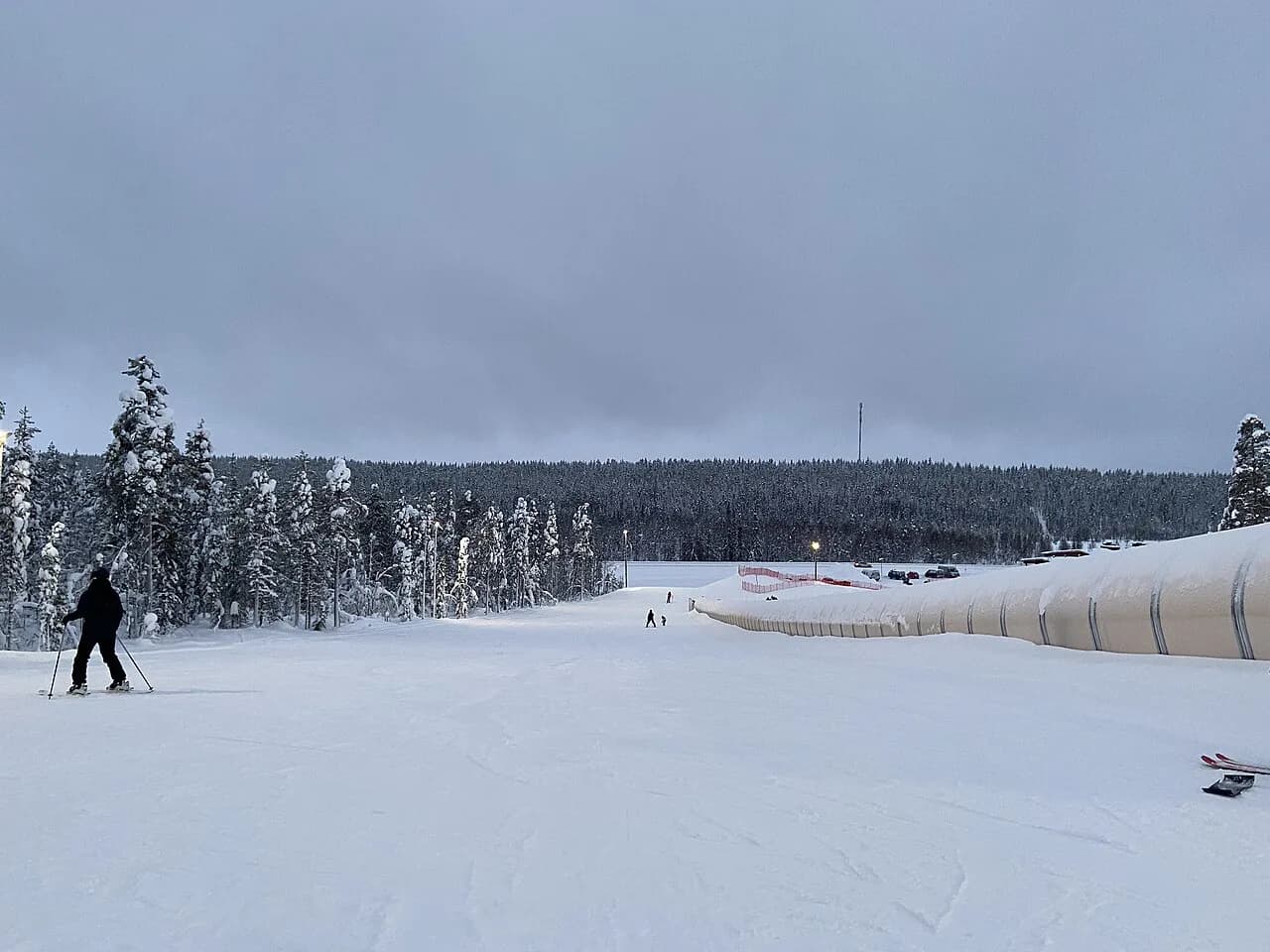
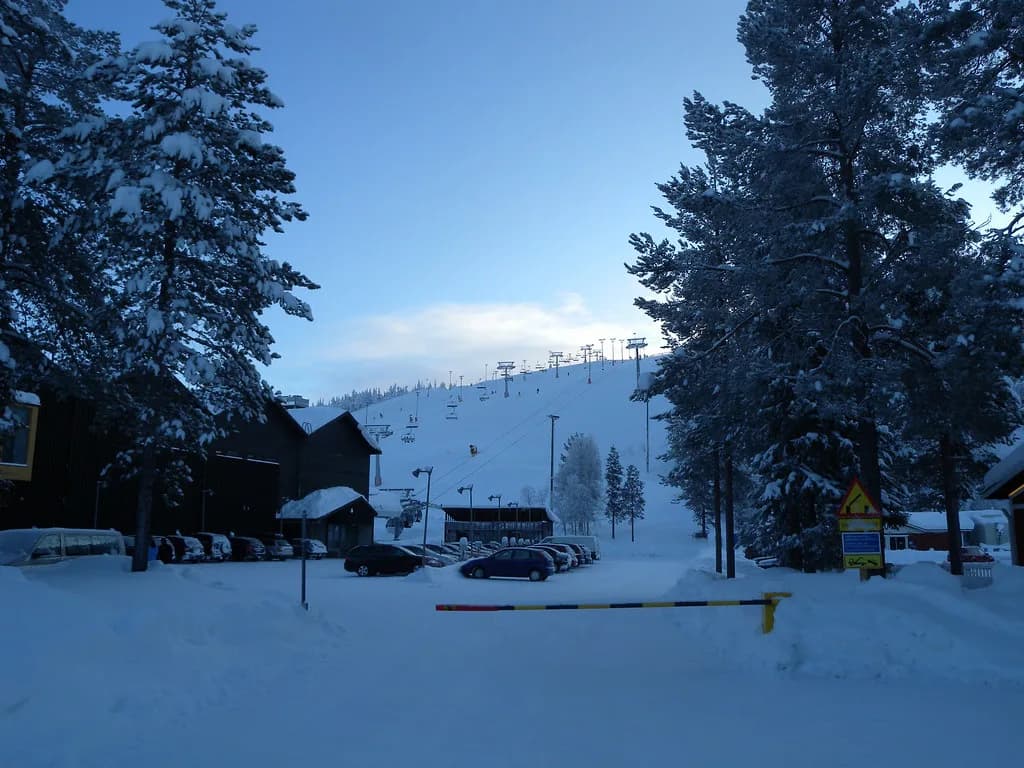
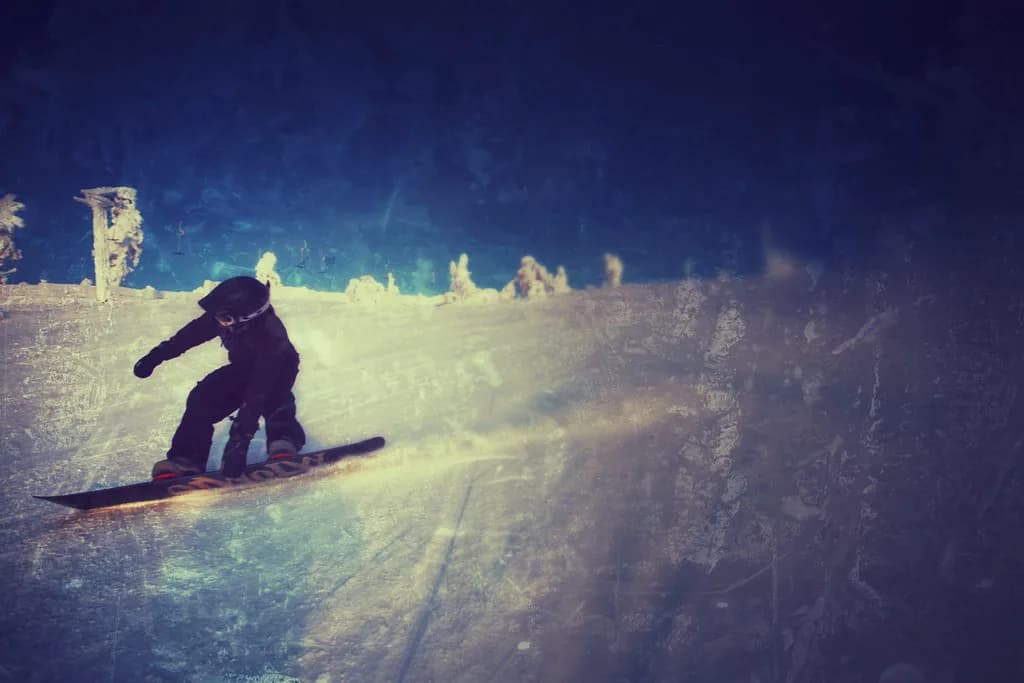
Levi Ski Resort is the largest ski area in Finland, with 43 pistes and 27 lifts serving blue, red and black terrain and snow parks. Lifts leave directly from the village, so you can ski out of your hotel, and a ski school runs for beginners and improvers. In ski-holiday weeks, the resort reports that all slopes, including natural-snow runs, are open.
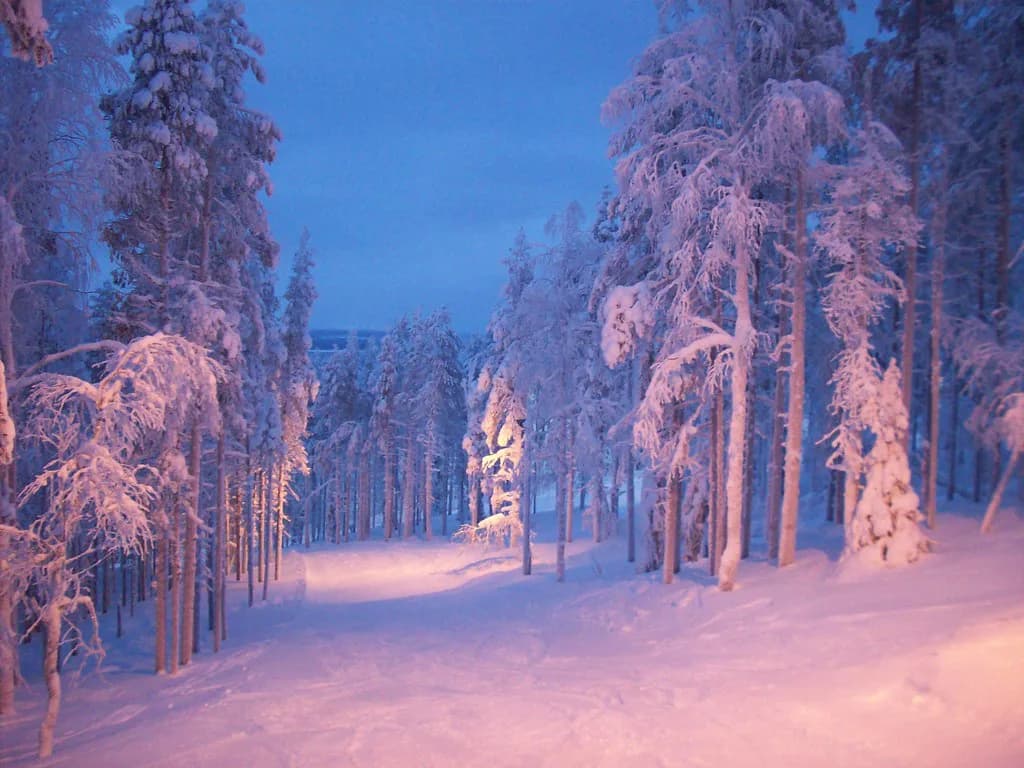
Snow reliability is why Levi works for a winter holiday. Powder covers the fells from mid-November through April, and most of Levi's slopes are illuminated, so night skiing is a real option and not a novelty. That extended season gives you flexibility if you are booking flights early or late in the winter.
Where to watch the aurora near Levi village
The most straightforward dark-sky spot is the top of the fell at the Peak of Levi, reachable by the Gondola2000 or Express lifts or on foot via the Panorama Steps, a wooden staircase with 766 steps zig-zagging up through the forest. The climb is steep and icy in winter, so the lifts are the safer way up, and the summit keeps you above most of the village light.
Lake Immeljärvi, a short walk from the village, freezes solid in winter and opens a wide view of the sky with aurora reflections on the ice. Only walk on the ice once local conditions confirm it is safe; in shoulder seasons it can be too thin. Beyond that, the forest roads and open fells outside the centre are where most aurora photographs are taken.
Aurora tours and night safaris versus chasing on your own
Tours make sense when you want someone else to read the cloud and drive to clearer sky. Snowmobile safaris and reindeer sleigh rides run at night from Levi and take you deep into the forest where the sky is darkest, with the guide handling navigation and often lending thermal suits. You get expert local knowledge and a vehicle that can move between viewing spots; you give up control and pay per person.
Self-guided chasing suits confident drivers who want flexibility. If you rent a car, you can drive ten minutes from the centre to the Peak or further out to the forest roads, wait as long as you like and leave when clouds roll in. The cost is a rental car plus winter-driving caution, and you still need to know which direction offers clearer sky, which is where a [northern lights](/levi-northern-lights) forecast check before heading out earns its keep.
Husky safaris and reindeer rides
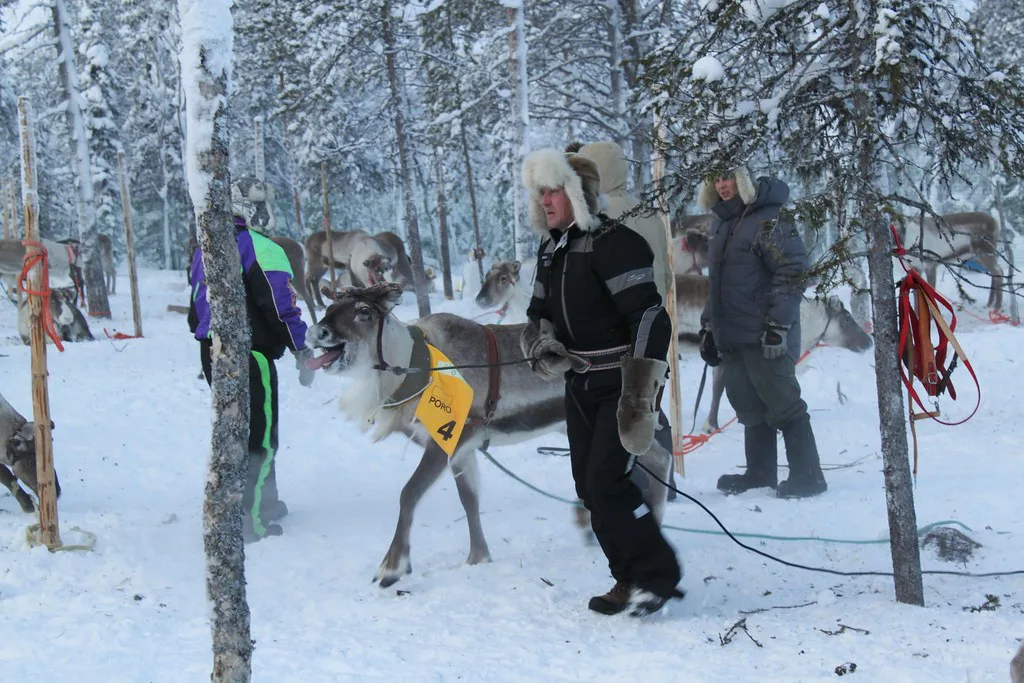
Husky safaris are the classic Lapland experience, and at Levi you can book with named operators. Tundra Huskies is a family-run team offering packages from 5 km to 15 km, including a visit to the husky farm and a snack and hot drink by the fire afterwards. You can drive your own sled if you want the full musher experience, or ride as a passenger.
Reindeer rides are slower and quieter, and they pair well with learning about herding culture. Ounaskievari Reindeer Farm sits outside Levi near Köngäs, where you can feed and meet the reindeer and hear about reindeer herding in Finland. It is open 9am to 4pm Monday to Friday and Saturdays on request, closed Sundays, and its activities start from 20 euros.
Snowmobiling, ice fishing and snowshoeing
Snowmobiling gives you the biggest range in an afternoon. Guided safaris from Levi run across frozen lakes and through forest, with tours short enough for a one-hour introduction or long enough to reach a reindeer farm or ice gallery, and night safaris combine driving with aurora hunting. Ice fishing is a quieter half-day option where you drill a hole and fish for trout on a frozen lake with a guide.
Snowshoeing is the easiest way for non-skiers to get into the landscape, and several hotels rent snowshoes. Meanwhile, guided snowshoe excursions from Levi, such as those with Safartica, are a good way to reach places you cannot reach on skis, and the resort's own trail network includes guided snowshoe outings to Santa Claus hut and similar spots.
Samiland, reindeer farms and local culture
Samiland at Koutalaki, part of the Levi Summit area, is an exhibition on Sámi history and reindeer herding and is part of the UNESCO Observatory Cultural Village programme. Its outdoor section shows reindeer from November to April. The exhibition is open 10am to 8pm daily, with adult tickets at 12 euros, children aged 7 to 16 at 9 euros and under-sixes free.
Combine the exhibition with a reindeer farm visit for context. Many farms invite visitors into a Lappish kota, a wooden hut with a fire, where you drink warm berry juice and hear stories about local traditions, which gives the herding history a human scale rather than just facts on a wall.
Arctic spas, saunas and forest retreats
Finnish sauna is a core part of a winter trip, and Levi has options from hotel saunas to a private forest spa. Levi Foxfires, a boutique guesthouse with two cabin rooms and one glass-roof cabin, offers a private Arctic spa with a wood-fired sauna facing the forest, a hot tub outside and the classic roll in the snow. It sits in secluded forest just outside the village, so you are immersed in the quiet.
For a central option, most hotels have saunas, and some suites include a private one, which lets you alternate slope or tour time with recovery time. At night the contrast between the hot sauna and the cold air is what most people remember, and in the right conditions you can watch the sky from the tub.
Glass igloos and aurora cabins around Levi
A glass-roof cabin or igloo lets you watch the sky from bed, but you pay for the view and should book months ahead. Options around Levi include Northern Lights Village Levi, a glass-roof cabin resort with breakfast and dinner included, and Aurora Pyramid Glass Igloos by Elves Village just outside town with a free shuttle to Levi. Levin Primus is the premium choice, a one-bedroom chalet with glass roof, sauna and hot tub.
These rooms sell out far ahead in winter, so treat a glass igloo as a booking decision rather than a walk-up. The trade-off is that you are outside the village and dependent on on-site dining or a shuttle, but in return you get a dark, quiet site and the chance to watch the aurora without dressing for it first.
Hotels and chalets in and around the village
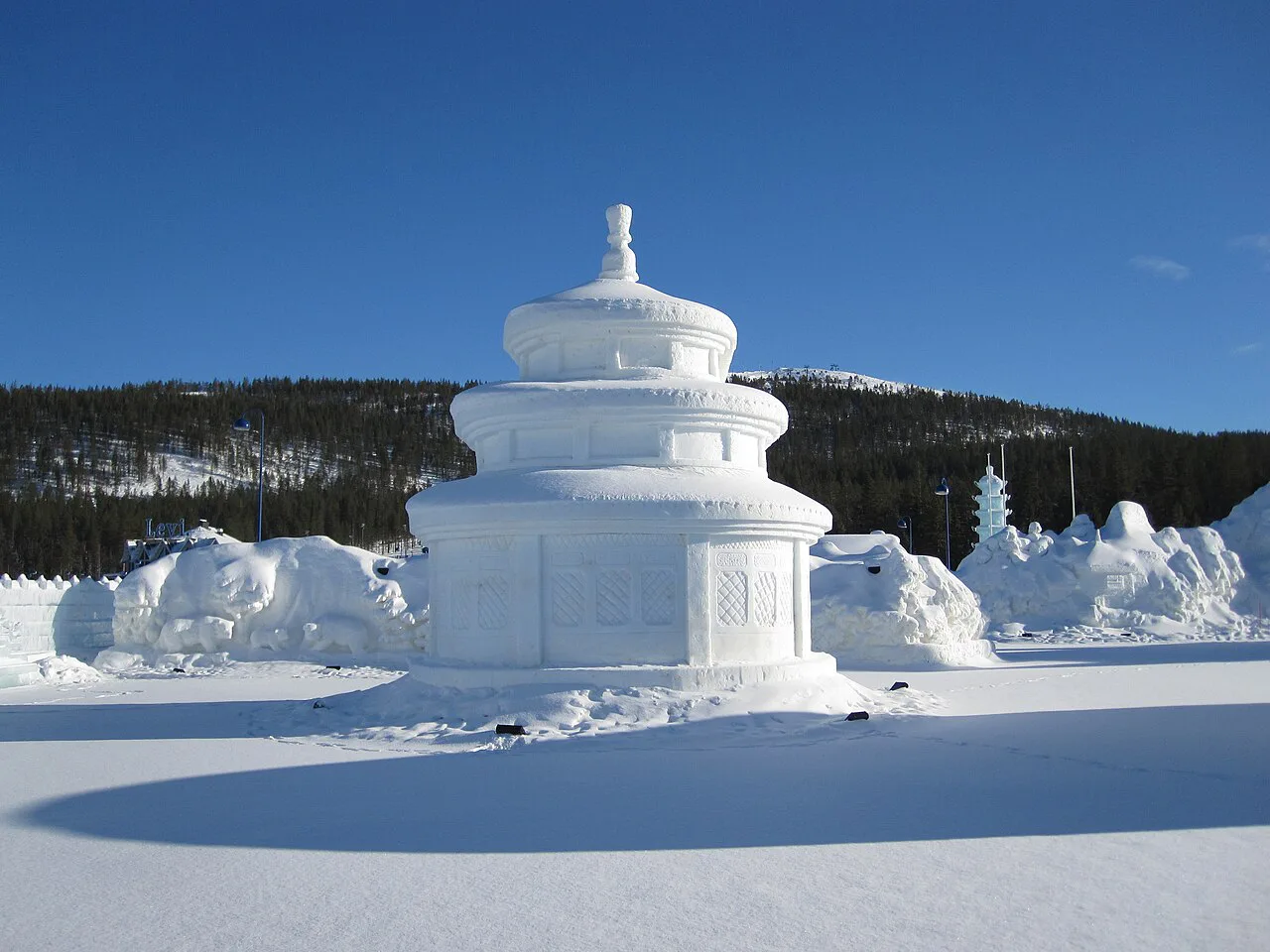
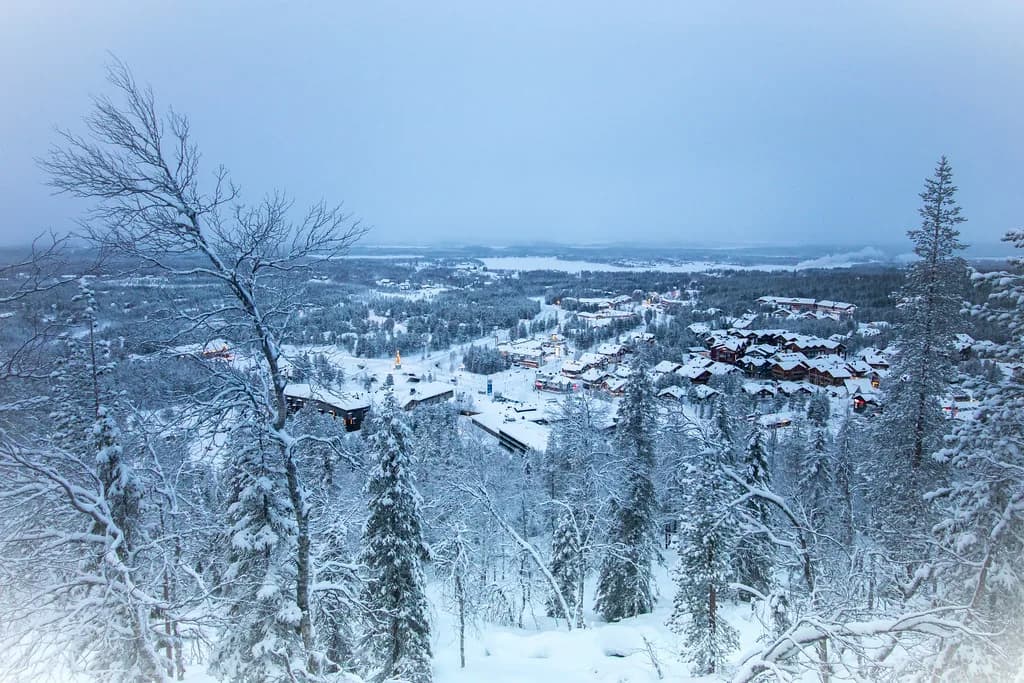
Staying in the village is the low-friction choice. Break Sokos Hotel Levi sits in the centre with easy access to slopes, shops and restaurants, modern rooms, some with private saunas, and views over the fell. Hotel Levi Panorama, up on the mountainside, has restaurants, a sauna and panoramic views across the ski fields, and is within walking distance of the slopes.
Self-caterers and longer stays do better in chalets and apartments. Levin Alppitalot Alpine Chalets are close to the main slope with full kitchens, free parking and a private sauna, which keeps costs down if you are staying a week. Choose between central hotels for convenience and cabins for space and a slower rhythm.
Kittilä Airport, transfers and getting to Levi
Most trips start at Kittilä Airport, about a 15-minute drive from Levi. The airport connects mainly through Helsinki, with some direct international flights during the ski season. From the airport, a bus takes around 25 minutes and one-way tickets start from 10 euros; taxis are also available.
Rovaniemi is the alternative gateway, about a two-hour drive from Levi, with daily buses and direct flights from London Gatwick several times per week on Norwegian. A car is worth it if you plan to chase aurora yourself or explore the region, but for a slope-and-tour holiday the airport bus and local operators are enough.
How many nights to plan for a fair chance of clear skies
Aurora sightings depend on solar activity and clear skies, so no number of nights guarantees a show. What you can do is give yourself enough nights to absorb cloudy ones. Levi even reports around 111 aurora nights per year, but that is a site-specific figure, not a prediction for your week.
Four to five nights is a sensible minimum for an aurora-focused trip, with a realistic chance of at least one clear night in that window; a week improves your odds and gives you room for a rest day. Book at least one guided aurora night early in the stay, so a cloudy result leaves you nights in hand for another attempt. Short two-night stays are a gamble on weather you cannot control.
Levi in February and March versus early winter
February and March are the strongest all-round months. Daylight is long enough for full days of skiing, the resort reports all slopes open in the ski-holiday weeks, and the evenings still offer dark hours for aurora. The snow is usually at its best and the cold is manageable for longer outdoor time.
Early winter, from late October through January, brings the polar-night blue and the shortest days, which some travellers love for its mood and dark skies but others find limiting for daytime activities. Snow can be thinner before mid-November, so check what is open and expect a different kind of trip. If you want both darkness and usable daylight, aim for late January onward. Weighing this against other resorts is easier with a guide to [Finnish Lapland in winter](/finnish-lapland-in-winter).
Plan Your Winter Trip to Levi
Levi works because it packs a serious ski resort, a walkable village and dark forest into a small area. Book your month deliberately, choose a central hotel or an aurora cabin by what you want from the evenings, and put one guided night on the calendar early so weather has time to cooperate.
Check the Visit Levi page or the hotel page for winter opening dates and transfer times before you lock in flights, and keep your aurora expectations honest: clear skies and solar activity decide the show, not the brochure.
Frequently Asked Questions
What can you do in Levi in winter?
Skiing and snowboarding on 43 pistes and 27 lifts, cross-country skiing on roughly 230 km of trails, snowshoeing, snowmobiling on almost 1000 km of trails, husky safaris, reindeer farm visits, ice fishing and sauna or spa time. Evenings are for aurora watches by snowmobile, sleigh or on foot.
Is Levi worth visiting in winter?
Yes, if you want a real ski resort alongside Arctic activities. It has the largest ski area in Finland, reliable snow from mid-November through April and a compact centre where you can walk to lifts, restaurants and hotels, with dark forest a short drive away.
How cold is Levi in winter?
Levi sits about 170 km above the Arctic Circle, so winter is properly cold with snow on the ground for months. Expect sub-zero temperatures through the season; check a local forecast for your dates and let operators lend thermal suits where they offer them.
When can you see the northern lights in Levi?
The aurora season runs from late August or September into early April, with dark nights throughout. December and early January bring the polar night, while February and March combine longer daylight with still-dark evenings. Clear sky and solar activity decide whether you see anything.
How many nights should you stay in Levi for the aurora?
Plan four to five nights at minimum for an aurora-focused trip, and a week if you can. That gives you enough nights to work around cloud, and booking a guided aurora night early leaves room for a second attempt.
Do you need a car in Levi in winter?
Not necessarily. The village is walkable, Kittilä Airport is a short bus ride away and operators run tours from the centre. A rental car helps if you want to chase clear sky yourself or explore beyond the resort, but it means winter driving.
Sources
Notes for your Arctic winter trip
Optional updates to our northern lights guides.
You might also like
Continue reading
More guides you'll find useful