Glass Igloos in Rovaniemi: Which Stay Fits Your Aurora Trip
Compare glass igloos and aurora cabins around Rovaniemi by distance, season dates, sky view and wake-up service, and learn how many nights to plan.
On this page
Rovaniemi gives you two things at once: dark, snow-covered countryside within half an hour of a city, and a short flight or train ride from the south. Sleeping under a glass roof puts the night sky above your bed instead of a pine ceiling, which is why so many travelers build an aurora trip around one or two such nights.
The catch is that igloo stays differ far more than the brochures suggest. A 360-degree dome on a lake, a nest-like suite beside SantaPark and a snow hotel room kept near zero degrees are three completely different nights, at three different distances from town and the airport.
Why Rovaniemi works for a glass igloo stay
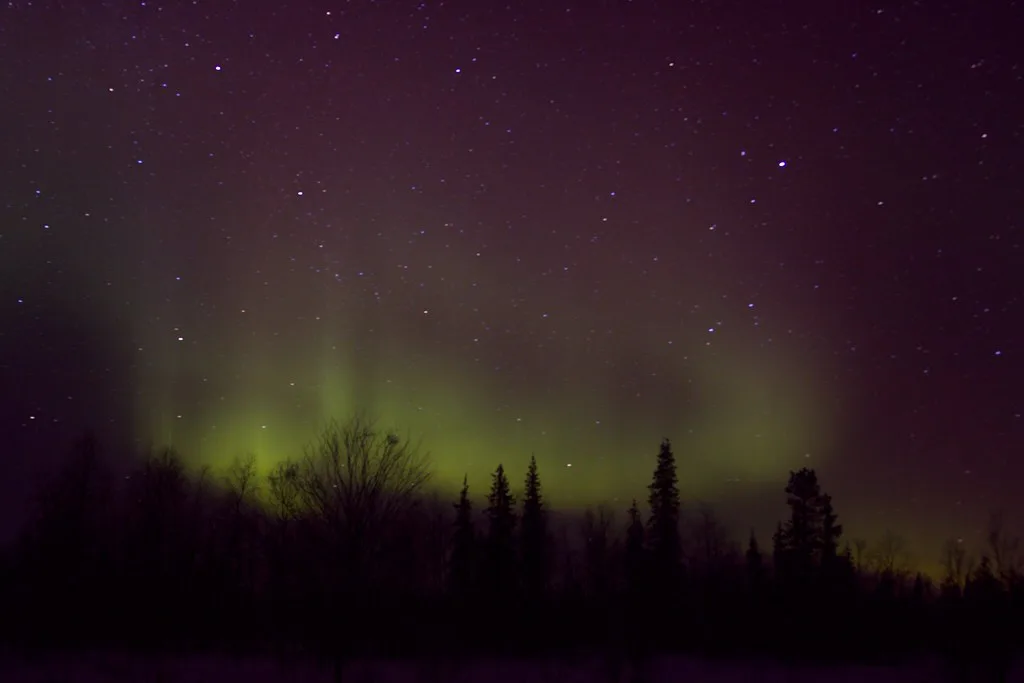
Rovaniemi sits inside the aurora zone of northern Finland, the band where aurora activity is most frequent. Glass igloo resorts across Lapland cluster between roughly 65 and 72 degrees north for exactly that reason, and a glass roof removes the need to stand outside in the cold waiting for a gap in the clouds. If you want to weigh Rovaniemi against the rest of that band, this guide to glass igloos in Finnish Lapland compares the main resorts.
The other half of the equation is darkness. The aurora only shows against a dark sky, so the practical window runs from late August and September, when nights lengthen again, through to early April. Midsummer is hopeless for auroras because the sun barely sets, which is why winter and early spring fill the igloo calendars.
Light pollution matters, and it is the main reason the best stays sit outside the city. Resorts in the countryside around Rovaniemi work with far less ambient light than a hotel in the centre, where street lighting washes out faint aurora. Choosing a property a few kilometres out is a real optical improvement, not just a marketing line.
When the glass igloo and snow hotel season runs
Seasons vary by property, so match your dates to the specific stay before booking flights. At Arctic SnowHotel & Glass Igloos in Sinettä, glass igloo accommodation runs from 1 September to 31 March, while the snow and ice hotel section opens from 15 December to 31 March. A September trip therefore gets you a glass roof but not an ice room.
Across Lapland generally, December to March is the core snow season, when trails, sledding and snowmobile routes are fully operational and days are short. September and October visits trade snow cover for earlier darkness and often lower demand, while late March and early April bring longer daylight and milder air at the cost of shorter aurora hours.
Glass igloos versus aurora cabins versus snow hotel rooms
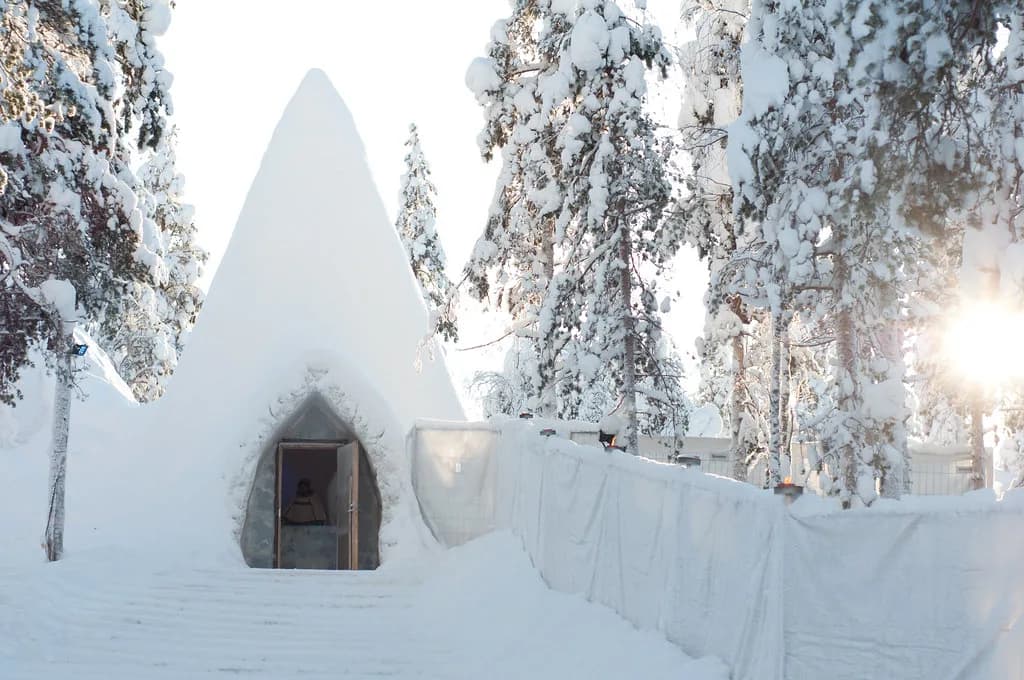
A true glass igloo has a transparent dome or a large heated glass panel over the bed, so you can watch the sky lying down. Some are full 360-degree roofs, some are a single panoramic window; ask the property which before you book, because the difference decides whether you see the sky from the pillow or only from the window seat.
Aurora cabins and huts usually pair a glass roof or glass wall with more living space, a private sauna or a kitchenette. That suits couples who want an evening indoors with the sky visible, and families who need room to spread out. Snow hotel rooms are the opposite trade: a sculpted ice room kept near zero degrees is a memorable single night, not a comfortable base for a week.
The heated glass roof is the detail that makes the concept work. Warming the glass melts fresh snow and frost so your view stays clear, and it keeps the interior at something close to normal room temperature while outside temperatures sit well below freezing on a Lapland winter night.
Arctic SnowHotel & Glass Igloos in Sinettä
This is the two-in-one option: 39 glass igloos with adjustable beds and 360-degree sky views, plus a snow and ice hotel rebuilt each winter with its own Ice Restaurant. It sits about 26 km from Rovaniemi city centre on Lake Lehtojärvi, roughly a 30-minute drive, which puts it firmly in darker countryside rather than the lit-up town.
Indicative rates published in igloo-hotel directories start around 314 euros per night for the glass igloos, with breakfast and an aurora alarm included according to that listing. Treat any figure as a starting point for low season rather than a quote: the property's own online store is where the exact price for your dates appears.
The appeal here is doing both accommodations in one stay: one night in the warm glass igloo, one in the ice hotel, with dinner in an ice restaurant between them. Bear in mind that the snow hotel only opens in mid-December, so early-season guests get the igloo experience alone.
Santa's Igloos Arctic Circle
Santa's Igloos Arctic Circle puts premium glass igloos right by Santa Claus Village, about 5 km from Rovaniemi Airport. Select igloos come with a private sauna or outdoor hot tub, and the listing includes an aurora alarm plus the on-site Restaurant Arctic Eye. Indicative rates start around 350 euros per night.
The trade-off is location. You gain walkability to Santa Claus Village, SantaPark and the airport transfer, which is ideal for families with children or a short trip. You lose some darkness: village lighting and year-round activity mean the sky is never as black as at a lakeside resort 25 km out.
Arctic TreeHouse Hotel
Arctic TreeHouse Hotel is the design-led choice, with Arctic Glass Houses and cubic nest-like suites featuring a glass wall and forest views. It stands 3 km from Rovaniemi Airport and 2 km from Santa Claus Village, with SantaPark about 200 m away, so logistics are about as easy as Lapland gets. Indicative rates start around 355 euros per night.
Note that many suites here look out through a glass wall rather than a full roof panel. If lying in bed and staring straight up is the point of the trip, check which room category actually delivers that before you commit to the higher rate.
Glass Resort: private sauna and outdoor jacuzzi
Glass Resort is the most luxurious glass stay in Rovaniemi, with private saunas and heated outdoor jacuzzis with massage jets and lighting. It sits about 250 m from Santa Claus Office and 3 km from the airport, and its northern lights chasing runs from October to April, with husky, reindeer and snowmobile safaris from December to mid-April.
Indicative rates sit at the top of the Rovaniemi range. That premium buys space, a jacuzzi and a sauna rather than a better aurora view, so it makes most sense for a honeymoon or a single celebratory night spliced into a longer, simpler trip.
If you would rather spend the difference on activities, a mid-range cabin outside town plus a guided chase night usually delivers more time under a dark sky for the same budget. Compare what the extras actually add before paying for the top category.
Apukka Resort on Lake Olkkajärvi
Apukka Resort is a full-service glass igloo village about 10 minutes from Rovaniemi Airport on the shore of Lake Olkkajärvi. Its Aurora Cabin igloos put a panoramic glass roof over the bed, and the resort runs huskies, reindeer, sauna and northern lights safaris on site, which cuts out transfer time on activity days.
The on-site activity programme is the selling point: you can do a husky safari in the morning and be back in your cabin for the evening without a minibus ride into town. The lake setting also keeps ambient light low, though cabins sit close together, so sky views are excellent but ground-level privacy is moderate.
Small-scale stays within 10 km of Rovaniemi
Ollero Eco Lodge, 8 km from Rovaniemi, combines a traditional log cottage, a glass igloo and a sleeping granary sleeping up to six. The glass igloo has a double bed and sits a minute's walk from the main house, which gives groups and families a private base with a dark-sky pod for the aurora watchers.
Small properties like this suit travelers who want a self-catering base and a dedicated sky-view room rather than a resort with a restaurant and reception. Expect fewer staff on hand for wake-up calls, so set your own alarm and keep an eye on cloud forecasts.
Farther afield: Ranua, Pyhä, Luosto and Levi
Ranua Resort Arctic Igloos has 20 glass igloos on the shore of Lake Ranuanjärvi with a private sauna in every unit, 93 km south of Rovaniemi and next to Ranua Wildlife Park. North of Rovaniemi, Pyhä Igloos is a seven-suite glass-ceiling mini hotel with ski-to-door access and bus transfers available, while Santa's Hotel Aurora & Igloos in Luosto has only 10 igloos with the Pyhä-Luosto National Park behind it and an amethyst mine 3 km away. Around Levi and Kittilä, Golden Crown Levin Iglut sits on a fell summit at 340 m, the only glass igloo resort in Finland on a mountain top, 15 km from Kittilä Airport. Levi Northern Lights Huts is on a reindeer farm 9 km from the airport and 13 km from Levi centre.
These transfers are worth it when you want ski slopes, fell scenery or a national park alongside the igloo night. If Rovaniemi is your only base and you have two or three nights, the closer resorts give you more sky time for the same travel effort.
What included extras are worth paying for
Transfers, breakfast, thermal suits and aurora alarms are the four extras that change a stay. A resort on a lake 26 km out without a shuttle means taxis or a rental car, so a property offering transfers effectively bundles part of your transport cost into the room rate.
Aurora alarms are worth having if you sleep deeply: staff watch the sky and wake you when the lights appear, so you are not staring at the roof until 2 a.m. Not every property offers one, and the listings name it explicitly where it exists, such as at Arctic SnowHotel & Glass Igloos and Santa's Igloos.
Borrowed thermal suits and boots matter most if you plan snowmobile or husky days, since operators lend them for the activity. For aurora watching from your own bed they add nothing, so do not pay a premium for gear you will not use.
Heat, glare and privacy inside a glass igloo
Two things surprise first-time igloo guests: the warmth and the light. Heated glass keeps the room comfortable and the view clear, which also means you may need to crack a window or adjust the thermostat to sleep well, and curtains or blinds are rarely full blackout.
Privacy is the other consideration. Resorts with rows of closely spaced domes, like the larger villages, give you a superb view of the sky but a neighbour in sight; fell-top and lakeside positions with more distance between units cost more for exactly that reason.
Self-guided watching versus a guided chase
An igloo night is self-guided by default: you stay put, watch, and hope the cloud breaks over your particular lake. That works well when the forecast is clear, and it is the cheapest way to spend an evening. On a cloudy night, though, staying put means seeing nothing.
A guided chase drives you toward gaps in the cloud, often across 50 to 150 km, using local knowledge and live forecasts. It costs more and involves late nights in a minibus, but it is the better bet when the sky over Rovaniemi is overcast. The ideal trip pairs one guided night with two or three igloo nights.
Kp readings are useful as background only. They indicate how disturbed the magnetic field is, not whether your specific patch of sky will be clear, and a modest Kp with cloudless air beats a high Kp under overcast.
How many nights to allow for a fair chance of clear skies
Three nights is the realistic minimum for an aurora-focused stay, and four or five is better. Cloud is the limiting factor far more often than solar activity, and Lapland weather changes quickly, so consecutive nights give the sky several chances to clear.
Book the igloo for the middle of your trip rather than the first night. A delayed flight or a late arrival is easier to absorb when the sky-view night comes later, and you can shift an activity day if a clear-weather window opens.
A sensible structure is two nights in a town hotel for arrival and activities, then two or three nights in the igloo. That keeps costs down and gives you a comfortable base for the days when you are out on safaris all day and asleep by ten.
Plan Your Visit
Choose your igloo by what decides the night: distance from town for darkness, season dates for whether the snow hotel is open, and whether the roof is fully glass. Match the extras, transfers, breakfast and aurora alarm, to how you actually sleep and travel.
Then give the sky time. Three or more nights, at least one guided chase and a flexible itinerary will do more for your chances than any single upgrade. For the wider picture on timing and conditions, the Arctic Circle guide sets out the season in detail.
Frequently Asked Questions
Can you see the northern lights from a glass igloo in Rovaniemi?
Yes, if the sky is dark and clear and aurora activity is strong enough. A glass roof gives you an uninterrupted view from bed, and a heated roof melts snow so the panel stays clear. Cloud and light pollution still decide the outcome, so a countryside property improves your odds compared with one next to village lighting.
How much does a glass igloo in Rovaniemi cost per night?
Rates differ widely by property, room category and season, and the resorts quote them for specific dates rather than as fixed annual prices. Each property's own booking page shows the exact rate for your nights, and igloo directories publish starting figures you can use for rough budgeting.
Is it cold sleeping in a glass igloo in Lapland?
No. Glass igloos are heated and insulated, so the interior feels like a normal hotel room even on a very cold winter night, and the heated glass keeps frost and snow off the roof. Many guests adjust the temperature or open a vent because the room can feel warm.
How far are Rovaniemi's glass igloos from the city centre and airport?
Distances vary widely. Some stays sit within a few kilometres of the airport and Santa Claus Village, while lakeside resorts are about 25 to 30 km from the city centre, roughly half an hour by road. Check the transfer arrangement before booking a stay outside town.
When is the best time to book a glass igloo in Rovaniemi?
Aim for the months when nights are dark and snow is on the ground, from September through March, and book well ahead for December and February, the busiest periods. September and late March offer dark skies with fewer visitors.
How many nights should you stay to have a fair chance of clear skies?
Plan at least three nights in the region, ideally with two or three of them in a sky-view room, and keep one night free for a guided chase toward clearer weather. Cloud, not aurora activity, is usually the reason a night comes up empty.
Sources
Notes for your Arctic winter trip
Optional updates to our northern lights guides.
You might also like
Continue reading
More guides you'll find useful