Glass Igloos in Finnish Lapland: Which Stay to Pick
Compare glass igloos across Finnish Lapland, from Rovaniemi and Levi to Lake Inari, with room types, season dates and how aurora wake-up alerts work.
On this page
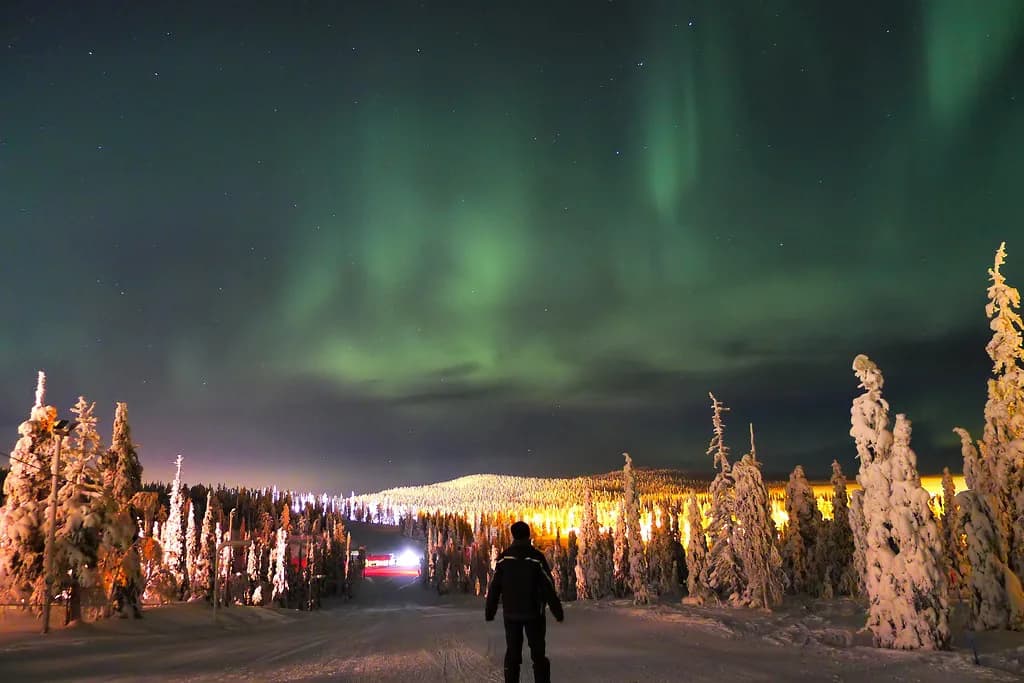
A glass igloo in Finnish Lapland turns the long wait for broken cloud into the centrepiece of the night: you lie back, let your eyes adjust, and watch the sky from bed instead of standing in a snowfield. Because the aurora appears in short bursts and often fades within minutes, a warm, dark room with a view straight up means you catch more of the sky than you would by stepping outside every hour. The stays that follow range from simple roof-only igloos steps from Rovaniemi to glass-walled cabins deep in the forest near Ruka and Lake Inari, and if the Rovaniemi options are already on your shortlist, this guide to glass igloos in rovaniemi compares them directly.
Choosing between them is mostly about three things: how much sky the glass actually covers, how dark the surroundings are, and whether the property wakes you when the lights appear. A village igloo buys convenience and light pollution; a forest or lakeside cabin buys darkness and a longer transfer. Pair the stay with a broader plan for the northern lights in finland so you keep flexible evenings free for a chase when cloud sits over your cabin.
Why a glass igloo changes the way you wait for the aurora
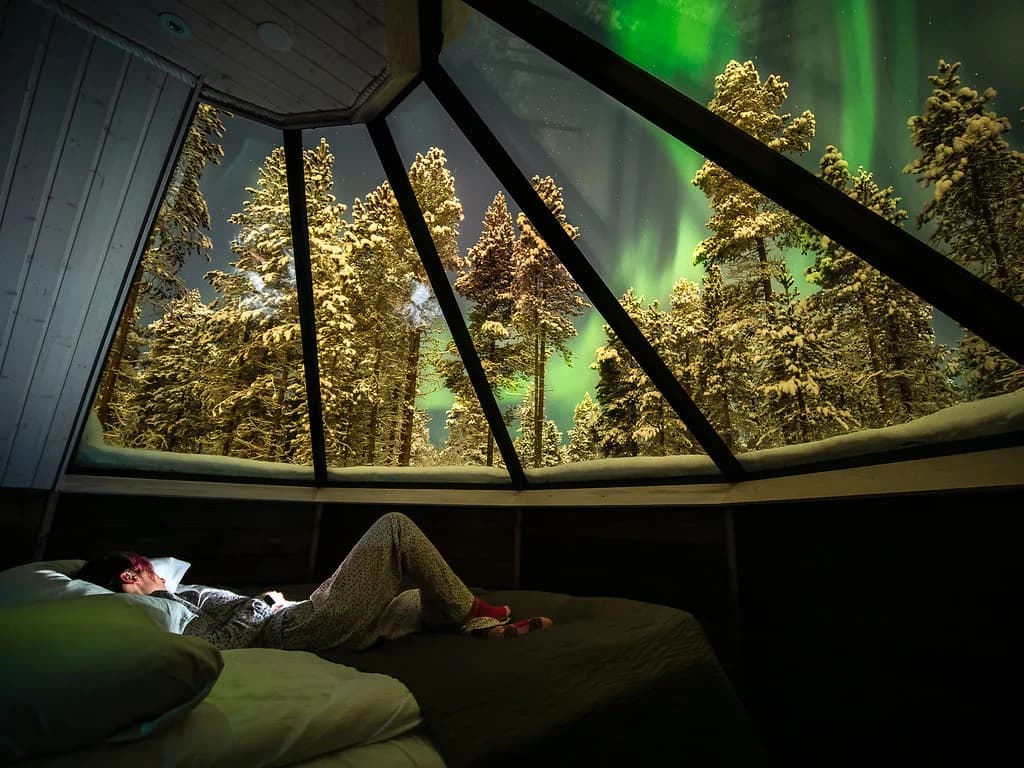
The wait is the hard part. The aurora is a response to solar activity, and no property can schedule it; what an igloo does is remove the friction that makes people give up at 11pm. Heated glass keeps the roof clear of frost, motorised or remote-controlled beds tilt you toward the sky without sitting up, and you stay warm enough to keep watching as the night stretches on.
The trade-off is that you are watching through a pane, often with warm interior light around you. Turn off every lamp you can, give your eyes twenty minutes to adjust, and treat the glass as one window among several rather than a screen. If the aurora is strong but low on the horizon, you will still need to go outside to see it, so pick a property where stepping out of the door puts you in darkness immediately.
Where the glass sits matters. Roof-only igloos give a narrow cone aimed at the northern sky; cabins with glass ceilings and glass side walls give a far wider field, which is the difference between seeing a faint arc and seeing the full curtain. Decide before booking how much of the night you intend to spend in bed and how much you will be outside.
When the aurora season runs and how many nights to allow
Dark, auroral nights in Finnish Lapland run roughly from late August into early April, with the snowiest and busiest stretch from December through March. Autumn often brings clearer skies and fewer visitors, while midwinter trades daylight for very long nights, which suits sleepers who want to watch from bed. Spring snow holds the light longer and tends to be quieter.
One night under glass is a gamble. Cloud can close in for a week, and a single booking leaves no second chance; three to four nights in a location gives the weather room to change, and five or more is realistic for a dedicated aurora trip. If your stay is short, spend the splurge night at a dark property and keep other nights flexible enough to join a chase when the forecast improves.
Solar activity drives the display and clear skies decide whether you see it, so build slack into the itinerary rather than picking a fixed night. Use a northern lights forecast to see how the coming days look, and remember Kp values are guidance only.
Rovaniemi area: Arctic SnowHotel & Glass Igloos and Santa's Igloos Arctic Circle
Arctic SnowHotel & Glass Igloos pairs two very different nights on one site: warm glass igloos with a 360-degree roof, and ice rooms where guests sleep in quality sleeping bags with an ice bar, ice restaurant and ice chapel nearby. Breakfast and the Finnish sauna are included with the stay, and resort transfers run from the airport, the city centre and Santa Claus Village. The SnowHotel opens from December 15 to March 31, while the glass igloos take reservations from September 1 to March 31, according to the property's listing.
The setting is rural, about 30 km and roughly 25 minutes' drive from Santa Claus Village, so you get darker skies than in the village itself while staying within easy reach of Rovaniemi. The igloos carry heated glass, underfloor heating and an aurora alarm, which matters if you would rather sleep than stare at the roof all evening. Rooms are on the compact side, so plan the stay for the sky rather than for space. For the practical details, see the christmas in finnish lapland.
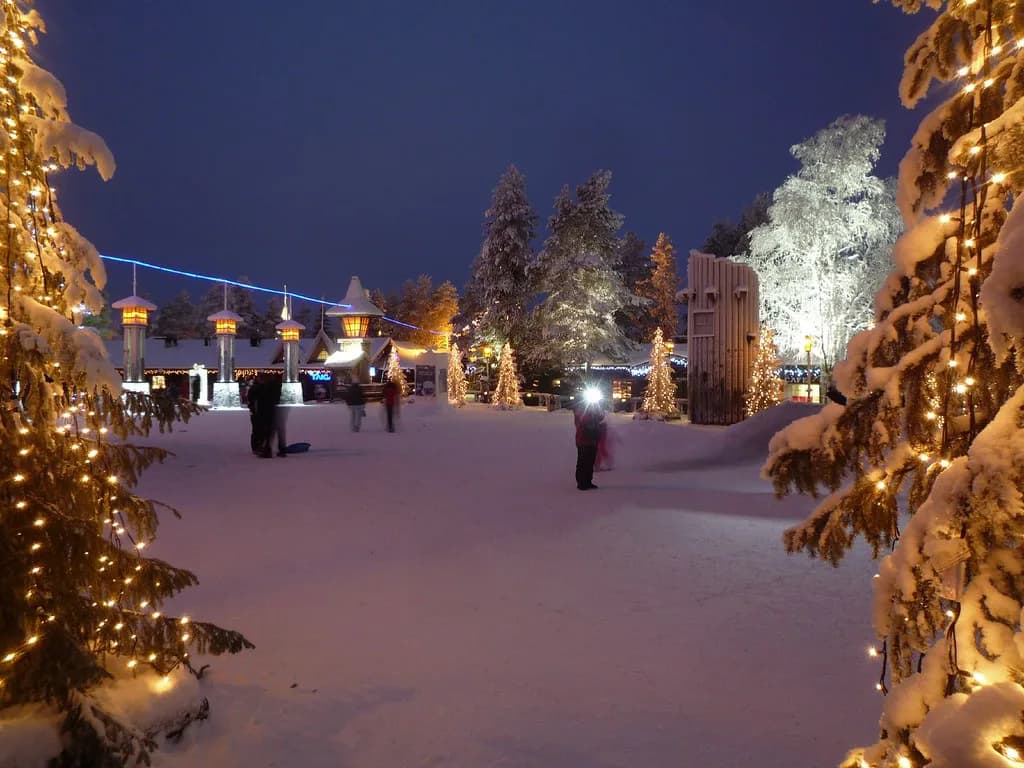
Santa's Igloos Arctic Circle sits inside Santa Claus Village itself, with a glass roof over the bed, private bathrooms, heated glass and some igloos with their own sauna. Staying in the village means a short walk to the Christmas attractions, but village lighting works against faint aurora, so treat this as a festive base rather than a dark-sky one. It suits families and December trips where the village atmosphere is as much the point as the sky.
Choose between them on night-count. If you have one night and want the Christmas village, book in the village; if you have two or more and the aurora is the priority, the rural glass igloos give you a better sky and the option of a night in an ice room as a second experience. For the wider Christmas picture, see the guide to christmas in finnish lapland.
Apukka Resort: aurora cabins, Kammi glass suites and aurora wagons
Apukka Resort sits a short drive from Rovaniemi and Santa Claus Village but feels remote once you are on site, which makes it a practical compromise between convenience and dark skies. The accommodation spans compact Aurora Cabins with glass roofs, larger Kammi Glass Igloo Suites with the glass above the bed, and movable Aurora Wagons that can be positioned out in the wilderness. Huskies, snowmobiles and a traditional Finnish sauna run from the resort, and there is a lakeside sauna and hot tub for the evening.
The Kammi Suites are the pick if you want space to spread out after long days outdoors: the glass roof sits directly over the bed, and the extra room makes the stay feel closer to an apartment than a cabin. The Aurora Wagons suit travellers who want the novelty of a movable position, though you should expect a compact footprint. Either way, the resort's activities mean you are not relying on the sky alone to fill a day.
Levi and the fell country: Levin Iglut room tiers
Levin Iglut sits on the flank of Utsuvaara fell just outside Levi, giving wide valley views from the bed and easy access to skiing, restaurants and winter activities in town. The room tiers step up in what they include: Superior Igloos with heated glass roofs and motorised beds, Prime Superior Igloos adding kitchenettes, and Suite Igloos with a private terrace, outdoor hot tub, minibar and welcome champagne. The property runs a free northern lights alert system so guests are woken when the sky opens.
This is the stay to book if you want a luxury edge and a resort town on the doorstep, and the alert system lets you sleep through the early evening rather than guarding the roof. The trade-off is that you are paying a premium for the comfort and the view, and the fell setting still leaves you under its own local weather. For a quieter alternative near Levi, the Northern Lights Ranch and the Northern Lights Village Levi appear among other glass-roof options in northern Lapland.
Further north: Wilderness Hotel Inari and Nellim on Lake Inari
North of the Arctic Circle and further from towns, the Lake Inari properties are the choice for travellers who want the darkest skies and a wilder setting. Wilderness Hotel Nellim sits on the edge of the lake in northern Lapland, offering Wilderness Rooms, Aurora Cabins, log cabins and apartments, plus spacious Arctic Sky Cabins with glass walls and ceilings so the sky is visible from almost every angle. Husky sledding, snowmobiling and reindeer safaris run from the hotel, and the range of cabins makes it a strong fit for families or groups.
Wilderness Hotel Inari & Igloos sits on the shore of the lake with aurora cabins that sleep up to four people under a glass roof, a restaurant with panoramic lake views, and excursions covering snowshoeing, ice fishing and a culture tour. The location makes it a natural base for learning about Sámi culture in the region, and the cabin capacity keeps costs sensible for a group. Both properties trade the convenience of Rovaniemi for a longer transfer and a better sky.
Book the north if you have several nights and the aurora is the whole point of the trip; a two-night stay this far north with a cloudy forecast leaves little room to move. Ivalo is the practical arrival airport for this stretch of Lapland.
Saariselkä, Pyhä-Luosto and southern fells: Kakslauttanen, Santa's Hotel Aurora, Syöte Igloos
Kakslauttanen Arctic Resort, near Saariselkä, is one of the earliest and best-known igloo resorts, offering authentic glass igloos and Kelo-glass igloos that combine a glass roof with a log cabin. It is also the property to pick if facilities matter as much as the sky: a very large smoke sauna, two restaurants, a fireplace lounge and a long menu of reindeer safaris, ice fishing and hikes. Expect the most polished operation and the highest demand around Christmas and the February school holidays.
Santa's Hotel Aurora & Igloos sits next to Pyhä-Luosto National Park, with ten glass igloos that each have a heated glass ceiling, private bathroom and bathrobes, plus an aurora alarm to wake you when the lights appear. The hotel also has a restaurant, lobby bar and terrace, which makes it a good compromise for travellers who want an igloo night without giving up hotel services. The national park setting adds fell scenery and day routes on the doorstep.
Syöte Igloos is a single stand-alone glass igloo on top of Iso-Syöte, the southernmost fell in Lapland, with panoramic views over the forests. It is self-catering apart from breakfast, which is served at a nearby hotel a short walk away, and there is no on-site restaurant, hot tub or second igloo. Book it for privacy and the elevated view rather than resort facilities.
Design cabins: Magical Pond near Ruka and Invisible Forest Lodge
Magical Pond, tucked in forest near Ruka, takes the glass-cabin idea in a smaller, more design-led direction: modern Scandinavian cabins with wood accents, large windows, a compact footprint and an on-site sauna. You are close to Ruka's skiing and winter sports but return each evening to a quiet woodland setting. It suits couples who want an intimate base and are happy with fewer resort extras.
Invisible Forest Lodge, deep in the forest near Rovaniemi, uses mirrored glass walls so the cabins disappear into the trees, and offers glass cabins plus Aurora Huts set on the frozen river, both with private hot tubs. The remote position means very little light pollution, so even a quiet aurora night rewards you with strong stargazing. It is the pick for travellers who want a distinctive design stay and are willing to trade proximity to town for darkness.
Room types and what each actually gives you
Read the room description for what the glass covers before you compare anything else. Roof-only igloos aim a glass cone at the sky above the bed; cabins with glass ceilings and side walls, such as the Arctic Sky Cabins at Nellim, give a much wider field and let you see a low arc without leaving the room. A glass wall facing the forest is beautiful in daylight but does little for an aurora directly overhead.
Then check what else is in the room. Kitchenettes at Levin Iglut's Prime Superior Igloos and at Syöte Igloos let you eat in; private bathrooms at Santa's Hotel Aurora and Santa's Igloos Arctic Circle remove a shared-facility compromise; private hot tubs at Invisible Forest Lodge and the Levin Iglut suites add an outdoor vantage point. Motorised beds, found at Levin Iglut and Arctic SnowHotel, are a small comfort that matters over a long night.
Finally, check capacity. Aurora cabins at Wilderness Hotel Inari sleep up to four, while Syöte's single igloo suits two. Matching the room to your group avoids paying for space you do not use or squeezing into a cabin built for couples.
Aurora alarms, wake-up calls and going to bed before the lights
An aurora alarm is the single most useful feature in an igloo, because the display can arrive at 1am and vanish by 1.20am. Arctic SnowHotel, Levin Iglut and Santa's Hotel Aurora all advertise alarm or alert systems that wake guests when the lights appear, which lets you sleep through the early evening instead of guarding the roof. Wilderness Hotel Nellim and Apukka Resort also run alerts according to their own guest information.
Use the alarm properly: keep your outer layer and boots by the bed so you can be outside in under a minute, and set a second alarm for the small hours in case the first comes during a cloudy spell. If the property has no alarm, pick one night to stay up rather than several, and check the aurora forecast before deciding which night that is.
Heat, glare and condensation in a heated glass roof
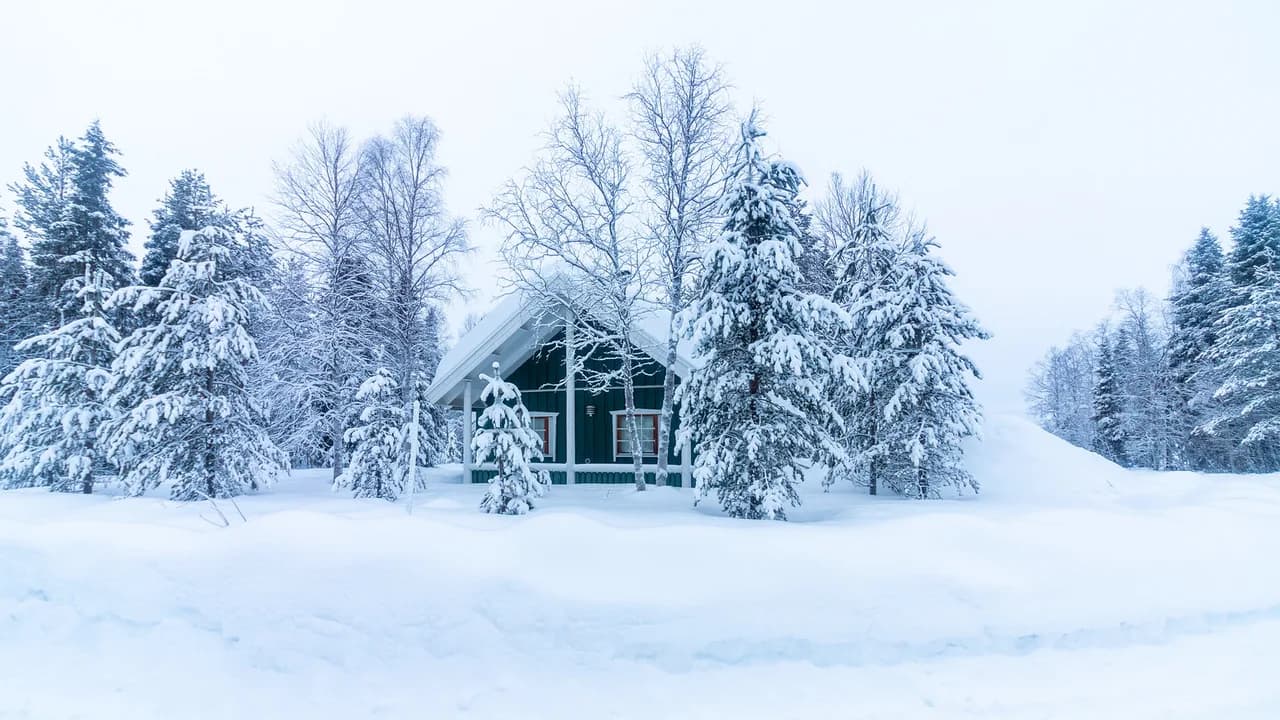
Heated glass is what makes an igloo work in a Lapland winter, keeping the pane clear while snow settles on the roof outside. The cost is warmth: a heated roof and underfloor heating can make the room stuffy, so expect to sleep under a lighter duvet than you would in a cabin. Glass igloos are generally compact, which concentrates the heat further.
Glare is the other trade-off. Interior lights, phone screens and a bright bathroom door all cut how much of a faint aurora you can see, and the difference between a faint arc and a strong curtain is often just dark-adapted eyes. Switch off what you can, keep the phone face-down and step outside if the display is low on the horizon.
Light pollution: village igloos versus forest and lakeside cabins
Where you sleep decides how much of the aurora you can actually see. Santa's Igloos Arctic Circle sits inside Santa Claus Village, where festive lighting makes the setting magical but washes out faint aurora, so treat the glass roof as a bonus rather than a dark-sky observatory. The rural and lakeside properties, from Arctic SnowHotel near Rovaniemi to Nellim and Inari, put you in genuinely dark surroundings.
Ask where the nearest lit building is, not just how far the property is from town. A forest cabin with a lit reception fifty metres away can be worse than a village igloo turned away from the lights. If darkness is the priority, favour properties with cabins spread out among trees or along a shoreline, and walk to the edge of the site for a clear northern horizon.
Shared bathrooms, saunas and hot tubs as part of the night
Facilities split these stays as much as the glass does. Santa's Hotel Aurora, Santa's Igloos Arctic Circle and Levin Iglut give you a private bathroom in the room, which matters on a cold night when a shared block means dressing to cross a yard. Smaller cabins at Magical Pond and Syöte are self-contained but compact, while Arctic Fox Igloos near Lake Ranuanjärvi pairs lakeside glass igloos with private saunas and an on-site restaurant.
Saunas and hot tubs extend the evening outside the glass. Levin Iglut's Suite Igloos, Invisible Forest Lodge's cabins and Aurora Huts, Apukka's lakeside sauna and hot tub, and the private saunas at Arctic Fox Igloos all give you a warm vantage point and a reason to stay up. A hot tub is also a practical aurora spot, since you can soak while watching the sky instead of standing still in the cold.
Hotel, cabin or igloo-only: matching the stay to your group
Couples usually get the most from a single igloo night with a hot tub and an alarm, then move to a hotel for the rest of the trip. Families need space: Wilderness Hotel Nellim's mix of aurora cabins, log cabins and apartments, and Wilderness Hotel Inari's four-person aurora cabins, keep groups together without paying for a second igloo. Apukka's Kammi Suites suit small families or anyone who wants a lounge area alongside the glass roof.
Travellers who want hotel services should favour Santa's Hotel Aurora, Arctic SnowHotel or Levin Iglut, where restaurants, saunas and reception are on hand. Those who want self-catering and privacy should look at Syöte Igloos and Magical Pond. A single glass igloo night in the middle of a cabin week is often the best value way to try the experience without committing the whole trip to it.
Lead times and when to book for December to March
The best glass igloo rooms sell out early, and the smaller properties have only a handful of units to begin with. Christmas and the February school holidays are the tightest dates, and popular igloos can be booked months ahead, so reserve the specific room type you want rather than a generic category. If your dates are fixed around December, book as soon as your flights are confirmed.
Shoulder dates give you more choice and often a better chance of clear skies. Late September and early April sit inside the aurora season with fewer guests, and availability at the more remote Lake Inari and southern fell properties is looser outside peak weeks. Autumn trips also appeal if you want to combine the aurora with hiking rather than snow activities.
Rates vary by property, room tier and date, and none of the stays here publishes a single fixed price, so compare the room you actually want on the property's own booking page rather than relying on a headline figure. A suite with a hot tub, a Kammi glass suite and a single Syöte igloo sit in very different cost brackets.
How to pair an igloo night with a chasing tour
An igloo is a fixed vantage point, and cloud is local. A chasing tour drives you toward clearer sky, so the strongest plan is to keep one or two evenings free for a guided chase and treat the igloo as the night you stay warm at home. Operators near Rovaniemi and Levi typically run small-group evening tours with hotel pickup, and a night in an igloo the following evening lets you sleep in after a late return.
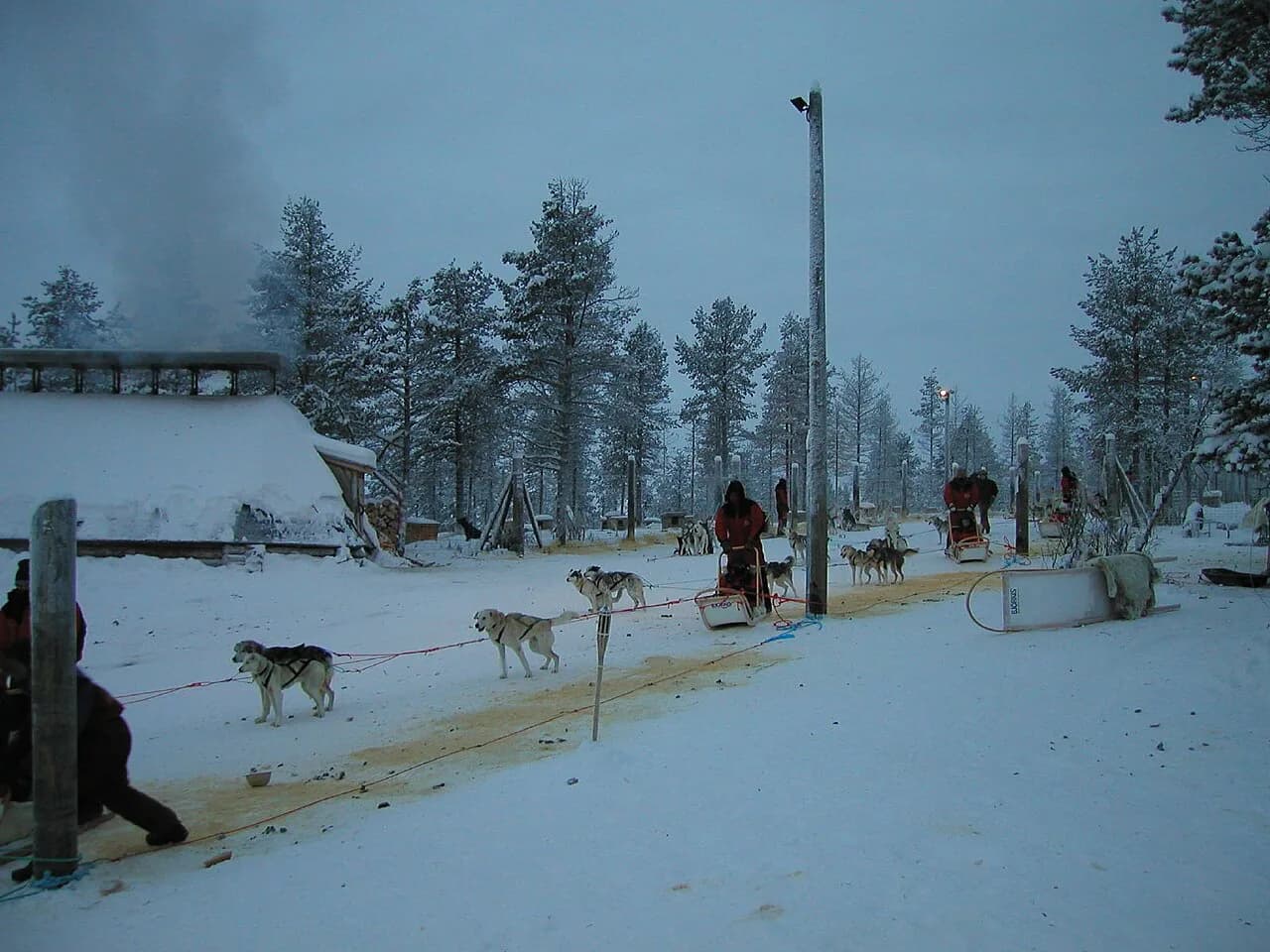
Many winter activities lend themselves to pairing: husky sledding and snowmobiling at Apukka and Nellim fill the daylight hours, and a sauna or hot tub at the property warms you up before the night watch. Where operators lend thermal suits and boots, you can travel lighter and save space for the camera gear that an aurora night really needs.
Plan Your Aurora Nights
Start with the base: Rovaniemi for village convenience and short transfers, Levi for a resort town and luxury igloos, or Lake Inari and the southern fells for darker skies and a wilder setting. Then choose the glass that fits your night: roof-only igloos for a compact stay, glass-walled cabins for the widest view, and an alarm system so you can sleep through a cloudy evening and still catch the moment.
Book three to four nights as a minimum, reserve the specific igloo or cabin you want early for December to March, and leave an evening free for a chase. If you travel in December and the Christmas village is part of the plan, a village igloo night paired with a darker cabin night gives you both without wasting a single dark-sky evening.
Frequently Asked Questions
What month is best for the northern lights in Finland?
Any dark night from roughly late August to early April can deliver aurora, because the season depends on darkness rather than on a single peak month. December to March brings the deepest nights and reliable snow, while late September and early April bring fewer visitors and often clearer skies. Solar activity and cloud decide each night, so plan several nights rather than betting on one date.
How much does it cost to stay in a glass igloo in Lapland?
Rates differ sharply by property, room tier and date, and a suite with a private hot tub costs far more than a compact roof-only igloo. Compare the specific room you want on the property's own booking page, where seasonal rates and inclusions are listed, rather than relying on a headline figure from a comparison site.
Is Lapland, Finland in the Arctic Circle?
Part of it is. Rovaniemi sits on the Arctic Circle itself, and resorts such as Saariselkä, Kakslauttanen, Inari and Nellim lie well north of it, which is why midwinter nights there are so long. Levi and Ylläs are close to the line, so nights are shorter but still dark enough for aurora through the core winter months.
Which glass igloos in Finland are the best?
It depends on what you want from the night. Levin Iglut suits luxury and a resort town, Arctic SnowHotel and Santa's Hotel Aurora offer alarm systems and hotel services, the Lake Inari properties give the darkest skies, and Syöte Igloos and Magical Pond suit travellers who want privacy and a compact design stay.
How many nights do you need in a glass igloo to see the aurora?
Three to four nights gives the weather room to change, and five or more is realistic for a dedicated aurora trip. One night is a gamble, because cloud can close in for a week. If the stay is short, splurge on one dark-sky igloo night and keep other evenings flexible for a chase toward clearer sky.
Sources
Notes for your Arctic winter trip
Optional updates to our northern lights guides.
You might also like

Continue reading
More guides you'll find useful