Snowshoeing in Ruka: Trails and Aurora Walk Guide
Plan snowshoeing in Ruka, Finland: guided northern lights walks on the fells, easy forest trails, terrain near Oulanka and how to pick the right route.
On this page
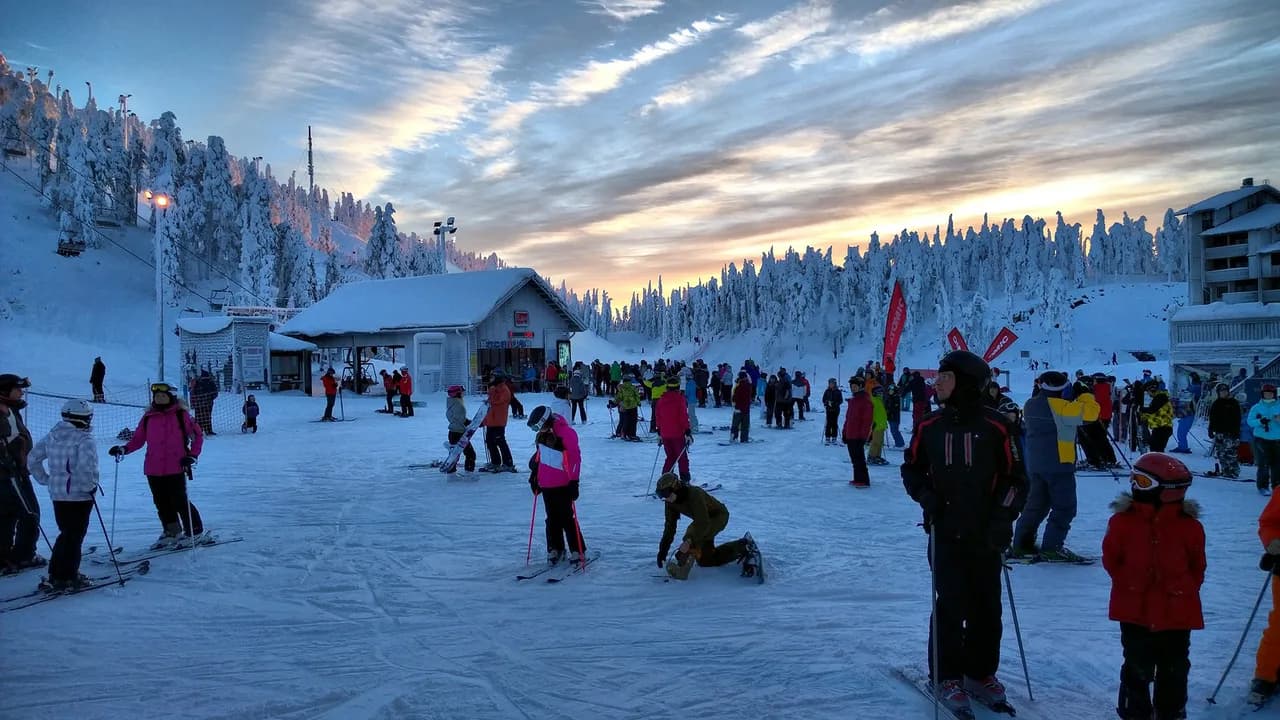
Ruka sits in eastern Finnish Lapland outside Kuusamo, where rounded fells rise straight from the village and snow lies deep from early winter into April. Snowshoeing here is less about technical difficulty than about where you point your feet: a summit view at dusk, a quiet birding hill, or a dark forest track after nightfall. The terrain and the long winter nights make it one of the easiest places in the region to walk out under a sky that may, on a clear evening, carry the northern lights in ruka.
This guide sorts the options by what each one actually delivers: a three-hour guided evening with a fire and hot drink, a short beginner loop, a national-park day trip by vehicle. It also covers rental, the weekly programme and how many nights to budget so a snowshoe outing has a fair chance of a clear sky.
Why Ruka suits snowshoeing
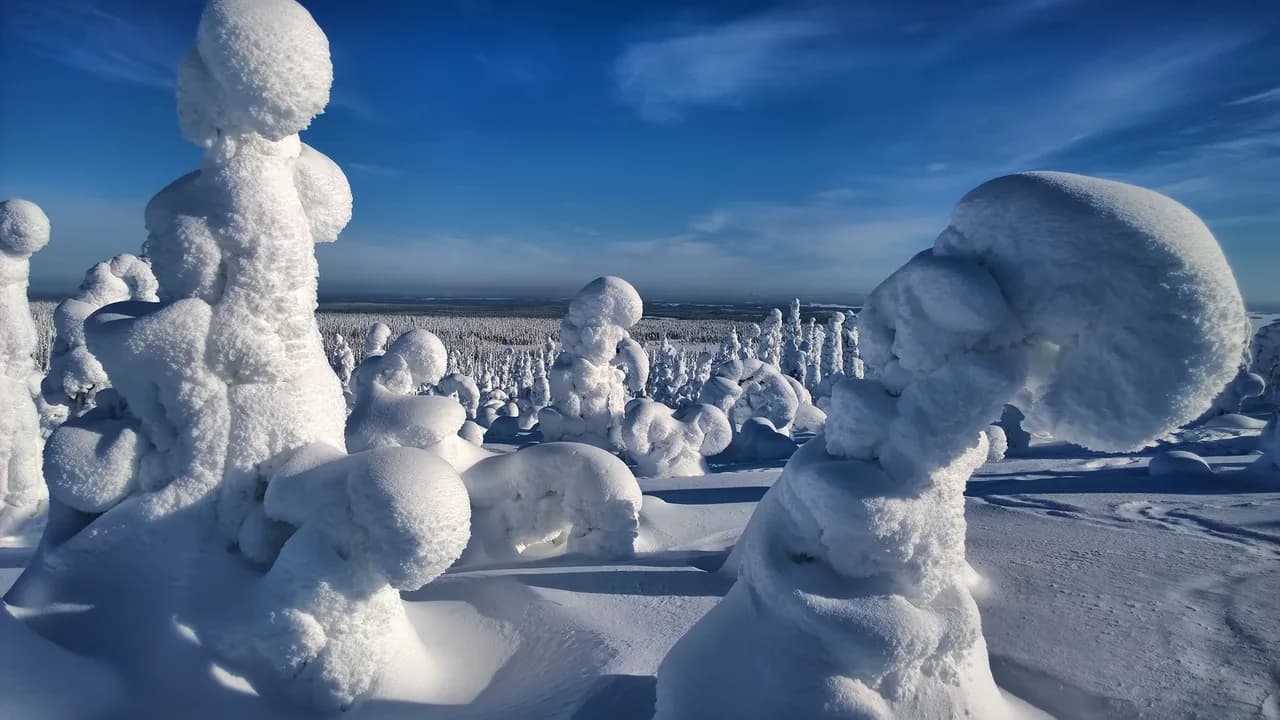
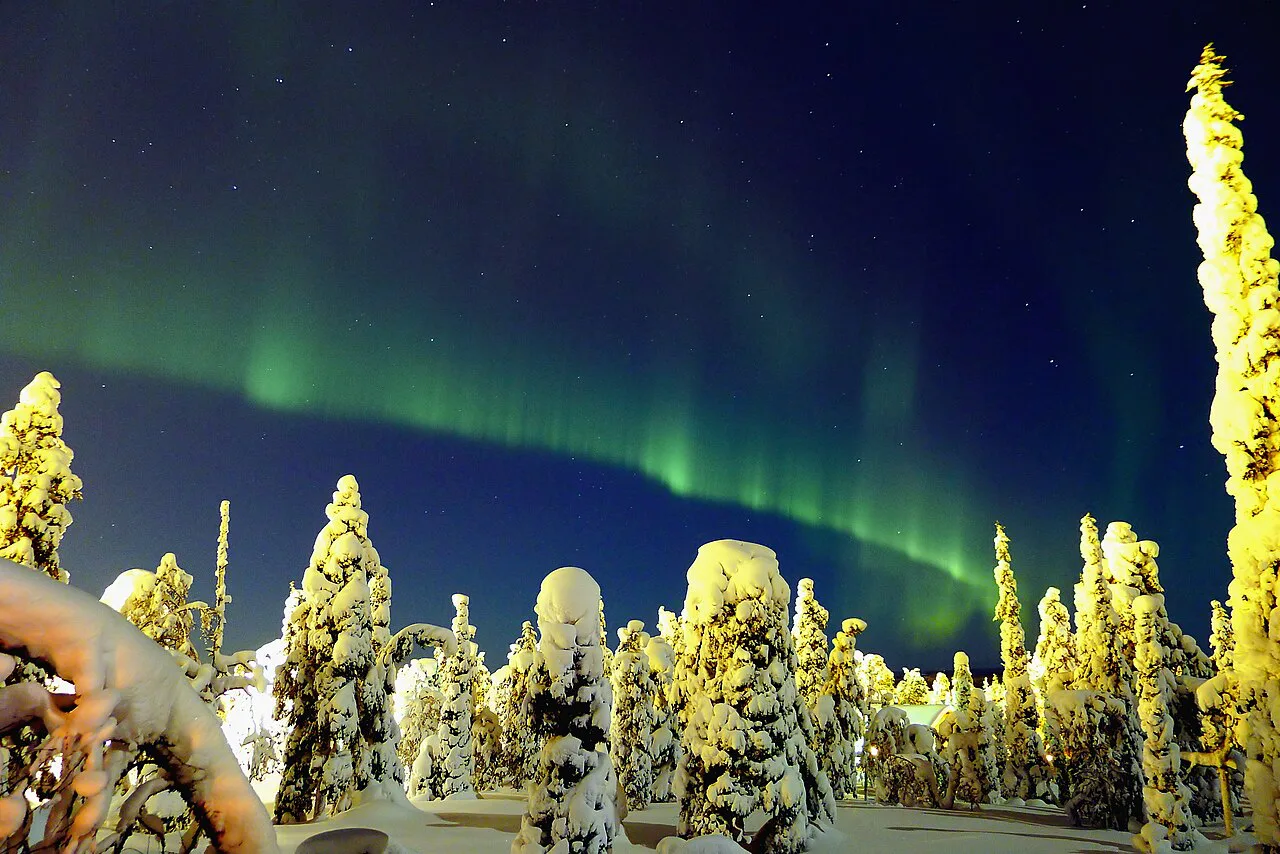
Ruka's appeal for snowshoers is the variety packed into a small radius: a fell you can climb from the village, forest hills with winter birds, and national parks within driving distance. The trees around Kuusamo often carry heavy tykky snow, the snow-crusted shapes that give Lapland forests their sculptural look, and Rukapalvelu points snowshoers toward Rukatunturi Fell, Konttainen and Oulanka National Park as its signature routes.
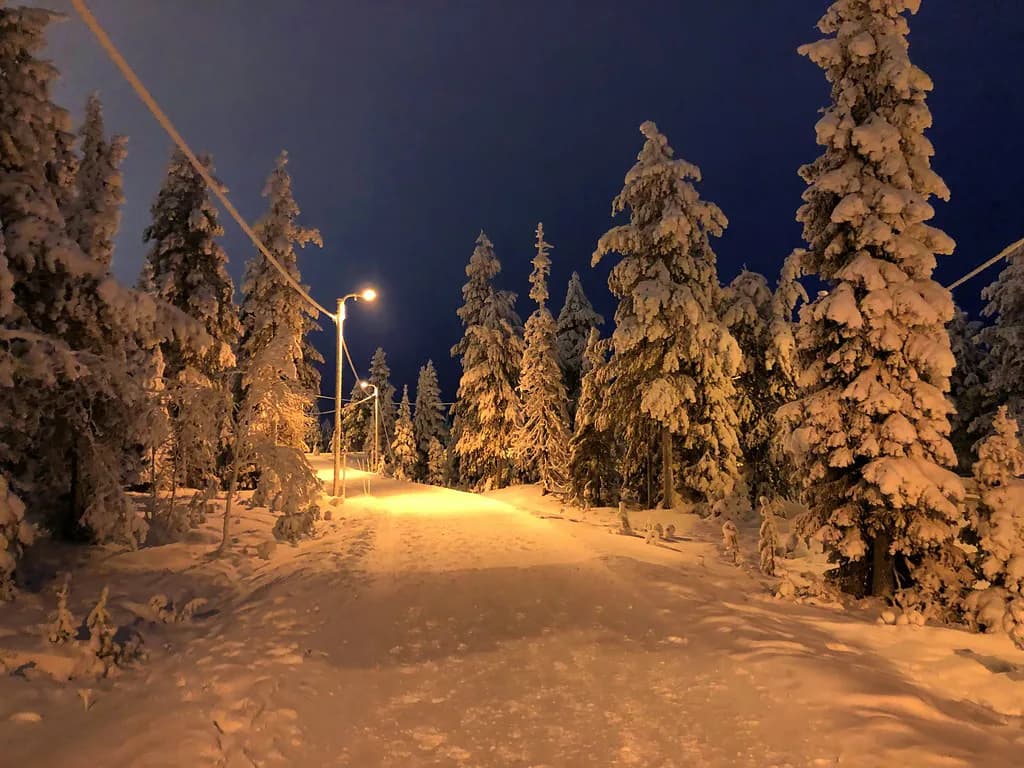
Winter nights in eastern Lapland are long and, away from the lit village and slopes, genuinely dark, which is what any aurora hunt depends on. Snowshoes let you leave a groomed track and cross open snow toward a fell top or a forest clearing without sinking. Whether the sky delivers is a matter of cloud and solar activity, not of the route you pick.
When to snowshoe in Ruka
The guided aurora snowshoe walk on the Ruka events calendar runs from late November to mid-April, starting at 19:00 in the evening and subject to snow conditions. Snowshoeing generally works across that whole window, with the deepest snow and longest dark nights falling in midwinter.
Late autumn and early spring are worth considering too: nights are still dark enough for aurora well before and after midwinter, but daylight lasts longer and temperatures are often friendlier for a daytime outing. April trips combine longer days with snow that is soft and wet rather than deep and dry, so plan shorter routes and start earlier.
Guided northern lights snowshoe walks
The evening aurora snowshoe is designed for travelers who want dark-forest walking without navigating alone. Groups head out at 19:00 for a three-hour walk covering 2–5 km, stopping to look at animal tracks, listen to the guide's stories about the Arctic and take a hot drink by a fire.
Pricing is straightforward: 87 € per adult and 54 € per child aged 8–11 on the Ruka Safaris listing. That makes it a realistic family option once children are old enough for three hours outdoors, but the trip is not aimed at younger kids, and you should plan an early dinner before the 19:00 start.
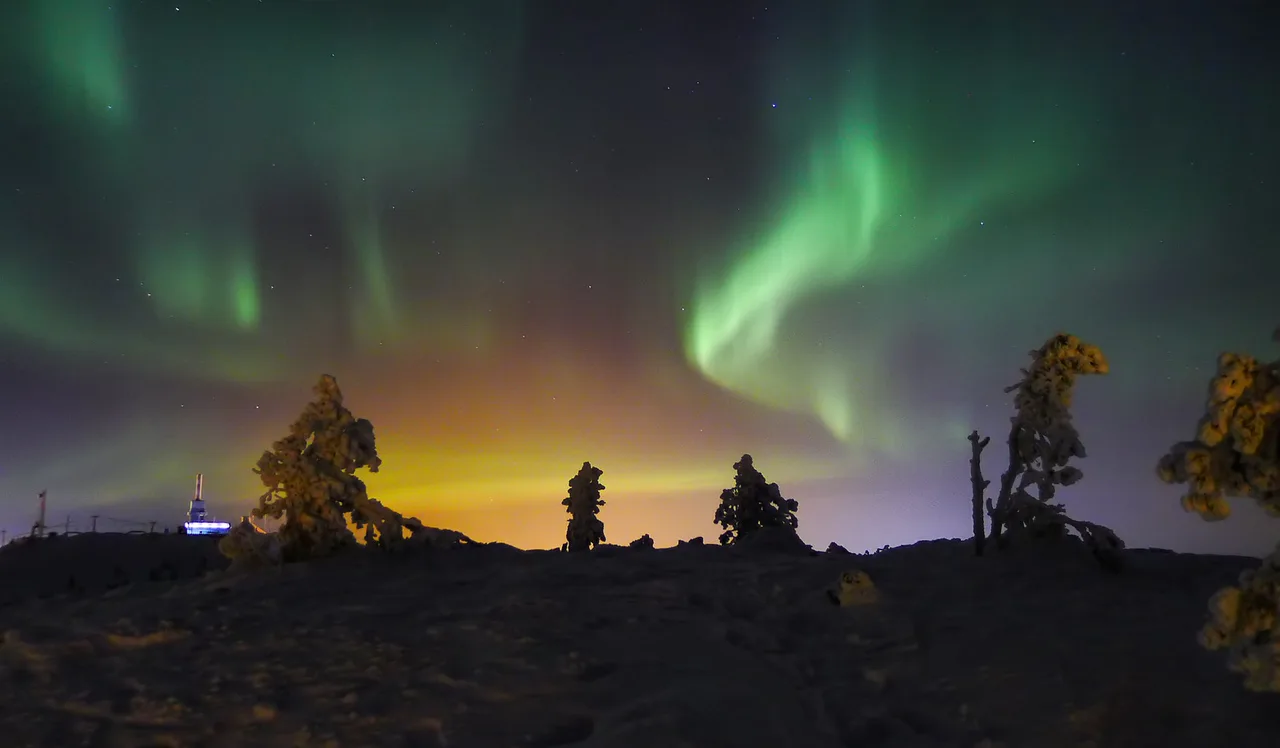
The walk is not a sighting guarantee. The trip's premise is that clear skies bring bright stars and, with luck, the aurora; cloud simply means a different night out. The snowshoe format is valuable because it puts you away from village lights and lets the group cover ground to a fell clearing or a fire spot rather than standing in one place.
Reading the 2–5 km format
The 2–5 km range on the guided aurora trip matters less than it looks: it is spread over three hours with stops, so the cold while standing around is a bigger factor than distance covered. First-timers handle it comfortably in snowshoes provided by Ruka Safaris. The fire break and hot drink built into the schedule are your best defence against the chill.
If your group includes someone who struggles with uneven snow, ask Ruka Safaris when booking about the route and pace for that evening; conditions govern which trails are used. For a fit group, the upper end of the range means more terrain covered and more chances to reach open sky.
Rukatunturi Fell from the village
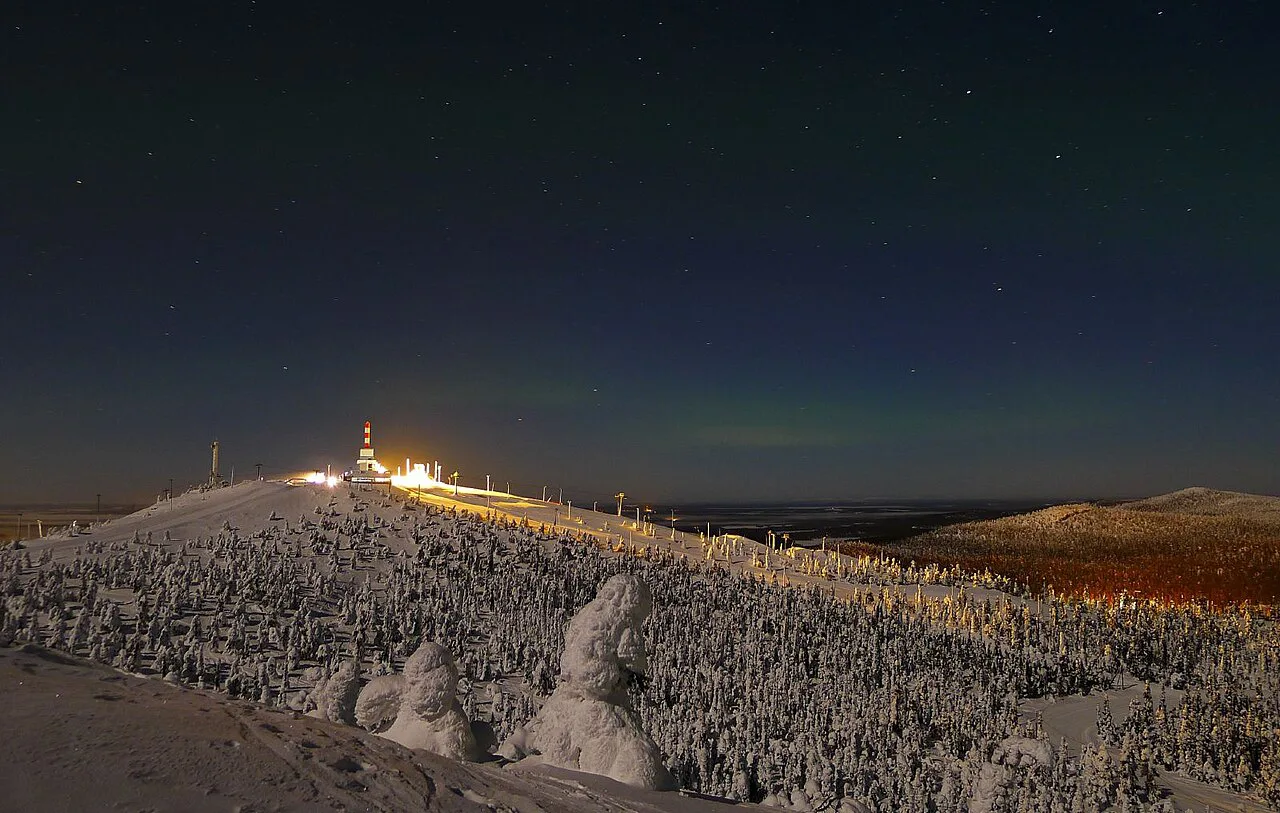
Rukatunturi is the fell above Ruka village, and its summit gives wide winter views over the surrounding wilderness. Rukapalvelu runs snowshoe excursions that climb it, which makes the fell the most accessible viewpoint in the area if you are staying in the village centre.
Climbing from village level means you start in lit, built-up surroundings and gain darkness as you rise. That makes the fell a sensible choice for a self-guided daytime walk, when the reward is the view and the snow-covered trees rather than the night sky.
Konttainen hill and winter birding
Konttainen is the quieter alternative: a forest hill with scenic trails known for winter birds and a peaceful atmosphere, according to Rukapalvelu. Snowshoeing is ideal here because the pace is slow and quiet enough to notice birdlife in the trees. Bring binoculars if you have them, and choose a daytime window when light reaches the forest.
Combining Konttainen in daylight with the guided aurora walk after dinner gives you two very different snowshoe experiences from one base without repeating terrain. That pattern also hedges against cloud: birds and forest are not weather-dependent in the way the aurora is.
Riisitunturi National Park and its snow-laden trees
Riisitunturi is the postcard forest, famous for heavily snow-covered trees and landscapes that draw snowshoers and photographers from across Finland. Riisitunturi National Park offers some of the most iconic snowshoeing scenery in Finland, and Rukapalvelu can arrange snowshoe outings from Ruka and Kuusamo. Plan it as a day trip with transport, because the park sits well beyond the village and winter access is not a stroll from your accommodation. If you are weighing this against other regions, our guide to snowshoeing in finnish lapland covers similar terrain further north.
The terrain is hilly, and deep snow around the trees can make progress slower than the distance suggests. Give yourself a full day, start in daylight, and go with a guide or a group if you do not know the trails.
Oulanka National Park in midwinter
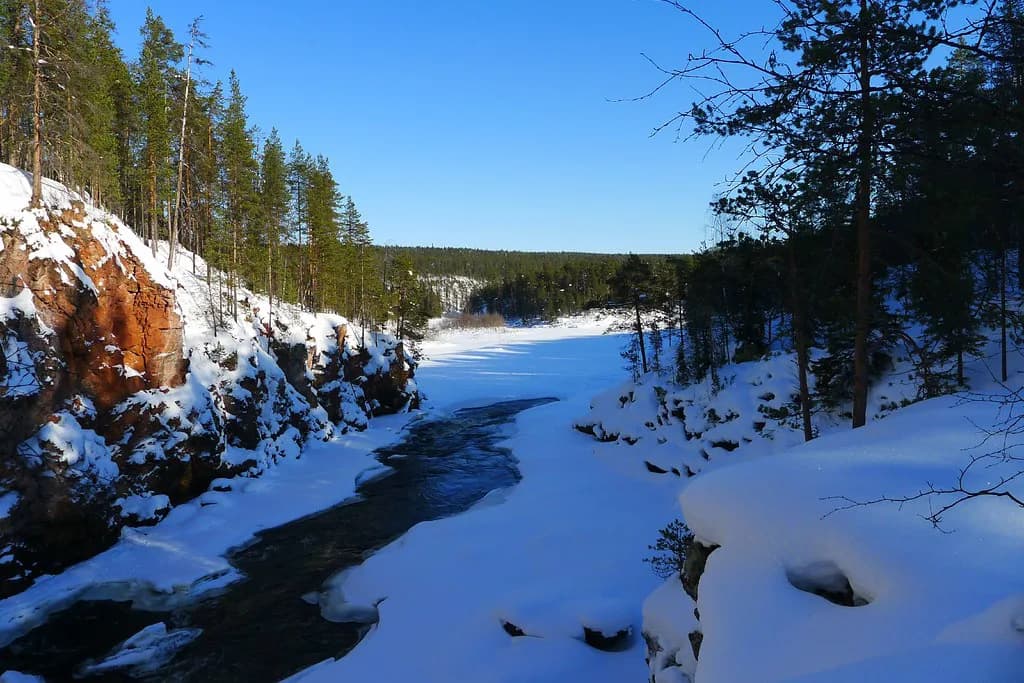
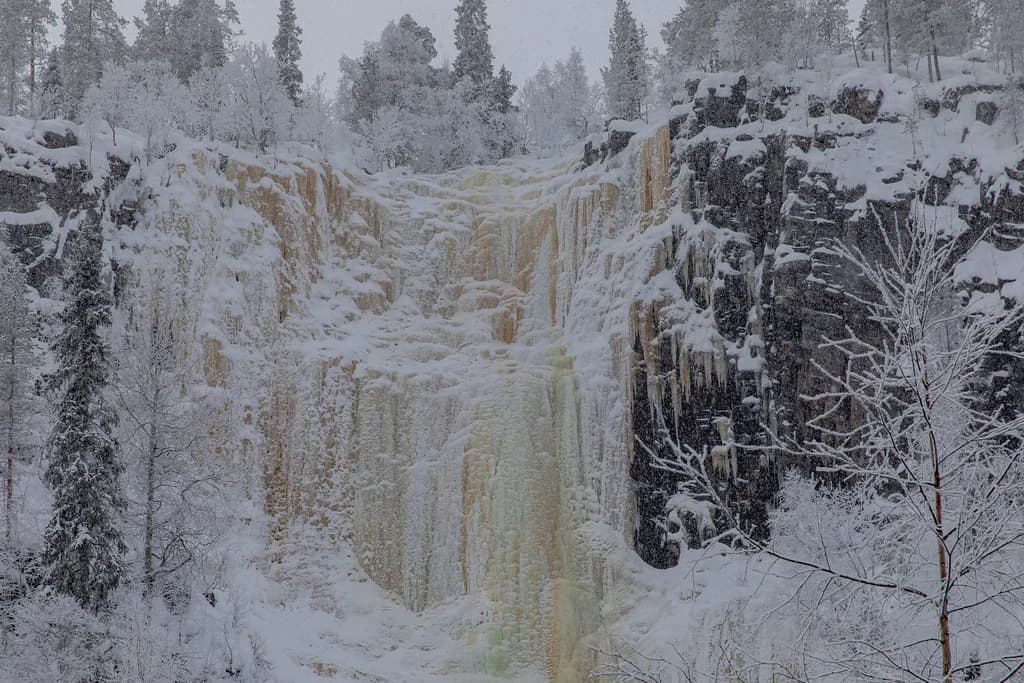
Oulanka is where frozen and free-flowing rapids sit side by side in the heart of winter, a striking contrast to the still forests nearer Ruka. Rukapalvelu offers snowshoe routes there, and it works best as a guided day out from Ruka or Kuusamo rather than something you bolt onto an afternoon.
The park's better-known summer trail, the Karhunkierros Trail, crosses this landscape, but winter travel follows different lines and conditions. Treat Oulanka as a daylight outing focused on river scenery, with the aurora left to an evening closer to Ruka.
Juhannuskallio trail for beginners
If you want a first, low-stakes snowshoe outing, the Juhannuskallio trail is a 0.5 km loop that takes under an hour and suits beginners. It is short enough to try snowshoes for the first time without committing to a guided evening or a national-park day trip.
Use it as a test run: if the snowshoes feel natural and you enjoy the pace, book the aurora walk or a longer fell route for later in the trip. Keep it in daylight so the focus stays on technique rather than the cold.
Self-guided versus guided snowshoeing
Self-guided works well in daylight on marked routes near the village and on short loops like Juhannuskallio. You set the pace, stop when you like and pay only for rental. Local operators such as Ruka Safaris also run snowshoe outings, so you can compare a guided option with going alone before deciding.
At night the trade-off shifts. A guide handles route-finding in the dark, knows where the fire spots and open sky are, and carries the group's safety kit, which is worth a lot on a first aurora evening. Go self-guided after dark only if you know the terrain, carry headlamps and have checked the route in daylight.
Rental and the weekly programme
Rukapalvelu runs snowshoe excursions from its weekly programme and also builds tailored outings suited to your interests, schedule and the prevailing winter conditions. That flexibility suits groups mixing abilities, or travelers who want a daytime forest walk rather than an evening aurora trip.
For equipment, rent from the company running your tour rather than hunting for gear separately; the Ruka area also has dedicated rental shops listed on the resort's services pages. Note the pickup point and timing when you book, since evening trips meet at the safari house before heading out.
How many nights to plan
Three nights based in Ruka gives you a fair structure: one guided aurora snowshoe evening, one daytime route like Konttainen or Rukatunturi, and one flexible day for Riisitunturi or Oulanka. With cloud possible on any given evening, a second dark-night window meaningfully improves your odds without relying on a single trip.
If the aurora is your main reason for coming, lean toward four nights and keep one evening unbooked so you can move plans if the sky looks promising. Midwinter offers the longest darkness, while late November and April give more comfortable daytime conditions alongside dark evenings.
Darkness, headlamps and thermal suits
Evening walks run entirely in the dark, so a headlamp with a red-light setting is useful for reading tracks without spoiling night vision. On guided trips the guiding company supplies the snowshoes, which takes one gear worry off the evening.
Keep the aurora in perspective: it depends on solar activity and clear skies, and no operator can schedule it. Snowshoeing gives you a reason to be out in the dark, a way to reach open ground and a better chance of a memorable evening whatever the sky does.
Plan Your Snowshoe Trip to Ruka
Choose Ruka if you want snowshoe terrain of several kinds from one base: a fell summit, a birding hill, snow-laden trees and river rapids. Book the guided aurora walk for your first dark evening, then use daylight for the longer routes.
Build in a spare night, check the booking page for the evening's meeting details and current pricing, and treat any aurora display as a bonus rather than a promise.
Frequently Asked Questions
Is snowshoeing easy for beginners in Ruka?
Yes. Guided snowshoe tours are described as suitable for all fitness levels, and the aurora walk covers only 2–5 km over three hours with stops. Short loops like the 0.5 km Juhannuskallio trail let you try the technique before committing to a longer outing.
How long is the guided northern lights snowshoe walk in Ruka?
The evening walk runs three hours, from 19:00 to 22:00, and covers 2–5 km with a fire stop and a hot drink. It operates from late November to mid-April according to snow conditions.
What does the guided aurora snowshoe walk cost?
Rates for adults and for children aged 8–11 are published on the Ruka events page for the Search for the Northern Lights snowshoe walk, so compare that listing with your dates before booking.
Can children join a snowshoe aurora walk in Ruka?
The guided aurora walk lists a child rate for ages 8–11, so it suits families with children in that band. Younger children are not covered by the listed pricing; ask the operator about them.
Where can you snowshoe near Ruka without a guide?
Daylight routes around the village, including the short Juhannuskallio loop and marked forest trails, work well self-guided with rented snowshoes. After dark, a guide is the safer choice unless you know the terrain and carry headlamps.
When is snowshoe season in Ruka?
Snowshoeing generally runs from early winter into April, and the guided aurora walk operates from late November to mid-April depending on snow. Midwinter brings the deepest snow and longest dark nights, while April offers longer daylight.
Will you see the northern lights on a snowshoe walk?
Not guaranteed. The walk puts you in dark forest away from village lights, and clear skies may bring bright stars and, with luck, the aurora. Cloud and low solar activity can mean no display, so plan more than one dark evening.
Sources
Notes for your Arctic winter trip
Optional updates to our northern lights guides.
You might also like
Continue reading
More guides you'll find useful