Polar Night in Saariselkä: What to Expect & Do
Polar night in Saariselkä brings sunless midwinter days, blue twilight and long dark nights. See how the season works and how to plan aurora evenings.
On this page
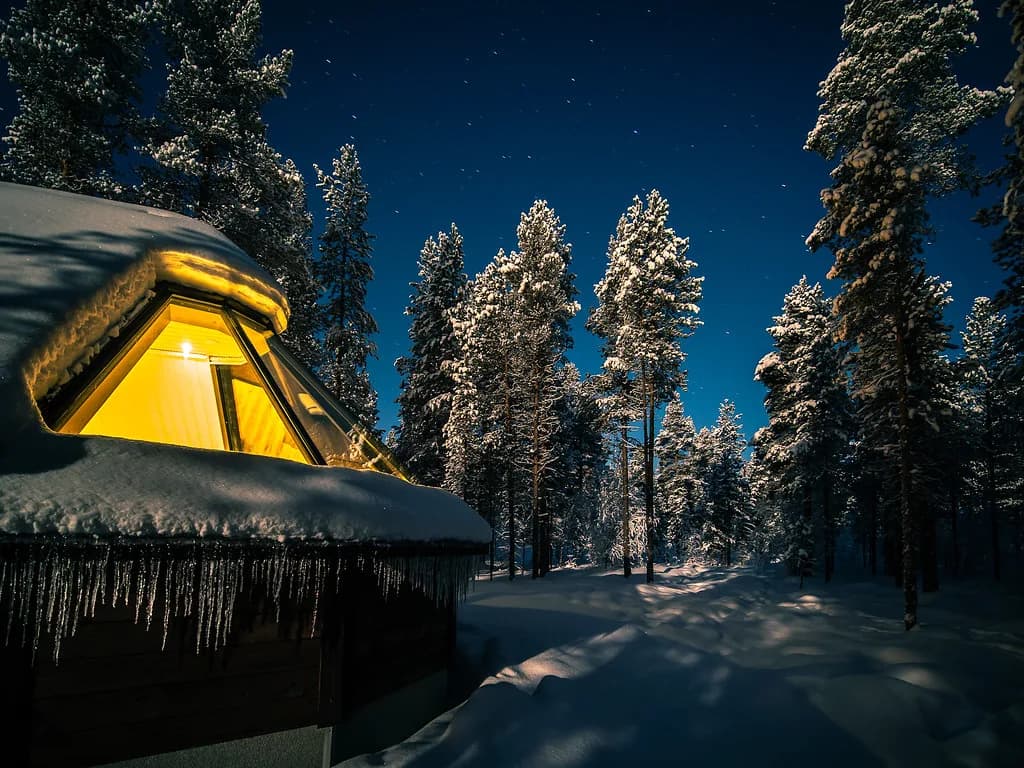
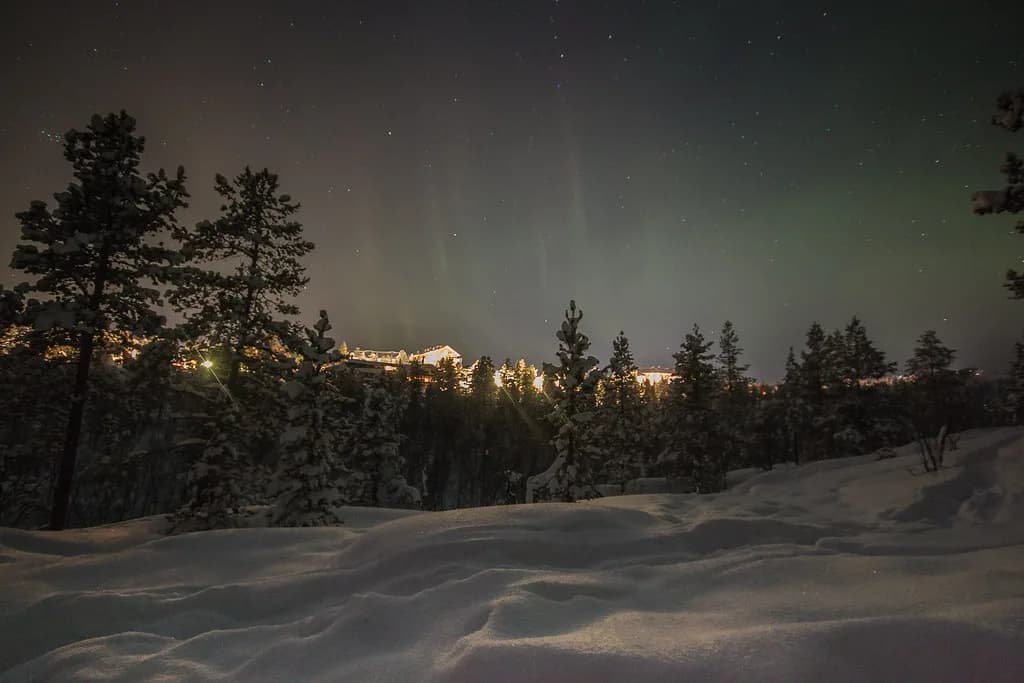
Saariselkä is a fell village in eastern Finnish Lapland, set beside the forests and open tops of Urho Kekkonen National Park. In midwinter the sun does not climb above the horizon here, and the day shrinks to a band of blue twilight around midday. What that really delivers is not blackness but a long, quiet dusk, followed by sixteen or more hours of dark sky that suit aurora watching, snowshoeing and night skiing.
Polar night rewards travelers who plan around light rather than against it. Photographers get slow blue hours; couples get long evenings and cabins with sky views; families get short outdoor sessions broken up by meals, saunas and museums. The aurora itself is never guaranteed, but deep winter darkness and a dark-sky neighbour in Urho Kekkonen National Park give Saariselkä a strong hand when the sky is clear.
What polar night means in Saariselkä and how far north it sits
Saariselkä lies in Inari municipality in eastern Finnish Lapland, well north of the Arctic Circle, close to Ivalo and the Russian border. At this latitude the sun stays below the horizon for a stretch of midwinter weeks, a period Finns call kaamos. The village itself sits among fells, with Urho Kekkonen National Park directly alongside. If you want to compare how the dark season plays out further west, our guide to the polar night in finnish lapland covers its dates and daylight hours.
Polar night is about the sun's position, not about permanent darkness. Because the sun skims just below the horizon, midday produces a pale blue glow that fades within a few hours; the rest of the day is night. That distinction matters on the ground: you can still ski, snowshoe and drive in the twilight window, and you do not need to spend the whole day indoors.
Finland's aurora season is commonly described as running from September to March, which frames the dark season inside a longer viewing window that includes autumn and spring nights. That is a countrywide guide rather than a Saariselkä schedule, but it shows that midwinter polar night is not the only time to travel north.
When the sun stays below the horizon and when light returns
The sunless stretch is centred on the winter solstice in late December, and it eases as the days lengthen through January. By late January and February the sun returns to the horizon and daylight grows quickly, even though nights remain long and dark. Late February and March give you both usable daylight and dark evenings, a combination many aurora travelers prefer.
Rather than fix a single date, plan around the shape of the season: the deepest twilight sits around the turn of the year, and the lightest nights with the best balance of daylight and darkness come later in winter. This is also the period when snow cover is reliable across the fells and forest trails around the village.
Kaamos light: the blue twilight hours and short usable daylight
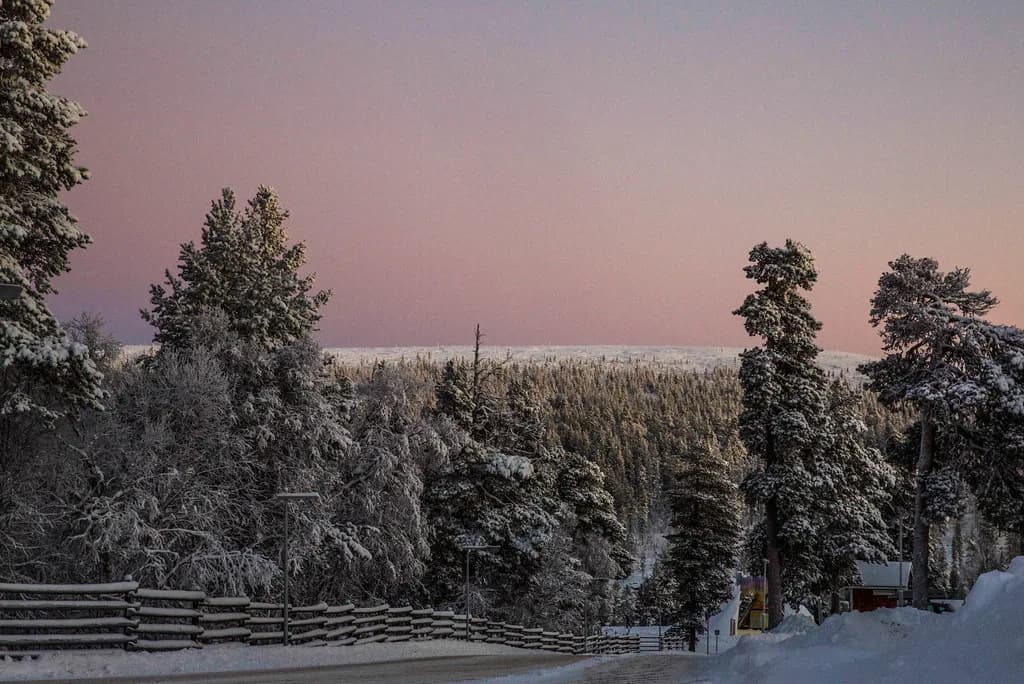
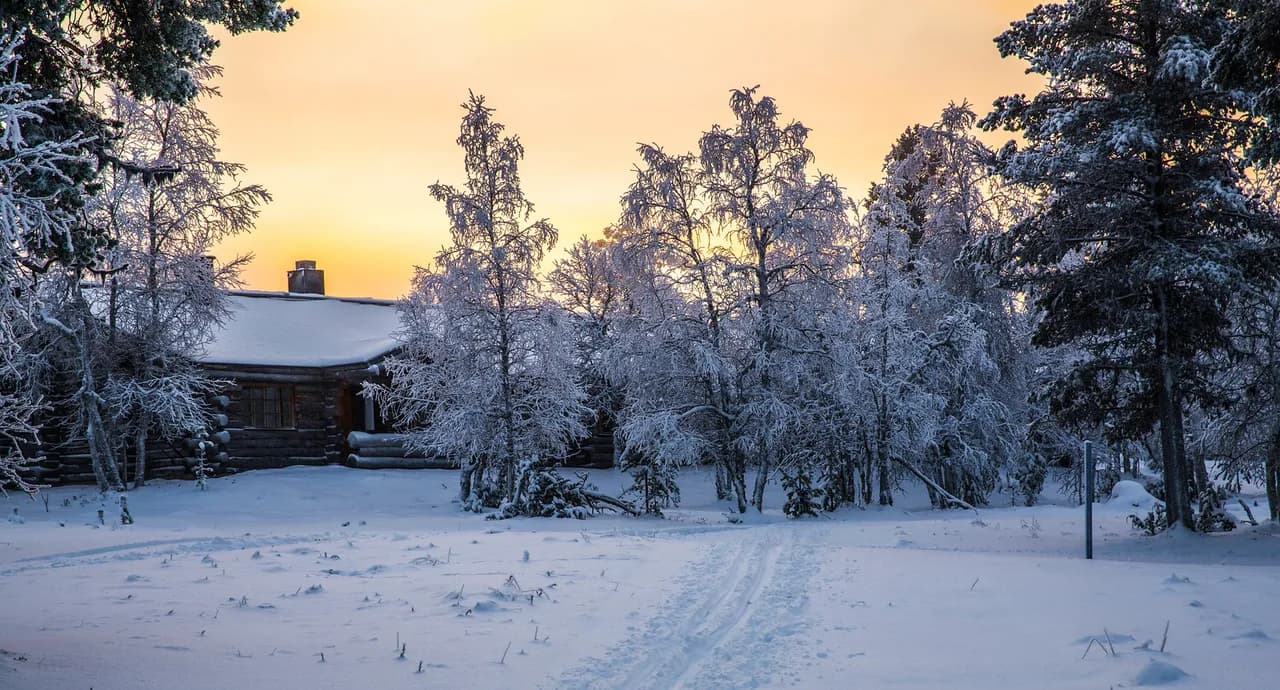
Kaamos light is the reason photographers travel here in December and January. Around midday the sky turns a soft, even blue, and snow reflects it so that the landscape reads as luminous rather than gloomy. Because that window is short, you plan shoots and outings around it, then use the long night for aurora setups and indoor stops.
A practical day in polar night often runs late: a slow morning indoors, an outdoor session in the twilight hours, then dinner and a night activity. Tour operators schedule evening departures for exactly this rhythm, so you can combine daylight photography and night sky watching without rushing. The absence of harsh sun also keeps snow and ice surfaces soft and photogenic.
Weather and temperatures through the dark season
Saariselkä sits inland in Lapland, so midwinter is cold and dry rather than coastal and damp. Clear, cold nights are the ones that give you both stars and a chance of aurora, while cloudy spells flatten the light. Cold is manageable with the right gear, and tour operators lend thermal overalls, boots and mittens on their trips.
Wind chill matters more than the thermometer reading, especially out on open fells and frozen lakes. A snowmobile ride to a fell top or a sleigh pull to a lake camp exposes you to moving air, so layered clothing and a warm hat make the difference between a pleasant evening and a short one. Northern Lights Village Saariselkä's own thermal kit, including overalls, boots and mittens, is designed for this exposure.
Why polar night suits aurora watching
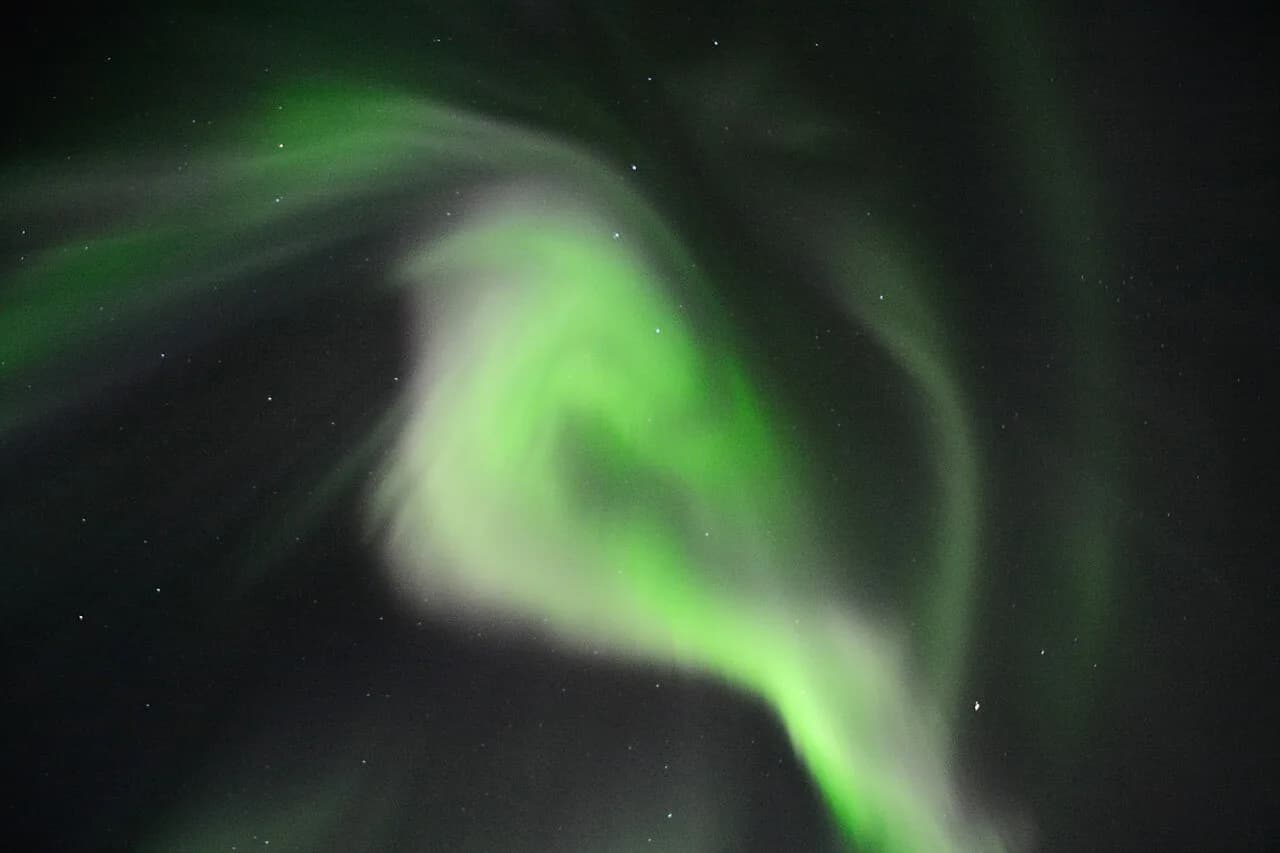
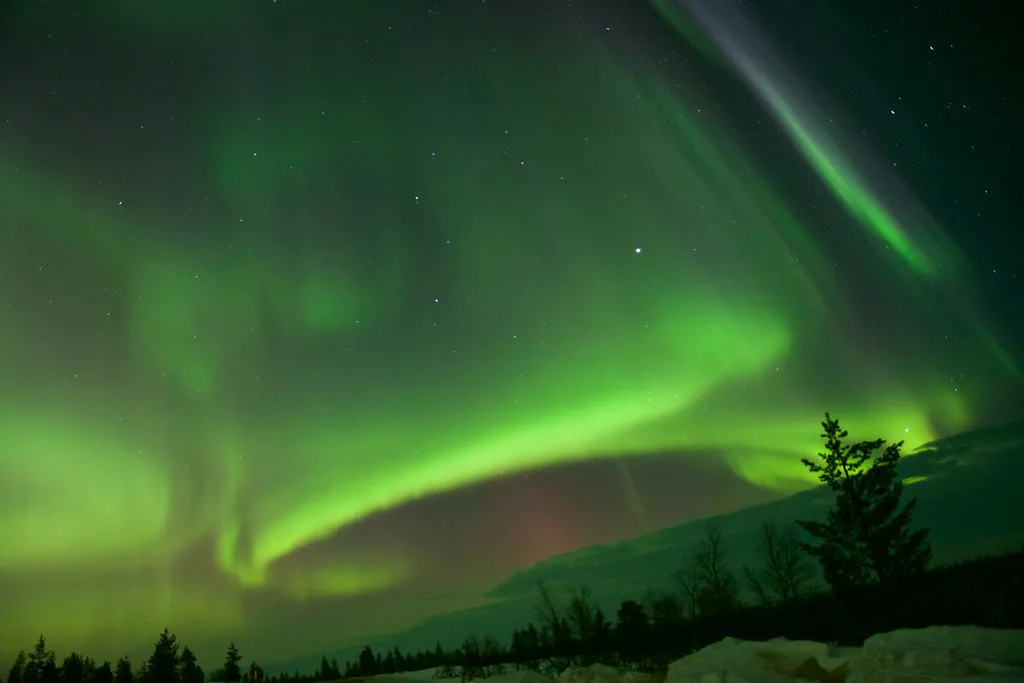
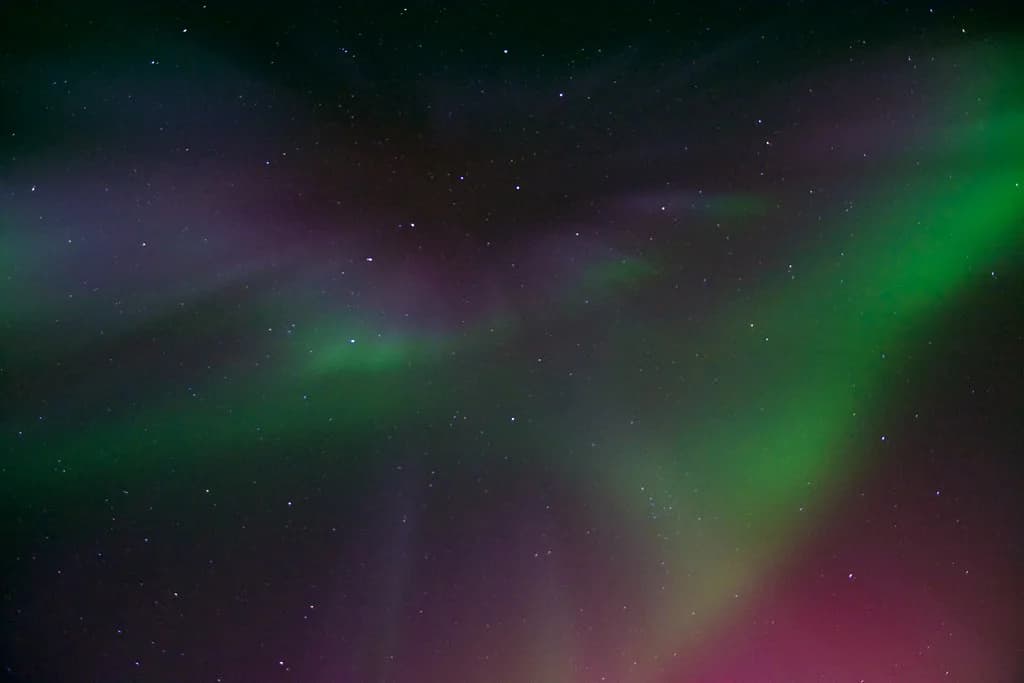
The aurora needs darkness, and polar night supplies plenty of it. With the sun below the horizon, the sky is dark for most of the day and night, so you do not need to wait until late evening to start looking. That is a real advantage for families and for travelers who want to combine aurora watching with daytime activities.
Darkness alone is not enough. You also need clear sky and enough solar activity, and the Kp index is only a rough guide to how far south the aurora might reach. Local cloud is the bigger variable: a clear night with modest activity can outperform a strong display hidden behind cloud. Plan several nights and keep your expectations flexible.
Where to watch near Saariselkä: fells, lakes and Urho Kekkonen National Park
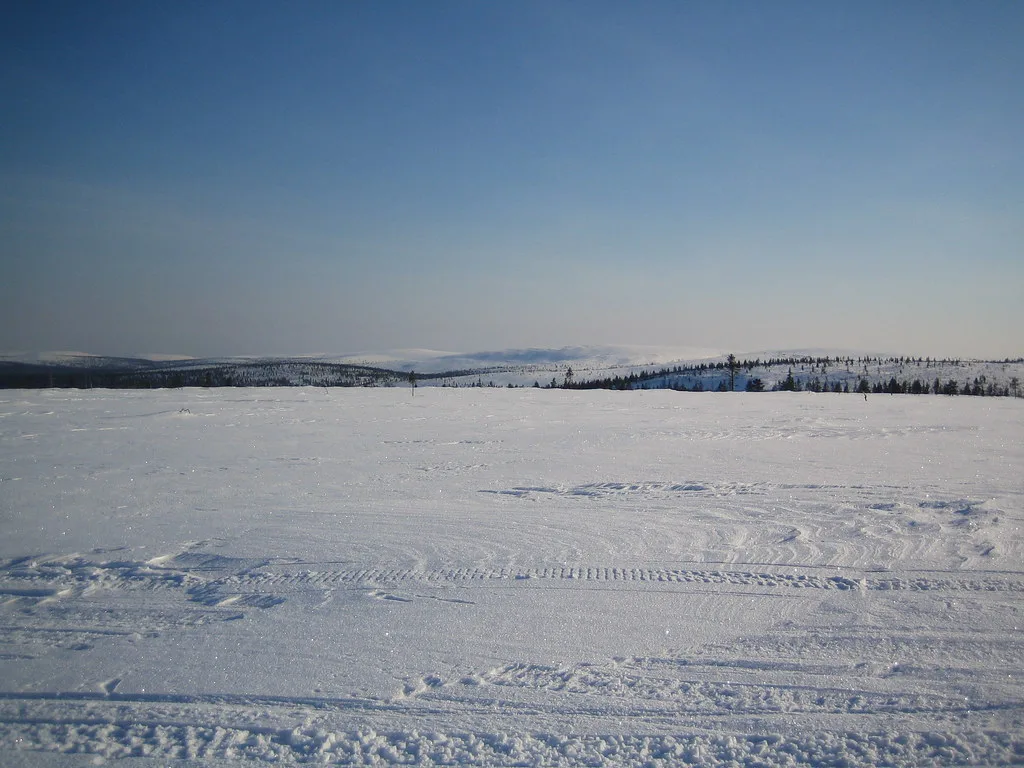
The village edge gives you quick access to dark ground. Walking a short way from the lit centre takes you toward trailheads into Urho Kekkonen National Park, where forest tracks and open fell tops offer wide sky. The park is a dark-sky neighbour of the village, and its trails are the simplest self-guided option alongside everything else the northern lights in saariselka have to offer.
Frozen lakes and open fells are the classic viewing spots: lakes give a low horizon and a chance of aurora reflected in ice, while fell tops lift you above tree cover and village light. A headtorch, a map and a warm layer are enough for a short self-guided outing, but stay on marked trails and keep an eye on the time.
Northern Lights Village Saariselkä runs its own camps away from the village lights, including an Aurora Camp by the Lake reached by bus and an Aurora Camp on the Border that travels through Ivalo and Nellim toward the Russian border. The border camp may also visit the bridge over the Paatsjoki river, where open water can reflect the aurora.
Self-guided chasing versus a guided aurora tour
Self-guided watching suits travelers with a car and some night confidence. You can drive short distances between the village and darker pull-offs, wait for gaps in the cloud and go home when you are cold. The trade-off is that you make every decision yourself, and you need to know the local roads and where it is safe to stop.
A guided tour removes the driving, the navigation and the cold-weather logistics. Operators know the local microclimates, carry thermal clothing and provide hot drinks, and they handle transport to camps and fells. The trade-off is fixed departure times and shared group pace, but for many travelers that is exactly the point.
Aurora camps, snowmobile hunts and heated sleighs from Northern Lights Village
Northern Lights Village Saariselkä offers a clear menu of aurora formats. The Aurora Camp by the Lake lasts three hours and costs €159 for adults, €79.50 for children aged 4-14, with infants free; it includes English guiding, warm berry juice and snacks, and thermal overalls, boots and mittens. The Aurora Camp on the Border runs four hours and costs €179 for adults. For a more active night, Aurora Hunting by Snowmobile lasts three hours from €338 for a shared snowmobile, while Aurora Hunting by Heated Sleigh is three hours at €149 for adults and €74.50 for children. The snowmobile trip includes a helmet, balaclava, fuel and insurance with a €2k self-liability clause; the sleigh option gives you a heated seat instead of a driving role.
There is also a snowshoe aurora expedition of about 2.5 hours at €109 for adults, and a one-hour aurora photography workshop at €49. All of these use the same evening window, so choose one format per night rather than trying to stack several. Durations and prices come from Northern Lights Village Saariselkä's own activity pages.
Husky safaris, reindeer rides and snowshoe nights
Husky safaris from the village come in two lengths: a 5 km ride lasting about 1 hour 15 minutes at €129 for adults, and a 10 km ride lasting about 1 hour 45 minutes at €169 for adults. Both include English guiding, warm berry juice and thermal clothing, and use two-person sledges with one guest driving. Reindeer experiences run from a 25-minute express ride at €89 for adults to a 1.5-hour express with reindeer feeding at €159, and a 2.5 to 3-hour Reindeer Day at €189 that includes a soup lunch and a 2 km sleigh ride. These suit travelers who want a slower, cultural pace and a chance to meet a herder. Snowshoeing in the Fells is a two-hour daytime or evening outing at €69 for adults, with a fire, a hot drink and a guide who explains the local nature. Cross-country skiing lessons also run two hours at €69 for adults. Both are gentle introductions to moving through the dark season landscape.
Winter sports in the dark: night skiing and cross-country trails
Saariselkä has lit ski slopes and cross-country trails that let you move after dark. Fridays from December through April bring designated night skiing sessions, according to one winter sports guide, which extends your usable day well past the twilight window. Lit trails are the simplest way to combine outdoor exercise with aurora watching.
Cross-country trails around the village run through forest and across fells, and they link toward the national park boundary. Check trail status locally before setting out, since grooming and lighting vary through the season. Skiing in the dark is a genuinely different experience: quiet, cold and often clearer than the daytime.
Sámi culture days: Siida Museum and Nellim
Not every day should be spent outdoors in the cold. The Siida Museum excursion runs six hours and includes transport through Ivalo to Inari, a guided museum tour, a lunch at the museum restaurant and thermal clothing. It is a strong option for a rest day or a cloudy spell. A day trip to Nellim also runs six hours, visiting Finland's northernmost border crossing and the wooden Holy Trinity Church, a symbol of Skolt Sámi Orthodox heritage. Both trips give you a broader picture of the region beyond the aurora, and both include a meal and guiding.
How many nights to plan for a fair chance of clear skies
Cloud is the main obstacle to aurora viewing, and no forecast can guarantee a clear night. A practical rule is to book at least four or five nights in Saariselkä and plan one aurora activity every second night, leaving room for rest and for cloudy evenings. Longer stays improve your odds simply by giving you more chances.
If you are traveling specifically for polar night, aim for late December or January, when the sunless period is deepest. If you want more daylight alongside dark evenings, aim for February or March. Either way, treat every clear night as an opportunity rather than a guarantee, and keep a flexible schedule.
Trade-offs: cold, cloud and comfort
Cold is the obvious trade-off in polar night, but comfort is the more subtle one. Cabins and hotels with heating and saunas make a real difference after a long evening outdoors, and a warm base lets you recover between night activities. Choose accommodation with easy access to the village centre if you plan to walk to trails after dark.
Cloud cover can wipe out an evening's plans, so build in alternatives: the Siida Museum, a sauna evening, a reindeer ride or a photography workshop. Polar night is also quieter than the high season around Christmas, which can mean more availability and a calmer village atmosphere. Weigh these factors against the shorter daylight hours when planning.
Who polar night suits: photographers, couples and families
Photographers get long blue hours, dark skies and reflected aurora on lakes and rivers. Couples get quiet evenings, cabins with sky views and slow dinners. Families get short outdoor sessions, Santa experiences and reindeer rides, with the option to retreat indoors when the cold bites.
Travelers who need bright daylight or long outdoor days may find polar night restrictive. If that describes you, plan for late February or March when the sun returns and the days lengthen. For everyone else, the darkness is the point: it is what makes the aurora visible and the landscape feel unlike anywhere else.
Plan Your Polar Night Trip
Saariselkä's polar night is a specific season with a specific character: sunless midwinter days, blue twilight hours and long dark evenings. Book your accommodation and at least one aurora activity early, keep your schedule flexible and plan for several nights rather than one. Check current prices, departure times and availability directly with Northern Lights Village Saariselkä or your chosen operator before booking.
The most rewarding approach is to treat the dark as an asset: ski in the twilight, snowshoe to a fell top at night and save a museum day for a cloudy spell. Pack for cold and wind, and let the aurora be a bonus rather than the sole reason for the trip. That way, even a cloudy week in Saariselkä still delivers a memorable Arctic winter.
Frequently Asked Questions
Does polar night in Saariselkä mean total darkness all day?
No. The sun stays below the horizon, but around midday the sky brightens into a soft blue twilight for a few hours and snow reflects that light across the fells. The rest of the day is effectively night, which is why aurora watching does not have to wait until late evening. Outside that window, a headtorch and lit trails make short outings straightforward.
Is polar night the same as the aurora season?
They overlap but are not identical. Polar night is the midwinter stretch when the sun does not rise, while the aurora season in Finland is described as running from September to March and so includes autumn and spring nights with normal daylight. Midwinter gives the most darkness, but clear skies and solar activity decide whether the aurora appears on any given night.
How many nights should I book in Saariselkä for a chance of seeing the aurora?
Four or five nights is a sensible minimum, with an aurora activity planned every second evening so cloudy nights do not use up your whole trip. Longer stays simply add more chances, since cloud is the main obstacle and no forecast can promise a clear sky. Keep one or two evenings free for a museum, a sauna or a reindeer ride as a fallback.
When does daylight return to Saariselkä after polar night?
The sunless period is centred on late December, and light builds through January. By late January and February the sun climbs back above the horizon and daylight lengthens quickly, while nights stay long and dark. February and March therefore suit travelers who want usable daylight alongside aurora-friendly evenings.
Can I watch the aurora without booking a tour in Saariselkä?
Yes, if you are comfortable walking or driving at night. Short walks from the village edge lead toward trailheads in Urho Kekkonen National Park, and frozen lakes and open fells give a low horizon away from village lights. A guided tour instead handles transport, thermal clothing and local knowledge, which matters when you are chasing gaps in the cloud.
Sources
Notes for your Arctic winter trip
Optional updates to our northern lights guides.
You might also like
Continue reading
More guides you'll find useful