Polar Night in Finnish Lapland: Dates & Aurora Odds
Polar night in Finnish Lapland means weeks without sunrise in the far north. See kaamos dates by latitude, daylight hours by month and aurora conditions.
On this page
Polar night, called kaamos in Finnish, is the stretch when the sun never climbs above the horizon, and in Finnish Lapland it turns winter travel into something between twilight and moonlight. Snow, reflected light and the aurora carry the days rather than sunshine. It suits travelers who want dark skies, quiet trails and a base far enough north to feel the effect properly.
How much kaamos you get depends entirely on latitude. Rovaniemi sits on the Arctic Circle and barely dips into it, while villages in the far north spend weeks without a sunrise. Choosing your base is therefore the first real decision, before you look at hotels or tours.
Why the sun stays below the horizon north of the Arctic Circle
North of the Arctic Circle, the tilt of the Earth means the sun can stay below the horizon for a full day or more around midwinter. The further north you travel, the earlier polar night begins and the later it ends. In Rovaniemi, which lies on the Arctic Circle itself, kaamos lasts only two days, while Ylläs, about 160 km north, gets 16 days and Utsjoki, roughly 465 km north, gets 52 days.
The darkest point falls at the winter solstice on 22 December, after which each day slowly gains light until midsummer. Even in Rovaniemi, where full polar night is brief, the surrounding weeks are far from normal daylight. Treat the solstice as the pivot of the season: if you want maximum darkness, aim for late December; if you want longer usable days, aim later.
How long polar night lasts: Rovaniemi, Ylläs and Utsjoki compared
The three bases give you three very different versions of kaamos. Rovaniemi offers the shortest dose and the most infrastructure, Ylläs a proper two-week stretch of it with fell scenery, and Utsjoki nearly two months of unbroken polar night at the northern edge of the country. Nuorgam, at Finland's northernmost point, runs from 26 November to 16 January, more than 50 days. For a closer look at the Levi fell version of these dates, see this guide to polar night in Levi.
For travelers who want the aurora and the kaamos atmosphere together, Ylläs and the far north are the stronger choices, because the long dark window removes any dependence on late sunsets. Rovaniemi works better as a short winter break where you combine Santa Claus Village and a night or two of chasing with a modest dip into polar night. Pick Utsjoki or Nuorgam only if you genuinely want weeks of twilight and are comfortable with very short days.
Kaamos light: the blue hours and colours along the horizon
Polar night is not a blackout. Around midday the horizon often glows in deep blue, pink or violet, and snow on the ground bounces what little light there is back into the landscape. Safartica describes streets lit with winter lights and locals skiing, sledding and walking in frosty forests under the full moon during kaamos. Those conditions make the middle hours of the day the best time for photography and for any outdoor activity that needs visibility.
Once snow arrives, the contrast improves dramatically; before it, October in Lapland is often described as the gloomiest stretch. If you are choosing dates, favour a snow-covered period over a bare late-autumn one. The blue hour around midday is short, so plan your day around it rather than expecting a full afternoon of light.
Daylight hours through the winter season, month by month
Sunrise-to-sunset figures show how quickly the light returns. In Rovaniemi the day runs 3 hours 45 minutes on 1 December, 2 hours 15 minutes on 22 December, 2 hours 44 minutes on 1 January, 6 hours 23 minutes on 1 February, 9 hours 54 minutes on 1 March and 13 hours 41 minutes on 1 April. At Ylläs the corresponding days are shorter in midwinter, with 2 hours 48 minutes on 1 December, no daylight at all on 22 December and 58 minutes on 1 January, then 5 hours 58 minutes on 1 February, 9 hours 47 minutes on 1 March and 13 hours 47 minutes on 1 April.
The practical reading is that December and early January leave very little daylight for anything beyond a few hours of twilight, so daytime activities and aurora nights compete for the same short window. By February you have a usable half-day, and by March the balance flips in favour of longer outings and better photography. If you want both dark nights and comfortable daytime touring, late February and March are the sweet spot.
What polar night means for aurora watching
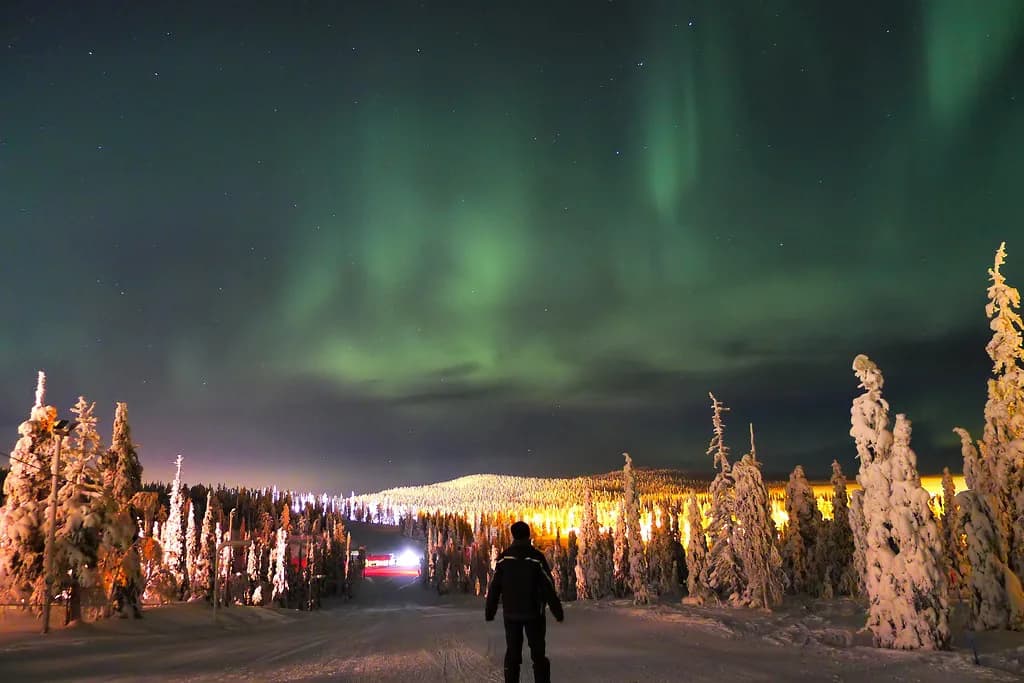
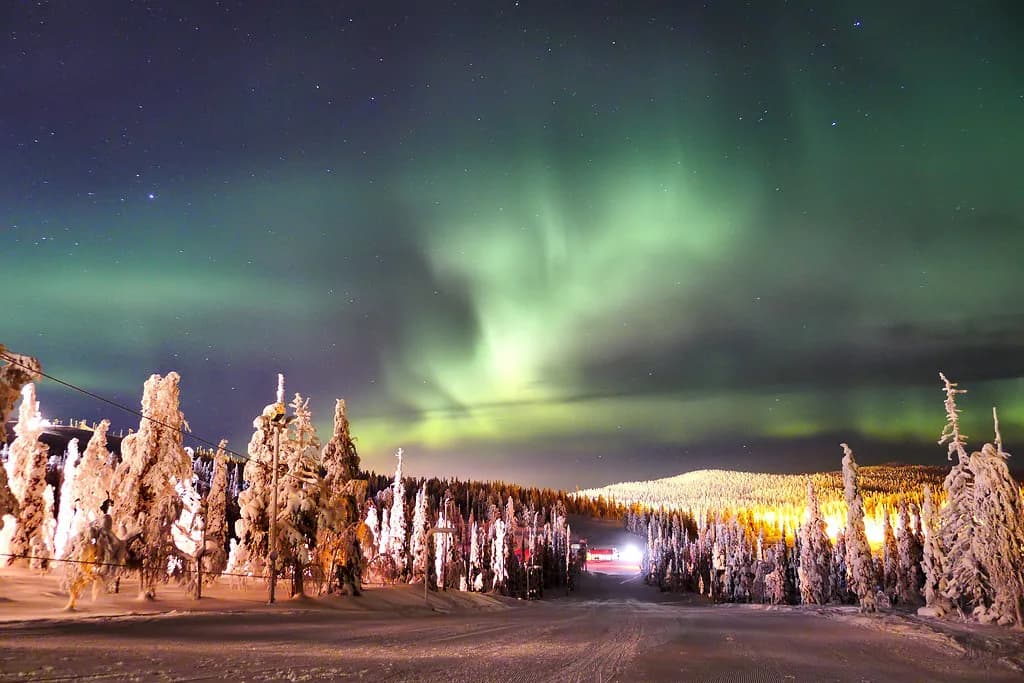
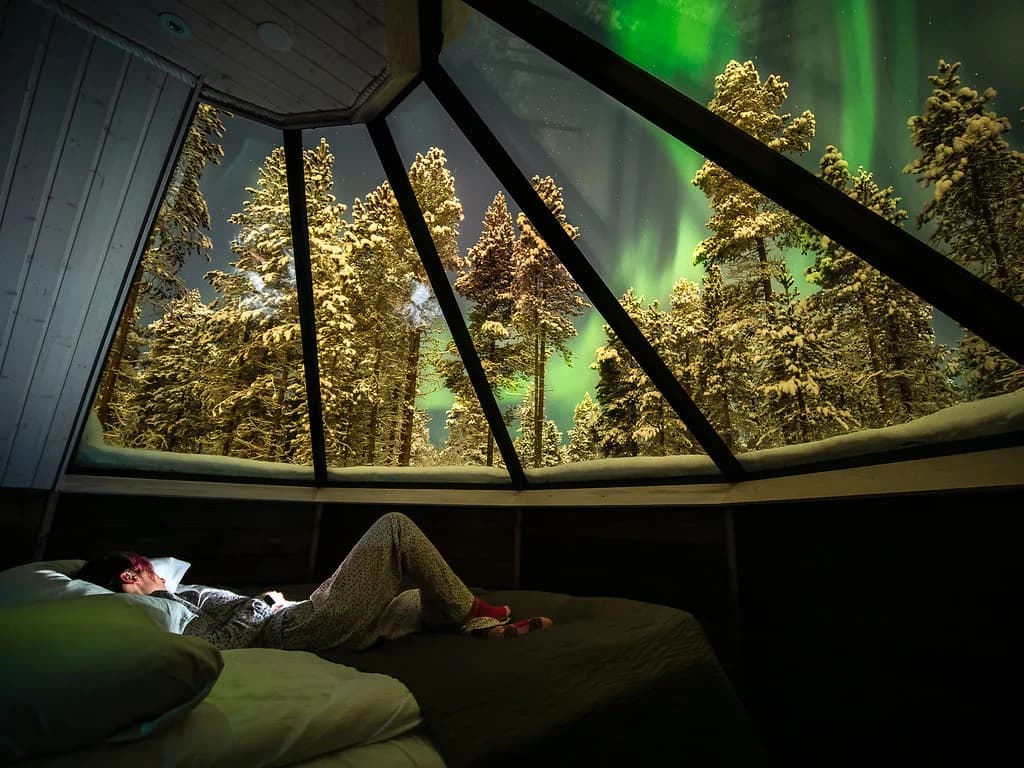
Long dark hours are an advantage for aurora hunting, because the sky is dark enough for northern lights across most of the day rather than just late at night. During kaamos in Finnish Lapland, locals regularly see the aurora before going to sleep. That does not make a sighting likely on any given night: cloud cover and solar activity still decide what you see, so plan several nights and keep your expectations realistic.
Kp values are only general guidance for how disturbed the geomagnetic field is, not a forecast for one village. Use an aurora forecast alongside a cloud forecast for your exact base, and treat any clear night during kaamos as worth being outside. A dark sky away from town lights plus a clear horizon matters more than a high Kp number in most Finnish Lapland locations.
Where to watch near Rovaniemi, Ylläs and Nuorgam
Near Rovaniemi, the reliable approach is to leave the town lights behind: forest roads and fell areas outside the city centre give you a dark horizon within a short drive. At Ylläs, the fell landscape itself provides open sky and dark slopes once you are away from the village lights. Nuorgam, at Finland's northernmost point, sits in a sparsely lit river valley where the surrounding wilderness is the viewing area.
If you would rather not drive at night, a guided chase handles the road conditions and the scouting for you, and operators typically lend thermal suits for the cold. Safartica runs aurora activities from Rovaniemi, Ylläs, Levi and Saariselkä, which gives you several northern bases under one operator. Compare what each tour includes before booking, because transport, duration and photography differ between products.
Tours and self-guided chasing on dark winter nights
Self-guided chasing works best when you have a rental car, some tolerance for cold waits and a clear idea of where the treeline opens up. Guided tours suit travelers who want the driving, spotting and warmth handled, and who value a local driver on icy roads after dark. Neither approach changes the weather, so both rely on the same thing: multiple nights and a flexible schedule.
Booking two or three aurora nights rather than one is the single biggest improvement most travelers can make, since a cloudy first night can be followed by a clear second. Keep daytime plans light after a late chase, and remember that in December the daylight is so short that a late night and an early activity rarely mix well.
Snow, trails and activities that work in low light
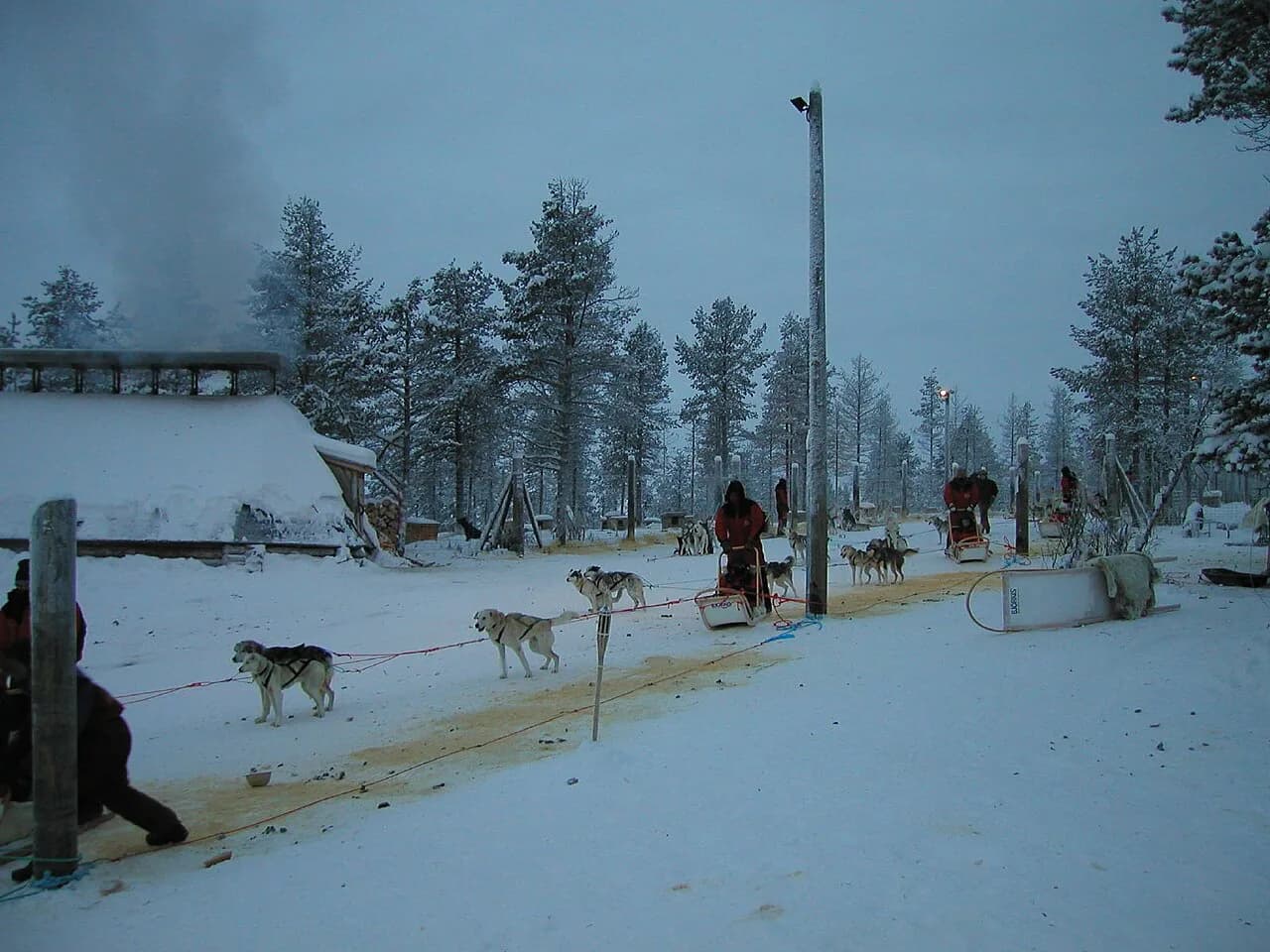
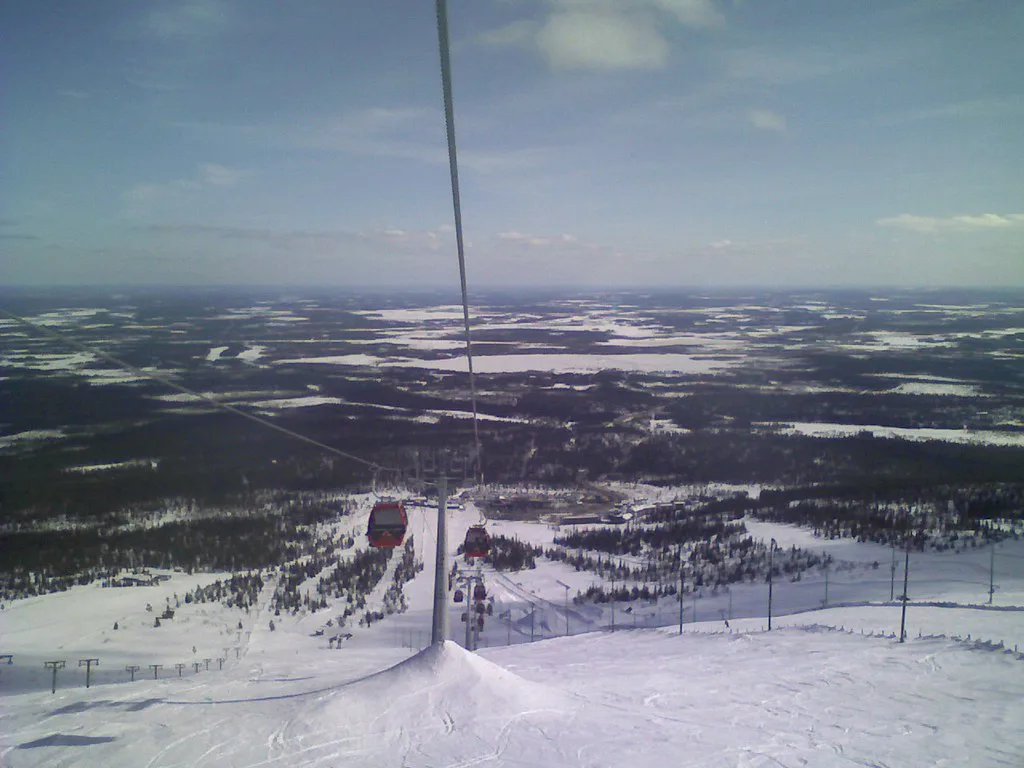
Kaamos does not close the outdoors. Snowshoeing, cross-country skiing, husky safaris and snowmobile tours all run in the twilight, and the flat northern light is often better for photography than bright spring sun. Shorter daylight means shorter activity days, so check the duration of any tour and build in a rest period before the evening.
In Ruka, the Polar Night Light Festival brings light installations to the snowy slopes and forests from 15 January to 7 February, which is a good reason to plan a late-January stay in that part of Lapland. It pairs well with a few aurora nights, since the festival sits in the dark part of the winter rather than the bright spring.
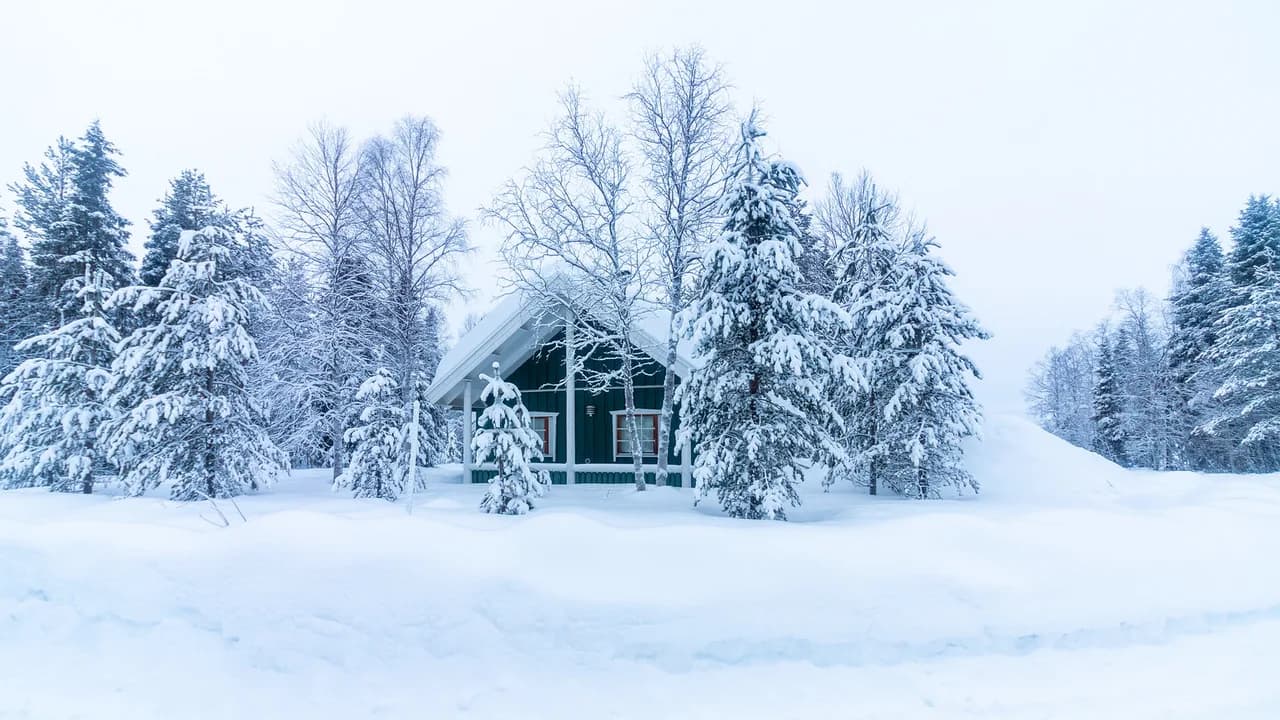
Saunas, open fires and warm cabins make the dark hours part of the trip rather than a drawback, and many winter accommodations are built around exactly that rhythm. If you want to add cultural context to a northern stay, Sámi culture in the far north rewards a day of your itinerary.
How many nights to plan for a fair chance of clear skies
Cloud cover, not darkness, is the usual reason travelers miss the aurora during kaamos, so give yourself at least three or four nights in one place. A week improves your odds further and lets you absorb a cloudy spell without losing the whole trip. Moving between bases every night reduces your chances, because each transfer costs you an evening in a place you have just started to learn.
Combine a short Rovaniemi stay with a few nights further north if you want both convenience and the deeper kaamos experience, and keep one flexible night free for a tour if the forecast looks promising. Christmas travelers should book early, since late December is both the darkest and the busiest period in Finnish Lapland.
Plan Your Kaamos Trip
Choose your base by how much polar night you actually want: two days in Rovaniemi, roughly two weeks at Ylläs, or more than 50 days at Nuorgam and Utsjoki. Then match your dates to the daylight table, with late December for maximum darkness and February or March for a workable balance of light and night.
Book several nights in one place, plan daytime activities around the short blue hours, and treat every clear evening as an opportunity rather than a guarantee. That approach gives you the best realistic chance of seeing the aurora during kaamos in Finnish Lapland.
Frequently Asked Questions
Does the sun rise during polar night in Rovaniemi?
Rovaniemi sits on the Arctic Circle, so full polar night lasts only about two days there; most winter days still get a short sunrise and sunset. On 22 December the day runs roughly 2 hours 15 minutes, and by 1 February it stretches to about 6 hours 23 minutes. Travelers who want a long stretch without sunrise need to head north to Ylläs, Utsjoki or Nuorgam.
How long does polar night last in Finnish Lapland?
Duration depends on latitude. Around the Arctic Circle it is measured in days, while Ylläs gets about 16 days and Utsjoki about 52. At Nuorgam, Finland's northernmost point, the sun stays below the horizon from roughly 26 November to 16 January. Pick a base by how much twilight you actually want rather than by name alone.
Can you see the northern lights during polar night?
Yes, and the long dark hours mean the sky is dark enough for aurora across most of the day rather than only late at night. A sighting still depends on cloud cover and solar activity, so no night is guaranteed. Booking several nights in one place, away from town lights, gives the most realistic chance of catching a clear gap.
Is polar night completely dark?
No. Around midday the horizon often glows blue, pink or violet, and snow on the ground reflects what light there is back into the landscape. Once snow has settled, kaamos reads as twilight rather than blackout, though the hours of usable daylight are short in December. Late February and March bring noticeably longer days while keeping dark nights.
What month is best for the northern lights in Finland?
Darkness is sufficient from roughly late August or September through early April, so the choice is really about daylight, snow and cloud rather than aurora alone. December and early January give the most dark hours but almost no daytime, while February and March balance usable daylight with long nights. Plan several nights in one base whatever month you choose.
Sources
Notes for your Arctic winter trip
Optional updates to our northern lights guides.
You might also like

Continue reading
More guides you'll find useful