Crystal Ice Cave Jökulsárlón: Which Tour to Choose
Plan a Crystal Ice Cave trip from Jökulsárlón: when blue ice caves open under Vatnajökull, how tours run, prices, group sizes and where to sleep.
On this page
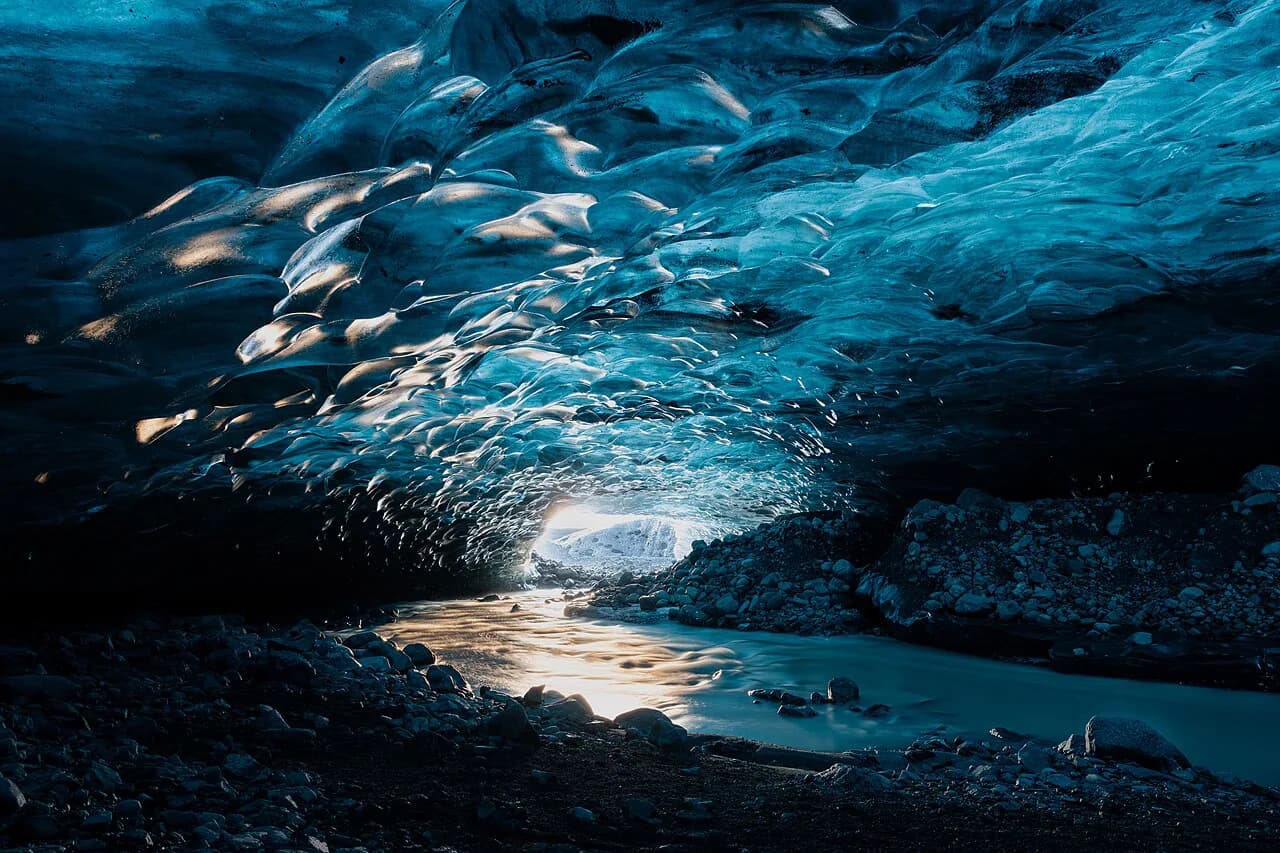
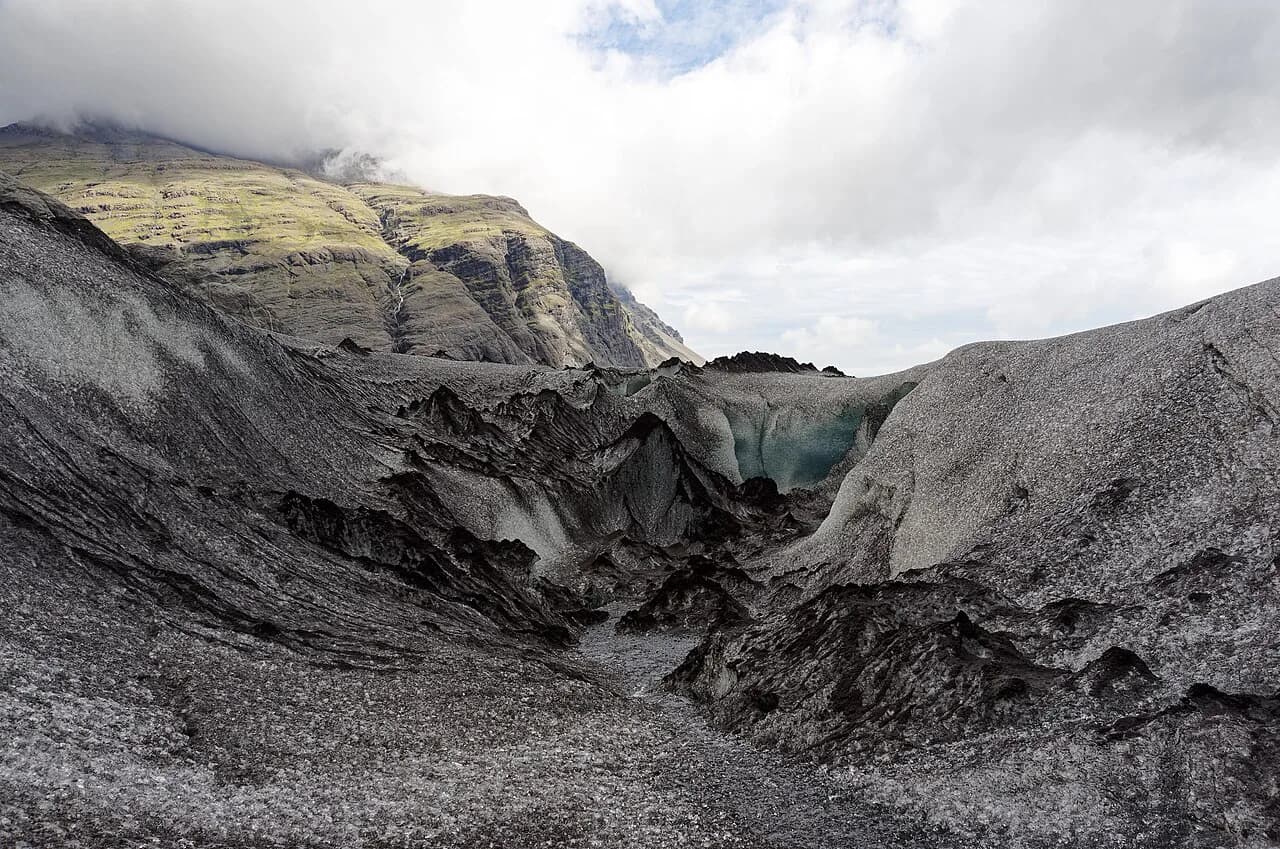
A crystal ice cave is the daytime centrepiece of a southeast Iceland winter: a meltwater tunnel inside Breiðamerkurjökull, an outlet of Vatnajökull, that freezes hard enough to walk through and glows blue where the ice is dense. Tours leave from Jökulsárlón, so the cave becomes an easy addition to a Ring Road itinerary rather than a separate expedition.
It suits travelers who want a short, guided glacier experience without a long hike, including families and anyone with limited walking range. Photographers get the most from it, but the cave changes every winter and the one you enter is chosen on the day, so treat published images as a genre, not a promise.
Why the crystal ice cave sits where it does
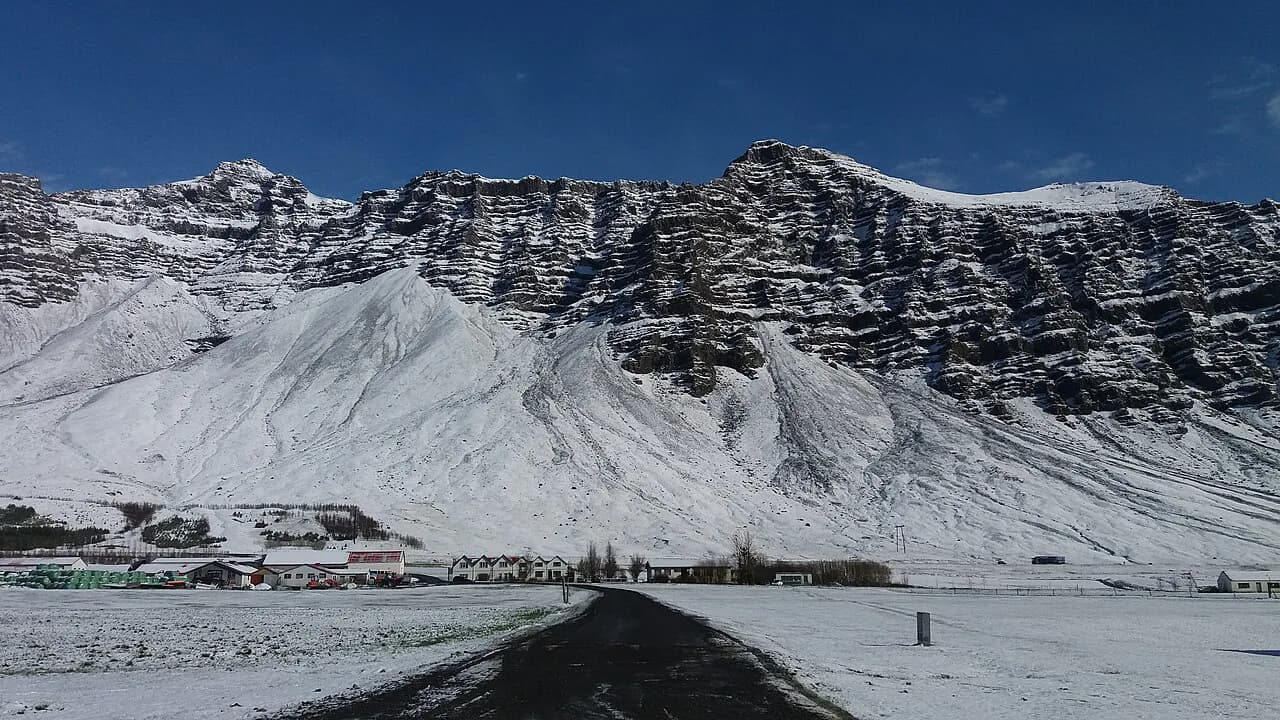
The cave forms inside Breiðamerkurjökull, a glacier tongue that drains Vatnajökull, Europe's largest ice cap. Summer meltwater carves tunnels beneath the ice, and when winter cold returns those passages freeze solid and become safe to enter with a guide, as glacier guides from Adventures.is and Blue Iceland describe.
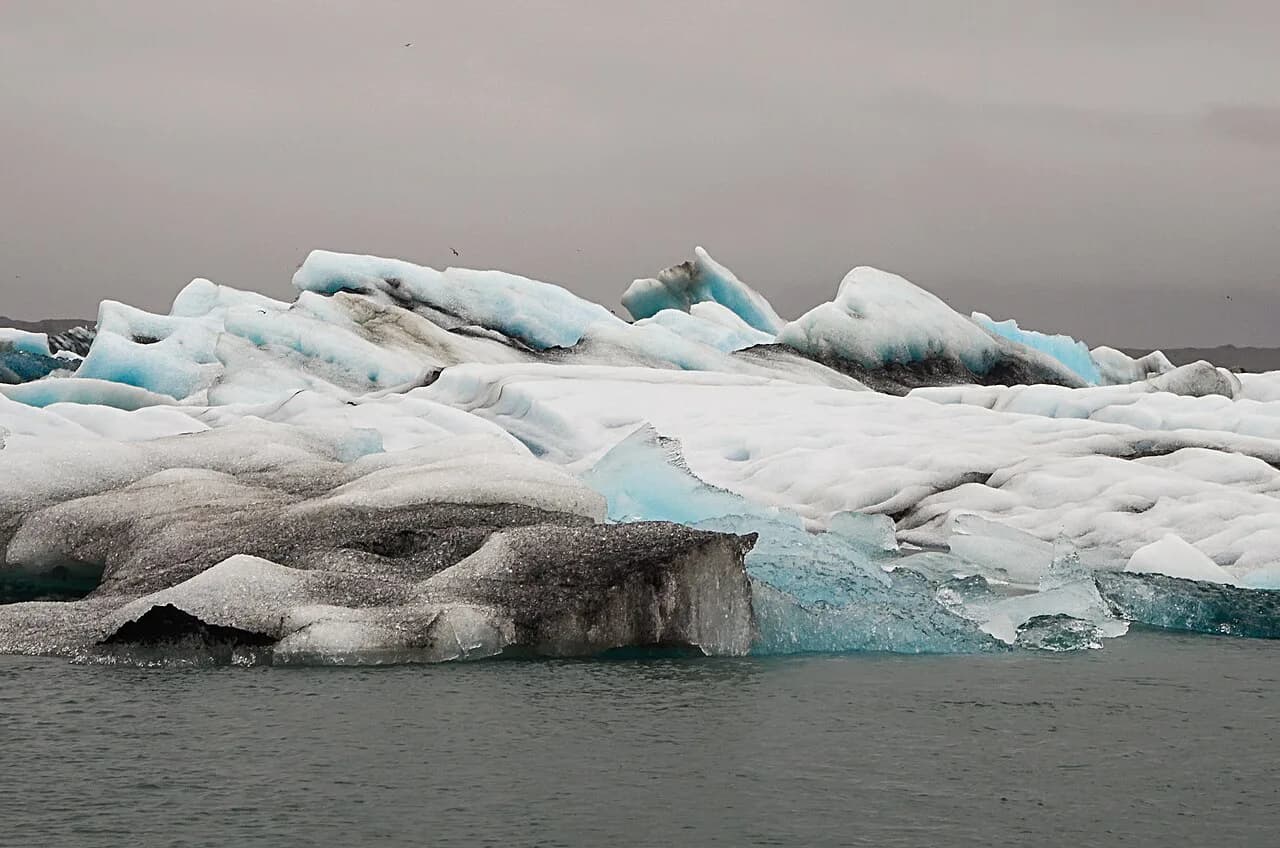
The blue colour comes from compression: centuries of ice packed under pressure squeezes out air bubbles, and denser ice absorbs red light and reads blue to the eye. Ash bands from past eruptions stay trapped in the ice, which is why a cave wall can shift between sapphire, white and grey-black within a few metres.
Because the tunnels are re-formed each season, the cave's location changes from one winter to the next and guides scout new ones as the glacier moves. The cave you visit is selected for safety and current condition, not for a fixed name on a map, so the route on the day is confirmed by your guide.
When the season runs
Crystal ice cave tours run from October to April, because the caves are a winter phenomenon and stay stable only while temperatures are low. One operator runs daily departures at 09:30 and 14:00 from the Glacier Lagoon; another gives a 2–3 hour duration for the same meet-on-location model.
The local guide account puts the enterable window at November through the end of March, when cold is reliably deep enough. If your trip falls in the shoulder weeks of October or April, check whether Adventures.is or Blue Iceland has a cave open for your dates before you book.
Daylight in southeast Iceland is short in midwinter, so the 09:30 departure is the safer choice for photography and for driving back before dark. The afternoon departure works well if you are already staying near the lagoon and only need to cover a short distance afterwards.
How a tour runs from Jökulsárlón
You meet at Jökulsárlón, on the east side of the lagoon's car park where the Super Jeeps gather, and ride a modified off-road vehicle up to the glacier edge. The walk from vehicle to cave mouth is short, roughly five minutes on one account and a 15–20 minute stretch of uneven ground on another, depending on where that season's cave sits.
Helmet and crampons are provided on both operators' tours, and certified glacier guides lead every departure. Time inside runs to about an hour on one schedule, while a competing tour spends 20–30 minutes walking to, in and around the cave during a total of up to three hours.
Boots with ankle support matter more than anything else you carry, because crampons clip onto them, and one operator explicitly does not rent boots, jackets or trousers for this particular tour. Groups are capped at 14 on one tour and 16 on the other, and popular dates sell out.
Crystal Ice Cave or Katla Ice Cave
The decision comes down to where you already are. Jökulsárlón sits about 379 km, roughly five hours' driving, from Reykjavík in good conditions, while the Katla ice cave is reached from Reykjavík or Vík and is a far shorter haul from the capital. If your route is the south coast only, Katla saves a day; if you are continuing east, the crystal cave fits naturally.
The two experiences differ in shape as well as distance. Katla runs on a Super Jeep from Reykjavík or Vík and is offered year-round, whereas the crystal cave is a winter-only add-on to a lagoon stop and takes a morning or an early afternoon rather than a full day.
A third option, the Into the Glacier tour, leaves from Skaftafell and pairs ice-cave time with glacier walking, which suits travelers who want more time on the ice. The crystal cave tour keeps the walking minimal and puts the emphasis on photography inside the cave.
Prices, group sizes and minimum ages
Blue Iceland lists its Crystal Blue Ice Cave Adventure at 22,000 ISK per person, with groups of up to 16 and a minimum age of 8.
Arctic Adventures advertises its Crystal Ice Cave tour from 181 USD per adult, takes children from age 6, and caps groups at 14 per guide. The lower age limit makes it the friendlier choice for families with younger children, while price comparisons should be made in the same currency on the day you book.
Neither price includes lunch, and photographs inside the cave are your own responsibility, though both tours provide the safety kit. Weigh the age limit and group cap over small price differences if you are travelling with children or want more guide attention.
Meet-on-location logistics
Meet on location means you drive yourself to Jökulsárlón and join the guide there, with no Reykjavík pickup. Parking sits on both sides of Route 1, next to the lagoon and south of the bridge at Diamond Beach, and the meeting point is on the east side of the lagoon car park, marked by the Adventures.is sign.
Arrive at least 15 minutes early, because the lagoon is a busy stop and parking plus the walk to the meeting point takes longer than you expect in winter. Road conditions on the approach can be icy or snow-covered, so build slack into the drive and use the road authority's live pages before setting out.
From Reykjavík the drive is long enough that a same-day return makes for a punishing schedule, especially with a cave slot fixed in the morning. Staying somewhere between Vík and Höfn turns the tour into a relaxed half-day.
Which cave you actually enter
No operator can promise a specific cave, because the tunnels collapse in summer and re-form elsewhere each winter. Guides check conditions and choose the best available cave on the day, so a tour booked for its photographs may deliver a different hue or shape than you expected.
Colour depends on light, snowfall, time of day and how much volcanic ash is locked in the ice, ranging from electric blue to white or grey. Going early in the day generally gives cleaner light and fewer groups inside, and visitors may share a popular cave with other operators on busy dates.
Who the tour suits
Both tours are rated easy, need no prior glacier experience and require only moderate fitness. Families with children from 6 on the Adventures.is tour or 8 on the Blue Iceland tour can join, and the short walk makes it realistic for travelers who cannot manage a long glacier hike.
Photographers should bring a camera and accept that a tripod is awkward in a shared cave, while travelers who want strenuous ice work should look at the Skaftafell glacier hike instead. Anyone with limited mobility should ask Adventures.is or Blue Iceland about the walk before booking, since the ground is uneven.
Combining the cave with the lagoon and Diamond Beach
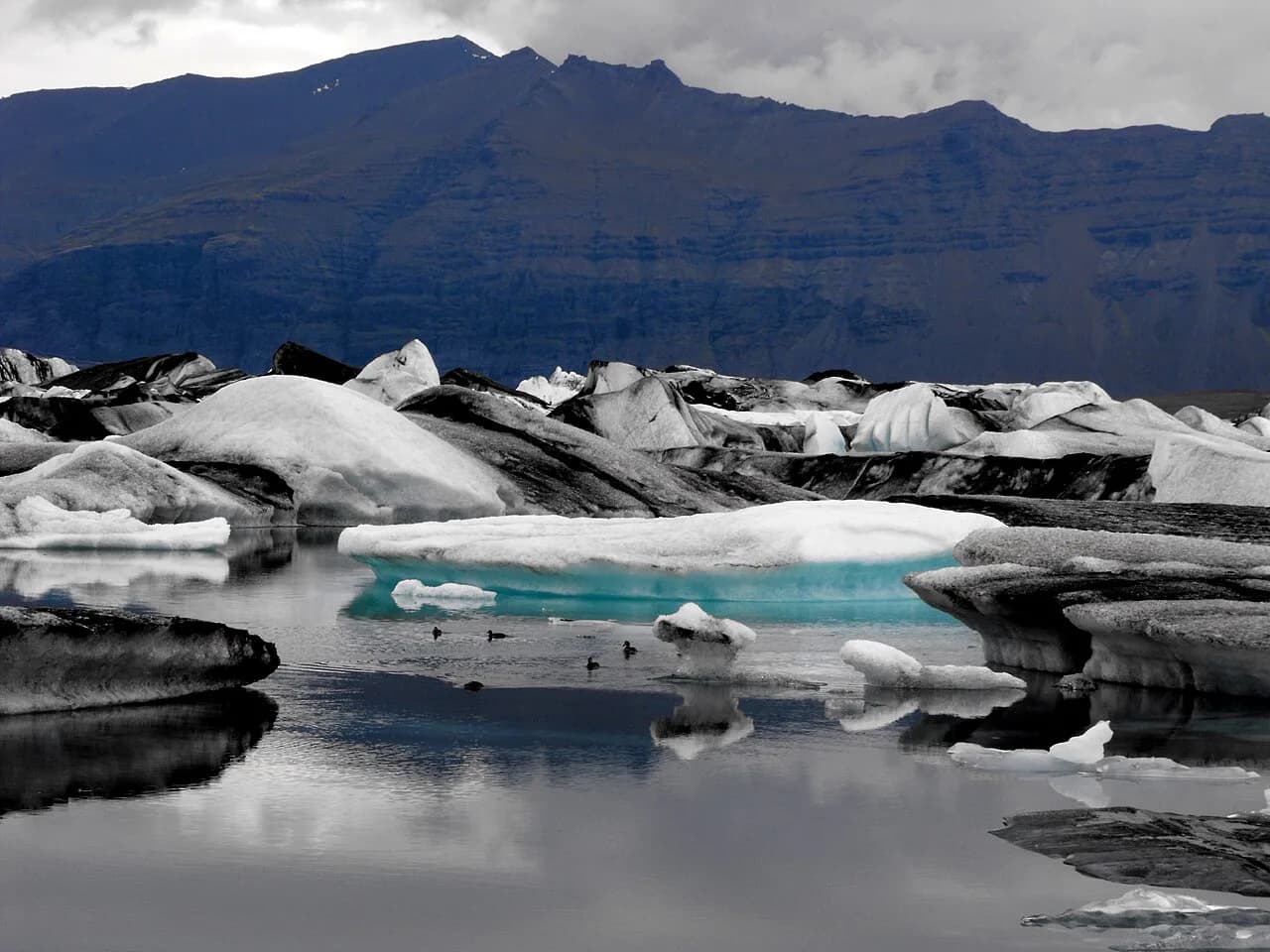
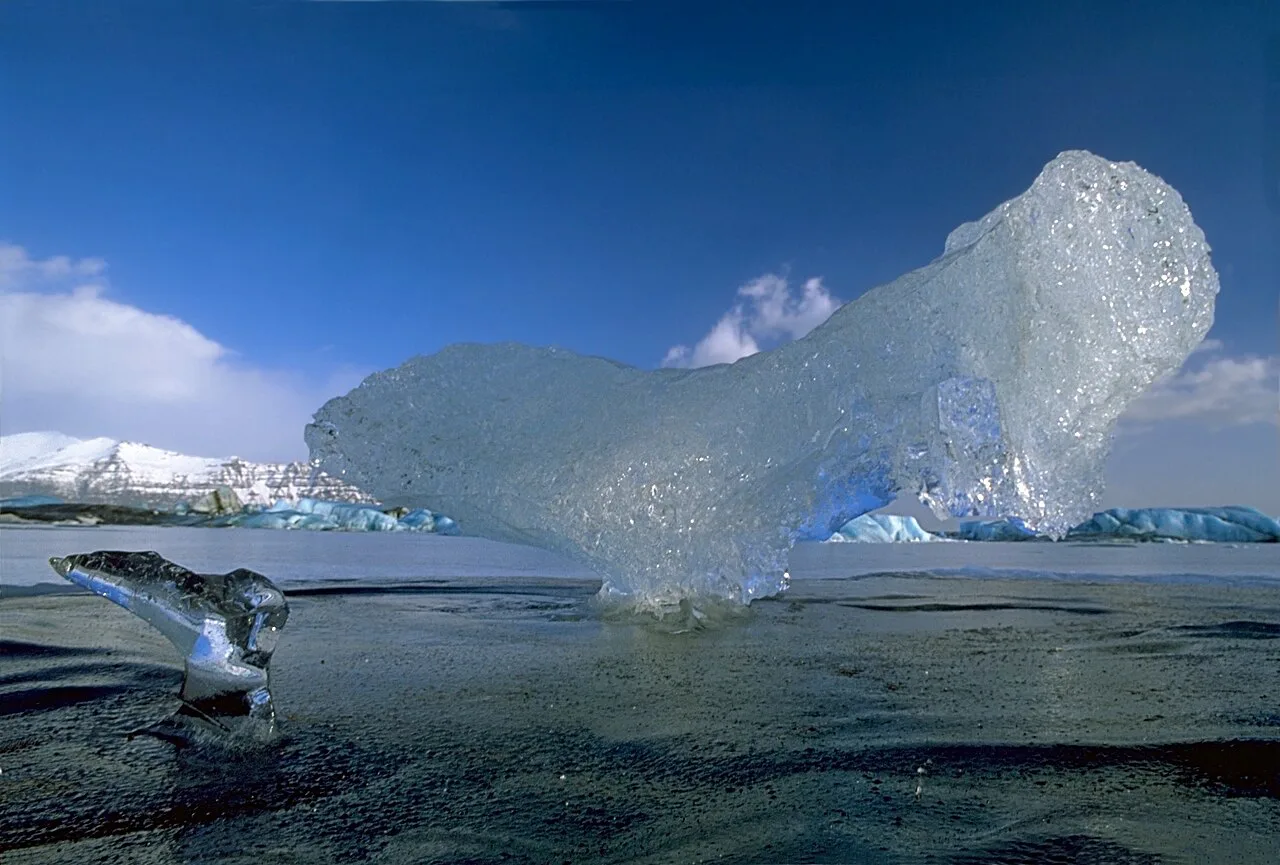
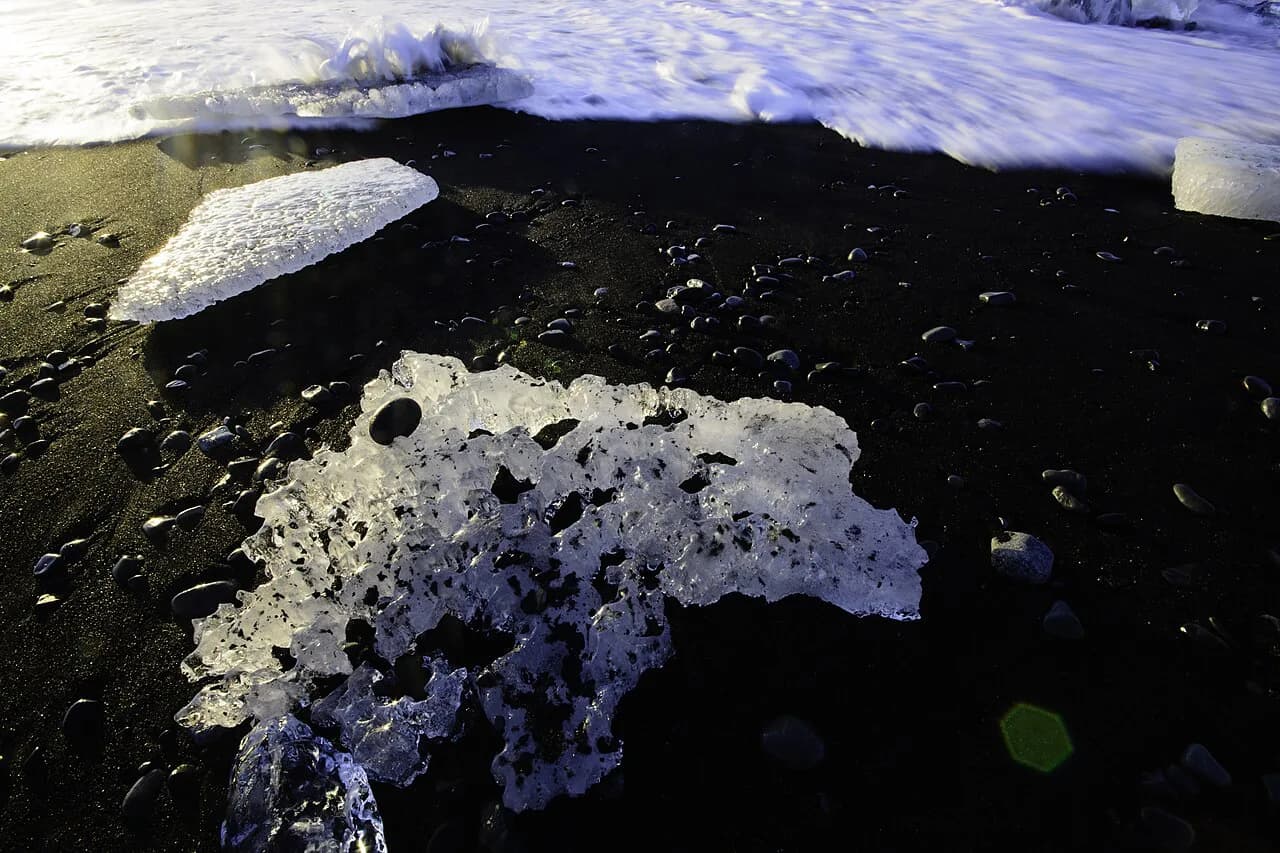
The tour starts and ends at Jökulsárlón, so plan to spend an hour at the lagoon and across the road at Diamond Beach, where icebergs wash ashore on the black sand. Both sit within Vatnajökull National Park's southern edge, and the whole cluster works as a single stop.
A morning cave slot leaves the afternoon for the lagoon, the beach and the short drive on toward Höfn or back west. If you take the 14:00 departure, do the lagoon first and return to the car park in good time.
Where to sleep to keep the drive short
Adventure Hotel Hof is a short drive from the glacier and cuts the morning transfer, while Hali Country Hotel sits between the lagoon and Höfn and makes a quiet base for both the cave and evening sky-watching. Fosshotel Glacier Lagoon places you closer still to the meeting point.
Staying two nights in this corridor beats one long day trip from Reykjavík, because it removes the five-hour drive from your cave morning. It also puts you in dark countryside at night, away from town lighting.
Aurora viewing around Jökulsárlón
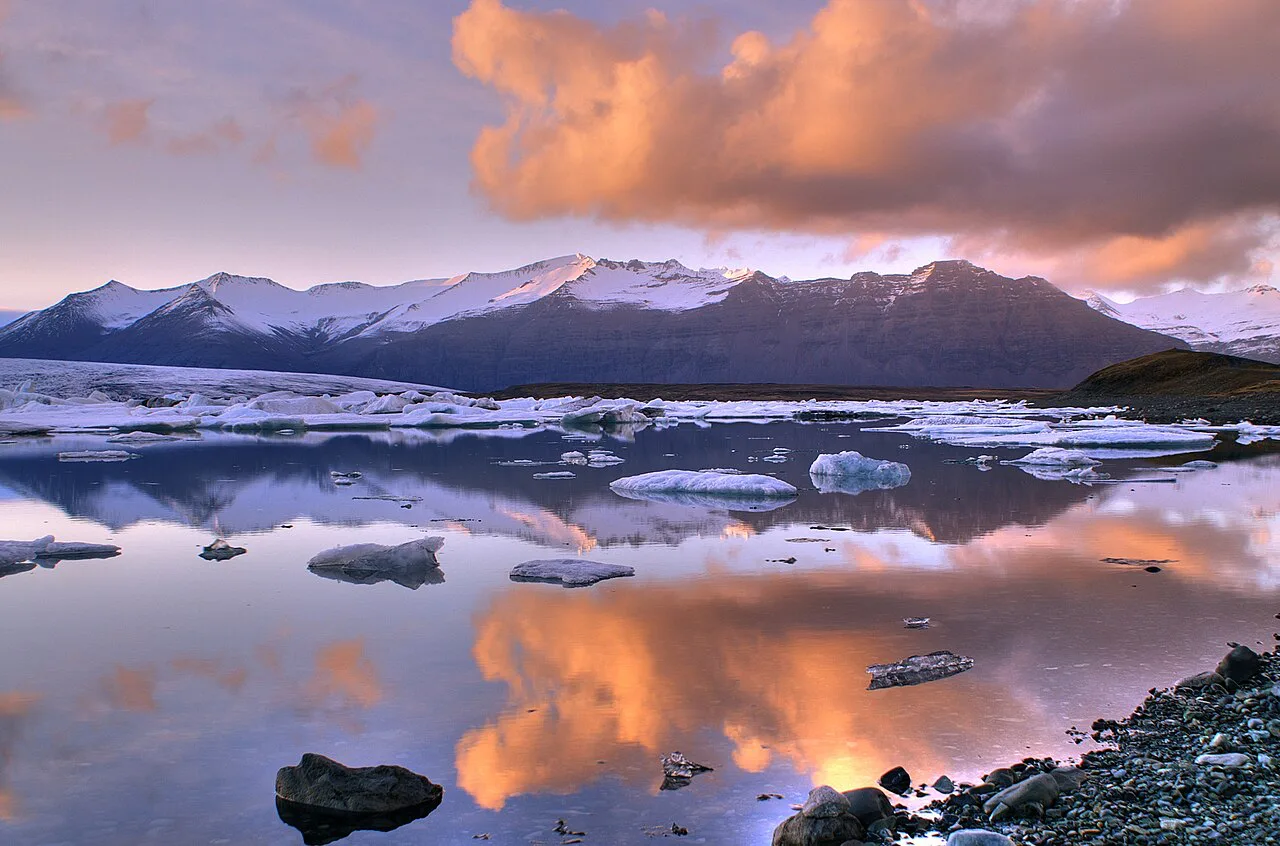
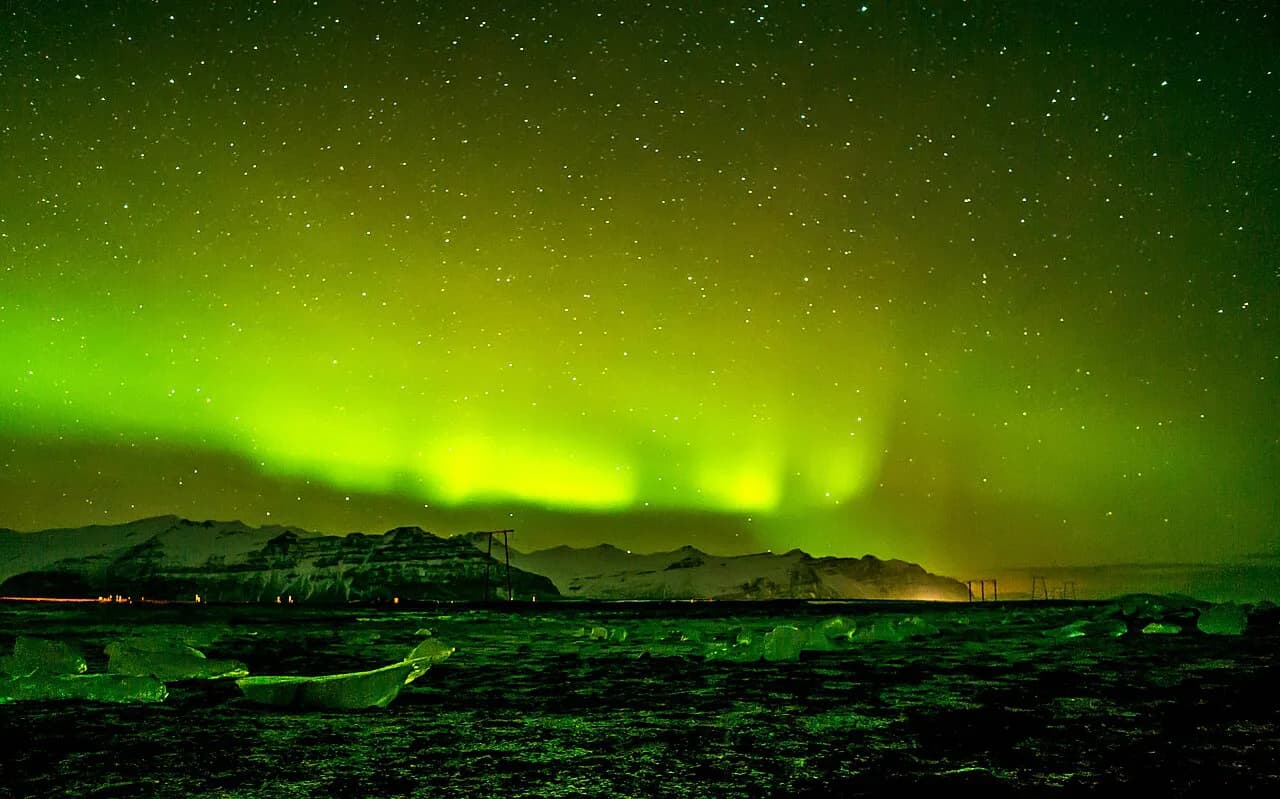
The cave is a daytime activity; the aurora is a separate evening plan, and the lagoon area offers dark skies once the last tour buses leave. Clear sky matters more than any forecast number, and coastal cloud can sit over the lagoon while the glacier edge stays open.
The aurora is a separate evening plan that overlaps the cave season, so a winter trip can hold both. If you are weighing bases, our guide to the northern lights in Iceland sets out when and where to watch beyond the lagoon. Nothing guarantees a sighting; what you can control is having several nights, a car or a guide, and a willingness to drive a few kilometres toward clearer sky.
How many nights to plan near Vatnajökull
Two nights in the Jökulsárlón area gives you one cave slot, time for the lagoon and beach, and two chances at a clear evening. Three nights is better if the aurora is the main goal, since cloud can persist for days in a row.
Sequence the cave early in your stay so that a weather cancellation can be rescheduled into a spare morning. Operators work through customer care on rebooking, and flexibility is easier when you are not moving on the next day.
Other glacier alternatives near Skaftafell
Skaftafell, about an hour west of the lagoon, is the base for glacier hikes and the Into the Glacier tour that combines walking with an ice cave. Other operators run blue ice cave and glacier hike combinations from Skaftafell over roughly four hours.
Choosing between them depends on how much time you want on the ice. The crystal cave is short and camera-friendly; a Skaftafell hike is longer, more physical and better for travelers who want crampons on open glacier rather than only inside a tunnel.
Plan Your Visit
Book the cave for a morning early in your stay, base yourself between the lagoon and Höfn for two or three nights, and keep the evenings free for dark-sky drives. Confirm the departure point and meeting time with your chosen operator on its own booking page the day before you travel.
Frequently Asked Questions
Where is the Crystal Ice Cave?
It forms inside Breiðamerkurjökull, an outlet of Vatnajökull in southeast Iceland, and tours meet at Jökulsárlón Glacier Lagoon on Route 1. The exact cave changes each winter, so the meeting point stays fixed while the cave location is decided by guides on the day.
Can you go inside the crystal ice cave?
Yes, with a certified glacier guide and provided helmet and crampons. The caves are only entered in winter when the ice is stable, and walking inside is short, roughly 20 to 30 minutes on one operator's tour.
How long does the Crystal Ice Cave tour take?
Expect about 2 to 3 hours with Arctic Adventures and 2.5 to 3.5 hours with Blue Iceland, both including the Super Jeep transfer. Time inside the cave is around an hour on the Blue Iceland schedule.
What is the difference between the Crystal Ice Cave and the Katla Ice Cave?
Katla is reached from Reykjavík or Vík and runs year-round, which suits a south-coast-only trip. The crystal cave sits at Jökulsárlón, roughly 379 km from Reykjavík, and runs October to April, so it fits an eastbound Ring Road route.
What does meet on location mean for this tour?
You drive to Jökulsárlón yourself and meet the guide in the lagoon car park rather than being collected in Reykjavík. Arrive with time to park and walk to the meeting point on the east side of the lot.
Is the Crystal Ice Cave tour suitable for children?
Yes. Arctic Adventures takes children from age 6 and Blue Iceland from age 8, and both rate the tour easy with no prior glacier experience required.
Can I see the northern lights after a cave tour?
Possibly, if the sky is clear and solar activity cooperates, but no tour can guarantee it. The cave season overlaps the dark months, so staying two or three nights near the lagoon gives you repeated evening chances.
Sources
Notes for your Arctic winter trip
Optional updates to our northern lights guides.
You might also like
Continue reading
More guides you'll find useful