Diamond Beach Iceland Guide: Decide Your Jökulsárlón Visit
Diamond Beach near Jökulsárlón puts icebergs on black volcanic sand under dark winter skies. Plan the drive, the season, the tours and the aurora odds.
On this page
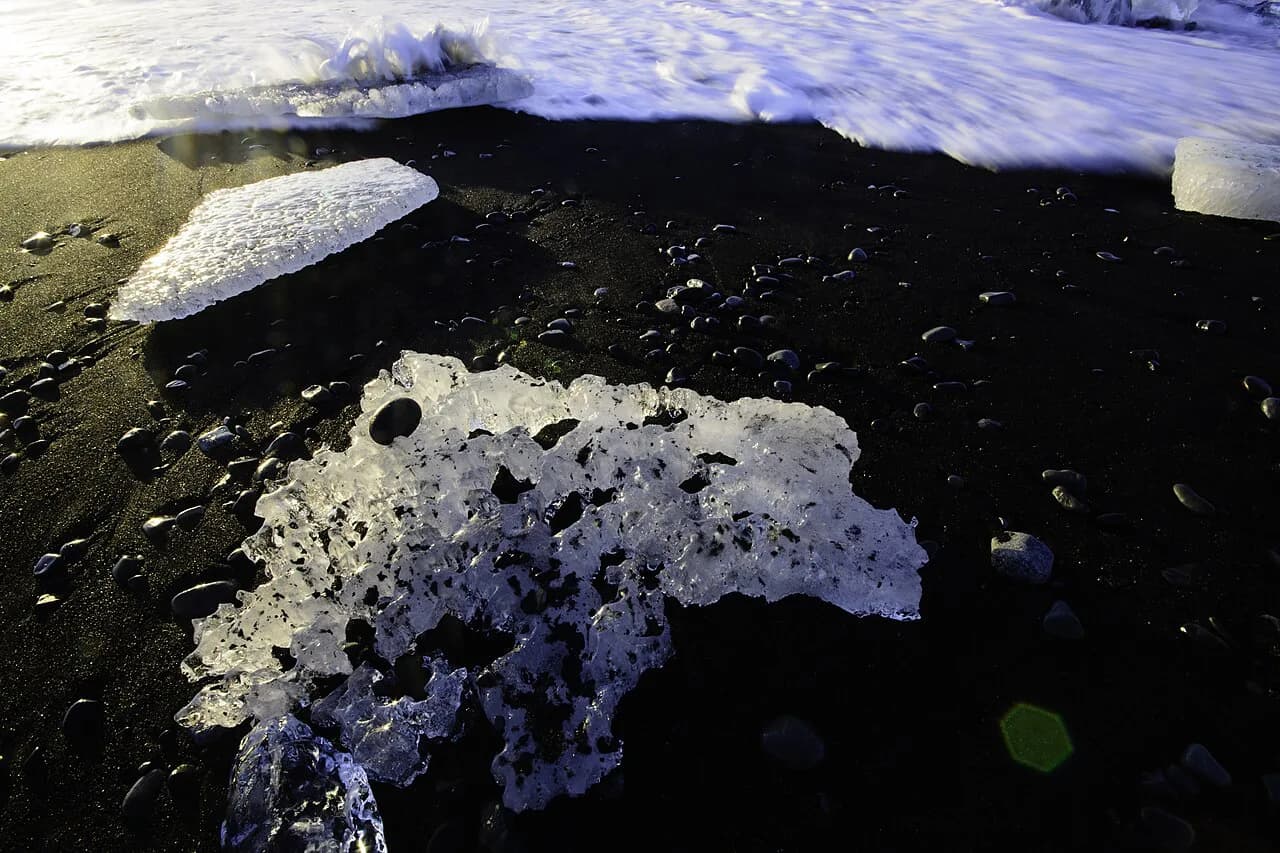
Diamond Beach is the stretch of black volcanic sand where icebergs calved from Breiðamerkurjökull wash ashore as glittering fragments, a short walk from the Jökulsárlón glacier lagoon in southeast Iceland. It suits travelers who want a raw, elemental landscape rather than a managed attraction, and photographers willing to work around wind, spray and shifting tides. The ice changes shape every day, so no two visits look the same.
Its appeal in winter is double: the low sun throws long light across the ice, and the long dark nights make this coast one of the better places to combine a daytime ice stop with an evening of aurora watching. What the beach gives you is darkness and open sky; whether the aurora appears depends on solar activity and cloud cover on the night.
What Diamond Beach is and how the ice gets there
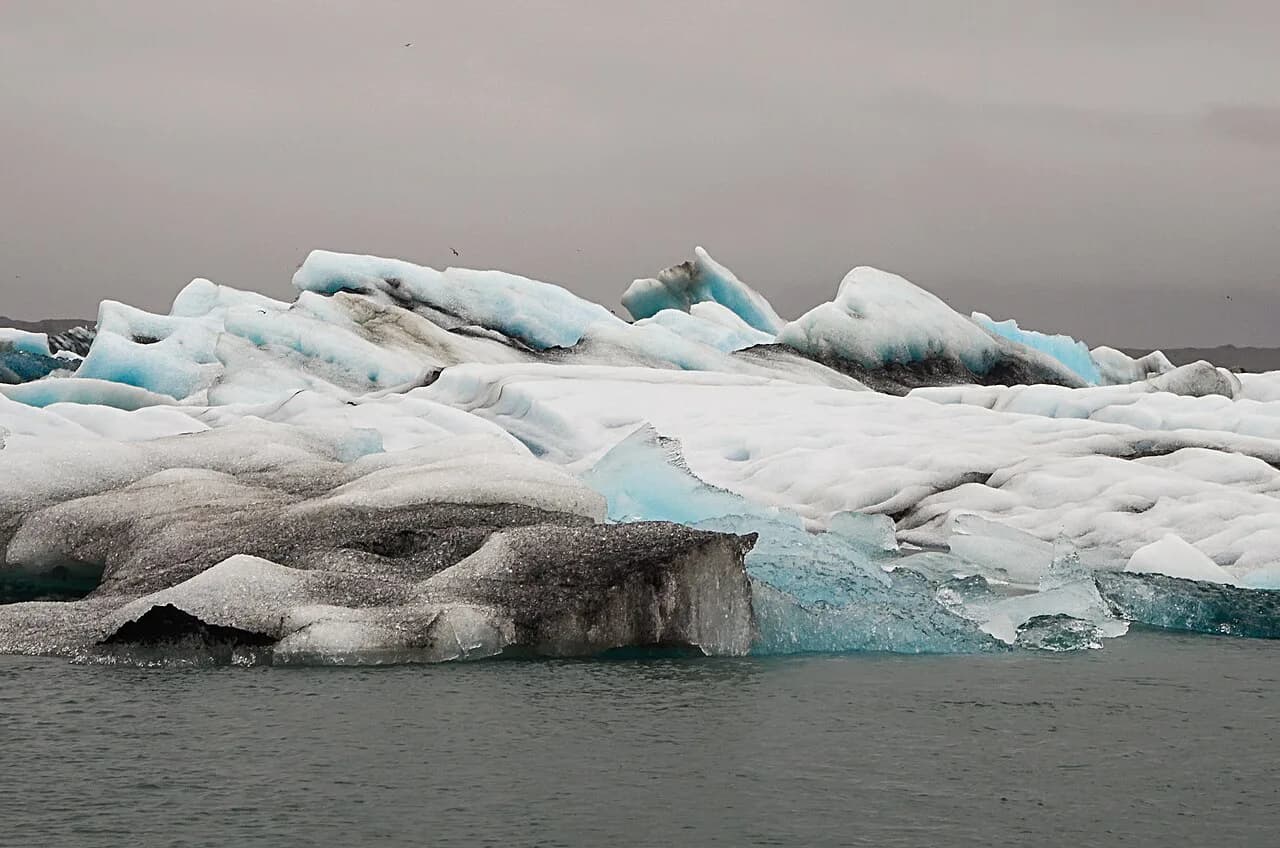
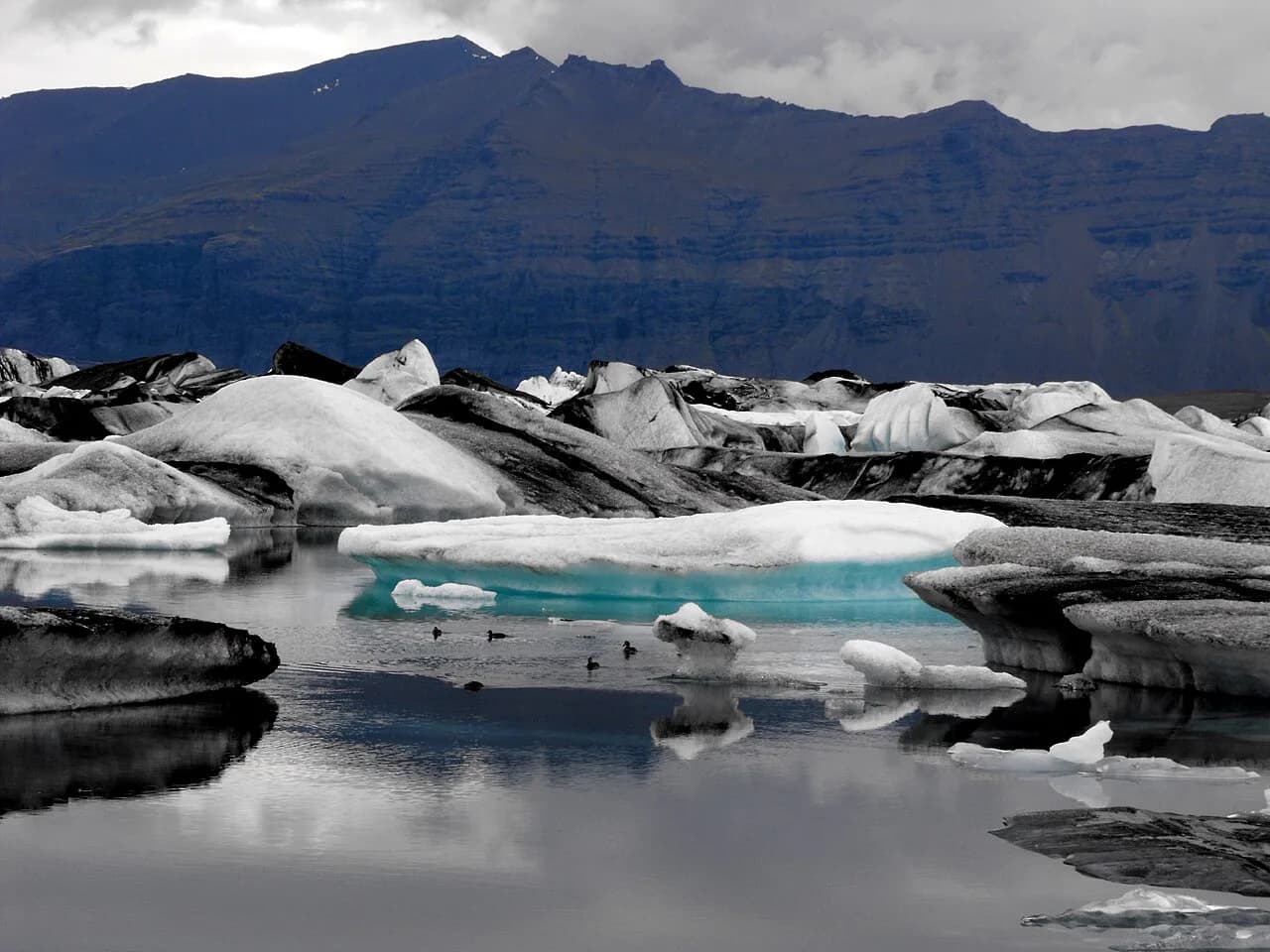
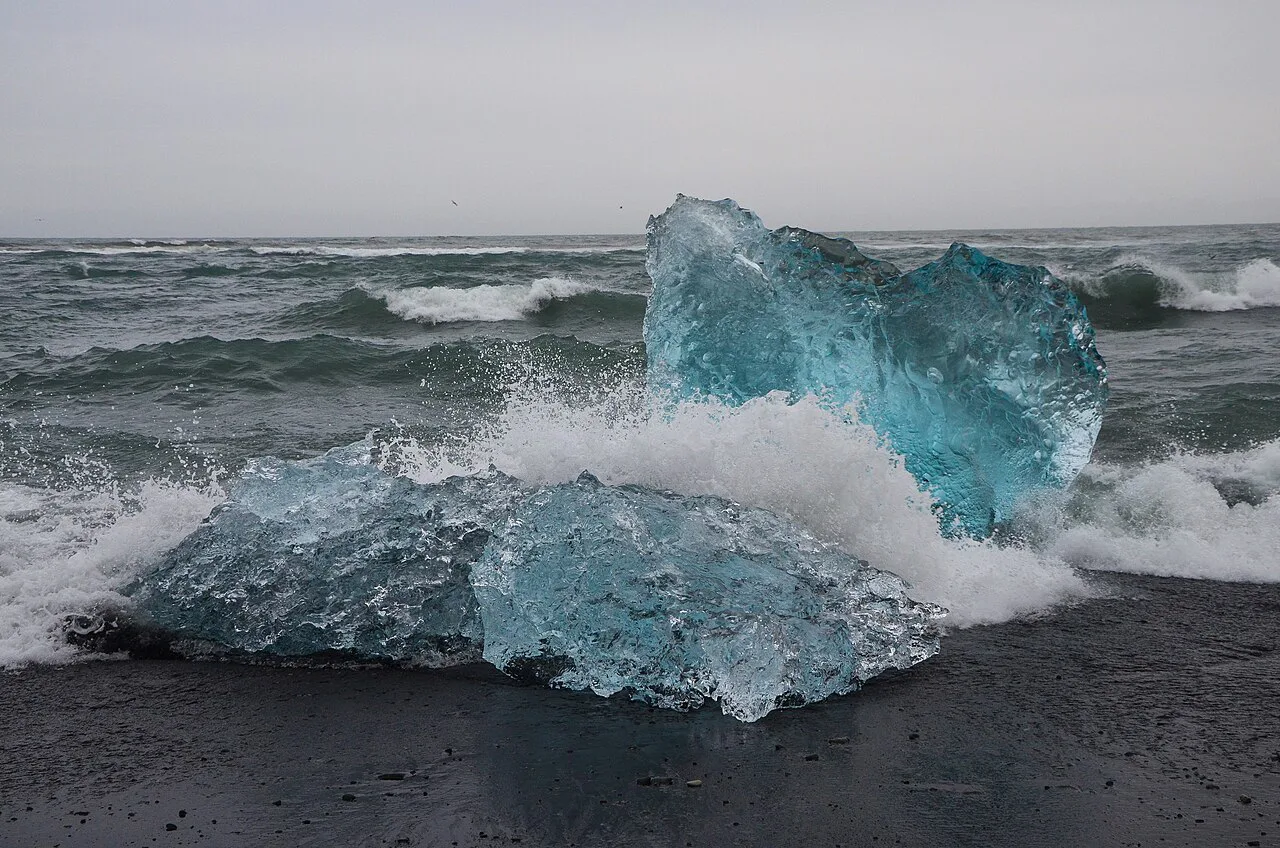
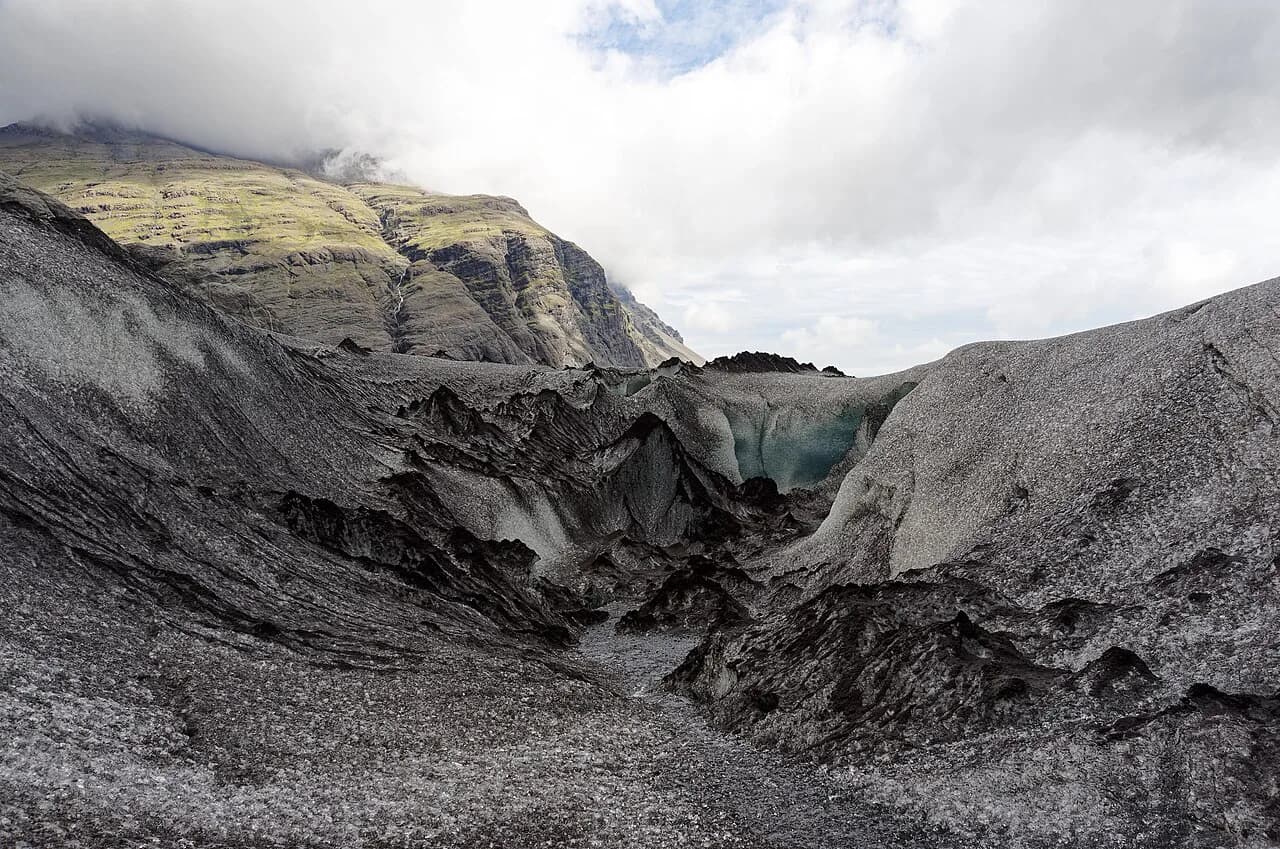
Icebergs break off the Breiðamerkurjökull glacier tongue and drift in Jökulsárlón for months or even years before the tide carries them down the short river Jökulsá and out into the Atlantic. Waves and wind then grind the survivors down and scatter the fragments along the sand, where they sit like cut stones on the black surface. Some pieces carry dark ash stripes from the volcanoes that periodically dust Iceland's ice.
The beach's formal Icelandic name is Breiðamerkursandur, an outwash plain more than 18 kilometers wide, and the stretch is also called Fellsfjara, with Eystri-Fellsfjara on the eastern bank of the river and Vestri-Fellsfjara on the west. The popular name is a modern invention, but it is the one every map and tour listing uses. Expect ice in every stage of melting, from blocks a meter or more across to slush at the waterline.
Where it sits: the Ring Road and the glacier lagoon
The beach lies in southeast Iceland, roughly 375 kilometers from Reykjavík, on the seaward side of the Ring Road. Jökulsárlón itself sits just inland across the road, which means you park once and cover both in a single stop of an hour or two, walking a few minutes between them.
The geography matters for planning: the beach is the ocean outlet for the lagoon, so the ice you photograph on the sand has usually traveled from the calving face a few kilometers inland. The Jökulsárlón Glacier Lagoon in Winter guide explains how the lagoon itself behaves once temperatures drop and the surface begins to freeze.
Driving from Reykjavík: distance and where to break the trip
Allow most of a day for the drive from Reykjavík, which Gray Line puts at about six hours. Route 1 runs along the south coast past Seljalandsfoss, Skógafoss and Vík, so the journey doubles as a sightseeing day if you start early. Check road and weather conditions with the Icelandic road authority before setting out, since winter closures and wind hold-ups happen on this stretch.
Most travelers break the trip at Vík or push on to spend the night near the lagoon, which turns a punishing round trip into two comfortable days. If you are weighing that stopover, the northern lights in Vík guide covers the same aurora decision at a closer base. Driving back to Reykjavík the same evening after a full day on the road leaves little margin for ice, dark or slow traffic. An overnight base also lets you return to the beach at first light or after dark, when the crowds thin out.
When the ice is at its best on the beach
Icebergs calve fastest once the spring thaw sets in, so Gray Line rates the period from April onward as the strongest time for fragments on the sand. In deep winter the lagoon surface can freeze and hold the bergs in place, so fewer pieces escape down the river to the shore. That does not empty the beach, but it does mean late-winter and spring visits often show more ice than a mid-December stop.
Weather is the other variable, and it changes fast on this coast. A calm, clear morning after a storm often delivers the cleanest ice and the best reflections. Plan your beach time flexibly around the forecast rather than fixing a precise hour weeks ahead.
Why winter visits look different
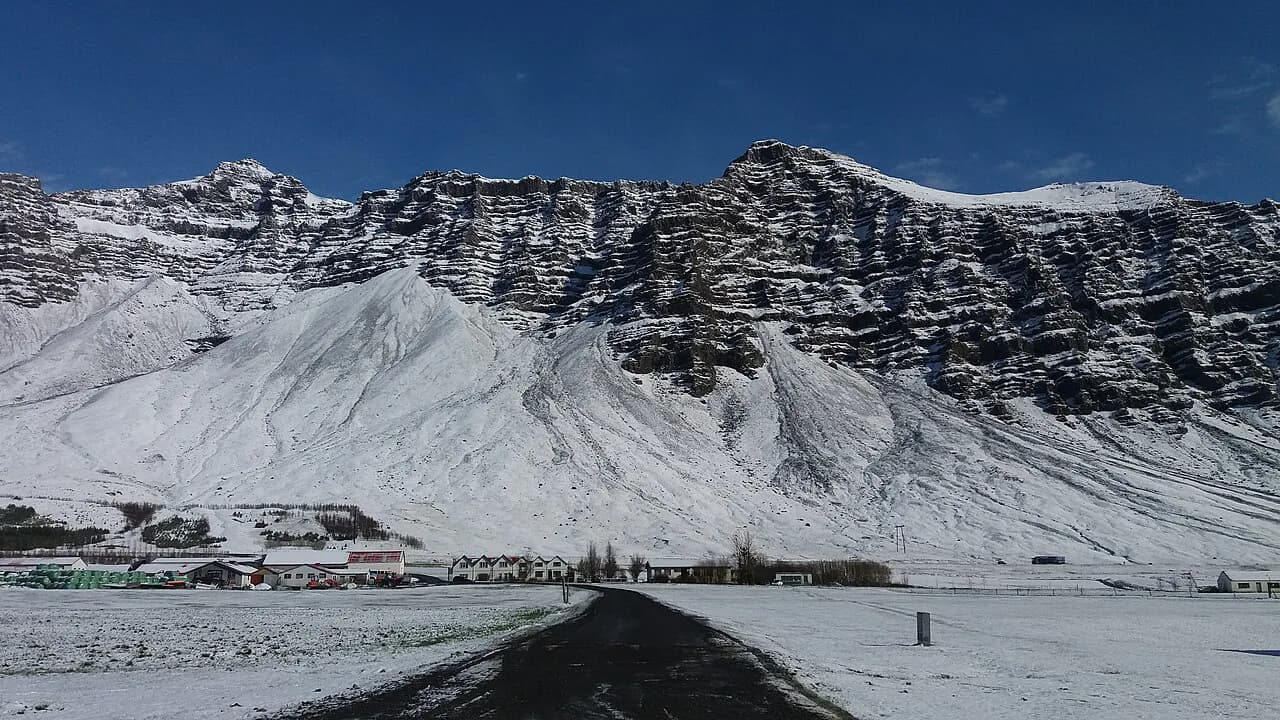
Winter brings fewer coaches, a lower sun and a shoreline that can be crusted with fresh snow, which makes the black-and-white contrast even sharper. Daylight is short in December and January, so you need to reach the beach by mid-morning to have hours of usable light; by late February and March the days are long enough for a relaxed schedule.
The trade-off is that the ice itself is often thinner on the sand in midwinter, as the frozen lagoon holds bergs back. Travelers who care most about seeing a beach full of ice should lean toward March or April, while those who want the darkest skies for aurora watching gain from December and January.
Where to watch the aurora near Jökulsárlón
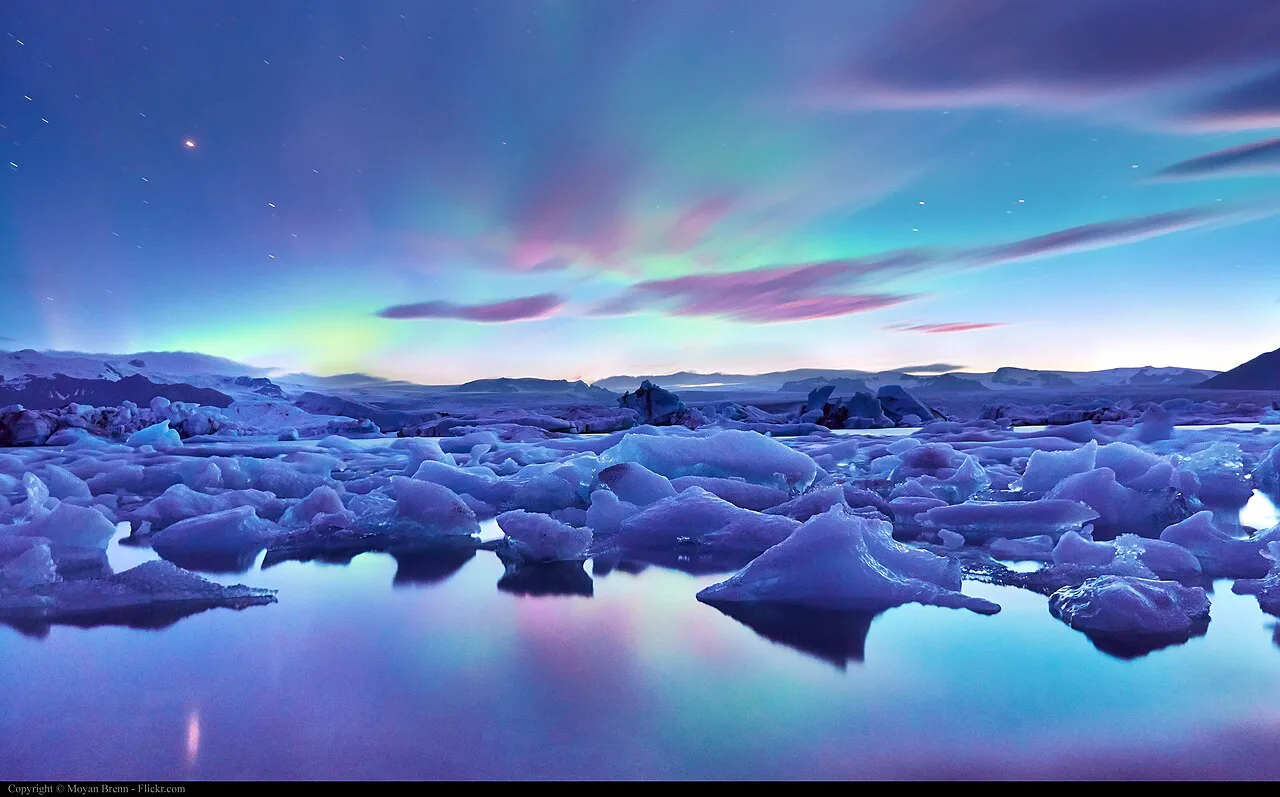
This corner of the south coast is far from Reykjavík's light dome, and the beach and lagoon car park sit under genuinely dark sky. On a clear night with aurora activity, the open horizon over the sea gives a wide view north across the ice. The Northern Lights at Jökulsárlón Glacier Lagoon guide covers the timing of auroral darkness and the local viewing logic in more depth.
Treat any Kp figure as a rough guide to how far south the aurora might reach, not a prediction that you will see it here. Clear sky, patience and a few nights on the ground do more for your odds than any single forecast. Never walk onto the ice or the water's edge after dark to get a better angle.
Self-drive versus a guided glacier-lagoon tour
Self-driving gives you the freedom to arrive at sunrise, stay for the aurora and combine the beach with nearby stops on your own schedule, but it puts the six-hour drive and winter road judgment on you. Guided South Coast tours remove that load and often fold in waterfalls and Vík, though they usually run as a long single day from Reykjavík. Reykjavik Excursions lists Jökulsárlón and Diamond Beach among the highlights of its South Coast day tour, running year-round.
For most travelers the best structure is a guided day south plus one or two nights based near the lagoon, so you get the logistics handled once and still have an unhurried evening at the beach. If you are mainly chasing aurora, base yourself near Jökulsárlón and drive out to the coast when skies clear.
What a long guided day involves
Day tours from Reykjavík typically collect passengers early, run the south coast waterfall stops and reach the lagoon and beach in the middle of the day before returning after dark. That makes for a long coach day, so ask Reykjavik Excursions about total duration and pickup time when booking. Some guides make an impromptu aurora stop on the drive home if conditions allow, as reviewers of the Reykjavik Excursions tour describe.
Check what the ticket covers before you commit: transport, guiding and stops vary between Reykjavik Excursions and Gray Line Iceland, and boat rides on the lagoon are usually a separate add-on with their own season. Book through the company's own page so cancellation terms are clear.
Staying overnight near the lagoon
The nearest comfortable base is Fosshotel Glacier Lagoon, a short drive from the beach with restaurant and bar, which suits travelers who want to be on the sand at dawn or out after dark. Our guide to Fosshotel Glacier Lagoon covers the setting and who it fits. Farther east, Höfn has a wider choice of hotels and restaurants, while guesthouses and cottages dot the farmland between Vík and the lagoon.
For a wider spread of options, from farm stays to larger hotels, see Hotels at Jökulsárlón, Iceland. Book early for February, March and the aurora season, when rooms near the lagoon fill up.
How many nights to plan for a fair chance of clear skies
Iceland's south coast is often cloudy, so a single night gives you one roll of the dice. Two or three nights based near Jökulsárlón materially improve the chance of at least one clear evening, and they also give you a spare morning if a storm closes the road. If aurora is your main goal, weight your stay toward the darker months and accept that daytime hours will be short.
Safety on the beach: waves, ice and slippery sand
The beach sits on the open Atlantic, and the waves can be stronger than they look, so keep back from the water's edge rather than chasing the biggest block. The ice is unstable and can tip, which is why you should never climb on it; the black sand is also slippery when wet. Gray Line's guidance is explicit on both points.
Swimming is out of the question and there are no lifeguards on duty. Walk with care, keep children close, and photograph from solid, dry ground rather than from on top of the ice.
Facilities, food and the glacier lagoon café
There are no facilities on the beach itself, so use the café and restrooms at the glacier lagoon across the road before you head out; it is only a few minutes away. Fuel and a fuller range of services are in Höfn to the east. Bring food and water if you plan to stay through an evening.
Pairing Diamond Beach with ice caves and Vatnajökull
The lagoon and beach sit on the edge of Vatnajökull National Park, and the Skaftafell area is within easy reach on the same Ring Road stretch. Winter ice-cave tours run from the lagoon area into the glacier, and the Crystal Ice Cave at Jökulsárlón is the headline underground experience. Add one to a lagoon morning for a full day.
Booking an ice cave in the same stay usually means spending two nights in the area rather than racing back to Reykjavík. Skaftafell is a good base if you want to combine glacier walks with the beach. Our Skaftafell National Park page lays out the nearby trails and glacier options.
Who Diamond Beach suits and when to choose something else
Diamond Beach suits photographers, self-drivers with time for the south coast, and aurora hunters willing to base themselves near the lagoon for a few nights. It works well for families who keep to the dry sand and respect the ice. It suits travelers who accept that the beach's show depends on the season and the thaw.
If you only have one day from Reykjavík, a guided tour is the practical choice, and if you want guaranteed ice rather than chance, an ice cave tour gives you a more reliable payoff. Travelers prioritizing maximum aurora time should choose several nights in the area rather than a rushed round trip.
Plan Your Visit
Treat Diamond Beach as the seaward half of a Jökulsárlón stop: park once, see both, and give yourself an hour or two on the sand. Base yourself near the lagoon for two or three nights if aurora and ice caves are both on your list, and keep your beach visit flexible around the forecast.
If you are driving from Reykjavík, split the journey on the south coast rather than attempting the round trip in one day. Walk carefully, stay off the ice, and let clear winter skies do the rest.
Frequently Asked Questions
Does Iceland have a beach like Diamond Beach?
Iceland has several black sand beaches, but Diamond Beach near Jökulsárlón is distinctive for the iceberg fragments washed onto the sand. Reynisfjara near Vík is the other famous black beach, though its waves are notoriously dangerous.
Which is better, Fjallsárlón or Jökulsárlón?
Jökulsárlón is the larger lagoon and comes with Diamond Beach across the road, which makes it the more complete stop. Fjallsárlón is quieter and closer to the glacier snout, so it can suit travelers who want a shorter, less crowded visit.
What is the best time to visit Diamond Beach in Iceland?
From April onward the spring thaw sends more icebergs down to the shore, so the beach generally shows more ice then. The trade-off for aurora watchers is that midwinter offers the longest dark nights, even if the frozen lagoon holds more ice back.
Can you see the northern lights from Diamond Beach?
The beach is far from city light and has an open horizon, so it can be a good dark-sky stop on a clear night. A sighting still depends on solar activity and cloud cover, so plan several nights in the area rather than a single one.
How far is Diamond Beach from Reykjavík?
It is about 375 kilometers from Reykjavík, and the drive is typically around six hours along the south coast. Most travelers break the trip at Vík or overnight near the lagoon.
Do you need a tour to visit Diamond Beach?
No, it is free to access and self-drivers can park by the lagoon and walk over. A guided South Coast tour is the easier option if you would rather not handle a long winter drive yourself.
Are there facilities at Diamond Beach?
There are no facilities on the beach itself. The glacier lagoon across the road has a café and restrooms just a few minutes away, and Höfn has a fuller range of services.
Can you walk on the icebergs at Diamond Beach?
No. The ice is unstable and can topple, and the water is dangerously cold, so stay off the blocks and keep clear of the surf line.
Sources
Notes for your Arctic winter trip
Optional updates to our northern lights guides.
You might also like
Continue reading
More guides you'll find useful