Glass Igloos in Ruka: Aurora Cabins and Igloo Stays
Plan a glass igloo stay near Ruka: how heated glass roofs and aurora alarms work, what cabins include, and how many winter nights give clear skies a chance.
On this page
A glass-roofed night in Finnish Lapland trades a standard hotel room for a sky view from bed, and Ruka suits travelers who want that payoff within a compact fell resort rather than a remote wilderness lodge. Days here fill with downhill skiing, husky runs and sauna evenings; nights belong to the aurora, and the roofs are built to make waiting easy. The choice that matters most is which kind of glass accommodation you book and how long you stay.
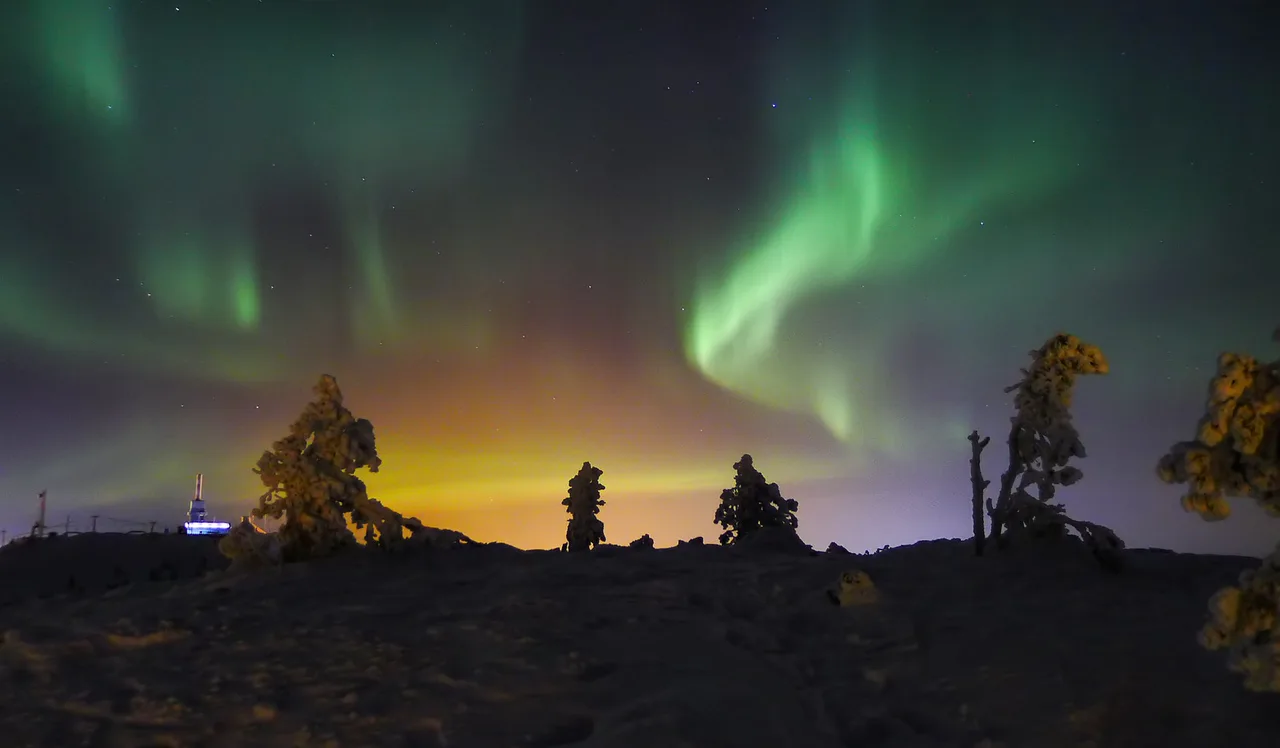
Almost all of these rooms sit in the aurora zone, roughly 65 to 72 degrees north, where solar activity delivers the most frequent displays, and Ruka's latitude places it firmly inside that belt. Glass igloos then work by removing the two obstacles between you and the sky: walls and cold. You lie back, the heated glass clears snow and frost, and you watch without stepping outside. Read the wider guide to northern lights in Ruka for viewing spots and season framing before choosing a property.
Why Ruka's latitude and dark winter nights suit aurora watching
Aurora displays need dark skies, low light pollution and a break in the cloud, and northern Finland's long winter nights deliver the first two in abundance. Ruka sits in the same high-latitude band as the rest of Lapland's aurora country, so displays are possible on many clear nights through the darker half of the year, though cloud and solar activity decide each individual night. Kp numbers are a rough guide to activity, not a forecast for your location.
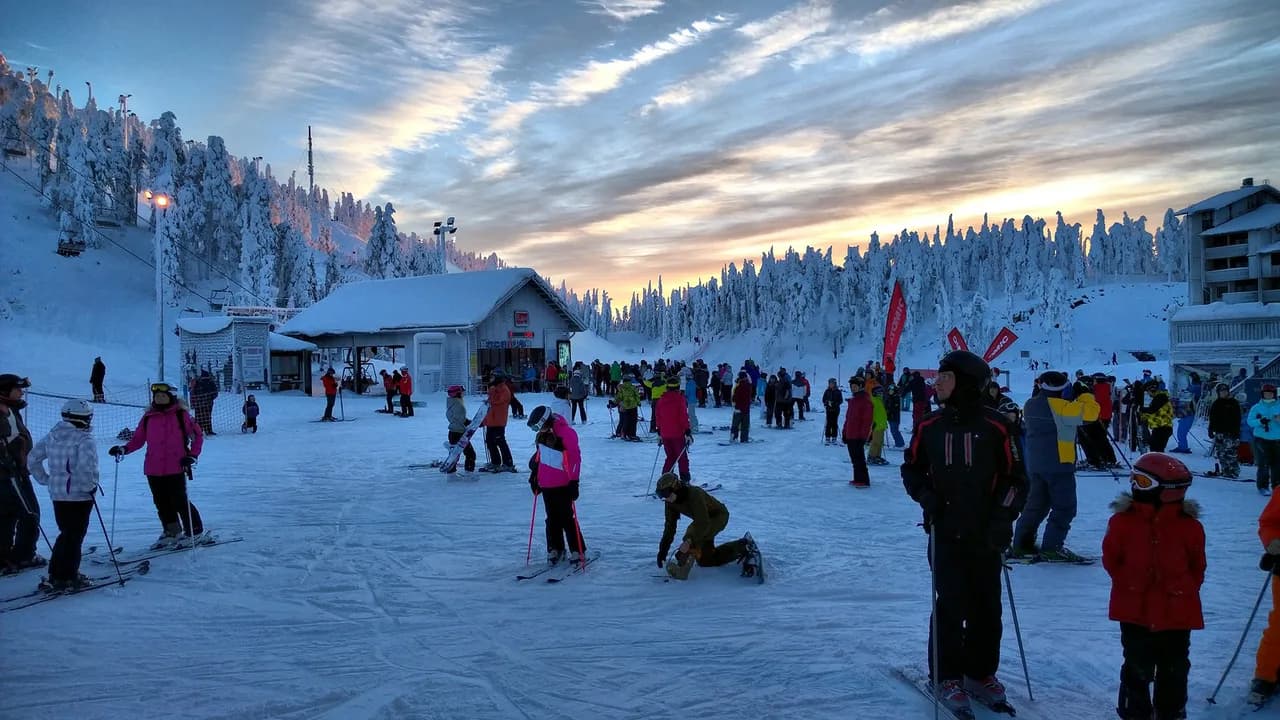
Ruka is a fell resort, which means ski runs, lifts and lit slopes create some glow close to the village center. The practical response is to book accommodation on the edge of the resort or to drive a short distance to darker forest and fell roads when the sky clears. That convenience-versus-darkness trade-off is the central planning decision for an aurora stay here.
When the aurora season runs and what winter nights are like
Lapland's aurora season coincides with the dark months, and December to March is the core window for snow-dependent activities such as dog sledding and reindeer safaris, with long nights stacking the odds in your favor. The deep winter weeks bring the shortest days, which frees the evening and late-night hours for sky watching but limits daytime excursions. Late-autumn and early-spring trips give longer daylight with darker nights still long enough for aurora watching.
Winter in Lapland averages between about -7°C and -12°C, and interior fell country around Ruka can run colder during clear, still nights, which is exactly the weather that favors aurora viewing. For up-to-date forecasts, the Finnish Meteorological Institute publishes local temperature and cloud data. Plan outdoor activity for the brighter middle of the day and keep evenings flexible for a chase.
How glass igloos actually work
A glass igloo is a thermally insulated cabin whose sleeping area is topped by a glass dome; the roof is heated so snow and frost melt away and the view stays open. Inside, the temperature behaves like a normal hotel room rather than a tent, so you sleep in ordinary bedding rather than expedition gear. That is the whole idea: you watch from a warm bed instead of standing in the snow.
Many igloo hotels let guests request a wake-up call when the aurora appears, a service that changes the night considerably. You can sleep through the early hours without fearing you missed the show, and the alarm decides when to look up. It is most useful when activity is forecast but intermittent; on a fully overcast night it cannot conjure a display, so treat it as a convenience rather than a guarantee.
Igloo-style and glass-roof stays in Finnish Lapland
Finnish Lapland's glass igloos cluster in the far north, and the resort properties there show what the room categories actually mean. At Kakslauttanen Arctic Resort near Saariselkä, the small glass igloos measure 25 m² for up to three guests, while the large glass igloo covers 38 m² for up to five, and every one of these rooms has its own shower and sauna. Sizes and capacities like these tell you quickly whether a property suits a couple or a group. For the full spread of properties and room types, see the guide to glass igloos in Finnish Lapland.
Ruka itself is a ski resort first, so the closest glass-roofed or aurora-cabin stays may sit a drive away in the wider Kuusamo and Salla region. When comparing options, weigh the drive time from Ruka village against whether transfers are included, since a remote location buys darker skies but costs you an evening taxi. Room categories and inclusions vary by season, so confirm them with each property when you book.
Kelo-glass combinations: log cabin warmth with a glass-roofed bedroom
Some properties combine a log cabin with a glass-roofed bedroom, which resolves the main compromise of a pure igloo: space. At Kakslauttanen, the Kelo-Glass Igloo sleeps up to six across 90 m², with two single beds, a double and a bunk, and adds a private electric sauna, fireplace, kitchenette and terrace. The sleeping area keeps the glass roof, so the aurora view from bed survives, while the rest of the cabin works like a normal self-contained lodge. Check-in is from 15:00 and check-out by 10:00.
This layout suits families and small groups who want to cook, sauna and spread out rather than spend the evening in one room. The Luxury Kelo-Glass Igloo expands to 310 m² for up to twelve guests. Rates vary by date and category, and the resort lists some rooms with a starting nightly rate, so compare quotes for your dates on the official booking page. Kelo pine, the silver-grey dead wood used in these cabins, is a distinctive Lapland material worth noticing.
Family-sized aurora cabins with glass igloo sections
Aurora cabins take a different approach: a conventional cabin with a separate glass-igloo sleeping section, marketed squarely at families. Apukka Resort's Aurora Cabin Family hosts up to six guests under the northern lights, which makes it a practical pick when children are along and the priority is a warm base with a sky view rather than a designer dome. Capacity like this matters, because many igloo rooms top out at two or three people.
Cabins with separate glass sections usually give you more space and better bathroom facilities than a single glass dome, at the cost of a slightly less immersive sky view. Combined with a sauna and a kitchen, they behave more like a self-catering apartment. Compare the bed configuration with your group size before booking; a cabin that sleeps six might still only give two people the glass ceiling.
Thermal suits, saunas and shared facilities
Operators running aurora tours typically lend thermal suits and boots for the night, which means you do not need to buy expedition clothing for a single excursion. At the accommodation itself, a private sauna is standard in the larger cabin and igloo categories, while smaller glass igloos may rely on shared facilities. Read the room description carefully, because a private electric sauna and a shared resort sauna are very different evening experiences.
A typical igloo night runs late: dinner, a sauna, then hours of watching through the glass with the aurora alarm set. Some resorts add extra facilities such as an ice bar, a planetarium or a smoke sauna, which fills the long polar night when cloud blocks the sky. Check what is open during your dates, since many seasonal facilities operate only in the core winter months.
Light pollution, cloud cover and where to sleep
Cloud is the single biggest factor between you and a display, and it varies locally: a short drive can take you from overcast resort slopes to a clear fell ridge. Rather than booking one spot and hoping, plan to move when the forecast shows a break. The Finnish Meteorological Institute's cloud forecasts are the tool to watch, and a guide who reads them will adjust the route on the night.
Light pollution near town is the second factor, though Lapland's populated places are small and the glow is limited to the resort core. Accommodation a few kilometers outside Ruka village, or toward the fells and national park edges, gives darker skies with little extra effort. Dark-sky spots such as Oulanka National Park lie within reach for a self-guided drive, and Riisitunturi National Park offers higher, quieter terrain.
Self-guided aurora spotting from your cabin versus a guided night tour
Staying in a glass igloo lets you self-guide simply by staying put: set an alarm, check the sky, and you are already in position. That works well when you have several nights and are content to wait. A guided night tour adds a driver who knows the road network and the cloud forecast, plus often a campfire and hot drinks, and it introduces you to spots you would not find on your own. The trade-off is cost and a fixed schedule.
Ruka Safaris and other local operators run evening aurora trips from the resort area, typically by minivan or snowmobile sled, with pickup near the village. Booking a tour on your clearest forecast night is often more efficient than committing every evening. Sled-based chases are slower and expose you to the cold; van-based trips cover more distance and shelter in worse weather.
How many nights to plan for a fair chance of clear skies
Three nights is the practical minimum for an aurora trip, because it gives you three independent chances at a clear sky and lets a single cloudy night pass without ending the trip. Five to seven nights markedly improve the odds for anyone travelling a long way, and they let you combine aurora watching with skiing, husky and reindeer days. Nobody can promise a display, and even in the far north a week can pass under cloud.
Suppose you have only two nights. Then treat the igloo as a comfortable base and book a guided chase as a backup, rather than relying on the roof alone. If aurora is the sole reason for the trip, allow at least four nights and keep your itinerary flexible enough to stay out late when the forecast improves. A sighting depends on solar activity and clear skies, and the best you can do is buy more nights and more mobility.
Typical winter temperatures and how insulated igloo rooms stay warm
Winter in Lapland averages roughly -7°C to -12°C, and the clearest aurora nights are often the coldest, so a warm room matters. Insulated igloos with heated glass roofs stay at ordinary room temperature, while cabins add a fireplace and sauna for extra warmth. Even so, the short walk between the cabin and the sauna or restaurant is outdoors, so plan that transition.
During cold snaps the heated glass roof keeps working, melting snow so the view stays clear, which is the key engineering behind the concept. Keep the indoor-outdoor contrast in mind when choosing between an igloo with a private bathroom and a cabin with more space, because at minus twenty you will appreciate the shorter distances. For the latest forecast, check the Finnish Meteorological Institute.
Booking lead times for aurora cabins in peak season
Glass igloos and aurora cabins are limited in number, and the weeks around Christmas and New Year, plus the deep winter school holidays, fill far in advance. For a peak-season stay, book many months ahead and be prepared to shift your dates by a week to find availability. Outside the holidays, late winter often offers better room choice and clearer, colder weather.
Book directly with the property when you can, since that gives you the most direct route to ask about aurora alarms, sauna access and transfer options. Check the cancellation terms carefully, as flight disruption in winter is common and a flexible booking is worth paying for. If one property is full, look at the wider range of Lapland igloo stays before abandoning the plan.
Pairing an igloo night with husky, reindeer and snowmobile days around Ruka
Ruka's winter days fill easily: husky safaris, reindeer sleigh rides and snowmobile excursions all leave from the resort area, and many run into the evening with a stop for the aurora. Book these activities early in the trip so the later nights stay free for sky watching. A husky safari with a guide who teaches you to drive the sled is a good introduction to the terrain and the trails.
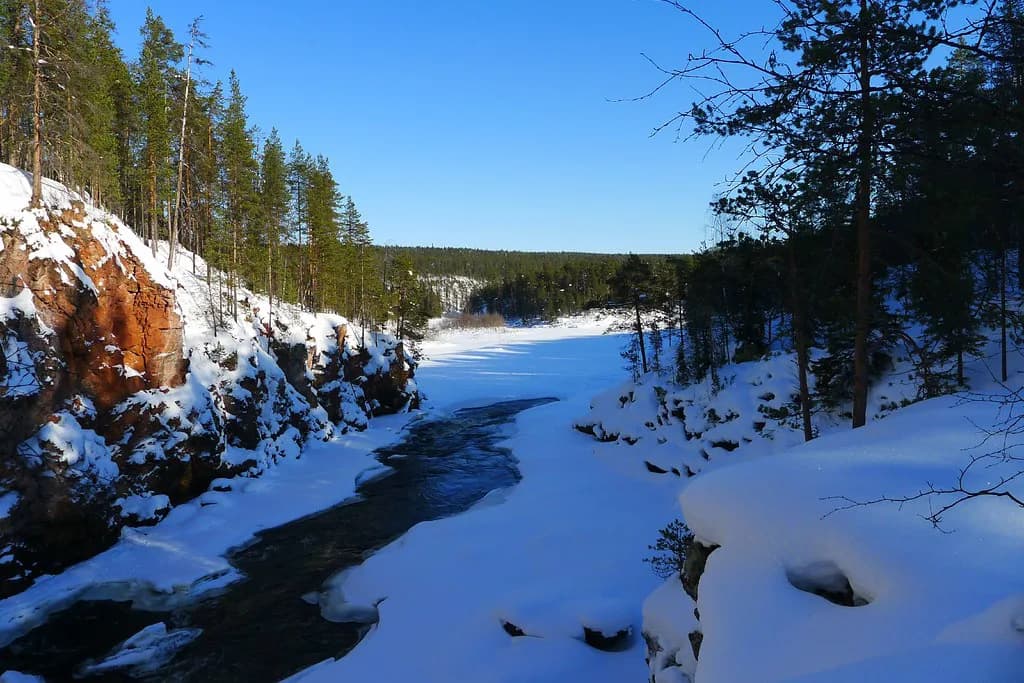
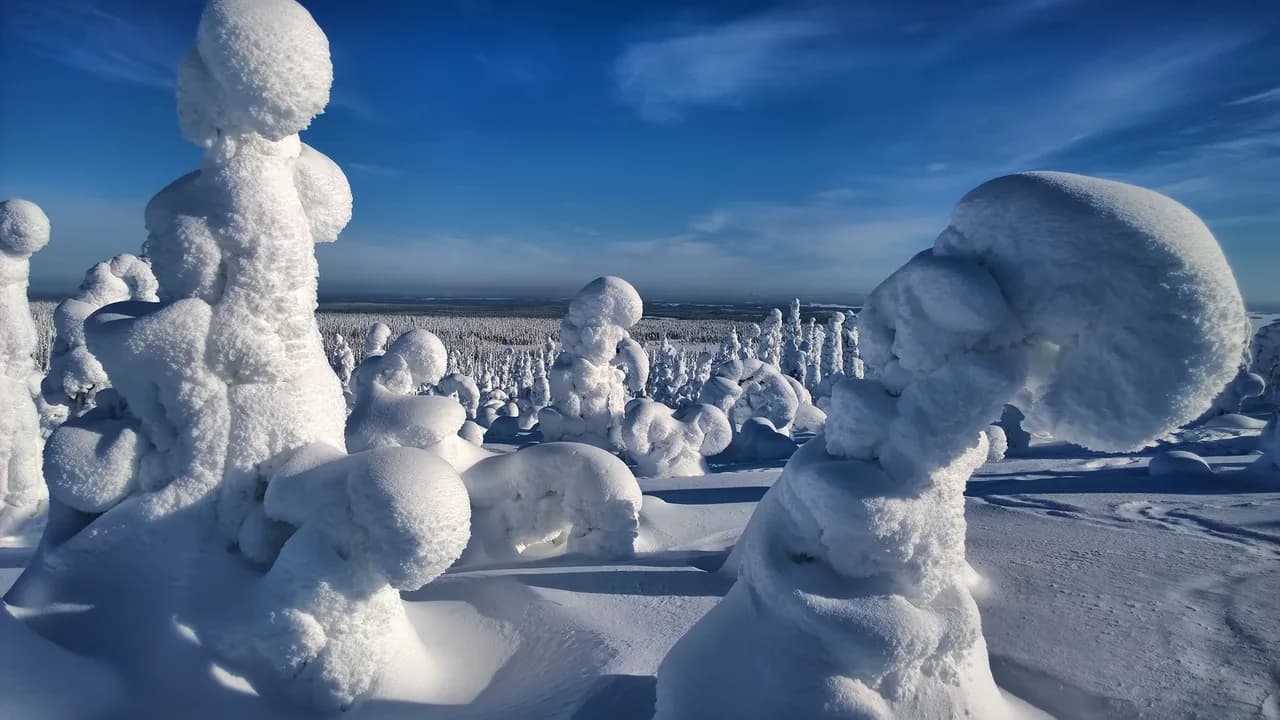
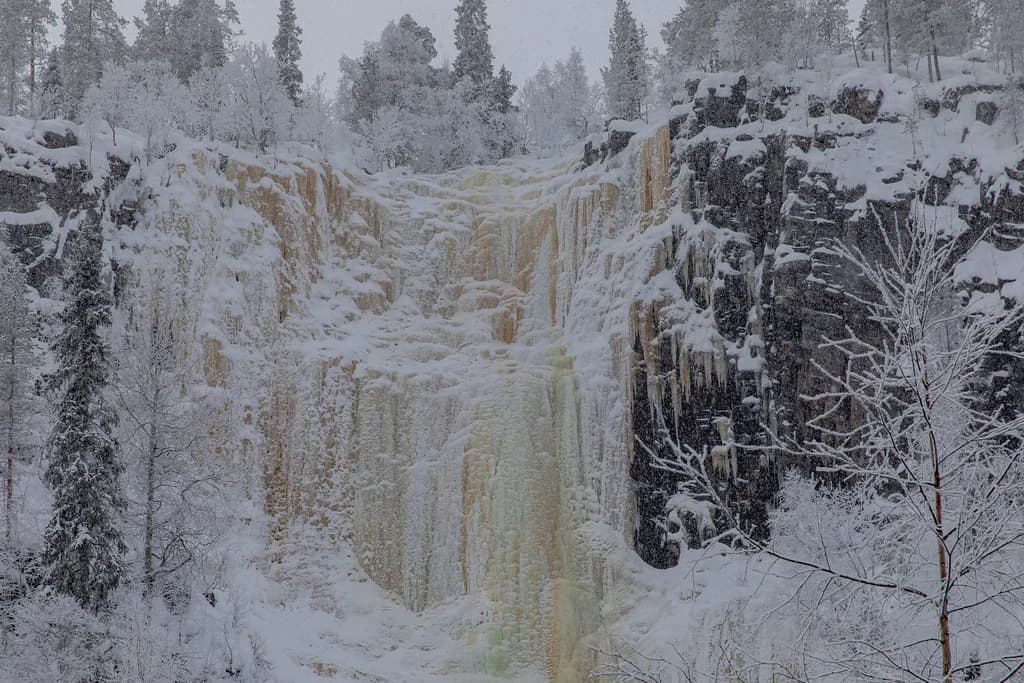
Beyond the resort, Korouoma Canyon draws winter visitors for its frozen waterfalls, and Oulanka National Park offers trails such as Karhunkierros for snowshoeing days, while Riisitunturi's snow-laden trees reward a day trip. Christmas in Ruka brings its own program of events around the resort village. Build a rest day into the middle of a week-long stay, because late aurora nights and active days quickly stack up.
Plan Your Aurora Stay Around Ruka
Choose a glass igloo if the view from bed is the point and you are happy with a compact room, and choose a kelo-glass or aurora cabin if you want a sauna, a fireplace and space for a family or group. Then match the property to the nights you can give it: three is a fair minimum, five or more is what turns a trip into a genuine chance at clear skies. Confirm current room details and availability with Kakslauttanen Arctic Resort and the other properties as you book.
Keep your base near Ruka for the slopes and services, and expect to drive a little to darker fell roads when the cloud breaks. Watch Kuusamo forecast and cloud data, keep the aurora alarm set, and treat every clear night as an opportunity rather than a promise. That combination of comfortable accommodation and mobility is what gives you the best chances.
Frequently Asked Questions
Can you see the northern lights from a glass igloo?
You can, if the sky is clear and aurora activity reaches your latitude. The heated glass roof keeps snow and frost off the view, so you can watch from bed with the lights low. Cloud and solar activity decide each night, and no operator can guarantee a display.
What is the difference between a glass igloo and an aurora cabin?
A glass igloo is a compact room topped by a glass dome, with the sky view directly over the bed. An aurora cabin is a larger cabin, often with a separate glass-roofed sleeping section, plus a sauna, kitchen and more space for families or groups. The larger layout trades some of the immersive dome view for comfort and room.
Is it cold sleeping in a glass igloo?
No. Insulated igloos with heated glass roofs stay at ordinary room temperature, much like a standard hotel room. The clearest aurora nights are often the coldest, though, so the short outdoor walk between your room, the sauna and the restaurant is where you feel the Lapland winter.
How many nights should you book for a fair chance of aurora sightings?
Allow at least three nights so you get three independent chances at a clear sky, and five to seven nights if you are travelling a long way. More nights and the flexibility to drive to a break in the cloud are what improve your odds; a sighting still depends on solar activity and clear weather.
Do glass igloos in Finland have bathrooms?
It depends on the room category. Larger igloos and many cabins have a private shower and sauna, while some smaller glass igloos rely on shared facilities. Room descriptions on each property's booking page set out exactly what is private and what is shared.
When is the best time to stay in a glass igloo near Ruka?
December to March is the core season for snow-dependent activities and long dark nights, while late autumn and early spring bring longer daylight with nights still dark enough for aurora watching. The deep winter weeks shorten daytime excursions, so weigh activity time against viewing hours when you pick dates.
Sources
Notes for your Arctic winter trip
Optional updates to our northern lights guides.
You might also like
Continue reading
More guides you'll find useful