Saariselkä Aurora Forecast: Read Kp, Solar Wind & Clouds
Read the Saariselkä aurora forecast with confidence: Kp thresholds at 68°N, Bz and solar wind, cloud cover, peak hours and where to watch near town.
On this page
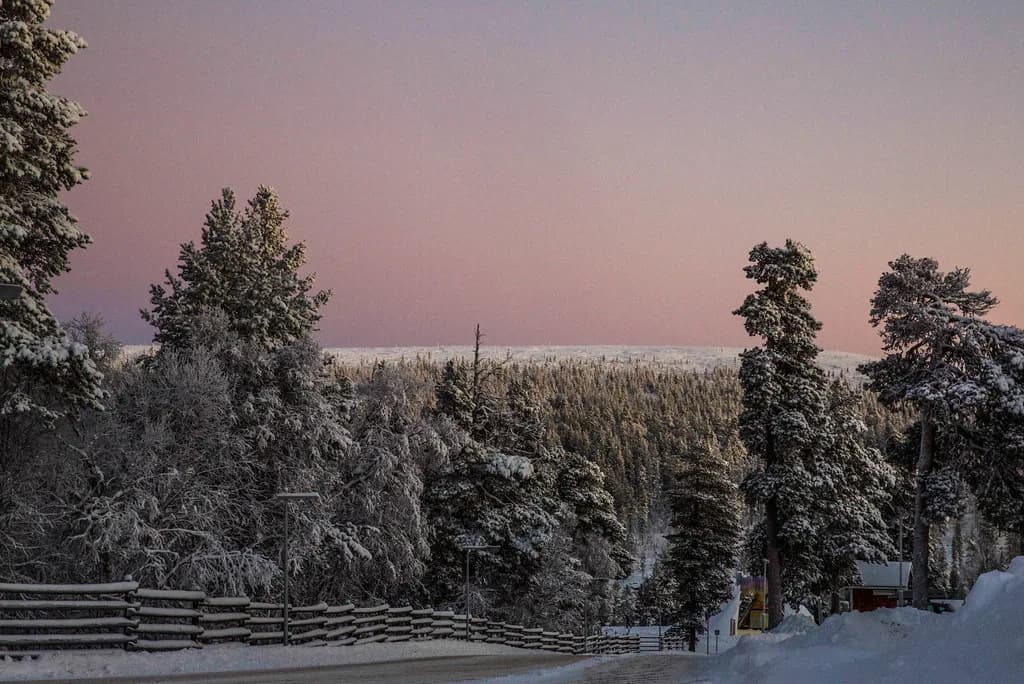
Saariselkä is a compact fell village in eastern Finnish Lapland, wrapped by forest, fells and the edge of Urho Kekkonen National Park. Winter visitors come for aurora, husky and reindeer days, ski trails and long, quiet nights, and the village works well for travelers who want dark scenery without a long transfer from the airport.
The forecast you need is really two forecasts in one: space weather, which tells you how active the aurora is likely to be, and cloud cover, which decides whether you can see it. Learning to read both together, hour by hour, is what turns a screen full of numbers into a sensible plan for the evening.
Why Saariselkä sits in the aurora zone
Saariselkä lies at about 68.42° north, and its geomagnetic latitude is roughly 65.1°, closer to the auroral oval than its geographic position suggests. That matters because the oval is where aurora most often forms, so activity that is modest on a global scale can still be visible from the fells.
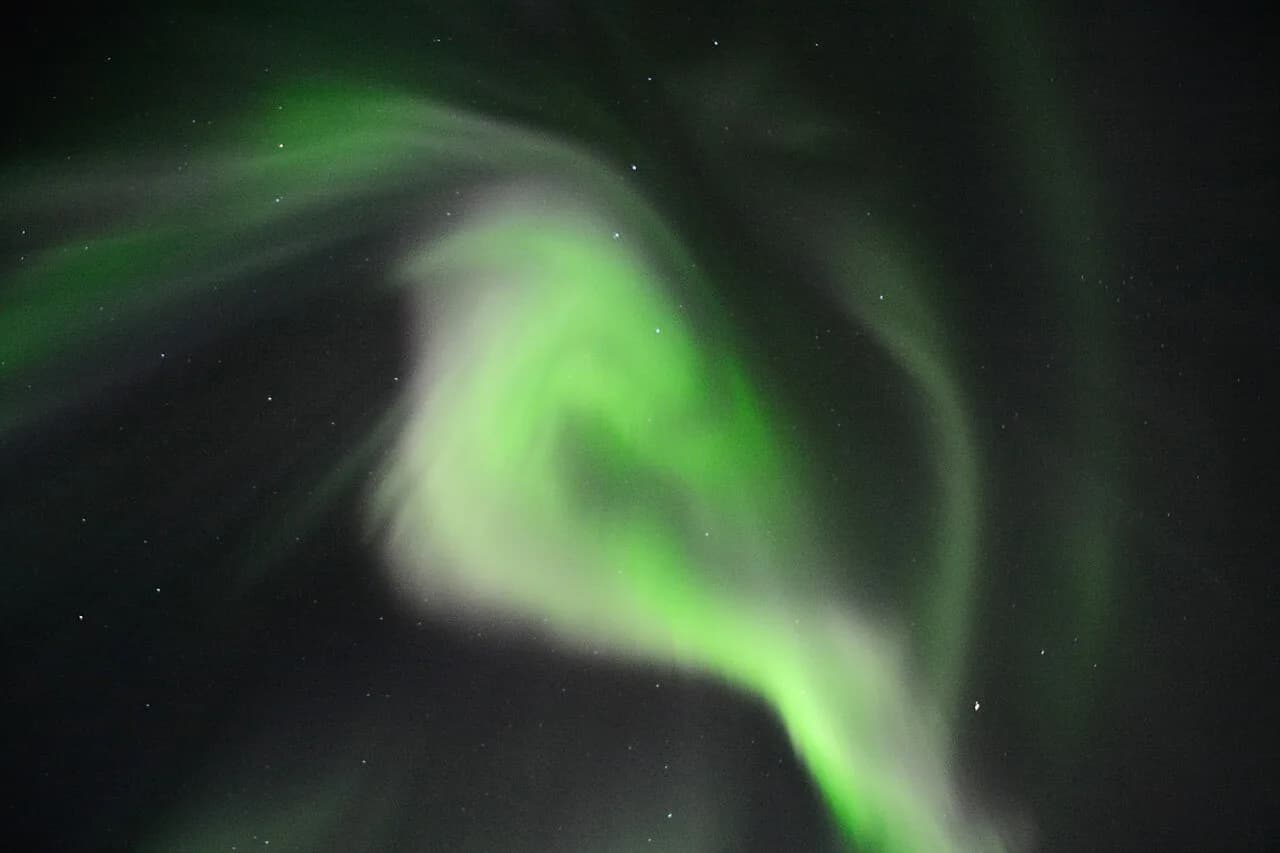
The practical effect is a low local threshold: aurora can clear the northern horizon at a Kp of about 1, and it can appear overhead from around Kp 2. A night with a quiet global index is therefore not a lost night, and travelers who only chase high Kp numbers often miss displays that were already overhead.
For a wider view of the village and its surroundings, see the guide to northern lights in saariselka, which covers the setting and the season alongside this forecast material.
When the aurora season runs and when nights get dark enough
Aurora needs darkness overhead, so the Saariselkä season effectively begins when late-summer nights darken enough for the sky to show structure, typically from late August or September, and continues through winter into early April. Midsummer weeks are useless for aurora because the sky never gets properly dark, however active the solar wind is.
Deep winter brings the longest dark window but also the coldest nights, while the weeks around the equinoxes combine reasonable darkness with a better chance of active space weather. Early and late season nights are shorter, and late-season twilight returns quickly, so plan the evening around the darkest hours rather than the whole night.
What a Kp forecast tells you and what it leaves out
The planetary K-index summarises how disturbed Earth's magnetic field is expected to be, and forecasters publish it for the coming hours and days. At Saariselkä's latitude it is a rough guide to whether aurora may be present, not a verdict on what you will see, because it describes global activity rather than your patch of sky.
The Finnish service behind the Lapland forecast states plainly that its aurora forecast is based on the planetary Kp index from the ACE satellite together with cloudiness data from a weather service, and that it should be used only as a guideline. It is not reliable enough to work as an alert on its own, which is why it pairs the forecast with live camera observations.
Aurora Hunter publishes a Saariselkä page that translates this into local terms, showing both a horizon threshold of roughly Kp 1 and an overhead threshold of roughly Kp 2 for the village. That is the most useful framing: a Kp of 3 or 4 is already generous here, and a low number only tells you the global field is calm.
Bz, solar wind speed and density: the signals that matter after Kp
Kp is a summary with a lag, so the raw solar wind readings are what show a night building or fading. Bz describes the north-south orientation of the interplanetary magnetic field, and a sustained southward turn couples more energy into the magnetosphere, which is the condition aurora chasers watch most closely.
Solar wind speed and density add context: a fast, dense stream can compress the field and stir activity, while a rising total field strength often precedes a stronger southward turn. These are short-term signals rather than long-range predictions.
Read them as a trend rather than a single snapshot, and expect a delay of roughly an hour between a change at the measuring satellite and its effect on Earth. Magnetic midnight at Saariselkä is around 23:40, and the page's typical peak hours run from about 21:40 to 01:40, so the best readings often coincide with the best viewing window.
Aurora forecast services that cover Saariselkä and how they differ
The Northern Lights Alert forecast covers Finnish Lapland from Rovaniemi north, naming Saariselkä and Ivalo among its locations and combining a Kp-based forecast with cloudiness data. The same site runs a network of aurora cameras around Lapland and sells a login key for its app, which is one paid option for real-time alerts.
Aurora Hunter's Saariselkä page draws on NOAA space-weather data and adds local thresholds, a best-viewing window, moon phase and cloud figures for the village itself. That makes it a convenient single screen for the detailed signals, provided you remember that any single night's numbers are a snapshot, not a promise.
For a broader regional picture, the finnish lapland aurora forecast guide explains how the national-scale outlook is put together and where the observing stations sit.
Real-time alerts and why camera-based alerts beat forecast thresholds
A forecast threshold tells you what might happen; a camera tells you what is happening. The Northern Lights Alert service bases its alerts on real-time aurora camera observations from a network around Finnish Lapland, which is a different approach from firing a notification whenever a Kp number crosses a line.
For a traveler already outside, that distinction matters: an aurora that is visible now is worth waking up for, while a forecast that promised activity an hour ago is not. If you rely on an app, choose one that reports observations rather than only predicted values.
Cloud cover and the FMI forecast: the half of the equation that decides the night
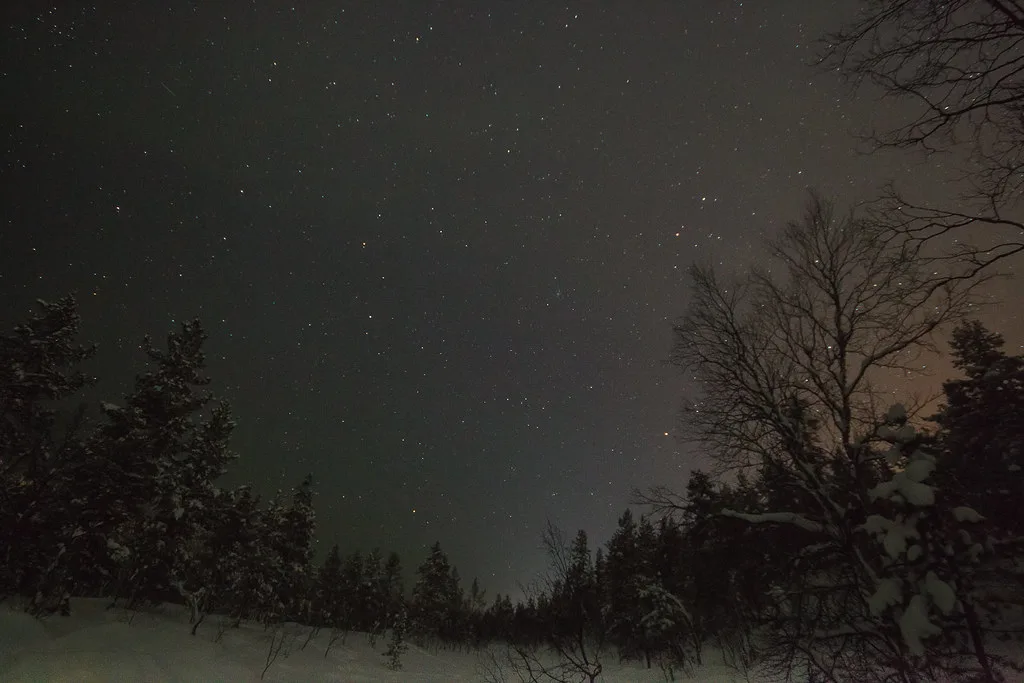
Clear sky is the deciding factor, and it is entirely separate from the aurora numbers. The Northern Lights Alert forecast deliberately combines its Kp-based activity forecast with cloudiness data from a weather service, because an active night under overcast is just a dark night.
Use the Finnish Meteorological Institute's local forecast for Saariselkä and Ivalo to judge cloud through the evening, and treat a percentage as a guide to the whole sky rather than a guarantee of a clear patch. Even a partly cloudy night can open up, so it pays to keep an eye on the sky rather than the screen alone.
Typical viewing windows around magnetic midnight
Saariselkä's magnetic midnight falls at about 23:40, and the page's best-viewing window centres on the hours from roughly 21:40 to 01:40. Plan to be outside and dark-adapted for that stretch, with a backup slot for late evening if cloud is forecast to break.
The local darkness window is long in midwinter, so an early-evening look and a late-night look cost you little beyond sleep. In September and early April the dark hours are shorter, which makes timing around magnetic midnight more important.
Where to watch near Saariselkä: Kaunispää, Kiilopää and dark spots away from village lights
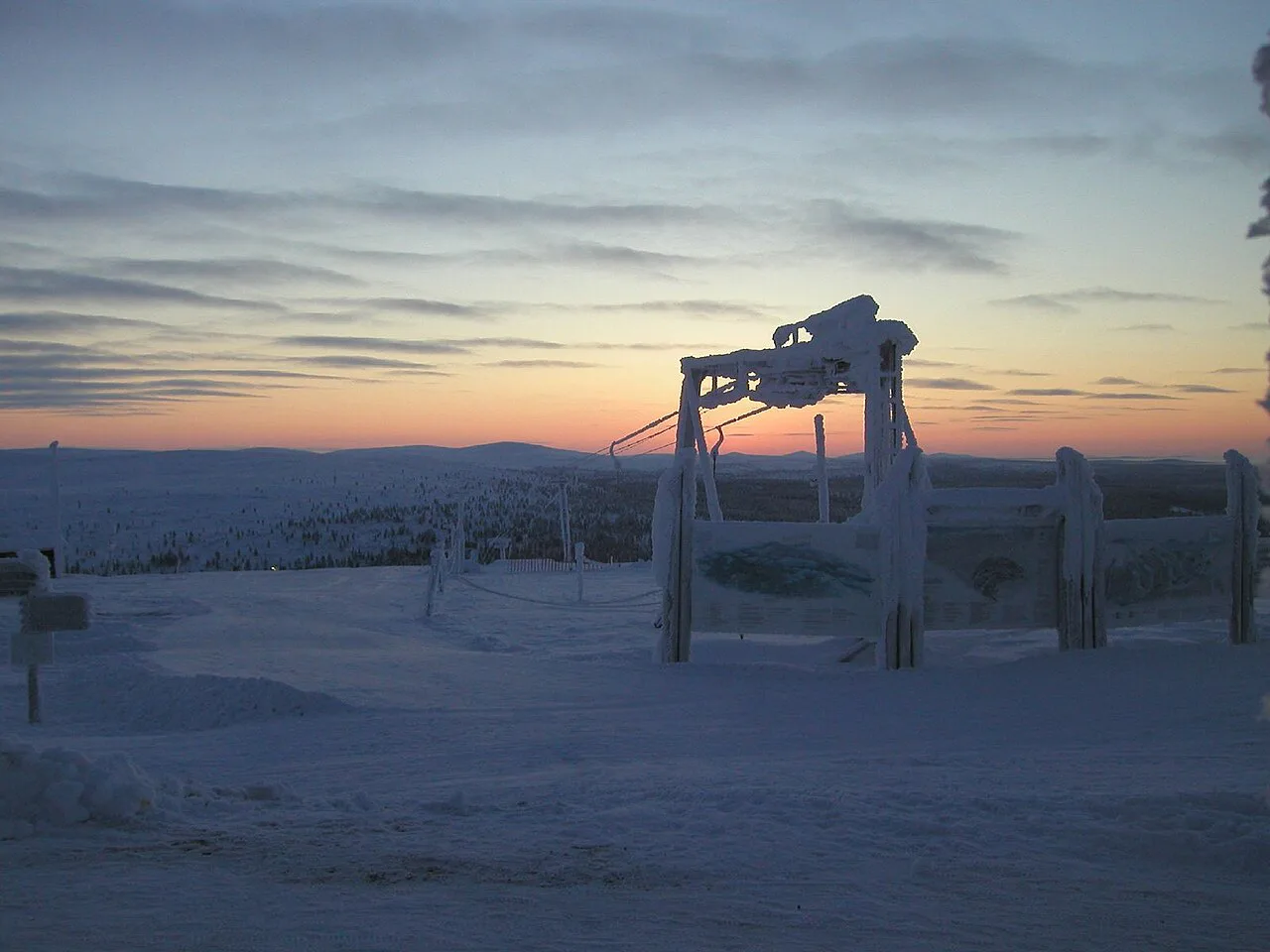
Kaunispää Fell rises about 2 km from the village and gives an open northern horizon away from most of the street lighting. Kiilopää, roughly 10 km away, is a fell and outdoor centre with darker surroundings and a useful base for a night outside the village.
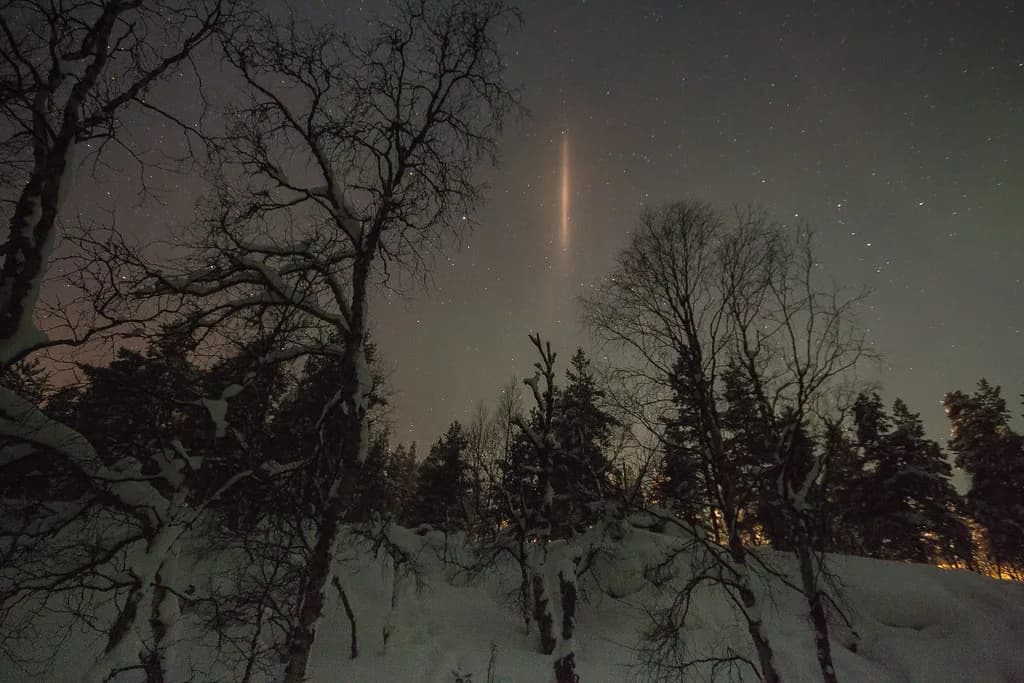
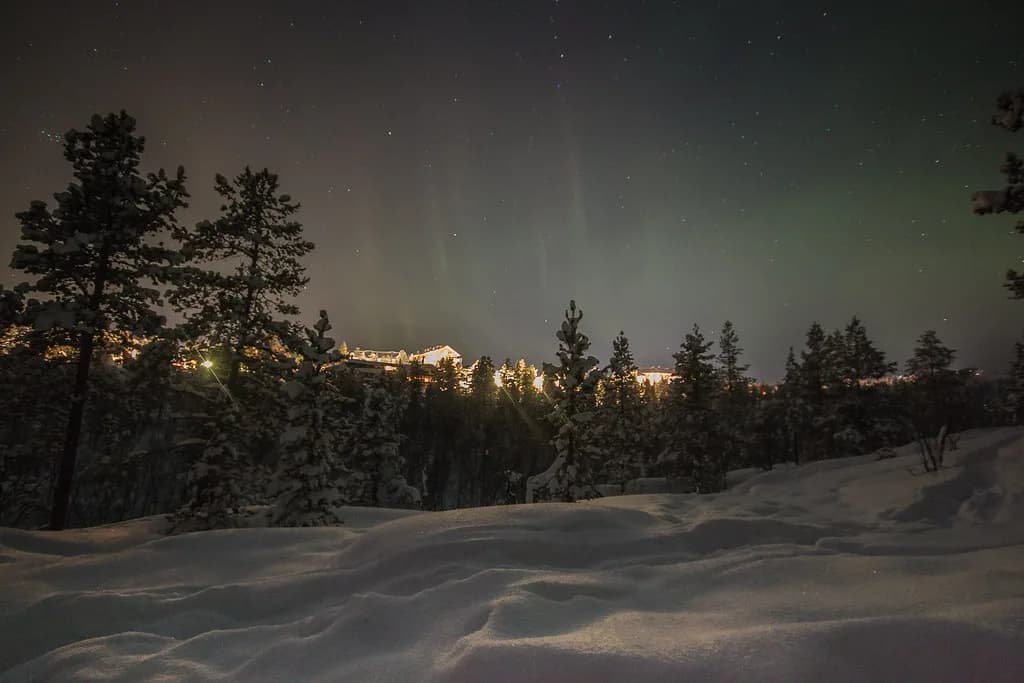
Within the village, walking a few minutes away from lit buildings and ski-trail lighting makes a real difference to how much of the aurora you can see. The fells around the village and the fringes of Urho Kekkonen National Park offer darker alternatives, though you should stay on marked routes after dark.
A wider look at the area, including how the village and its surroundings are laid out, sits in the guide to Northern Lights in Saariselkä.
Combining the aurora and cloud forecasts into a nightly plan
Start with the activity reading for the coming hours, then overlay the cloud forecast for Saariselkä and check whether there is a gap that coincides with your viewing window. If the aurora is active but cloud is solid at the village, a short drive towards Kiilopää or an open fell can put you under a different patch of sky.
Keep an eye on the local thresholds rather than the global average: at Saariselkä a Kp of 1 is enough to bring aurora over the northern horizon and a Kp of about 2 can put it overhead, so moderate numbers still justify a night out.
Self-guided chasing versus a guided night tour from Saariselkä
Self-guided watching is straightforward here: the fells and the roads towards Kiilopää and Ivalo let you change location quickly, and you can chase a clear gap without waiting for a group. The trade-off is that you drive snowy roads after dark and supply your own local knowledge.
Guided tours sell convenience: a driver, a small group, transport and often thermal suits, boots and hot drinks, with guides who watch the forecast and reposition during the night. They suit travelers without a car, families, and anyone who would rather not drive on winter roads at night, and a tour also gives you the option of a longer chase.
How many nights to allow for a fair chance of clear skies
No service can promise an aurora on a given night, because both solar activity and cloud are outside anyone's control. What you can control is how many nights you spend in the region, and more nights simply give you more chances at a clear sky.
A practical rule is three to four nights in Saariselkä, with the expectation that at least one will be usable, and more if your trip is short and you would rather not gamble. Moving between locations, such as a night or two on the coast or inland, adds flexibility when cloud settles over the fells.
Moonlight, snow and late-season twilight as trade-offs
A bright moon lifts the snowy landscape and makes it easy to walk but washes out faint aurora, so the darkest week around new moon gives the best contrast. Cold, clear nights often follow the cloudiest weather, which is why the clearest skies in winter tend to arrive with a cold snap.
Snow cover reflects any light, including aurora, so a dim display over a snowy fell can read better than it would over bare ground. Late in the season, twilight lingers through the evening and narrows the window, pushing you towards the small hours for a dark sky.
Where to stay for dark skies: fellside hotels, cabins and glass igloos
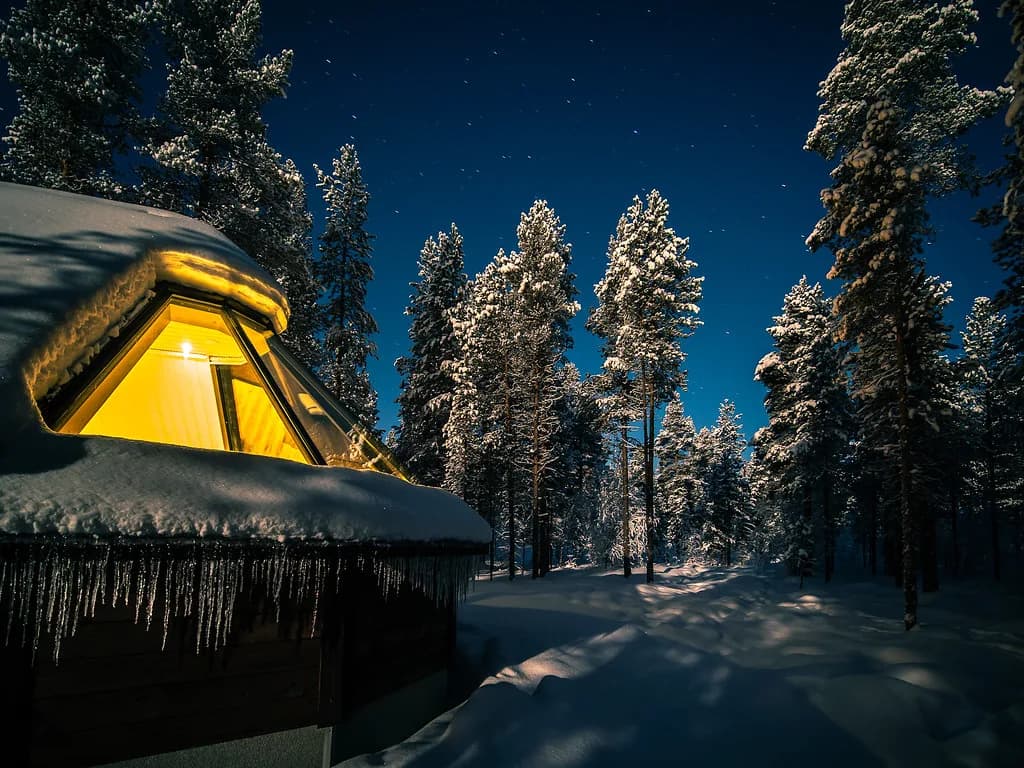
The Northern Lights Village Saariselkä places you on the edge of the village with its own setting for evening viewing, and the guide to the property explains the glass-roof accommodation and its trade-offs. Glass igloos trade a certain view and warmth for the convenience of watching from bed, with glare and heating to weigh up.
The Star Arctic Hotel in Saariselkä sits up on Kaunispää, above much of the village lighting, which suits travelers who want dark skies within walking distance of their room. A kakslauttanen arctic resort option further along the road offers a different kind of cabin stay and is worth comparing if you want more space and quiet.
Aurora village ivalo adds a nearby alternative if you are flying into the region and want to combine a few nights around Ivalo with Saariselkä.
Plan Your Visit
Build your Saariselkä trip around dark, flexible evenings rather than a single night: check the activity reading, check the cloud, then choose between the village edge, Kaunispää and Kiilopää. Booking three to four nights in a dark-sky property gives you the freedom to drop a poor forecast night without losing the trip.
Ivalo Airport is the practical gateway for the village, with Saariselkä a short transfer down the road, which makes a few nights here easy to slot into a wider Lapland itinerary.
Frequently Asked Questions
What Kp do you need to see the northern lights in Saariselkä?
Saariselkä is far enough north that a modest Kp can be enough. The local aurora page puts the village's horizon threshold at around Kp 1, with overhead aurora from roughly Kp 2, so a quiet global index does not rule out a display.
What time of night is best for aurora in Saariselkä?
The best odds cluster around magnetic midnight, which falls at about 23:40, with the typical viewing window running roughly from 21:40 to 01:40. In midwinter the dark period is long, so an early and a late look both make sense.
Where can you watch the northern lights near Saariselkä?
Kaunispää Fell, about 2 km from the village, and Kiilopää, about 10 km away, both offer more open northern horizons than the village centre. Walking a few minutes away from lit buildings within Saariselkä also helps on a quiet night.
How many nights should you plan for a chance of aurora in Saariselkä?
Plan at least three to four nights if aurora is the main goal, since clear skies are never guaranteed. More nights simply give you more chances, and you can skip a cloudy night without losing the whole trip.
What is the difference between an aurora forecast and cloud cover?
An aurora forecast describes likely geomagnetic activity, while cloud cover decides whether you can see any of it. The Lapland forecast combines a Kp-based activity outlook with cloudiness data for exactly this reason.
Does a low Kp forecast mean no northern lights in Saariselkä?
No. At Saariselkä's latitude aurora can clear the northern horizon at a Kp as low as about 1, and it can appear overhead from around Kp 2. A low number means the global field is calm, not that the sky will be empty.
Sources
Notes for your Arctic winter trip
Optional updates to our northern lights guides.
You might also like
Continue reading
More guides you'll find useful