Glass Igloos in Saariselkä: Which Aurora Stay Suits You
Compare glass igloos in Saariselkä by location, roof style and aurora alarms, with shared versus private facilities and realistic odds for a short winter stay.
On this page
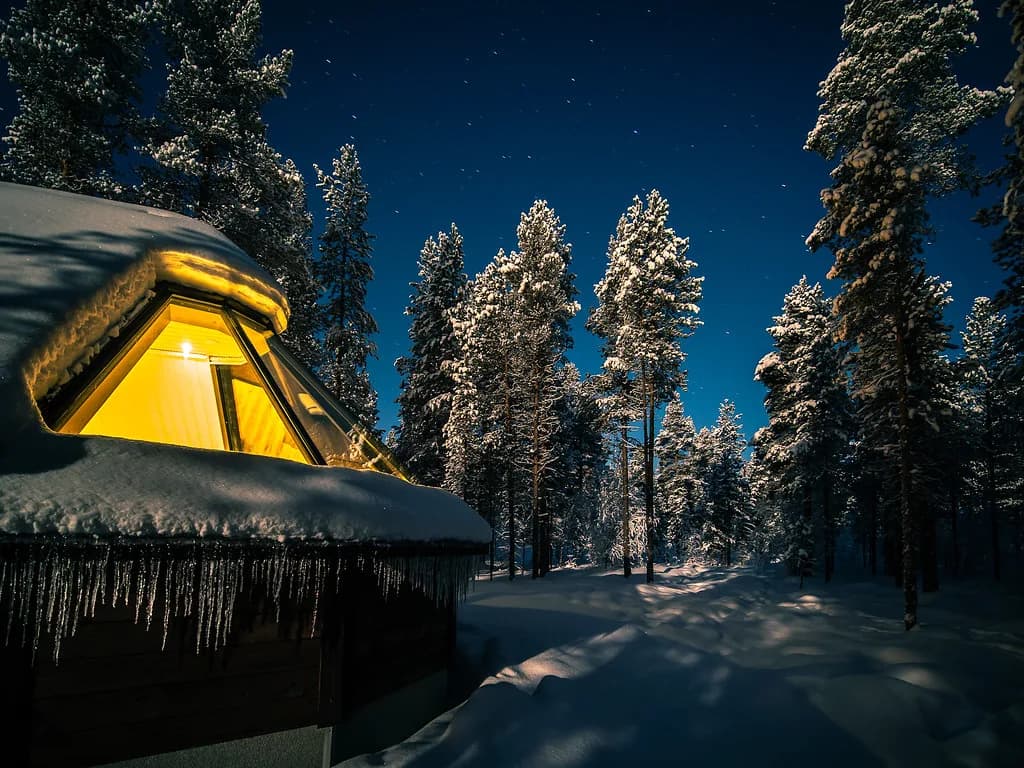
Saariselkä is a compact fell village in eastern Finnish Lapland where a glass-roofed night and a cabin night can sit inside the same short trip. The village sits close to Urho Kekkonen National Park, so dark fell terrain starts a short walk or drive from the beds, and the accommodations themselves range from sleeping pods to full log cabins with a glass section. That variety is the point: you can pick how much sky you want above you and how much privacy and heat you want around you.
A glass igloo is best treated as one memorable night inside a longer aurora itinerary rather than the whole plan. Cloud can close in for days at a time in any Arctic winter month, so pairing a glass-roof night with cabin nights and a guided chase gives you repeated chances at clear sky. Operators in the village run bus, snowmobile and sled-based night tours precisely because the lights may show far from the resort.
Why Saariselkä suits a glass-igloo stay
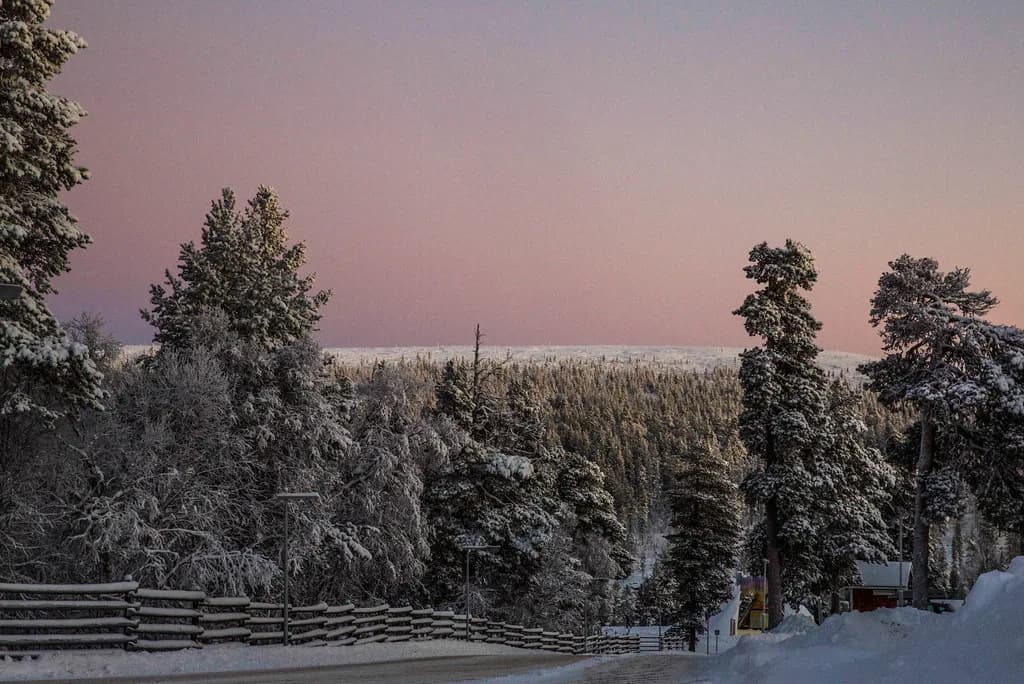
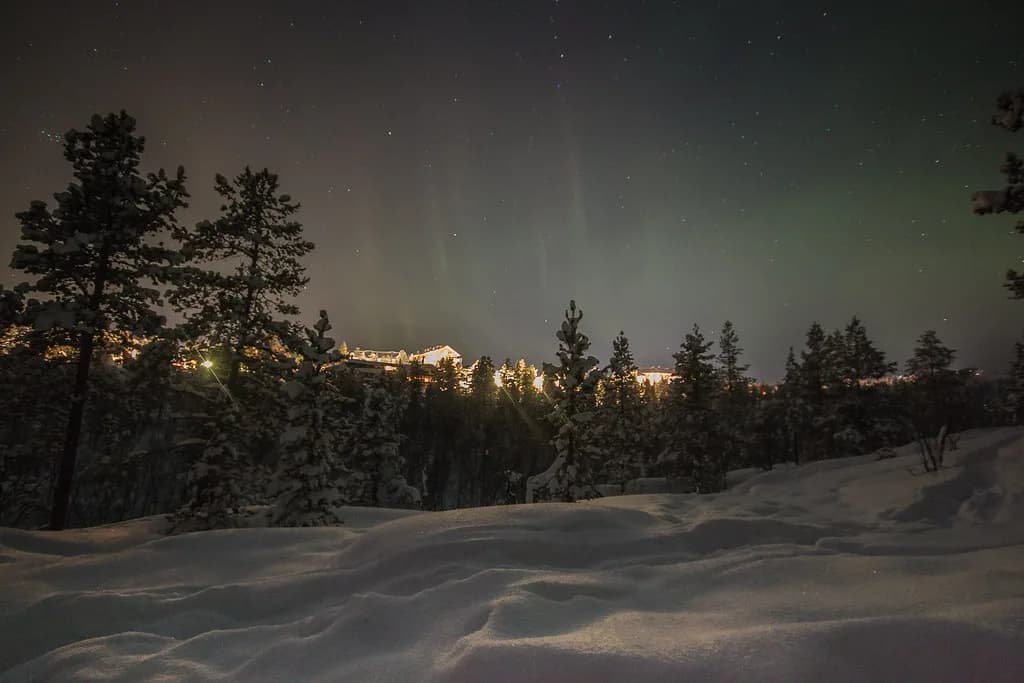
The village is small and surrounded by snow-covered forest and fell, which keeps light pollution low compared with a city and puts open sky within easy reach of most beds. It also has a dense cluster of activity providers, so a night in a glass igloo can be slotted between a husky safari, a reindeer sleigh ride, a snowmobile safari and a sauna session without long transfers. The trade-off is that the village center itself glows, so properties on the outskirts and up the fell have a darker horizon than a bed a few streets from the restaurants.
Igloo stays here are in high demand and commonly sell out six to twelve months ahead for the winter season, so the property choice narrows faster than the flight choice. If you have a specific resort in mind, treat the booking as the first decision of the trip rather than the last. Booking early also gives you more room to pick a hillside or fell-edge location instead of taking whatever remains in the center.
How far north it sits and how dark the nights get
Saariselkä lies well above the Arctic Circle in eastern Finnish Lapland, roughly three hours by road from Rovaniemi and a short transfer from Ivalo. That latitude puts it inside the auroral oval for much of the dark season, which is why ordinary clear nights here can deliver a display without a long chase. It also means midwinter brings very short daylight, so plan errands and activities around a narrow bright window and keep the long night for sky-watching.
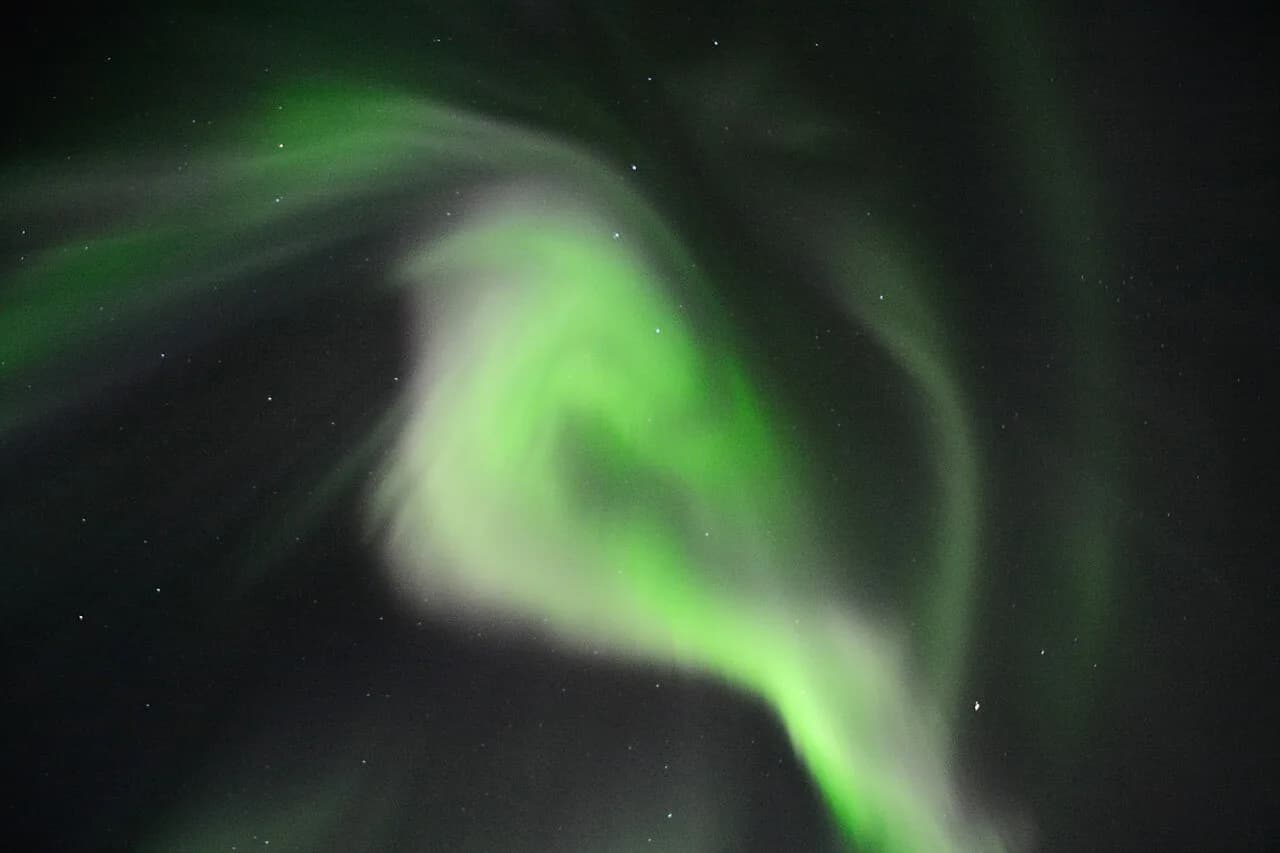
Darkness is the other half of the equation. In autumn and spring the nights are long but not endless, which leaves daylight for safaris; around midwinter the balance flips and the sky is dark for most of the day. Aurora forecasts and Kp values are guidance only — they describe geomagnetic activity, not whether cloud will clear over your specific bed, so a high Kp reading under overcast skies still gives you nothing.
When the aurora season runs in Saariselkä
The aurora season here spans roughly late August and September through March, which is when nights are dark enough for displays. September and March are the sweet spots for travelers who want dark nights and usable daylight in the same trip; December and February bring the deepest darkness and the coldest conditions. Snow cover builds through the autumn, and by midwinter the landscape is fully white, which reflects what light there is and helps with orientation on night walks.
A glass igloo is most comfortable when outside temperatures are cold enough for crisp, clear air but not so extreme that you spend the night monitoring the heating. Late autumn and early spring give you longer active days to fill and still-dark nights; deep winter suits travelers who want the full polar-night atmosphere and are content to sleep late. Whichever window you choose, leave at least a few nights so a cloudy stretch does not use up your entire stay.
Kakslauttanen Arctic Resort: glass igloos and Kelo-glass cabins
Kakslauttanen Arctic Resort is the property most travelers picture when they search for glass igloos in Saariselkä. It offers thermal glass igloos as well as Kelo-glass cabins, which combine a log cabin with a glass-roofed section, and its room inventory includes a large glass igloo of about 35 square meters in the West Village as well as multi-bed Kelo-glass units. In the basic igloo category there is a toilet but the shower is shared, so the room category you pick directly changes your bathroom arrangements.
The resort is known for glass igloos, Santa's Home and husky safaris, and it sits in the forest outside the village center rather than in the middle of it. Reviews consistently describe it as an expensive resort, with accommodation, food, drinks and services priced accordingly. If budget matters, treat a single glass-igloo night here as the splurge and spend the rest of the trip in a cabin or a cheaper village hotel.
Northern Lights Village Saariselkä: aurora alarms and cabins
At Northern Lights Village Saariselkä the draw is the aurora alarm system, which wakes guests when the lights appear, plus full-board meals and private hot tubs in some categories. An alarm is a convenience, not a forecast: it only helps once the sky is actually clear, and it works best when you are genuinely able to get up in the middle of the night. Travelers who sleep deeply or travel with small children should weigh an alarm against a cabin close enough to step outside in seconds.
Full-board packages remove the need to plan restaurant meals each evening, which matters in a village where the dinner window can be short in midwinter. The trade-off is less flexibility to eat in town or try a different kitchen on a whim. Check what your specific room category includes before comparing rates, because meal plans and hot tubs are tied to particular bookings rather than the resort as a whole.
Star Arctic Hotel: hillside suites and ski access
Star Arctic Hotel sits up on the fell above the village, with a modern design, panoramic igloo suites and ski-in, ski-out access. Elevation and distance from the center are real advantages for aurora watching, since you look over the village glow instead of through it. The flip side is that a hillside location means more dependence on a shuttle or your own transport for dinners and tours, especially in deep snow.
The panoramic suites here suit travelers who want a full room with a view rather than a dedicated glass pod, and ski access makes it a natural base for a mixed ski-and-aurora trip. If you plan to spend your days on the trails and your nights watching from the room, the hillside position pays off. If you want to be steps from restaurants and departure points, factor the extra transfers into the decision.
Aurora Collection Saariselkä and Wilderness Hotel Muotka
Aurora Collection Saariselkä positions itself around luxury, an outdoor jacuzzi and an exclusive location, which appeals to travelers who want the igloo experience wrapped in hotel-level service. Wilderness Hotel Muotka takes the opposite approach: a secluded wilderness setting, guided aurora tours and a cozy cabin atmosphere, with more of the night spent actively out in the terrain. Choosing between them comes down to whether you want the sky from a hot tub or from a sled on a guided chase.
Muotka's seclusion is a genuine advantage on a clear night and a genuine drawback on a cloudy one, when the guided tours become the main plan rather than a backup. Aurora Collection's outdoor jacuzzi is a comfortable way to wait for a gap in the cloud, though it is no substitute for a drive away from any light. Both work well as the comfortable half of a split stay with a single glass-igloo night elsewhere.
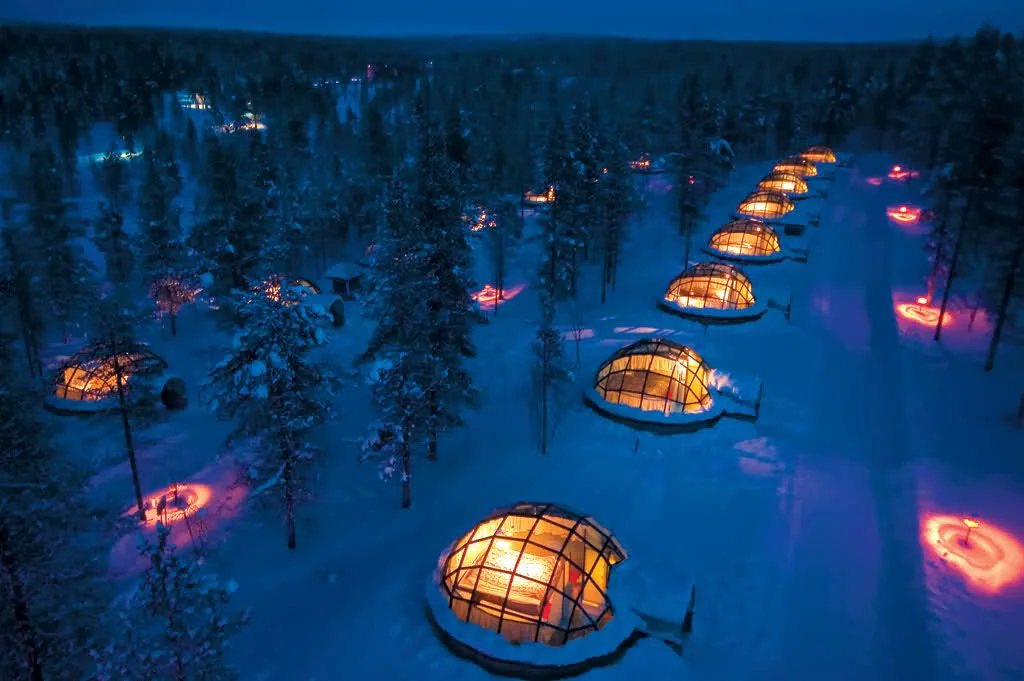
Glass roof or full cabin: heat, glare and curtains
A glass-roofed pod is built for looking up: the whole point is an unobstructed view of the sky from bed, and heated glass keeps the roof clear of frost and snow. The same design brings trade-offs — solar gain and glare in the brighter months, warmth that can make sleeping under glass stuffy, and less floor space and storage than a cabin. Properties address privacy with curtains or frosted glass sections, so you still get a view while changing or reading.
A Kelo-glass or aurora cabin gives you a log-walled bedroom with a glass section, which means real space, a proper door and usually a private bathroom. That matters for families, light sleepers and anyone staying more than one night. If you want the sky above the bed for the whole night, book the pod; if you want to sleep well and step outside to watch, the cabin is the better instrument.
Shared versus private bathrooms and showers
Bathroom arrangements vary by category rather than by resort, so read the room description before booking. At Kakslauttanen, the basic igloo category has a toilet but a shared shower, while larger glass igloos and Kelo-glass cabins come with more space and fuller facilities. Travelers who value a private shower at 3 a.m. after a cold night out should pay for the category that includes one rather than assume every glass roof comes with it.
Shared facilities are normal in Arctic accommodations and are usually clean and warm, but they add a walk through the cold between your bed and the shower. In deep winter that is a practical detail, not a comfort quibble, especially with children. Match the bathroom to how you actually use a hotel night, and treat the glass roof as a separate decision from the plumbing.
Aurora alarms and wake-up services
Many resorts here provide an aurora alarm that notifies guests when the lights appear, which lets you sleep through the early part of the night instead of staring at the ceiling. The alarm cannot create clear sky, so it is only as useful as the forecast is favorable — under solid overcast it will stay quiet. Ask how the alarm reaches you and how much time you have to get outside once it sounds; the answer shapes whether the night feels restful or restless.
An alarm is most valuable in a village property where you might otherwise sleep through a display, and least valuable in a wilderness cabin where you are already outside with a guide. Pair it with your own habit of glancing out whenever you wake, since a quick look costs nothing. Never treat the alarm as a promise: a quiet night means cloud or weak activity, not a failed holiday.
Meals, thermal suits and what a package includes
Igloo resort bookings here usually include breakfast and dinner in the package, with lunch as an extra purchase, so the meal plan is often baked into the rate rather than optional. Some properties, including Northern Lights Village, run full-board arrangements, which simplifies a short winter stay. When you compare two rates, check whether meals, transfers and a hot tub are included, because the headline number rarely tells you the full cost.
Night tours in the region typically lend thermal suits and boots for the duration of the outing, which is why a glass-igloo stay does not require a suitcase full of expedition gear. The included extras differ by safari company, so check the tour details when you book whether your outing covers suits, boots, hot drinks and photography. The room itself is heated and insulated, so the cold is something you dress for in short bursts rather than all night.
Combining an igloo night with husky, reindeer and snowmobile safaris
Activity providers around Saariselkä run northern lights tours by bus, reindeer sleigh and snowmobile, plus husky sledding safaris, ice fishing on frozen lakes, cross-country skiing and Finnish sauna sessions. Snowmobile safaris are typically offered in blocks of a few hours depending on the duration you choose, which makes them easy to fit around a night in a glass igloo. A reindeer sleigh ride is the slower, quieter option and suits travelers who want the landscape rather than speed.
Build the itinerary so your glass-igloo night falls after a day when you are not exhausted, since the whole appeal is being awake enough to look up. A guided chase on the cloudiest night and a pod night on a clearer one is a sensible split, and a sauna in the late afternoon sets up a long evening well. Keep at least one buffer day so a cancelled safari can be rebooked without losing the rest of the trip.
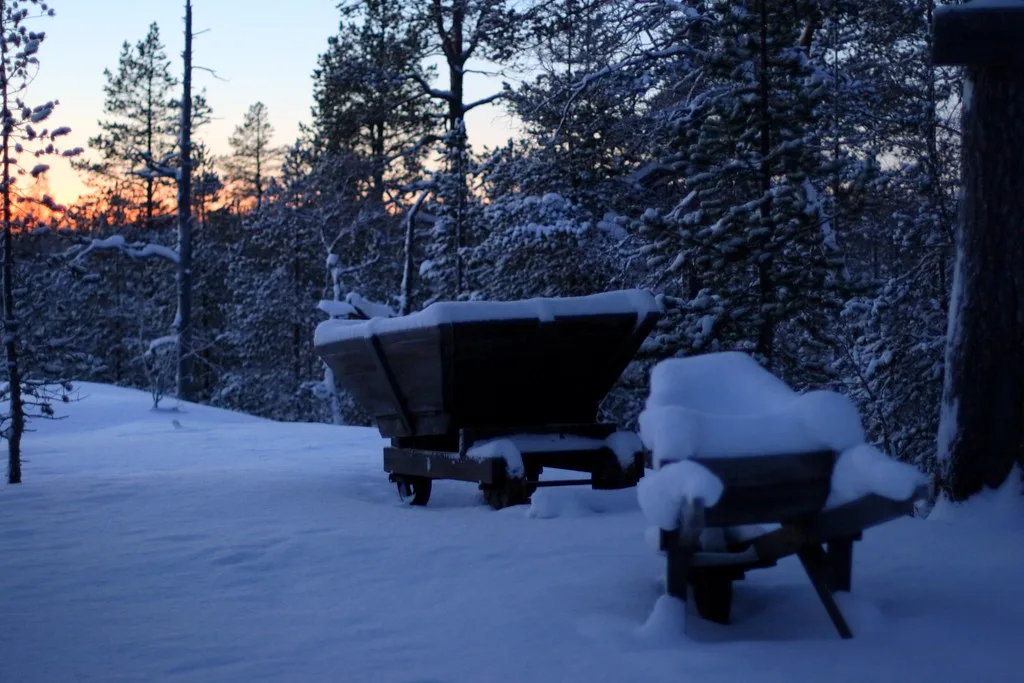
Village light pollution versus the fells and trails
The village center is small but bright enough to wash out faint aurora near the horizon, so where you sleep changes what you see. Properties on the fell, in the forest outside the center and in secluded wilderness settings have a darker sky than a bed beside the main street. If you book in the center, plan to walk or drive a short distance toward Urho Kekkonen National Park's edge for a darker view.
The fell trails above the village are the classic local answer to light pollution: a short climb puts the village glow behind you and opens the northern horizon. In midwinter you need a headlamp and a route you already know, since the trails are unlit and the daylight window is short. Snow-covered trees and open fell tops give you natural framing, and the reflected light from snow helps you move safely.
How many nights to give yourself a fair chance
Three nights is a sensible minimum for a glass-igloo trip, and five gives you real resilience against a cloudy spell. No property here can promise a sighting, and the resorts' own promotional percentages are marketing rather than a forecast for your dates. What you can control is the number of nights, the number of locations you can watch from, and whether you have a vehicle or a guide to chase clear sky.
A useful pattern is two or three cabin nights on either side of one glass-igloo night, with a guided tour booked for the first full evening. That way a cloudy arrival does not waste the pod, and a clear arrival gives you an early win before the splurge night. If your trip is short, put the igloo night in the middle rather than at the end so a cancellation or a cloudy forecast leaves you time to rearrange.
Booking lead time and price expectations
Winter igloo stays sell out six to twelve months ahead, so the practical booking window for a February or March trip opens in the previous spring. Rates at the long-established forest resort are described as expensive for accommodation, food, drinks and services, and a glass-roof night is the premium item in any Saariselkä itinerary. Get a written quote from the property that includes meals, transfers and any hot tub or suite upgrade before you commit.
Prices change by season and category, so the property's own booking page is the only reliable figure for your dates. Compare like for like: a shared-shower pod, a large glass igloo and a Kelo-glass cabin are three different products with three different rates. Factor in airport transfers from Ivalo and at least one guided night tour when you build the budget.
Saariselkä versus Ivalo and Rovaniemi for an igloo stay
Ivalo is the airport town closest to Saariselkä and works as a practical arrival point rather than a base for a glass-igloo night, since the village offers the denser cluster of resorts and activities. Rovaniemi is roughly three hours away by road and brings a bigger city, more restaurants and its own Santa-focused attractions, but it adds transfer time to any eastern Lapland stay. For a trip built around sleeping under glass in quiet terrain, Saariselkä is the more efficient base.
For a broader survey of roof styles and resorts across the region, including properties such as Arctic SnowHotel & Glass Igloos, compare options before settling on Saariselkä. Travelers who want a city add-on can finish in Rovaniemi after the igloo nights rather than splitting the aurora portion of the trip. Keep the dark-sky nights together so you are not spending clear evenings in transit.
Who each property suits
Kakslauttanen suits travelers who want the classic forest igloo and are willing to pay for it, with Kelo-glass cabins for families and groups who need space. Northern Lights Village suits anyone who values an aurora alarm, full-board simplicity and a hot tub, while Star Arctic Hotel fits skiers who want a hillside view. Aurora Collection leans luxury and jacuzzi comfort, and Wilderness Hotel Muotka fits travelers who would rather be out on a guided chase than in a pod.
Travelers on a tighter budget should consider one glass-igloo night plus cheaper cabin nights, or a village hotel with a short walk to dark trails. Couples celebrating something specific will get more from a suite with a private jacuzzi, while families should prioritize a cabin with private facilities and space. Whatever you choose, book the property for its location and facilities, then let the sky do what it does.
Plan Your Visit
Decide first whether you want sky directly above the bed or a cabin you step out of, because that choice drives everything else about a Saariselkä igloo stay. Then pick the location — fell, forest edge or village — based on how much light pollution you are willing to trade for convenience. Book six to twelve months ahead for winter dates and confirm what meals, transfers and bathroom arrangements come with the exact room category.
Give the trip at least three nights and one guided chase, and treat a single glass-igloo night as the highlight rather than the whole strategy. Clear skies and solar activity decide the show, and no resort can control either. With a sensible number of nights and a flexible plan, the odds of a memorable night out under the fells improve without any promise attached.
Frequently Asked Questions
Are there glass igloos in Saariselkä?
Yes. Saariselkä and its surrounding forest are home to several resorts built around glass-roofed accommodation, including Kakslauttanen Arctic Resort, Northern Lights Village Saariselkä, Star Arctic Hotel and Aurora Collection. Room styles range from compact thermal glass igloos to log cabins with a glass-roofed section, so read the category carefully before booking.
Do glass igloos in Saariselkä warm up in winter?
The igloos are insulated and heated, and heated glass keeps the roof clear of frost and snow. Expect a warm room rather than a cold one, and read the room description for details on curtains or frosted sections that give privacy while keeping the view.
Do glass igloos in Saariselkä have private bathrooms?
It depends on the room category. At Kakslauttanen, the basic igloo category has a toilet but a shared shower, while larger glass igloos and Kelo-glass cabins come with more space and fuller facilities. Check the exact category if a private shower matters to you.
Do igloos in Saariselkä have aurora alarms?
Many resorts provide an aurora alarm that notifies guests when the lights appear, and some properties run full-board packages alongside it. An alarm only helps once the sky is clear, so treat it as a convenience rather than a forecast. Ask how the alert reaches you and how much time you have to get outside.
What is the best month for a glass igloo stay in Saariselkä?
The aurora season runs roughly from late August and September through March, when nights are dark enough for displays. September and March balance dark nights with usable daylight, while December and February bring the deepest darkness and coldest conditions. Whichever month you pick, allow several nights so a cloudy stretch does not use up the trip.
How far is Saariselkä from Ivalo Airport?
Saariselkä sits a short transfer from Ivalo Airport in eastern Finnish Lapland, and roughly three hours by road from Rovaniemi. Most travelers fly into Ivalo and transfer to the village, then use it as a base for night tours and fell trails.
How early should I book a glass igloo in Saariselkä?
Winter igloo stays are in high demand and commonly sell out six to twelve months ahead, so the practical booking window for a February or March trip opens in the previous spring. Booking early also gives you more choice of hillside and fell-edge locations rather than whatever remains in the village center.
Sources
Notes for your Arctic winter trip
Optional updates to our northern lights guides.
You might also like
Continue reading
More guides you'll find useful