Swedish Lapland Reindeer Safari: Sleigh Rides and Sami Farms
Plan a reindeer safari in Swedish Lapland: how sleigh rides work, when dark aurora nights run, which bases to choose and how long to allow.
On this page
A reindeer safari is the quietest way to travel through Swedish Lapland's winter forest: a single animal pulling a wooden sled at walking pace, snow muffling everything around you. It suits travellers who want herding culture and landscape rather than speed, and it works equally well as a daytime outing or as an after-dark hunt for the aurora. Because the pace is slow and the route usually stays close to a farm, a sled is a calm introduction to Arctic winter for families and first-time visitors alike.
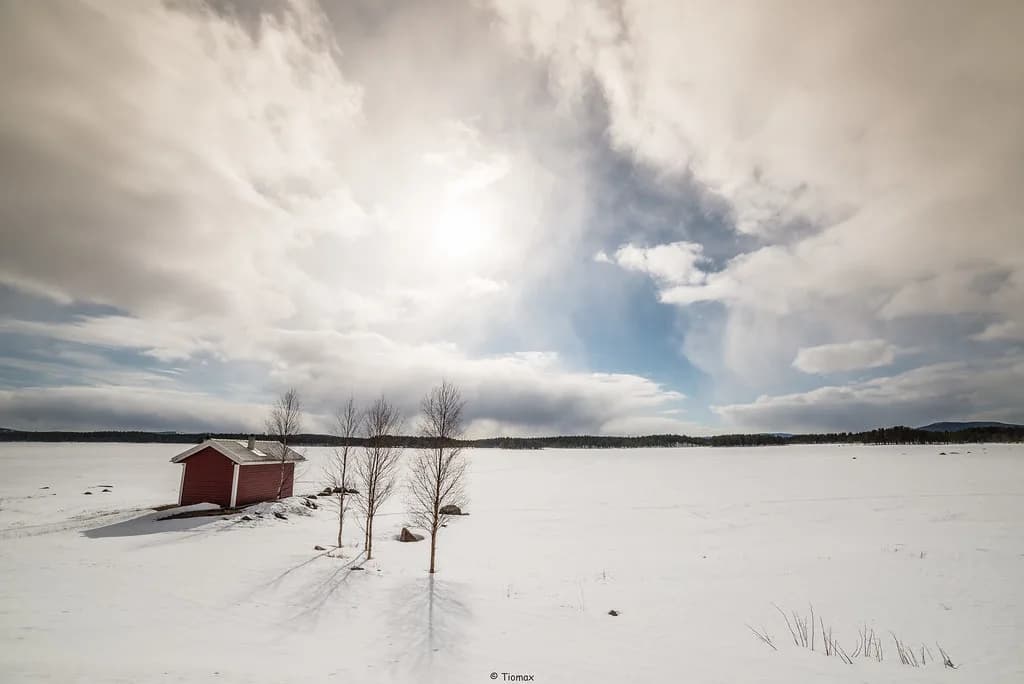
The region sits well north of the Arctic Circle, so winter nights are long and genuinely dark, and snow cover holds from late autumn into spring across the inland forests around Kiruna and Jukkasjärvi. That combination of latitude and snow is what makes a sled ride here feel like a proper expedition rather than a theme-park loop. Use the wider northern lights in sweden planning guide to line up your dates, then come back to the specific question of which safari and base fit your trip.
Why Swedish Lapland suits a reindeer safari
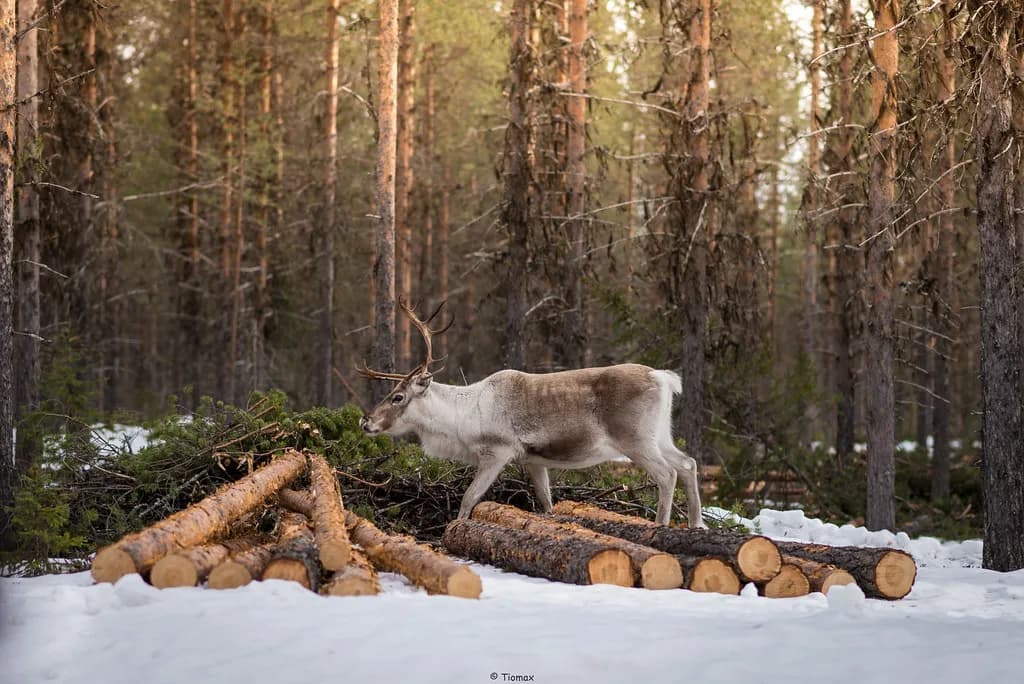
Reindeer husbandry is a living industry across northern Sweden, and safari operators work with herders whose families have kept animals for generations. Inland Swedish Lapland around Kiruna and Jukkasjärvi gets reliable snow and long, cold winters, while the mountains toward Abisko National Park trade some of that shelter for clearer, drier air. That split matters when you choose a base: the forest gives you sheltered sled tracks, the mountain gives you a better shot at open sky. If you are weighing a border crossing, the same forest-versus-mountain decision shapes any trip chasing northern lights in Finnish Lapland.
Latitude does most of the work. Kiruna and Jukkasjärvi sit above the Arctic Circle, where the sun barely clears the horizon in midwinter and the auroral oval passes overhead on most nights. The aurora is never guaranteed, because cloud and solar activity decide what you actually see, but a dark location at this latitude removes the two problems that ruin viewing farther south. Kp values are a rough guide to geomagnetic disturbance rather than a forecast of what appears above your head.
When the reindeer and aurora season runs
Snow-dependent sledding generally starts once the ground is properly covered inland, which in Swedish Lapland usually means December at the earliest and often later for longer routes; late-season riding can continue into April as snowpack holds in shaded forest. Operators publish their own opening and closing dates each year, and those vary with snow depth rather than a fixed calendar. Book the middle of the season if a long sled route is the priority.
The aurora window is wider than the sledding window. Dark enough skies return to northern Scandinavia from roughly late August, and nights stay dark enough for viewing until early April, so September and March sit in a sweet spot where you get both reasonable daylight and long dark nights. Because the aurora needs darkness rather than deep snow, you can chase northern lights in sweden well before the sled season opens or after it closes. Keep the two bookings separate in your planning so a closed sled track does not wreck an otherwise well-timed aurora trip.
Daylight, snow and temperatures month by month
From November the sun sits very low, and by midwinter around Kiruna and Jukkasjärvi there is only a few hours of twilight rather than full daylight, which is why midday sled rides can feel like dusk. February and March bring noticeably longer days and often the most comfortable riding conditions, with brighter light on the snow and still-deep tracks in the forest. September and October are darker but often short on snow, so treat early-season trips as aurora-first rather than sled-first.
Temperatures inland routinely sit well below freezing for months, and cold snaps in January and February can be severe, so sled operators schedule around conditions rather than a fixed timetable. Weather and road data from SMHI are the sensible places to watch forecasts in the final days before you travel. Plan your days around short winter daylight and keep the evenings free for sky watching.
How a reindeer safari actually works
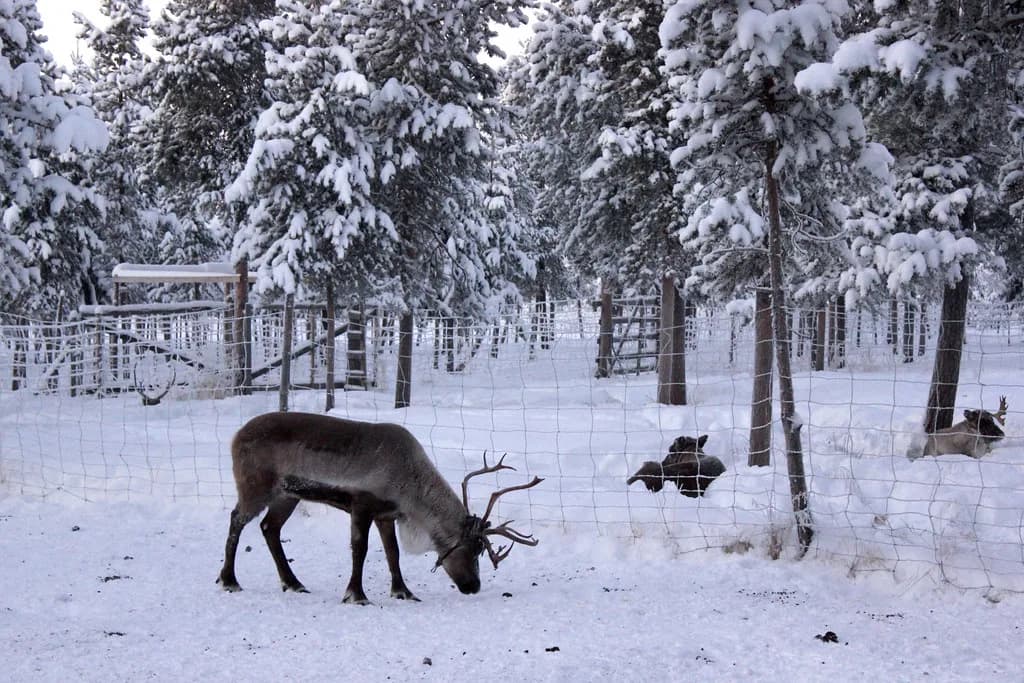
A typical safari begins at a farm with an introduction to the animals and the herding year, then moves to harnessing before you set off along a marked forest trail. Guests usually travel two to a sled and, where snow conditions allow, can take turns steering and riding as a passenger. The pace is walking speed, with stops for photographs and a fireside break partway round. Ask before booking how much of the total time is spent in the sled itself, since transfer time and farm time often add up to more than the ride.
Sami-run reindeer herding experiences and the culture behind them
Some Swedish Lapland operators run their safaris directly with Sámi herding families, which means the visit centres on the working year: calving, marking, moving animals between seasonal pastures and the practical knowledge that goes with it. These experiences often include a joik, a story or an explanation of how herding rights and land use work in Sweden. Choose one of these if you want the culture explained by the people who practise it rather than staged for visitors.
Other farms are Finnish or Swedish family businesses without Sámi connections, and that is not a lesser experience, just a different one. Reputable operators are explicit about who runs the farm, so read the tour description for the words Sámi-owned, family-run or herding family rather than relying on imagery of colourful dress. Around the Jokkmokk winter market season you also get a concentrated dose of Sámi craft and culture alongside the winter travel.
Aurora sleigh rides after dark versus daytime forest rides
A daytime ride is about the forest, the animals and the light: you see the trail, the snow-laden trees and the working farm, and photography is easy. An after-dark aurora sleigh is a different product, run in genuine darkness with the sled moving slowly and quietly through open terrain or along a forest edge, and it depends entirely on cloud cover and solar activity for what you see. Neither version promises a sighting, and a good operator will say so plainly.
The slow pace of a sled is an advantage at night, because a reindeer does not roar, rattle or throw up a plume of exhaust the way a snowmobile does. That silence helps you hear the forest and keeps the sky unobstructed above a low sled, which is exactly what you want if the aurora appears. Pick the night ride only if you are comfortable sitting still in serious cold for an extended period, and keep a separate clear-weather evening free as backup.
Where safaris run: Kiruna, Jukkasjärvi and the Icehotel area
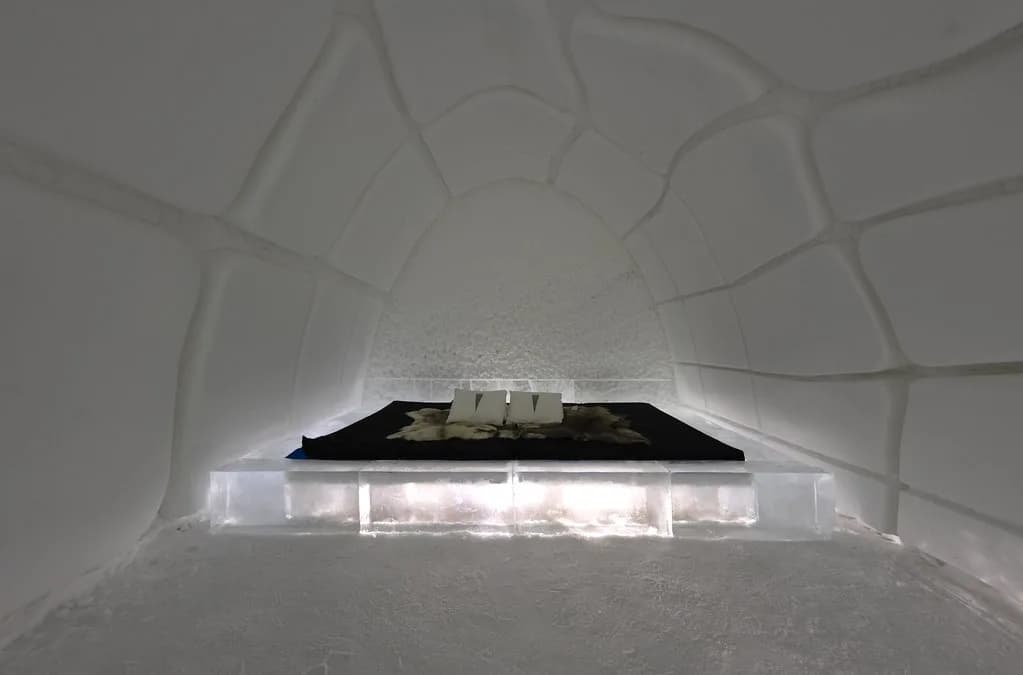
Kiruna is the main gateway, with the airport, the train station and the widest choice of operators and transfers, so it suits travellers who want options and easy logistics. Jukkasjärvi, a short drive east on the Torne River, is the base for the icehotel sweden experience and has farms and kennels nearby, which makes it convenient for pairing a sled ride with a night in a cold room. Book your Icehotel Jukkasjärvi stay and safari together where possible, since transfers between the two are the fiddly part.
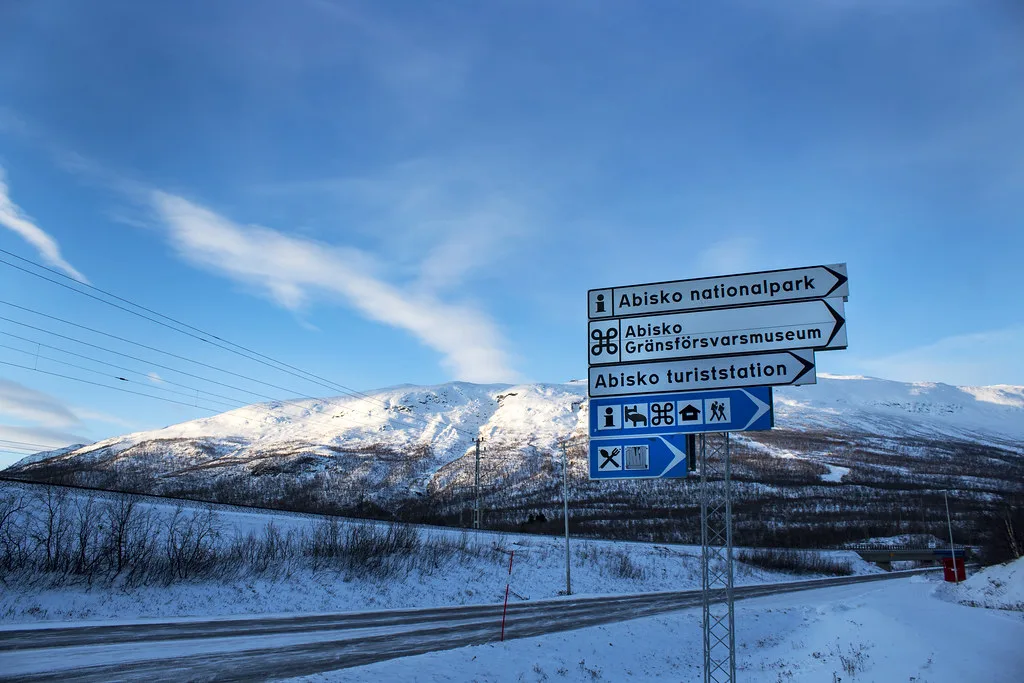
If clear skies matter more than convenience, head west toward Abisko, where the mountain climate produces some of the driest, clearest winter air in Scandinavia and the Aurora Sky Station gives you a lift above the valley. The trade-off is that Abisko is a long transfer from Kiruna and has fewer reindeer operations on its doorstep, so many travellers split the trip: sledding and Icehotel nights in the east, then a few dark nights in the mountains. Tourist offices in Kiruna and Abisko can point you to operators currently running safaris.
Snow depth and river ice decide which trails open and when, and the Torne River freezes hard enough for snowmobile and sled traffic only after a sustained cold spell. Ask your operator which route they expect to run in your week, and favour farms with more than one trail so a single closed section does not cancel your ride. For a broader look at conditions and bases across the region, see this guide to swedish lapland in winter.
Bases and lodges that pair well with a reindeer safari
In Jukkasjärvi, Icehotel Sweden Guide covers the cold rooms, the warm cabins and the ice bar in one place, and staying there puts you minutes from farms and kennels along the river. In Kiruna, town hotels and cabins near the station make early departures simple and keep you close to restaurants and shops. Farther west, mountain lodges around Abisko trade comfort for darkness and clear-sky odds.
Glass igloos and aurora cabins are popular in this region, and they are worth it only if you accept the trade-offs: warmth, condensation and interior light can all interfere with watching the sky from bed, and a heated glass roof is not the same as a dark field. A cabin with a wood stove outside town often gives you a darker sky and more space for the same or lower cost. If you want a night in a cold room for the experience, book one night and keep the rest warm and flexible.
Snowmobile, sled or walk-in access to farms
Most safaris include road transport from a central pickup point, and some companies collect you from your accommodation within a set radius for an extra charge or as part of the price. Longer transfers by snowmobile or sled to remote farms are sometimes offered as an add-on, which can be a good way to reach a darker location but adds cold exposure and cost. Confirm the meeting point and transfer time when you book, because a farm 40 minutes out of town changes how your day fits together. Ask whether the transfer vehicle is heated and whether thermal suits are provided for the ride.
What is included: thermal suits, food and photos
Standard inclusions on Swedish Lapland safaris are usually the guided ride, a farm visit, hot drinks and something cooked over an open fire, with thermal suits and boots lent by the safari company for the duration. Photography is often left to you, though some companies take pictures and share them afterwards; ask if that matters to you. Transport from town is common but not universal, and pickup from remote lodges may carry a surcharge.
Read the inclusions list line by line, because a cheap safari without transfers or warm clothing can end up costing more than a slightly pricier all-in option. Meals range from sausages and pancakes by the fire to a full lunch, so check whether you need to eat beforehand. If you are travelling with children, ask what clothing sizes the safari company stocks.
Group sizes, minimum ages and durations
Small-group safaris in this region often cap at around eight guests, which keeps the farm visit personal and the sled queue short; larger coaches do run from Kiruna in peak season. Minimum ages vary with the length of the ride and the cold, and a two-hour sled in deep winter is a different proposition for a young child than a short loop near the farm. Check both the age limit and the total duration rather than the ride length alone. A five-hour tour may include only two hours in the sled, with the rest spent on transfers and at the fire.
Prices and how to compare operators fairly
Prices in Swedish Lapland vary widely with ride length, group size, transfers and whether a meal is included, and they change with the season and demand. Compare like with like by lining up four numbers: minutes actually spent in the sled, total tour duration including transfers, maximum group size and what is included. A longer ride with a fire meal and hotel pickup is not directly comparable to a short farm loop, even when the headline price looks similar.
Published prices from nearby Finnish Lapland give a sense of the range for a long sled safari, where a seven-kilometre ride of around two hours in the sled, with transfers, winter clothing and fireside snacks, runs about five hours in total. That level of detail is what a fair comparison looks like. Ask each Swedish safari company for their equivalent breakdown. Book through the company's own site so the terms, cancellation policy and meeting point are clear.
Shorter rides are widely sold from Santa Claus Village and other hubs on the Finnish side of the border, and they typically offer a 30-minute sleigh ride inside a longer wilderness outing. That format is a useful benchmark for what a brief taster looks like, though Swedish Lapland operators set their own lengths and inclusions. Ask for the ride length in kilometres or minutes rather than accepting a vague description.
Reviews help you judge pace and organisation rather than price, and guests consistently value rides that feel unhurried over ones that rush the loop. Read recent reviews for comments on group size, guide knowledge and whether the sled time matched the description. Treat star ratings as a rough signal and look for specifics about the farm and the animals.
Where an operator does not publish a price, request a written quote with the inclusions itemised. That protects you if transfers, clothing or meals turn out to be extras on the day.
Self-guided aurora watching versus a guided night
A guided aurora night adds a driver who follows the cloud forecast, a warmed vehicle and local knowledge of where the sky clears, which is genuinely useful in a region where conditions change fast. Self-guided watching costs nothing beyond your car or a taxi and gives you the freedom to sit at a dark trailhead or frozen lake for as long as you like. The trade-off is that you take on the cloud-chasing yourself, and driving on winter roads at night needs care.
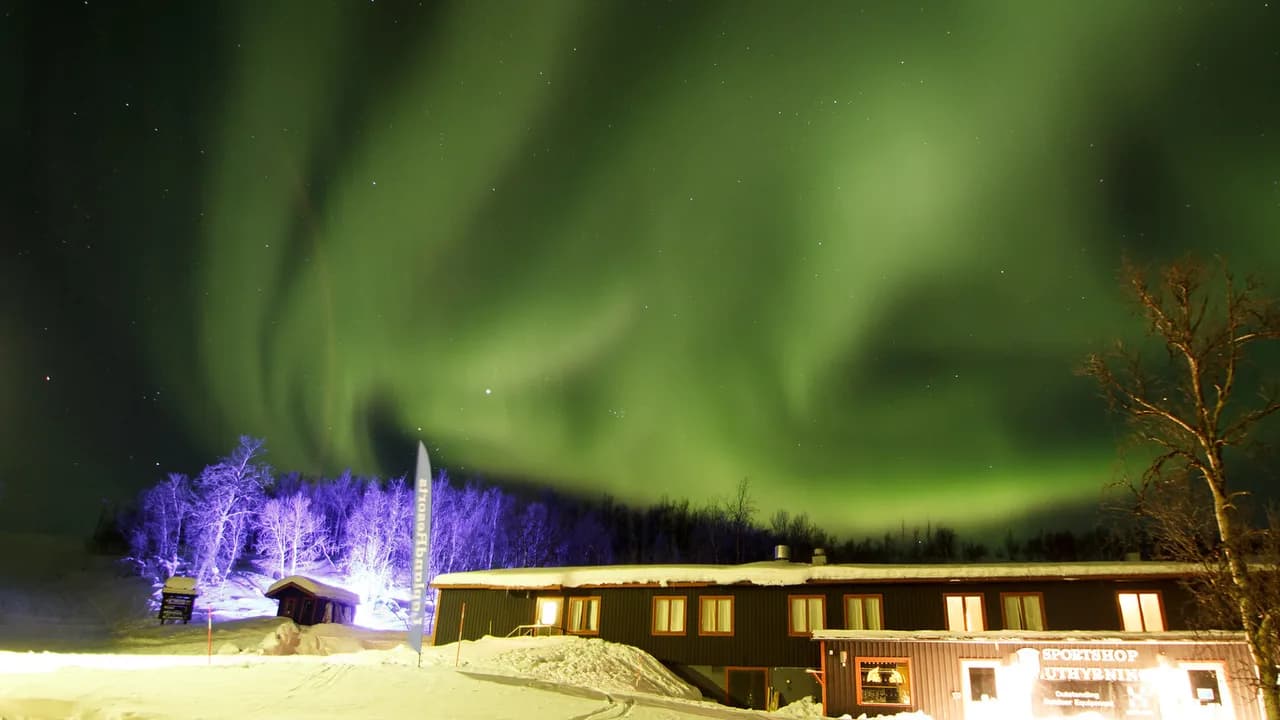
If you go it alone, pick a spot away from the lights of Kiruna and the floodlit Icehotel area, tell someone where you are going and keep the engine and heating available. A reindeer farm on the edge of the forest is often darker than the town centre, which is one reason an aurora sleigh can be a practical choice rather than a novelty. Combine the two: a guided night early in your trip to learn the local sky, then self-guided evenings afterwards.
How many nights to plan for a fair chance of clear skies
Cloud, not darkness, is usually the limiting factor, so the number of nights matters more than the number of tours you book. Three nights gives a fair chance in inland forest around Kiruna and Jukkasjärvi; four or five is better if the aurora is the main reason for the trip, and it gives you room to rebook a sled if a night is lost to weather. Around Abisko, the drier mountain climate improves the odds, but you still need several nights to be confident of a clear one.
Build flexibility into your itinerary: keep at least one evening unbooked, choose accommodation with a dark outlook and do not schedule your only aurora night for the last night of the trip. Solar activity adds another variable you cannot control, so plan for a range of conditions and enjoy the snow, the animals and the silence when the sky stays clouded. If the aurora is central to your plans, compare bases and seasons in the northern lights guide before booking anything.
Pairing a safari with husky sledding, ice fishing and saunas
A reindeer safari is gentle enough to pair with a more active day, and most travellers combine it with a husky sled, a snowmobile run on the river ice or a guided ice-fishing trip on a frozen lake. Dogsledding is faster and louder, reindeer sledding is slow and quiet, and doing both gives you a good sense of how Lapland moves in winter. Ice fishing adds a still, patient morning and a fire-cooked lunch on the ice.
End the day in a sauna, which is standard in Swedish Lapland lodges and the best way to warm through after hours outdoors. Many cabins and hotels have a wood-fired sauna, and some operators pair a sauna with a cold dip or a snow roll for the brave. Keep the sauna evening free of other bookings so you can linger, and leave a buffer before any early transfer the next morning.
Plan Your Visit
Book your reindeer safari around the middle of the snow season, keep several nights free for sky watching and choose a base that matches your priority: convenience in Kiruna or Jukkasjärvi, clearer skies around Abisko. Ask each operator for ride length, total duration, group size and inclusions before you pay, and treat any aurora sighting as a bonus rather than a promise.
Layering a slow sled ride, a night in a cold room and a sauna into the same few days gives you a rounded Arctic winter trip, and spreading your nights gives the weather room to cooperate. Check current availability and prices directly with the sled company, farm or hotel you book, and let the forecast decide which evening you spend outside.
Frequently Asked Questions
What is a reindeer safari in Swedish Lapland like?
It is a guided visit to a working reindeer farm followed by a sled ride through snow-covered forest, usually with two guests to a sled, a fireside break and an explanation of herding life. The pace is walking speed, so it suits families and travellers who want landscape and culture rather than adrenaline. Longer tours spend only part of the total time in the sled, with the rest taken up by transfers and the farm visit.
When can you do a reindeer safari in Swedish Lapland?
Sledding depends on snow, so most operators run from around December into April once trails are covered, and each farm publishes its own dates. Late February and March often give the best mix of deep snow and longer daylight. The aurora season is wider, running from roughly late August to early April.
Can you see the northern lights on a reindeer sleigh ride?
You can book an after-dark aurora sleigh, and the slow, silent sled with an open sky above is a good platform for watching, but sightings depend on cloud cover and solar activity. No operator can promise the aurora will appear. Keep a second clear evening free and check the forecast on the day.
How long does a reindeer sleigh ride last?
Ride lengths vary from about 30 minutes on taster tours to around two hours on longer forest safaris, and total tour time is usually much longer once transfers and the farm visit are included. Always ask for the sled time and the total duration separately so you can compare operators fairly.
Are reindeer safaris in Swedish Lapland run by Sami families?
Some are, and those tours usually explain the working herding year, land use and traditions directly with the family involved. Other farms are Swedish or Finnish family businesses without Sami connections, which is simply a different experience. Read each tour description to see who runs the farm and how the culture is presented.
How much does a reindeer safari in Swedish Lapland cost?
Prices depend on ride length, group size, transfers and whether meals are included, and they shift with season and demand. Ask for a written quote itemising clothing, transport and food, and compare those inclusions rather than the headline figure alone.
Where in Swedish Lapland can you book a reindeer safari?
Most safaris run from farms around Kiruna and Jukkasjärvi, with transport from town or from the Icehotel area. Abisko has fewer reindeer operators but clearer mountain skies, so many travellers split their stay between the two. Local tourist offices keep current lists of operators.
How many nights should I plan to see the aurora?
Three nights gives a fair chance in the inland forest, and four or five is better if the aurora is the main aim, because cloud is the usual obstacle. Around Abisko the drier mountain air helps, but you still need several nights to be confident of a clear one.
Sources
Notes for your Arctic winter trip
Optional updates to our northern lights guides.
You might also like

Continue reading
More guides you'll find useful