Polar Night in Swedish Lapland: What to Expect
Polar night in Swedish Lapland brings weeks of blue twilight, snow-bright afternoons and long aurora nights. See how the dark season shapes a winter trip.
On this page
Swedish Lapland's polar night turns midwinter into a slow, blue-lit season: the sun stays below the horizon, snow throws light back into the air, and the dark hours stretch long enough for serious aurora watching. It suits travellers who want landscape and night sky more than bright days, and who are happy to build sightseeing around a short window of twilight around midday.
The effect is strongest well north of the Arctic Circle, around Kiruna and the mountain villages toward Abisko, and milder at the circle itself, where the sun typically peeks above the horizon for a brief spell each day. Knowing which version of the dark season you are booking shapes where you sleep, when you schedule activities and how many nights you allow.
What polar night means above the Arctic Circle
Polar night is the period when the sun does not rise above the horizon at a given latitude, which is why its dates differ from place to place rather than falling on one shared calendar day. In Finnish Lapland the darkness generally settles in around December and runs into January, with the depth depending on how far north you are; communities near the Arctic Circle get a polar twilight with a short window of sun, while places much farther north stay darker.
That distinction matters in Swedish Lapland too. Kiruna sits well above the circle and experiences a proper stretch of sunless days, while bases closer to the circle see the sun skim the horizon for a brief period around midday. If you want the full effect, plan your stay in the northern part of the region rather than at its southern edge.
Why Swedish Lapland's polar night is blue, not black
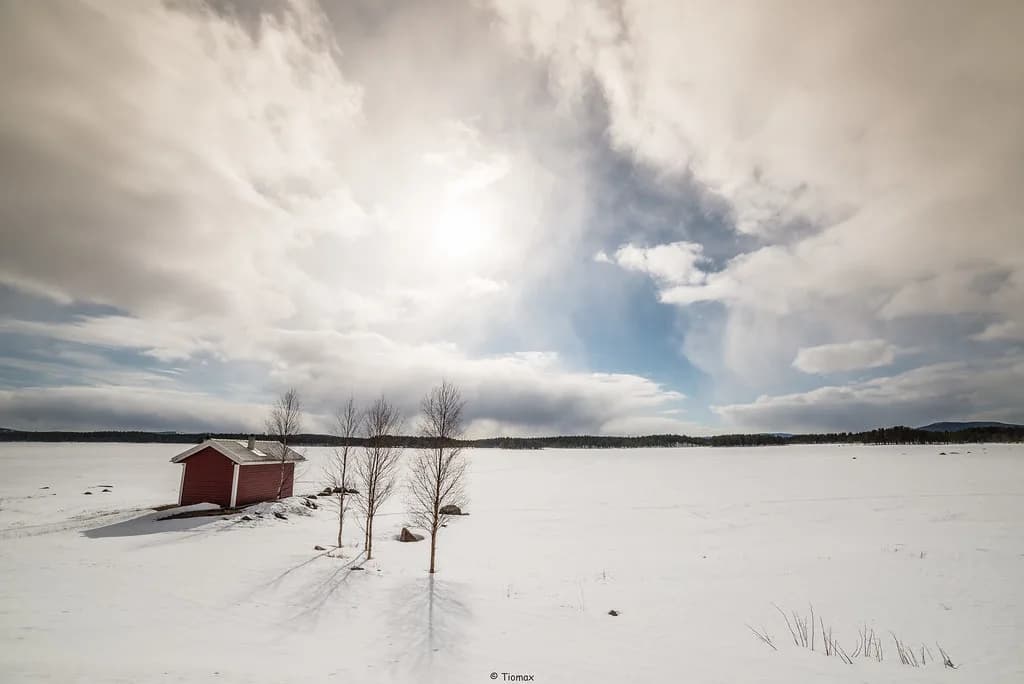
Even when the sun stays below the horizon, light still reaches the upper atmosphere and scatters into the pinks, oranges and deep blues that colour the middle of the day. Snow on the ground reflects that light and brightens the landscape, which is why northern Lapland can feel more luminous in midwinter than a snowless southern town.
Visit Rovaniemi describes the effect as a blue moment rather than a blue hour, so brief is the brightest part of the day in the heart of midwinter. Photographers should treat that window as their main shoot of the day and plan any outdoor activity, such as a snowshoe walk or a short ski, to sit inside it rather than at either end.
How latitude changes the darkness from Kiruna northward
Swedish Lapland stretches a long way from south to north, so the polar night is not one experience. Around Kiruna the sun disappears for a run of midwinter days, while farther north toward Abisko and the mountain border the sunless stretch lengthens and the twilight at midday grows fainter. Near the Arctic Circle the sun usually manages a short appearance even in late December. If you are weighing up bases, this guide to polar night in abisko explains what the sunless stretch feels like at the northern end of the region.
Treat latitude as your main planning lever: the farther north you base yourself, the deeper the dark season and the more of each day is available for aurora watching. The trade-off is weaker daylight for photography and outdoor activities, so many travellers split a trip between a northern base for nights and a more southerly stop for brighter days.
Daylight hours through the dark season
Through the dark weeks the usable daylight shrinks to a few hours of twilight around midday, and the brightest light comes in the middle of that window rather than at either end. Build your days around that: a late-morning start for a guided activity, a midday walk or photo session, and an early dinner before the night shift begins. Outside those hours you are travelling in twilight or full dark, which is exactly what aurora watchers want.
By late January the light is returning quickly, and by February and March Swedish Lapland has recognisable days again while still keeping long, dark evenings. That balance makes late season attractive if you want both daytime scenery and a real chance of night skies without committing to the darkest weeks.
When polar night starts and ends around the Arctic Circle
Start and end dates depend on latitude, so tie them to your specific base rather than to Swedish Lapland as a whole. Finnish sources put the core dark period around December into January for the far north, with communities closer to the Arctic Circle getting a polar twilight instead of full darkness. Use that as a rough frame and treat the exact dates for Kiruna or Abisko as location-specific.
For trip planning, late December and the first days of January give you the deepest darkness and the longest nights; the back half of January delivers noticeably more light. Book the deep weeks for aurora priorities and later weeks for a mixed itinerary of daytime activities and night watching.
Snow, temperature and cloud in midwinter
Midwinter in this part of Lapland means a settled snowpack and hard frost, with snow lying for roughly five months of the year in the Rovaniemi area just across the border, which sits on a similar latitude and climate band. Expect cold, dry air and crisp, clear spells that suit night photography, along with overcast stretches when cloud shuts down aurora viewing entirely.
Cloud is the variable that decides a night, not temperature, so build flexibility into your stay. A run of clear, very cold nights often follows a cloudy, milder spell, which is one argument for booking several nights rather than a single aurora tour on a fixed date.
Why polar night suits aurora watching
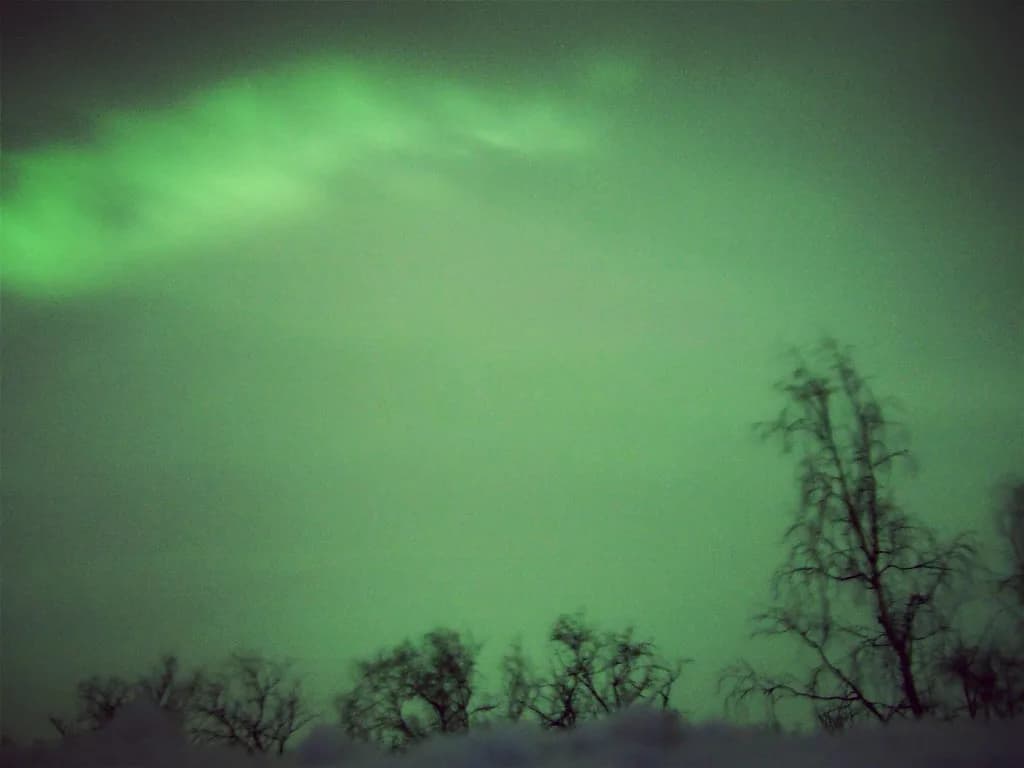
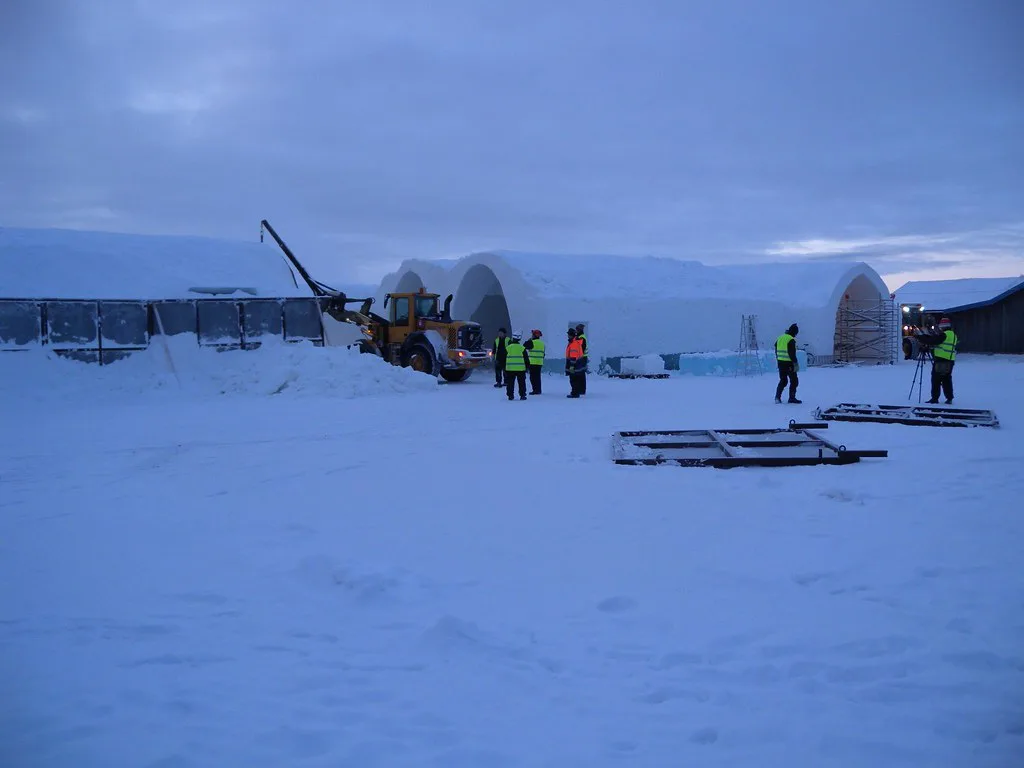
Aurora needs darkness, and polar night supplies it for most of the day, so you are not waiting for a late sunset before the sky is usable. Snow on the ground adds reflected light that helps with framing and makes the landscape readable in photographs, while the aurora itself can appear overhead even during what would otherwise be daytime hours.
The further north you go, the better the odds of catching a display, which in Swedish Lapland points toward Abisko National Park and the mountain corridor. None of this guarantees a sighting: solar activity and cloud cover decide each night, and even a well-placed base can go a week without a clear sky.
How to read aurora forecasts and Kp during the dark weeks
The Kp index summarises geomagnetic disturbance on a global scale, and it is useful guidance rather than a local verdict. A high Kp improves your odds in southern latitudes but tells you little about whether cloud will clear over your specific base, so read it alongside a cloud forecast for the spot you plan to stand in. Treat any prediction of a strong display as a reason to be outside, not as a promise.
Use the forecast to choose which nights to stay up and which to bank sleep, and keep your plans loose enough to switch a tour or a drive to the clearer night. In the deep weeks the dark window is long, so a display can arrive at almost any hour rather than only around midnight.
Where to find dark skies away from Kiruna and other towns
Town light spills upward and washes out faint aurora, so put distance between yourself and street lighting for the best views. Around Kiruna, a short drive out of the centre toward open country or up onto higher ground quickly reduces glare; near Abisko the national park setting gives you dark horizons with the lake and mountains as a backdrop.
Moonlight on snow is a factor few guides mention: a bright moon lights the landscape beautifully but dims faint aurora, while a new-moon window gives the darkest sky and the strongest contrast. Check the lunar phase against your dates and decide whether you want lit scenery or maximum darkness for the night sky.
Self-guided aurora chasing versus a guided night tour
Driving yourself gives you the freedom to follow a clearing sky and to stay out as long as you like, but it requires winter driving confidence on ice and snow and a willingness to navigate in the dark. A guided night tour removes that burden and usually brings local knowledge of back roads and viewing spots; operators typically run late into the night and often lend thermal suits for the cold.
If you are staying somewhere like Icehotel Jukkasjärvi, a guided night out can be the simplest way to combine a warm base with a dark-sky excursion, while self-drive suits travellers based in a cabin with a car and a flexible schedule.
Glass igloos, aurora cabins and warm hides
Sleeping under a glass roof is the classic polar-night indulgence, letting you watch the sky from a warm bed. The trade-offs are real: heated glass can frost or glare, interior light spoils your night vision, and the small footprint of an igloo leaves little room for a long stay, so many travellers pair one or two nights in a glass room with a cabin for the rest of the trip.
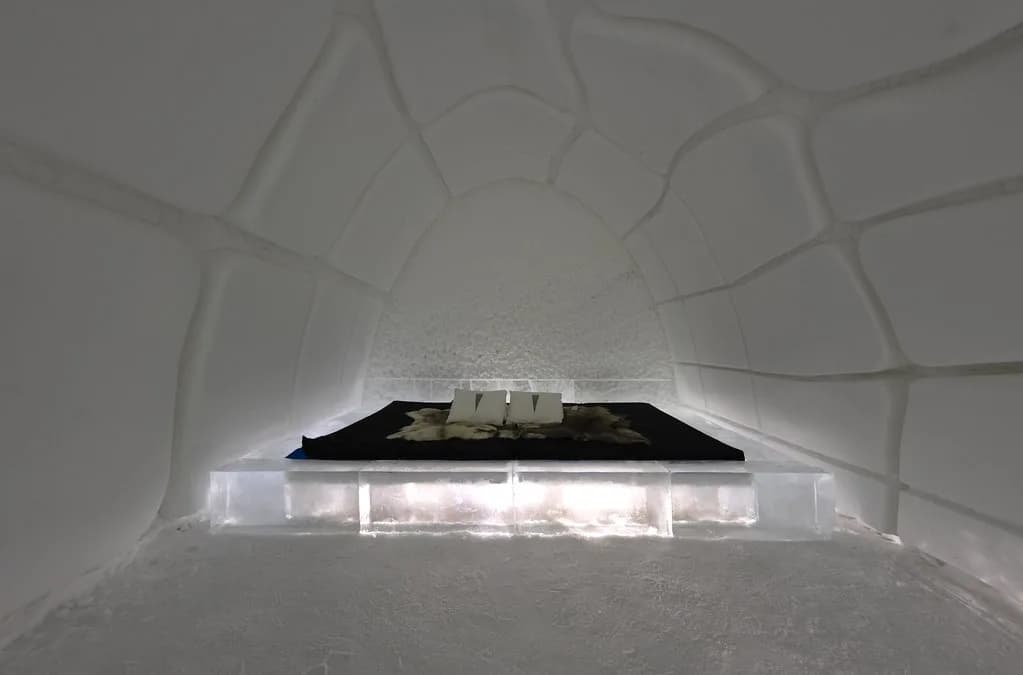
At Jukkasjärvi the Icehotel Sweden combines an art hotel built from ice with warm accommodation and a winter season that draws aurora watchers to the Torne River. Its seasonal rooms are cold by design, while the warm buildings and the year-round Icehotel 365 give you a comfortable fallback if a night turns cloudy.
A cabin with its own sauna and a dark garden is the other strong option: more space, more privacy and a viewing spot a few steps from the door. The trade-off is that you cede the curated setting and often need a car to reach shops, trails and tour pickups.
Winter activities that fit the short daylight
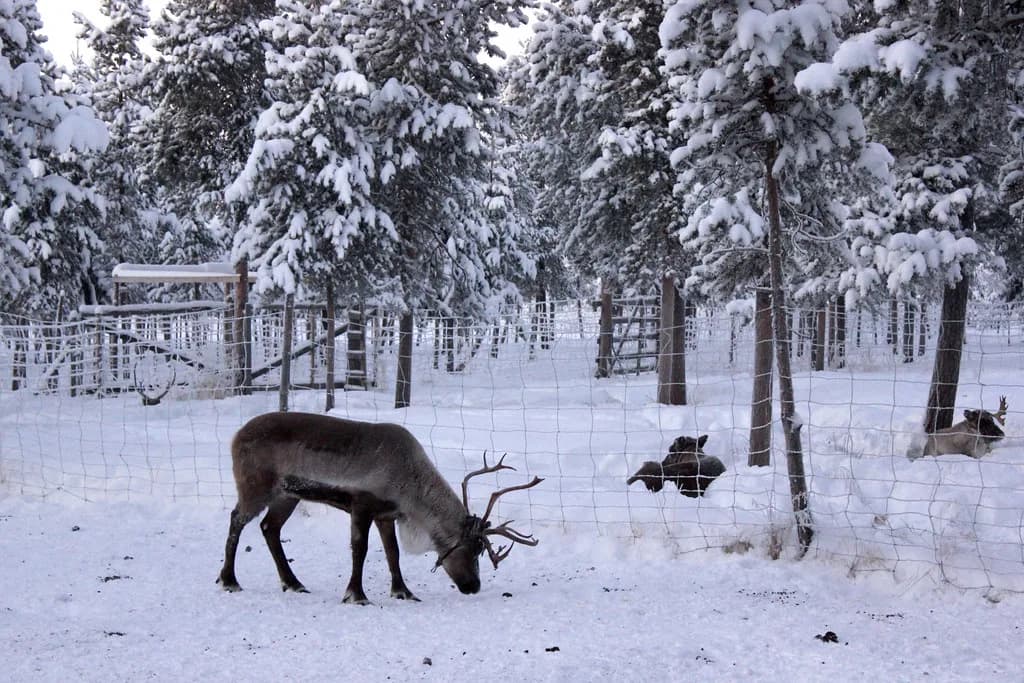
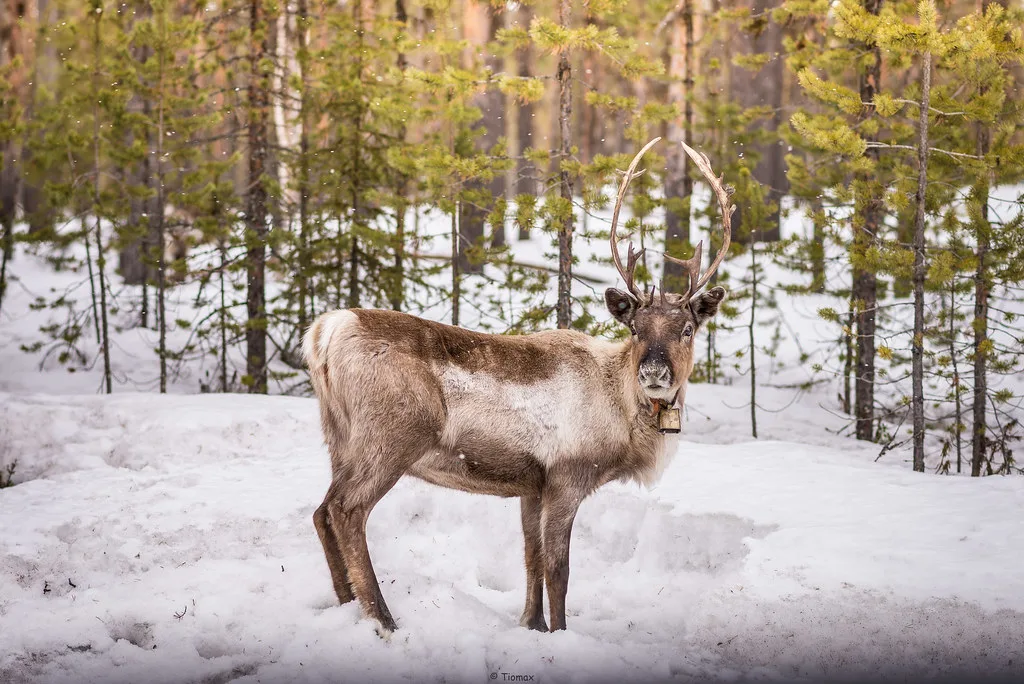
The polar night does not stop activity, it reschedules it. Snowshoeing, cross-country skiing, reindeer sledding and photography walks all work well in the blue hours, when the light is soft and the landscape reads clearly. Snowmobile safaris suit the twilight too, though they run on marked trails and ice with a guide for good reason.
Husky sledding is the standout for many visitors, and operators typically run morning and afternoon departures that fit inside the daylight window. For a broader picture of what the season offers, see this guide to Swedish Lapland in winter, which sets polar-night activities alongside the rest of the region's cold-season options.
How many nights to plan for a fair chance of clear skies
Cloud is the limiting factor for most aurora trips, so give yourself a run of nights rather than a single shot. Four to five nights in one place is a sensible minimum if the aurora is a priority, and a week gives you room for a cloudy stretch without losing the whole trip. Spread over two bases and you improve your odds of finding a clear sky somewhere.
Keep your itinerary loose: book activities for the blue hours and leave nights free for spontaneous watching, so a clear forecast can redirect your evening without cancelling something you paid for. If you are set on sleeping in glass, book that for the middle of the stay and keep the rest flexible.
Christmas and New Year in the dark season
Christmas and New Year fall inside the darkest stretch, which makes them atmospheric: snow-covered forest, candlelit cabins and long nights outside. They are also the busiest weeks, so accommodation and the marquee activities fill early and prices rise; book well ahead if those dates matter to you.
If you want the holiday atmosphere without the peak crowding, early January keeps the darkness and much of the snow while easing the pressure on hotels and tours. Either way, plan the holiday meals and transfers first, then build aurora nights around them.
Who the polar night suits and who should book later in the season
The dark weeks reward travellers who prioritise night skies, photography and quiet snowscapes over long days outdoors, and who are comfortable with a slow midday rhythm and cold temperatures. They suit couples and small groups staying several nights, and anyone who values the sense of a landscape suspended in blue twilight.
Book later in the season, from February into early April, if you want visible daylight for long ski days, easier temperatures and brighter photography, accepting that the nights shorten and you will spend more time waiting for dark. Family trips with young children often fit the later window better, since activities can run in proper daylight.
Plan Your Polar Night Trip
Choose your base by latitude first, then by bed: a northern position around Kiruna or Abisko for the deepest darkness, a glass room for a night or two and a warm cabin for the rest. Fix your daytime activities inside the blue hours and keep evenings free for the sky, whichever way you plan to watch it.
Allow four to seven nights, expect some cloud, and treat forecasts as guidance rather than a guarantee. With realistic expectations and a flexible itinerary, the polar night delivers the blue landscape and the long dark nights that make Swedish Lapland worth the cold.
Frequently Asked Questions
Does the sun really not rise during polar night in Swedish Lapland?
In the northern part of Swedish Lapland the sun stays below the horizon for a run of midwinter days, which is the true polar night. Closer to the Arctic Circle the effect is milder, with a short appearance by the sun around midday. The dates depend on latitude, so tie them to your specific base.
What is the blue moment in Lapland?
The blue moment is the brief brightest spell around midday in midwinter, when sunlight scattering in the upper atmosphere tints the snow and sky blue, pink and violet. It is the best window for photography and for outdoor activities during the darkest weeks.
Is polar night a good time to see the northern lights?
Yes, because darkness lasts most of the day and snow brightens the ground for viewing and photography. A sighting still depends on solar activity and clear skies, so plan several nights and stay flexible rather than counting on a single evening.
Should I stay in a glass igloo during polar night?
A glass-roofed room is memorable but comes with trade-offs: heated glass can frost or glare, interior light spoils night vision, and space is limited. Many travellers book one or two nights in glass and the rest in a warm cabin or hotel.
How many nights should I plan for aurora chances?
Four to five nights in one place is a sensible minimum if the aurora is your priority, and a week gives room for a cloudy stretch. Splitting the stay between two bases improves your chances of finding clear sky somewhere.
Can you do winter activities during polar night?
Yes. Snowshoeing, cross-country skiing, reindeer sledding, husky sledding and photography walks all run in the blue hours around midday, and snowmobile safaris operate in twilight with a guide. Schedule activities for the daylight window and keep nights free.
Where should I go for dark skies near Kiruna?
Drive a short distance out of town or up onto higher ground to escape street lighting, or head toward the Abisko area, where the national park setting gives dark horizons. A moonlit night lights the landscape but dims faint aurora, so the lunar phase matters.
Sources
Notes for your Arctic winter trip
Optional updates to our northern lights guides.
You might also like

Continue reading
More guides you'll find useful