Abisko National Park: Winter Aurora and Where to Stay
Abisko sits deep inside the Arctic Circle with dark winter skies and a mountain viewing station above the valley. Here is how to plan an aurora trip around it.
On this page
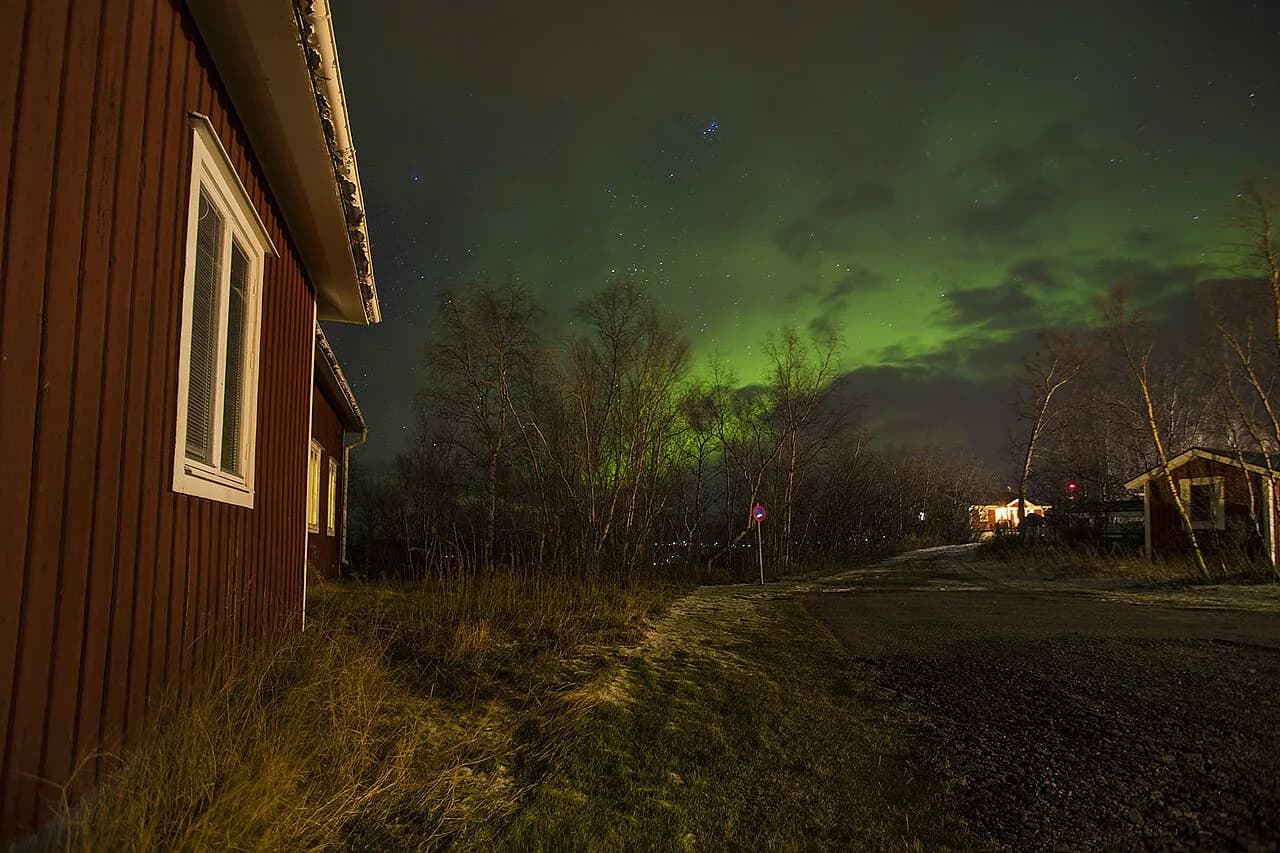
Abisko is a tiny sub-Arctic village at the head of Lake Torneträsk, with one of Europe's oldest and smallest national parks on its western edge. Winter here means frozen ground, birch forest, the U-shaped valley of Lapporten on the skyline and long dark nights when the aurora can appear overhead. It suits travelers who want to walk out of their accommodation and be in the landscape within minutes, rather than sit on a coach to reach a dark spot.
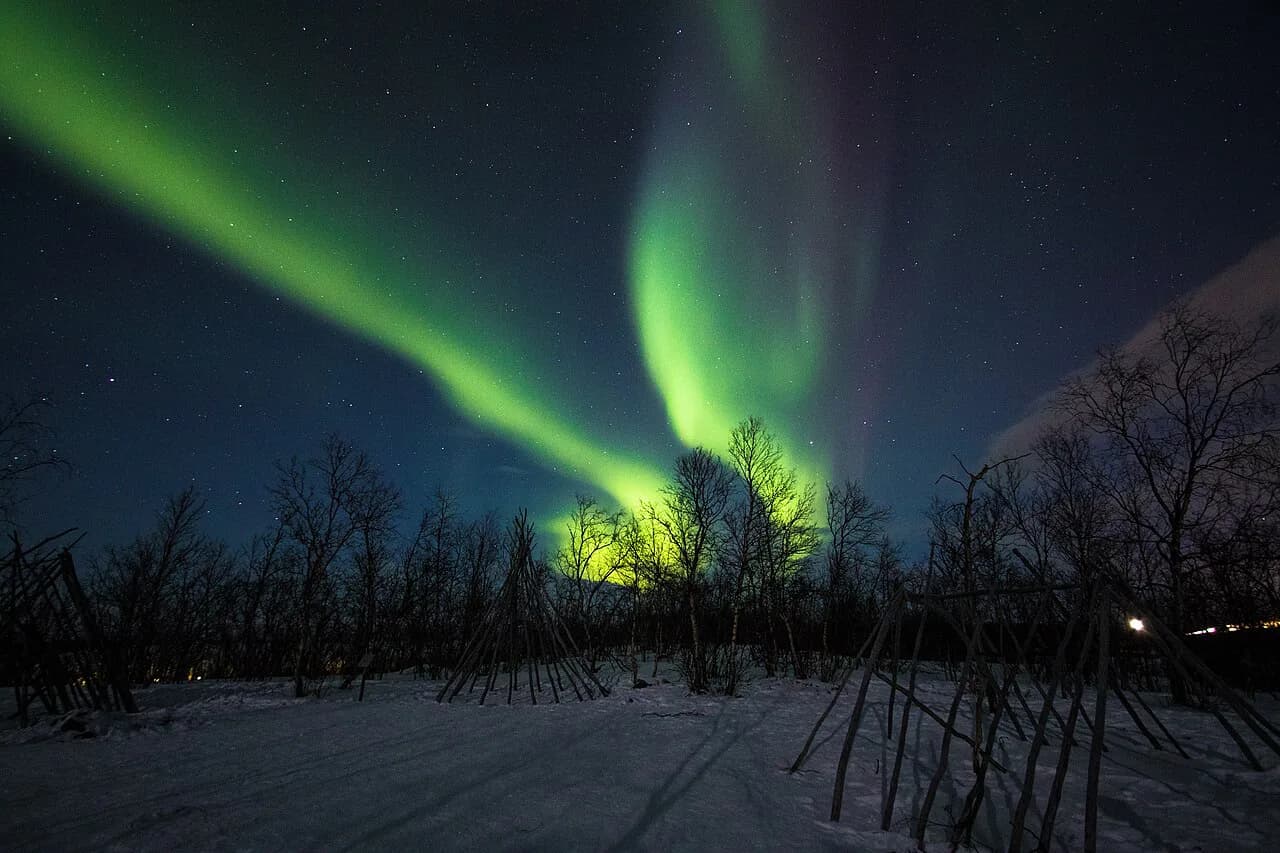
The aurora is never guaranteed, and no operator can promise a display. What Abisko offers is the combination travelers can plan around: high latitude, a long dark season and low light pollution once you step away from the buildings. From there it becomes a question of how many nights you give yourself and how you fill the daylight hours.
Why the aurora shows over Abisko
Abisko sits roughly 200 to 250 km inside the Arctic Circle, depending on which stretch of the valley you measure, and frequently lies within the auroral oval. That band around the magnetic pole is where aurora is most often overhead, so the latitude does much of the work before weather enters the picture.
The village has a second advantage that matters more than latitude on many nights. The surrounding mountain ridges wring moisture out of westerly air, so the valley often stays drier and clearer than the coast and is known locally as the Blue Hole of Abisko.
None of that clears the sky on demand, and a cloudy week is possible in any month. Treat the microclimate as a reason to base yourself here rather than somewhere wetter, not as a forecast you can bank on.
When the aurora season runs
Auroras are visible on most nights from the onset of winter in October through to March, according to the local tourism organisation, because the nights are dark enough for long stretches. Late September and early April can also work, but the dark window narrows at both ends of the season.
Midwinter is the darkest stretch, with December the gloomiest month in the valley. January and February are traditionally the coldest, so travelers who want active days often aim for February and March, when light returns without the aurora season ending.
Kp values and aurora apps are guidance on solar activity, not a prediction of what you will see over Abisko on a given night. Cloud is the deciding factor most evenings, which is why the number of nights you stay matters more than any forecast you read before departure.
How the village and park are laid out
The layout is simple and compact: Lake Torneträsk to the north, the national park boundary to the west, and mountain terrain to the south and east. The E10 road and the Kiruna to Narvik rail line both run through the village, so the tourist station, trailheads and lake shore sit within a short walk of each other.
That compactness is the real draw for aurora travelers. You can leave your room, walk a few minutes into the park or onto the frozen lake shore, and be away from most artificial light without arranging transport.
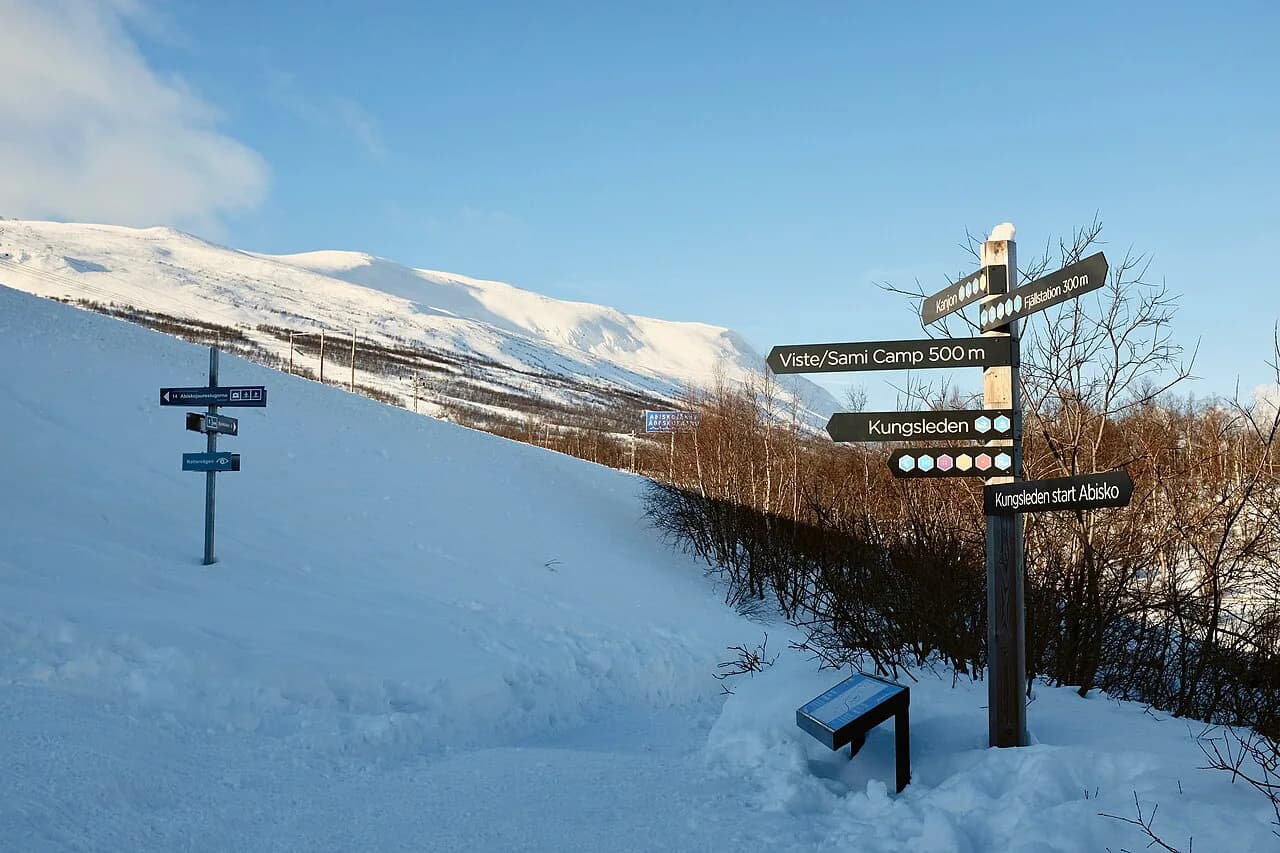
Abisko National Park sits within easy reach of both STF Abisko Turiststation and the lodges near the road. The marked trail network starts at the station area.
Getting to Abisko
Most travelers fly into Kiruna and continue by road, a drive of about 90 minutes on scenic highway. Kiruna also connects to the valley by rail, with the Kiruna to Narvik line stopping at Abisko Turiststation.
Arriving by train puts you off the platform and onto the Kungsleden almost immediately, which makes Abisko unusually easy for a Lapland base without a car. If you are carrying ski or camera bags, check the walking distance from the station to your accommodation before booking.
Winter daylight, temperatures and snow
On the shortest day Abisko gets roughly three hours of usable light, so winter days are short and activities bunch around late morning and early afternoon. December is the darkest month, with January and February the coldest, and temperatures have been known to approach -40°C as an extreme, not a norm.
Typical winter conditions run from about -10 to -20°C, which is manageable with the right layers and a flexible plan. Snow builds up across the valley because westerly winds carry it over the mountains, which is what makes the skiing, dog sledding and snowmobiling good.
Short days are a genuine trade-off: you get long aurora hours but compressed sightseeing time. Travelers who want full days on trails and still a fair shot at the lights should aim for late February or March rather than the polar-night weeks.
Where to watch near the village
The national park trails are the easiest option, since they begin at the station area and quickly leave the buildings behind. Paths along the Abiskojåkka canyon and out toward the lake shore give open sky views without a tour or a vehicle.
The frozen shore of Lake Torneträsk is another straightforward spot, with a wide northern horizon over flat ice. Walk out only where the ice is clearly in use and follow local guidance, since conditions change through the season.
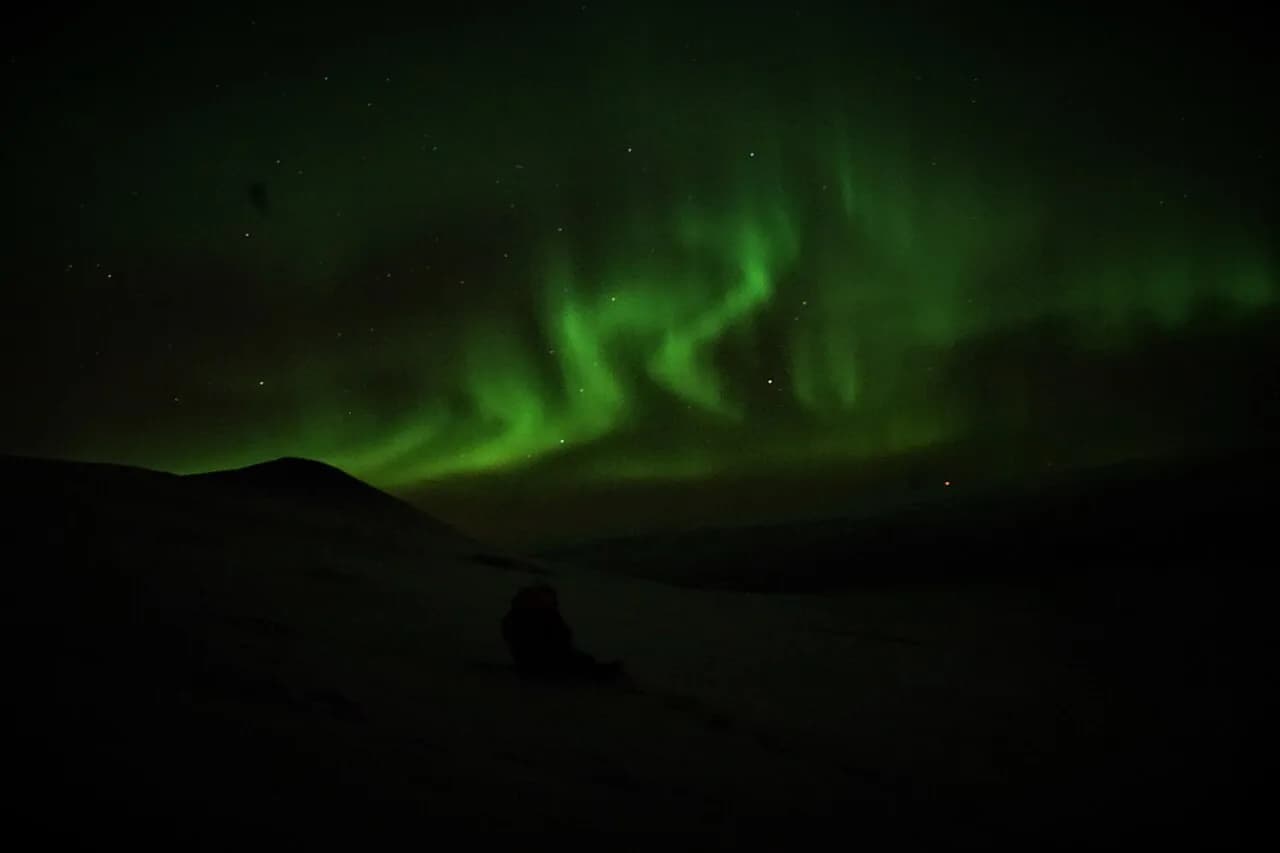
Once away from the station and road, light pollution drops sharply and the Milky Way alone is worth the walk. Bring a red headlamp and let your eyes adapt for at least fifteen minutes before judging whether the sky is clear.
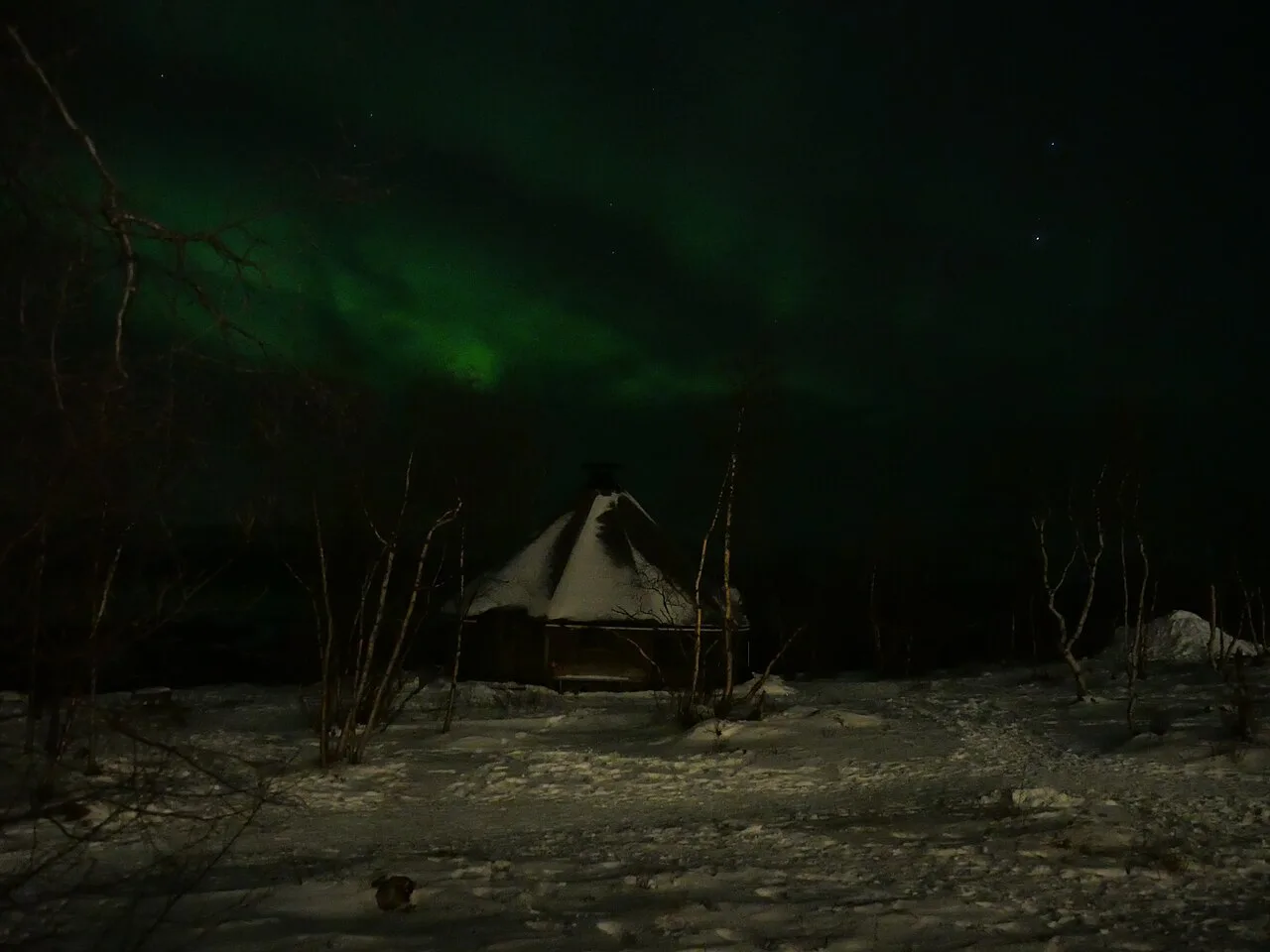
The Aurora Sky Station on Mount Nuolja
An open chairlift climbs Mount Nuolja to the Aurora Sky Station, which sits about 900 m above sea level and looks out over the valley and the lake. It is the most structured way to spend an evening at altitude here, and the fixed view over the whole valley is its appeal.
Because the station sits at a set elevation, you are committed to one viewpoint for the night rather than following a clearing sky. On a mixed-weather evening that is the trade-off: a spectacular position when it is clear overhead, and less freedom to move when cloud sits over the mountain.
Dress for the ride and the waiting time at the top, and note that chairlift operation is weather-dependent. Your accommodation can point you to the current evening arrangements, and full detail sits on the Aurora Sky Station, Abisko page.
Self-guided watching versus a guided tour
Independent watching works well in Abisko because the dark spots are close and the village is small. If you have a clear evening, walking into the park costs nothing and avoids fixed departure times, which matters when the sky clears late.
A guided tour makes more sense when cloud is patchy, since operators with vehicles can drive after gaps in the sky rather than staying put. Companies such as Lights over Lapland run aurora and photography tours from the village alongside the Sky Station evening.
Photographers often prefer a guide who knows the camera settings and can find dark foregrounds, while travelers without a car may simply value the transport. Ask what is included before booking, and pick a night early in your stay so you can rebook if it is cloudy.
Winter activities around the park
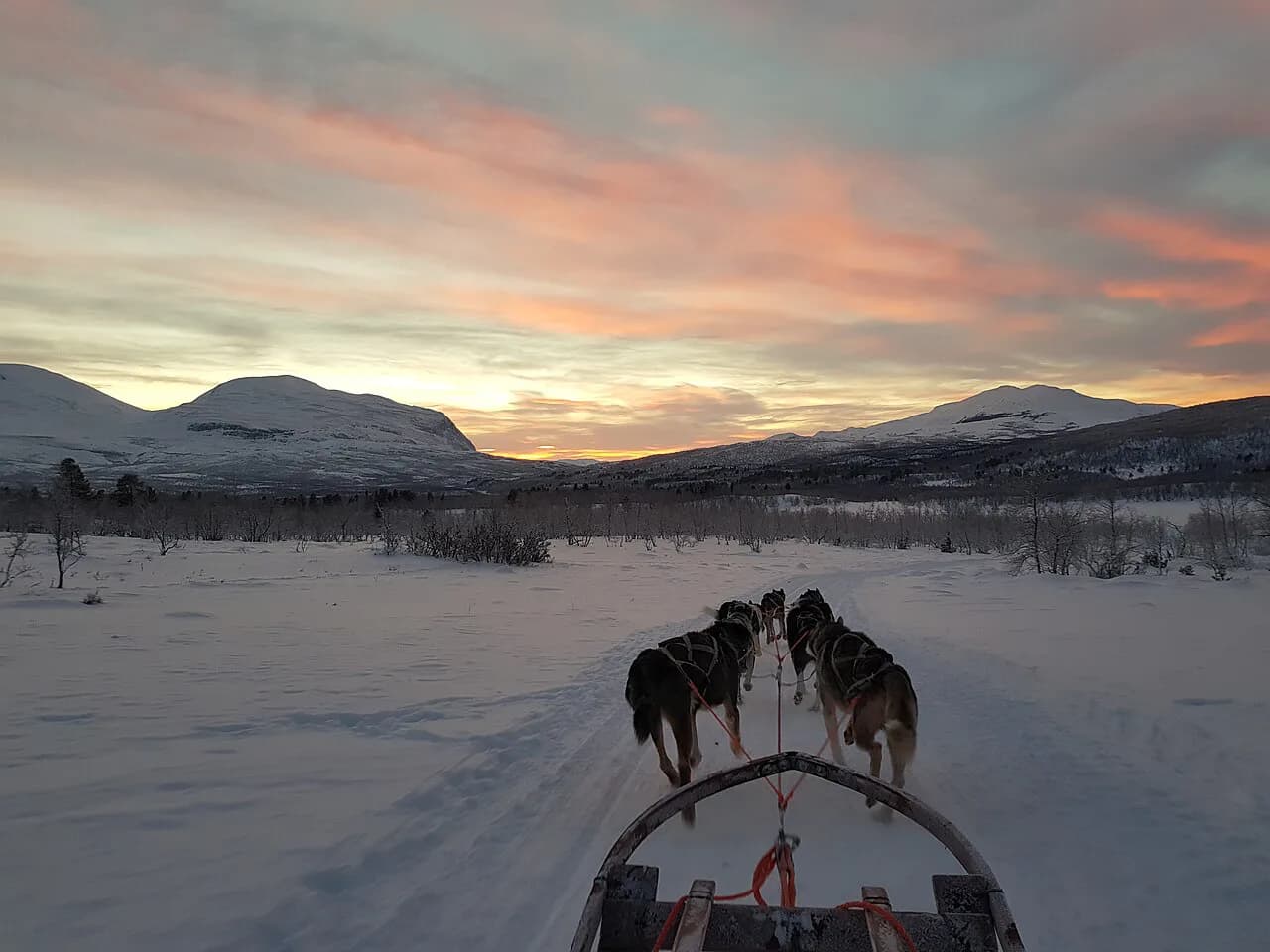
Dog sledding, snowmobiling, ice fishing, ice climbing and cross-country skiing are all readily available from Abisko, with cross-country trails in the national park and off-piste terrain on Mount Nuolja. Björkliden, a short distance away, has dedicated pistes and lifts.
Snowshoeing to Stornabben is a popular half-day objective from the valley floor, and the marked paths suit travelers who want a shorter outing as daylight fades. Tour operators typically lend thermal suits and boots on snowmobile and sledding trips, so confirm sizes when booking rather than bringing heavy duplicates.
Build your activity days around the light rather than the clock: start late morning, return for a hot break and keep the evening free for clear skies. Trying to fit a long excursion and a late-night chase into the same day is how most travelers end up too tired to go out when it matters.
Where to stay: hotels, lodges and Björkliden
STF Abisko Turiststation is the classic base, sitting beside the trailheads and the park boundary, which makes it the easiest address for car-free aurora walks. Abisko Mountain Lodge is known for a traditional menu built on local ingredients such as reindeer, Arctic char and salmon, with vegetarian and vegan options.
ABISKO MOUNTAIN LODGE sits close to the road and the station, so you trade a little quiet for convenience when the sky clears at midnight. Our guide to ABISKO MOUNTAIN LODGE covers its rooms and how the aurora evenings work in practice.
STF ABISKO TURISTSTATION suits travelers who want the park on the doorstep and a mix of room types under one roof. Read the STF ABISKO TURISTSTATION guide for detail on the accommodation and the surrounding trails.
Björkliden, further west along the road and rail line, is a quieter alternative with its own pistes and lifts. It suits travelers with a car or those who prefer ski terrain over village convenience.
Book early in peak winter weeks, since STF accommodation fills in busy periods and food and huts are expensive relative to camping. Tenting is the budget option for travelers with proper winter gear.
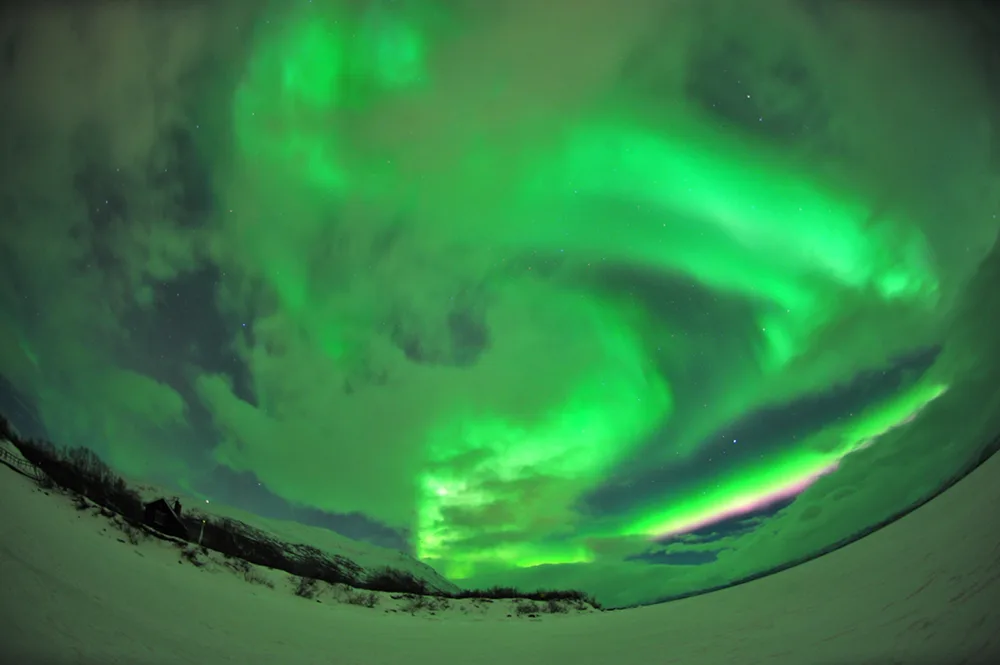
The Sami camp and the cultural side of the valley
An open-air Sami camp within the national park recreates traditional dwellings, and guides explain local names and folklore. Even the name Abisko comes from a Sami word loosely meaning the forest that meets the great sea.
The valley is also a working landscape for reindeer herding, so keep a respectful distance from animals and stay on marked paths where the ground is fragile. Pairing a cultural visit with a short nature walk gives the day a useful shape when daylight is limited.
A day trip toward Narvik
The rail line from Abisko toward Narvik is often described as one of the most beautiful train journeys in the world, and a day trip gives you fjord scenery without moving your base. It is easily done by train within a day.
Norway is worth a passing look for the contrast: steep fjords against the wide birch valley here. Keep the return leg in mind, since a late train back leaves a short evening for aurora watching.
How many nights to plan
Three nights is the sensible minimum for anyone treating the aurora as the main reason to travel, and four or five is better if the trip is a long-haul one. Because cloud decides most evenings, extra nights give you repeated chances rather than a single high-stakes one.
Place the guided chase or Sky Station evening early in your stay so you can rebook if that night is overcast. Keep at least one evening free at the end for a self-guided walk from the village if the sky clears unexpectedly.
Travelers who also want full activity days should lean toward late February to March. The aurora season is still running, the days return to usable length and the cold is familiar rather than extreme.
Who Abisko suits and when to look elsewhere
Abisko suits travelers who want a compact base, easy access to dark skies and a genuine sub-Arctic landscape rather than a resort. With a population counted at 85 in 2005, it is small, quiet and largely free of the theme-park feeling some northern destinations have.
It is less suitable if you want nightlife, a wide restaurant scene or guaranteed clear skies. Travelers who need a big-town base should consider Kiruna instead, but they will spend more time travelling out to dark spots in the evening; for a coastal city base with its own viewing spots and tours, see this northern lights in Luleå guide.
Plan Your Visit
Abisko National Park makes aurora planning unusually simple: book a bed in the village, give yourself several nights and keep your evenings flexible. The park trails, the canyon and the frozen lake shore are within walking distance, and the Sky Station offers a fixed high viewpoint when you want one.
Start with the aurora guide to the valley, then choose your accommodation by how you want to spend the nights. No one can promise a display, but a well-paced stay of three to five nights between October and March gives you the best chance the sky allows.
Frequently Asked Questions
Is Abisko in the Arctic Circle?
Yes. Abisko lies roughly 200 to 250 km inside the Arctic Circle in Swedish Lapland, close to the Norwegian border along the E10 and the Kiruna to Narvik rail line.
How do I travel to Abisko, Sweden?
Most travelers fly into Kiruna and drive about 90 minutes to the village, or take the Kiruna to Narvik train and get off at Abisko Turiststation. Train arrival puts you within minutes of the national park trailheads.
When is the best time to see the northern lights in Abisko?
Auroras are visible on most nights from October through March because the nights are dark enough. February and March add longer daylight for activities, while December is the darkest month.
Do I need a tour to see the aurora in Abisko?
No. The national park trails, the Abiskojåkka canyon and the frozen lake shore are all within walking distance of the village. A guided tour helps when cloud is patchy, since operators can drive to clearer sky.
Where do you watch the northern lights near Abisko village?
Walk into Abisko National Park or onto the shore of Lake Torneträsk, where light pollution drops quickly. The Aurora Sky Station on Mount Nuolja gives a fixed high viewpoint above the valley.
How many nights should I stay in Abisko for a chance of clear skies?
Plan at least three nights, and four or five if the trip is long-haul. Cloud decides most evenings, so repeated nights give you several chances rather than one.
What winter activities run in and around Abisko National Park?
Dog sledding, snowmobiling, ice fishing, ice climbing and cross-country skiing are all available from the village, along with snowshoeing to Stornabben and off-piste skiing on Mount Nuolja.
Sources
Notes for your Arctic winter trip
Optional updates to our northern lights guides.
You might also like
Continue reading
More guides you'll find useful