Abisko Husky Safari: Dog Sledding Tours and How to Choose
Compare Abisko husky safaris: short valley rides, seven-hour runs to Kiruna, and one-person-one-sled tours. Group sizes, transport and what to book first.
On this page
Abisko pairs one of Sweden's most reliable winter settings with a compact trail network, which is why a husky safari here is often a full day out rather than a short add-on. Deep snow settles through the valley and the winter days stay short, so a sled ride is as much about moving through a quiet, low-lit landscape as it is about speed. It suits travellers who want the sledding itself to be the main event, and who are happy to book early because seats fill ahead of the season.
The village itself is small, with the national park beginning at its edge and the accommodation clustered close enough that most tours start within a short walk or transfer. That makes husky safaris easy to combine with night-time aurora watching, since you are already deep in dark country. The guide below separates the formats on offer, explains what the stated tour length actually covers, and shows how to weigh a drive-your-own sled against a passenger ride.
Why Abisko suits a husky safari
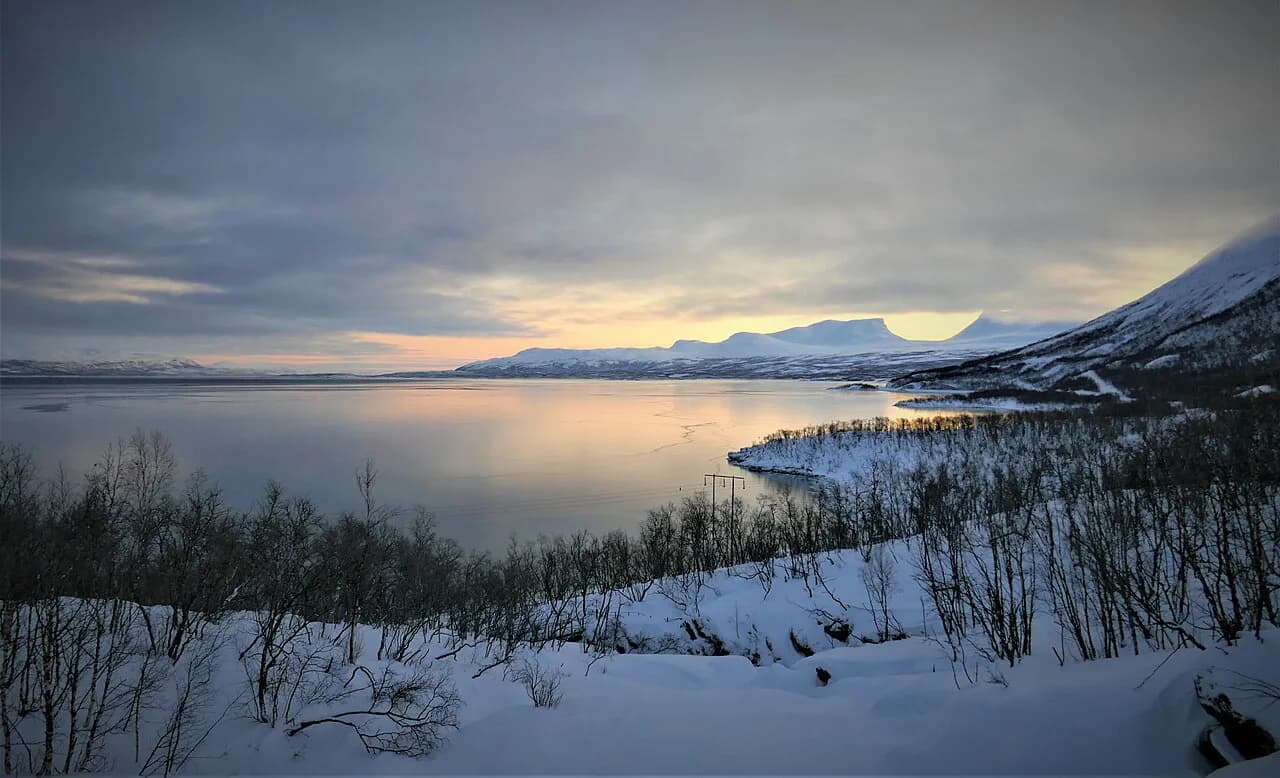
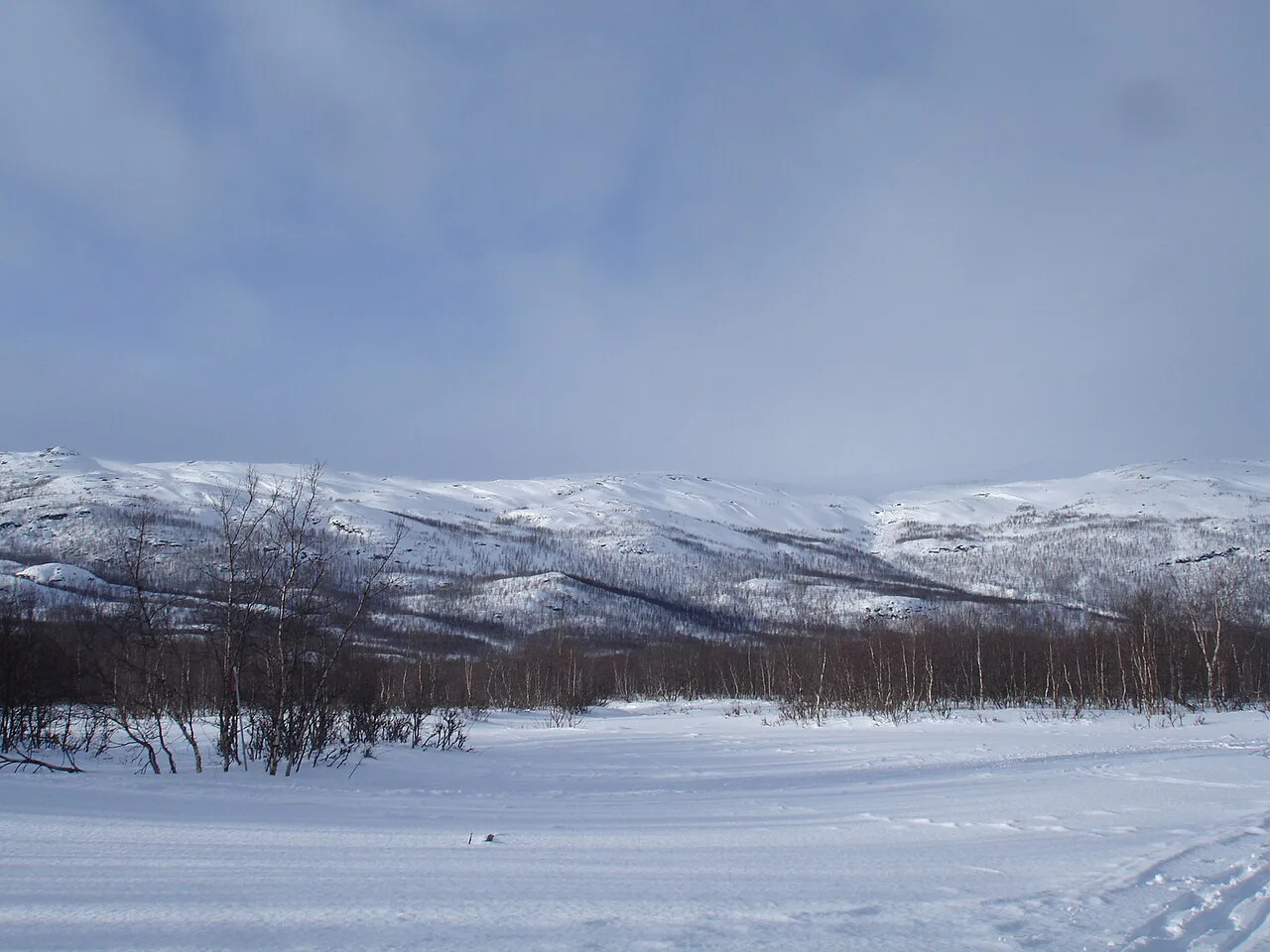
Abisko sits well north of the Arctic Circle, inside a valley that the surrounding mountains shelter from the worst of the Atlantic weather. The park protects the trail country on the doorstep, and the frozen lake at the valley floor opens up long, wide views toward the peaks. In practice this means you can leave the village and be in wilderness within minutes rather than after an hour in a transfer bus.
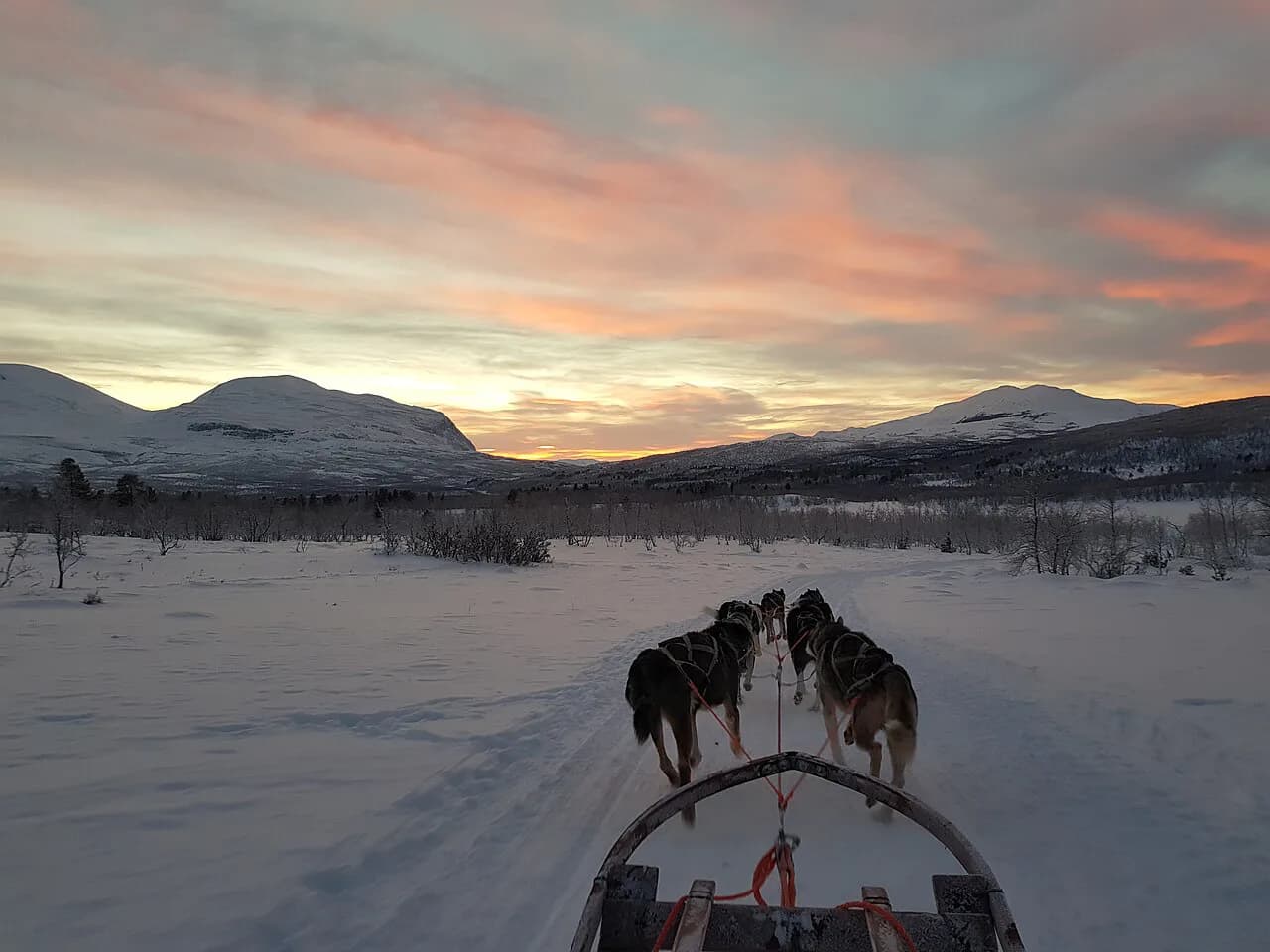
The classic sled routes climb from the valley toward the Kiruna mountains, where snow lies deeper and holds better through the winter. This is the landscape the dog teams are built for: open ground, well-used trails and a sense of distance without needing a long journey to reach it. Travellers who want the sledding to feel like a proper expedition rather than a loop around a field get more from the terrain here.
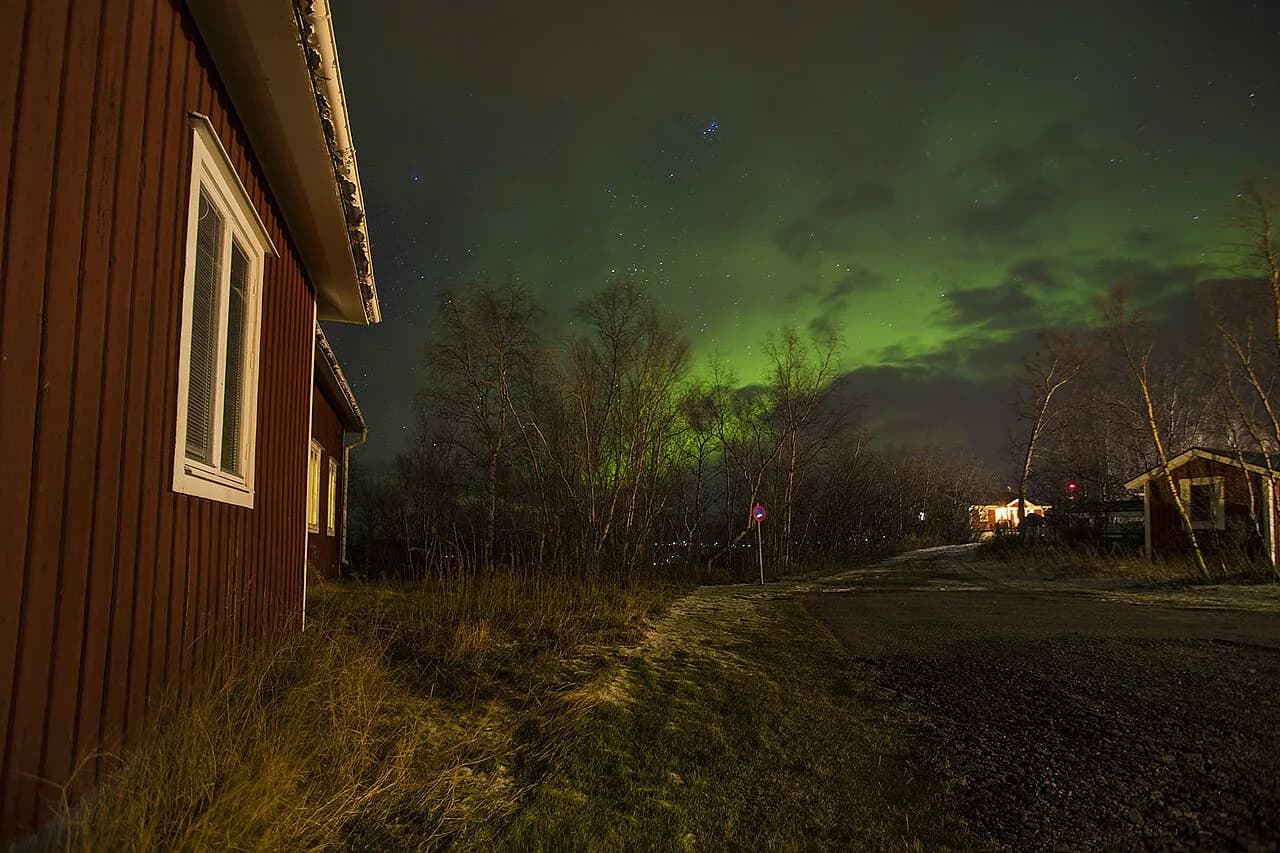
Being far from city light matters after dark as well. The valley is famously dark at night, which is why many visitors pair a daytime safari with an evening spent watching the sky. A husky ride gets you out into that same landscape in daylight, so you see the ground and the mountains you will be standing under later.
When the sledding season runs
Dog sledding depends on snow cover rather than the calendar, and operators in the Abisko area run trips through the snow months while the trails hold. Winter daylight is brief in midwinter and stretches quickly through spring, so an early-season ride and an April ride feel like different outings: one is run in near-twilight, the other under a brighter, longer day. Ask your provider how much daylight your slot will have if the scenery matters to you.
Snow conditions at the start and end of the season are the variable that changes plans most. A tour that runs on packed trail in February may be a different proposition after a mild spell, and a late-season booking can still deliver good sledding on north-facing ground. Check the tour company's own season information when you book, since last year's dates may not carry over.
Types of husky safari
Roughly three formats are sold from Abisko, and they behave differently. The first is a guided ride through the valley, usually on a set loop with a musher driving and guests seated, which suits families and anyone who wants the experience without handling the team. The second is the long run into the Kiruna mountains, which is the option to choose if you want a full day in the backcountry rather than a taste of it. The third is a sled you drive yourself, one person per sled, which asks more of you and gives more back.
The long Kiruna version has an important detail built into its length. Visit Abisko lists a dogsledding excursion to Kiruna from SEK 2500 lasting 7 hours, and states that road transport from Abisko is included on these Kiruna departures. That means the stated duration covers the drive out and back as well as the time on the sled, so the sledding itself is a smaller slice of the day than seven hours suggests.
The drive-your-own format is described by Abisko.net as a dogsled tour where one person drives one sled through the wilderness around the village. It is a genuinely different product from being a passenger: you are the one reading the trail and working with the dogs, with a guide setting the route. That page does not publish a price or a duration, so ask the sled company directly about both, plus what previous experience, if any, is expected.
If you are comparing Abisko with other bases in the north, the same three formats turn up across the region with different trail lengths and price points, so it is worth reading a Swedish Lapland husky safari guide to see how trail time and transfers differ.
Drive-yourself versus passenger
As a passenger, your job is to sit, hold on and watch the landscape move past. You can carry a camera, and the format works for mixed-age groups and anyone who would rather not balance on a moving sled for hours. The trade-off is that you are not part of the team's handling, so the trip is more of a ride than an activity.
Driving your own sled is a physical, attentive hour after hour of balance and braking, and the dogs respond to how well you do it. It rewards travellers who want to feel involved and are comfortable standing on runners over uneven ground. Before booking, ask how much instruction is given before departure and how many guests share a guide on the trail, because those two answers shape how supported you will feel.
On either format, the rule of thumb is that a longer trip is not automatically a better one. A short valley ride in flat light can be the right choice for a group with young children or a tight itinerary, while a serious driver will want the longest trail time they can get. Be honest about your group's stamina and match it to the format rather than to the headline duration.
Group sizes and booking ahead
Husky teams set a hard ceiling on how many people can go out at once. Visit Abisko notes that trips are limited to four people per dog sled team, which is why popular dates sell out well before the season. That figure is about shared sled capacity, not a cap on the whole tour, so ask how many sleds and guests a given departure carries if group size matters to you.
The practical consequence is to reserve the safari before you lock in the rest of your itinerary, especially for holiday weeks and the brighter spring weekends. If your first choice is full, a shorter valley ride or a different departure time may still have room. Visit Abisko suggests booking early for exactly this reason, and it is worth having a second date in mind before you start.
Short husky experiences that pair dogs with a walk are also sold in the area, including guided husky hikes where you meet the dogs and set off on foot through the valley. Those are listed alongside the sled tours, so read the description carefully to see whether you are booking a sled or a walk.
What's included and what it costs
The clearest published price in the Abisko market is the seven-hour dogsledding excursion to Kiruna, which Visit Abisko lists from SEK 2500. That fare includes transport from Abisko on the Kiruna departures, so you are paying for the road transfer as well as the sled time. Shorter valley rides and drive-your-own tours are priced separately and often per person, so compare them on total time out rather than on the headline figure alone.
When you compare quotes, ask what is bundled into the price: the sled time itself, any road transport from the village, and whether hot drinks or a stop are part of the run. Some trips lend extra outer layers for the cold, so ask whether that is included if you are travelling light. Get the inclusions in writing before you pay a deposit, because a cheap seat on a tour with a long transfer can cost more of your day than a pricier trip that starts at the trailhead.
The seven-hour Kiruna run from Abisko
The long Kiruna tour is the choice for travellers who want a proper day in the mountains rather than an hour in the valley. It is a musher-led excursion into the Kiruna mountains, with the chance to photograph the wilderness from the sled as you go. It suits adults and older children who can stay out in the cold for a full day, and it is a poor fit for anyone with a tight schedule or a low tolerance for cold.
Treat the seven hours as the whole outing and plan the rest of the day around it. With road transport from Abisko included, you will spend part of the day in a vehicle, so build in a slow morning before pickup and a quiet evening after. That also leaves room to head out for the northern lights after dark if the sky is clear and you still have energy.
The Kiruna mountains are also a reminder that Abisko is a base, not the only trailhead in the region. Tours that start elsewhere can collect you in the village, which widens your choice when the local departures are full. Ask where the sledding actually happens when you check current prices and dates, so you know how much of your day is transfer and how much is trail.
Husky hiking as an alternative
When snow is thin, or when a sled ride is too much for someone in your group, a guided husky hike is the option to look at. You meet the dogs, get a short introduction, and walk through Abisko Valley with them rather than riding behind them. It is a real outing with the animals, but it is not sledding, so do not book it expecting to be pulled along.
The hike format also works well for travellers who want more time with the dogs themselves. Meeting a team up close and learning how the handlers work with them gives context that a seated sled ride can miss. If your priority is the animals rather than the speed, this is often the more rewarding half-day.
Animal welfare questions to ask
Huskies are working dogs, and a well-run kennel is built around their needs: enough exercise, rest days, shade in summer and a team matched to the load. You do not need to audit an operator to ask sensible questions before booking. Ask how many days a week the dogs run, how teams are matched to the sled weight, and what happens to retired dogs. The answers tell you a lot about how the business is run.
You can also ask about the guest-to-guide ratio, how the dogs are cooled and rested between runs, and whether you will be encouraged to meet the team before departure. Operators who welcome these questions tend to be the ones worth riding with. If a booking agent cannot answer them, ask to be put in touch with the kennel directly before you commit.
Pairing a safari with an aurora night
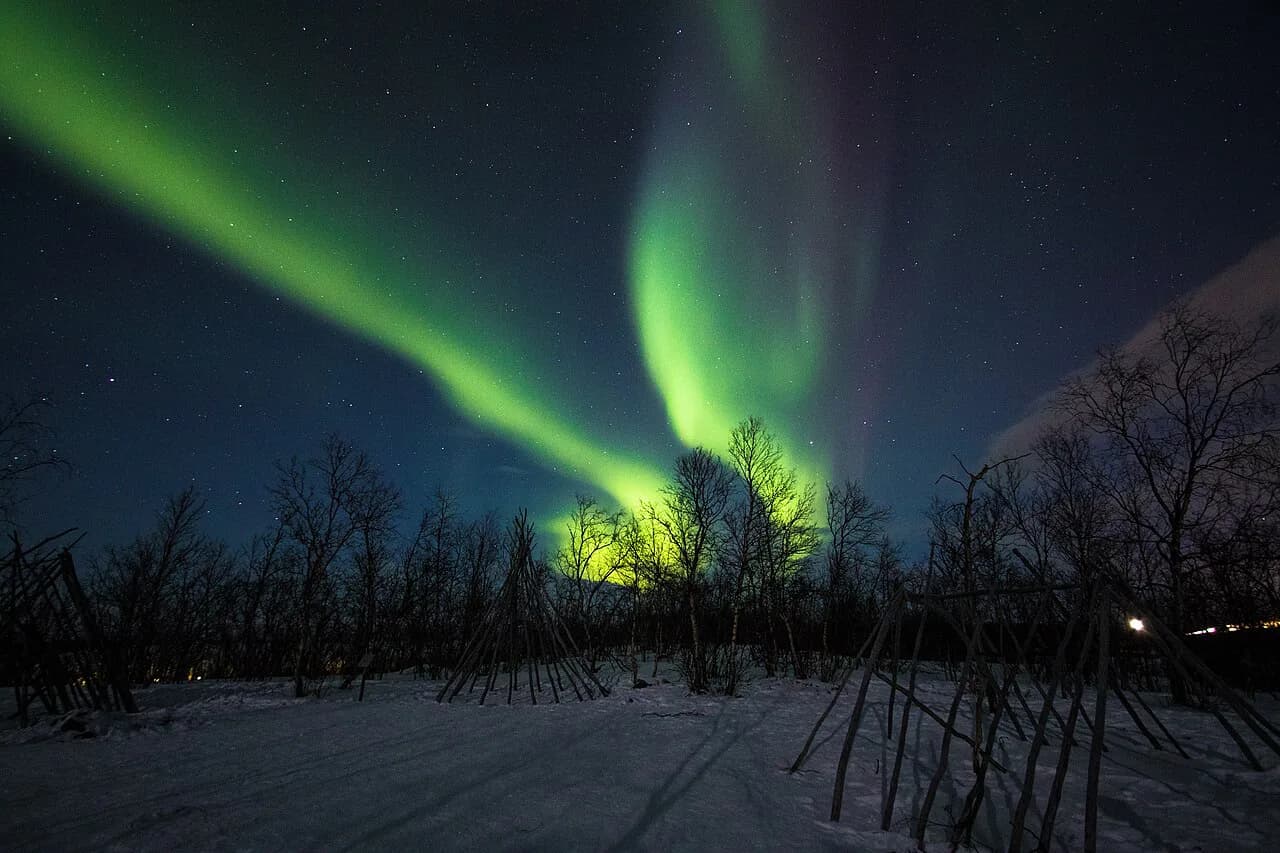
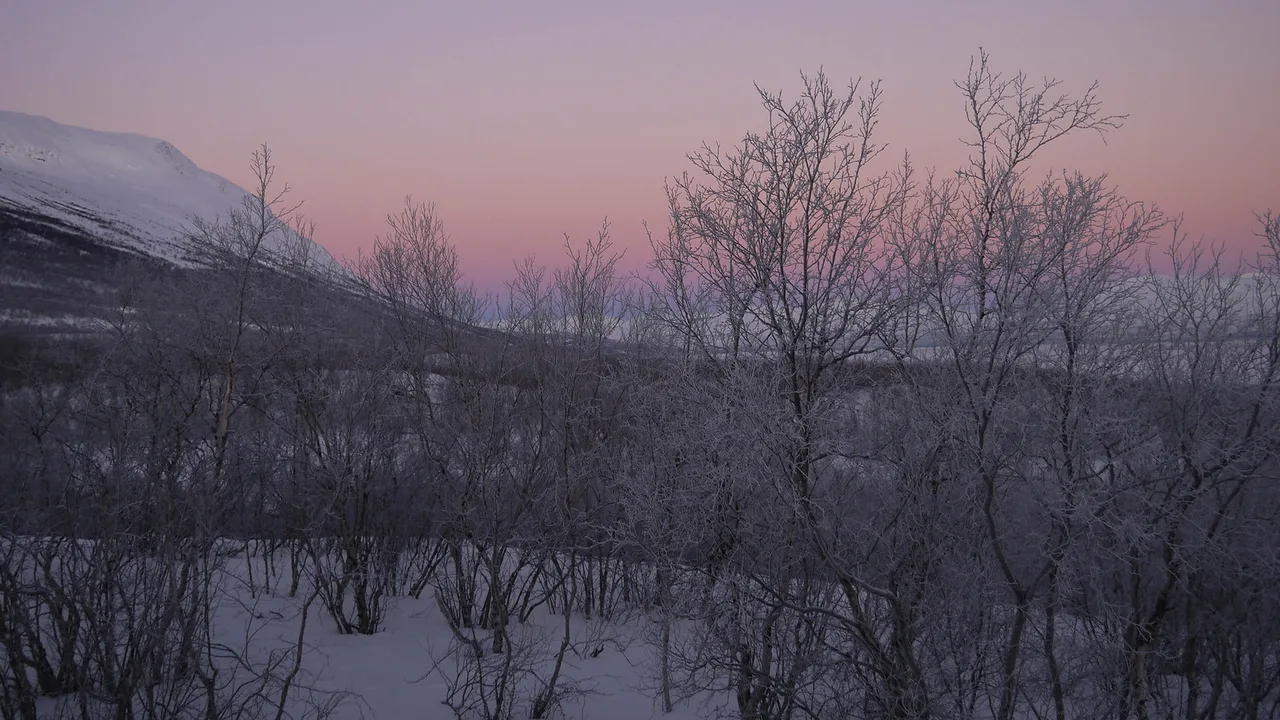
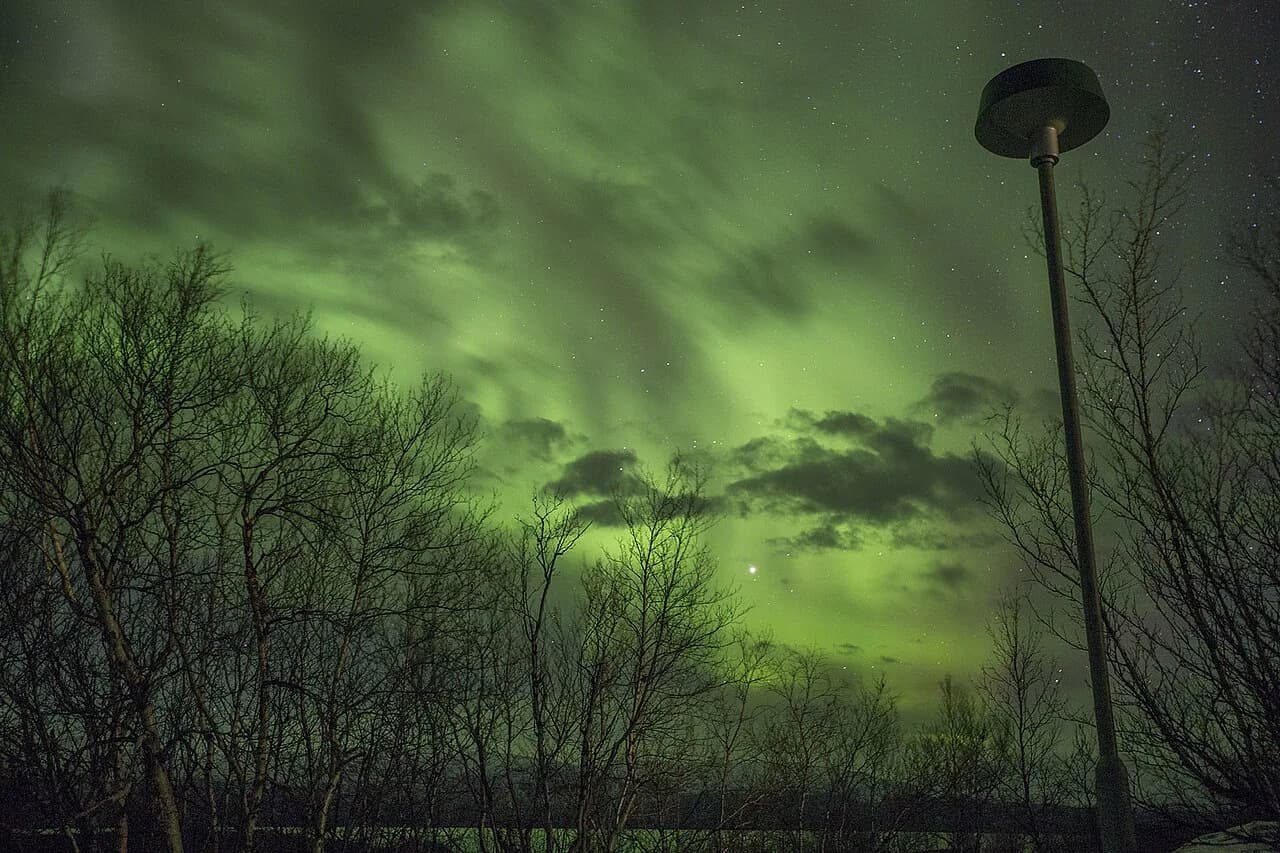
A husky safari is a daytime activity, but the same dark valley that makes the sledding atmospheric is what draws aurora hunters. Plan the safari for the middle of your stay and keep the evenings free, so a clear night does not clash with an early pickup. Tour operators in the village run evening trips to dark-sky viewpoints, and you can also walk to the park edge and watch from there.
The aurora depends on solar activity and clear skies, and no operator can guarantee a sighting. What you can control is how many dark nights you give yourself, how far you get from village lights, and whether you are willing to wait out cloud. Kp forecasts are a rough guide only; local cloud cover decides more than the index does. A safari followed by two or three clear evenings gives you a far better chance than a single night.
If you want a lift to a high, dark viewpoint, the chairlift to the Aurora Sky Station on Mount Nuolja is the classic Abisko option, and it runs as an evening excursion rather than a self-guided walk. Booking it on a separate night from the safari spreads your chances across the trip.
Where to stay to keep transfers short
Abisko village is small enough that the main accommodation sits close to the trailheads and the park entrance. Staying in the village keeps transfer time to a minimum, which matters on a morning safari and again at night when you want to be out under the sky rather than in a bus. The STF Abisko Turiststation is the long-established base at the park edge, with the station itself acting as a hub for activities and evening departures.
A little further out, Björkliden offers an alternative base with its own mountain setting and views across the lake. It suits travellers who want quieter surroundings and do not mind a short transfer for village-based activities. Weigh the extra travel against the setting: for a seven-hour Kiruna departure with pickup, staying in the village removes one leg of the day.
For travellers who want a lodge-style base with easy access to guided trips, the Abisko Mountain Lodge sits in the village and works well as a hub for both safari mornings and aurora evenings.
How many nights to plan
If the husky safari is the main reason for the trip, give yourself at least three nights in Abisko. One full day covers the safari, and the remaining evenings give you several chances at a clear sky without pinning everything on a single night. Travellers who also want a snowmobile trip, a sauna evening or a day in Kiruna should add a night or two on top.
Build the safari into the middle of the stay rather than the first morning, so a delayed arrival or a cancelled transfer does not cost you the booking. Keep one evening completely free of plans and leave room to swap days if the weather turns. That flexibility is worth more than a tightly packed schedule in a place where conditions decide what is possible.
Book the Safari First
A husky safari in Abisko comes down to three choices: a short valley ride, the seven-hour Kiruna run with transport included, or a sled you drive yourself. Decide which of those fits your group, then book it before the rest of the itinerary, because capacity is limited and popular dates go early. Reserve the long Kiruna departure through Visit Abisko if you want the backcountry day, and contact the kennel directly for the drive-your-own format so you can ask about price, duration and experience level.
Then leave yourself two or three dark evenings for the sky, keep one night unplanned, and stay close to the village so transfers stay short. Aurora sightings are never guaranteed, but more nights, less light pollution and a flexible plan all improve your odds. Get the safari locked in, and let the weather decide the rest.
Frequently Asked Questions
How much does a husky safari in Abisko cost?
Visit Abisko lists the seven-hour dogsledding excursion to Kiruna from SEK 2500, with road transport from Abisko included. Shorter valley rides and drive-your-own sled tours are priced separately by their operators, so ask for a quote that shows the sled time and any transport.
How long are the dog sledding tours from Abisko?
The Kiruna excursion runs seven hours in total, and that figure includes the road transfer from Abisko, so the time on the sled is shorter. Short valley rides take a fraction of that, and drive-your-own tours vary, so ask each operator for the actual trail time rather than the total duration.
Can you drive your own dog sled in Abisko?
Yes. Abisko.net describes a tour where one person drives one sled through the wilderness around the village, with a guide setting the route. Check current details on price, duration and how much instruction you receive before departure.
Do Abisko husky tours include transport?
Visit Abisko states that transport from Abisko is included on the dogsledding excursion to Kiruna and the Arctic dogsledding adventure in Kiruna. Village-based valley rides usually start at the trailhead, so ask whether any transfer is part of your booking.
Is a husky ride in Abisko ethical?
Ask how many days a week the dogs run, how teams are matched to sled weight, how dogs are rested between runs, and what happens to retired dogs. A kennel that answers these questions openly and welcomes a visit to the team before departure is the kind to book with.
Is a husky safari worth it if you also want to see the northern lights?
The safari and the aurora are separate experiences: the sledding is a daytime outing, while aurora watching needs dark, clear evenings. Plan the safari mid-stay and keep two or three nights free, since sightings depend on solar activity and cloud and cannot be guaranteed.
How far in advance should I book a husky safari?
Visit Abisko notes that trips are limited to four people per dog sled team and recommends booking early. Holiday weeks and bright spring weekends fill first, so reserve before fixing the rest of your schedule and keep a backup date in mind.
Sources
Notes for your Arctic winter trip
Optional updates to our northern lights guides.
You might also like
Continue reading
More guides you'll find useful