Abisko Aurora Forecast: Reading the Data Night by Night
Learn how to read Kp, Bz and cloud forecasts for Abisko so you can judge each night's aurora odds, pick a tour and plan enough nights for clear skies.
On this page
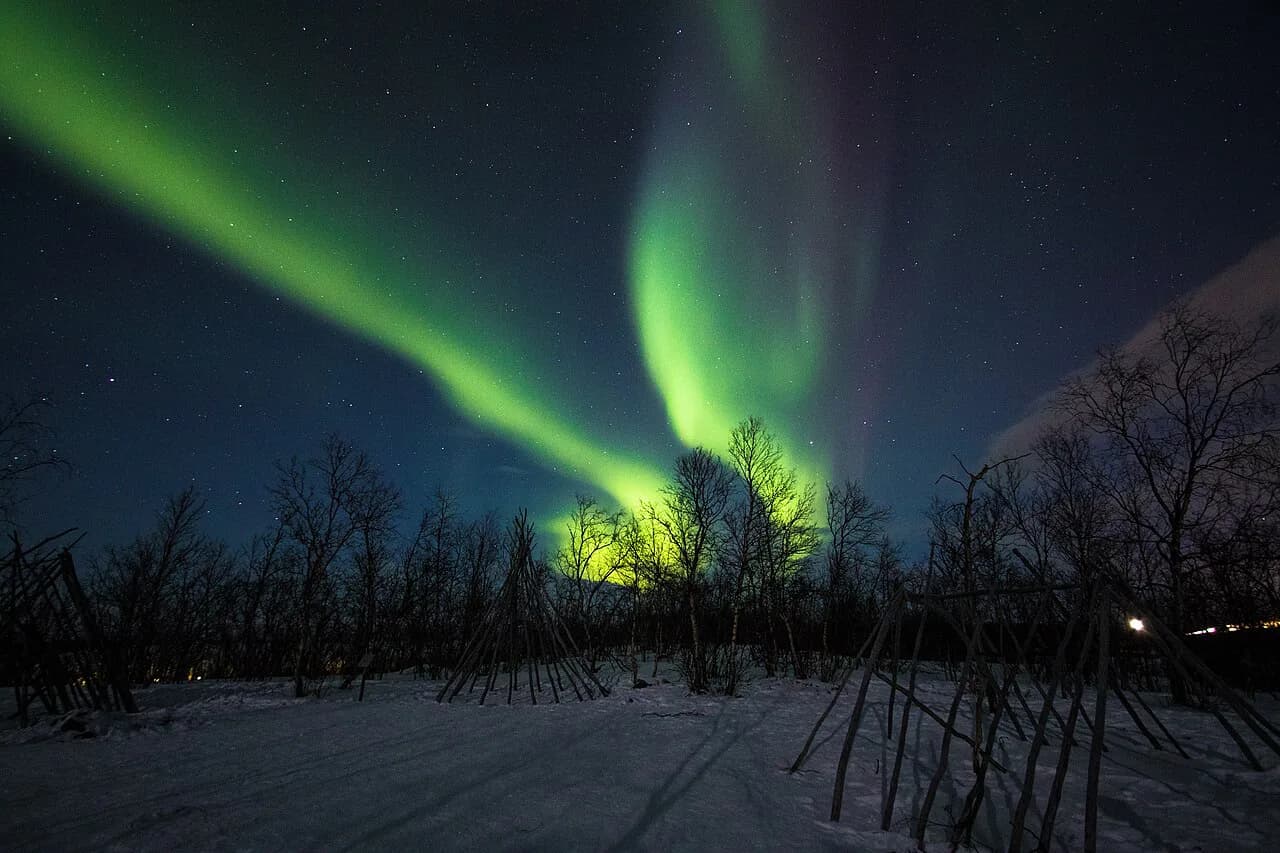
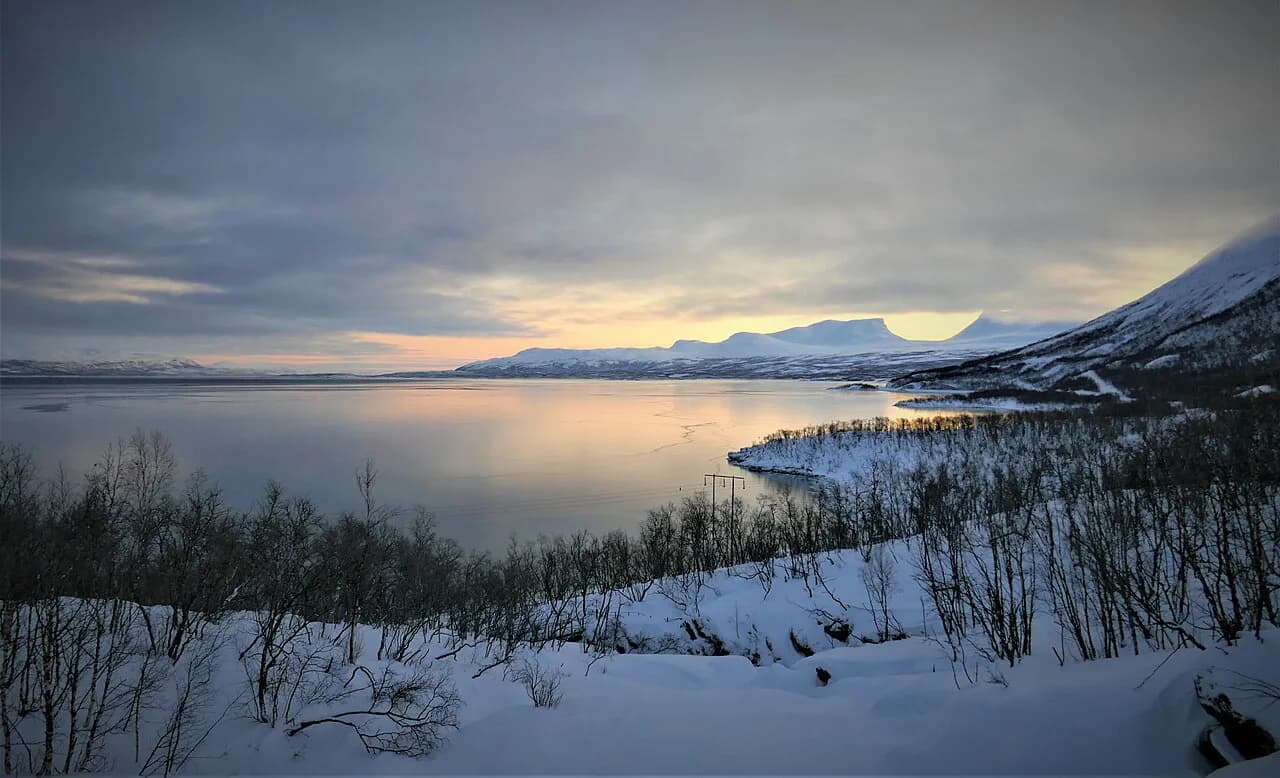
Abisko sits deep inside the auroral oval, in a national park west of Kiruna with mountains on one side and the long waters of Lake Torneträsk on the other. That far north, a modest reading on a geomagnetic index can still put a glowing arc over the valley, which is why a nightly forecast routine pays off more here than almost anywhere in Sweden. This guide is for travellers who want to judge conditions themselves rather than rely on a single number on a phone screen.
The forecast never guarantees a display. What it does is tell you how active the solar wind is, where the auroral oval sits and whether the sky above Abisko will be clear enough to see it. Treat every chart as a guide to odds, not a promise.
Why Abisko's latitude makes local forecasting worth the effort
Abisko lies in Swedish Lapland, well north of the Arctic Circle, so the auroral oval regularly passes over the region even on ordinary nights. That position means you rarely need a major geomagnetic storm to see something; you mostly need darkness and a hole in the cloud. It also means the marginal forecasts that matter further south are less decisive here.
The forecast becomes valuable because it separates two questions: is the solar wind stirring the magnetosphere, and will the sky be clear over the valley tonight? Answer both and you know whether to walk out to the lake shore or book a chase. For a broader picture of the village, the park and how the season works, see the northern lights guide to the area.
What a Kp index actually tells you in northern Sweden
Kp is a scale of planetary geomagnetic disturbance, running from quiet to storm levels, and forecasters publish expected ranges for coming days. At Abisko's latitude the oval already reaches overhead at low Kp, so you can see aurora on nights when the index barely moves. A low number is not a reason to stay indoors.
Conversely, a high Kp reading does not mean you will see anything if cloud sits over the valley. Use Kp to judge how far south the oval may reach and how bright the display could be, then check the sky. Kp values are guidance only, and substorms can flare up at modest activity levels without much warning.
Solar wind, Bz and substorms: the numbers that move the odds
Beyond Kp, watch the solar wind speed and the direction of the interplanetary magnetic field, usually written as Bz. A sustained negative Bz helps the solar wind couple with Earth's magnetic field, and forecasters track it in near real time alongside solar wind density and speed. When Bz turns strongly negative and stays there, activity often builds within tens of minutes.
Aurora also arrives in bursts called substorms, which can brighten a quiet sky and fade just as fast. Forecast services note that displays stop and start and that patience is part of the night. Plan to be outside for a stretch of hours rather than checking once and giving up.
Which forecast services to open each afternoon, and in what order
A sensible afternoon routine starts with the three-day geomagnetic outlook to see whether a coronal hole or a solar disturbance is on the way. Then open real-time solar wind data to see what is arriving within the hour, and finish with a cloud forecast for the Abisko valley. Doing it in that order keeps you from chasing activity that will arrive under overcast skies.
Keep a satellite or webcam view open as the evening develops, because cloud can clear or thicken faster than a forecast model updates. A quick look at the sky and a look at a European cloud animation tell you more at 22:00 than any chart did at lunchtime.
SpaceWeatherLive's Kp forecast and auroral oval views
SpaceWeatherLive publishes a Kp forecast with minimum and maximum values for coming days, plus auroral oval maps with regional views for Europe and Asia. The oval view shows where the aurora is expected overhead, which is useful for judging whether a display will sit north of Abisko or sweep across it.
The same site carries ground magnetometer readings, including a station at Kiruna in northern Sweden. A sharp deflection on that trace is a local signal that the magnetosphere above Swedish Lapland is unsettled, which is more relevant to Abisko than a global average.
The three-day outlook and how far ahead it is useful
Three-day Kp forecasts give a rough shape of the week: a quiet stretch, a disturbed window, or a possible storm from a coronal mass ejection. They are useful for choosing which nights to keep free and which to plan a rest, not for deciding where to stand at 23:00. Geomagnetic timing often shifts by hours as the arrival of solar wind is refined.
Treat anything beyond the coming night as a planning hint. Re-check the same forecast on the day, because the solar wind that actually reaches Earth can differ from the modelled arrival. Book flexible accommodation and keep your strongest aurora ambitions for the nights with both activity and clear skies in the same window.
Cloud cover, moonlight and light pollution around Abisko
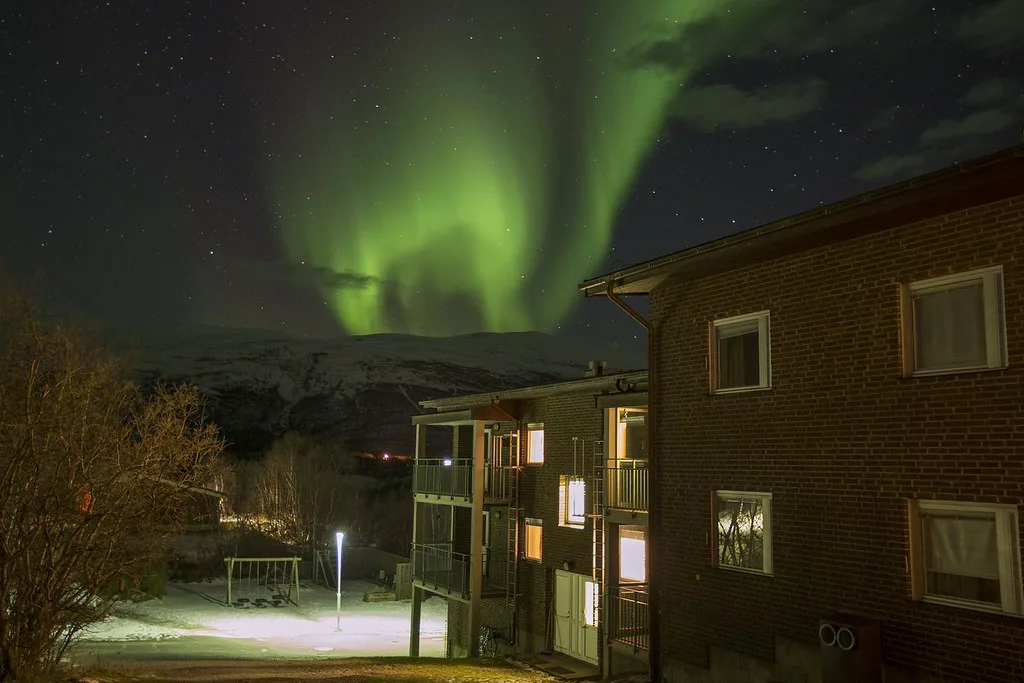
Cloud is the single biggest reason aurora watchers see nothing, because the display happens high in the atmosphere while the obstruction sits just above your head. Abisko's inland position gives it a reputation for clearer skies than the coast, but weather still moves through in waves. Check cloud forecasts for the valley and be ready to move a short distance if conditions differ.
Moonlight and town light both cut contrast. A bright moon raises ambient light, so darker phases of the lunar cycle give a cleaner view, and it is worth stepping away from lit buildings and roads. The darker the surroundings, the more your eyes can pick out faint arcs and structure.
Reading sky and weather rather than numbers on the night
Once you are outside, look north for a pale arc or a band that looks like a thin cloud which does not move like cloud. Let your eyes adapt for a quarter of an hour without staring at a bright phone screen. If you must check data, use a dimmed display so you do not lose dark adaptation.
Cold, clear nights are usually the best viewing nights, and standing still in the cold is harder than walking. Break the night into shifts, go back inside to warm up, and return outside rather than waiting in one spot for hours. The display can appear late, so a warm base near the viewing spot matters as much as the forecast.
Combining aurora and cloud forecasts into a nightly decision
Each evening, write down two verdicts: activity level and sky clarity. If both look promising, head to a dark spot near the village early and stay out. If activity is modest but the sky is clear, still go, because Abisko's latitude means even quiet nights can deliver. If activity is high and cloud is solid, consider a guided chase that can drive to clearer ground.
The decision is easier if you keep one source for space weather and one for cloud, rather than switching between many apps. Consistency helps you notice real changes, such as Bz turning negative or a break in the cloud line, instead of noise.
Self-guided chasing from Abisko Turiststation and Abisko Östra
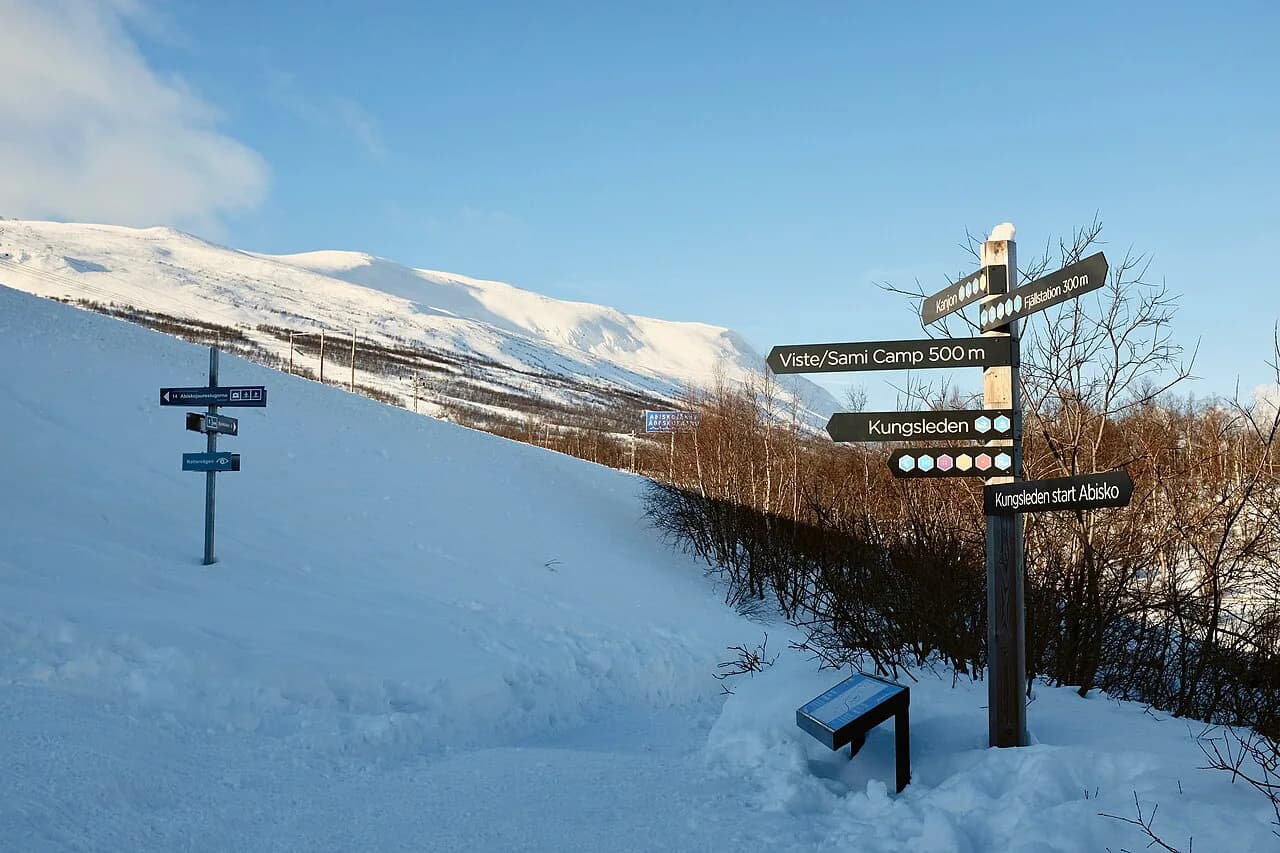
The village is compact, with the tourist station and the Abisko Östra area as the two practical bases for a night out. Walking away from the buildings toward open ground gives you darker sky within minutes, and the long lake horizon leaves the northern sky unobstructed. For the terrain, trails and what the park offers in winter, see the guide to Abisko National Park in Winter.
Another option is to ride up to Aurora Sky Station on Mount Nuolja for a higher, darker viewpoint, which suits travellers who prefer a fixed base to walking in the cold. Either way, keep your plans flexible and check conditions before committing.
What a Lights Over Lapland aurora chase costs and includes
Lights Over Lapland runs a last-minute aurora chase priced at 995 SEK per person, purchased following instruction from a guide and valid only on the day of purchase, subject to availability. That structure suits travellers already in Abisko who want a guide to make the call on a marginal night. Check what the chase includes when you book.
A guided chase earns its place when cloud sits over the valley and the guide can drive toward a clearing. On clear nights, self-guiding from the village costs nothing and gives you the freedom to stay out as long as you like. Weigh the price against how many nights you have and how much you value someone else reading the data.
Webcams and observations as a live reality check
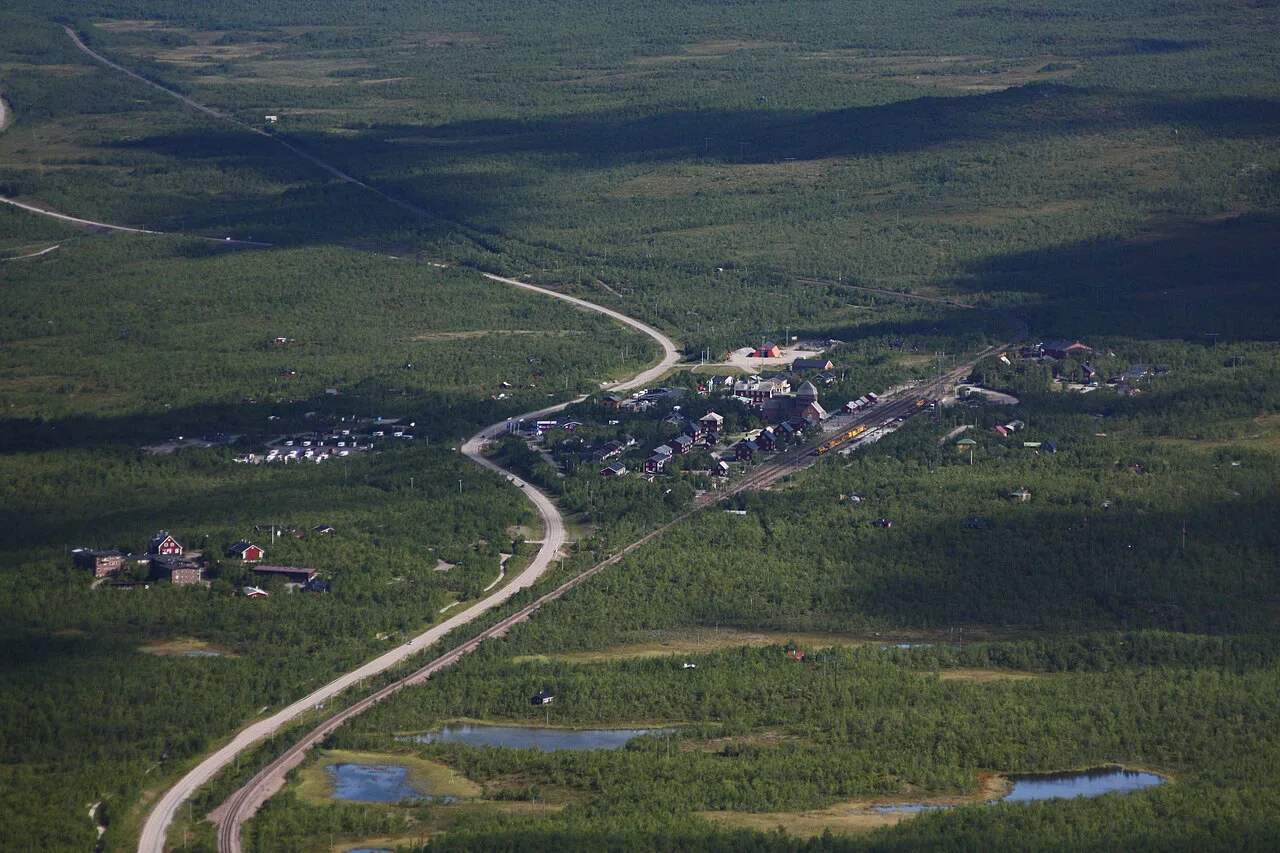
Webcams and recent aurora observations give you a reality check that no forecast can. If observers nearby are reporting a display, the activity is real and you should get outside. If webcams show solid cloud over the valley, save your energy for another night.
Observations also reveal how local conditions vary: one part of the valley can be clear while another is under cloud. Use them alongside your own view of the sky rather than instead of it.
How many nights to allow for a fair chance of clear skies
Cloud is the main variable you cannot control, so give yourself several nights rather than one. A stay of four to five nights in Abisko gives you repeated chances to combine activity with clear sky, and it lets you absorb a run of overcast weather without losing the trip. If aurora is the central purpose, weight your stay toward the darker weeks of the season.
Book accommodation you can enjoy on cloudy nights, whether that means a sauna, a warm lounge or a short walk to a restaurant, and keep your aurora nights flexible. If you want wider regional context on conditions and timing, the Swedish Lapland aurora forecast guide covers the surrounding area.
When the aurora season runs and how dark the nights get
Aurora season in northern Sweden broadly runs from late August or September through early April, when nights are long enough to be dark. Around midwinter the nights are at their longest, which gives you more hours of darkness per day but also short daylight for other activities. By late March and early April the nights shorten quickly, though dark hours remain.
Darkness alone is not enough; the sky also has to be clear. Build your itinerary around the season rather than a single date, and remember that a forecast only describes the coming days. For the village base and how to plan around the season, see the abisko northern lights overview.
What to do on a low-Kp, high-cloud night
Some nights simply will not deliver, and the best move is to plan for them. Abisko has a compact village with food, saunas and indoor space, and STF Abisko Turiststation is a practical base for a mixed itinerary. Check the data once more before bed in case the cloud breaks.
If you want a comfortable alternative base, Abisko Mountain Lodge sits within reach of the same dark ground and the lake shore. Staying close to the park keeps the option of a spontaneous night out open.
Plan Your Visit
Abisko rewards travellers who treat the forecast as a nightly habit. Check the three-day outlook in the afternoon, watch solar wind and Bz as evening arrives, and look at the cloud over the valley before you head out. On clear nights, walk toward the lake and give your eyes time to adjust; on cloudy ones, keep a guided chase in reserve.
Book enough nights to absorb bad weather, stay somewhere close to dark ground, and treat every display as a bonus rather than a certainty. For the park and lake setting, see the guide to Lake Torneträsk and the surrounding trails.
Frequently Asked Questions
How do I read the aurora forecast for Abisko?
Start with the three-day Kp outlook, then look at near real-time solar wind and Bz to see what is arriving in the next hour. Finally, check the cloud forecast for the Abisko valley and any webcams or recent observations. A display needs both activity and a clear sky.
What Kp index do you need to see the northern lights in Abisko?
At Abisko's latitude the auroral oval often reaches overhead at low Kp, so modest readings can still produce a visible arc when the sky is clear. Higher Kp generally means a brighter, more expansive display. Kp values are guidance only, and substorms can occur on quieter nights.
Is the three-day aurora forecast reliable?
Treat it as a planning hint rather than a fixed schedule. The three-day outlook shows likely disturbed and quiet windows, but the timing of solar wind arrival often shifts. Re-check on the day you plan to go out and give more weight to real-time data and the sky above you.
Can I chase the aurora myself from Abisko?
Yes. The village is compact, and walking away from buildings toward open ground gives you darker sky within minutes. You can also ride up to Aurora Sky Station on Mount Nuolja for a higher viewpoint. A guided chase is worth considering when cloud covers the valley.
How many nights should I stay in Abisko for the northern lights?
Plan for four to five nights so that several clear nights can line up with aurora activity. Cloud is the main variable you cannot control, and a longer stay lets you absorb an overcast stretch without losing your chance. Travellers with aurora as the main goal should weight the stay toward the darker weeks.
What time of night is best for aurora in Abisko?
Darkness is the key requirement, so the hours around local midnight usually give the deepest dark. Substorms can occur at any point in the night, so plan to check regularly and stay out in spells rather than waiting for one fixed hour. Midwinter offers the longest dark window.
What does a guided aurora chase from Abisko cost?
Lights Over Lapland lists a last-minute aurora chase on its booking page, where the current price and availability are shown. The last-minute product is bought on a guide's instruction and is valid only on the day of purchase. Check what the chase includes when you book.
What should I do on a cloudy, low-activity night?
Use it for something else and keep an eye on the data. Abisko has food, saunas and indoor space, and nearby accommodation gives you a warm base if the cloud breaks late. Check the forecast once more before bed rather than writing off the whole night.
Sources
Notes for your Arctic winter trip
Optional updates to our northern lights guides.
You might also like
Continue reading
More guides you'll find useful