Abisko in December: Dark Days, Deep Snow and Aurora Nights
Abisko in December means polar darkness, snow-covered trails and aurora chases when skies clear. See tour formats, prices and how many nights to plan.
On this page
December in Abisko strips the day down to a few hours of blue twilight and gives the rest to the aurora. The village sits inside the Arctic Circle in Swedish Lapland, between Lake Torneträsk and the mountains, so the sun barely clears the horizon and the sky stays dark enough for northern lights through most of the clock. It suits travelers who want deep snow, quiet trails and long nights rather than long sightseeing days.
What December does not do is guarantee a display: aurora needs solar activity and clear sky together, and no operator can promise either. What Abisko offers is a mountain setting that shelters the valley from much of the Atlantic cloud that soaks the coast, and a national park with almost no artificial light.
Where Abisko sits and why the dark window matters
Abisko lies in the far north of Swedish Lapland, inside the Arctic Circle, with the national park running along Lake Torneträsk toward the Norwegian border. The village is small and the dark comes early, so you can be out under the aurora well before a normal dinner time.
The U-shaped valley of Lapporten is the landmark that tells you where you are, a notch between two peaks visible from much of the valley floor. It also explains the geography: mountains on both sides, a long lake in the middle and dark slopes rising straight from the shore.
Daylight in December
December is the darkest month of the Abisko year, with the sun skimming below or just above the horizon and only a short window of civil twilight around midday. Treat that window as your daylight and plan the outdoor activity you care about most inside it.
The practical rhythm is a slow morning, a midday walk or a snowmobile or husky trip in the twilight, then dinner and an evening tour that runs well into the night. The Aurora Sky Station chairlift operates as a night experience from the village side of the park, with the restaurant and exhibition at the summit.
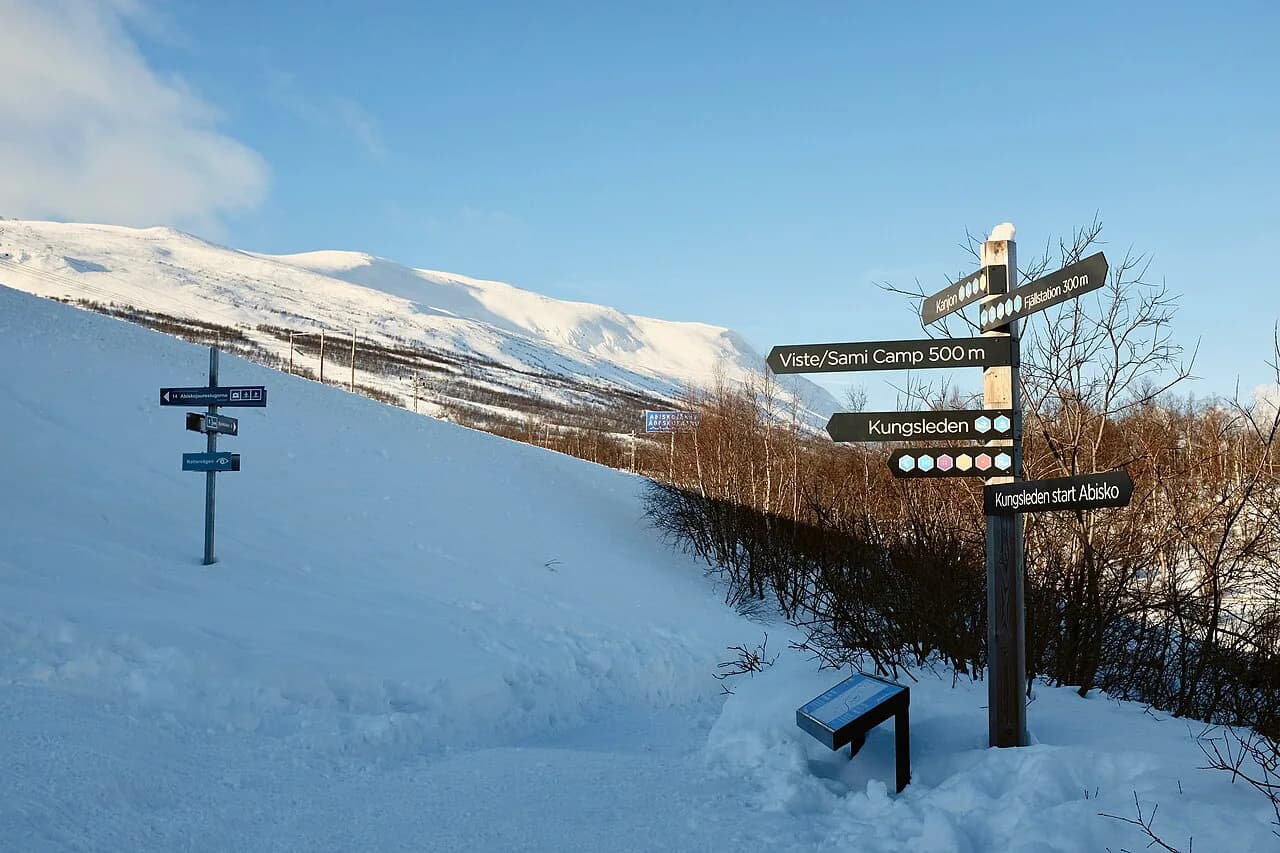
That short daylight is the main trade-off of a December trip. You get maximum aurora hours but limited time for long hikes toward Lapporten or the Kungsleden, which is why many travelers pair December nights with a later-season return.
Snow and temperature in December
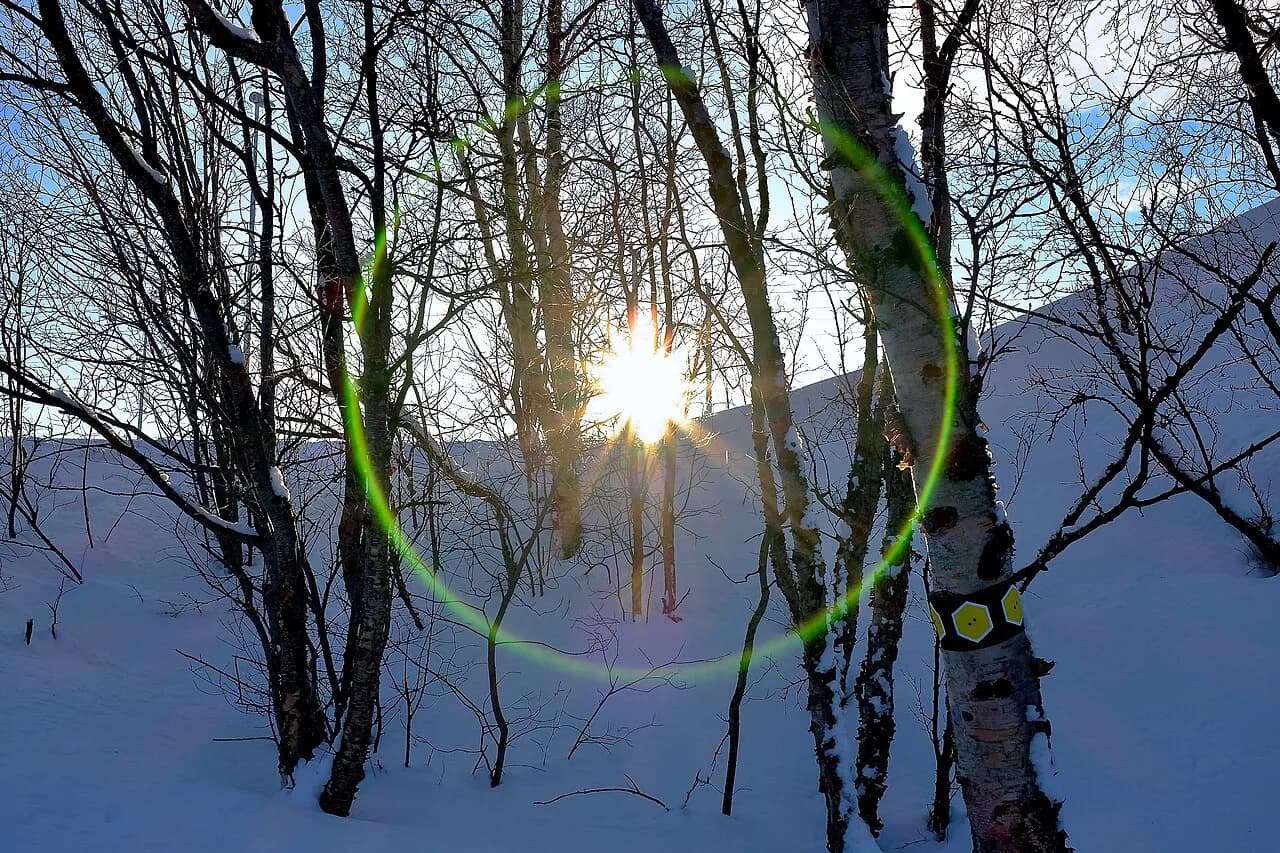
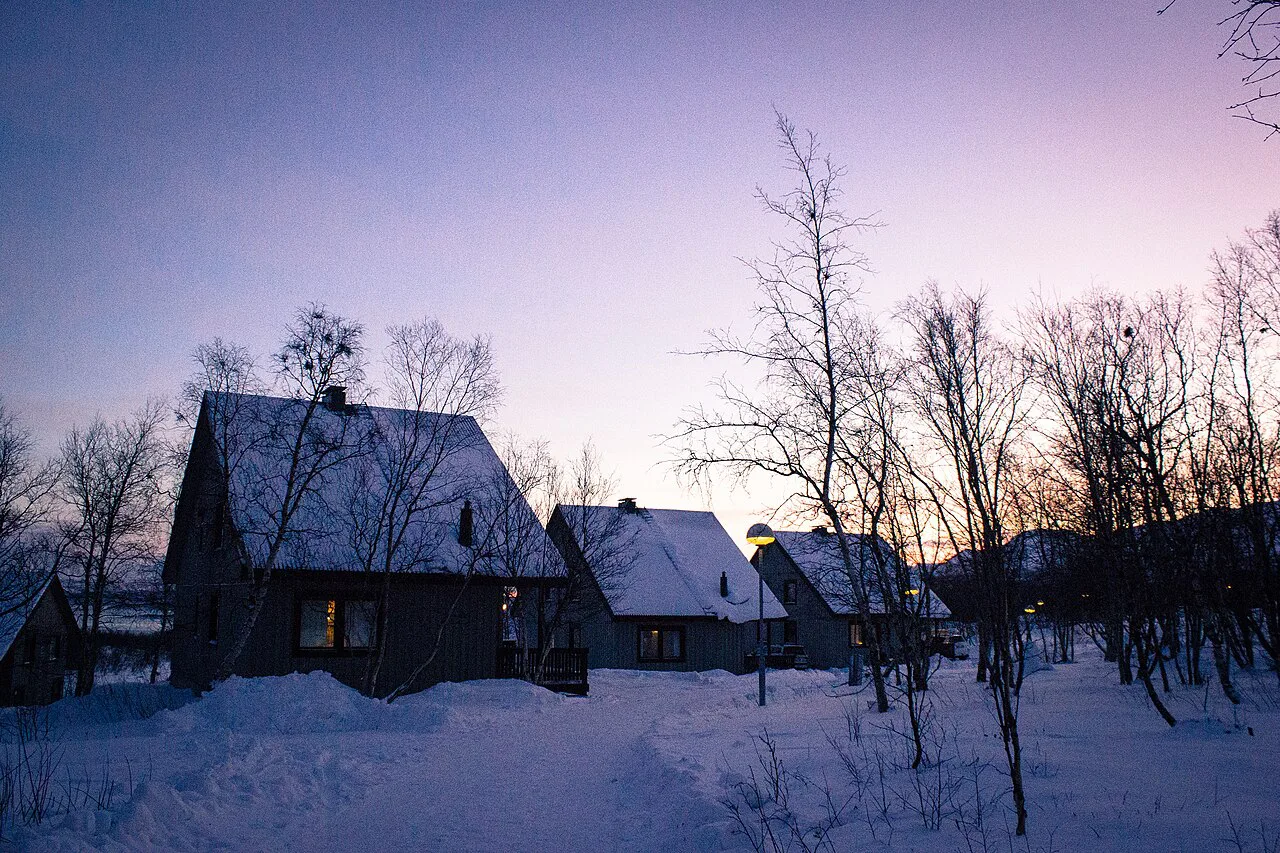
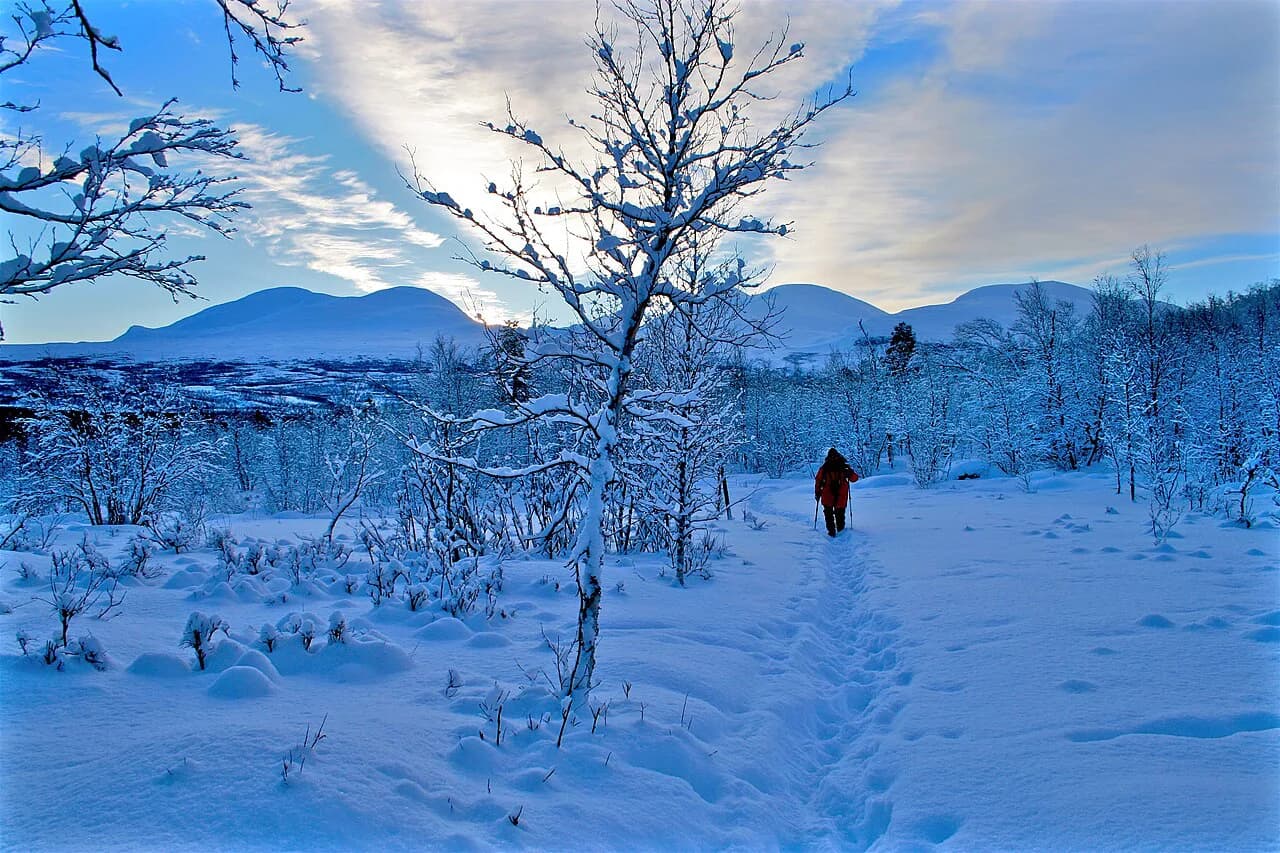
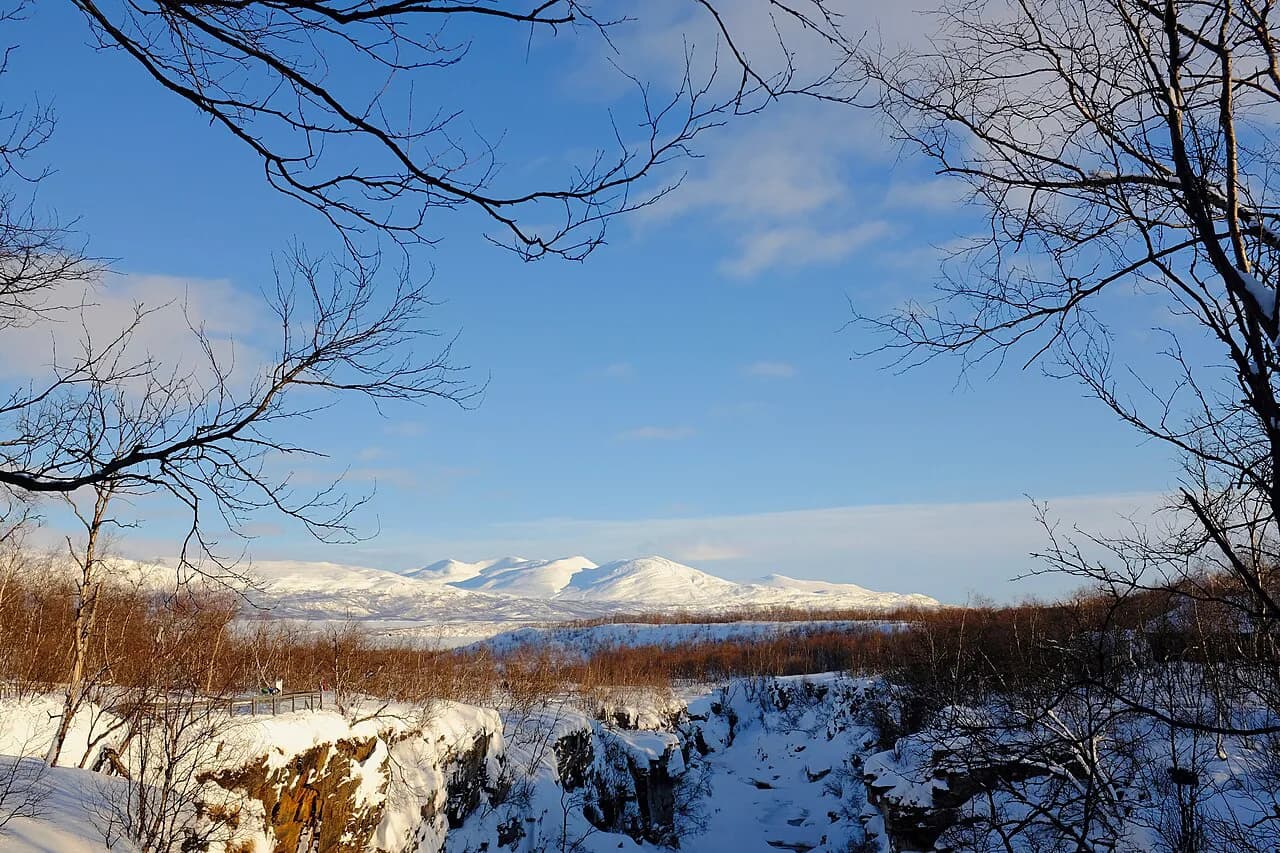
By December the ground is snow-covered and the lake shore freezes, and the forest around the STF Abisko Turiststation turns into groomed tracks and deep powder. Expect genuine Arctic cold, and plan on operators lending thermal suits and boots for their trips rather than relying on town clothing.
Cold is not the enemy so much as exposure: a three-hour snowmobile sled at night feels far colder than the same hours walking in the village. Shorter tours, warm drinks and a base with a sauna or a hot common room make December evenings far more comfortable.
Why the aurora shows here
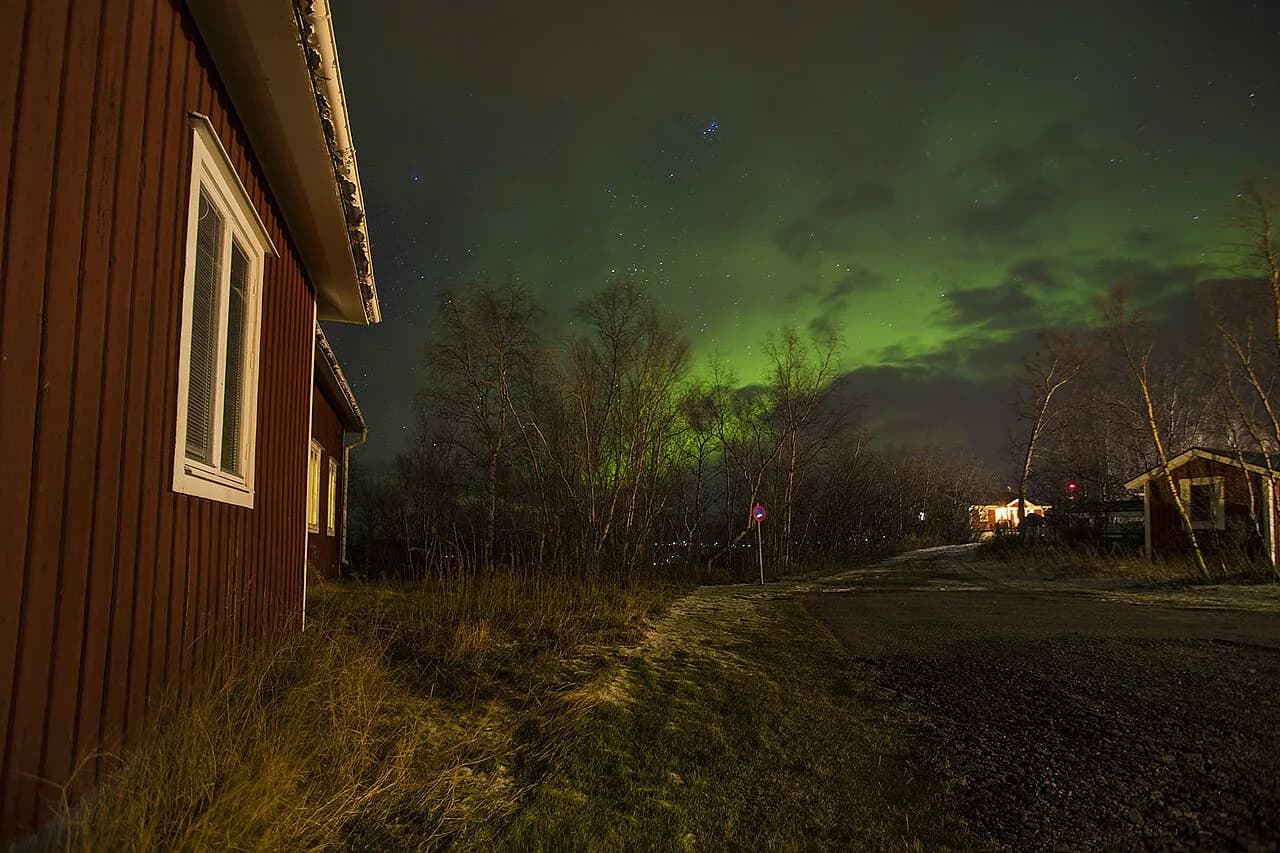
Abisko sits in a rain shadow behind the mountains, so the valley often stays clearer than the Norwegian coast while the coast is buried in cloud. That, plus the near-total absence of light pollution in the national park, is the reason the area has a reputation as an aurora base rather than a sighting guarantee.
The village itself has enough light to soften faint arcs, so guides take guests a short way out onto the lake or into the forest where the sky is darker. Looking north over Lake Torneträsk gives an open horizon for arcs that build low in the sky.
When the aurora season runs
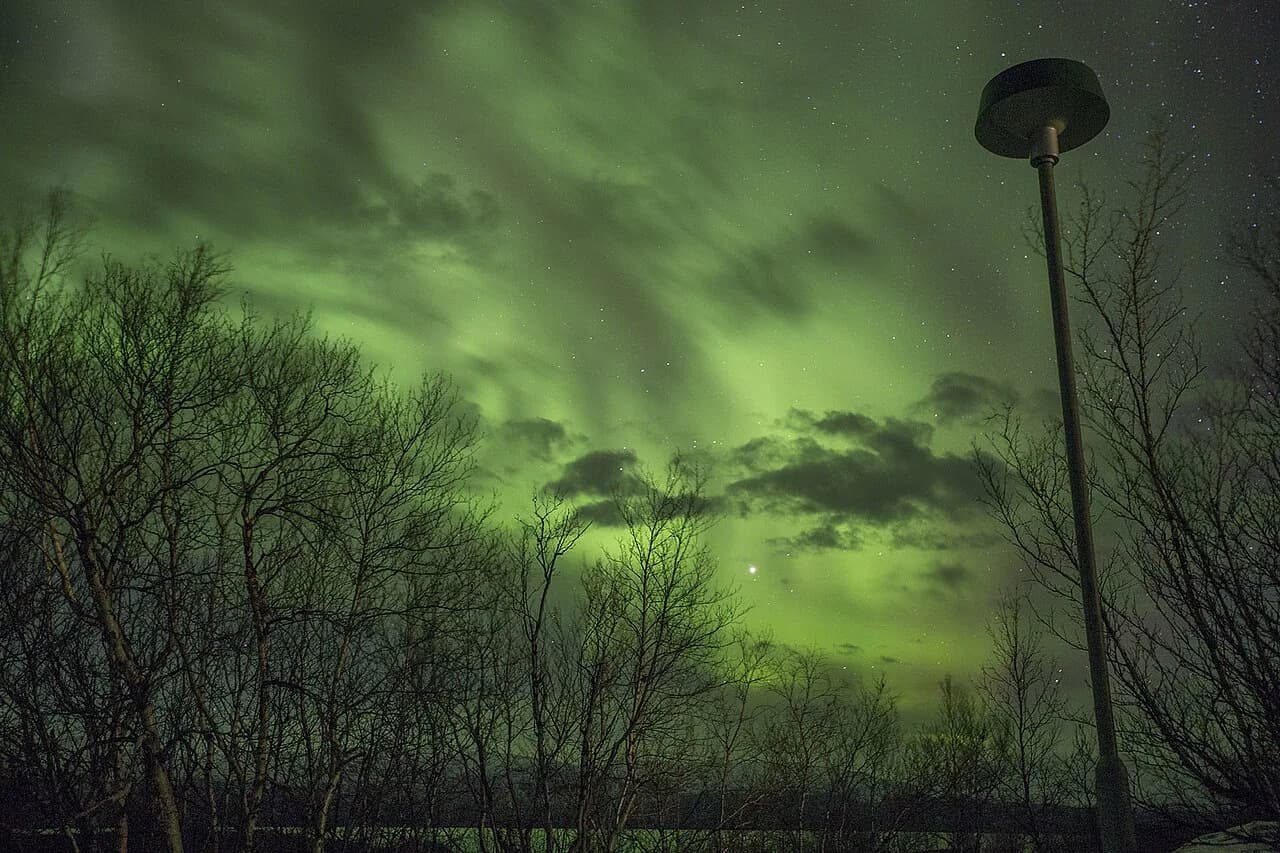
The Abisko aurora season runs from September to early April, and December sits in the middle of it when nights are longest. Displays can appear in curtains, arcs, spirals or coronas, and colour ranges from green to purple, blue or occasionally red, depending on the solar activity at the time.
If daylight matters more than darkness, March brings longer hours for exploring and a spring equinox period, while September offers autumn colour before the snow settles. December trades those longer days for the deepest, longest nights.
Viewing from the village versus the national park
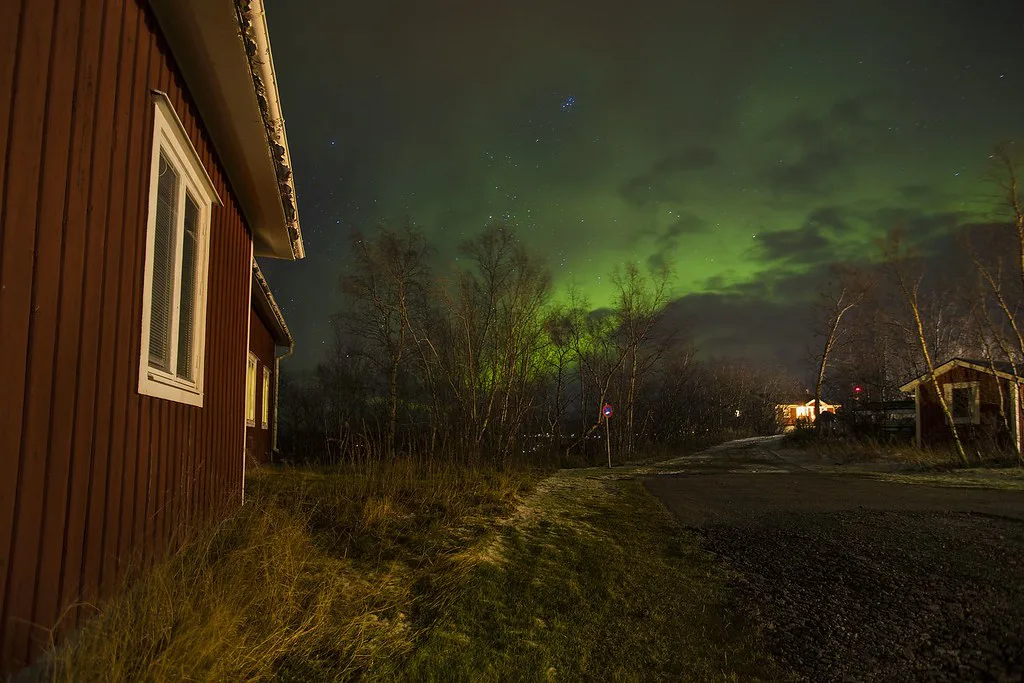
Aurora can appear right outside your hotel in Abisko, and many guests see their first display from the yard without booking anything. Village light is modest but enough to mute a weak arc, so a short walk toward the lake edge or the park boundary improves the view at no cost.
Guided trips take you further into the wilderness where the sky is darker, which makes faint displays more vivid and gives you a guide reading the cloud and the solar forecast. If you have only two nights, a tour plus a village backup night is a sensible split.
The Aurora Sky Station chairlift night
The chairlift up Mount Nuolja to the Aurora Sky Station is Abisko's signature night out, with a summit restaurant, an aurora exhibition and open sky above the valley. The summit sees the aurora often when skies clear, though the lift ride itself is a cold, exposed few minutes and the top is colder than the village.
The easiest time to visit the station is between December and March, which puts your trip squarely in the window. It suits travelers who want a fixed evening plan with dinner and a view rather than a mobile chase, and less well anyone who feels the cold quickly on an open summit.
Guided aurora chases by 4x4, bus and snowmobile sled
Lights Over Lapland runs the main aurora programs out of Abisko, and its chases are the most direct way to hunt clear sky when the valley is cloudy. The Abisko Aurora Chase is a three-hour bus-based hunt from SEK 995, while the Autumn Abisko Aurora Chase uses 4x4 vehicles over four hours from SEK 1095, a better fit for small groups and rougher roads. A private version runs three hours from SEK 12995.
For a slower, lower vantage, the Aurora snowmobile sled tour lasts two hours from SEK 995, with guests riding in a sled pulled by a snowmobile rather than driving themselves. It is the gentlest option for families and anyone who wants to sit back and watch the sky.
A daytime alternative is the Arctic Nature & Wildlife Spotting Tour, a two-hour snowmobile sled safari from SEK 850 through the snowy landscape around Abisko. Reserve it for the short daylight window and keep the night free for aurora.
Aurora photography tours and what beginners get from them
The Ultimate Aurora Photo Adventure runs four hours from SEK 1595 with a professional aurora guide, aimed at guests who want help with camera settings as well as a good location. If you own a camera but have never shot at night, this is the most efficient way to learn exposure times and framing in one evening.
For self-guided photography, a tripod and exposures from a few seconds up to around twenty give the best results, with a wide lens, a wide aperture and a high ISO setting. Practise in the village on a clear night before you pay for a guided shoot.
Husky sledding, snowmobiling and Sami camp visits in December snow
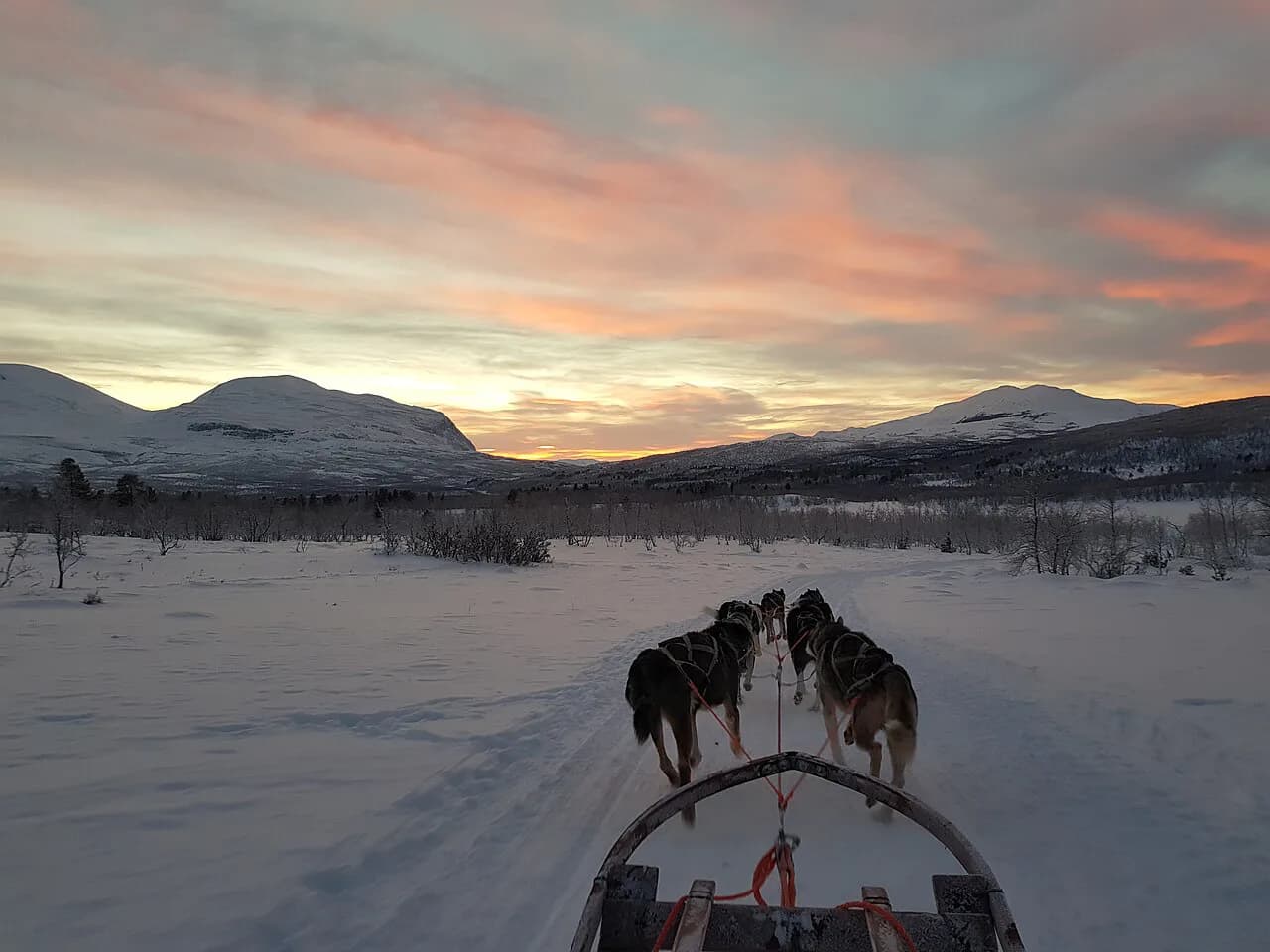
Beyond aurora, the December snow supports husky sledding, snowmobile safaris, snowshoeing and ice climbing, all run from the Abisko area with guides and lent thermal gear. Sami camp visits and wildlife outings with a local guide add cultural context to the landscape you are traveling through.
Book these for the midday twilight and keep the evening for sky-watching, since a cold sled ride in the dark and an aurora tour back to back rarely work well. Most operators run the same activities across the winter, so December dates fill around the holiday weeks.
How many nights to allow for a fair chance of clear skies
Aurora depends on solar activity and clear sky, and a single December night can be clouded out or quiet even in Abisko. Three or four nights gives you repeated chances to catch a clear window and a backup if one tour is cancelled or the cloud refuses to break.
Build in one flexible night with no activity booked and see what the sky does, rather than stacking a paid tour on every evening. If the trip is only two nights, choose one guided chase and one village night near the lake for the best value.
Getting there in December
The usual route is a flight to Kiruna Airport, then a transfer or the train through the mountains to Abisko, with rail also connecting onward from Kiruna and from the Norwegian side. Winter road conditions can slow transfers, so aim for a daytime arrival that leaves the evening free.
Abisko is a small village spread along the lake and the railway, so once you arrive you walk or join a tour rather than needing a car. That makes a rail-based December trip realistic without renting a vehicle for icy roads.
Where to sleep: mountain station, lodges and Icehotel
Abisko Mountain Station sits inside the national park minutes from the mountain, with husky sledding and snowshoeing available from the hotel and locally sourced meals in the dining room. It is the most direct base for park trails and for the chairlift.
The STF Abisko Turiststation is the other main base, a short walk from the station and the lift, with a sauna and self-catering options for longer stays. For a splurge, the Icehotel is just over an hour's drive away and works as a one-night add-on rather than a base.
Glass igloos and aurora cabins trade heat and darkness for a view from bed, and December's long nights make that more worthwhile than in March. If you sleep hot or need true darkness, a standard lodge room plus a night tour is usually the better trade.
December trade-offs: cold, short days, holiday demand and value
December gives you the most aurora hours and the most snow, at the cost of very little daylight and hard cold on long nights outdoors. Anyone who wants to combine aurora with hiking or photography in daylight should look at March or September instead.
The holiday weeks around Christmas and New Year are the most heavily booked period of the winter, so tours and lodges fill early and prices sit at their peak. Shifting a week earlier or later usually buys more availability and a calmer village.
Who December in Abisko Suits
December in Abisko suits travelers who want deep snow, near-constant darkness and a real Arctic night, and who accept that cloud can still hide the aurora. Book three or four nights, put one guided chase and one summit night in the plan, and leave a village night in reserve.
Anyone who needs daylight for hiking, wants warmer temperatures or is traveling mainly for photography in good light should come in March or September instead. Norway's coast is a comparable aurora region, but Abisko's rain-shadow valley is the reason travelers pick this side of the border. If you want a coastal counterpoint on the Gulf of Bothnia rather than a mountain valley, compare it with Luleå in December before booking.
Frequently Asked Questions
Is Abisko inside the Arctic Circle?
Yes. Abisko sits in the far north of Swedish Lapland, inside the Arctic Circle, with the national park running along Lake Torneträsk toward the Norwegian border. That latitude is why December days are so short and the sky stays dark for most of the clock.
Can you see the northern lights in Abisko in December?
December is inside Abisko's aurora season, which runs from September to early April, and the long nights give you plenty of dark hours. Whether a display appears depends on solar activity and clear sky together, and no tour can guarantee it. Booking several nights raises your chances of catching a clear window.
How do you get to Abisko in December?
Most travelers fly to Kiruna Airport and continue by transfer or by train through the mountains to Abisko, and rail also connects onward from Kiruna and from the Norwegian side. Winter road conditions can slow transfers, so a daytime arrival that leaves the evening free works best. The village is small and spread along the lake, so you can walk or join a tour once you arrive.
How many nights should I plan for an aurora trip to Abisko in December?
Three or four nights gives you repeated chances to catch a clear window and a backup if one tour is cancelled or the cloud refuses to break. Keep one evening free of booked activities, and if you have only two nights, choose one guided chase plus one village night near the lake.
Sources
Notes for your Arctic winter trip
Optional updates to our northern lights guides.
You might also like
Continue reading
More guides you'll find useful