Akureyri in February: Daylight, Snow and Northern Lights
Plan Akureyri in February with realistic daylight, temperatures and snow, plus aurora nights, skiing at Hlíðarfjall, husky sledding and whale watching.
On this page
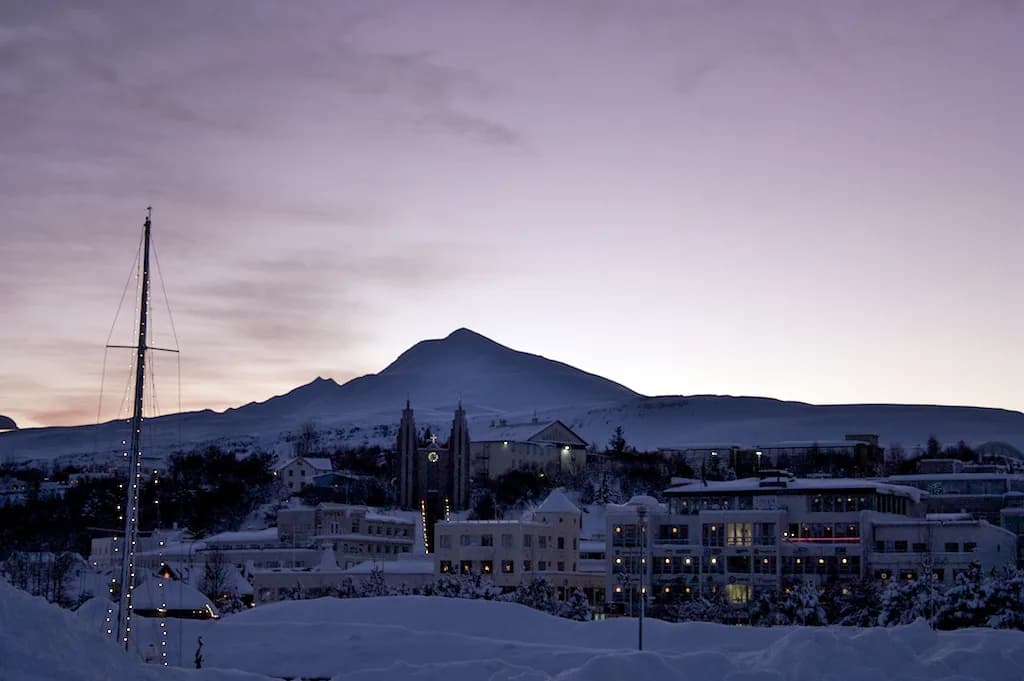
Akureyri in February gives you a compact northern town under reliable snow, with ski slopes five kilometres up the hill and dark fjord shoreline minutes from the centre. Days are short but stretching quickly, so you can fit a morning activity, an afternoon soak and a late aurora drive into the same trip. It suits travelers who want winter proper without Reykjavík's crowds, and who accept that cloud, wind and snow can rewrite a day's plan.
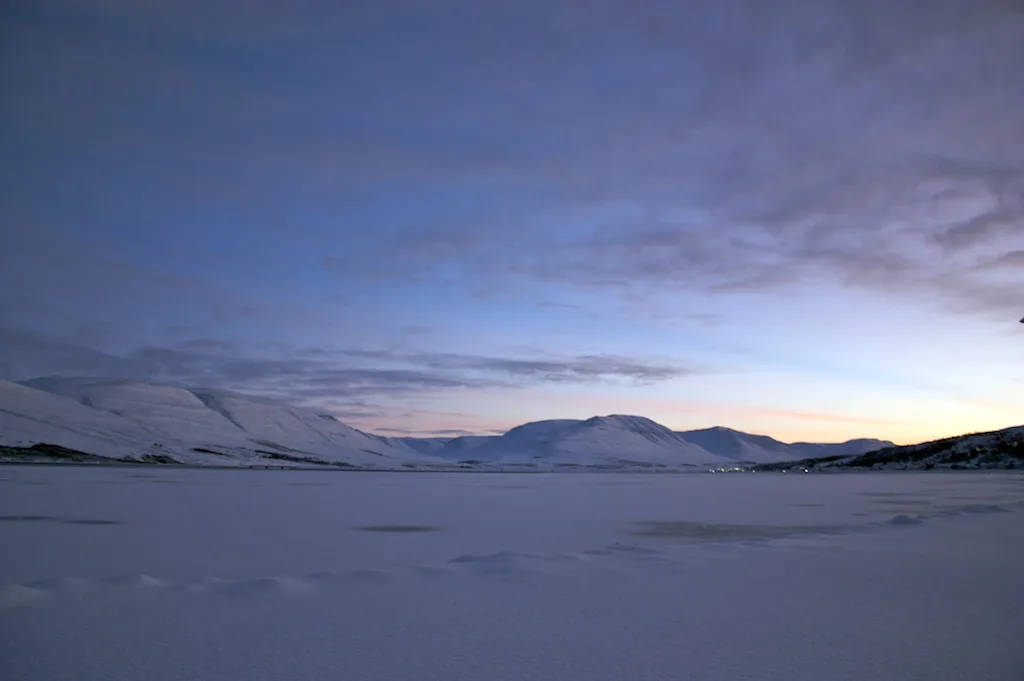
This north Iceland town sits close to the Arctic Circle, and the surrounding Eyjafjörður fjord is Iceland's longest, running some 38.5 miles with depths down to 200 metres. That geography matters twice over in February: it puts you under aurora-favourable latitudes and gives you a long, dark corridor of coastline to chase clear sky along.
Why February suits Akureyri
February pairs two things Akureyri does well: a deep, settled snow cover and nights that are still long enough for aurora watching. Visitor numbers sit far below summer levels, with December through February seeing roughly one-third the arrivals of the peak months, so tours and pools feel calmer. The trade-off is weather that can serve snow, sleet, rain and sunshine inside a single day. For the same month compared across the whole island, see this guide to Iceland in February.
For a northern lights trip, February is a strong month because darkness arrives early enough that you are not waiting until midnight to start a chase. At the same time, daylight is returning fast, so the days are usable for skiing, whale watching and day trips rather than sitting in near-permanent dusk.
How far north Akureyri sits and why the aurora shows over Eyjafjörður
Akureyri lies in northern Iceland, close enough to the Arctic Circle that the auroral oval passes overhead on active nights. The town looks across the Eyjafjörður fjord to mountain ridges, so the northern horizon is open water and low hills rather than a wall of buildings. That combination of latitude and open northern sky is why the area works as a base from late August through early April.
Aurora visibility depends on solar activity and cloud cover, and no operator can promise a display. What you can control is where you stand and how many nights you give yourself: a clear, dark sky away from town lights is the single biggest improvement you can make. Kp forecasts are a rough guide to geomagnetic activity, not a schedule of what will appear above the fjord.
Daylight in February: from roughly seven hours to ten
Daylight grows noticeably across the month. Early February delivers about seven hours of daylight, and by the end of the month you can expect upward of ten hours, with each day gaining roughly six minutes. Plan your outdoor activity for the middle of the day and leave mornings and late afternoons for museums, pools and the drive out to a dark viewing spot.
Those short days shape a February itinerary more than any other factor. A whale watching trip, a husky sled ride and a geothermal soak are realistic in one day only if you start early and keep driving distances modest, because you will be finishing in dusk.
February weather: temperature, wind and snow
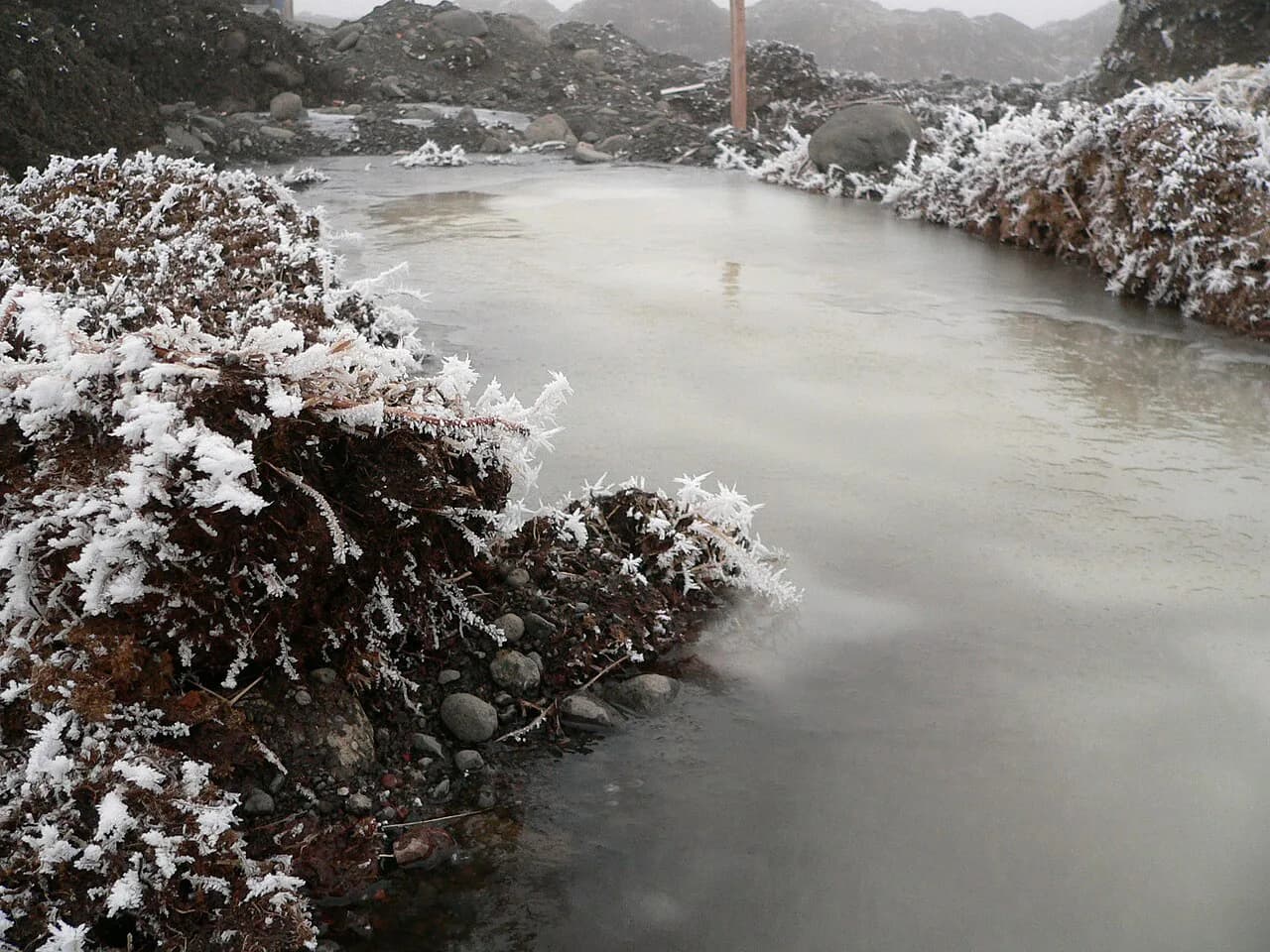
Expect a country-wide February range of about -3°C to 1°C, with northern Iceland a little colder, darker and icier than the south. High winds and fast-changing conditions are normal, and snow, sleet, rain and sunshine can all arrive on the same afternoon. Snow cover in and around Akureyri is typically established in February, which is what makes the skiing and sledding season work.
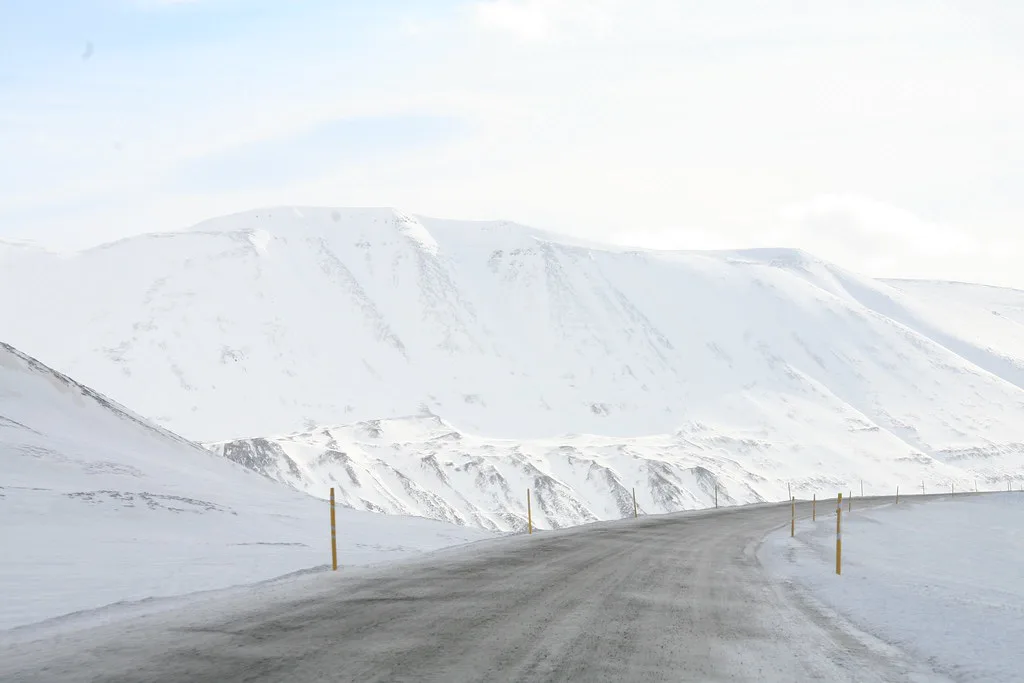
The practical consequence is flexibility: build one indoor or geothermal option into each day so a storm does not waste it. Road conditions on the passes toward Lake Mývatn and along the fjord can shift quickly, so check the road authority's live map before setting out on a long day trip.
When the aurora season runs and what February nights offer
The aurora season in northern Iceland runs from roughly late August or September through early April, bracketed by the dark nights on either side of summer's midnight sun. February falls comfortably inside that window, with long nights and early darkness that let you chase before dinner or after. It is also a month when snow on the ground reflects any light and makes the landscape readable at night.
Treat February as a good month rather than a guaranteed one. Clear skies, not solar maximum, decide most trips, and a cloudy week in February is entirely possible. Giving yourself several nights is the only reliable strategy, and it is why a three-night minimum makes sense for aurora-focused visits.
Where to watch near town: dark roads and hills above the fjord
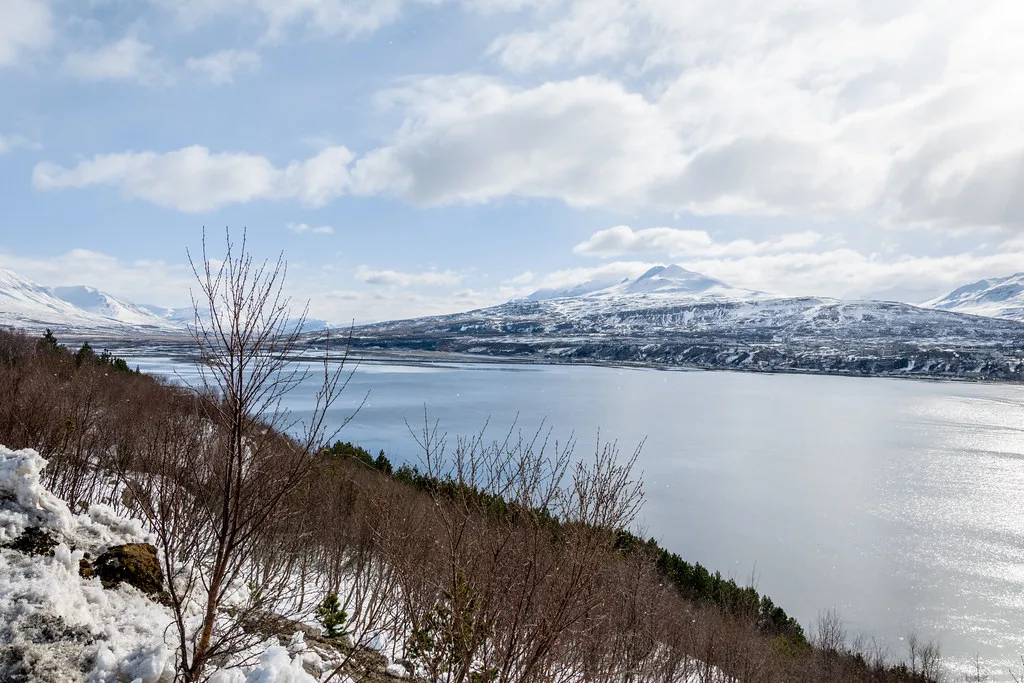
The easiest dark-sky option is simply to leave the town's light dome behind along the fjord shoreline roads, where the northern horizon opens up over the water. The hills above town, including the road up toward the ski area, also lift you above street lighting. On foot, the quieter edges of town and the botanical garden grounds, which stay accessible through winter, give you a dark corner without a drive.
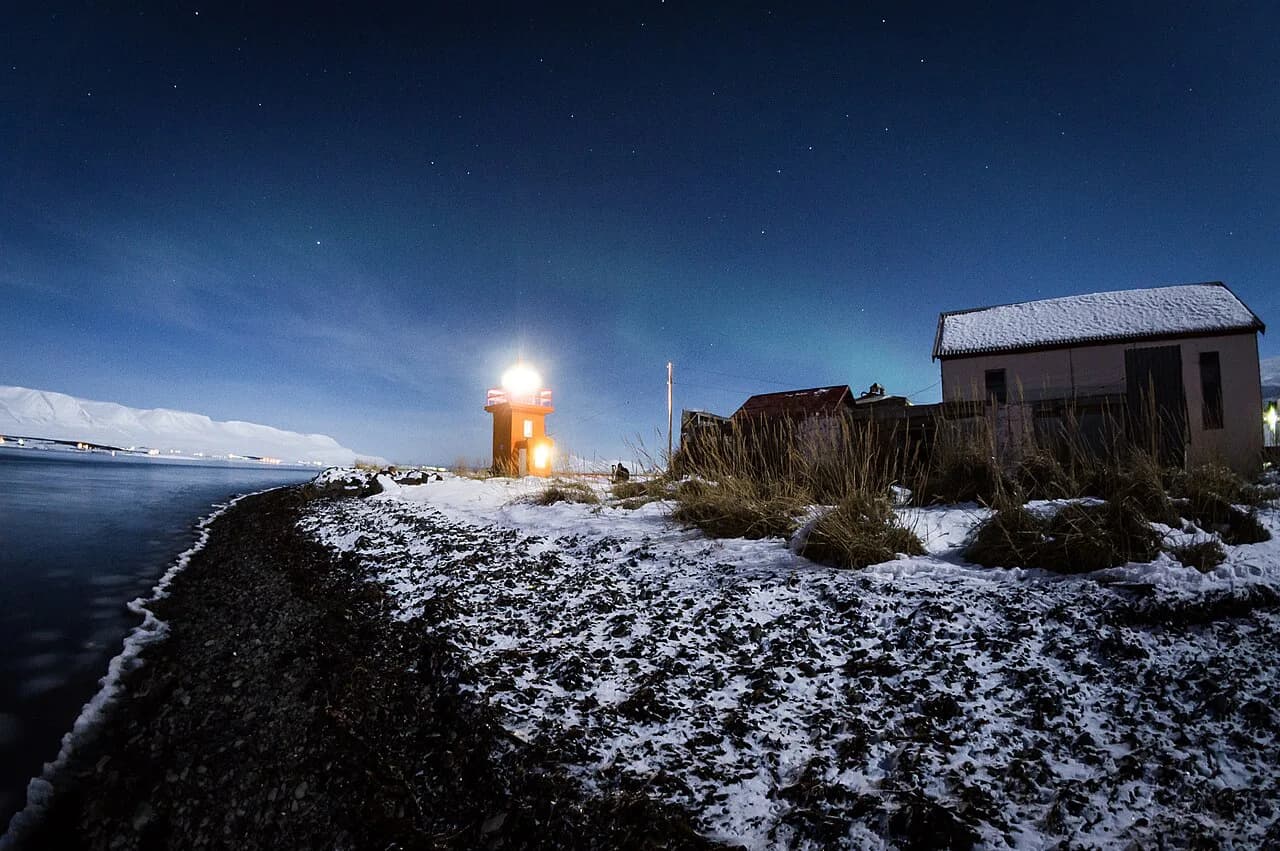
Guided aurora hunts from Akureyri typically run in the evening and drive out into the hills and countryside around the town, moving between spots to find gaps in cloud. Operators usually lend thermal suits and boots for the night, which matters when you are standing still for an hour or more. That mobility is the main advantage over parking yourself in one place.
Self-driving versus a guided northern lights tour
If you are comfortable on winter roads, a rental car gives you the freedom to follow a clearing sky along the fjord and to retreat when cloud closes in. The costs are winter tyres, potential road closures and the need to read conditions yourself. For a first February trip, a guided hunt removes that risk and often covers more ground in one night.
The honest trade-off is cost against adaptability. A tour bundles transport, a driver who knows the local roads and a fixed departure time; self-driving is cheaper per night but only pays off if you are willing to drive an hour or two in the dark on uncertain surfaces.
How many nights to allow for a fair chance of clear skies
Three to four nights in Akureyri gives you a reasonable shot at one clear evening, and five gives you margin for a full cloudy stretch. Pair town nights with a night or two further out around Lake Mývatn, where light pollution drops and the landscape opens up. If aurora is the main purpose of the trip, weight your itinerary toward more nights rather than more activities.
Skiing at Hlíðarfjall: season, floodlit runs and the five-kilometre run up from town
Hlíðarfjall, about five kilometres up from the town, is one of Iceland's best-known ski areas and opens from the end of November until early May. Its main runs are floodlit, which matters in February when daylight is still limited but the evenings are long and dark. The location yields views down over Akureyri and the fjord between runs.
Check the resort's own snow report and lift status before committing a day, since February conditions vary and wind can shut upper runs. Confirm the day's opening and any bus service to the slopes before you set out from town, as transport options change with conditions.
Husky sledding on the trails outside Akureyri
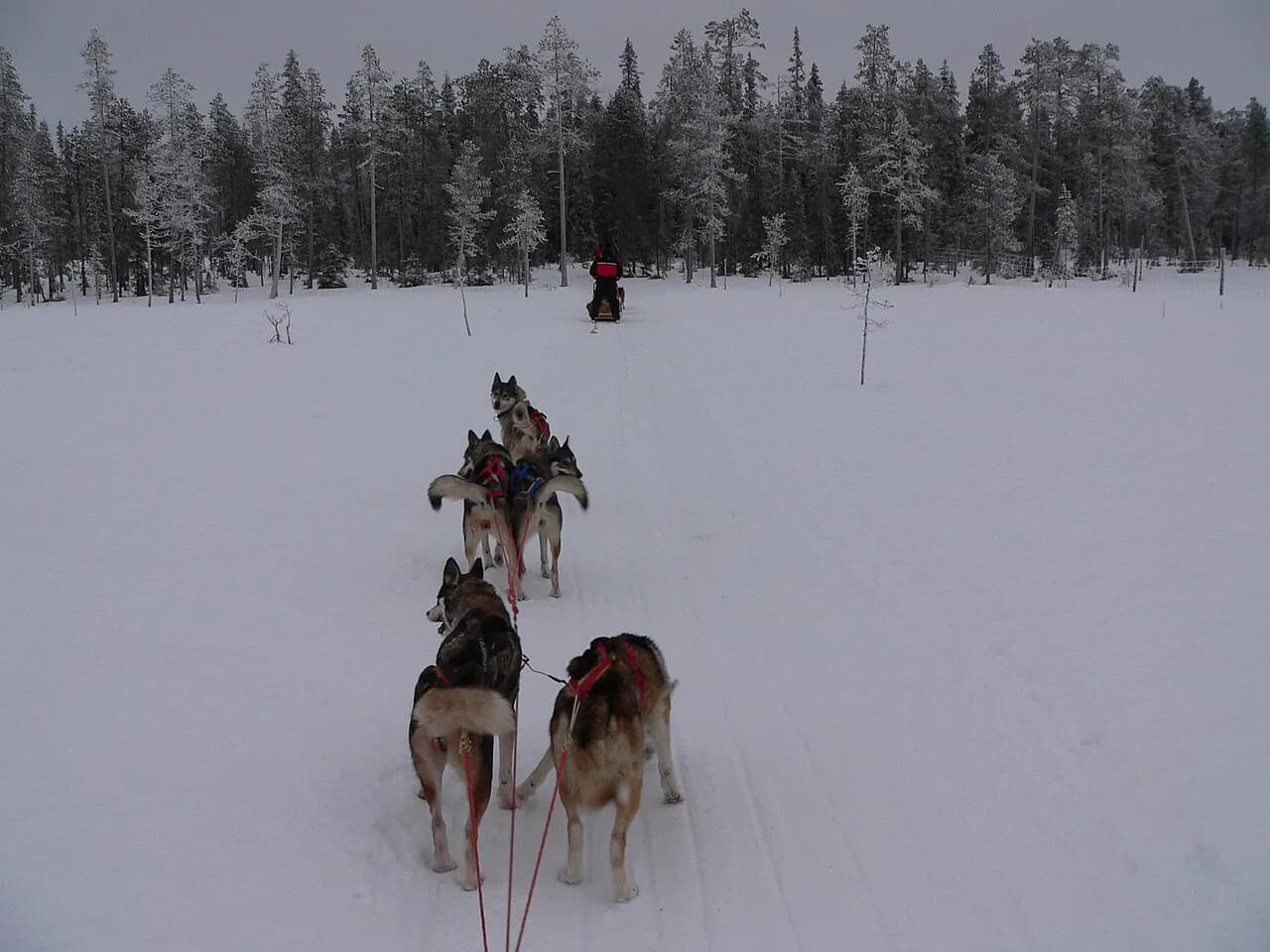
Husky sledding runs out of the countryside around Akureyri, with Inspiration Iceland among the companies offering trips where you handle the sled yourself rather than riding as a passenger. Trails follow snow-covered paths beside frozen rivers with mountains on either side; the sledding route on one such tour runs about four kilometres. Expect instruction on managing the dogs before you set off.
Book directly with Inspiration Iceland to confirm current tour lengths, prices and whether a driver or passenger format is available, because sledding formats differ between companies and seasons. Sledding is a daytime activity, so it slots neatly into February's short daylight window.
Whale watching from the harbour in winter
Eyjafjörður is regularly visited by humpback whales, and Elding Whale Watching runs trips from the downtown harbour north up the fjord. The company offers a free second trip if your first yields no sightings. Whale watching in February is a genuinely cold commitment: you are on open water in wind, and the crew's ecological commentary is a large part of the experience.
Arrive early to claim a spot along the side of the boat rather than the bow or stern, and expect whales to stay under for several minutes between surfacing. Confirm sailing times and whether winter departures are running before you build a day around it.
Warming up: geothermal pools, the Hof Cultural Centre and Into the Arctic
Akureyri has two geothermal swimming pools, the indoor Glerarlaug and the outdoor Akureyri Thermal Pool, both with hot tubs and slides and both a good way to end a cold afternoon. The outdoor pool in falling snow is the quintessential February experience here, and the water does the warming for you.
Into the Arctic is a small museum on Arctic exploration and the local area; entry was reported at around £10 with lifetime access, but treat that as a past report and confirm the current ticket with the museum. The Hof Cultural Centre is the town's circular cultural venue for exhibitions, shows and concerts. Check both for winter programming before you go.
For a geothermal soak with a view, the Forest Lagoon, Akureyri sits across the fjord from town and pairs well with a short drive and a dark-sky stop on the way back.
Museums, the Christmas Garden and the old town on short days
Akureyri packs a surprising number of museums into a small town: the Akureyri Museum, David's House, Nonni's House, the Aviation Museum with its 28 full-sized aircraft, the Industrial Museum, the Motorcycle Museum, the Art Museum and the Toy Museum. Many run shorter hours or close in winter, and the 24-hour museum pass only pays off if you line up several that are open.
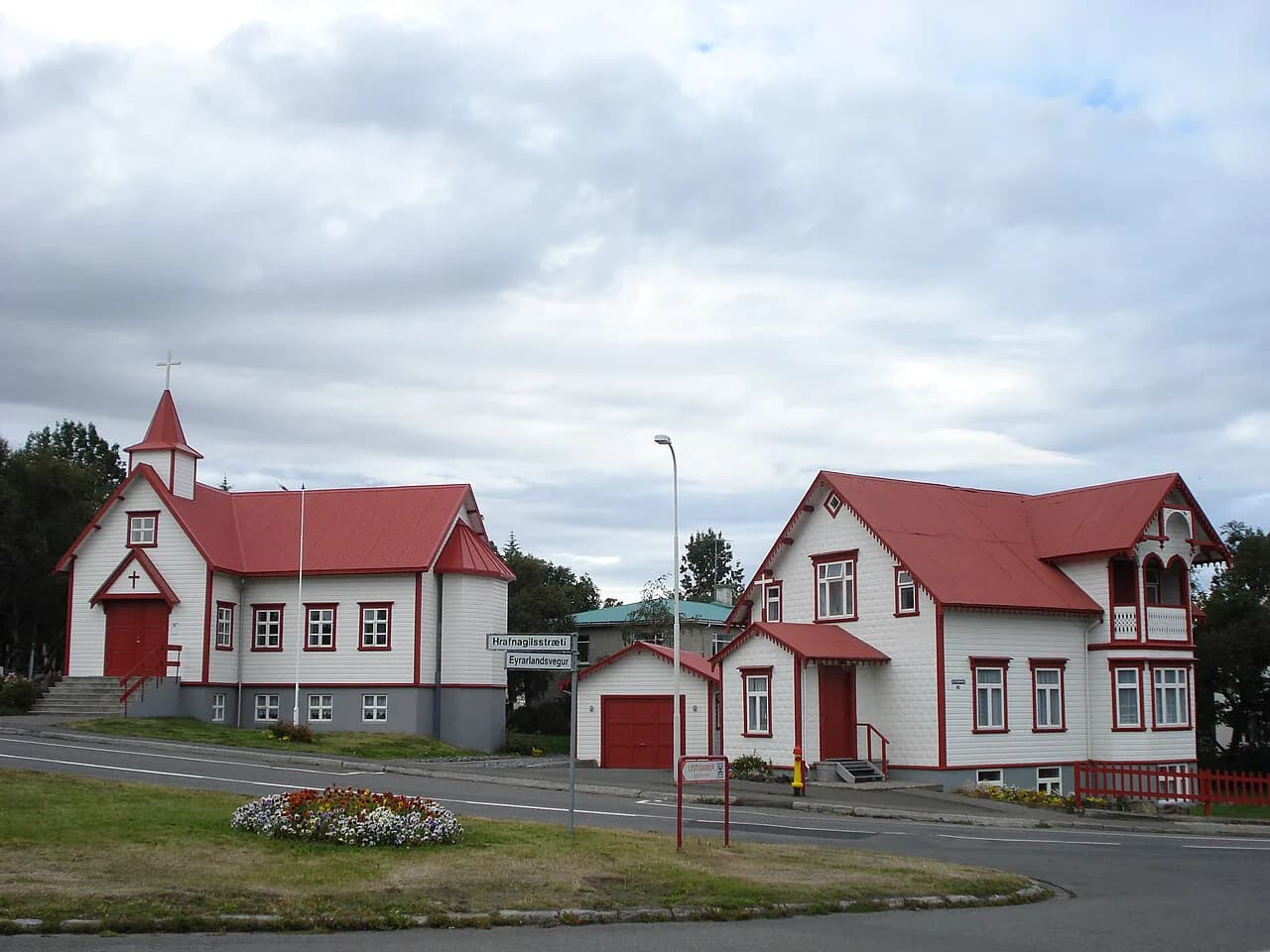
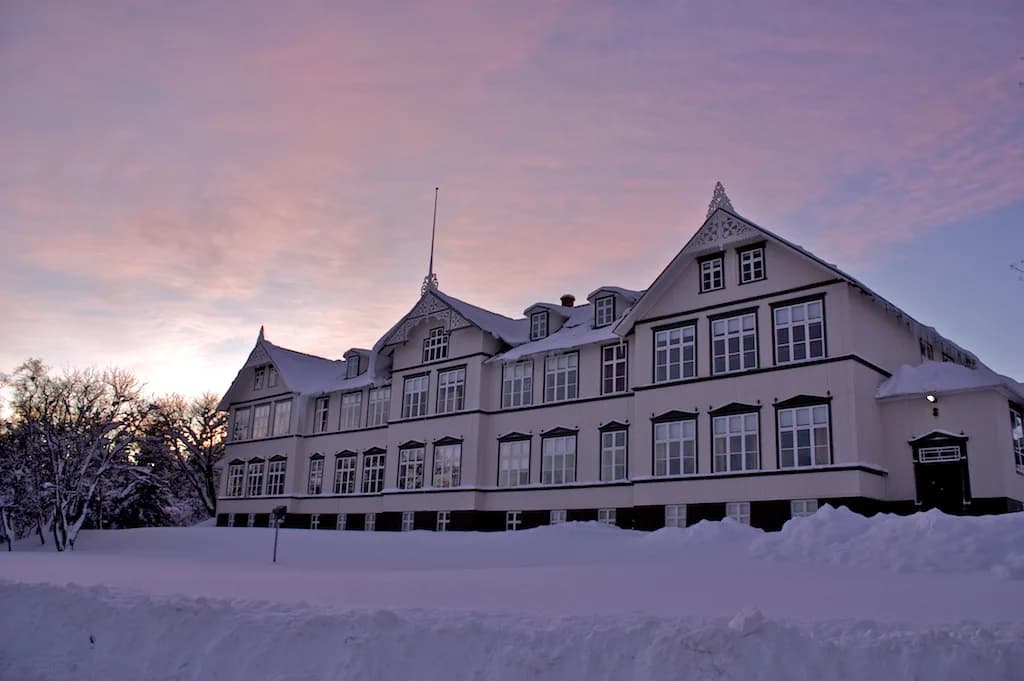
The old town between the airport and the modern centre has the oldest houses, including Laxdalshus from 1795, plus the black-tarred museum church moved from across the fjord. The Christmas Garden on the edge of town is a museum and shop dedicated to Icelandic Christmas and the Yule Lads, open year-round. These are the anchors for a short February day when the weather closes in.
Day trips: Goðafoss, Lake Mývatn and the Mývatn Nature Baths
Akureyri works as a base for northern Iceland's headline sights: Goðafoss waterfall, the Skútustaðagígar pseudo-craters at Lake Mývatn, the Dimmuborgir lava formations and the Hverir mud pools. Laufás turf houses are part of the Akureyri Museum and can only be seen from the outside during winter. Distances are manageable in a day, but February light is short and road conditions can add hours.
At Mývatn, the Mývatn Nature Baths offer a quieter geothermal soak than the south's better-known lagoons, and they are a natural stop on the drive back to Akureyri. Further northeast, GeoSea in Húsavík uses geothermal seawater and is another option if you are extending your route along the coast.
Getting there and around: flights, the five-hour drive and free town buses
Akureyri has its own airport, and a short domestic flight from Reykjavík is the fastest way north in winter; the drive takes around five hours in good conditions and considerably longer when roads are poor. Once in town, the centre is compact and walkable, and the local buses are free across six routes, which helps when the hills are icy.
If you are planning a wider February loop, remember that some minor highland roads can be impassable in snow, so a 4WD or a Super Jeep transfer may be the realistic option.
February events and the last of the winter season
Iceland's February calendar includes the Winter Lights Festival in Reykjavík at the start of the month, Öskudagur on Ash Wednesday when children dress up and collect cream puffs, and the List í ljósi art-light event in Seyðisfjörður in the middle of the month. These are mostly outside Akureyri, so treat them as add-ons if your route passes through.
February is the last full month of the deep winter season in the north, with skiing running and snow still reliable before March lightens the nights. For a holiday that leans on snow, short days and aurora, it is often a better fit than the brighter but lighter nights of late March.
Who February in Akureyri suits and who should look elsewhere
February suits travelers who want snow underfoot, a real chance of northern lights and a compact base with skiing, sledding, whales and geothermal pools within easy reach. It rewards people who build slack into the plan and who treat cloud as part of the trip rather than a failure. The town's mild winter temperatures mean it is manageable rather than extreme.
Look elsewhere if you need guaranteed sunshine, long daylight hours for hiking or self-drive touring deep into the highlands. Late spring and summer deliver long days and open roads, but not the dark nights. Those are the two directions: come in February for the snow and the night sky, or wait for the midnight sun.
Plan Your February Trip
Build a February Akureyri trip around a three- to five-night stay, with one daytime activity, one geothermal soak and one aurora attempt per day as your working rhythm. That gives you room to reshuffle when the weather turns without losing the trip.
Book skiing, whale watching and husky sledding directly with operators so you have their latest schedules and conditions, and keep the daylight window in mind when you set departure times. With realistic expectations about cloud, a February visit to Akureyri delivers deep snow, quiet roads and long, dark nights over the fjord.
Frequently Asked Questions
What is there to do in Akureyri in February?
February offers skiing at Hlíðarfjall, husky sledding on trails outside town, whale watching from the harbour, geothermal swimming and a cluster of museums and the old town. Days are short, so pick one main activity per day and keep a backup for bad weather.
How many hours of daylight does Akureyri get in February?
Roughly seven hours at the start of the month, rising to about ten by the end, with each day gaining approximately six minutes. Plan outdoor activities for the middle of the day and keep museums or pools for the early and late hours.
Can you see the northern lights in Akureyri in February?
February sits inside the aurora season and has long, dark nights, so it is a strong month for trying, but displays depend on solar activity and clear skies. Give yourself several nights and drive or join a tour away from town lights to improve your odds.
How cold is Akureyri in February?
Expect a country-wide range of about -3°C to 1°C, with the north a little colder, icier and darker. Wind and fast-changing conditions matter more than the raw temperature, so plan flexibly around weather.
Is there snow in Akureyri in February?
Snow cover is typically established in February, which is why the ski area and sledding tours can operate. Conditions vary, so check the ski resort's snow report and local road status before committing a day to the slopes.
How many nights do you need in Akureyri for the northern lights?
Three to four nights give a fair chance of at least one clear evening, and five provide margin for a cloudy stretch. If aurora is the main goal, trade activities for extra nights rather than trying to do everything.
Can you ski near Akureyri in February?
Hlíðarfjall is about five kilometres up from town and operates from the end of November until early May, with floodlit main runs. February is well inside the season, though wind can affect which runs open, so check the resort's status.
Sources
Notes for your Arctic winter trip
Optional updates to our northern lights guides.
You might also like
Continue reading
More guides you'll find useful