Iceland in February: Daylight, Weather and Northern Lights
February in Iceland brings cold, snow and rapidly growing daylight, plus long dark nights that suit aurora hunting and guided ice cave tours.
On this page
February gives you Iceland at its most wintry: snow lying on the hills, geothermal pools steaming against cold air, and nights long enough to make aurora watching worthwhile. It suits travellers who want the northern lights as the centrepiece of a trip and are happy to build days around short daylight, wind and the occasional closed road rather than mild weather.
The month is one of the coldest and snowiest in the country, yet daylight is climbing fast. That combination is unusual: you keep the long dark evenings that the aurora needs while gaining usable hours for the Golden Circle, the south coast or an ice cave.
Why February suits an aurora-focused winter trip
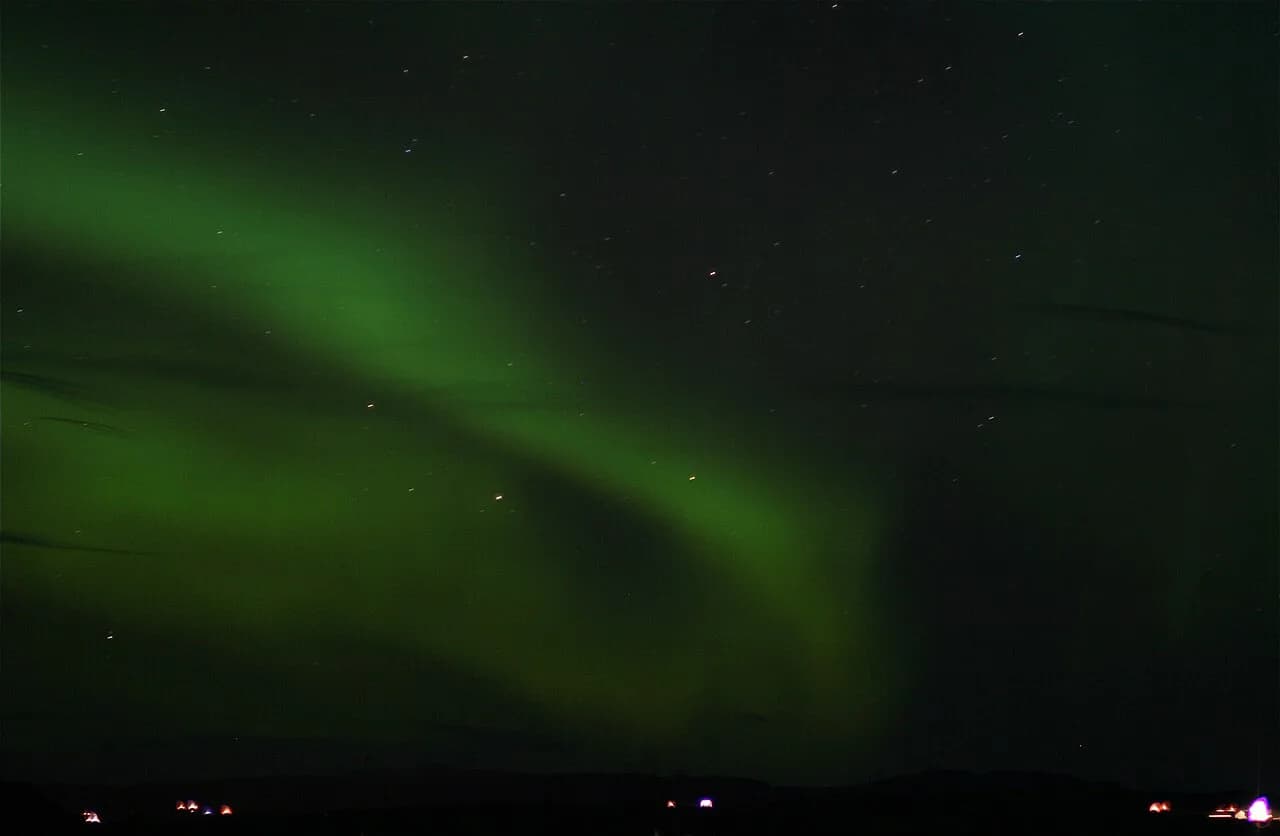
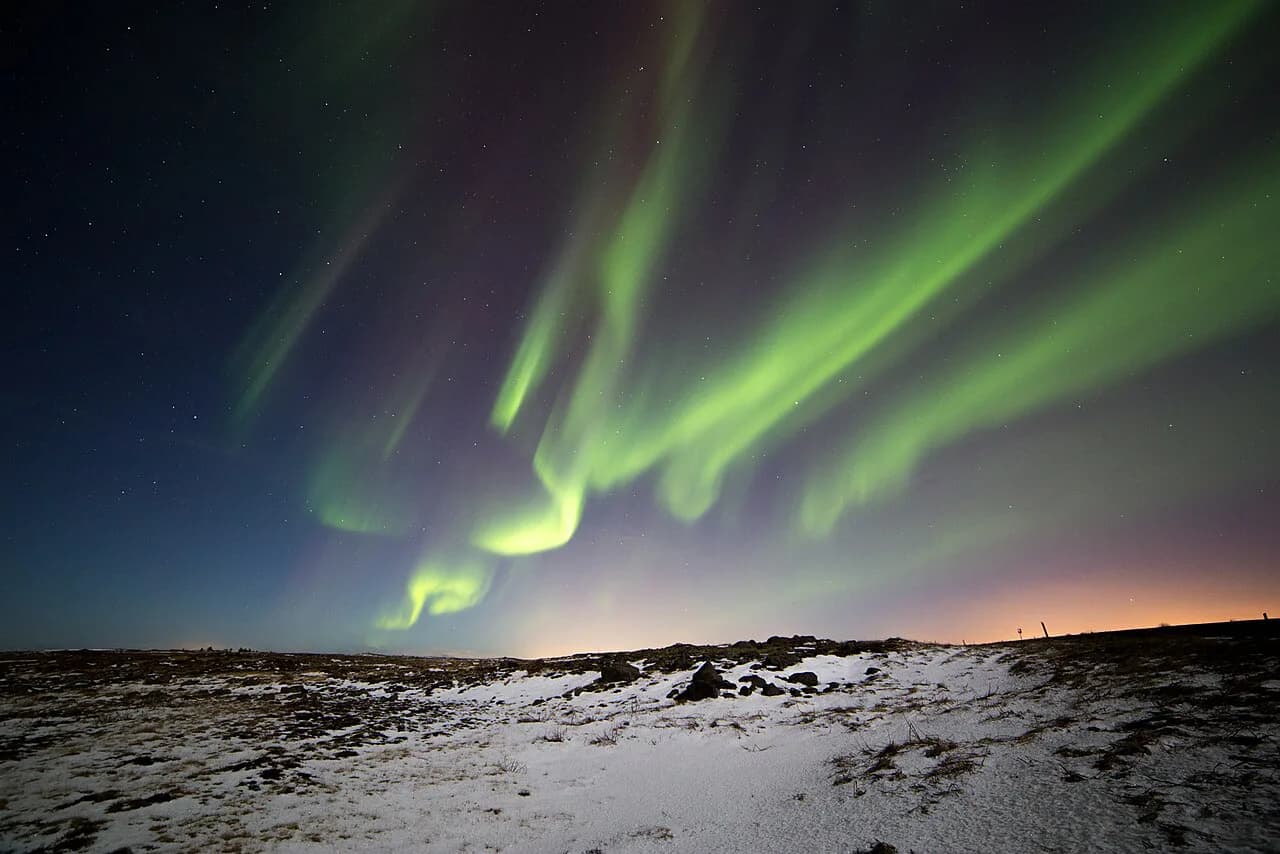
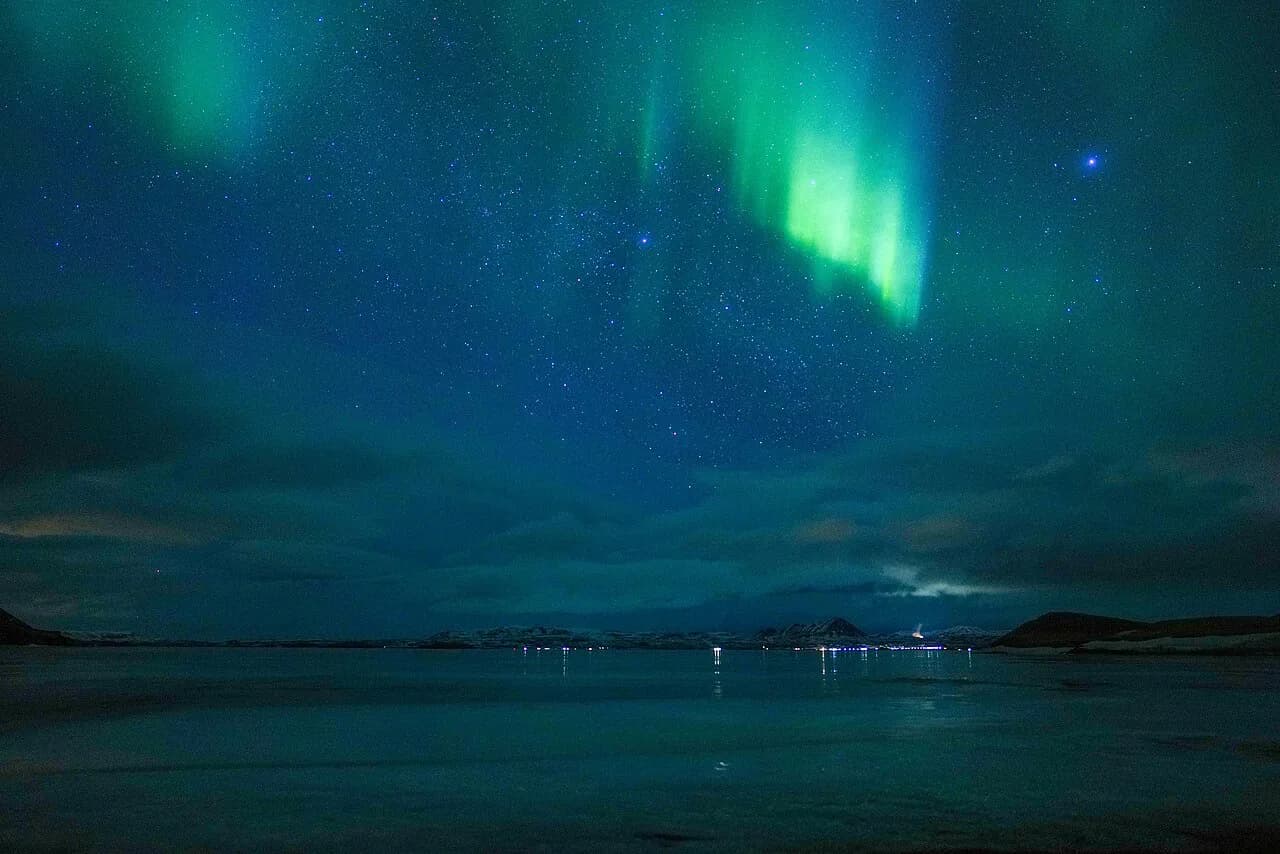
Across Iceland the aurora season runs from September to April, and February sits in the middle of it when nights are still long. Once the light fades in the evening, the sky is dark enough for a display well before a sensible bedtime, so you do not have to stay up until the small hours as you would in late April.
The trade-off is comfort. February is deep winter, cold and prone to strong wind, and the weather can shift from sunshine to snow within a day. Plan the aurora as your evening anchor and keep daytime plans flexible, because a clear night often follows a day you would rather spend indoors or in a hot pool.
How far north Iceland sits and why the aurora shows here
Iceland sits just below the Arctic Circle, and the capital is the world's northernmost sovereign capital. That latitude places the country under the auroral oval often enough that a dark, clear night in winter gives you a genuine chance of seeing the lights, without the deeper cold of places farther north.
Sightings depend on solar activity and cloud cover, so no month or operator can promise them. What February reliably supplies is darkness: with the sun setting in the late afternoon and rising late in the morning, there are many hours each night when a display would be visible if the sky clears.
Daylight hours through February in Reykjavík and Akureyri
In Reykjavík on 1 February the sun rises at 10:09 and sets at 17:13, giving just over seven hours of daylight. By the end of the month it rises at 08:37 and sets at 18:44, giving more than ten hours of daylight. The change across four weeks is dramatic and makes late February noticeably easier for sightseeing.
Akureyri, in the north, runs shorter: 10:07 to 16:45 on 1 February, about six and a half hours, rising to 08:26 to 18:24 by month end. If your itinerary leans north, expect to compress outdoor sightseeing into a narrower window and to drive less after dark on rural roads. Our guide to Akureyri in February covers the same daylight trade-off for the northern capital.
Plan long drives and multi-stop days for the middle of the day, and treat the hours around sunrise and sunset as your photographic window. Because darkness returns by late afternoon, a full day outdoors plus an evening aurora hunt is realistic in February, provided you are not covering too much distance.
February temperatures, snow and wind
Reykjavík's February mean daily temperature is 0.5°C, with average highs of 3.3°C and lows of –1.9°C. The north coast is colder, averaging –0.8°C with highs of 2.6°C and lows of –3.6°C, and February is the coldest month of the year there. Coastal air keeps the capital milder than many visitors expect.
Snow is common: Reykjavík averages about 12.4 snowy days and 17.1 cm of snowfall across the month, while Akureyri sees an average of 16.9 snowy days. Away from the sea and at higher ground, expect deeper snow, which matters if you plan to drive into the interior or along mountain passes.
Wind is the factor that shapes a February day more than temperature. Strong gusts make open stretches of road and exposed viewpoints uncomfortable and occasionally unsafe, so build slack into the itinerary and let the forecast decide which day you head for the coast.
Cloud cover, coastal versus inland skies and Kp as guidance only
Cloud is the usual reason an aurora night fails, not a lack of solar activity. Coastal areas can sit under a low ceiling while inland valleys clear, or the reverse, so a guide who reads the cloud forecast and drives to the clearest patch has a real advantage over a fixed viewpoint.
Kp values describe how disturbed the magnetic field is expected to be, and they are guidance rather than a forecast of what you will see. A high Kp under thick cloud shows nothing, while a modest Kp under a clear sky can produce a fine display, so treat cloud as the first thing to check each evening.
When the aurora season runs and why February nights are dark
The season spans September to April, but the quality of the nights changes across it. February offers some of the longest usable darkness within that window while daylight is already generous enough for daytime activities, which is why it draws aurora-focused travellers despite the cold.
If your dates are flexible and you want to compare months by darkness, daylight and weather, weigh February against March, when nights shorten but temperatures ease. The best time to see the northern lights in Iceland depends on that balance as much as on solar activity, so pick the month whose trade-offs you can live with.
Where to watch near Reykjavík and how far to drive from light pollution
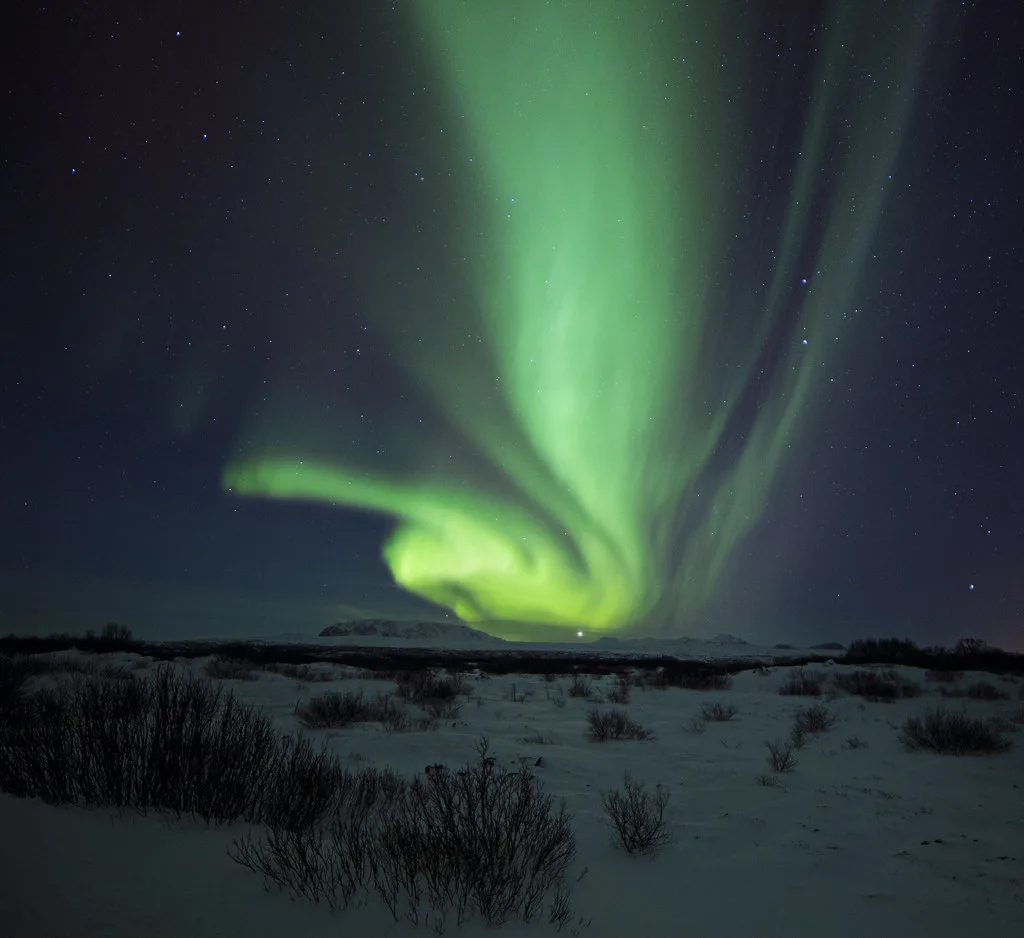
You can sometimes spot the aurora while walking around Reykjavík, but the city's lights wash out all but strong displays. Getting away from street lighting is the single most useful step, which is why tours head out of the capital rather than stopping at a city viewpoint.
For a self-guided night, aim for the darker fringes of the capital region and the open country beyond, using road access and safe parking rather than pulling onto narrow verges in the dark. Grótta lighthouse and the Reykjanes coast are the classic short hops from the city, but cloud often decides the direction more than distance does.
On the Snæfellsnes Peninsula, Mt. Kirkjufell has become the signature foreground for aurora photographs in West Iceland, and the surrounding coastline offers several dark pull-offs. Reaching it means a longer drive from Reykjavík and a careful look at road conditions, so treat it as a night out from a local base rather than a round trip in the small hours.
Guided northern lights tours: how a night runs and why to book early
A guided hunt usually means an evening departure from Reykjavík in a small coach, with the guide following the cloud forecast to pick a direction and a dark site. Groups stop away from light pollution, and if the weather offers no prospect of a gap the company cancels and you try another night rather than sitting under cloud.
Book your aurora night early in the trip so a cancellation leaves room to rebook before you fly home; leaving it to the final evening removes that margin. Small-group and privately guided formats cost more than a large coach but move faster and can change plan mid-night when the cloud shifts. Iceland northern lights tours vary widely in size and inclusions, so compare what each actually provides.
Self-drive aurora chasing in West and South Iceland
If you are comfortable on winter roads, a self-drive trip gives you the freedom to leave the city whenever the sky looks promising. Rental cars come with winter tyres, and a four-wheel-drive vehicle is the safer choice outside the main towns, where ice, wind and drifting snow are more likely to catch you out.
Stick to West and South Iceland, where roads tend to be less snowy than in the East and North, and plan your driving in daylight. That keeps night-time mileage to short, familiar hops between your accommodation and a dark viewpoint, which is far less demanding than chasing across the country after dinner.
Road status changes quickly in February, and the Icelandic Road and Coastal Administration publishes live conditions that should shape each day's plan. Combine that with the Icelandic Met Office forecast, and keep a fallback night in reserve so a closed road does not cost you the whole trip.
Ice caves under Vatnajökull and the closer Katla option
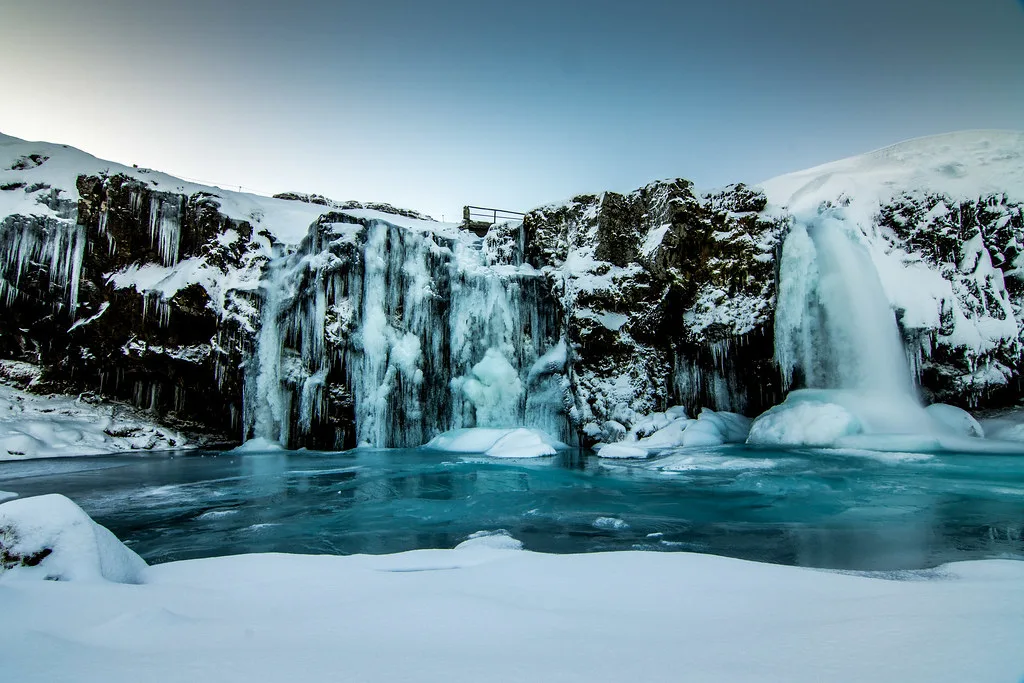
February's cold is exactly what the blue ice caves need: the caverns form under the glacier and are reached on guided tours only, with a trained guide checking safety each morning. Tours supply crampons and a helmet, and you walk into the ice rather than climbing it independently.
The Blue Ice Caves lie in Vatnajökull National Park in southeast Iceland, about 372 km from Reykjavík, which makes them a multi-day commitment rather than a day trip. The Katla Ice Cave in South Iceland has a meeting point around 186 km away, a workable option if your time is tight.
If weather or road closures block the long drive east, Reykjavík has indoor alternatives such as the Ice Cave Exhibition at Perlan Museum, and lava caves closer to the capital. Neither replaces the real glacier, but they keep a storm day productive.
Glacier hikes, snowmobiling and winter driving conditions
Glacier hikes and snowmobile trips run when conditions allow, and February's snow cover makes both scenic and photogenic. Go with a trained guide rather than setting out alone, since crevasses and changing weather make independent glacier travel genuinely dangerous in winter.
Driving is the part of a February trip most likely to disrupt your plans. Expect ice, high wind and blizzards, reduce speed, leave space, and take extra care on bridges and overpasses; in poor conditions a guided tour is the more sensible choice than pressing on.
Lagoons and geothermal pools in winter
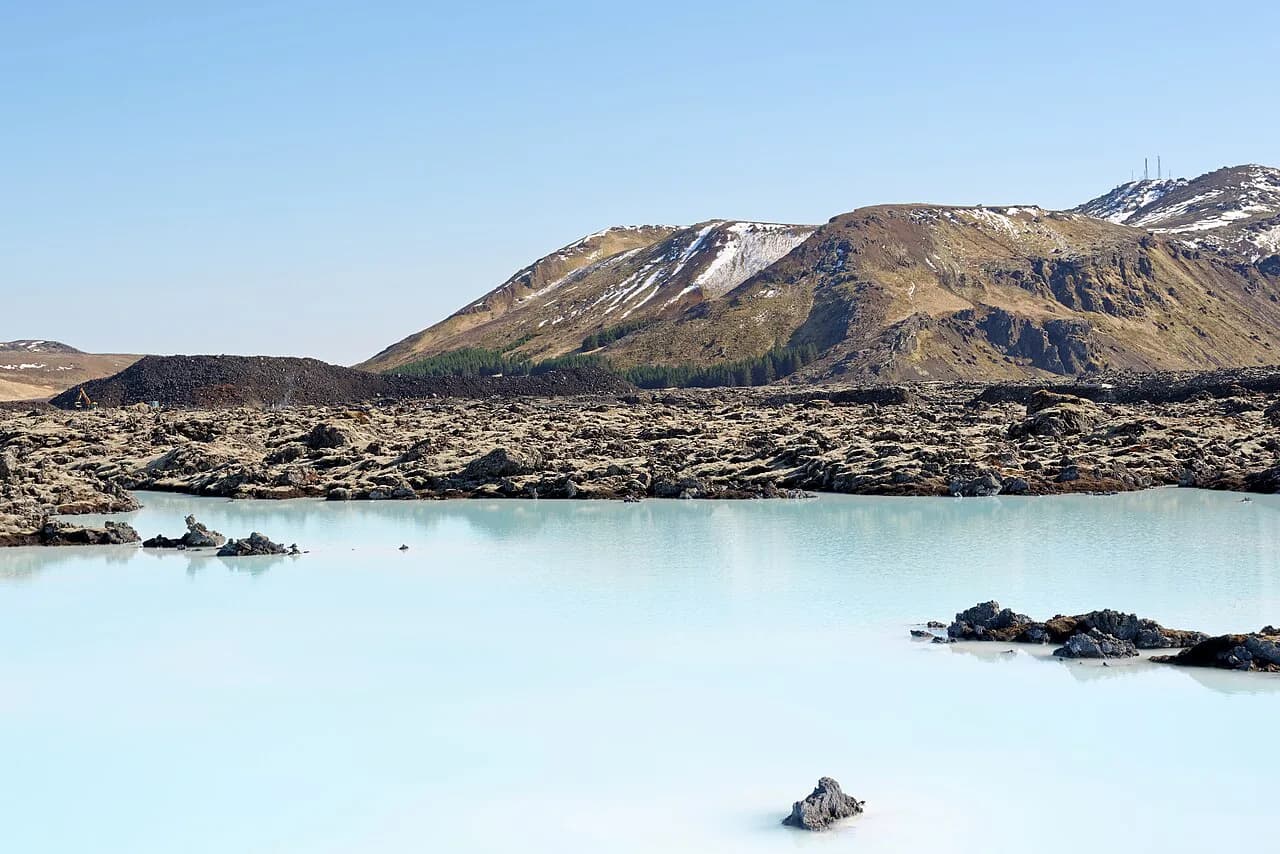
Sitting in warm water while cold air moves overhead is one of February's great pleasures. The Blue Lagoon sits between Keflavík Airport and Reykjavík, which makes it an easy stop on arrival or departure, while Sky Lagoon in Kópavogur offers an infinity edge and a hot sauna closer to the capital.
Elsewhere around the country, Hvammsvík sits on the banks of Hvalfjörður with views of the fjord and mountains, and Geosea in Húsavík looks out over the sea. Each suits a different route: Hvammsvík on a west Iceland day, Geosea only if you are already heading north.
Geothermal sites are many, so if weather closes one, another is usually within reach on your route. Booking your preferred slot ahead of a winter trip reduces the chance of arriving to find your first choice full. Sky Lagoon in Winter shows how the season changes a visit, from cold air over the pool to the light at the edge of the North Atlantic.
Reykjavík's Winter Lights Festival and indoor days
Reykjavík's Winter Lights Festival takes place at the beginning of February across the capital region, built around Museum Night with free entry to many museums, Pool Night with late free swimming, and light art installations around the city. It is a genuine reason to spend a couple of nights in town rather than heading straight for the countryside.
For storm days, the city holds Perlan Museum, the National Museum of Iceland, the Whales of Iceland exhibition and the Lava Show, all indoors and close to the centre. Pair one with a café afternoon and you lose nothing to the weather.
Crowds, accommodation prices and booking ahead
February is one of the least busy months for visitors, which shows at the Golden Circle, Jökulsárlón glacier lagoon and the south coast, where you can expect fewer people in your photographs. The quieter season also tends to soften accommodation rates compared with summer, though you should still book popular hotels and tours well ahead for the nights you care about most.
The exception is aurora nights and festival weekends, when demand for rooms near the city and for guided tours concentrates. Locking in your tour early means a cancelled night can be rebooked rather than lost, which matters more than saving a little on a room you will barely see.
How many nights to allow for a fair chance of clear skies
Allow at least five days for West and South Iceland, and nearer ten if you want to add the North and East, including the long drive to the Vatnajökull ice caves. The longer base also buys you more nights, which is the real currency when you are hoping for a break in the cloud.
Aim for several aurora-capable nights in one place rather than a string of one-night stops; a single clear evening out of four is a realistic return, and three or four nights in the same base lets you try again after a washout. Nothing is guaranteed, so treat any sighting as a bonus rather than the plan itself.
A five-day West and South Iceland frame versus a longer circle trip
With five days, base yourself in Reykjavík and cover the Golden Circle, the south coast and the Snæfellsnes Peninsula on day trips or a short loop, keeping two or three evenings free for aurora attempts. This frame fits February's short days and keeps you on the roads that are less affected by snow.
A longer circle trip makes sense if you want the north and east, including Akureyri and the Vatnajökull glaciers, but it demands more driving in limited daylight and a willingness to change route when a road closes. Weigh the extra scenery against fewer aurora nights in one spot, and choose the version you can adapt without stress.
Make February Work for You
February rewards travellers who put the aurora first and build comfortable, flexible days around it: short drives in daylight, a geothermal pool in the afternoon, and a clear evening sky as the goal. Snow and cold are part of the bargain, but so are the long nights that make a display possible.
Book a guided hunt early, keep a self-drive backup route through West and South Iceland, and you give yourself several honest chances rather than a single all-or-nothing night.
Frequently Asked Questions
How much daylight does Iceland get in February?
In Reykjavík the sun rises at 10:09 and sets at 17:13 on 1 February, just over seven hours, extending to 08:37 and 18:44 by the end of the month, more than ten hours. Akureyri in the north starts with about six and a half hours and finishes the month with around ten.
How cold is Iceland in February?
Reykjavík averages a daily temperature of 0.5°C, with highs near 3.3°C and lows near –1.9°C, while the north coast averages –0.8°C and is at its coldest for the year. Snow falls on about 12.4 days in the capital and on an average of 16.9 days in Akureyri.
Can you see the northern lights in Iceland in February?
The aurora season runs from September to April, and February's long nights give you plenty of dark hours. A sighting still depends on solar activity and, above all, clear skies, so plan several attempts and treat any display as a bonus.
Is February a good time to visit Iceland?
It suits travellers who want the aurora, ice caves and fewer crowds, and who accept cold, wind and occasional road closures. It does not suit anyone seeking mild weather or long sightseeing days, since daylight is limited and weather can change quickly.
How many days should you spend in Iceland in February?
Allow at least five days for West and South Iceland, and around ten if you want to add the North and East. More nights in one place give you more chances at a clear sky and reduce pressure to drive long distances in poor conditions.
Can you drive around Iceland in February?
Self-driving works best in West and South Iceland, where roads are generally less snowy, and with a four-wheel-drive vehicle and winter tyres. Check live road conditions each morning and keep the schedule flexible, since closures and strong winds can force changes.
Are ice caves open in February?
February's frost is what makes the blue ice caves under Vatnajökull safe and spectacular, and they are visited on guided tours with crampons and helmets provided. The caves lie about 372 km from Reykjavík, while the Katla Ice Cave meeting point is roughly 186 km away.
Sources
Notes for your Arctic winter trip
Optional updates to our northern lights guides.
You might also like
Continue reading
More guides you'll find useful