Akureyri in January: Daylight, Weather and Northern Lights
Plan Akureyri in January with realistic daylight hours, temperatures and snow, plus how aurora tours run and why midwinter dark skies suit the northern lights.
On this page
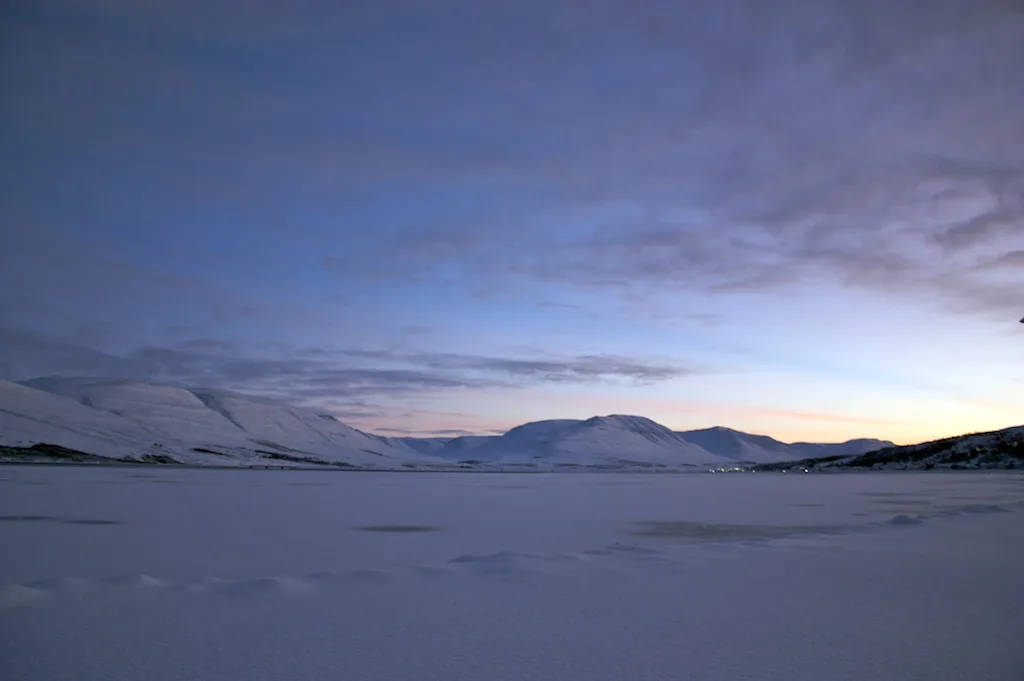
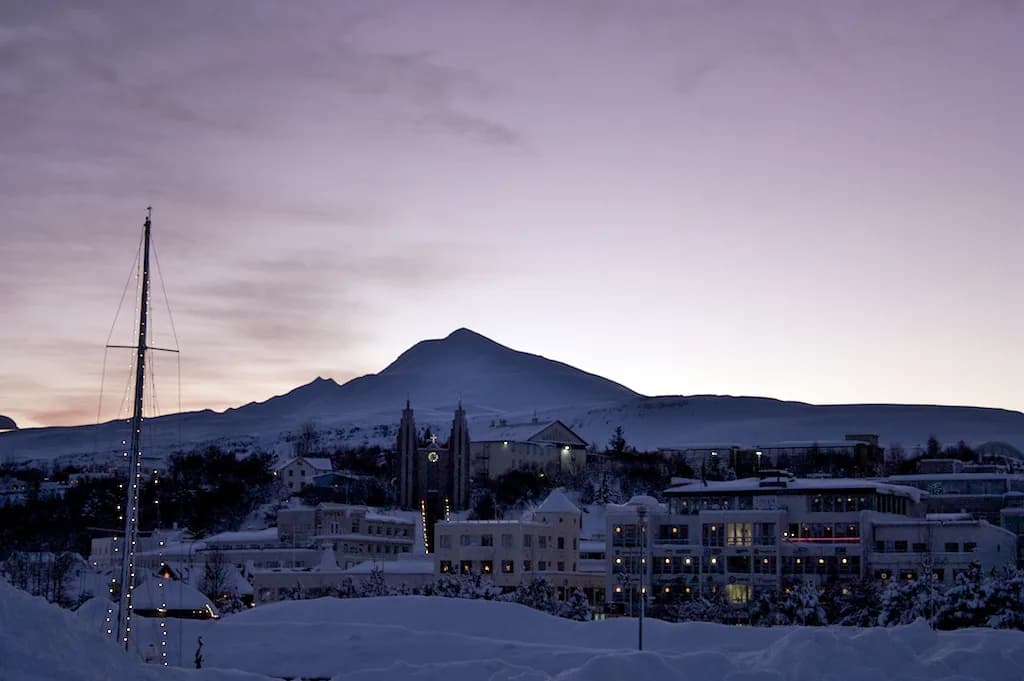
January strips Akureyri down to its essentials: snow on the slopes above town, a fjord shoreline that goes quiet after dark and only a handful of daylight hours to fit everything in. For a traveler who wants deep winter rather than a mild taste of it, this is the month with the most atmosphere and the least daylight. It suits people who plan sightseeing around a short bright window and leave the long evenings for aurora chasing, hot pools and slow dinners.
The town sits at the base of Eyjafjörður, the longest fjord in Iceland, about 60 miles south of the Arctic Circle, with roughly 18,000 to 20,000 residents. That combination of northern latitude, a small footprint and a dark shoreline is why the akureyri northern lights draw travelers who would rather skip the bus traffic of the southwest. January rewards that choice with the darkest skies of the year, but it also asks you to accept cold, wind and the possibility of cloud for several nights in a row.
Why January suits travelers who want deep winter
This is the month when Akureyri feels most like itself: cross-country tracks and ski slopes above town, snow-buried gardens and a main street strung with lights. Visitors who need eight hours of daylight to enjoy a place should look at late February or March instead. Those who like the idea of a town settling into darkness by mid-afternoon, with a long evening ahead for a geothermal pool or a minibus ride into the countryside, will find January the more memorable month.
January also keeps the town quiet. Akureyri is small enough to walk in an afternoon, and in winter the main sights, cafés and shops are clustered along Hafnarstræti and the old town rather than spread across a city. Fewer visitors means easier tables at the tasting-menu restaurants and more space at the pools, though snow and short days limit how much you can reasonably schedule between sunrise and sunset.
How far north Akureyri sits and why the aurora shows here
Akureyri lies just below the Arctic Circle on Iceland's north coast, close enough to the auroral oval that a geomagnetic disturbance overhead frequently reaches this latitude. Iceland's weather is coastal and changeable, so a strong solar forecast is only half the story; cloud is the other half, and it can close the sky for days at a time in midwinter. That is why serious aurora hunting here is about patience across several nights rather than a single booked departure.
The town's practical advantage is scale. Light pollution exists but is modest by city standards, and a few minutes of driving toward the fjord shoreline or up side roads into the hills takes you away from street lamps. The trade-off is icy roads and unlit pull-offs after dark, which is exactly where a local driver earns their fee on a tour night.
January daylight: short mornings and early dusk
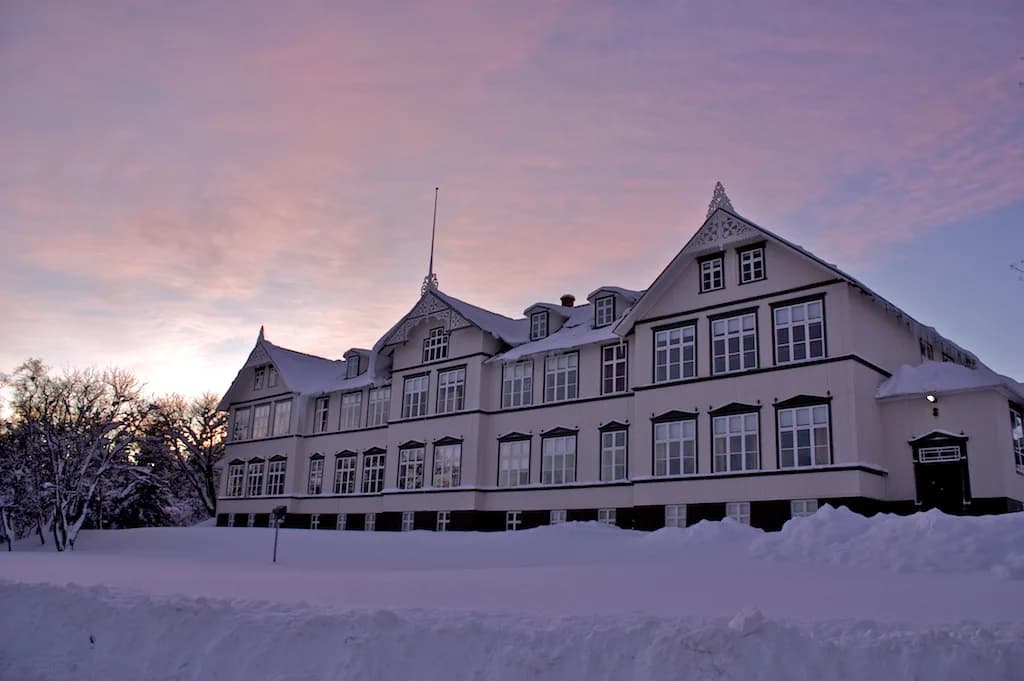
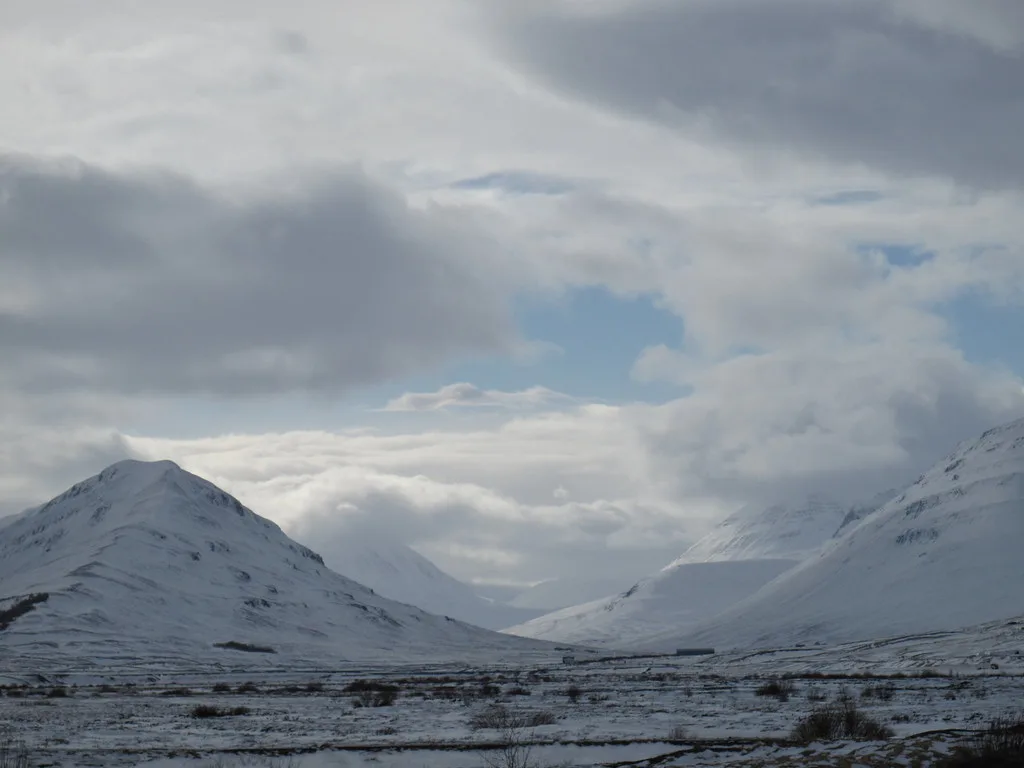
January is the darkest stretch of the Akureyri year. Around midwinter the sun rises late in the morning and sets in the mid-afternoon, giving only a few usable daylight hours, with the sun climbing barely above the horizon. One published account of the town in winter describes a sun rising around 11am and setting around 4pm with just four to five hours of daylight.
Plan the day around that narrow window. A daylight tour to Lake Mývatn or Goðafoss leaves little slack for late breakfasts, and a late-afternoon visit to the Forest Lagoon works better after dusk than before it. Museums, churches and cafés fit naturally into the dark hours, and the red heart traffic lights near the Hof Cultural House stay photogenic long after the sun has gone.
January temperatures, snow and cold snaps
Expect genuine winter cold rather than a mild Icelandic version of it. The same published account describes an average of about minus 5°C in the coldest season, some days near minus 20°C and a January night at minus 10°C. Snow settles on pavements and side roads, so boots with grip earn their keep on the walk up to the church.
That cold changes how you move through the day. Walking between the church on its hill, the art street beside it and Hafnarstræti is fine in short bursts, but longer waits outdoors need proper layers or a warm base to retreat to. Snow tires and road conditions matter on the Eyjafjörður roads out of town, and the mountain pass south toward Mývatn can close or demand care in winter weather.
When the aurora season runs and why January nights are darkest
Northern lights appear over Akureyri and its surroundings from September through April, and January overlaps the deepest part of that window. Published peak viewing guidance points to November through February, when nights last long enough that darkness begins well before a sensible bedtime. January simply gives you the most dark hours per day to work with.
Darkness is necessary but not sufficient. A sighting needs both clear sky and enough solar activity to push the aurora into view, and neither can be promised on a given night. Kp forecasts are a rough guide to solar conditions rather than a guarantee for Akureyri's particular sky, and cloud forecasts for the fjord and the inland plateau can differ sharply. Book daylight activities as your anchor and treat each aurora night as a separate attempt.
Self-guided chasing versus a small-group minibus tour
If you rent a car with winter tires, you can chase clear gaps yourself along the Eyjafjörður shore, toward the hills above town or out on quieter roads, checking cloud forecasts and moving as conditions change. The freedom is real but so is the risk: unlit roads, ice and unfamiliar terrain after dark make this a serious option only for confident winter drivers.
A guided night tour removes the driving. One published account describes a small minibus trip with Imagine Iceland Travel, whose guide drove to quiet spots away from city lights and helped guests get better photographs from their own phones and cameras. That combination, a driver who watches conditions plus practical camera help, is the main reason to pay for a tour rather than improvise.
How a northern lights tour typically runs
Departures usually leave Akureyri in the evening and head for darker country outside town, with the exact direction chosen on the night according to cloud. Small-group formats are the norm on the north coast, and guides commonly help guests with camera settings and take photos of them under the lights. Confirm the precise inclusions, pickup points and departure times with your northern lights tour company when you book.
Treat the first tour as one attempt rather than the whole plan. Many operators offer a free repeat night if nothing shows, which is worth more in January than a longer single excursion, because it turns a cloudy first evening into a second chance. Check the terms for that rebooking policy before you choose a company.
Where to watch near town
The fjord shoreline west and south of the centre gives open northern horizons with the town's glow behind you, and a short drive along the coastal road puts you beyond the brightest street lighting. Inland, quiet gravel roads toward the hills reduce light pollution further but demand extra care on winter surfaces. Any spot with an unobstructed view north and no nearby lamps works; you do not need a famous viewpoint.
Inside town, the area around the church and the botanical garden is dark enough for a casual look on a clear night, but expect some glow from streets and buildings. If the aurora is weak, walk or drive ten minutes away from Hafnarstræti rather than waiting on the main street. A phone with a cloud-radar app earns its place here, since conditions change quickly along the fjord.
Hotels, guesthouses and cabins as an aurora base
Akureyri's accommodation is compact and mostly central, which suits a January trip where you want to walk to dinner and come back warm. Hotels near Hafnarstræti put restaurants, cafés and the geothermal pool within a few minutes on foot, while guesthouses in the old town trade some convenience for quieter streets.
Self-catering cabins and apartments outside the centre make sense if you have a car and want a darker doorstep for aurora watching, though icy access roads and snow clearing are part of the deal. Ask hosts directly about parking, heating and whether the road is maintained in midwinter. For a short January stay built around tours, a central room is usually the better trade.
Forest Lagoon and the town pool on a cold January day
The Forest Lagoon sits in a birch and pine wood a short drive from town, with warm pools, a cold plunge, a Finnish dry sauna and a bistro, and a published account describes it as roughly ten minutes by car or around fifty minutes on foot from Akureyri. Its fjord setting and trees make it a natural fit for a dark January afternoon after the daylight has gone.
The town's own geothermal pool is the cheaper, more local alternative, with hot tubs, a sauna and slides, and it is easy to reach on foot from the centre. Both work well as a warming session between a short daylight outing and an evening tour. If you want to extend the soaking theme, GeoSea in Húsavík is a worthwhile stop on a day heading east toward the lake country.
Akureyri's winter streets: church, art street and heart lights
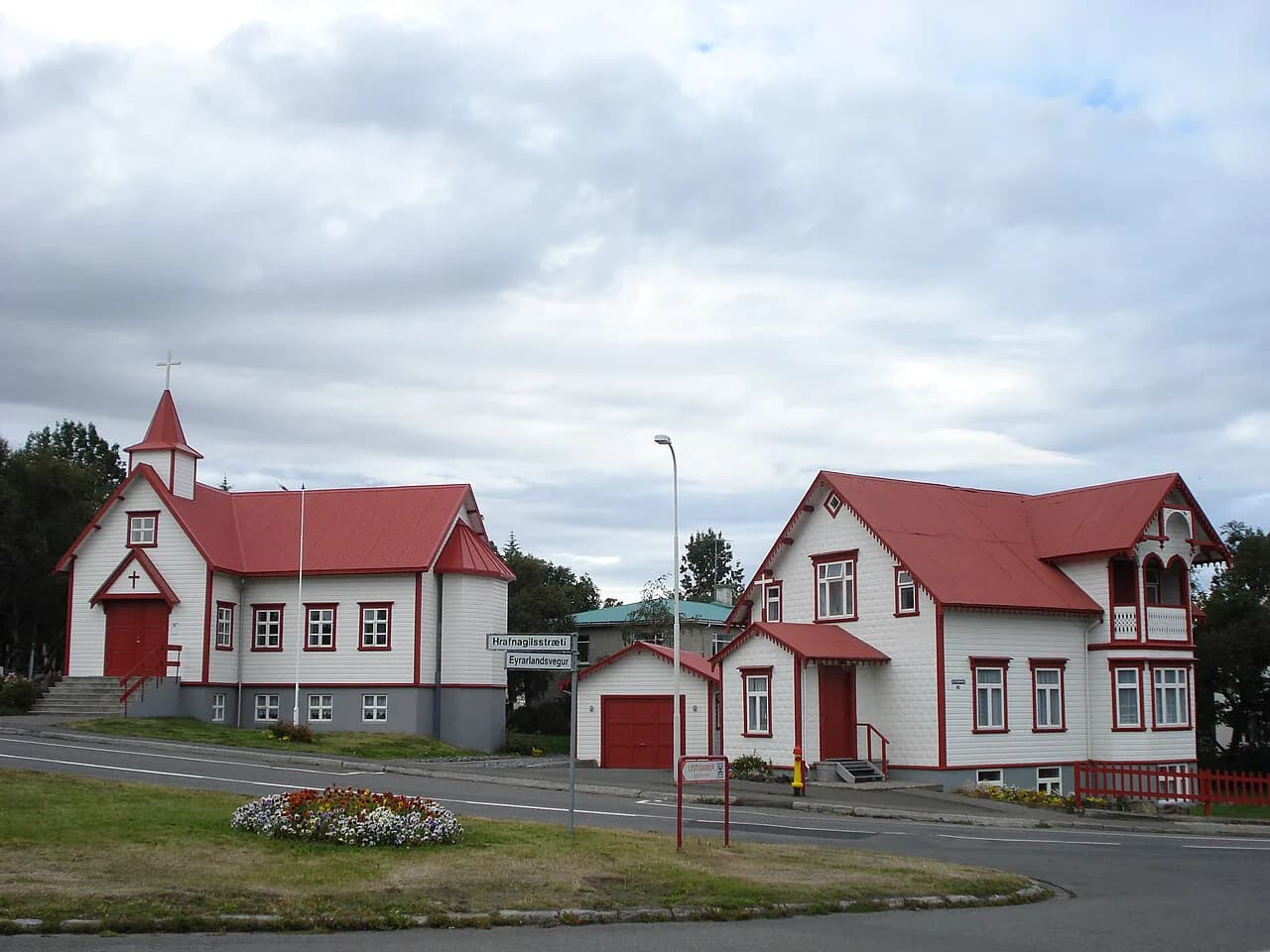
Akureyrarkirkja, the 1940 Lutheran church on its hill, is the town's landmark, designed by the same architect behind Reykjavík's Hallgrímskirkja and worth climbing to for the view even in low light. Beside it, Kaupvangsstræti, nicknamed Art Street, holds small galleries, studios and the art museum along a brightly painted pavement. Hafnarstræti below is the main shopping street, good for wool sweaters, outdoor gear and coffee stops.
The red heart-shaped traffic lights, introduced after the 2008 financial crash as a civic morale project, are now a town symbol, and the easiest safe spot to photograph one is by the Hof Cultural House. The old town's painted wooden houses, including the 1795 Laxdalshús, fill another short loop. All of this fits comfortably into a single dark afternoon.
Day trips that work in January: Lake Mývatn and Goðafoss
The classic full-day circuit east of Akureyri takes in Goðafoss waterfall, the pseudocraters at Skútustaðagígar, the lava labyrinth of Dimmuborgir, the Grjótagjá cave and the steaming ground at Hverir, finishing with a soak at the Mývatn Nature Baths. A published account of that tour puts the drive from Akureyri pickup to the first stop, Goðafoss, at about 45 minutes.
In January the constraint is daylight, not distance. A guided minibus makes more sense than driving yourself, since the guide handles icy sections and knows which stops still work under snow. If you are comparing hot pools across the north, GeoSea Húsavík sits naturally on this eastward route.
Skiing and snowboarding above town
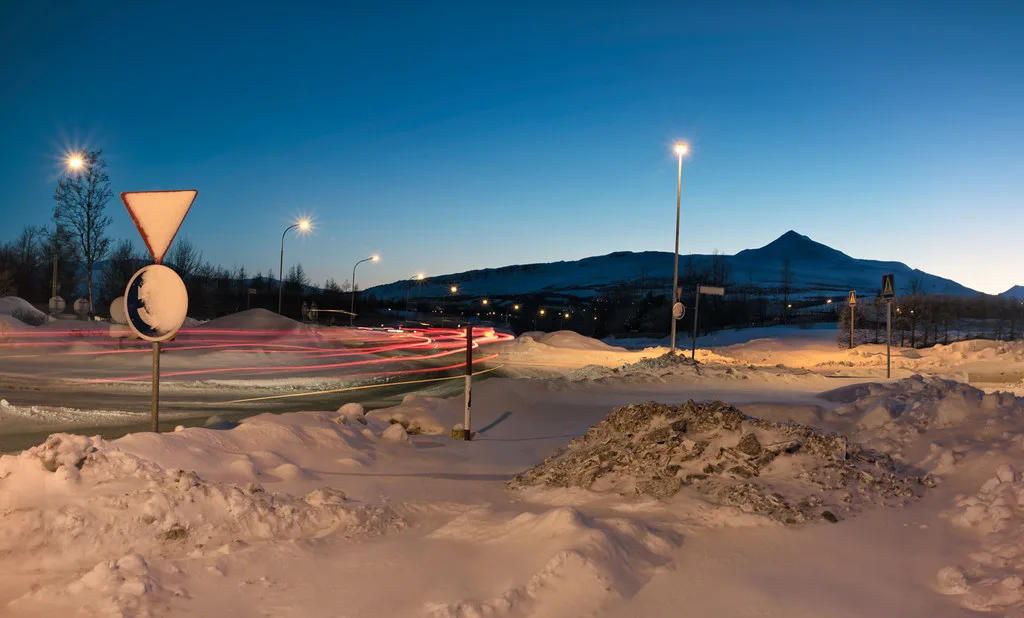
Locals ski and snowboard on the slopes above Akureyri in winter, and the hill is close enough to combine a morning on the snow with an afternoon in town. Lift status and opening depend on snow and weather, so the mountain's own page is the place to look on the day. January usually brings the snow base, but wind can close lifts without notice.
For non-skiers, the same hillside gives a high, dark vantage point over the fjord after sunset. Drive or take a short taxi ride up rather than walking icy roads at night, and keep headlights and hazards in mind at informal pull-offs.
Food and drink to fill the short daylight hours
Akureyri's restaurant scene is stronger than its size suggests. Múlaberg Bistro & Bar at Hotel Kea runs a seasonal tasting menu built on Icelandic seafood, lamb and game, and North Restaurant at Hotel Akureyri serves a set multi-course menu at an intimate chef's table. Both are splurges rather than everyday meals, and a published account notes North offers only the one set menu with no vegan alternative.
Cheaper and quicker options cluster on and near Hafnarstræti: the Backpackers Café for burgers and comfort food, Eyja for a small bistro menu, and Kaffistofan for coffee and pastries. In the old town, Brynja is the local ice cream stop, an odd but popular January ritual. Book the tasting menus ahead, since small dining rooms fill quickly.
How many nights to plan for a fair chance of clear skies
Two nights gives you two attempts and a decent chance of at least one clear evening, but not much margin. Three or four nights is a more honest allowance in January, when Atlantic weather can park cloud over the fjord for days. Build the itinerary so a flexible aurora night can slot in whenever the forecast improves rather than committing every evening to a fixed tour.
Use the dark hours productively: a hot pool session, a long dinner or a museum visit on a cloudy night costs you nothing if the sky clears later. If your operator offers a free rebooking after a failed attempt, that effectively adds an attempt without adding a night. Keep at least one evening unbooked so you can take advantage of a last-minute clear forecast.
Crowds, cost and booking ahead in January
January is a quiet month in Akureyri compared with the summer cruise season and the autumn aurora rush, which makes hotels and restaurants easier to book at short notice. Costs still reflect Iceland's general price level, so budget for restaurant meals and tours as the main expenses; midwinter discounts are not a safe assumption. Check current rates directly with each hotel or tour company.
Book aurora tours and any Mývatn day trip a few days ahead rather than weeks, so you can match the booking to the forecast, but secure accommodation earlier if your dates fall around a weekend. Winter flight and road conditions can shift plans, so keep the first and last days of a trip light. Travelers comparing the north with the rest of the country can weigh the southwest's iceland in january conditions against Akureyri's quieter, darker setup.
Plan Your January Trip to Akureyri
January in Akureyri is a trade: a few hours of low daylight in exchange for the darkest nights of the year along a quiet fjord. Plan sightseeing for the short bright window, keep your evenings flexible for aurora attempts, and give yourself three or four nights so cloud on one evening does not end the trip.
Book a small-group night tour with a driver who reads the cloud, add the Forest Lagoon and a Mývatn day trip, and leave room for a repeat attempt if the first night fails. Confirm departure times, inclusions and any rebooking terms with your chosen operator before you travel.
Frequently Asked Questions
How many hours of daylight does Akureyri get in January?
Only a few. Around midwinter the sun rises late in the morning and sets in the mid-afternoon, giving roughly three to five usable daylight hours depending on the date. Plan any long day trip around that narrow window.
What is the weather like in Akureyri in January?
Cold and snowy, with average temperatures near minus 5°C, colder nights and occasional snaps well below minus 10°C. Snow can settle and stay on pavements and side roads, and wind makes the air feel sharper.
Is January a good time to see the northern lights in Akureyri?
January gives you the most dark hours of the year, and the aurora season runs from September to April with peak viewing guidance pointing to November through February. A sighting still depends on clear sky and enough solar activity, so no night can be guaranteed.
Should I book a northern lights tour or chase the aurora myself?
Self-driving works if you are confident on icy, unlit roads and can read cloud forecasts. A small-group minibus tour removes the driving and usually includes a guide who finds dark spots and helps with camera settings.
How many nights should I plan in Akureyri for a chance of aurora?
Three or four nights gives you several attempts and some margin for cloudy weather. Two nights is workable but leaves little room if the first evening is overcast.
What can you do in Akureyri in January when it is dark?
Soak at the Forest Lagoon or the town geothermal pool, eat at one of the tasting-menu restaurants, visit the church and art street, or take the short walk to the heart-shaped traffic lights by the Hof Cultural House.
Are day trips to Lake Mývatn possible in January?
Yes, but daylight is the constraint. A guided full-day tour covers Goðafoss, the Mývatn area sights and the nature baths, with the drive from Akureyri to Goðafoss taking about 45 minutes.
Sources
Notes for your Arctic winter trip
Optional updates to our northern lights guides.
You might also like
Continue reading
More guides you'll find useful