Akureyri Northern Lights: Season, Dark Spots and Tours
Akureyri sits just below the Arctic Circle, near mountains that often clear. Plan aurora nights with season dates, dark valleys and small-group tours.
On this page
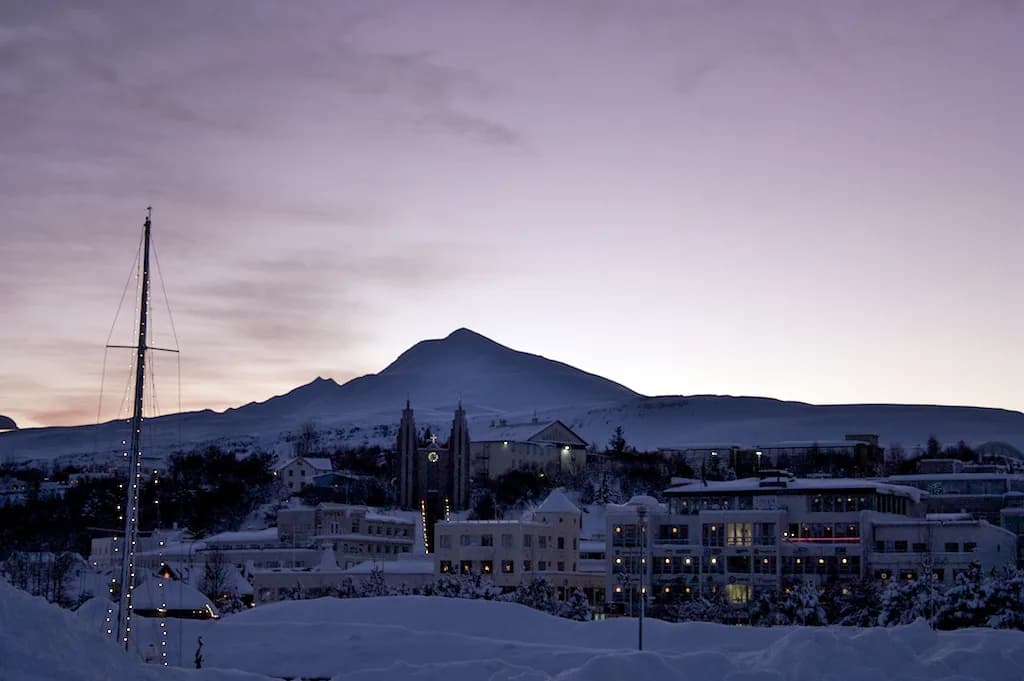
Akureyri packs an unusual amount into a short winter break: a walkable town on the shore of Eyjafjörður, mountain roads that climb away from the streetlights within minutes, and a tour scene small enough that one well-chosen night out can cover the basics. It suits first-time aurora hunters who want a town with restaurants and museums to fill the daylight hours, and travelers who would rather not drive icy roads after dark.
The aurora is a natural phenomenon, and no operator can promise a display on your chosen night. What you can manage is the number of nights you give yourself, the amount of town light between you and the sky, and whether you spend the evening in a bus with a guide reading the forecast or behind your own wheel. Those three choices do most of the work.
Why the aurora shows over Akureyri
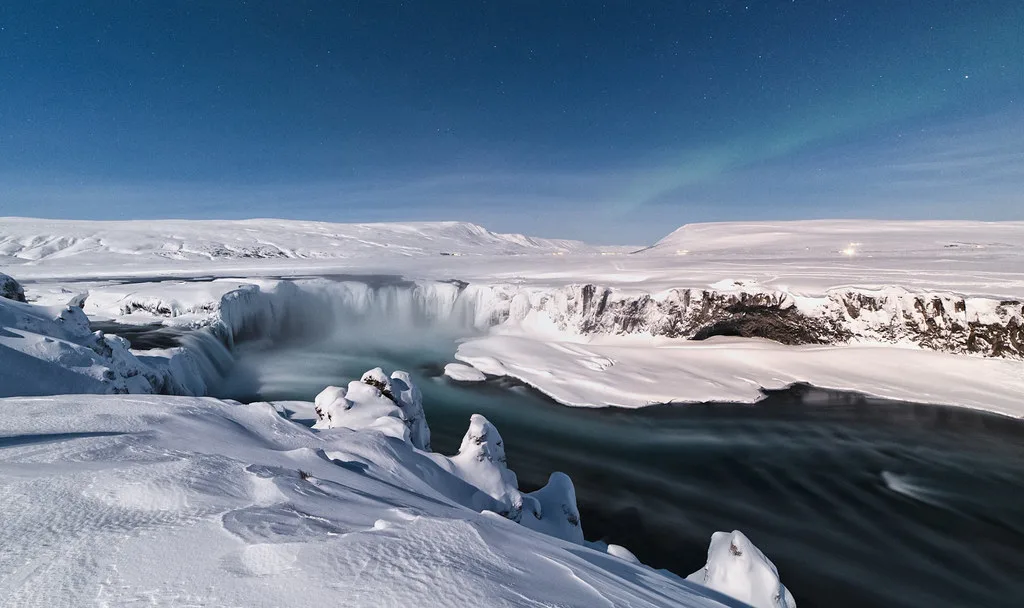
The northern lights appear in auroral zones that sit roughly 20 to 25 degrees from the magnetic poles, which is why Iceland and northern Scandinavia see them while most of Europe does not. Akureyri lies in North Iceland just below the Arctic Circle, so on a clear winter night it sits under the band where charged particles colliding with the atmosphere produce the glow.
The display forms high above the ground, at altitudes of about 100 to 250 kilometers, so local terrain does not create the lights but does decide whether you can see them. That makes cloud the deciding factor on any given night, and it makes the mountains around Eyjafjörður useful: a guide or a driver can move a short distance to find a gap.
When the aurora season runs
The guided bus tour from Akureyri operates from September to April, which matches the months when nights are dark enough for aurora viewing at this latitude. The Grímsey page names late September to the end of April as the best window for that island, so late autumn and midwinter both fall within the practical season rather than only deep winter.
For planning purposes, treat the season as stretching from roughly late August or September through early April. September and March give you longer days for sightseeing with fully dark nights still available, while December and January trade daylight for the most hours of darkness. Late April nights are too bright for anything but a faint display, which is why operators such as Guide to Iceland draw their season where they do.
Darkness, daylight and the winter nights
Akureyri is a proper town, so its own street lighting washes out the low northern sky; what makes it workable is how quickly you can leave that glow behind. The main conditions for a display are darkness and clear weather, and on a short winter day the darkness arrives early enough that an evening tour fits comfortably after dinner.
Displays are not continuous. They often come in short bursts of about 5 to 15 minutes, and occasionally they last for hours, so a single half-hour stop can easily miss the best of the night. This is the argument for booking a tour early in your stay and holding a second night in reserve rather than treating one outing as the whole plan.
Cloud, snow and temperature through the season
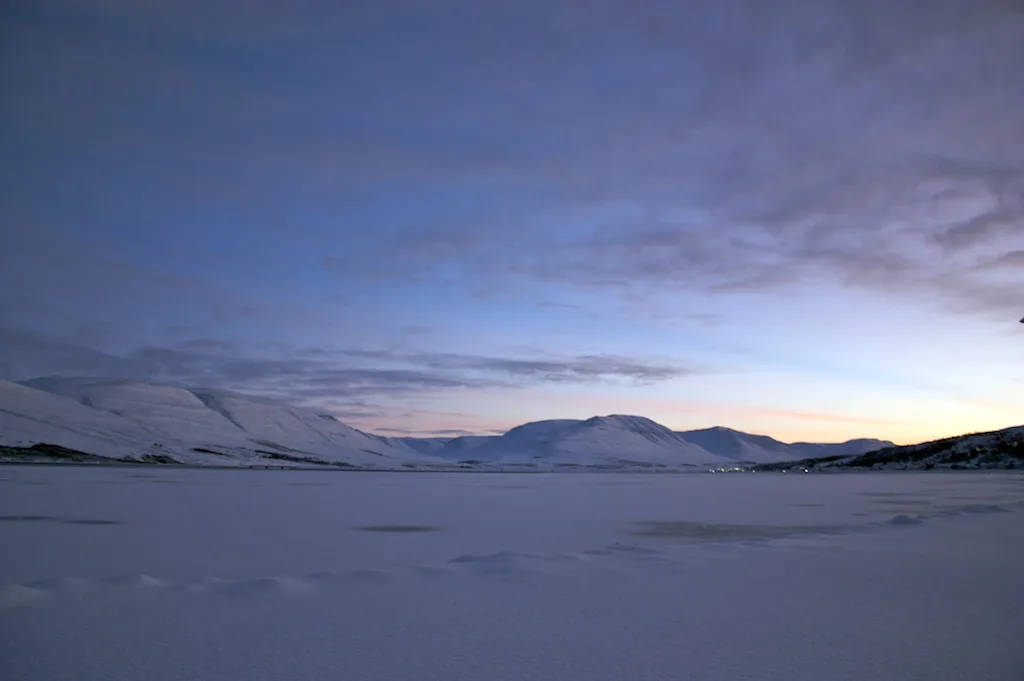
Cloud cover decides the night, and the mountains around Akureyri are the reason local guides can work with it: the tour route runs into nearby mountains or snowy valleys where dark skies and open horizons are more likely than over the town. Rather than planning around any fixed cloud figure, the practical approach is to book several nights and let the guide choose the direction on the day.
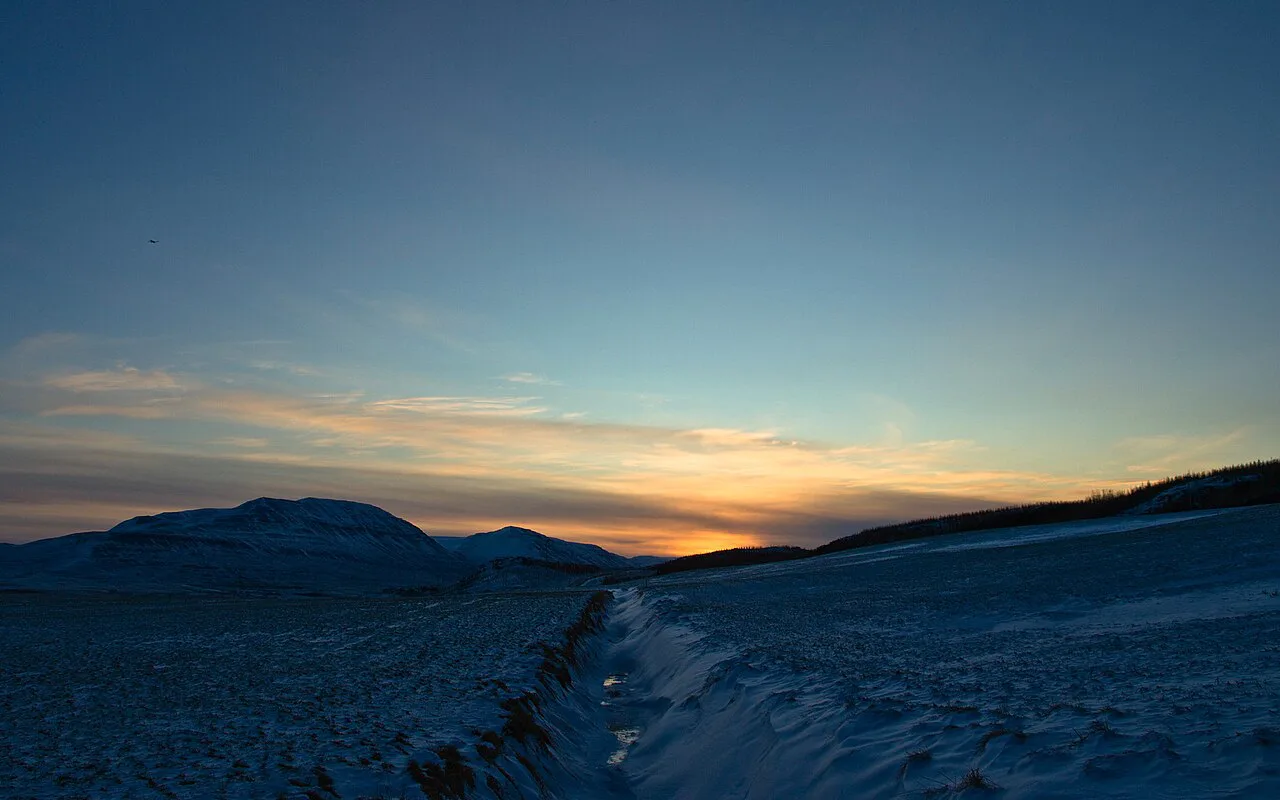
Expect real winter conditions from November through March, with snow on the ground and ice on pavements in town; by February the snowpack along the valley is generally deep. Rather than plan around a temperature figure, plan around the fact that you will stand still outside at night, and take up borrowed thermal suits where a tour offers them. Guide to Iceland advises warm layers, gloves, a hat and warm boots for the time spent outside the bus.
Where to watch near Akureyri: dark valleys and mountain roads away from town lights
The simplest self-guided plan is to drive a short way out of town and find a lay-by with an open view to the north. The roads up Eyjafjörður and into the side valleys climb away from the streetlights quickly, but they also carry winter ice, unlit bends and occasional snowplough traffic, which is why a local driver is worth considering if you are not used to Nordic winter roads.
The tour's own answer to the same problem is to head into the countryside around Akureyri and stop where the horizon is open, typically a mountain or valley location chosen on the night. Because the guide monitors weather and aurora activity in real time and adjusts the route, you are not committed to a fixed viewpoint booked weeks in advance.
Grímsey island as a dark-sky base north of Akureyri
Grímsey, the island on the Arctic Circle north of Akureyri, is described by the municipality as an excellent location for the northern lights, with the best conditions from late September to the end of April. It is a small, low-population place reached by air or ferry from the Akureyri area, and it removes the town-light problem almost entirely; the trade-off is that weather can strand you and services are minimal.
If you base yourself on Grímsey, tell the staff at your accommodation that you are there for the aurora. The island guidance notes that they may be able to wake you if the lights appear, which matters when displays arrive in short bursts in the middle of the night.
Self-driving versus a guided northern lights bus
Driving yourself gives you flexibility and no fixed departure, but it puts the forecast reading, the route choice and the winter driving on you. A guided evening removes all three: the bus ride avoids winter driving on unfamiliar roads, and the guide watches conditions and picks the direction. The trade-off is the fixed three-hour format and the shared vehicle.
For a short trip, or a first aurora hunt with children, the bus is the lower-risk choice; for a longer stay with a confident winter driver, mixing one guided night with one self-drive night gives you two different routes. Either way, book the guided night early in the stay so a cloudy first attempt leaves room for a second.
What a three-hour guided tour from Akureyri includes
The standard outing is a three-hour bus tour with an English-speaking local guide, round-trip transport and pickup and drop-off in Akureyri; the guide points out aurora activity and helps with photographs at the stop. Departure times are flexible rather than fixed, and you choose a slot when you book.
Bring your own camera and tripod if you want long exposures; Guide to Iceland lists both among what to bring, alongside water and refreshments. The bus itself is the warm base between stops, so the evening is mostly a short drive out, a period standing outside, and a drive back into town. Check current prices and departure times when you book.
Group size, minimum age and pickup points across town
The tour is easy-graded and open to children from 3 years old, which makes it one of the more family-friendly ways to spend an aurora night in North Iceland. It is a bus tour rather than a small-group jeep outing, so expect a full vehicle and a shared viewpoint rather than a private chase.
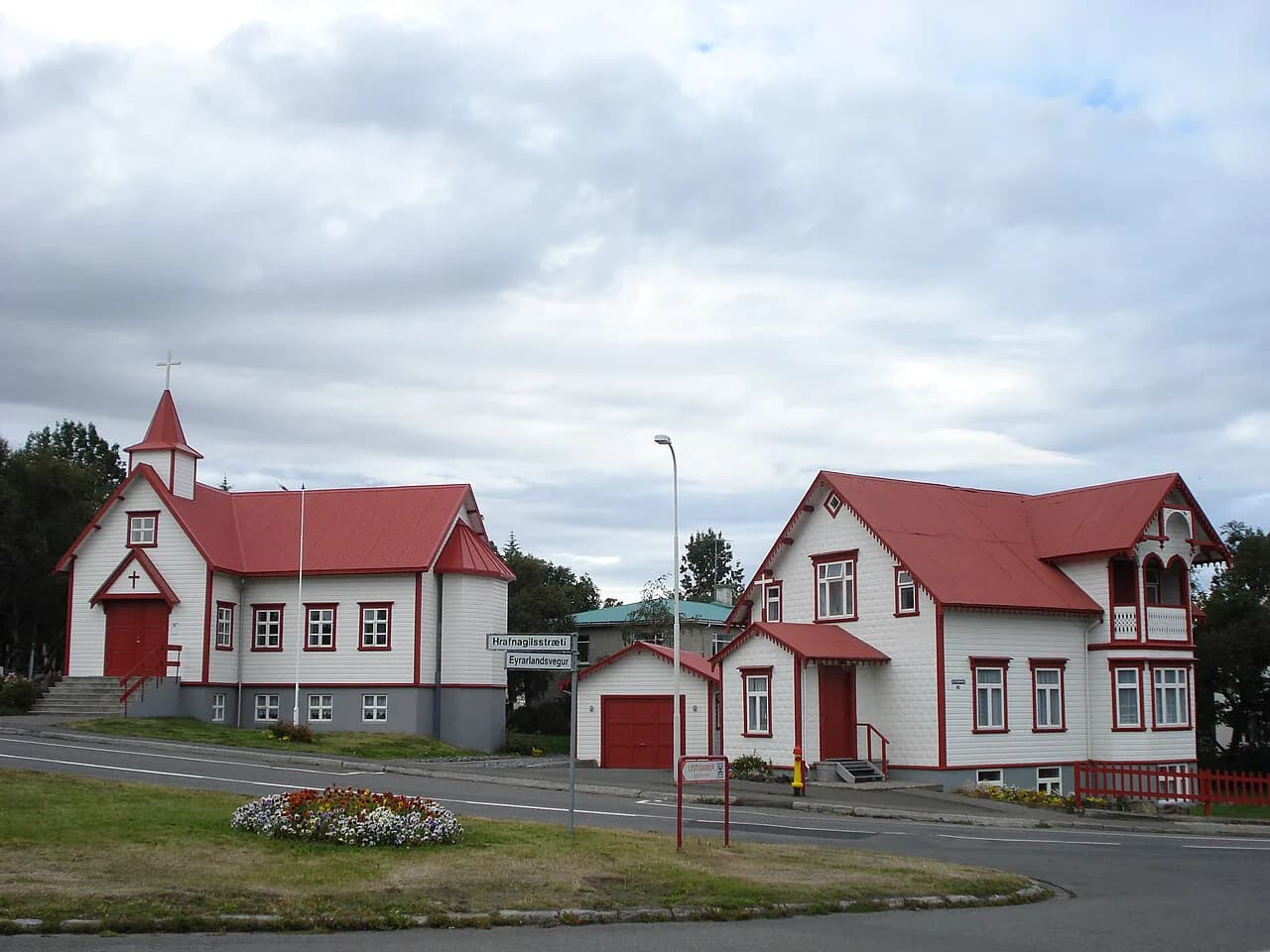
Pickup is included and covers a long list of hotels, guesthouses and apartments across town, with several addresses collecting at fixed points such as Hof Cultural Center on Strandgata and Hotel KEA on Hafnarstræti. If you book a place near one of those hubs, your evening starts with a short walk rather than a taxi, and you can add your pickup location after booking if you have not settled your accommodation.
Photography on the night: cameras, tripods and phone limits
The guide helps guests capture photos, but the practical kit is a camera you can operate in the cold and a tripod for long exposures; phones can record bright displays but struggle with faint ones. Set up at the stop and let the camera run while you watch, rather than splitting your attention between the screen and the sky.
What the camera records is often more colourful than what your eye sees. Most displays read as green to the naked eye because our eyes detect green more readily, while photographs frequently pick up pinks and violets that were not obvious at the time.
Where to stay: hotels, guesthouses and apartments
Most of Akureyri's accommodation sits within a short walk of the pickup points, so the choice is less about distance and more about comfort after a cold evening. Hotels along Hafnarstræti and around the Hof cultural centre put you on the doorstep of the main collection points, while guesthouses and apartments on the town's edges are quieter but may route you to a central pickup.
If you want a warm end to the night, the Forest Lagoon, Akureyri sits just outside town and appears among the tour's pickup locations, which makes it a plausible base for travelers who value a geothermal soak over a central address.
How many nights to allow in Akureyri for a fair chance
Three nights in Akureyri is a sensible minimum for an aurora-focused trip: it gives you two or three separate evenings and a spare slot for the night the cloud breaks. Two nights works if you accept that a single cloudy evening can end the hunt, and one night is a gamble on weather rather than a plan. The same rule of thumb applies if you extend the trip east toward Lake Mývatn, where the myvatn northern lights guide sets out the season and dark spots in more detail.
Use the Icelandic Met Office aurora forecast, which the municipality links as the local forecast source, as a guide rather than a verdict. Kp values and forecast maps are guidance only, and the island guidance is blunt that the forecast is not always reliable and that it is worth going out even when conditions look unpromising.
Colours you may see and why green dominates
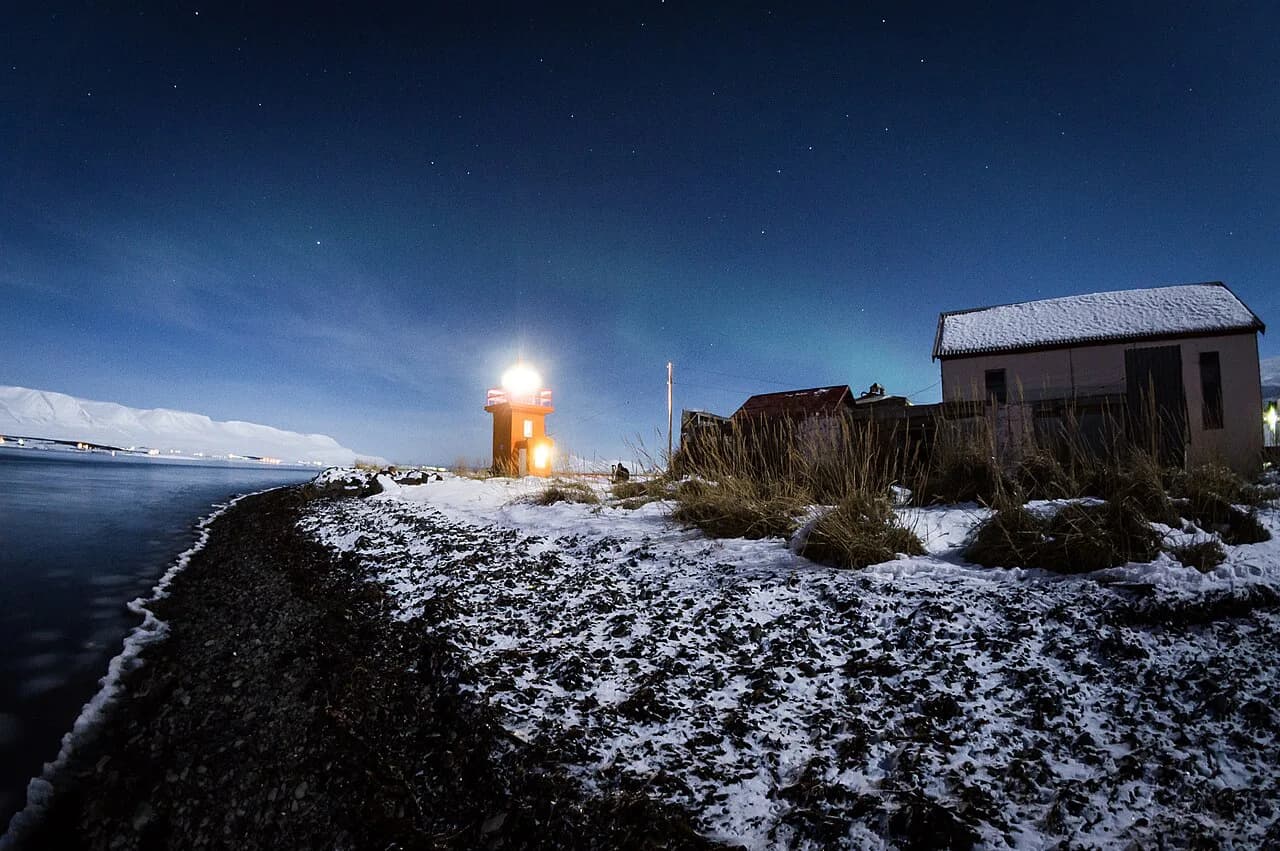
Green is the colour most people see, with white alongside it, and strong displays can add red, violet and pink. The colour depends on the altitude where solar particles collide with the atmosphere and on which gases are present there, so a single night can shift through several hues.
Red and pink tones are linked to intense solar activity and are less common, so do not judge a night by colour alone. A modest green arc that brightens for ten minutes is a good result, and the burst pattern is exactly why a fixed three-hour window is a reasonable bet rather than a certainty.
Adding daytime winter activities to aurora nights
Winter days in Akureyri are short, so plan one anchor activity rather than three: the town's swimming pool and geothermal pools, the botanical garden under snow, or a drive along Eyjafjörður for the scenery. Keeping the afternoon light and saving your energy for a late night out is the pattern that works.
Geothermal bathing is the classic way to warm up before an evening tour, and the Forest Lagoon is the closest option to town. If you are heading further north along the coast, GeoSea in Húsavík pairs a sea-view soak with the drive, though it makes for a long day if you are also chasing aurora at night.
Plan Your Visit
Treat Akureyri as a base rather than a single night out. Book three nights, put a guided bus evening early in the stay so a cloudy first attempt leaves room for another, and keep one evening free for a self-drive run into the valleys if you are comfortable on winter roads.
The rest is patience and repetition: displays come in short bursts, cloud decides the night, and the mountains around Eyjafjörður give you a reasonable chance of finding a gap. Combine that with a geothermal soak and a short winter day of sightseeing, and the aurora becomes one good reason among several to be there.
Explore more Akureyri northern lights guides
- Forest Lagoon, Akureyri
- GeoSea in Húsavík
- Akureyri in Winter
- Akureyri Swimming Pool
- The Christmas House Near Akureyri
- Akureyri Aurora Forecast
- Akureyri Husky Safari
- Akureyri in December
- Akureyri in February
- Akureyri in January
- Akureyri in March
- Akureyri in November
- Akureyri in October
- Akureyri Northern Lights Tours
- Akureyri Snowmobile Safari
- Christmas in Akureyri
Frequently Asked Questions
How close is Akureyri to the Arctic Circle?
Akureyri sits in North Iceland just below the Arctic Circle, which is why the aurora is regularly visible on clear winter nights. The island of Grímsey, north of the town, lies on the Arctic Circle itself and is reached by air or ferry from the Akureyri area.
When is the best time to see the northern lights in Akureyri?
The guided aurora bus runs from September to April, and the darkest months of December and January give the most hours of night. September and March are a good compromise: long enough days for sightseeing, with fully dark nights for the aurora.
Can you see the northern lights from Akureyri without a tour?
Yes, if you have a car and winter-driving confidence. The streetlights in town wash out the low northern sky, so drive a short way up Eyjafjörður or into a side valley and find a lay-by with an open northern horizon, watching for ice and unlit bends.
How long is a northern lights tour from Akureyri?
The standard guided bus tour lasts about three hours with round-trip transport from Akureyri, an English-speaking guide and pickup and drop-off included. Departure times are flexible and chosen when you book rather than fixed.
Are northern lights tours from Akureyri suitable for children?
The guided bus tour accepts children from 3 years old and is graded easy, which makes it a workable family evening. It is a shared bus rather than a private small-group chase, so expect a full vehicle and a common viewpoint.
How many nights should I stay in Akureyri for a chance of aurora?
Three nights gives you several separate evenings and a spare one for when the cloud breaks, which is a fair balance for an aurora-focused trip. Two nights is workable, and one night is a gamble on weather rather than a plan.
Sources
Notes for your Arctic winter trip
Optional updates to our northern lights guides.
You might also like
Continue reading
More guides you'll find useful