Aurora Hunting in Europe: Where to Go and How to Plan
Aurora hunting means driving toward clearer skies, not waiting in one spot. See how guided chases work, what they include, and how many nights to plan.
On this page
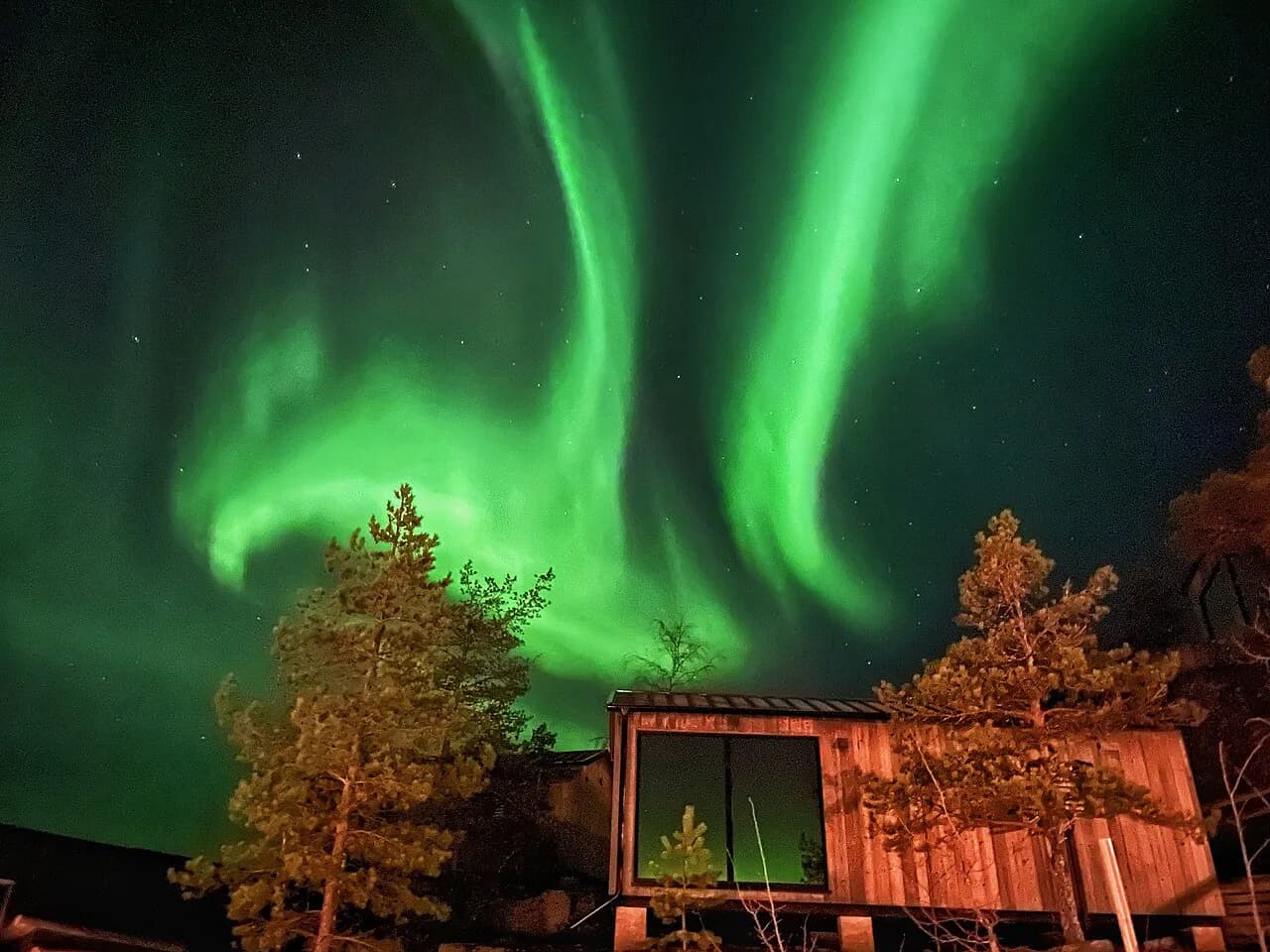
An Arctic winter night puts the aurora within reach of anyone willing to travel north and stay up late, but the sky decides whether it appears. Aurora hunting is the practical response: you read cloud and space-weather forecasts, then drive toward the clearest horizon rather than sitting still at one viewpoint. Finnish Lapland, Swedish Lapland and Iceland each give you a different mix of road network, dark-sky access and tour infrastructure to work with.
This guide focuses on how a chase actually works, using named operators around Inari and Rovaniemi as concrete models. It covers season timing, self-guided versus guided decisions, what a tour includes and what costs extra, and how many nights to book so a cloudy evening does not end your trip.
Why the far north matters: aurora oval, dark nights and the limits of Kp forecasts
The aurora forms in a ring around the magnetic pole known as the aurora oval, and the farther north you base yourself the more often that ring sits overhead. That is why Inari, northern Swedish Lapland and Iceland's interior fringe are stronger starting points than southern cities. Latitude alone does not deliver a display, though; you still need darkness and a clear line of sight to the northern sky.
Kp numbers describe how disturbed the geomagnetic field is on a planetary scale, not what you will see from a specific road or lakeshore. A modest Kp under clear inland skies often beats a high Kp buried under coastal cloud. Treat the index as one input alongside local cloud forecasts, and pick your chase direction accordingly.
Guides build their evenings around exactly this gap between global activity and local visibility. Nordic Odyssey, for example, analyses roughly a 100 km radius around Rovaniemi and several weather models rather than relying on a single Kp figure. That framing is a useful mental model wherever you hunt: the question is always which nearby patch of sky is likely to be open.
When aurora hunting works: the dark season from late August to early April
Chasing requires genuine night, so the practical window runs from late August, when the first dark hours return to the far north, through early April. Operators schedule within that frame: Rovaniemi photography hunts usually operate from August to April, while Visit Inari's car-based chase runs 1 December to 31 March with a daily 20:00 departure. Booking inside these windows means the sky can be dark enough when you step outside.
Early and late season trips trade deep winter darkness for milder temperatures and longer daylight for daytime activities. Midwinter brings the longest nights but also the coldest conditions, which matters for how long you can stand outside at a roadside stop. If your dates are fixed, work out how much true darkness your chosen week delivers before committing to a chase.
Self-guided chasing versus a guided tour: roads, cloud forecasts and safe stopping
Driving yourself gives you total flexibility: you can leave when a cloud gap opens, change direction mid-evening and stop for as long as you like. The catch is that winter roads demand real care, and finding a safe pull-off in the dark on an unfamiliar route takes local knowledge. A guide who knows which lay-bys and lake shores are safe is solving a specific, practical problem rather than only navigating.
A guided tour suits travelers without winter driving experience, those traveling solo who want company and interpretation, and anyone who would rather not plan a route at midnight. Self-guided chasing works best when you have a rental car with winter tyres, a base with quick access to empty roads, and the discipline to abandon a cloudy spot early.
How a guided chase actually runs, using the Inari car hunt as the model
Visit Inari's Aurora Hunting by Car shows the shape of a typical chase: three hours out from Inari village, with the guide reading cloud movement to choose a direction. Visit Inari positions its location as an advantage because five different directions are within reach, which lets the guide dodge a bank of cloud rather than commit to one fixed viewpoint. The rest, as Visit Inari puts it, comes down to luck.
That tour is priced at 169 € per person, with children aged 4 to 11 receiving a 30 percent discount, and it includes an English-speaking guide, thermal equipment, a hot drink, fuel and insurance. Departures are daily at 20:00, and outside the main season the minimum is two adults. Knowing inclusions up front helps you compare a chase against a cheaper tour that leaves you to rent winter clothing separately.
Rovaniemi: small-group photography hunts, group size, price and inclusions
Rovaniemi's photography hunts are built around small groups and flexible routing rather than a fixed campfire stop. Nordic Odyssey caps shared departures at eight participants, runs a three-hour evening, and includes hot drinks, transport and professional photographs sent afterwards. Guides can make several stops and may cross toward Sweden when the forecast justifies it, though Nordic Odyssey argues that driving hundreds of extra kilometres is not automatically better.
Standard pricing is 100 € per adult and 80 € per child aged 8 to 12, with a minimum age of 8 and a minimum of two paying adults to run. Winter overalls and boots are not included but can be added for 5 € per set, and pickup is covered within 8 km of the city centre with surcharges for remoter resorts. The tour season normally stretches from August to April, with evening departure times shifting by season.
Nordic Odyssey is explicit that sightings cannot be guaranteed and reschedules depend on availability. If poor conditions are forecast, guests can ask to move their booking to another evening free of charge when seats remain. That makes early contact useful: small groups fill on popular dates, so the sooner you flag a weak forecast the more options you keep.
Aurora Pass and multi-night booking: trading fixed dates for flexibility
The core weakness of a single chase night is that you commit to one date before you know the weather. Nordic Odyssey's Aurora Pass answers this by reserving your seats across three consecutive evenings, with a morning weather update so you can choose to join on the night that looks best. Pricing starts at 225 € per adult for the multi-night product, compared with 100 € for a single shared departure.
The trade-off is straightforward: a pass costs more than one tour but less than booking the same night three times, and it removes the risk of finding every departure full after a forecast turns bad. It suits travelers staying several nights in one place who can rest during the day and stay up on the promising evenings. If your itinerary moves every night, a single chase with a free reschedule policy may fit better.
Cloud versus clear skies: inland Lapland, the Swedish north and Iceland
Inland Finnish Lapland around Inari and the national parks tends to offer cold, dry, clearer air, which is why lake shores and fell roads there are productive chase terrain. Swedish Lapland, with bases near Abisko and the Torne River valley, is famous among aurora watchers for a rain-shadow reputation, though you should still plan around cloud and check this Abisko northern lights guide for season timing. Iceland's coastal weather is the most changeable of the three, so a chase there often means driving inland or along the coast to find a break.
Use the same logic wherever you base: position yourself within an hour or two of empty roads, check cloud forecasts for several directions before dinner, and be ready to move rather than waiting at your hotel. Coastal areas gain milder temperatures and lose inland clarity; the reverse holds for forest and fell country. Your chase plan should follow whichever direction the satellite picture favors that evening.
Where dark skies are within reach: Lake Inari, national parks and coast
A chase is only as good as the places it can reach, and Inari village sits beside Lake Inari, whose frozen surface and sparse shoreline settlements leave genuinely dark horizons close to the road network. National parks across Finnish and Swedish Lapland add maintained tracks and open terrain, though you need to plan your access before nightfall and respect park rules on vehicles and fires. Iceland's interior roads are seasonal and should not be treated as casual night-driving routes in winter.
Light pollution matters even in small towns, so the practical move is to put a few kilometres between yourself and village lighting before you start watching. A local guide who knows which lake shores, lay-bys and forest clearings are safe and legal after dark saves you the trial and error of finding them yourself. That local routing knowledge is often worth more than a slightly longer drive.
Glass igloos, aurora cabins and wilderness saunas as alternatives to driving
Not every aurora night needs a vehicle. Glass igloos, aurora cabins and wilderness saunas let you keep watch from a fixed base, which trades mobility for comfort and warmth. The compromise is that you accept whatever sky you get overhead, so these stays reward travelers who book several nights in one place rather than a single night.
Combining formats works well: sleep in a glass-roofed cabin one night and take a guided chase the next when cloud is forecast over your resort. Nordic Odyssey, for instance, pairs a private wilderness sauna with aurora watching from a dark forest setting, a slow alternative to a roadside hunt. If ice architecture interests you, an ice hotel stay can anchor a winter itinerary in the same way.
What tours include and what costs extra: thermal suits, boots, pickup zones
Inclusions vary enough that two tours at similar prices can deliver very different value. Visit Inari bundles thermal equipment and insurance into its car hunt, while Nordic Odyssey includes transport, hot drinks and professional photographs but charges 5 € for winter overalls and boots. Read the inclusion list before comparing headline prices, because clothing rental and photo packages can close the gap quickly.
Pickup zones are the other common surprise. Within central Rovaniemi, pickup is included inside 8 km of the centre, but resorts farther out carry surcharges that can reach tens of euros each way depending on the property. Guests staying within 750 m of the Nordic Odyssey office are asked to meet on foot to cut short vehicle transfers. If you are weighing a remote glass igloo against a town hotel, factor that transport cost into the comparison.
How many nights to plan for a fair chance of clear skies
No operator can promise a sighting, and any itinerary built on a single night is a gamble on cloud as much as on solar activity. A sensible approach is to budget at least three or four nights in one aurora base and treat one clear evening as the goal rather than every night. Multi-night products such as the Aurora Pass exist precisely because repeat attempts raise your odds without guaranteeing them.
Balance chase nights with daytime activities so a late return does not wreck the next day: three hours out is comfortable, while all-night drives leave you exhausted and do not automatically improve your chances. Keep one flexible evening unbooked for a forecast that looks strong, and read the reschedule terms when you book. If you want a single base with the strongest mix of dark skies and infrastructure, Finland's far north is the easiest starting point.
Head to Finland, Sweden or Iceland: matching your base to the chase
Finnish Lapland gives you the deepest pool of named chase operators, from Inari's car hunts to Rovaniemi's photography groups, plus national park dark skies within easy reach. Swedish Lapland rewards travelers who want remote fell country and long lake horizons with fewer crowds. Iceland suits those combining a chase with a wider winter road trip, accepting more volatile coastal weather in exchange.
Choose your base by how you want to move: a car-based independent trip favors the Finnish and Swedish interior, while a guided trip with pickup and photographs suits Rovaniemi and Inari village. Whichever you pick, book inside the dark season, allow several nights and keep one evening free for the best forecast. Then let the sky make the final call.
Plan Your Aurora Chase
Aurora hunting rewards preparation more than luck alone: base far enough north, travel inside the dark season, and give yourself several nights so cloud on one evening is not the end of the trip. Decide whether you want the freedom of your own car or the local routing, clothing and photographs a guided chase provides, then compare what each tour actually includes.
Whichever destination you pick, treat Kp figures as one clue among several, watch local cloud forecasts and accept that no operator can guarantee a display. Book a chase or a multi-night pass early enough to keep your options open, and let the evening forecast guide the final decision.
Frequently Asked Questions
What is aurora hunting and how does a chase tour work?
Aurora hunting means driving toward clearer skies rather than staying at one viewpoint. A guide reads cloud and space-weather forecasts before departure, picks a direction, and may make several stops during the evening to find gaps in the cloud. Tours typically last around three hours and include transport, a guide and hot drinks.
Is aurora hunting better self-guided or with a guide?
Self-guided chasing gives maximum flexibility if you are comfortable on winter roads and know where it is safe to stop after dark. A guided tour removes the driving and route-finding burden and usually adds local knowledge, thermal equipment and photographs. Travelers without winter driving experience generally get more from a guide.
How many nights should I plan for aurora hunting?
Plan at least three or four nights in one aurora base rather than a single attempt. Cloud is the main limiting factor, and repeat evenings raise your chances without guaranteeing anything. Multi-night passes reserve your seats across consecutive evenings so you can pick the most promising forecast.
What does an aurora hunting tour include?
Inclusions vary by operator. Some chase tours bundle a guide, thermal equipment, a hot drink, fuel and insurance, while others include transport, hot drinks and professional photographs but charge extra for winter overalls and boots. Pickup outside a central zone can also carry a surcharge, so read the inclusion list before comparing prices.
Does a higher Kp number mean I will see the aurora?
No. The Kp index describes planetary geomagnetic disturbance, not the sky above your location. A modest Kp under clear inland skies often beats a high Kp hidden by coastal cloud. Use Kp as one input alongside local cloud forecasts and pick your chase direction accordingly.
Sources
Notes for your Arctic winter trip
Optional updates to our northern lights guides.
You might also like
Continue reading
More guides you'll find useful