Northern Lights Hotels in Europe: Igloos vs Cabins
Compare northern lights hotels in Finnish Lapland and Iceland, from glass igloos to aurora cabins, and learn how many nights to plan for clear skies.
On this page
A northern lights hotel earns its name from what happens after dark, not from its lobby. The strongest versions put open sky in front of you: a glass roof above the bed in Finnish Lapland, or a property on dark lava fields in Iceland where the hotel reports aurora above the buildings from September to April when space weather is favourable. What separates a good stay from a disappointing one is less about thread count and more about how far you are from town lights and how easily you can step outside at 1am.
Europe's aurora belt runs through Finnish Lapland, Swedish Lapland, northern Norway and Iceland, and the best places to see northern lights cluster where dark nights, inland clear-sky gaps and access line up. A hotel only helps if the sky cooperates, so treat any property as a comfortable base and a viewing position, not a promise. This guide compares the named options in our destinations, explains what each room format actually gives you, and sets out how many nights to book before you commit.
Why a hotel in the far north beats a city break for aurora watching
Aurora watching rewards darkness above almost everything else. A hotel on the edge of a wilderness area reduces the glow of streetlights and car parks that washes out faint arcs, and it puts you outside within a minute of an alert. In a city you usually need to drive out first, which costs time and often means joining a group. A rural property trades nightlife and restaurant choice for a darker sky and a shorter walk to your bed when the aurora dies down.
The trade-off is logistics. Lapland resorts sit far from airports and are reached by transfer or bus, while an Iceland hotel near the Blue Lagoon is a short drive from Keflavík but has fewer alternatives for dining and evening activity. Neither is better in the abstract. A hotel that faces open sky and lets you look up between courses is worth more on a cloudy week than a stylish city room where the aurora is an excursion.
How far north these hotels sit and why the aurora shows there
The auroral oval is a ring of activity around the magnetic pole, and a stay inside or close to it means the lights can appear overhead rather than low on the horizon. Finnish Lapland sits well inside that band, which is why resorts around Saariselkä and Kakslauttanen build their winter product around the sky. Iceland sits slightly south of the main oval but still catches strong displays, particularly when activity is high.
Auroras come from charged particles carried on the solar wind that excite gases in the upper atmosphere, producing the green and sometimes red or violet curtains you see in photographs; what are the northern lights explains the mechanism in more detail. Latitude sets your baseline, but it does not control cloud. A northern position with an overcast week loses to a slightly less northern spot with clear gaps, which is why inland Lapland and the Icelandic south-west are compared on weather as much as on degrees.
When the aurora season runs: dark nights from late August to April
You need darkness, not just latitude, so the season follows the return of long nights. Kakslauttanen runs its glass igloos through the northern lights season from around the third week of August to around the end of April, according to the resort. The Northern Light Inn states that aurora appears above the hotel from September to April when space weather is favourable, which is a condition worth reading literally: the months set the dark window, the solar wind decides the night.
Within that window, the weeks around the equinoxes often combine dark nights with manageable cold, while midwinter delivers the longest nights but also the shortest days for everything else. Late August and September give you evening darkness after mild days, and March into early April brings longer daylight for daytime activities without losing the night. Snow cover is not required for the aurora, but it brightens the foreground and reflects light in photographs.
Glass igloos in Finnish Lapland: what the roof view actually gives you
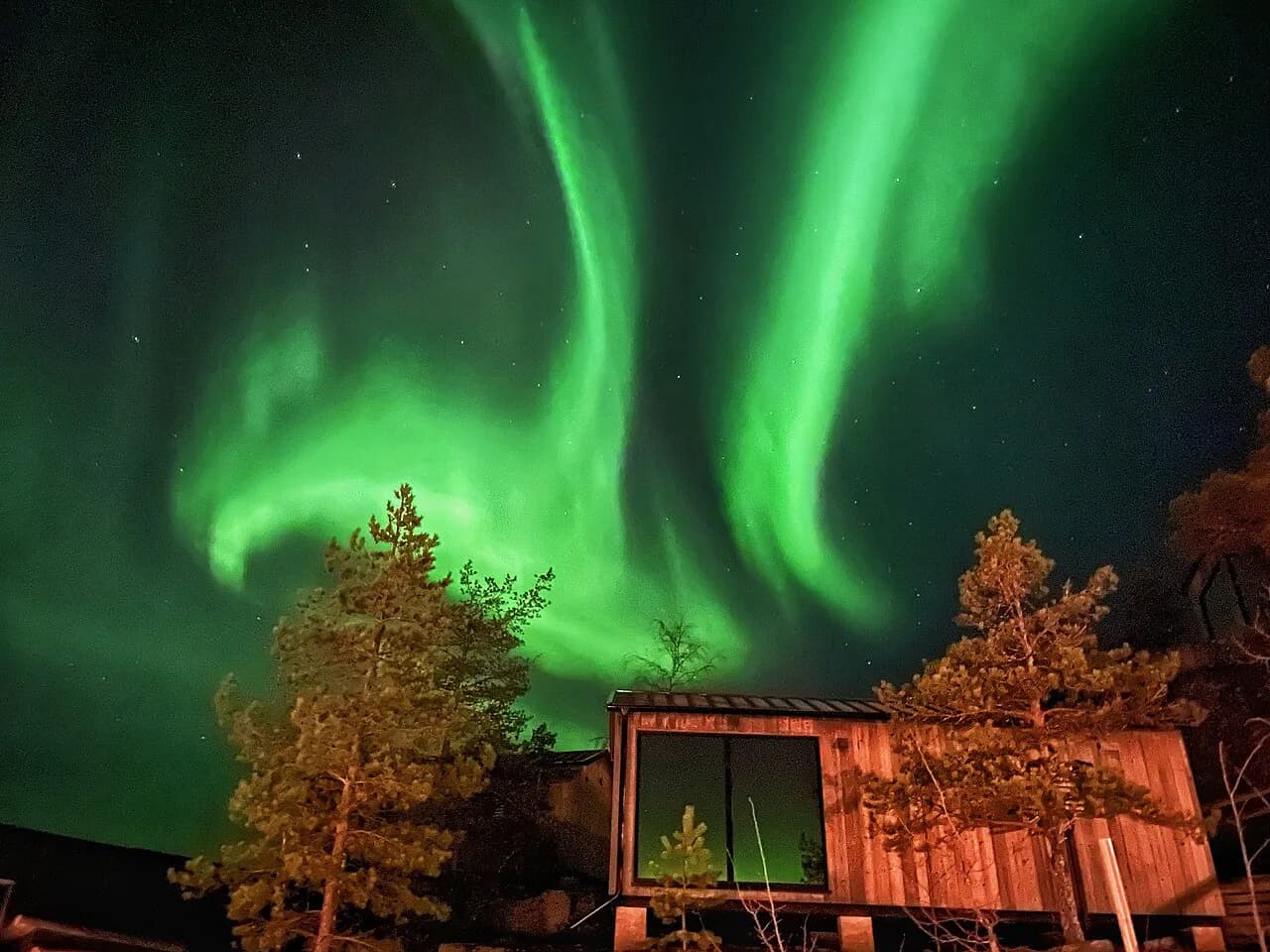
A glass igloo is a simple idea executed with real constraints. You lie in bed and watch the sky through a thermal glass roof, staying warm while the temperature outside drops, and you never have to dress to check whether anything is happening. Kakslauttanen's small glass igloos hold two single beds with a toilet, shower and private sauna, while the large glass igloos sleep up to five with four single beds plus a shower, toilet and private sauna. That sauna matters after a cold hour outside.
The Kelo-Glass Igloo combines a log chalet with a glass-roofed bedroom, sleeping up to six with a fireplace, kitchenette and private sauna, and the 310 square metre Luxury Kelo-Glass Igloo adds three chalet bedrooms and three glass igloos for groups of up to twelve. These hybrid formats solve the main glass-igloo complaint: a glass dome is a viewing pod, not a spacious apartment, and a family or group spreads out better in a cabin with a glass bedroom attached.
Kakslauttanen Arctic Resort: igloo types, cabins and the West Village activities
Beyond igloos, the resort offers log cabins from small units for four up to large cabins for six, the Gold Digger's Cabins, a Queen Suite with outdoor Jacuzzi, and a century-old traditional house. Smoke saunas in the East Village, including a lake sauna and a large one seating 200, give you a hot-and-cold evening between aurora checks. Winter offers on the resort site run from about 278 euros per night on a half-board winter rate to multi-night packages in the low thousands, with a two-hour husky safari from about 80 euros per person and a reindeer safari from about 94 euros per person; treat these as starting prices when booking.
The resort also gives you a self-guided daytime base. Marked cross-country ski trails lead from the East Village towards Kiilopää and Urho Kekkonen National Park, with around 200 kilometres of tracks starting in front of the resort. That is the argument for staying several nights: a cloudy evening costs less when the next day has skiing, snowshoeing or a smoke sauna instead of a long drive to fill.
The Northern Light Inn in Iceland: a Blue Lagoon base with aurora views from the property
The hotel's own framing is aurora above the property from September to April when space weather is favourable, so your viewing position is the grounds rather than a booked chase. The surrounding Reykjanes landscape is open and lightly built, which suits a quick step outside, but the Blue Lagoon complex and nearby roads add light. For a darker night, plan to drive a short distance onto the peninsula's quieter lanes or join an organised tour; the hotel does not present itself as an aurora-tour operator.
Rooms range from double and twin formats to family rooms, and direct bookings bring extras such as a spa discount, an early check-in subject to availability and a room-upgrade discount on arrival. Max's Restaurant serves breakfast, lunch and dinner with Nordic ingredients, so you can eat before an evening outside instead of driving to Grindavík. The wellness spa and fitness facilities give you somewhere warm to wait out a snow shower.
Snow and ice hotels versus warm cabins: the overnight trade-off
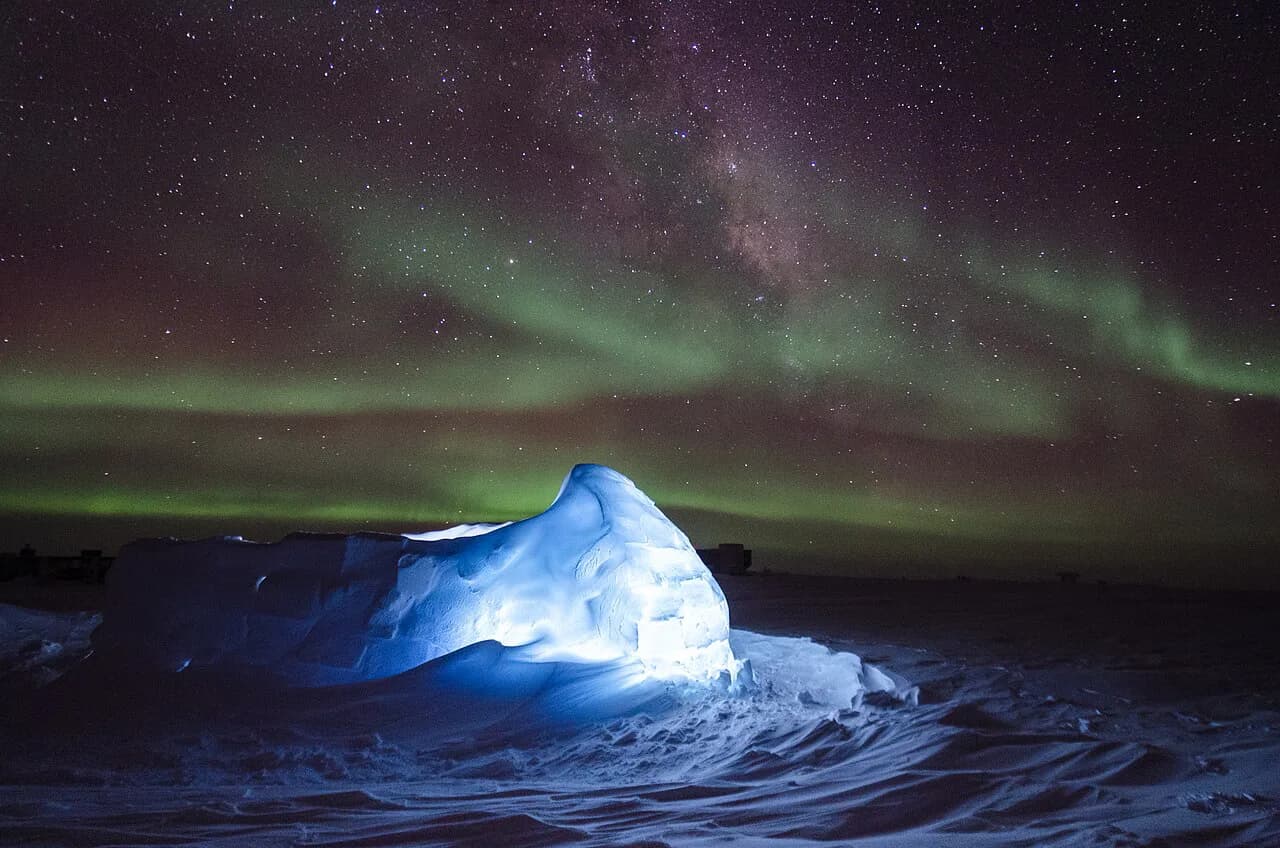
An ice hotel is an experience first and a bedroom second. You sleep in a room built of snow and ice, usually in a heavy sleeping bag on a reindeer skin, and the memorable part is the night itself rather than deep rest. Across the Nordic north, these properties are rebuilt each winter and often pair an ice room with warm cabins on the same site, so guests can take the cold night as a single adventure and sleep normally either side. Ice Hotels in Europe maps the options if you want the format rather than the aurora as the centrepiece.
Warm cabins are the better aurora base for most travellers. A log cabin with a fireplace, kitchenette and private sauna lets you keep odd hours, brew coffee at 2am and step out repeatedly without disturbing anyone. Kakslauttanen's cabin range covers couples and families in the same village as the igloos, and the Northern Light Inn's rooms serve the same purpose in Iceland. If you want one dramatic cold night plus comfortable aurora watching, split the stay.
Saunas, hot tubs and glass-roofed dining: comfort between aurora checks
In Iceland, the Northern Light Inn's spa and honesty bar serve the same function: somewhere comfortable to sit between checks. A hot tub or jacuzzi is the classic version, letting you watch the sky from warm water, though steam can obscure the view and you still need to be outside. Glass-roofed dining looks spectacular but is not a substitute for stepping out, because interior lighting reflects in the glass.
Heat, glare and privacy: the real limits of a glass-roof cabin
Privacy is the other limit. A glass dome is visible from outside and from other igloos, so curtains or blinds matter when you want to sleep or change. Space is tight in the small models, with two single beds and a private sauna in the 25 square metre igloos, which is why Kakslauttanen's descriptions of cabin sizes are worth reading before booking a family in. Children sleep well in igloos; adults often sleep less when the aurora is active.
Cloud cover, coast versus inland, and light pollution near towns
Clear sky is the deciding factor, and cloud patterns differ sharply between coast and inland. Iceland's south-west sits on an exposed Atlantic coast, so weather moves quickly and a clear hour can appear between fronts, but long overcast spells are common. Inland Finnish Lapland is more continental, with colder, drier air and a better chance of stable clear nights, at the cost of deeper cold. Keep an eye on the Kp Index Explained alongside a cloud forecast, because a high index under thick cloud shows you nothing.
Light pollution is easier to manage than cloud. Town edges, car parks and floodlit hotel facades all reduce contrast, so ask for a room facing away from the main buildings and walk a few hundred metres to open ground. Near the Blue Lagoon the geothermal plant and the lagoon itself add glow, while Kakslauttanen's position in forest away from Saariselkä's centre gives darker surroundings. A short drive can beat both, if roads are clear and you know a safe stopping place.
Self-guided chasing from your hotel versus booking a night tour
A guided aurora tour removes that burden. Operators drive, read the cloud radar, lend thermal suits and often take photographs, and they will keep going until they find a break or call the night off. You trade independence and money for local knowledge and a guaranteed return to your bed. A sensible pattern is to book one tour early in the stay, watch from the property on other nights, and use a live app to decide whether to go out.
What operators typically include: thermal suits, boots, transport and hot drinks
Lapland activity pricing usually bundles more than the activity. Kakslauttanen's reindeer safari includes transfer from the resort, thermal overalls and a blanket, a hot drink and a Finnish treat in a herder's shelter, and takes about two hours from pick-up to return for all ages. Its two-hour morning husky safari supplies thermal outfits at the farm before you meet the dogs. That means you arrive in ordinary winter clothing and let Kakslauttanen supply the heavy layers.
For night tours, the inclusions that matter are transport, a driver who knows the roads, thermal suits and boots, hot drinks, and photography help or a shared photo file. Group size changes the experience: a minibus of eight to sixteen moves faster and stops more easily than a coach. Ask whether the tour guarantees a sighting and offers a rebooking, and read the cancellation terms for weather before you pay, since a clear night is never assured.
Husky safaris and reindeer sledding from Lapland hotels
Book these for mornings, not for the same evening as a long aurora night, and leave at least one day without a fixed activity so you can sleep in after a good display. Kakslauttanen's West Village hosts most of these departures, so a room there shortens the walk to the meeting point, though transfers from the East Village are part of the arrangement. Feed the reindeer at the fenced enclosure near Santa's Home as a low-key alternative on a short break.
How many nights to allow for a fair chance of clear skies
No honest aurora hotel sells certainty, so plan for weather rather than for a single night. Three nights is the practical minimum for a short trip: one clear night would be luck, and three gives you some room for a front to pass through. Five to seven nights is the sensible booking for a dedicated aurora holiday, especially on the Icelandic coast where cloud can persist for days. If seeing the lights is the whole point, give it the longer window.
Choose the season as carefully as the duration. Late September and March often combine dark nights with workable temperatures and enough daylight for daytime plans, while December and January bring the longest nights and the coldest conditions. Use the best places to see northern lights in Europe to pair a hotel with a region and a month rather than picking a property in isolation, and book a flexible rate where you can.
Pairing an aurora hotel with daytime winter activities
A hotel-based aurora trip needs a daytime plan, because the nights are long and the days can be short. In Finnish Lapland, cross-country skiing from the resort towards Kiilopää and Urho Kekkonen National Park, snowshoeing, horse riding and smoke-sauna sessions fill the light hours without a long transfer. In Iceland, the Blue Lagoon, Reykjanes geopark trails, the volcano shuttle and the south coast sights give you a full day before an evening outside, though the Golden Circle is a two-hour drive each way.
Build one rest day into anything longer than four nights. Aurora watching fragments sleep, and a tired driver on an icy road is a real hazard, which is one argument for a hotel with a shuttle or a guide. Keep evening activities short and close to the property when the forecast looks promising, and save the long excursions for the nights when cloud is settled and no display is likely.
Choosing between Finnish Lapland and Iceland for a hotel-based aurora trip
Finnish Lapland wins on format and forest darkness. Kakslauttanen offers glass igloos, Kelo-Glass hybrids, cabins and suites on one forested site, with safaris, saunas and ski trails starting from the village, which suits travellers who want the aurora built into the architecture of the stay. The cost is a longer journey and deep cold, and the resort's two villages mean a car or a shuttle for some activities, though a bus stop outside the East Village connects to Ivalo and Rovaniemi.
Iceland wins on access and day-trip variety. The Northern Light Inn is next to the Blue Lagoon and a manageable drive from Keflavík, with shuttles and a restaurant on site, which suits a short break bolted onto a city stay. The trade-off is coastal cloud and the light from the lagoon and roads. Travellers who want the extreme version of the same idea can cross the Torne River into Sweden's ice hotel country, or head to northern Norway, but for a hotel-led aurora trip these two bases make the clearest comparison. If you are weighing the Swedish side of the border too, our northern lights in Swedish Lapland guide covers those bases.
Book the Base, Then the Weather
Decide first what you want from the night: the aurora from bed, the aurora from a hot tub, or the aurora after a drive to a cloud gap. A glass igloo at Kakslauttanen gives you the first, a Kelo-Glass or cabin adds space and a sauna, and the Northern Light Inn gives you a warm Icelandic base near the Blue Lagoon with airport and lagoon shuttles. Book five nights where you can, three at minimum, and leave one evening free of activities.
Book directly with the property where rates and extras are clearest, and check the hotel's own page for current prices, package contents and cancellation terms before paying. Kp values are guidance only, cloud decides the night, and no hotel can promise a display. Choose a place you would enjoy even under overcast skies, then treat a clear night as the bonus it is.
Frequently Asked Questions
What is a northern lights hotel?
It is accommodation chosen for its dark-sky position and easy access to open sky, not simply a hotel in a northern country. The strongest versions put the sky in front of you, such as a glass-roofed igloo at Kakslauttanen in Finnish Lapland or an Icelandic property on open ground near the Blue Lagoon. A hotel improves your odds by cutting light pollution and the distance to a viewing spot, but cloud and solar activity still decide whether anything appears.
Are glass igloos worth it for seeing the aurora?
A glass igloo buys comfort while you watch: you stay warm in bed and check the sky without dressing. It does not widen the weather window, and heated glass can fog or reflect interior lights. The 25 square metre igloos at Kakslauttanen suit couples, while the Kelo-Glass format sleeps up to six and adds a fireplace and living space. If you want space and a private sauna along with the roof view, the hybrid cabins are the better buy.
How many nights should I book to have a good chance of clear skies?
Plan three nights as a minimum and five to seven for a dedicated aurora trip. One night is a gamble on cloud, and coastal Iceland can stay overcast for days while inland Lapland often clears in cold, dry air. Spreading nights across a stay lets you use a guided tour on the first clear forecast and watch from the property on others. No number of nights guarantees a display.
When does the aurora season start and finish?
In Finnish Lapland, Kakslauttanen runs its glass igloos through the northern lights season from around the third week of August to around the end of April. The Northern Light Inn reports aurora above the hotel from September to April when space weather is favourable. Both windows describe dark nights rather than guaranteed displays, and the equinox weeks often balance darkness, temperature and daylight well.
Is a hotel tour better than watching from the property?
A tour adds a driver, cloud reading and often thermal suits and photos, which helps if you do not want to drive on winter roads at night. Watching from the property is free, flexible and lets you go back to bed quickly. The practical approach is one guided night early in the stay, then self-guided checks from the hotel grounds using a live forecast, moving a short distance if local lights interfere.
Do northern lights hotels provide thermal suits?
Many activity operators do: Kakslauttanen's reindeer safari includes thermal overalls and blankets plus a hot drink, while its husky safari supplies thermal outfits at the farm. Hotel rooms do not normally come with suits, so check the activity listing. Bring your own base layers and boots for walking around the property, and rely on the operator for the heavy outer layer on safari nights.
Which is better, Finnish Lapland or Iceland, for an aurora hotel stay?
Finnish Lapland offers purpose-built formats such as glass igloos, cabins and suites on forested sites, with safaris and saunas on the doorstep, but a longer journey and deeper cold. Iceland offers easier access from Keflavík and day trips to the Blue Lagoon and Reykjanes, but more coastal cloud and light from the lagoon. Choose Lapland for the room format and forest darkness, Iceland for a short break with varied days.
Sources
Notes for your Arctic winter trip
Optional updates to our northern lights guides.
You might also like
Continue reading
More guides you'll find useful