Aurora Australis vs Borealis: Europe Trip Guide
The northern and southern lights are one phenomenon seen from opposite poles. Compare seasons, latitudes and destinations to choose your aurora trip.
On this page
The northern and southern lights are the same phenomenon viewed from opposite ends of the Earth: charged particles from the Sun, channelled by the magnetic field, collide with gases high in the atmosphere and glow. The aurora borealis and aurora australis share that mechanism, but the travel decision is different in each hemisphere, because the seasons reverse and the accessible viewing grounds do not match.
If you are planning a winter break with a real chance of seeing the lights, it helps to separate the science from the itinerary. Read the two hemispheres side by side and the choice usually comes down to season, how far north or south you must travel, and how many dark hours you can spend outside.
Same lights, opposite poles: what actually differs
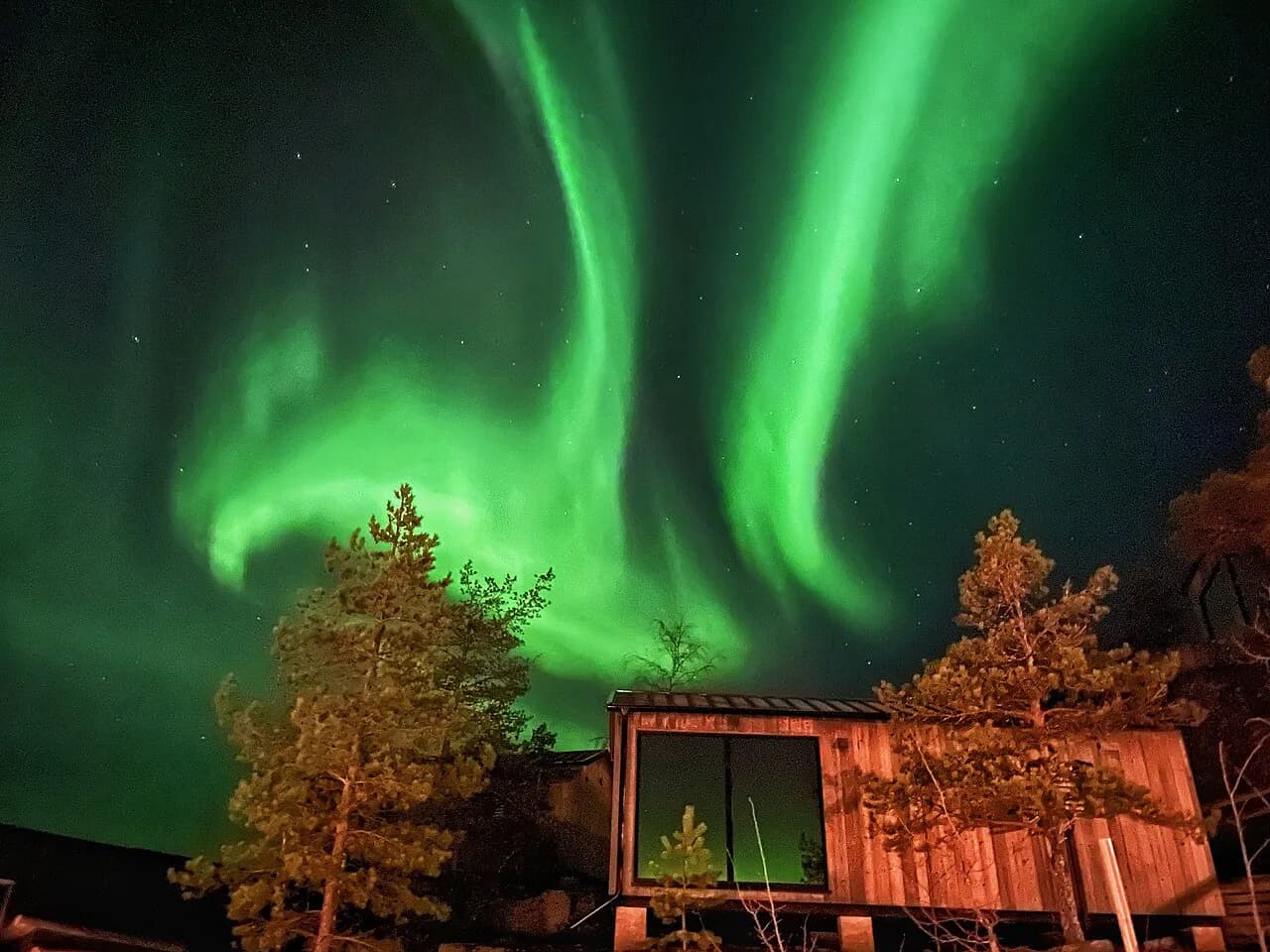
Both displays form when solar wind and particles from solar storms meet Earth's upper atmosphere, mostly oxygen and nitrogen, and are funnelled toward the poles; the glow appears between about 80 and 1,000 kilometres up. That shared origin means the colours and shapes are similar in either hemisphere, from simple arcs to rays and coronas that shift over minutes.
The practical differences are geographic. The auroral zone is a belt roughly 6° wide centred near 67° geomagnetic latitude, and it crosses populated, road-connected land in the north but mostly ocean and remote islands in the south. That single fact drives most of the planning trade-offs below.
Why the auroral oval sits near 67° geomagnetic latitude
Auroras are most often seen within the auroral zone, and the area where they appear at any moment is the auroral oval, whose size and shape change with solar activity. Being inside or near that oval matters more than being at the geographic pole, which is why high-latitude destinations in Lapland and Iceland work while more southerly cities need a strong storm.
Geomagnetic latitude is not the same as the latitude on your map, so two places at similar map latitudes can sit differently relative to the oval. When you compare destinations, treat how close a place sits to the oval as the question that decides your odds, not how far north or south the town looks on a globe.
Season timing: September to March in the north, March to September in the south
The northern lights season runs from September to March, while the southern lights season runs from March to September, so the two hemispheres never share a peak. If your holiday time is fixed, that reversal alone often decides which direction you fly for an aurora trip.
Within the northern window, December and January give the longest nights at high latitudes, and the weeks around the March and September equinoxes tend to bring extra activity. A February or March trip to Lapland trades shorter nights for slightly longer days you can use for husky sledding and snow activities before dark.
Best hours of the night and why midnight matters
Auroras can appear at any time in darkness, but the strongest displays typically fall between 9 p.m. and 2 a.m., with a peak often around 11 p.m. to midnight. Plan your evenings so you are outdoors and dark-adapted through that window rather than arriving back from dinner at midnight.
Displays last anywhere from minutes to hours, and several waves can pass through one night, so patience across a whole evening beats a single look at the sky. A guided night built around that window is often the reason it works, because someone else watches the forecast while you stay outside.
Dark skies, clear weather and solar activity: the three conditions that align
A sighting needs dark skies, clear weather and elevated solar activity together; darkness alone will not produce a display. That is why winter, a new-moon week and periods of higher solar activity are the most favourable combinations in either hemisphere.
The Sun follows a roughly 11-year activity cycle, and Solar Cycle 25 reached its maximum in October 2024 and is now in a gradual decline. That decline is uneven, so strong flares and coronal mass ejections can still occur, but treat any single forecast night as unknown until the weather and solar wind data come together.
Kp index and geomagnetic storms: how to read them as guidance
The Kp index is a guide, not a promise: values of 5 or higher suggest a good chance of strong auroras, but cloud cover and local darkness decide what you actually see. Use the Kp index explained to read the scale and pair it with a short-term aurora forecast through the evening.
During geomagnetic storms the auroral oval expands, which is how the lights occasionally reach far south of the usual zone. Those events are worth watching for, but they are not something to build a fixed-date trip around in a southerly city.
Where to go in Europe: Finnish Lapland, Swedish Lapland and Iceland
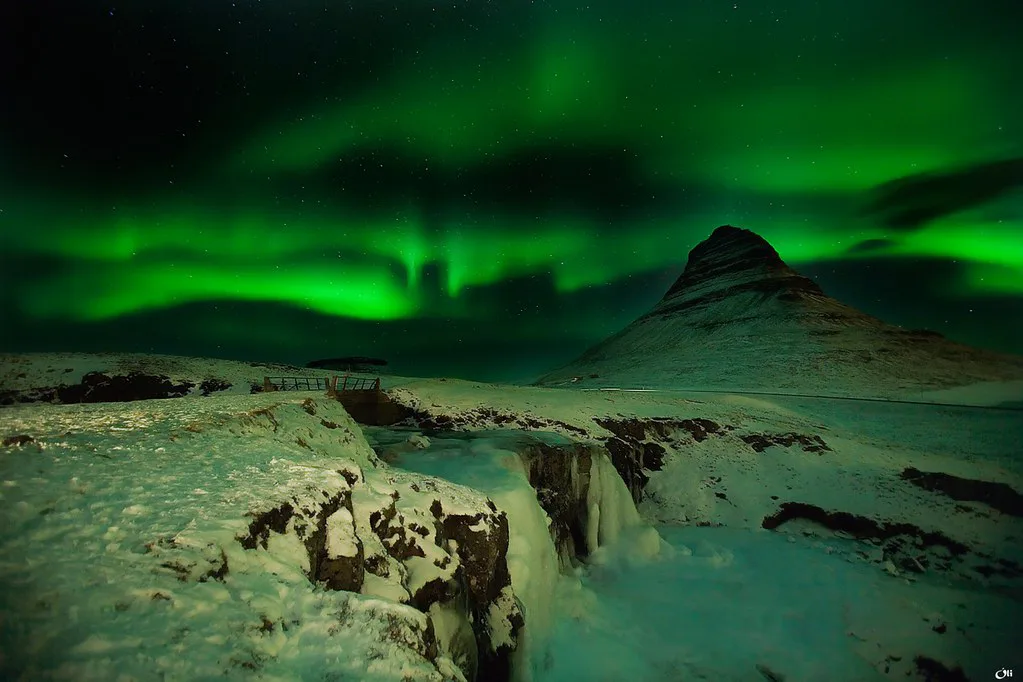
In Europe the reliable ground sits high in the north: Finnish Lapland around Rovaniemi and beyond the Arctic Circle, Swedish Lapland around Abisko and Kiruna, and much of Iceland. Our guide to the best places to see northern lights sets out how these destinations compare on darkness, access and winter conditions.
Swedish Lapland's Abisko is known for a dry, continental climate that favours clearer inland skies, while coastal Iceland trades cloud risk for easy access from the capital. In Finnish Lapland you can combine a town base in Rovaniemi with cabin and glass-igloo stays further north, which suits travellers who want a mix of activities and dark-sky nights. For a closer look at the town-base option, see our Rovaniemi northern lights guide.
If a memorable place to sleep is part of the appeal, an ice hotel or glass-roofed cabin can anchor the trip, and many sit within reach of dark countryside. Browse ice hotels in Europe to see how the seasonal builds differ in comfort, warmth and setting.
How far south the northern lights can reach during strong storms
During geomagnetic storms the auroral oval expands, and the aurora borealis has been seen as far south as the Mediterranean and parts of the southern United States, while the aurora australis has reached as far north as New Caledonia and Western Australia's Pilbara region. Those are exceptional events, not a normal travel plan, and they depend on a storm arriving when your sky is dark and clear.
The lesson for a trip is to position yourself inside the auroral zone rather than hoping a storm reaches you in a temperate city. If you are already in Lapland or Iceland, a strong storm expands your options; if you are in a southern city, it is a bonus rather than a plan.
Southern lights destinations and why they are harder to reach
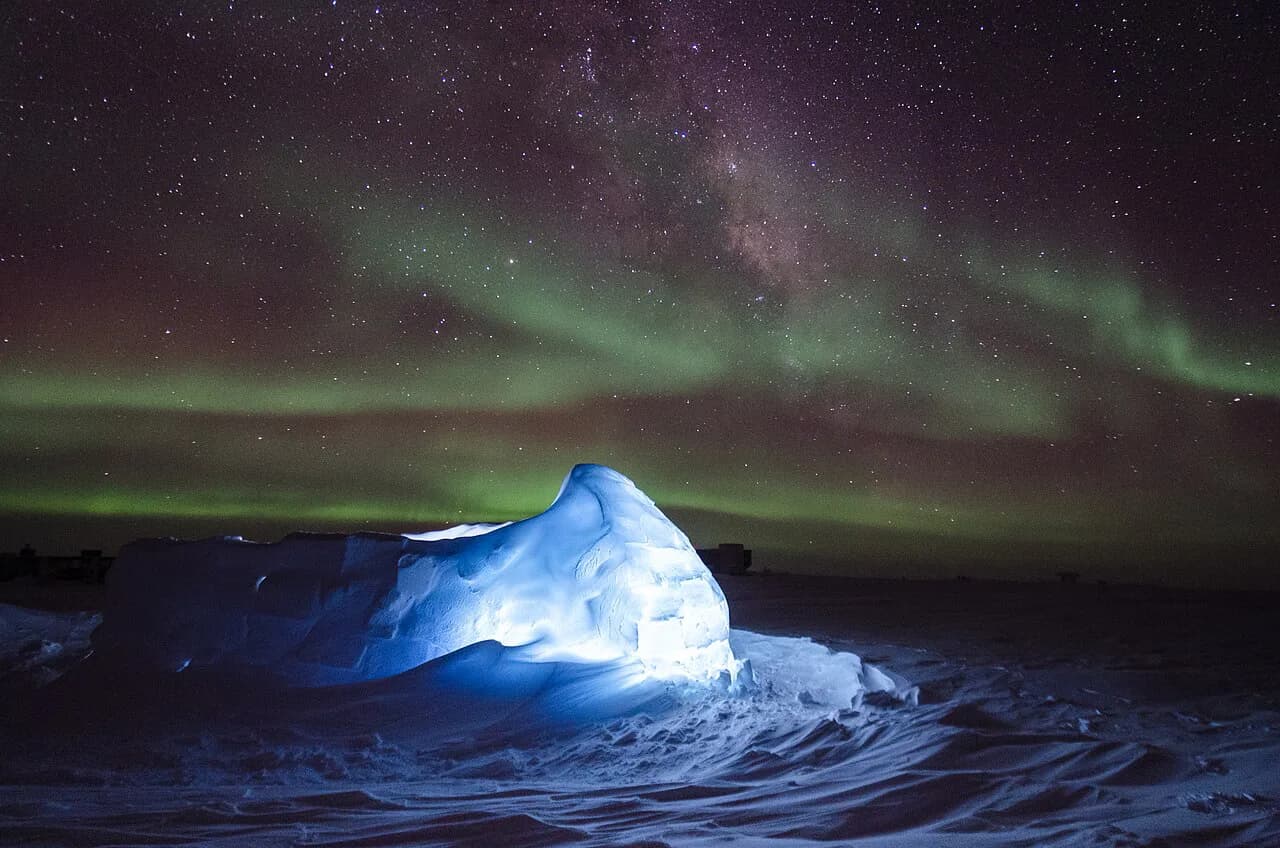
Southern lights viewing grounds include Tasmania south of Hobart, New Zealand's South Island around Dunedin and Invercargill, Patagonia in southern Argentina and Chile, and the sub-Antarctic islands. The aurora australis is harder to observe because the high southern latitudes are mostly ocean with fewer populated places, so the remote locations that work best cost more time to reach.
In practice that means scheduling extra travel days and accepting a coastal, weather-driven experience rather than a compact inland base. If you want the easiest logistics, the northern hemisphere simply offers more road-accessible ground inside the oval.
Cloud cover, coast versus inland, and light pollution near towns
Cloud is the factor most likely to spoil an otherwise good night, so a base with dark skies nearby and some flexibility to drive matters more than a marginally higher latitude. Coastal Iceland can shift quickly between clear and overcast, while inland Lapland often holds clearer, colder air, so weigh cloud risk against access when you pick a base.
Light pollution near towns washes out faint arcs, so plan to walk or drive away from street lighting and look toward the northern horizon with a wide, open view. A dark spot 15 to 20 minutes from your hotel is often enough to improve contrast without a long night drive.
Self-guided chasing versus a guided aurora night
Self-guided chasing buys flexibility: you follow the forecast, move between clear patches and keep your own hours, which suits confident winter drivers with a rental car and a base outside town. Guided nights buy local road knowledge, a driver who monitors the forecast through the evening, and a group that shares the waiting.
In Finland and Sweden, operators typically drive to a dark site, lend thermal suits and serve hot drinks, and many run small groups in minibuses. Read what each night includes before booking, and treat each company's chosen route as a sign of where they expect clearer weather.
What a guided night typically includes and how to judge an operator
Judging an operator comes down to specifics: how long the night runs, the maximum group size, whether transport and thermal suits are included, and whether photos are part of the package. Ask where they drive to and how they decide, because a guide who watches the forecast and moves is doing the work that makes a night worthwhile.
In Iceland and Lapland, many tours leave in the evening and return after midnight to match the strongest part of the window. Book for a night early in your stay so a cloudy result leaves room to try again, and choose a company that is clear about rebooking or cancellation terms.
How many nights to allow for a fair chance of clear skies
No night is guaranteed, and cloud can persist for days, so build in more nights than you think you need. Three or four nights in Lapland or Iceland gives room to move away from a cloudy stretch; a single night leaves your chances entirely to the weather.
If your trip mixes cities and countryside, put the aurora nights in the north or inland first and keep city nights for the end. That way a cloudy start does not send you home without a second attempt.
Photography expectations versus what the naked eye sees
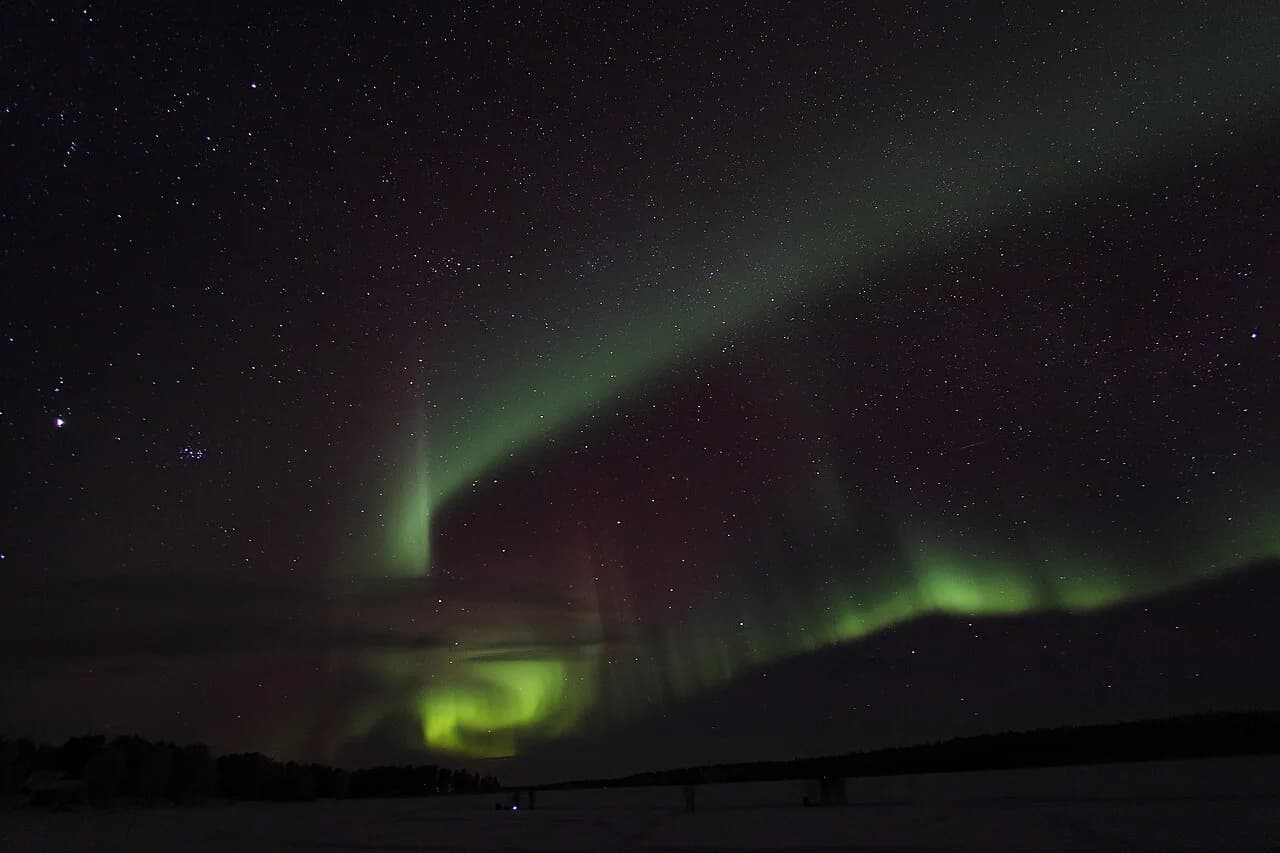
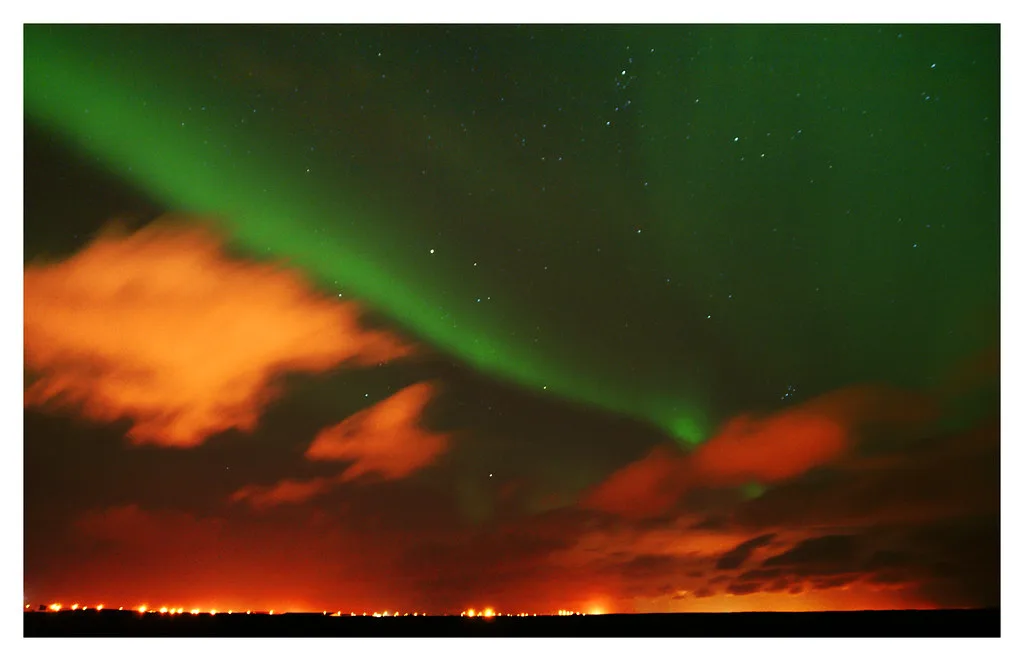
Cameras pick up more colour than the eye, so photos can look vivid while your naked-eye view is a soft green or grey arc. Green is the most common colour, and reds, purples and blues often look faint or greyish in real time, especially with light pollution or thin cloud.
Set expectations accordingly and enjoy the movement rather than the colour saturation. If photography matters, choose a guided night that includes photos or ask what camera settings and tripods are provided.
Comparing trip logistics: distances, darkness and winter daylight
In northern Europe, winter days are short at high latitude, and in places like Svalbard the Sun stays below the horizon from mid-November to late January, so plan daytime activities around limited light and keep evenings free. Your aurora window is after dark, which in December and January starts early and leaves long hours outside.
Southern lights trips come with different logistics: the dark season reverses to March through September, and the strongest viewing hours still sit late in the evening. That means winter travel in the south, often with a longer journey to a remote coast or island, which is why the northern hemisphere remains the simpler first aurora trip.
Who each hemisphere suits best
The northern hemisphere suits first-time aurora travellers who want a compact winter trip with activities, hotels and short transfers, and it suits families because the guided nights and cabin stays are easy to organise. The southern hemisphere suits travellers already in Australia or New Zealand, or those who want a remote coastal adventure and can accept longer travel and more weather risk.
Either way, choose your dates for dark nights, book several nights of possible viewing, and treat the forecast as guidance. The lights are never guaranteed; what you can control is where you are, how long you stay and how flexible you remain.
Plan Your Visit
Start with the season: September to March for the northern lights, March to September for the southern lights, then match your base to the auroral oval and your appetite for travel. Northern Europe, especially the destinations covered in our guide to the best places to see northern lights, remains the most practical winter trip for most travellers.
Book accommodation with a dark-sky setting and at least three nights, and decide whether you want to chase independently or join a guided night that handles the forecast and driving. Check the current conditions through an official aurora forecast before you go.
Frequently Asked Questions
Is the aurora australis the same as the aurora borealis?
They are the same physical phenomenon seen from opposite poles. Charged particles from the Sun are funnelled by Earth's magnetic field toward both polar regions and collide with oxygen and nitrogen high in the atmosphere, producing similar colours and shapes. The difference for travellers is geographic: the northern auroral zone crosses road-connected land in Lapland and Iceland, while the southern zone sits mostly over ocean and remote islands, with the seasons reversed.
When is the best time to see the northern lights?
The northern lights season runs from September to March, with December and January giving the longest nights at high latitudes and the weeks around the March and September equinoxes often bringing extra activity. Within any dark night, the strongest displays typically fall between 9 p.m. and 2 a.m., with a peak often around 11 p.m. to midnight. Dark skies, clear weather and elevated solar activity must all align, so plan several nights rather than one.
When is the best time to see the southern lights?
The southern lights season runs from March to September, the mirror image of the northern window. June and July bring the longest, darkest nights at high southern latitudes, and the equinox periods in March and September often see stronger activity. The best hours still sit late in the evening, so plan to be outside between 9 p.m. and 2 a.m. rather than relying on a single early look.
What time of night are auroras most likely?
Auroras can appear at any time during darkness, but the strongest displays typically occur between 9 p.m. and 2 a.m., with a peak often around 11 p.m. to midnight. Displays can last from a few minutes to several hours, and multiple waves can pass through one night. Staying outside through the whole window, dark-adapted and away from town lights, gives you a far better chance than a brief check.
Does a high Kp index guarantee a sighting?
No. The Kp index is guidance: values of 5 or higher suggest a good chance of strong auroras, but cloud cover and local light pollution decide what you actually see. A high Kp with an overcast sky produces nothing visible, while modest activity on a clear, dark night can still deliver a fine display. Pair the index with a short-term forecast and a cloud forecast before you commit to a location.
How many nights should I plan for an aurora trip?
Three or four nights in Lapland or Iceland gives you room to move away from a cloudy stretch, and it is a fair baseline for a winter trip built around the lights. A single night leaves everything to the weather, and cloud can persist for days. If your itinerary mixes cities and countryside, put the aurora nights first so a cloudy start still leaves time for a second attempt.
Sources
Notes for your Arctic winter trip
Optional updates to our northern lights guides.
You might also like
Continue reading
More guides you'll find useful