Northern Lights in Vík, Iceland: When and Where to Watch
Plan a northern lights night in Vík, Iceland, with dark-sky spots minutes from town, season timing, cloud forecasts, aurora-friendly hotels and tour options.
On this page
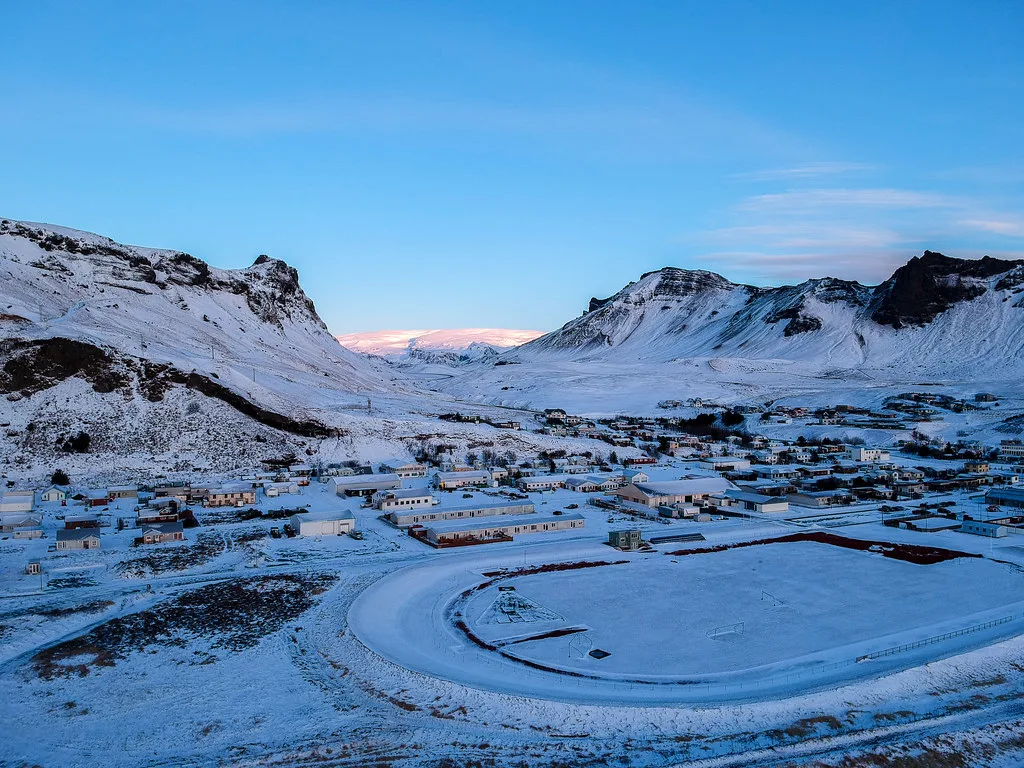
Vík í Mýrdal packs an unlikely combination into a village of just over 300 people: a black sand beach at the foot of the town, Reynisdrangar sea stacks offshore and the Mýrdalsjökull glacier filling the horizon. In winter that same layout makes it one of the easiest south coast bases for an aurora evening, because you can walk from your guesthouse to open sky in minutes rather than driving an hour into the highlands.
The village sits well south of the Arctic Circle but directly under the auroral oval's reach on active nights, and its distance from Reykjavík means the capital's glow is not your problem. What you do have to plan around is cloud, wind and the short winter days, which is why a two-night stay usually serves aurora hunters better than a single overnight.
Why Vík works for aurora
Vík hits a useful middle ground between remote and reachable. The town sits on the South Coast under cliffs, with black sand on one side and the Mýrdalsjökull glacier visible in the distance, and light pollution drops away quickly once you step off the main road toward the beach or the church hill.
The geography also frames the sky. From the shoreline you look out over the Atlantic toward Reynisdrangar, with nothing built up between you and the horizon, so an active aurora has a wide stage. Inland the glacier and ridges give you a second option on nights when the coast is overcast.
Aurora here is a dark-sky and clear-sky game, not a latitude game. Vík's position on the south coast means you are chasing gaps in the cloud as much as solar activity, and a mobile evening that moves between the beach and the hillside often beats staying fixed at one spot.
When the aurora season runs
The northern lights season in Vík follows Iceland's national rhythm, typically running from late September through mid-April. The darkest, clearest nights between November and March give the best odds of seeing the aurora, because the sky stays dark long enough for activity to coincide with your waking hours.
Within the night, 10 PM to 2 AM is the conventional sweet spot, but there is no rule that aurora waits for it. If the forecast looks promising, start looking as soon as it gets properly dark; a clear October evening around 9 PM can deliver just as well as midnight.
Winter daylight in Vík is short, which is good news for aurora hunters and mixed news for sightseeing. Plan the daytime for the coast's waterfalls, ice caves and black sand, and keep the evening free; the reverse, sleeping through the dark and driving at midday, wastes the part of the day that matters.
Reading cloud cover and aurora activity forecasts
Lead with cloud, not Kp. The Icelandic Met Office aurora forecast shows a cloud-cover map of Iceland where green areas are cloudy and white areas clear, with a slider for day and time, and it puts the auroral activity forecast at midnight on a 0 to 9 scale in the upper-right box.
A strong activity number means nothing under heavy cloud, and the Met Office page spells out the requirement plainly: dark and partly clear skies. Read the cloud panels for the south coast before you commit to an evening outside, and compare the coast with the inland forecast if the shoreline is socked in.
One quirk matters for Vík: the sunset, darkness, sunrise and moonrise times on that page are valid for Reykjavík, not for the village. Vík lies east of the capital, so use the times as a rough guide to when the sky darkens and rely on the cloud and activity layers for the local picture.
Perlan's real-time forecast page adds another read on space weather, auroral activity, solar activity and a Kp-index forecast you can cross-check against the Met Office cloud map. Treat Kp as guidance for how far south the aurora may reach, not as a promise of anything visible above Vík on the night.
Víkurfjara black sand beach
Víkurfjara is the main beach behind the town, a 5- to 10-minute walk from most hotels and guesthouses, with a gravel parking lot if you are driving in from elsewhere. Once you are on the sand the village falls away behind you and the view opens toward the sea stacks and cliffs to the west.
Of the beaches on this stretch, Víkurfjara is the most convenient after dark: you can grab a coat, walk out and be watching the sky before the town's streetlights matter. That convenience, without giving up darkness, is the reason the village works as an aurora base at all.
The Atlantic is not a backdrop, though. Stay well back from the waterline after dark, because sneaker waves can run further up the sand than the flat light makes obvious. A headlamp and a companion make the walk safer without brightening the sky enough to spoil the view.
Church Hill above the village
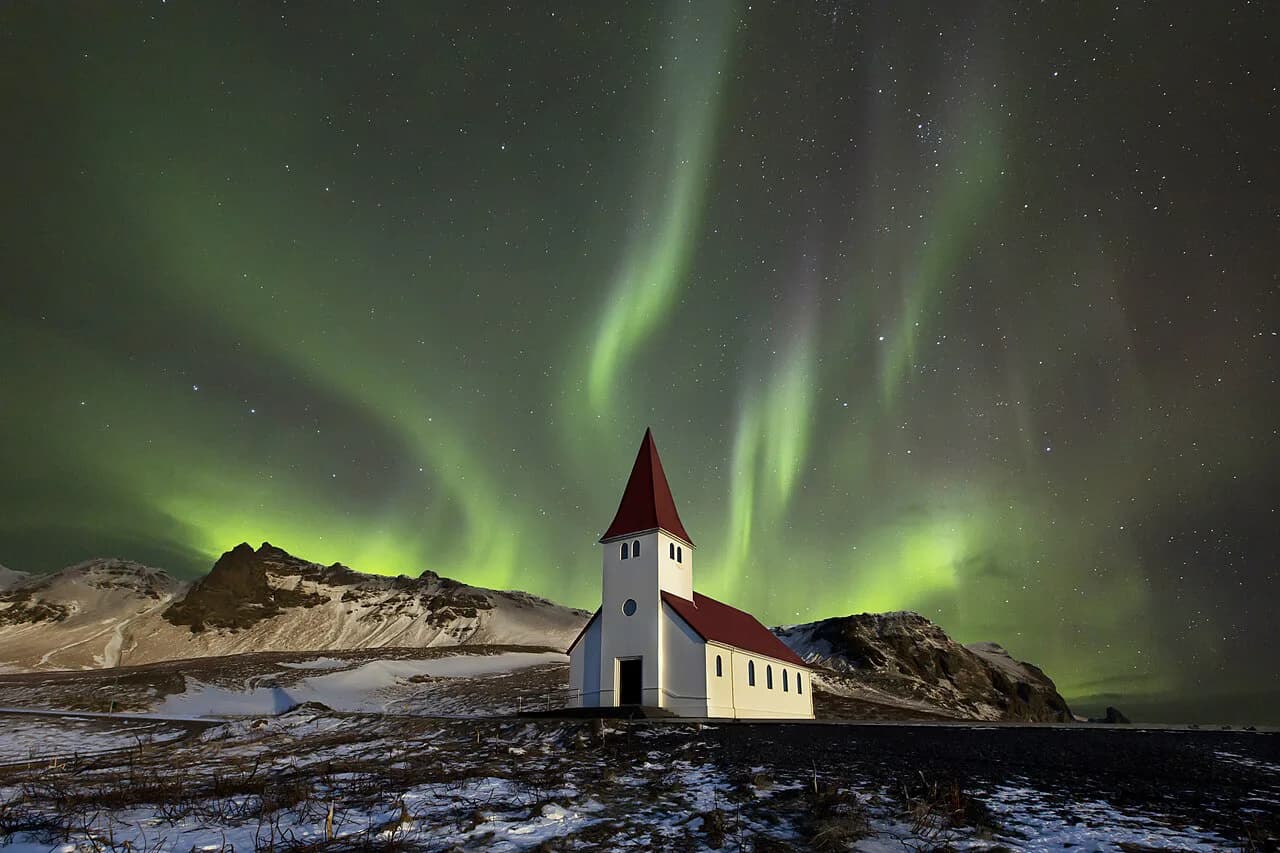
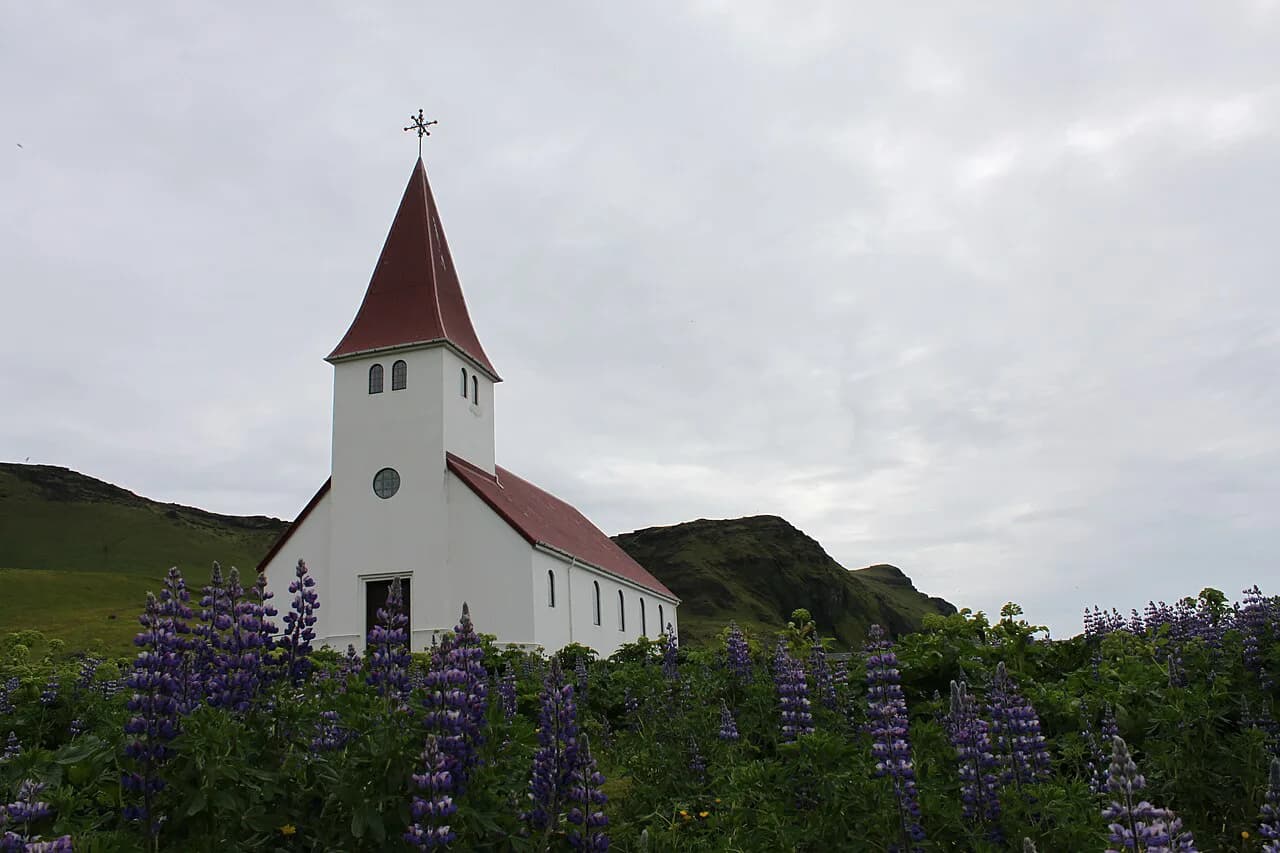
The red-roofed Vík church sits on the hill above the village, and the ground around it gives you an elevated, wide-open view over the sea and inland toward the mountains. It is a short climb from the centre and usually less windy than the beach, which matters on a cold, exposed night.
Use the hill when the wind is up or when cloud is sitting low over the water. The elevation lets you see aurora rising over the sea or sweeping inland over the ridges, and you can retreat to the car or the guesthouse quickly if conditions change.
The dark patch behind the N1 gas station
It sounds unpromising, but the area behind the N1 gas station is surprisingly dark and gives a clear view of the sky without leaving town. Treat it as a quick sky-check spot: step out, look up, and decide whether the night deserves a walk to the beach or the hill.
This is also the practical answer for travellers who are tired, travelling with children or simply unwilling to commit to a long night outside. You keep your boots on, check the forecast against what you actually see, and go back inside if the cloud wins.
Self-guided watching or a south coast aurora tour
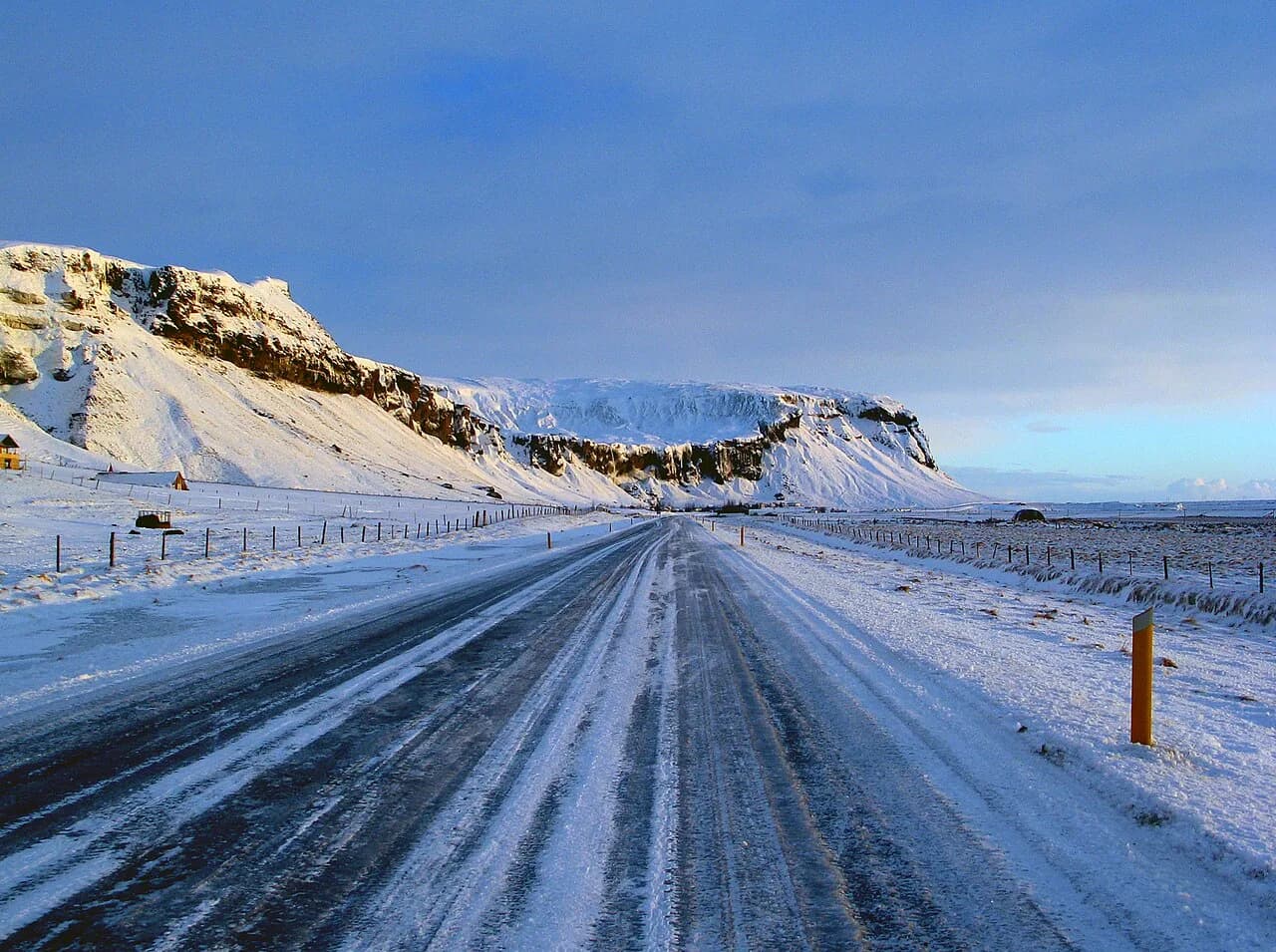
Vík is easy to do under your own steam: you sleep in the village, watch the Met Office cloud map, and walk to whichever of the three spots looks clearest. The trade-off is that you carry the driving, the road decisions and the late-night navigation yourself, on roads that can be icy.
A guided south coast trip moves that burden to a driver who knows the winter roads. Travel Reykjavík runs multi-day winter itineraries that include Vík and Reynisfjara with aurora viewing at night when conditions allow, combining south coast highlights such as the Golden Circle with evening sky-watching.
If your priority is a daytime glacier experience, the katla ice cave trips run out of the Vík area onto the Kötlujökull glacier, and they pair naturally with an aurora evening because you are already based on the south coast. Booking one dark-hours activity and one daytime activity is a sensible way to split a two-night stay.
Where to stay for a fast sky check
Hotel Kría is a few minutes' walk from the beach and its large windows mean the aurora can occasionally be watched without leaving the room. Vík Apartments suits travellers who want their own space and a kitchen, with the living-room window doubling as a sky check before bed.
Hótel Vík sits in the heart of the village and is convenient for late-night spotting, with many rooms looking toward the cliffs or the coastline. The Barn, a favourite with younger and budget-conscious travellers, is an eight-minute drive outside town but offers views toward the mountains and sea.
Wherever you sleep, position matters more than luxury: a room facing open sky, or a door onto the street, means you can check conditions in seconds instead of dressing for a drive. In Vík that usually means choosing between a beach-walk hotel and a cheaper bed a short drive from the dark.
Getting to Vík from Reykjavík
Vík is about 190 kilometres and roughly two and a half hours southeast of Reykjavík along the Ring Road, a straightforward drive in daylight past Seljalandsfoss and Skógafoss. If you are chasing aurora, plan to spend the night rather than drive back after midnight.
The return leg in the dark, on winter roads, is the part that catches people out: the Vík guide is blunt that driving back to Reykjavík in the middle of the night in icy conditions is not a safe plan. Stay overnight, eat at a local restaurant such as Suður-Vík or The Soup Company, and let the evening settle.
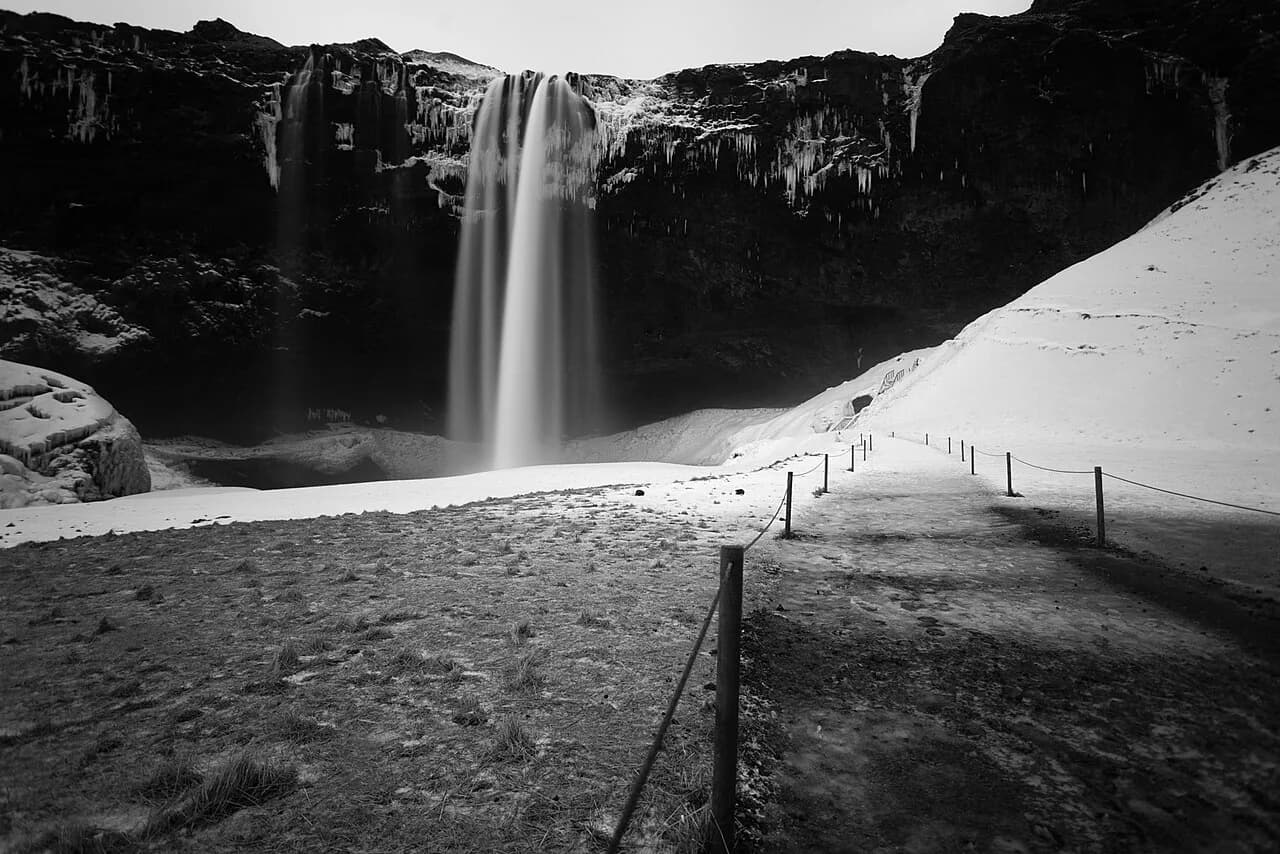
If you are building the drive into a longer south coast loop, the waterfalls on the way deserve daylight of their own; skogafoss in winter is a short detour and the Skógar Museum nearby gives you an indoor stop if weather closes in. Seljalandsfoss, where the trail behind the curtain of water runs past the Seljalandsá river, is the other easy leg-stretch before Vík. Keep the aurora hours separate from the driving hours so neither gets rushed.
How many nights to plan
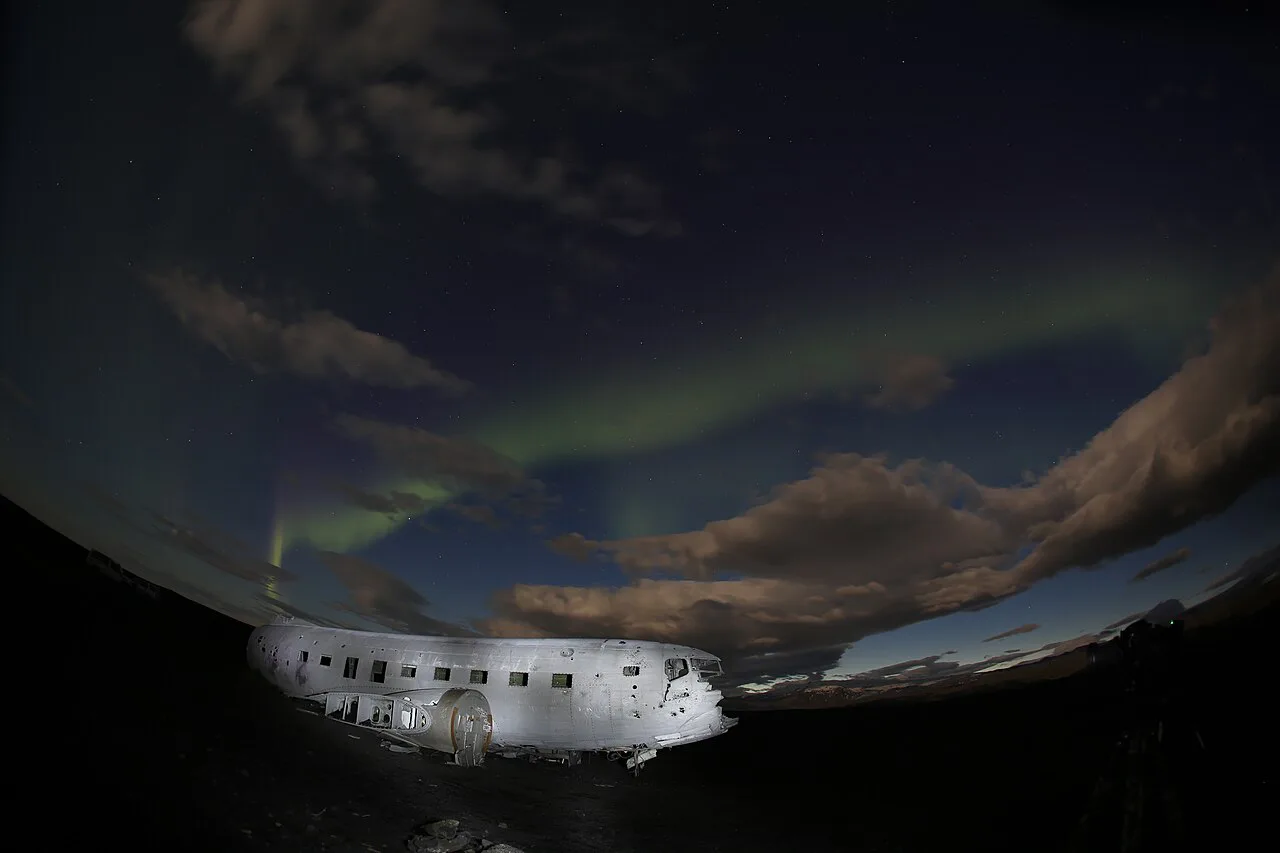
Two nights in Vík is the sensible minimum for a fair chance of clear skies, because cloud here comes in bands and one overcast evening says little about the next. A single night stacks the odds against you: you need the aurora to be active, the sky clear and yourself awake at the same time.
If your itinerary allows three nights, use the extra evening to push further east or inland rather than repeating the same beach. Travellers continuing along the south coast toward the glacier lagoon can compare the jokulsarlon northern lights conditions, where the same cloud-first logic applies but the drive and the dark-sky setting are different.
Set an alarm for midnight rather than staying up all evening, and accept that sleep disruption is part of the deal. No guide, forecast or operator can promise a sighting, but two or three nights of checking the sky patiently is the practical way to improve your chances.
Winter trade-offs in Vík
The main trade-off is coastal cloud versus inland shelter. Sitting on the Atlantic gives you open horizons and dark beaches, but it also means weather that changes quickly; the glacier and ridges behind town may offer a clearer slot when the shoreline is grey.
Wind is the second factor. The beach is exposed and the church hill is usually calmer, so the same aurora can feel very different at the two spots; on a raw night, start on the hill and move down only if the sky opens over the water.
Short daylight is the third. Winter days here are brief, so use the light for driving and sightseeing and treat the long dark as the main event rather than dead time; a hot meal and a warm room between outings make a late sky check far more appealing.
Aurora etiquette and beach safety after dark
Keep torches pointed at the ground and phone screens dimmed when others are watching or photographing; a single bright screen can ruin the night vision of everyone around you. On the beach, stay back from the waterline and never turn your back on the surf for long.
Stay off closed tracks and respect private land around the village, and tell someone where you are going if you head out alone. If you are driving between spots, park in the gravel lot by Víkurfjara rather than on the road shoulder, and keep the car keys with you.
For a wider picture of aurora conditions elsewhere on the island, including the north around the Arctic Circle, the akureyri northern lights guide is a useful comparison when you are deciding where to spend your dark nights.
Plan Your Vík Aurora Night
Build your Vík stop around two nights, arrive in daylight, and use the Met Office cloud map to choose between the beach, the church hill and the quick check behind the gas station. Book a room within walking distance of the sand so the decision to go outside costs you seconds rather than a drive.
Watch the aurora activity and Kp guidance as a hint of what might arrive, then let the actual sky make the call. Clear, dark and patient beats a high number under cloud every time, and no one can promise you a display.
Explore more Vík northern lights guides
Frequently Asked Questions
Can I see the northern lights in Vík?
Yes, Vík is a well-placed south coast base for aurora watching from late September through mid-April, with the darkest, clearest nights between November and March. You need dark skies, partly clear weather and auroral activity at the same time, so no one can guarantee a display on any given night.
Are the northern lights visible in Vík tonight?
Check the Icelandic Met Office aurora forecast, which shows a cloud-cover map of Iceland and an activity forecast on a 0 to 9 scale. If the south coast is clear and activity is present, head to Víkurfjara beach or the church hill after dark.
What time of night is best for aurora watching in Vík?
10 PM to 2 AM is the conventional window, but if the forecast looks good, start watching as soon as the sky is dark. Some displays arrive earlier in the evening, and setting an alarm for midnight is a practical compromise if you want sleep.
How far is Vík from Reykjavík?
Vík is about 190 kilometres and roughly two and a half hours southeast of Reykjavík along the Ring Road, passing Seljalandsfoss and Skógafoss. Plan to stay overnight rather than drive back after midnight on winter roads.
Is it worth staying overnight in Vík for the northern lights?
Yes, because the village lets you walk to dark beach and hillside spots in minutes and avoids a late-night drive back to the capital. Staying also means you can check the sky repeatedly across an evening instead of committing to one look.
Do I need a tour to see the aurora in Vík?
No, self-guided watching works well here because the viewing spots are close to the accommodation. A guided south coast tour takes the winter driving and road decisions off your hands, which suits travellers who would rather not navigate icy roads at night.
How many nights should I plan in Vík for a chance of clear skies?
Two nights is a sensible minimum, and three gives you room to move east or inland if the coast is cloudy. Cloud comes in bands, so a single overcast evening says little about the next night.
Sources
Notes for your Arctic winter trip
Optional updates to our northern lights guides.
You might also like
Continue reading
More guides you'll find useful