Lapland in February: Daylight, Temperatures and Aurora Nights
February brings deep snow, brighter afternoons and long dark nights to Finnish Lapland. See temperatures, daylight hours and how to plan aurora nights.
On this page
February sits in the heart of the Finnish Lapland winter, when snow lies deep, the trees carry heavy frost and the days start stretching noticeably longer than in December. For travelers who want proper Arctic conditions without the total darkness of midwinter, it is one of the most balanced weeks of the season: enough light for husky sledding and skiing, still enough darkness for long aurora watches.
The trade-off is cold. February is a month for planning around short daylight windows and treating the evening as the main event, whether that means a booked aurora tour, a cabin outside town or a snowmobile run across frozen lakes. Bases such as Rovaniemi, Kemi and Ylläs each offer a different mix of airport access, activities and surrounding darkness.
Why February suits aurora travel in Finnish Lapland
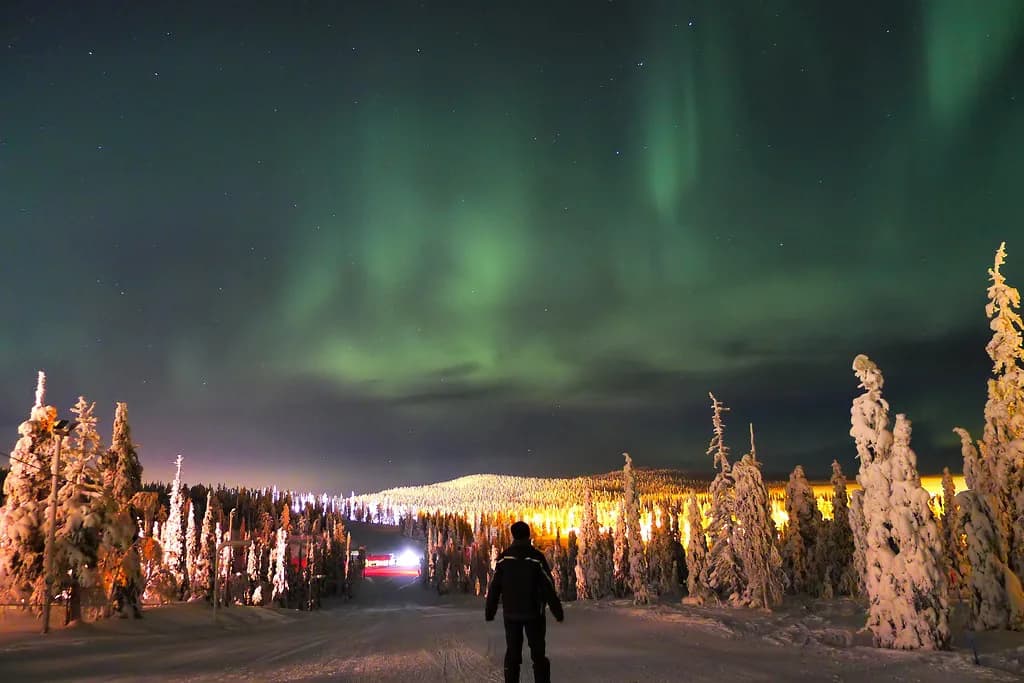
Aurora visibility depends on solar activity and clear skies, so no month can promise a display. What February does offer is a large share of dark hours combined with weather that is often crisp and cold, and the aurora season is generally presented as running from November through March, which places February squarely inside the window.
Compared with December, when daylight in peak winter is limited to a few hours around late morning and early afternoon, February gives you more usable afternoon light for activities while still leaving long nights for aurora watching. That balance is why February works well for travelers who want both a full winter activity programme and repeated chances at the sky after dark.
For a broader look at how the season fits together across the region, the northern lights in finland guide covers the science, the season and the main bases in more depth.
How far north you are and why the aurora shows here
Most of Lapland lies above the Arctic Circle, which is why winter darkness is so complete and why the region sits close to the auroral oval, the band where aurora activity is most frequent in the northern hemisphere. Being this far north means the lights can appear high overhead rather than low on the horizon, and displays can continue for hours on a clear night.
Latitude only sets the stage. Solar wind and charged particles in the upper atmosphere drive each display, and cloud decides whether you can see it, so a February trip is really a bet on clear skies over several nights rather than a single booked evening. Kp values are useful guidance for how far south activity may reach, not a forecast of what you will see from a forest clearing near Rovaniemi.
Daylight hours in February and the return of brighter afternoons
February daylight is still short but noticeably longer than at midwinter, and the snow reflects light back into the day so it reads brighter than the clock suggests. Plan outdoor activities for the middle of the day and keep the morning and late afternoon free for transfers, saunas and rest before a night outside. In peak winter the usable light sits roughly between 10:00 and 14:00, and February pushes steadily beyond that window.
For photographers, that low February sun gives long golden light across the snow, while the blue twilight after sunset is often the first cue to head out. A day built around one main activity plus an evening aurora plan tends to work better than squeezing in three outings.
February temperatures and snow cover in Rovaniemi, Kemi and Ylläs
February means are similar across the main Finnish bases, but the differences matter when you choose where to sleep. Ylläs averages around -12°C, Rovaniemi around -11°C and Kemi around -10°C for the month, so none of them is mild and all demand respect for the cold.
Across December to February the broader region ranges from about -16°C to 3°C depending on location, with occasional lows near -30°C or colder once wind chill is counted. Cold snaps are part of the month, so build flexibility into your schedule rather than treating a -30°C morning as a reason to cancel the trip.
Snow cover is rarely the issue in February. Lapland averages around 175 to 225 snow days a year between mid-October and mid-May, which is why dog-sledding, skiing and snowmobiling run reliably through the month and why forest tracks stay white well into spring.
When the aurora season runs and what February nights offer
The aurora season in Lapland is generally described as running from November to March, and February sits near the productive middle of that span with long, dark nights and often stable cold weather. Nights are still long enough to wait out passing cloud, which is the single biggest advantage of booking several nights rather than one.
Check the finnish lapland aurora forecast before you travel to understand how activity is reported, and remember that a high activity reading with thick cloud gives you nothing. Clear sky plus patience is the practical formula, and February gives you more dark hours to spend on it.
Where to watch near town: dark-sky spots and light pollution
Town centres in Rovaniemi and Kemi are bright enough to wash out all but the strongest displays, so the practical move is to get a few kilometres out where street lighting ends. Forest clearings, frozen lake edges and the roads toward fell country give open northern horizons, and a tour operator will typically drive you to a spot chosen for that night's cloud.
Around Ylläs, the fells themselves offer the cleanest darkness, with open views and little ambient light once you leave the village. If you are driving, deep snow and unlit roads make a local guide the lower-risk choice on a first visit; if you know the area, plan a short drive to a known clearing and keep the car warm.
For more on which operators run out-of-town chases and what they include, Finnish Lapland northern lights tours compares the main formats.
Self-guided chasing versus a booked northern lights tour
A booked tour takes the cloud-guessing and night driving off your hands, usually heading away from town lights to remoter, darker areas for a better chance of a sighting. That matters most if you have only one or two nights or are traveling with children and want a fixed evening plan.
Self-guided chasing gives you freedom to wait as long as you like in one spot, which suits travelers staying a week or more with a car and a confident feel for winter roads. The trade-off is that you own the decisions about where to drive at night in snow, and you may spend the best hour of activity relocating rather than watching.
Many travelers split the difference: one booked aurora night early in the trip to learn how a chase works, then self-guided evenings from a dark cabin for the rest of the stay.
Husky safaris and reindeer sledding in February conditions
February snow cover makes dog-sledding and reindeer sledding reliable, and both are the classic way to see the forest from outside a vehicle. Huskies run fast and cover distance with a handler driving the team, while reindeer sledding moves at a slower pace and connects more directly to Sámi herding traditions.
Sámi culture runs through reindeer herding across northern Lapland, and many herders explain that heritage alongside the ride. If that side of the trip matters to you, sami culture is worth reading so you can pick experiences run with that context in mind.
Dress for the cold and let the safari company handle the rest: firms running snowmobile and husky excursions loan thermal suits and boots for their trips, so you do not need to buy expedition gear for a single morning.
Snowmobiles, cross-country skiing and snowshoeing
Snowmobiling suits travelers who want distance and speed across frozen lakes and forest trails, and a standard driving licence is enough to take the wheel on a guided safari where the safari company supplies the machine and briefing. Cross-country skiing and snowshoeing are quieter options that work well in February snow and let you stay out through the blue hour without much kit.
Book motorized activities for the brighter middle of the day and keep evenings free, since a long snowmobile run in deep cold can leave you too tired to stay up for the aurora. Ylläs and its surrounding trails are the strongest fit for ski-in, ski-out days.
Glass igloos, aurora cabins and ice or snow hotels
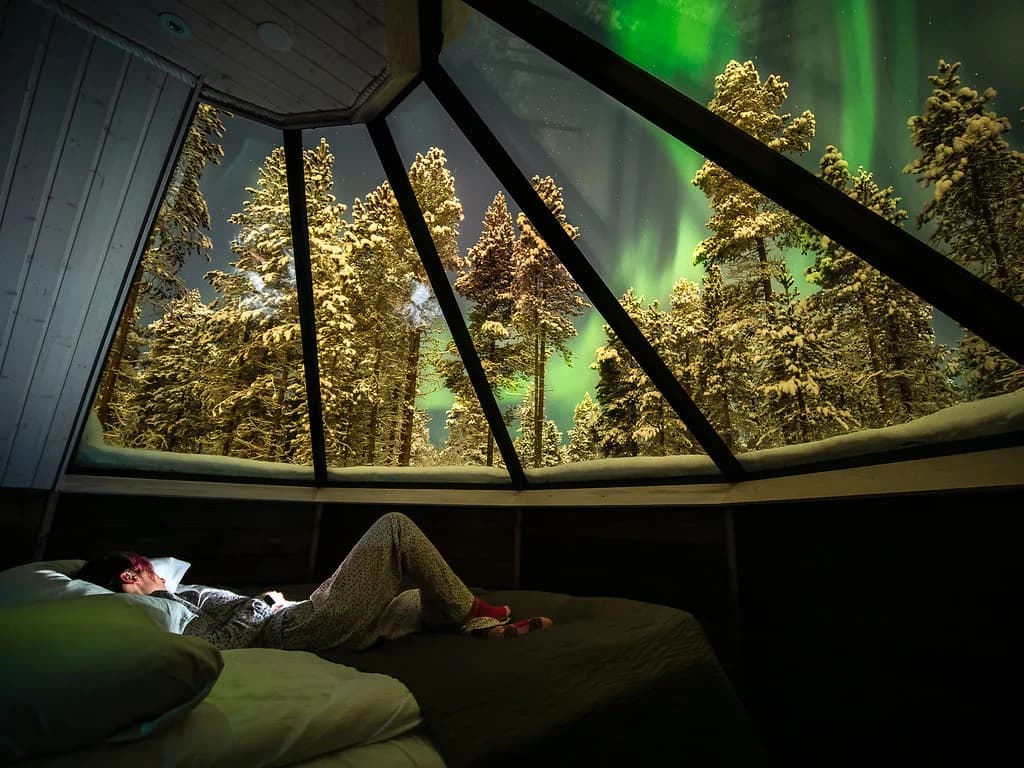
Glass igloos and aurora cabins put the sky above your bed, which is a genuine convenience on a cloudy-to-clear night but comes with trade-offs: heated glass can frost, interior light hurts your night vision, and the price usually buys view over space. A cabin outside town gives you darkness, a sauna and room to wait, at the cost of a drive whenever you want dinner or an activity.
Ice and snow hotels are worth one night for the experience rather than a whole stay, and they suit travelers who want the novelty of a frozen room with a warm sleeping bag. Read the check-in arrangements carefully so you know where your luggage and washing facilities are.
Saunas and warming up after a night outside
A sauna is the standard Finnish way to end a cold day, and in Lapland you will find them in hotels, cabins and camps. Traditional saunas are typically heated by a wood-burning stove and run at around 80 to 110°C, hot enough that a short session resets you after hours in the snow.
Build the sauna into your evening rather than treating it as an extra: warm up, eat, then head out for the aurora once your core temperature has recovered. Cabins with their own sauna make this far easier than a hotel where you book a slot.
Santa Claus Village and Rovaniemi in February
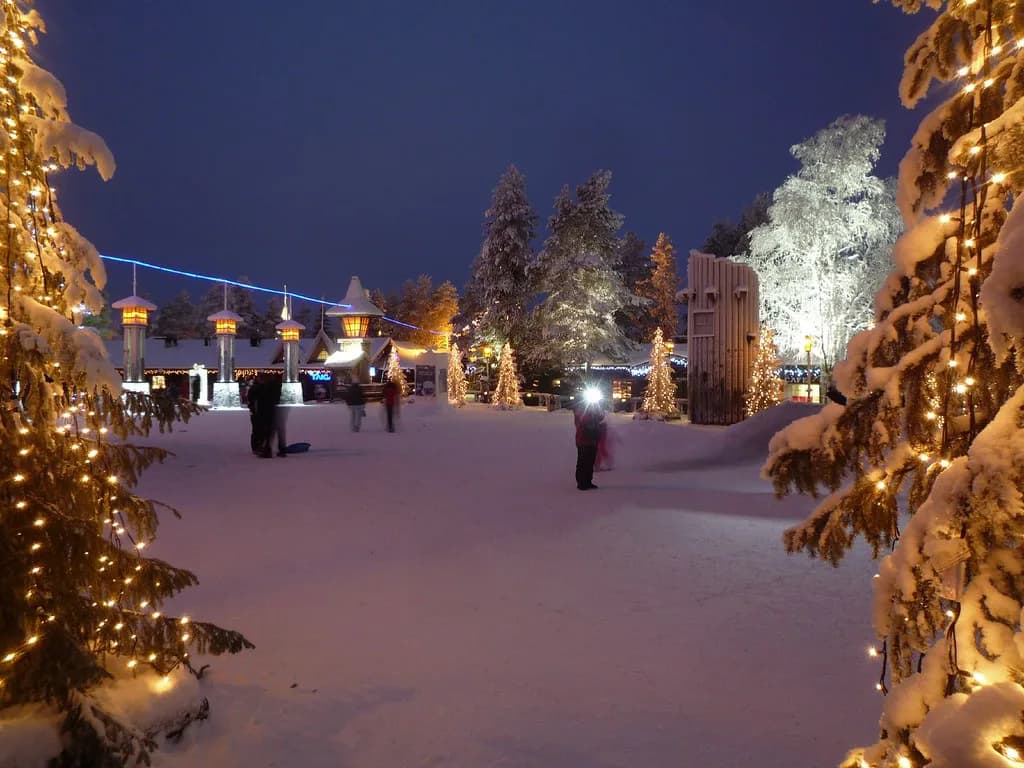
Santa Claus Village on the Arctic Circle just outside Rovaniemi stays open year-round, so February visits can include meeting Santa, the post office with its special postmark and a photo at the Arctic Circle line. Santa Park, across the street, is an underground Christmas cavern with elf performances, useful as a warm indoor half-day when temperatures drop.
February is calmer than the Christmas peak but still fully winter, so you get the festive sites without the heaviest crowds. For a fuller picture of the season and what each site offers, christmas in finnish lapland covers the December side in detail.
Rovaniemi also works as a practical base: an airport with winter connections, a compact centre and excursions departing from town. Treat the Santa sites as a daytime activity and keep the night for aurora plans.
Family travel in February: short days, cold and pacing
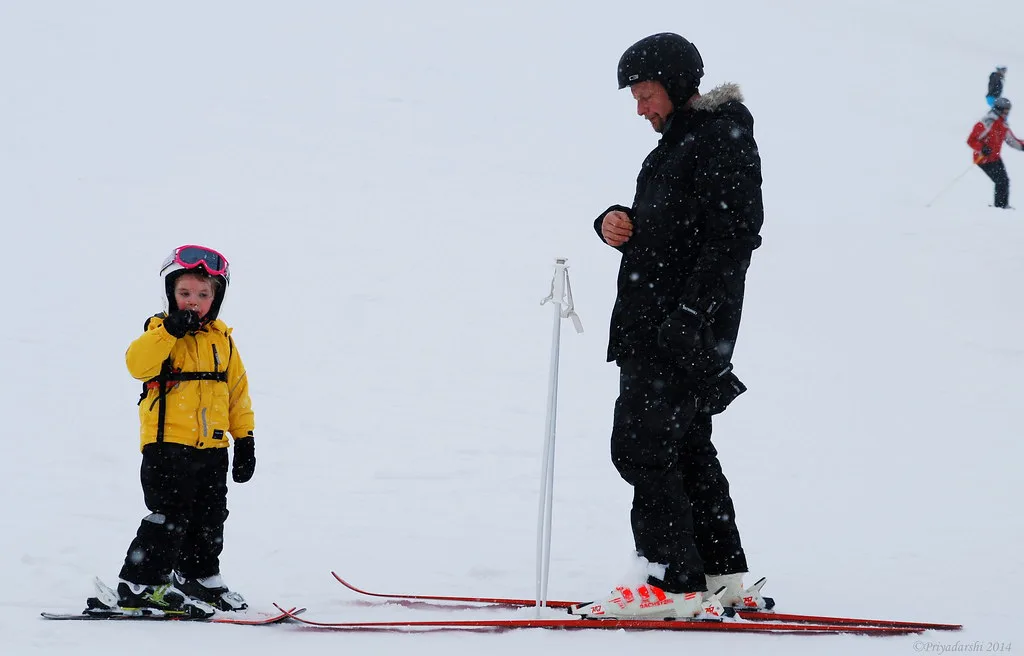
February is a good family month because the days are bright enough for outdoor play but the nights are long enough for a late aurora outing that children can sleep through in a sled or van. The main constraint is cold: plan one outdoor activity per day, keep indoor options like Santa Park and museums in reserve, and avoid long evening drives with young children.
Shorter daylight hours also mean you do not need to keep children up late to see darkness fall. An early dinner, a short husky ride in the afternoon light and an aurora tour with an operator who provides suits and transport is a realistic rhythm.
How many nights to plan for a fair chance of clear skies
Cloud is the variable you cannot book around, so nights on the ground matter more than any activity choice. Three to four nights gives you several evenings to catch a clear window; a week is better if the aurora is the main purpose, and it also insulates you against a cold snap or a cancelled excursion.
Treat any single night as a bonus and build in a rest day mid-trip so you are not exhausted by the fourth late night. Travelers who stay a week in one base tend to see more sky than those who move every day, because they learn the local roads and dark spots.
Getting to Finnish Lapland and moving between bases
Rovaniemi is the main winter gateway, with flights from Helsinki and direct winter services from several European cities, and the town is compact enough to reach your accommodation quickly after landing. Kemi sits on the coast with its own airport and rail links, while Ylläs is reached by road from Kittilä airport or via rail and bus, so moving between bases takes planning.
Finland uses Eastern European Time, one hour ahead of Sweden and Norway, which matters if you are crossing borders or booking a tour that starts in a neighboring country.
Pick one base for a first trip rather than connecting several. Rovaniemi suits families and first-timers, Kemi suits travelers interested in the icebreaker and coast, and Ylläs suits those who want fells and quiet. If Rovaniemi is your pick, see what a rovaniemi in february stay involves before you book.
February trade-offs: cold snaps, cloud cover and cost
February offers longer daylight and reliable snow in exchange for genuine cold, and a -30°C wind-chill morning can close outdoor activities or force a shorter day. Coastal Kemi is milder than inland Ylläs on average, but the difference is modest and cloud can settle anywhere.
Costs are driven by accommodation type and how far in advance you book rather than by the month itself, and February half-term and school holiday weeks fill up earlier than mid-January. Glass igloos and aurora cabins command the highest rates, so a cabin outside town plus one special night is a sensible way to balance comfort and budget.
Whatever you choose, plan for cloud and cold as normal conditions, not exceptions. The best February trip is one with slack in the schedule and darkness outside your window.
Plan Your February Trip
February is one of the strongest months for a Finnish Lapland aurora trip: deep snow, longer daylight than midwinter and nights dark enough to give a clear sky every chance. Choose Rovaniemi for access and family sights, Kemi for the coast, or Ylläs for fells and quiet.
Build the trip around nights rather than single evenings, book the aurora tour early in the stay and leave the rest of the evenings flexible. Keep one indoor day in reserve for a cold snap, and let borrowed thermal suits do the work on excursions.
Frequently Asked Questions
What is the weather like in Lapland in February?
February is deep winter in Finnish Lapland, with monthly means of about -12°C at Ylläs, -11°C at Rovaniemi and -10°C at Kemi. The wider region ranges from about -16°C to 3°C over December to February, and occasional lows near -30°C or colder occur with wind chill. Snow cover is dependable, with Lapland averaging around 175 to 225 snow days a year between mid-October and mid-May.
How much daylight is there in Lapland in February?
February days are still short but clearly longer than at midwinter. In peak winter, usable daylight is limited to roughly 10:00 to 14:00, and February extends beyond that window, with snow reflecting light so the days feel brighter than the clock suggests. Plan outdoor activities for the middle of the day and keep evenings for aurora watching.
Can you see the northern lights in Lapland in February?
Yes, February falls inside the aurora season, which runs roughly from November to March. Whether you see a display depends on solar activity and clear skies, so no trip can guarantee one. Booking several nights rather than one, and choosing accommodation or tours away from town lights, gives you more chances.
What temperature should you expect in Rovaniemi or Ylläs in February?
Rovaniemi averages around -11°C in February and Ylläs around -12°C, with colder spells possible. Wind chill can push the felt temperature toward -30°C or below, so treat the monthly means as a starting point rather than a ceiling.
Is February a good month for husky sledding in Finnish Lapland?
Snow cover is reliable in February, so husky safaris and reindeer sledding run through the month. Huskies cover distance fast with a handler driving the team, while reindeer sledding is slower and tied to Sámi herding traditions. Operators lend thermal suits and boots, so you can book without buying expedition gear.
How many nights should you plan for a February aurora trip?
Three to four nights gives several evenings to catch a clear window, and a week is better if the aurora is the main purpose. Staying in one base lets you learn the local roads and dark spots, and a rest day mid-trip keeps a long stay manageable.
How do you get to Finnish Lapland in winter?
Rovaniemi is the main winter gateway, with flights from Helsinki and direct winter services from several European cities, and the town centre is close to the airport. Kemi has its own airport and rail links, while Ylläs is reached by road from Kittilä airport or by rail and bus. Finland uses Eastern European Time, one hour ahead of Sweden and Norway.
Sources
Notes for your Arctic winter trip
Optional updates to our northern lights guides.
You might also like
Continue reading
More guides you'll find useful