Lapland in January: Finnish Lapland Snow & Aurora Guide
January gives Finnish Lapland its coldest weeks and darkest nights, ideal for aurora hunting. See what daylight, snow and crowds mean for your winter trip.
On this page
January in Finnish Lapland is the deep-winter version of the Arctic: snow lies thick on the ground, the sun barely clears the treeline, and the dark hours stretch long enough to make aurora watching a genuine evening plan rather than a lucky accident. It suits travellers who want cold, quiet and dark over long daylight and easy sightseeing.
The month also marks a distinct shift. The Santa crowds thin after the holidays, the resorts settle into a colder, calmer rhythm, and the focus turns to snow activities and night skies. If your priority is the northern lights in Finland rather than festive atmosphere, January's long nights give you more dark hours to work with each evening.
What January offers in Finnish Lapland and who it suits
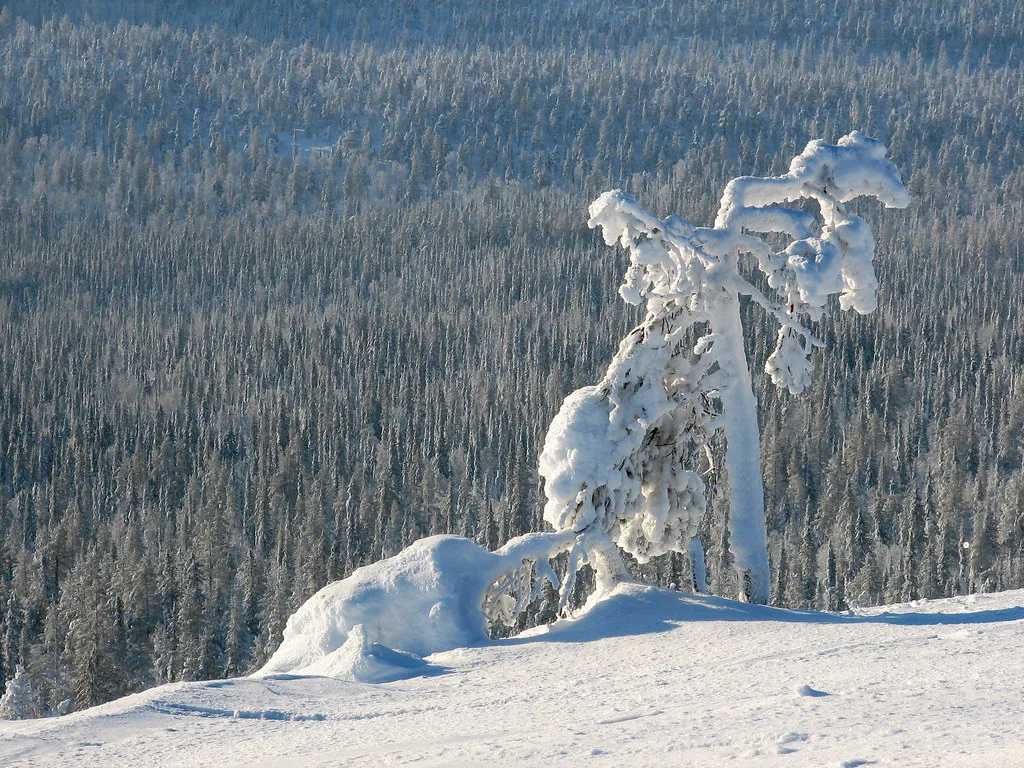
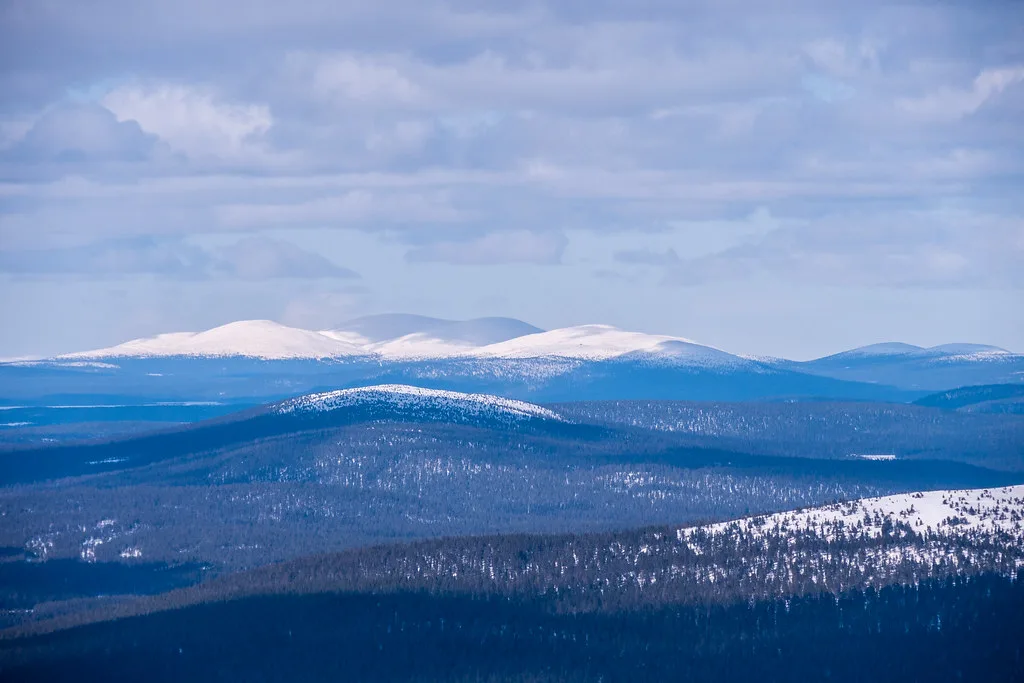
January is the month when Lapland feels most like the Arctic of the imagination: snow-covered forest, frozen lakes and a low, pale light that lasts only a few hours. The trade-off is that those short days cut into daytime activities, so plan snowmobile, husky or skiing outings for the middle of the day and leave the edges of the day for rest and night excursions.
It suits travellers who value atmosphere, dark skies and cold-weather activities over long sightseeing days, and couples or photographers who want to spend evenings watching the sky. Families with young children often find December's festive draw stronger, while January rewards those who prefer fewer crowds and a quieter resort.
The month's deep snow is the foundation of almost everything on offer, from dog sledding to cross-country skiing, and resorts such as Kakslauttanen and Rovaniemi build their winter programmes around it. February's conditions are similar but with more daylight, which is why many repeat visitors shift their trip later for outdoor activity.
How far north you are and why the aurora shows here
Finnish Lapland sits inside the auroral oval, the ring around the magnetic pole where displays are most frequent, and the region lies between roughly 65 and 72 degrees north, which puts it in the prime aurora zone. That geography, not local skill, is why the northern lights in Finland appear here on clear nights far more often than in southern Europe.
Solar activity drives how active the aurora is on any given night, while cloud cover decides whether you can see it at all. Treat Kp values as a rough guide to geomagnetic disturbance and plan around clear skies rather than a single index number; the Finnish Lapland aurora forecast gives a better local read than a global figure.
No one can promise a sighting, and a week of overcast weather can pass with nothing visible. What you can control is where you stay, how many nights you give yourself and whether you are willing to travel away from town lights to find a gap in the cloud.
Daylight hours in January and how they shape your day
January days are short everywhere in Lapland, with only a few hours of usable light around midday and long twilight at either end. In December the sun sits above the horizon for only a couple of hours a day, and January remains close to that, gradually lengthening toward February. Plan your outdoor activities for the brightest window and keep the rest of the day flexible.
That brief light is beautiful in its own way, a low blue and pink glow over snow, and photographers often find it more rewarding than full daylight. It also means you should not schedule two long daytime excursions back to back; a husky safari in the morning and a snowshoe walk in the afternoon can leave little margin if the light fails.
The long nights are the compensation. With darkness falling in the mid-afternoon, you have a wide window each evening for aurora watching, and operators can run night tours that start early enough to be family-friendly.
Typical temperatures and snow depth by month
In the Finnish and Swedish border region, January is the coldest month on the climate charts, with average lows around minus 17 degrees Celsius and highs near minus 10, and precipitation low at roughly 34 millimetres. February is close behind at around minus 16 to minus 9, so pack for genuine cold rather than a mild winter.
Cold that deep shapes your plans more than any other factor: batteries drain, exposed skin stings quickly and mechanical activities are shorter than in spring. Snow depth in midwinter is typically at its seasonal best, which is why January is a strong month for dog sledding, snowmobiling and cross-country skiing.
By late March and early April the picture changes markedly. Temperatures hover nearer freezing, daylight is longer and cloud cover is often less, which is why some Lapland residents name that period as their favourite; it is a different trip from January but a fair alternative if cold is a concern.
When the aurora season runs and why January nights are dark
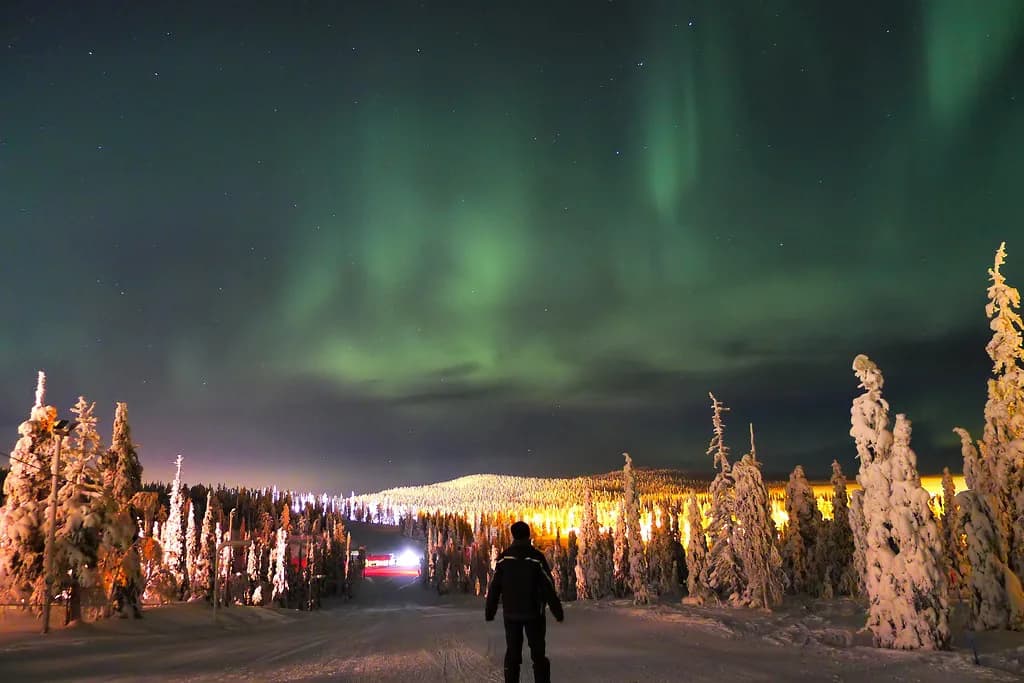
Aurora season in Lapland broadly spans the dark months from late August and September through to early April, when nights are long enough for displays to be visible. January sits deep inside that window, with darkness lasting most of the day, so a clear evening is all you need.
Equinox periods around September and March are often highlighted for aurora activity, but January's advantage is sheer darkness: you are not waiting for night to fall, and evening tours can run for hours.
The northern lights in Finnish Lapland are visible from late August into early April, and January offers some of the longest dark windows of the year.
Cloud cover and how it decides your odds
Cloud is the decisive factor on any given night: a strong geomagnetic forecast means nothing if the sky is overcast, while a quiet night with clear air still shows a faint arc. Inland Lapland can be very clear in deep cold, but weather systems move through, and coastal Norway often trades colder, clearer inland skies for milder, cloudier conditions, which is why some travellers compare the two.
The practical response is flexibility. Book several nights, keep one or two evenings free for a chase if the forecast improves, and choose accommodation that lets you step outside without a drive. Tour operators monitor cloud and road conditions and will often reroute to clearer ground.
For context on the February conditions that follow January, the Apukka Resort winter guide covers snow and temperatures at a single Lapland base in more detail.
Where to watch near Rovaniemi, Saariselkä and Kakslauttanen
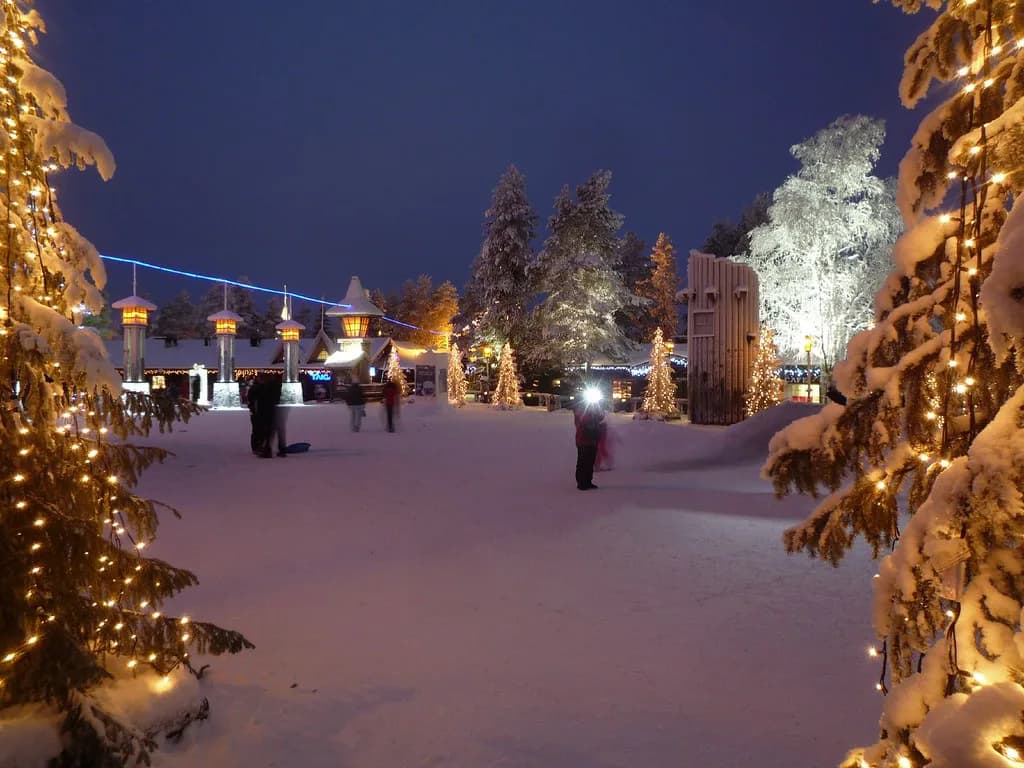
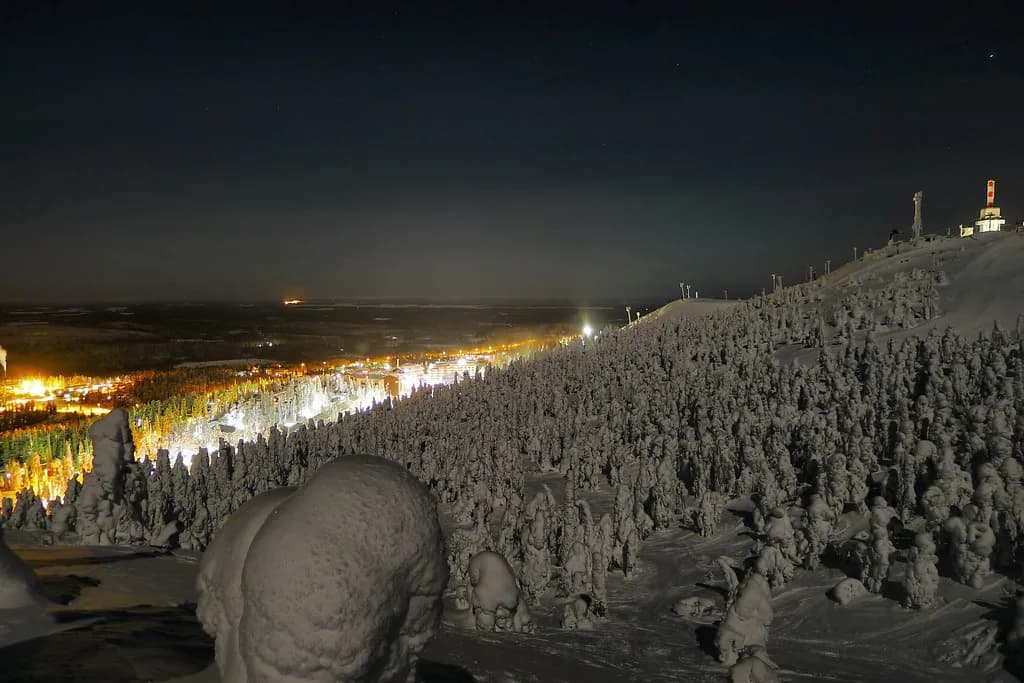
Around Rovaniemi, the city lights wash out the northern horizon, so the best viewing is a short drive out of town toward darker forest and frozen lakes, or at Santa Claus Village on the Arctic Circle, where you can combine a visit with an evening sky check. The village is open year-round and sits north of the city centre, making it a convenient first stop if you are based in Rovaniemi. For a full picture of the city as a winter base, see this guide to Rovaniemi in January.
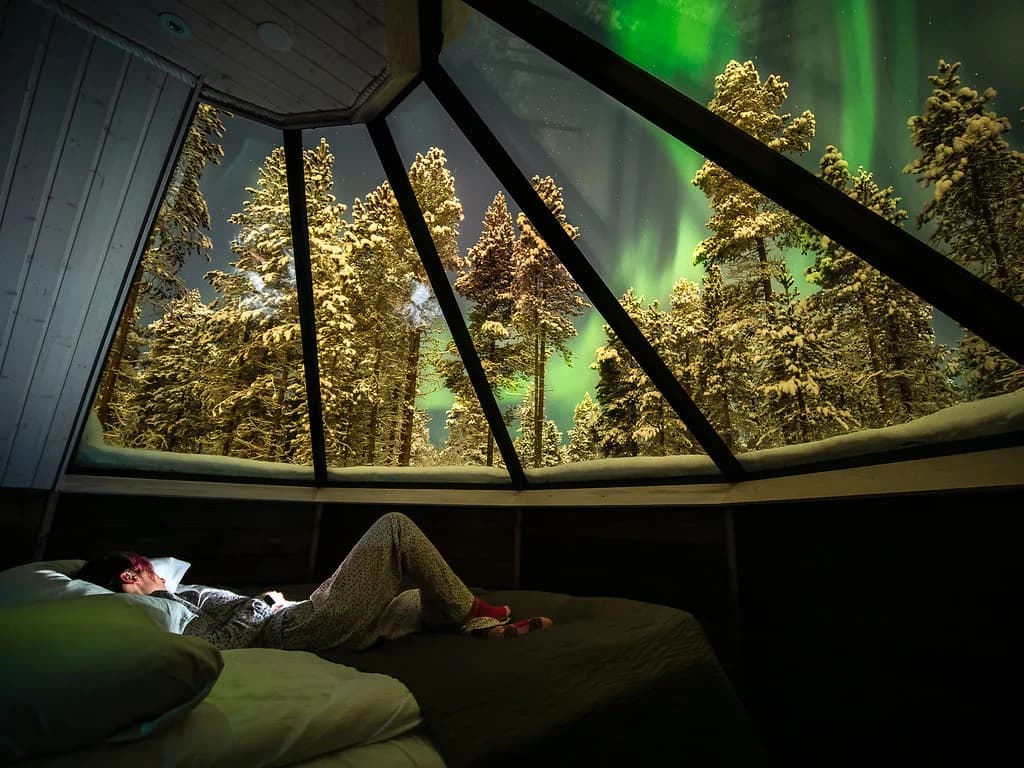
Farther north, Saariselkä and Kakslauttanen sit in sparser country with darker skies and easier access to genuinely dark forest and fell terrain. Kakslauttanen is known for its glass igloos, and the surrounding area offers open views north with little light pollution.
Wherever you base yourself, ask how far the tour company drives to its viewing spot and whether the tour includes a backup location. A short drive to darker ground is often more valuable than a longer, more expensive tour.
Self-guided chasing versus a booked aurora tour
Driving yourself gives you the freedom to follow a clearing sky and to wait as long as you like, but it demands winter driving confidence, a reliable car and a willingness to read forecasts and road reports. Booked finnish lapland northern lights tours remove that burden: a guide handles the driving, picks a location and often supplies thermal suits and hot drinks.
The trade-off is cost and fixed timing. A tour commits you to a departure time and a group, while self-driving lets you chase a gap in the cloud at midnight. Many travellers do both: a tour on the first clear night and a self-drive excursion later in the week.
If you are new to Arctic night driving, a guided tour for your first evening is a sensible way to learn how the local sky behaves before going it alone.
Glass igloos and aurora cabins: heat, glare and comfort
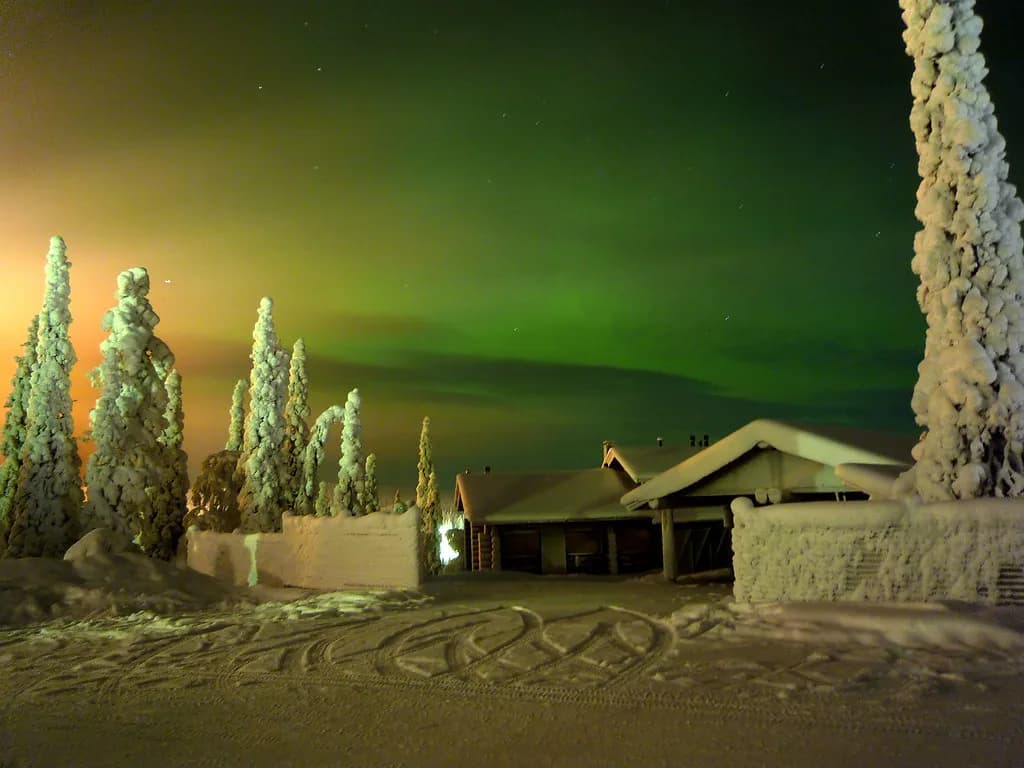
Glass igloos promise a view of the sky from bed, and on a clear night they deliver a memorable one. The trade-offs are real: glass roofs lose heat, interior lights reflect on the glass unless dimmed, and a warm cabin can fog the panes, so you may spend part of the night adjusting rather than watching.
Aurora cabins with a glass panel or a large north-facing window often balance comfort and viewing better than a fully glazed dome, and they keep the heat where you want it. Ice hotels are a different experience again: rooms are built by hand each winter and are striking to visit, though many guests sleep in a warmer cabin and tour the ice rooms.
If the aurora is the main reason for the trip, treat the glass roof as a bonus rather than a guarantee, and choose a property with dark surroundings and a short walk to open sky.
Husky and reindeer safaris in deep snow
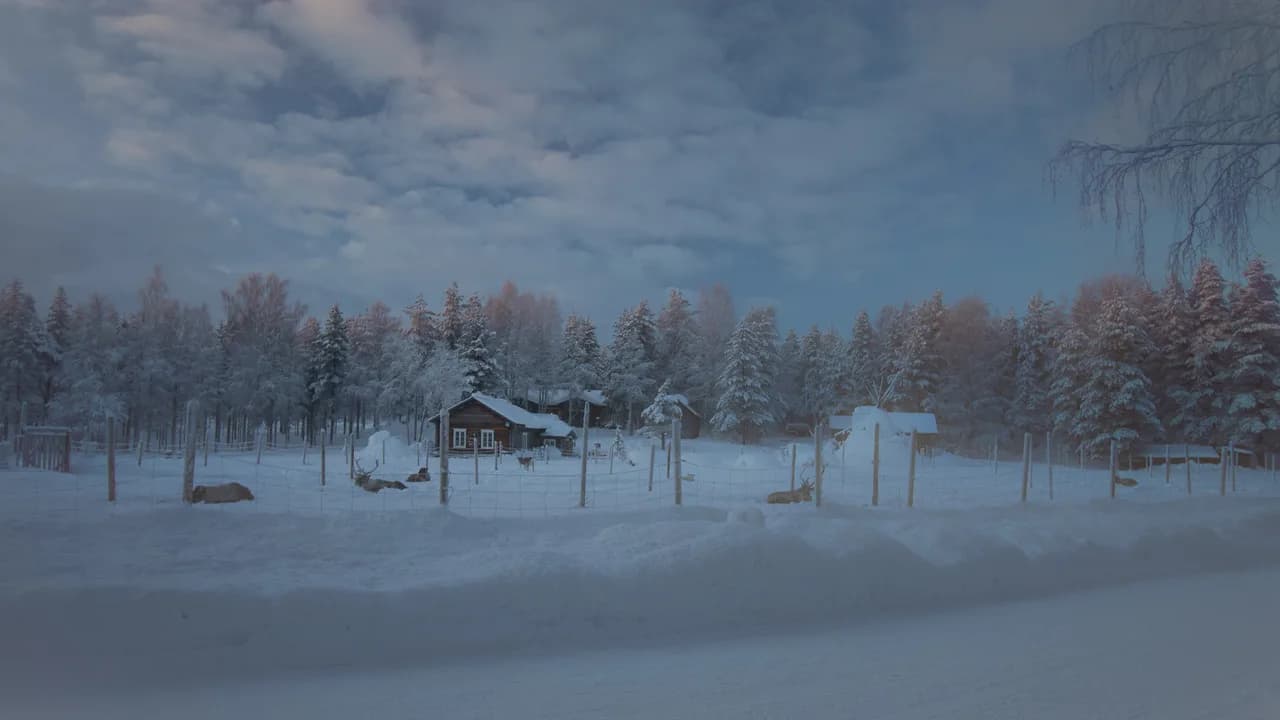
January's deep snow makes husky and reindeer safaris the signature daytime activities. A husky safari typically pairs you with a sled and a team, with the guide leading the route and explaining how to handle the dogs; reindeer sleigh rides are slower and gentler, often paired with a visit to a Sámi family or camp.
Both are weather-dependent: very cold days may shorten routes, and operators lend thermal suits and boots when needed. Ask in advance about group size and whether you drive your own sled or ride as a passenger, since that changes the experience substantially.
For a deeper look at the indigenous culture behind many reindeer experiences, Sámi Culture in Finnish Lapland explains the traditions and where to encounter them respectfully.
Snowmobiling and ice fishing on frozen lakes
Snowmobile tours suit travellers who want distance and speed, and January's snow cover is usually enough to open trails and frozen lakes. Drivers typically need a licence, and passengers ride behind; ask the tour company about the route length and whether the tour is a daytime or evening outing.
Ice fishing is the quiet counterpart: a short snowmobile or snowshoe trip to a frozen lake, a hole drilled in the ice and a few hours of patience, often with hot drinks and a fire. It is a good low-cost half-day option when you want a break from night tours.
Saunas and cold plunges after a night out
After a cold evening outside, a Finnish sauna is the natural next step, and most Lapland accommodations have one. Many also offer a cold plunge pool or a roll in the snow between sessions, the classic contrast that Lapland visitors remember as much as the aurora.
Saunas are a social ritual rather than a spa treatment, so expect simple facilities and a relaxed pace. If you are staying somewhere without one, ask whether a nearby resort opens its sauna to outside guests.
January events and the Christmas-to-winter shift in crowds
January follows the Christmas peak, and the change is noticeable: Santa Claus Village stays open year-round, but the festive crowds thin after New Year and resorts settle into a calmer winter rhythm. Prices and availability generally ease alongside that shift, making the month a quieter option than December.
Across the border in Swedish Lapland, the Jokkmokk Sámi Market takes place over three days from the first Thursday of February each year, with reindeer races, handicrafts and a reindeer caravan procession. It is a reason to extend a trip into February if you want a cultural highlight alongside the snow.
Cost and availability compared with December and March
December carries the highest demand because of the Christmas season, and March attracts travellers chasing longer days and better aurora odds around the equinox, so January often sits in a softer middle band. Exact rates depend on the property and dates, so compare quotes directly with the hotel or operator for your week.
Flights and cabins can still fill for the first week of January, when holiday travel overlaps, so earlier or later in the month tends to be calmer. Booking accommodation with free cancellation gives you room to shift if conditions or plans change.
How many nights to allow for a fair chance of clear skies
A single night is a gamble. Clouds can persist for days, so three to four nights gives you a reasonable chance of at least one clear evening, and a week is better if the aurora is your main reason for travelling. Build in at least one flexible evening for a chase.
Balance that against the short January days: more nights give more aurora opportunities but also more cold-weather activity time to fill, so pair a longer stay with a mix of daytime safaris and rest.
Comparing January with February and March
January is the coldest and darkest of the three, with the deepest snow and the calmest post-Christmas crowds. February is similar but slightly milder and noticeably brighter, while March brings longer days, temperatures closer to freezing and often less cloud, which is why many repeat visitors prefer it.
If you can tolerate serious cold and want maximum darkness, January is the strongest choice. If you want more daylight for activities and a better balance of comfort and sky-watching, February or March will suit you better.
Plan Your January Trip
January rewards travellers who plan around darkness rather than against it: short, spectacular days for snow activities and long evenings for the sky. Choose a base with dark surroundings, book several nights and keep one evening flexible for a clear-sky chase.
Check the aurora forecast and cloud conditions as your dates approach, and confirm activity details directly with the tour company you book. With realistic expectations, January in Finnish Lapland delivers deep snow, quiet resorts and some of the year's best dark hours for aurora watching.
Frequently Asked Questions
What is the weather like in Lapland in January?
January is the coldest month in the Finnish and Swedish border region, with average lows around minus 17 degrees Celsius and highs near minus 10, and precipitation low at roughly 34 millimetres. Expect deep snow, short daylight and a real need for winter clothing and flexible plans.
How many hours of daylight does Lapland get in January?
Days are short, with only a few hours of usable light around midday and long twilight at either end. December is even darker, with the sun above the horizon for only a couple of hours a day, and January gradually lengthens toward February. Plan outdoor activities for the brightest window.
Can you see the northern lights in Lapland in January?
Yes, January sits deep in the aurora season, which runs from late August and September through early April. Whether you see a display depends on solar activity and, above all, clear skies, so book several nights and stay flexible rather than relying on a single evening.
Is January a good time to visit Lapland?
It is a strong choice if you want deep snow, dark nights and fewer crowds than December. The trade-off is very cold weather and short daylight, so balance daytime activities with rest and evening aurora watching.
Does Lapland have snow in January?
Yes, snow depth is typically at its seasonal best in midwinter, which supports dog sledding, snowmobiling and cross-country skiing. Conditions vary by location and year, so ask your operator about trail and lake conditions for your dates.
How cold does it get in Finnish Lapland in January?
Average lows in the border region are around minus 17 degrees Celsius, with daytime highs near minus 10. Colder spells occur, so choose accommodation with proper heating and plan shorter outdoor sessions on the coldest days.
Sources
Notes for your Arctic winter trip
Optional updates to our northern lights guides.
You might also like
Continue reading
More guides you'll find useful