Lapland in December: Daylight, Snow and Aurora Nights
Plan Finnish Lapland in December with realistic daylight hours, temperatures and snow cover, dark-sky aurora evenings, and how many nights to allow.
On this page
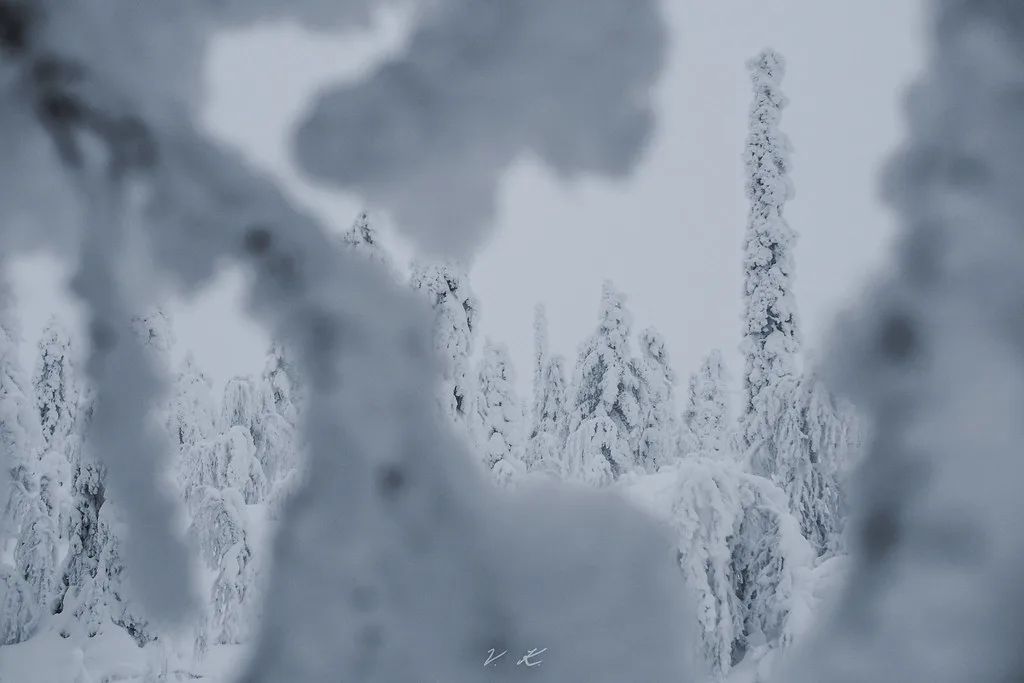
December in Finnish Lapland delivers the full Arctic winter package: reliable snow cover, a sun that barely clears the horizon and long, dark evenings that give the aurora its stage. It suits travelers who want a compact winter idyll rather than a long daylight itinerary, and who are content to build each day around a short, luminous window of light.
The trade-off is real. Days are short, temperatures sit well below freezing, and the Christmas season brings crowds to the Rovaniemi area in particular. But the darkness that shortens your sightseeing hours is the same darkness that makes December one of the better months for aurora watching.
Why December works for aurora hunting in Finnish Lapland
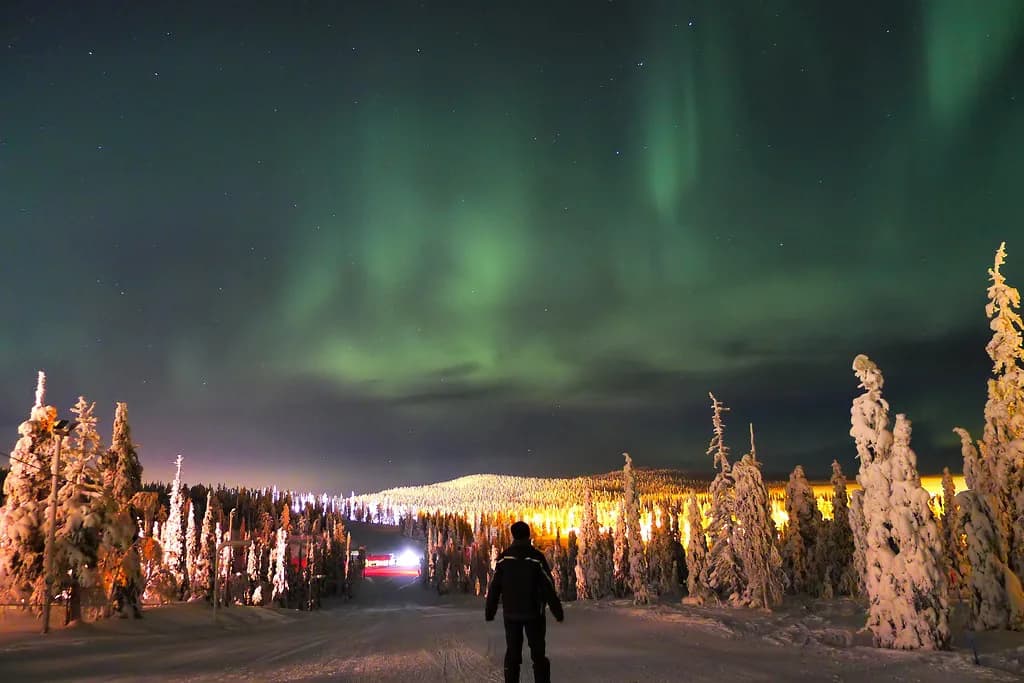
Aurora displays need dark skies and clear weather, and December supplies darkness generously in the far north. Between November and March the region's nights are long enough for the aurora to show, according to Nordic Visitor's account of the northern lights season, and December sits squarely inside that window. Solar activity still governs whether anything appears on a given night, so treat the month as favorable conditions rather than a promise.
Practically, that means you can eat dinner, head out at 8pm and still have hours of darkness ahead of you. Compare that with September, when you might be waiting until late evening for true dark, and December's long nights become an obvious asset for anyone whose main reason for coming north is the aurora. For a wider picture of where and when displays appear across the region, our guide to northern lights in Finland lays out the season and the best bases.
How far north you are and what that means for the aurora
Most of Lapland lies above the Arctic Circle, so the region sits within the auroral oval for much of the time. That geography is why northern Finland sees displays on many dark, clear nights even when activity is modest: the lights are overhead rather than on the horizon. Bases further north, such as Ylläs or the villages around Lake Inari, sit deeper inside that band than Rovaniemi or Kemi.
Kp values, the planetary index often quoted in forecasts, are guidance only. At Lapland latitudes a low Kp can still coincide with visible aurora overhead, and a high Kp means little if cloud covers the sky. Treat clear weather as the more decisive variable and use an aurora forecast for Finnish Lapland alongside a cloud forecast when you plan an evening out.
Daylight hours in December: what a short day looks like
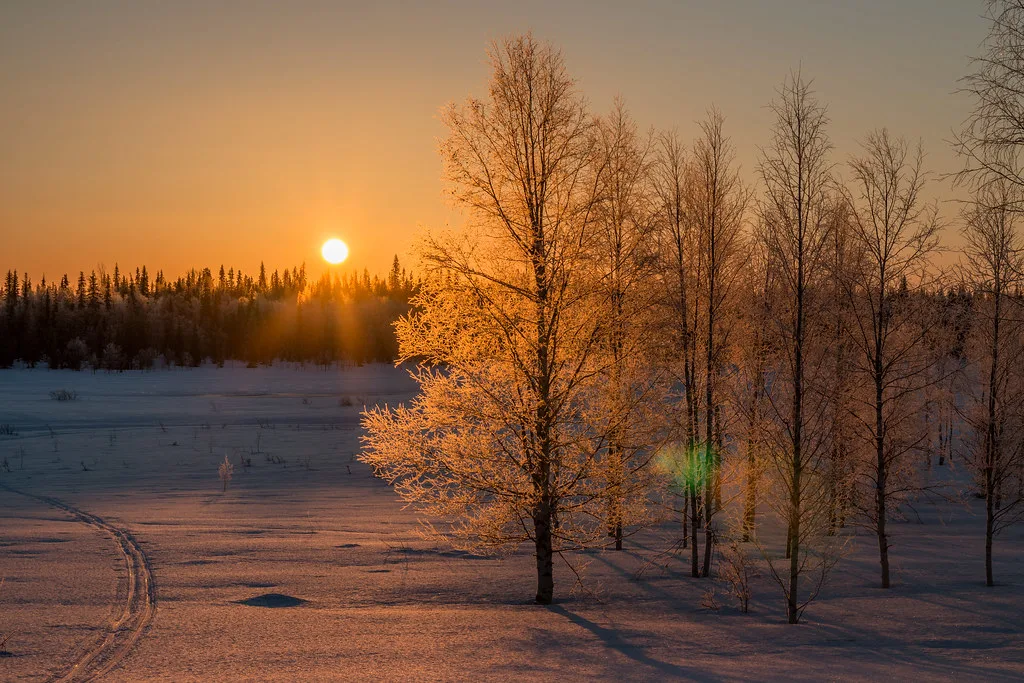
In the peak winter months, daylight in Lapland is limited to a few hours, usually between about 10am and 2pm, according to Nordic Visitor. Snow on the ground reflects light back upward and makes those hours feel brighter than the clock suggests. Plan your outdoor sightseeing, snowmobile transfers or husky excursions inside that window and keep evenings free for aurora attempts.
The short day shapes logistics more than most travelers expect. A morning transfer, a two-hour activity and lunch can consume the entire light period, so avoid booking two daylight activities back to back. If you want photography of snowy landscapes, aim for the hours around midday when the low sun grazes the treetops.
December temperatures and snow cover by location
Nordic Visitor reports mean December temperatures of about -6.9°C in Rovaniemi, -8.7°C in Kemi and -12.2°C at Ylläs, with occasional lows near -30°C or colder when wind chill is factored in. The dry air moderates the cold somewhat, but these are averages rather than forecasts, so expect variation across a trip. Choose your base partly on how much cold you want to handle: Ylläs is noticeably colder on average than Rovaniemi.
Snow is the other December certainty. Nordic Visitor puts the average number of snow days in Lapland at around 175 to 225 per year between mid-October and mid-May, which means December almost always has cover on the ground. The border-region climate chart from Responsible Travel shows January and February as the coldest, deepest-snow months, so December is snowy but still short of the season's coldest stretch.
When the aurora season runs and how December nights fit
The aurora season in Lapland runs from roughly late August or September through early April, when nights are dark enough at these latitudes. Responsible Travel notes that the northern lights make a dramatic appearance around the September equinox and that March, near the spring equinox, brings optimum viewing conditions. December falls in the middle of that season, with the advantage of very long nights and the disadvantage of more variable cloud than late winter.
December's nights are long enough that you have a wide window each evening, not a narrow one. That flexibility helps when cloud shifts during the night: you can wait out a gap rather than relying on a single hour. It is one reason operators can run evening tours with reasonable expectations even when the forecast is mixed.
Where to watch near town: dark-sky spots and light pollution
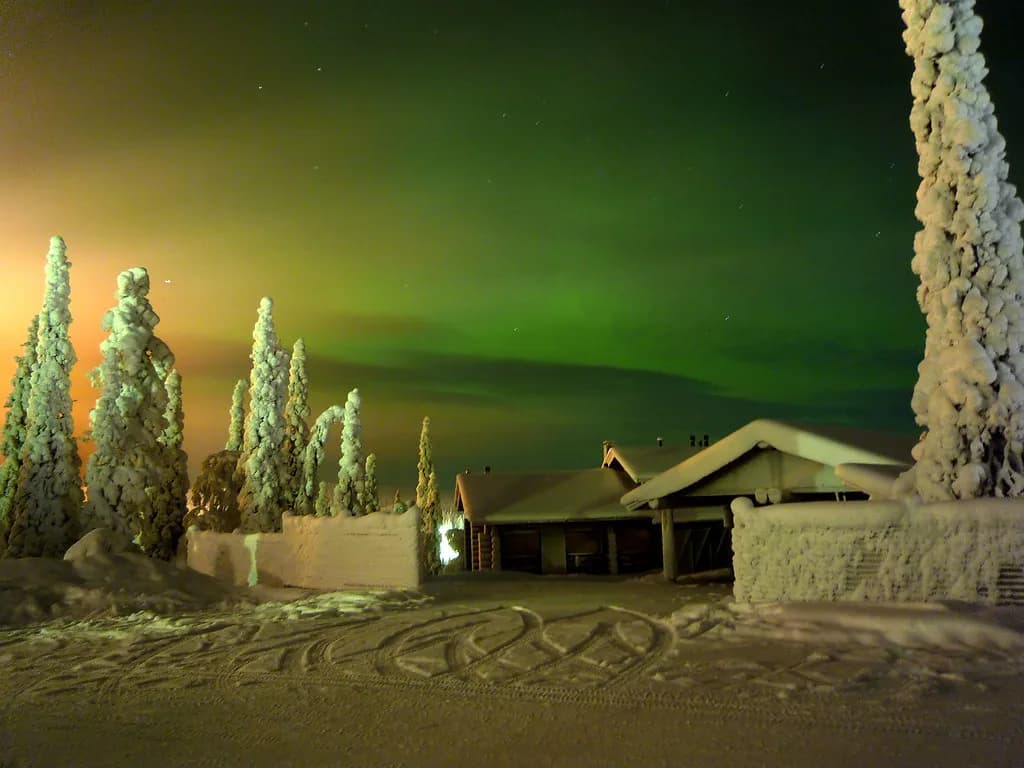
Town lights are the main obstacle to aurora watching from your hotel window in Rovaniemi or Kemi. Getting even a short distance outside the built-up area makes a visible difference, and the flat, forested terrain around both towns offers plenty of quiet roadside viewpoints. Ask your accommodation which direction the nearest unlit road or lake shore lies, and drive or take a taxi a few kilometers out.
Further north, villages around Lake Inari and the fells above Ylläs have far less light pollution and open northern horizons. A frozen lake surface is especially good: no trees block the view and the snow reflects any faint glow. Our guide to Sámi Culture in Finnish Lapland covers the Inari area, where aurora watching sits alongside a strong cultural landscape.
Self-guided chasing versus a booked aurora tour
Driving yourself gives you the freedom to move when cloud shifts, but it requires a rental car with winter tires and confidence on snowy roads. A booked tour removes that burden: guides typically know local microclimates, monitor cloud forecasts, and can reroute the group during the evening. Nordic Visitor notes that many Lapland operators lend thermal suits and boots as part of winter activities, which matters on a long, cold night out.
Group size and duration vary widely, so read the tour description carefully: a small-group minibus trip that runs late is a very different product from a short snowmobile safari with an aurora stop. Our guide to finnish lapland northern lights tours compares the typical formats and what each includes. Factor in a rest day if you book several evening outings in a row, because late nights and short days add up.
Glass igloos, aurora cabins and wilderness hotels
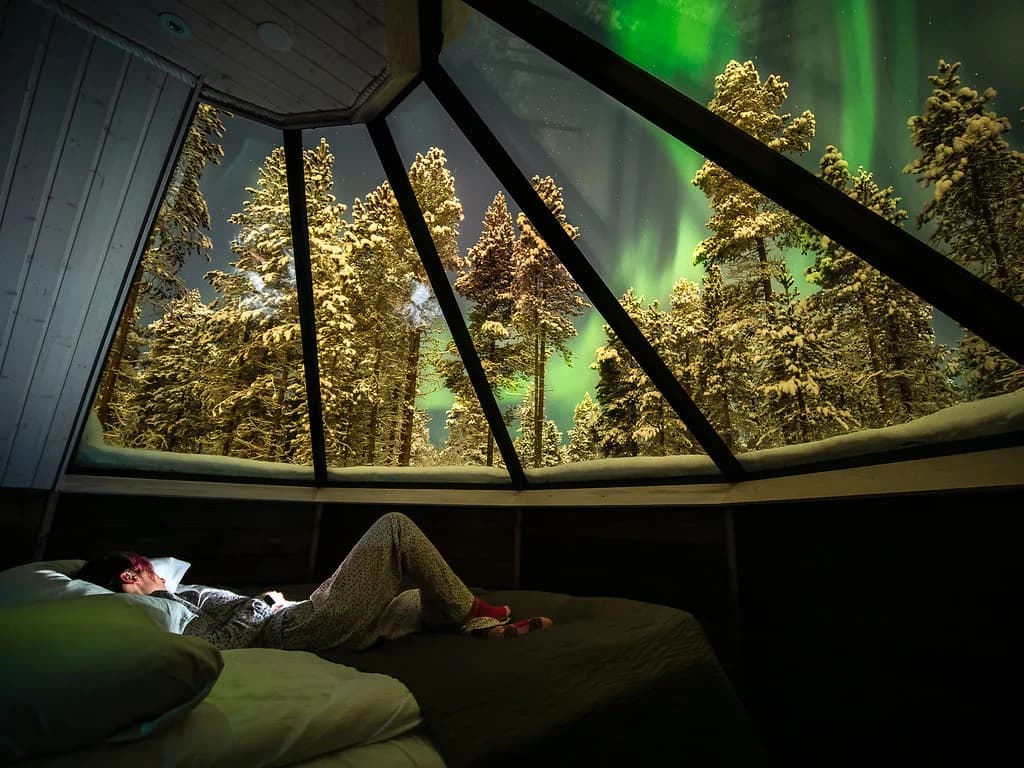
Glass igloos and aurora cabins let you watch from bed, which is appealing in December's cold. The trade-offs are real: glass roofs can fog or frost, interior lighting creates glare, and heated cabins are not the same as a dark-sky observation point. Read what each property actually offers, including whether the roof is heated and how much of the sky it reveals, before paying a premium.
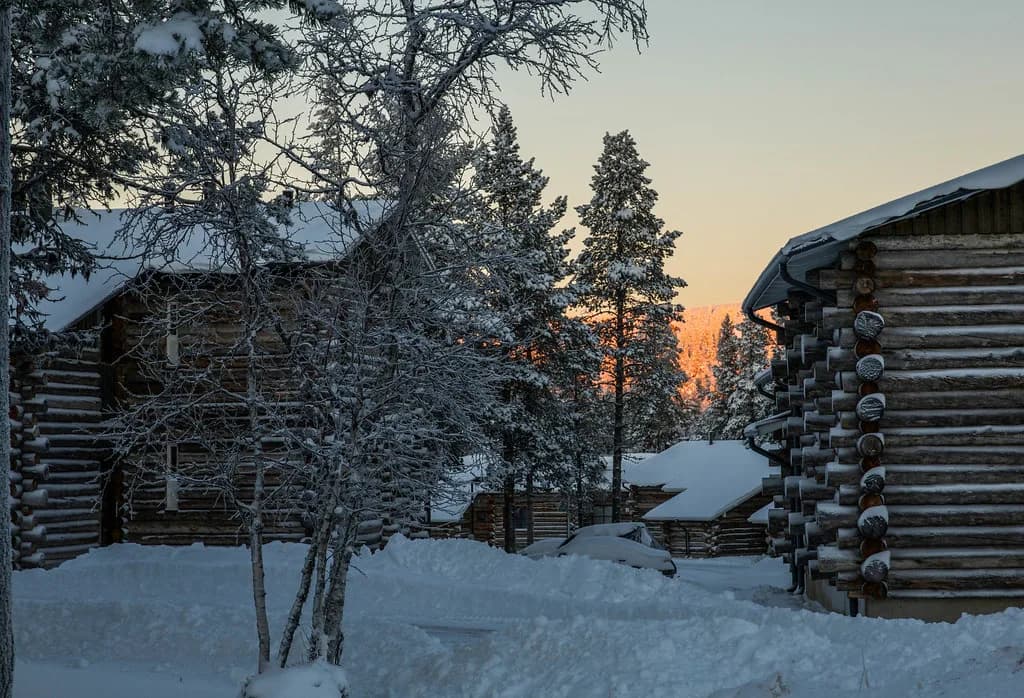
Wilderness hotels and log cabins outside town offer a compromise: warmth, privacy and darker surroundings, usually with a short walk to an open viewing spot. Many also run their own evening aurora activities. Compare locations on a map rather than trusting marketing language about being 'in the wilderness'.
Husky safaris and reindeer experiences in December
Husky safaris and reindeer sled rides are the classic December activities, and both fit the short daylight window. Responsible Travel describes dog-sledding against deep snow as a signature Lapland experience, and the snow cover from mid-October to mid-May supports it. Book these for the daylight hours and keep evenings for aurora attempts.
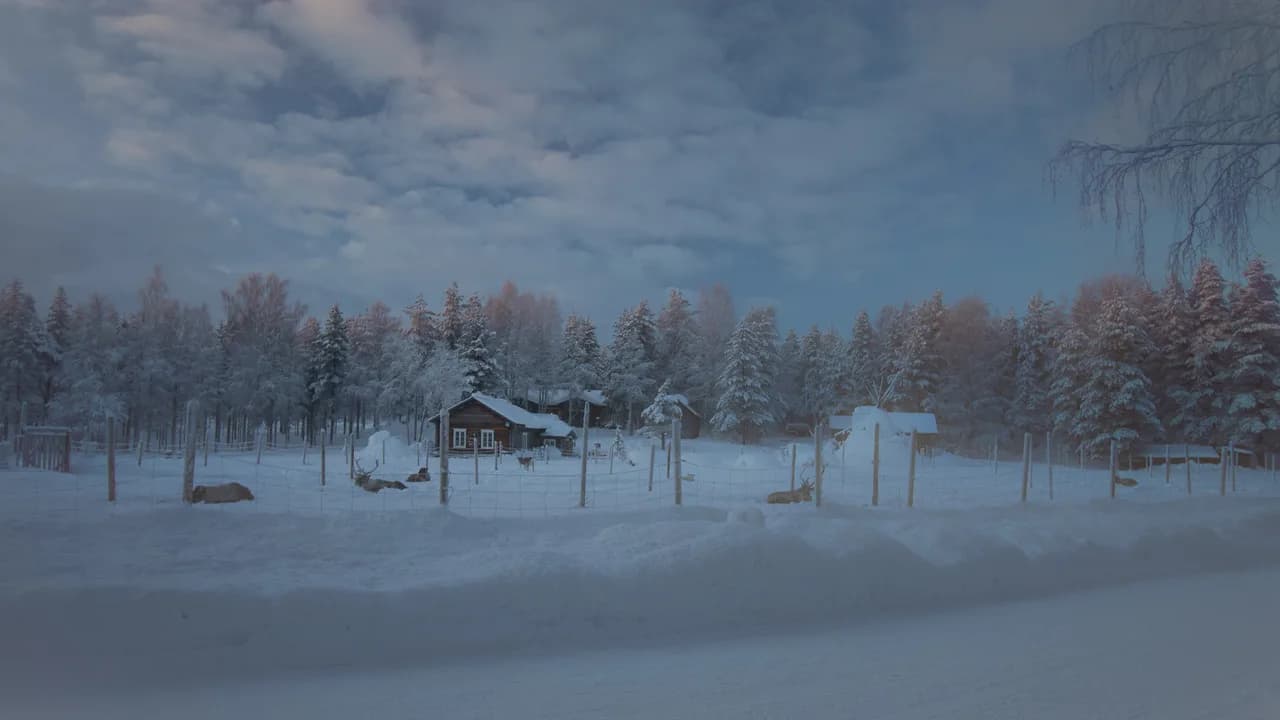
Reindeer experiences often include a short sled ride and a visit to a herder's camp, which suits families and travelers who want a gentler pace. Check whether transport from your accommodation is included, since rural farms can be some distance from town. Duration and group size vary by operator, so confirm before booking.
Santa Claus and family-focused stays around Rovaniemi
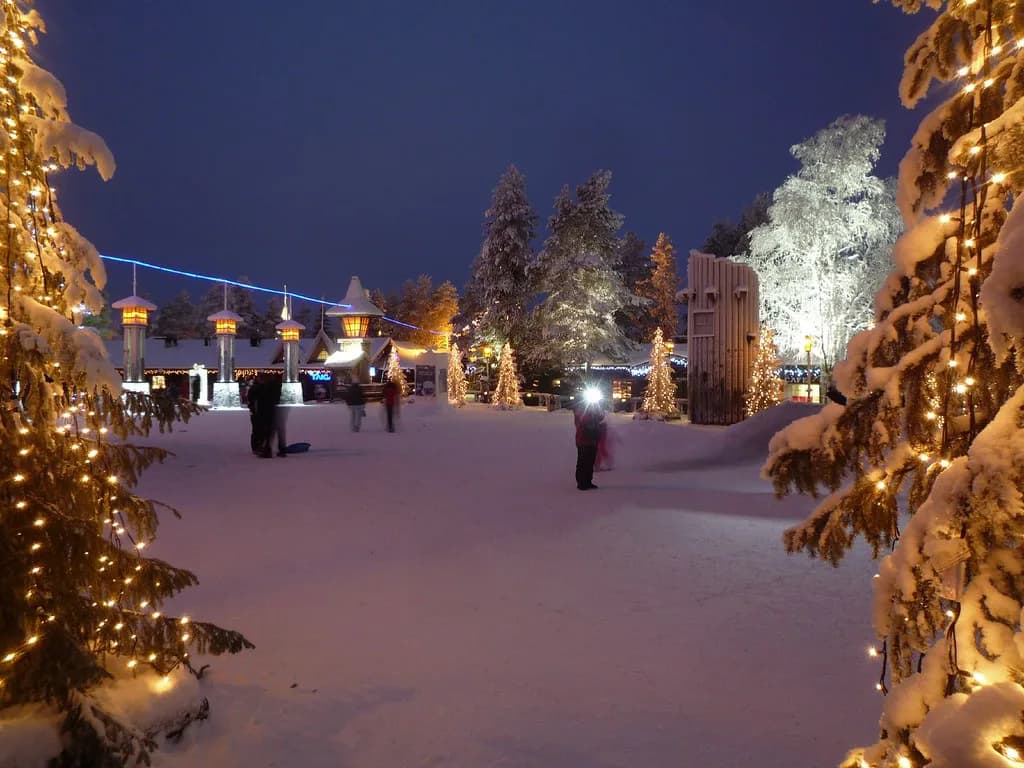
Rovaniemi's Santa Claus Village is the main draw for families in December, and it concentrates crowds accordingly. Responsible Travel describes December as the month when cheap, crowded fly-in Christmas trips dominate the landscape; if that puts you off, base yourself further north and visit the village as a day trip. For a detailed look at the season's family offerings, see our guide to christmas in finnish lapland. If you are weighing a stay in the city itself, our guide to rovaniemi in december covers daylight hours, snow and aurora nights there.
Families should also weigh daylight against young children's routines. With light only between roughly 10am and 2pm, a morning Santa visit followed by an early dinner and an indoor evening works better than trying to stretch the day.
Saunas, ice hotels and indoor alternatives for cold days
A traditional Finnish sauna is the best antidote to a day spent in the snow, and most hotels and cabins have one. Ice hotels and snow hotels, built fresh each winter, are worth an afternoon visit even if you sleep somewhere warmer. Check whether day visits are possible and whether transport is included before you plan a day around one.
Christmas crowds, prices and booking timing
December is peak season around Rovaniemi, so accommodation and popular activities fill early and prices rise accordingly. Responsible Travel notes that September and October are cheaper precisely because many tours close, which tells you the flip side: December's full activity calendar comes with full-season pricing. Book flights, aurora cabins and husky safaris as early as you reasonably can, and compare packages rather than defaulting to direct booking as the cheapest route.
If you are flexible on dates, aim for early or mid-December before the Christmas week surge, or the days between Christmas and New Year if you want the festive atmosphere. Either way, confirm cancellation terms on aurora tours, since weather can force changes.
How many nights to plan for a fair chance of clear skies
Aurora sightings depend on solar activity and clear skies, so no itinerary can guarantee one. What you can do is give yourself multiple nights out. Three to four nights in Finnish Lapland gives a reasonable number of independent evenings, and four to five is better if you are traveling in a cloudy spell or want one rest day.
Choose two different bases if your schedule allows, for example Rovaniemi plus somewhere further north such as Ylläs or Inari. That way, if cloud settles over one area, you have a second chance without long drives. Also keep in mind that a booked aurora tour is not wasted on a cloudy night: guides often find gaps, and the experience of a dark Arctic forest is worthwhile on its own.
Comparing December with March for aurora trips
December gives you long nights and guaranteed snow, but cloud cover is often heavier than later in the winter. Responsible Travel reports that late March to early April brings longer daylight, temperatures hovering around 0°C and less cloud cover, which increases the chance of seeing the aurora. That makes March the stronger statistical bet for clear skies, while December offers the deepest winter atmosphere and the Christmas season.
If you can only travel in December, plan more nights rather than fewer to compensate for cloud. If you are choosing between the two months and aurora is your priority, March's longer daylight and clearer skies are usually the better bet, at the cost of saying goodbye to the Christmas atmosphere.
Plan Your December Trip to Finnish Lapland
December in Finnish Lapland rewards travelers who embrace the short days: a few hours of low, luminous light for activities, then long dark evenings for the aurora. Choose your base with temperature in mind, budget several nights, and treat any display as a bonus rather than a certainty.
Use the official operating pages for any tour you book to confirm current prices and what is included, and check the aurora forecast for Finnish Lapland alongside a cloud forecast on the day.
Frequently Asked Questions
Does Lapland have snow in December?
Yes, December is reliably snowy across most of Finnish Lapland. Nordic Visitor reports around 175 to 225 snow days per year between mid-October and mid-May, which places December firmly within the snow season.
What are the daylight hours in Lapland in December?
Daylight is limited to a few hours, usually between about 10am and 2pm, according to Nordic Visitor. Snow on the ground reflects light and makes those hours feel brighter, but plan outdoor activities inside that window.
What is the weather like in Lapland in December?
Expect deep cold and snow. Mean December temperatures are around -6.9°C in Rovaniemi, -8.7°C in Kemi and -12.2°C at Ylläs, with occasional lows near -30°C or colder when wind chill is factored in. These are averages, not forecasts.
Can you see the northern lights in Lapland in December?
December sits inside the aurora season, with long dark nights that give you a wide viewing window. Whether displays appear on a given night depends on solar activity and clear skies, so plan several nights and treat any sighting as a bonus.
Is December a good time to visit Lapland?
It is excellent for deep snow, Christmas atmosphere and aurora hunting, but days are very short and the Rovaniemi area gets crowded around Christmas. If clear skies are your priority, late March to early April offers longer daylight and less cloud cover.
How many nights do you need in Lapland for the northern lights?
Three to four nights gives a reasonable number of independent evenings, and four to five is better if you want a buffer for cloudy spells or a rest day. Splitting your stay between two bases improves your chances of finding clear sky.
Sources
Notes for your Arctic winter trip
Optional updates to our northern lights guides.
You might also like
Continue reading
More guides you'll find useful