Sámi Culture in Finnish Lapland: Which Winter Trip to Choose
Sámi culture belongs to any winter trip to Finnish Lapland. Find the parliament, museums and reindeer herding around Inari, and how to visit.
On this page
Finnish Lapland is the home of the Sámi, the only officially recognised indigenous people in the European Union, and their culture runs through the north as a working way of life rather than a staged attraction. A winter trip built around Inari village puts you inside that heartland, with the Sámi parliament, museums and reindeer herders all within reach. It suits travellers who want culture in the daylight and dark skies over the lake at night, and who treat the northern lights in Finland as a bonus rather than a certainty.
Why the Sámi are Finland's indigenous people
The Sámi are the only officially recognised indigenous people in the EU, and around 9,000 of them live in Finland. Across the four countries that share Sápmi, the broader population is estimated at roughly 75,000, according to Visit Inari. That shared homeland, one flag and a national day on 6 February frame a culture that crosses modern borders.
In Finland the Sámi have their own parliament, responsible for linguistic and cultural self-government, and it sits at Sajos in Inari village. It is elected every fourth year. Northern Lapland's municipalities also give Sámi students the right to schooling in their own language, and immersive language day care works to keep the languages alive.
Most Sámi today live in modern houses and dress in everyday clothes; the Sámi dress is kept for important occasions and signals family and region. That matters for how you read the north: kotas and lean-tos are still part of the environment, but the culture you meet is contemporary. Expect a living community rather than a performance staged for visitors.
Where Finnish Lapland's Sámi heartland sits
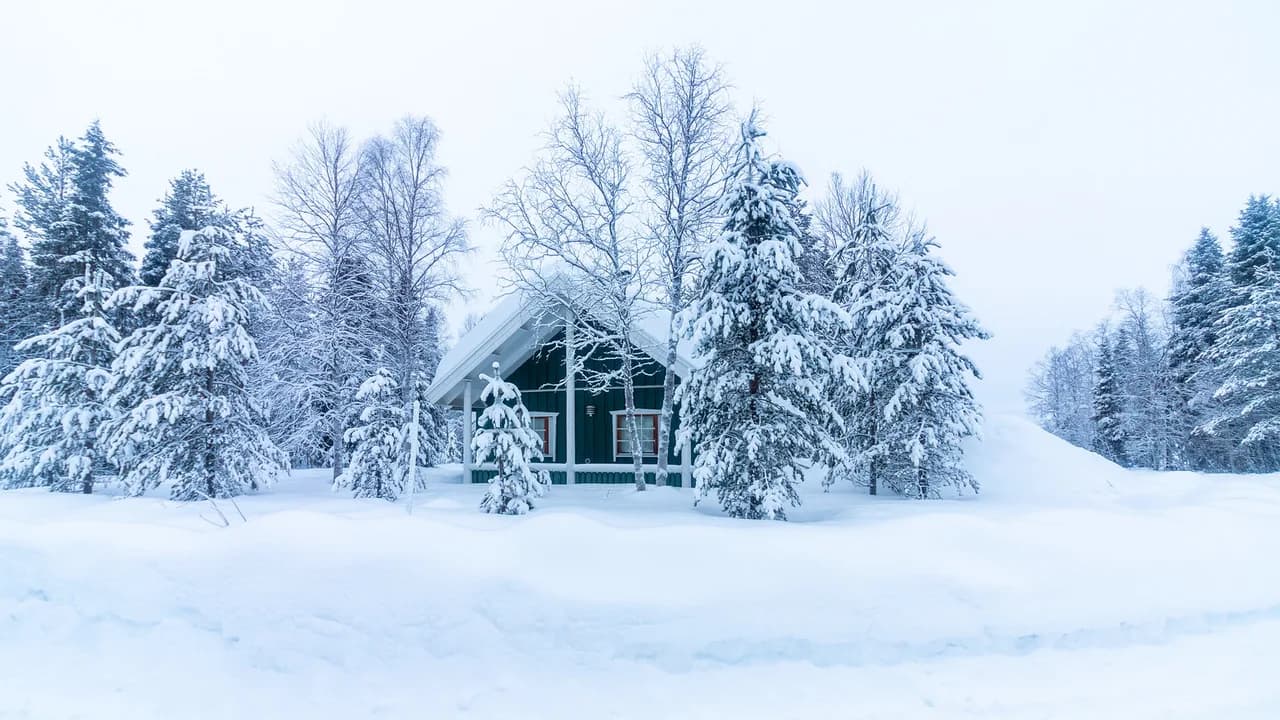
Inari village, on the shore of Lake Inari, is the administrative and cultural centre of Finnish Sámi life and the natural base for a culture-focused winter trip. Sajos, the parliament building, sits in the village. Ivalo, with its airport, lies a short drive to the south, and the village's hotels, holiday cabins and safari offices cluster along Inarintie.
Plan on Inari as a compact base: hotel rooms, holiday cabins and a safari office sit on the same main street, so you can walk between accommodation, meals and activities without a car. Distances in Lapland are measured in long drives between towns. Keeping your nights in one place buys you more usable daylight and more dark hours under the sky.
Book accommodation early for the darkest weeks, when aurora season peaks and cabins fill. Hotels in Inari village and Ivalo run winter packages that bundle rooms with activities, which simplifies logistics when daylight is short. Confirm airport shuttle times with your hotel before you commit to a flight arrival.
Three Sámi languages, one identity
Three Sámi languages are spoken in Finland: Northern Sámi, Inari Sámi and Skolt Sámi. Language is the clearest marker of Sámi identity and the sharpest dividing line between communities. Skolt Sámi communities are largely Orthodox, for example, in contrast to the majority Lutheran Sámi.
Sámi languages carry a deep vocabulary for snow and ice, with separate words for ordinary snow, wet snow, untouched snow, hard snow and thin icy snow. That detail is a useful reminder that you are travelling through a landscape people have named and read for generations. When you hear a place name around Inari, it often comes from one of these languages.
Reindeer husbandry as a living livelihood
Reindeer husbandry is the livelihood most closely tied to Sámi identity, alongside fishing, hunting and handicrafts. In Finland herding is organised through grazing associations known as paliskunta, and there are 56 of them. Each area carries a pasture limit of 200,000 reindeer so the ground can recover.
Herding is a year-round working cycle, and many Sámi in the north combine it with tourism work or other jobs in the community. Reindeer are owned by families and herders but graze collectively on association land, which is why you see animals roaming widely. That roaming is normal and not a sign of neglect.
Sámi herders are widely described as among the first peoples to tame and herd animals, using tamed reindeer to pull sleds and to draw wild animals into their herds. Today herding is largely focused on meat production. The heritage is real, but the economy behind it is modern.
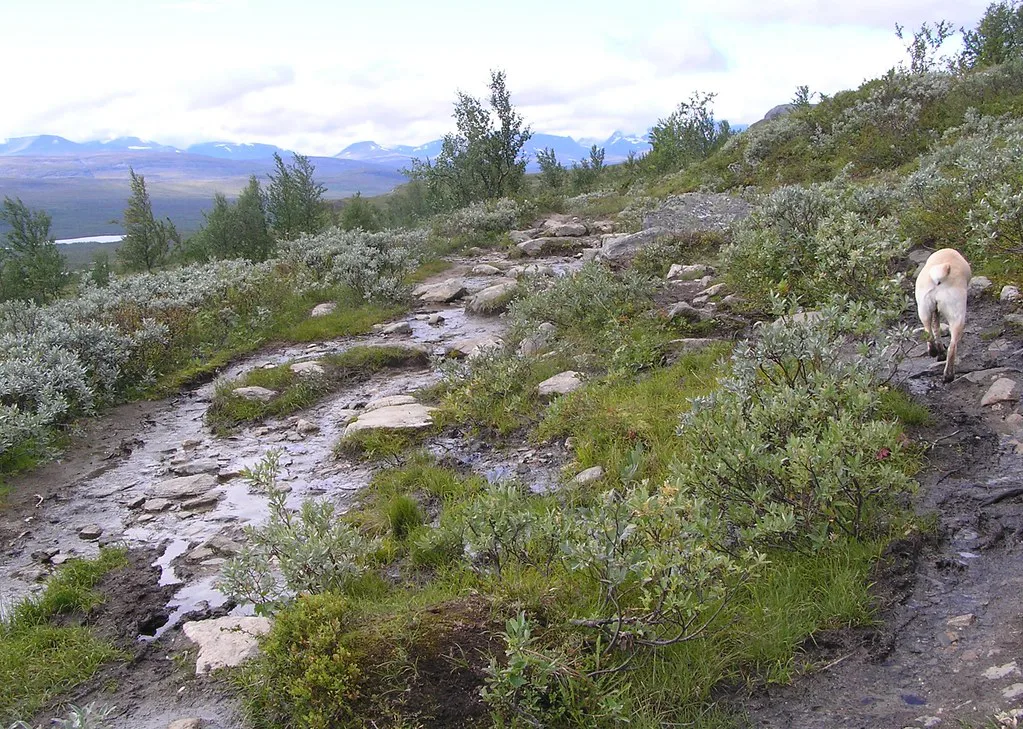
The reindeer year and when to see the work
Calves are born in May and June, which opens the reindeer year. From midsummer, on 21 June, reindeer are gathered into summer corrals and the new calves are earmarked by cutting a unique pattern into the ear, one mark per herder. Swarms of mosquitoes and flies help drive the animals out of the forest and into the open.
In autumn the herds are rounded up again, using quad bikes and mountain bikes, then snowmobiles and helicopters once snow arrives. The animals are separated, some removed for slaughter or home use, and the rest treated against parasites and released. If you want to see earmarking, plan for summer; aurora-season visitors see the working winter side of herding instead.
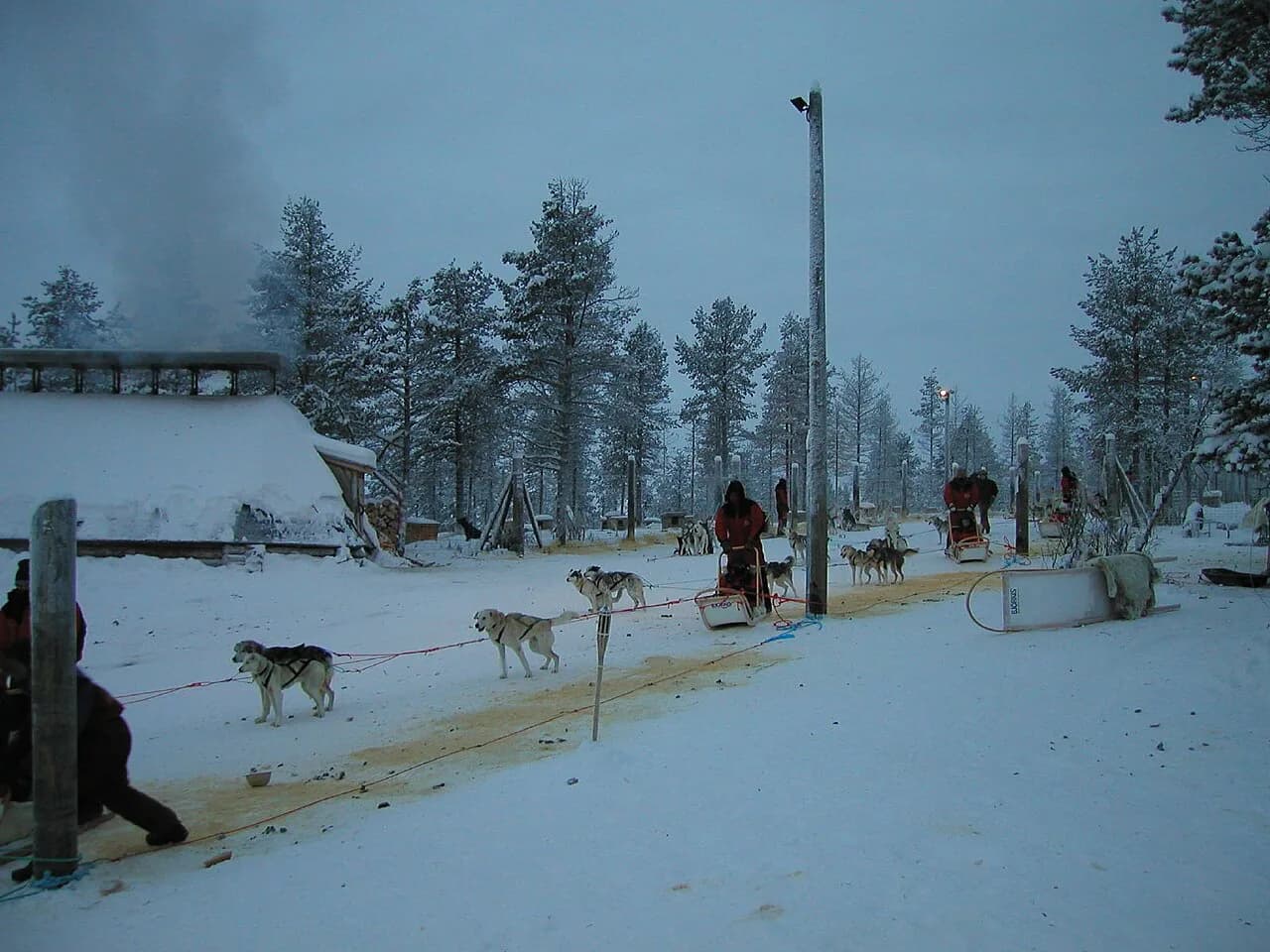
In winter, reindeer experiences revolve around feeding, sled drives and time with herders rather than roundups. Ask what a visit actually includes: meeting animals, a sled ride, a hot drink by a fire, or a longer herder-led walk. That distinction matters more than the marketing label on the tour.
How to spend a Sámi culture day in winter
Build a culture day around Inari village itself, where the parliament at Sajos anchors the Sámi institutions and the surrounding area holds museums, handicraft and food. Guided visits run from the village safari office alongside the hotels. Daytime is short in midwinter, so start early and keep the itinerary compact.
Pair a museum or Sajos visit with a reindeer herder experience and a meal of local fish or reindeer. That combination gives you context in the morning and contact with working culture later. If you travel with children, ask about the pace and content of guided visits before booking.
If your trip falls near Christmas, the region's seasonal events pull attention elsewhere, and the wider region's festive programmes are worth knowing about.
Sámi National Day on 6 February
Sámi National Day falls on 6 February, a fixed date that sits inside the aurora season when nights are still long and dark. The date marks a shared identity across Sápmi rather than a single Finnish event. If your trip overlaps, Inari is the place to be for it.
Beyond the flag day, the culture is visible year-round in the institutions, the languages and the herding calendar. Time your visit around what you most want to see rather than around a single date. Midwinter gives you the darkest skies; late winter gives you longer days for museum and village time.
Sámi culture and aurora nights around Lake Inari
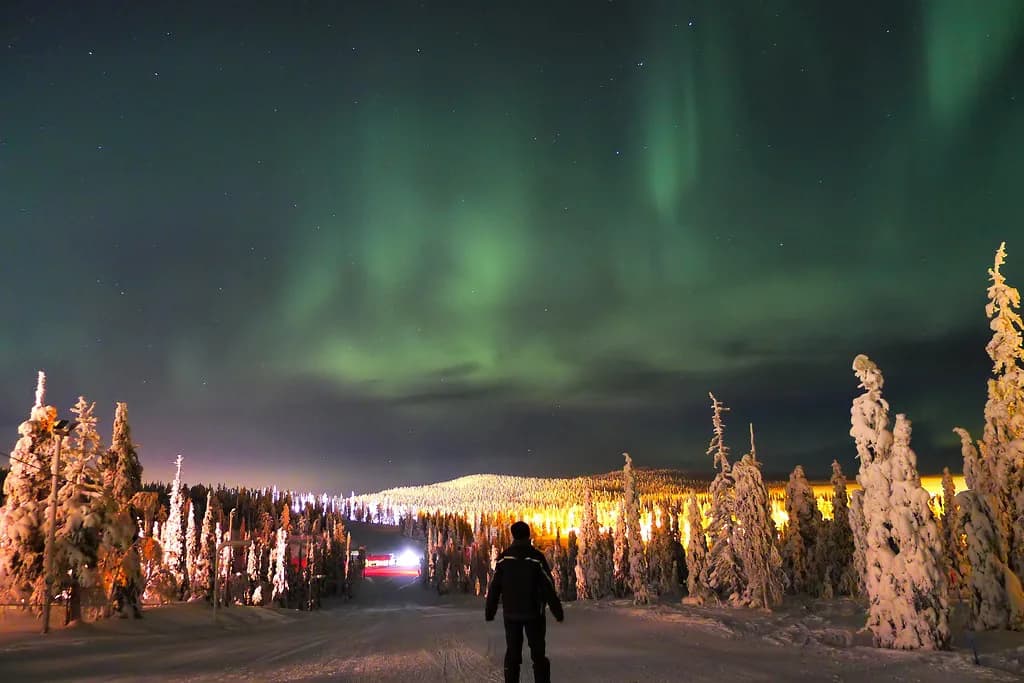
Inari sits far enough north that aurora season runs through the dark months, with long nights from September to early April and midsummer light in between. Clear skies are the other half of the equation, and inland Lapland often trades coastal cloud for colder, clearer nights. Kp values are a guide, not a promise.
Lake Inari offers dark horizons away from village lights, and the surrounding forest roads give you quiet places to watch from. A guided northern lights tours night out with a local operator adds transport, a fire and local knowledge of where the cloud is breaking.
Check the aurora forecast before you set out and treat it as guidance on solar activity, then watch the sky. Cloud is the factor you can actually respond to by moving. If your culture day is done and the sky clears after dark, go out; the two parts of the trip fit together naturally here.
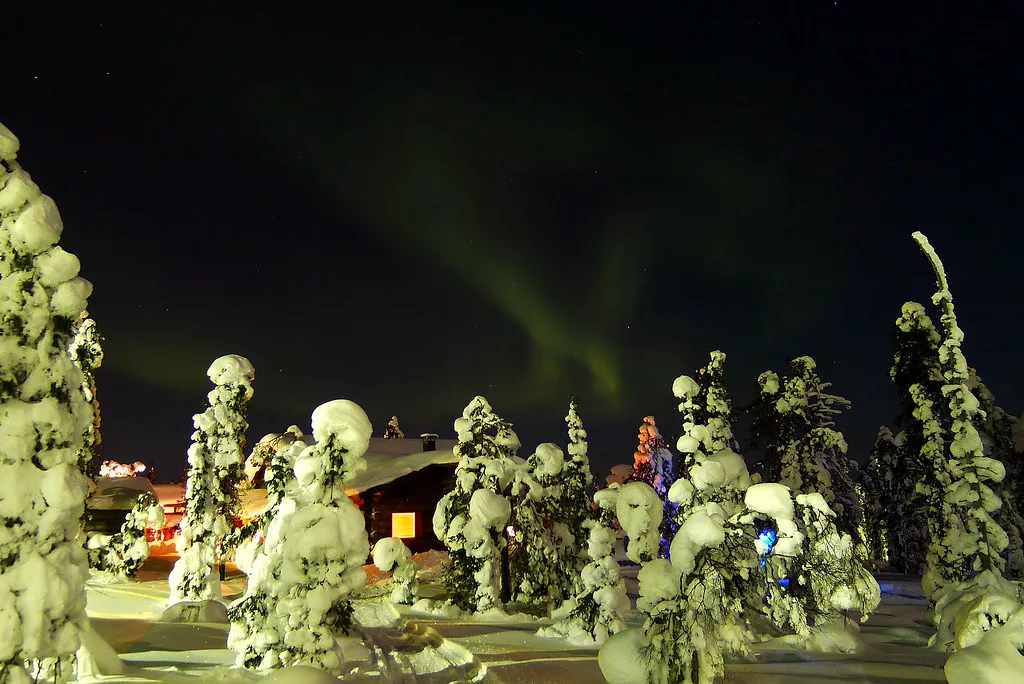
How many nights to plan around Inari
Allow three to four nights in Inari if you want both a culture day and a fair run at clear skies. Cloud can hold for days, and a single night offers little margin. A longer stay also gives you room to rest after a late night out.
If aurora is your priority, weight your nights in one place rather than splitting them across several bases. Inari works well because the culture, accommodation and dark-sky access sit together. If you prefer a wider circuit, keep Inari as the fixed point and add days elsewhere.
Who this suits and nearby alternatives
This trip suits travellers who want culture and dark skies in one place, and who are content with short days and cold. It is a poor fit for anyone expecting guaranteed sightings or busy nightlife. If you want pure wilderness, look at national-park bases such as Pyhä-Luosto National Park rather than adding more days in Inari.
Finnish Lapland holds the core of this culture, but Sápmi also spans Swedish Lapland and Norway, where Sámi institutions and museums appear in the far north. If your route crosses the border, the culture continues rather than stops. For most winter trips, though, Inari is the most concentrated introduction, comparable to other far-north bases like the northern lights in Saariselkä if you are weighing a second stop.
Travelling with a dog around Inari and the Sámi heartland
If you are bringing a dog to Finnish Lapland, the practical question is usually where the animal can stay while you visit sled reindeer, museums and cultural sites. Base yourself in Inari village and you will find dog-friendly operators within one small area. Visit Inari's own listings bring together Hotel Inari on Inarintie 40, Holiday Village Inari on Inarintie 26, Crow Creek Cabins on Sarviniementie 23 and Hotel Kultahippu in Ivalo on Petsamontie 1, along with the safari office on Inarintie 38 where activities are booked.
Those places also run the winter activities and safaris, so the same staff who arrange your reindeer day can tell you what to do with the dog while you join. Reindeer work is guided and often happens in open pens on the tundra, which is not an outing for a pet. When you are outside on the fells and around Lake Inari, keep the dog close: reindeer may be in the area on the collective grazing grounds, and during the midsummer round-up the insects are already enough to drive them out of the forest.
Timing the dog around the Sámi year is worth planning. Reindeer calves are born in May and June, which starts the reindeer year, and around midsummer (21 June) the animals are gathered into summer corrals so that calves can be marked by cutting a pattern into their ear. A dog standing near that work adds stress, so keep your pet on a lead.
If your visit is built around culture rather than the outdoors, leave the dog in the accommodation for the day. The Sámi parliament sits at Sajos in Inari village, so a culture day in winter puts you within reach of the village's hotels, cabins, restaurants and safari desks without long transfers. Sámi National Day on 6 February falls in the dark season and can be paired with aurora nights around Lake Inari. Check with the individual place when booking.
Plan Your Inari Culture Trip
Build your Finnish Lapland winter trip around Inari village, with at least three nights, a culture day and a couple of dark evenings reserved for the sky. Book accommodation and any herder-led visits in advance, and keep one evening free for a guided night out if cloud looks stubborn. The culture is the reason to come north in winter as much as the aurora.
Frequently Asked Questions
Why are the Sámi called indigenous?
The Sámi are the only officially recognised indigenous people in the European Union. They have their own languages, homeland, flag and national day, and in Finland a Sámi parliament handles linguistic and cultural self-government.
How many Sámi live in Finland?
Around 9,000 Sámi live in Finland, within a wider Sápmi population estimated at roughly 75,000 across Finland, Norway, Sweden and Russia. Over half of Finland's Sámi now live outside the Sámi area, many in the Helsinki region.
Which Sámi languages are spoken in Finland?
Three: Northern Sámi, Inari Sámi and Skolt Sámi. Language is the clearest marker of Sámi identity, and immersive day care and schooling in the north work to keep the languages alive.
Where is the Sámi parliament in Finland?
It sits at Sajos in Inari village, on the shore of Lake Inari, and is elected every fourth year. The village is the practical base for anyone wanting to combine Sámi culture with aurora nights.
When are reindeer calves earmarked?
Calves are born in May and June, and earmarking happens at the summer corral roundups that begin at midsummer, 21 June. Each herder has a unique ear mark carried by the whole herd.
What happens at an autumn reindeer roundup?
Herders gather the animals using quad bikes and mountain bikes, then snowmobiles and helicopters once snow arrives. They separate the herd, remove animals for slaughter or home use, treat the rest against parasites and release them.
Is Sámi culture visible in winter in Inari?
Yes. Sajos, museums, handicraft and herder-led reindeer experiences operate around the village in winter, and short daylight hours make a compact culture day sensible. Earmarking itself is a summer event, so winter visits show the working side of herding instead.
Can you combine Sámi culture with northern lights viewing in Inari?
Yes, and that pairing is the main reason to base yourself in the village. Lake Inari and the surrounding forest give dark horizons, while guided nights out add transport and local knowledge. Clear skies and solar activity decide whether the aurora appears, so allow several nights.
Sources
Notes for your Arctic winter trip
Optional updates to our northern lights guides.
You might also like

Continue reading
More guides you'll find useful