Lapland in October: Weather, Snow, Daylight and Aurora Chances
Plan Finnish Lapland in October with realistic temperatures, snowfall and daylight, plus how aurora nights work and how many nights to allow for clear skies.
On this page
October in Finnish Lapland is a shoulder month with real rewards for travelers who want dark nights and open resorts without deep winter. The autumn colours are fading, the first snow usually arrives but rarely settles, and the aurora season is already running, so long as clouds allow. It suits travelers who can stay flexible and treat clear sky as the prize rather than a guaranteed part of the itinerary.
The trade-off is weather. October brings cloud, rain and the first flurries, and most winter tours do not operate yet because snow activities depend on snow arriving. In exchange, resorts and glass igloos are open and heavily discounted compared with winter, and the landscape is quieter than in December or March.
What October feels like across Finnish Lapland
October is a transitional month across Lapland. The leaves fall from the trees, the first snow usually arrives but rarely sticks, and the days shorten noticeably toward the end of the month. Temperatures drop well below freezing at night, while daytime remains tolerable early in the month.
The north feels more wintry than the south. Kilpisjärvi and Saariselkä see colder nights and more precipitation days than Rovaniemi, so the choice of base changes what you experience, not just where you sleep. If you want the best chance of snow on the ground, go further north; if you want easier travel and more services, stay around Rovaniemi, and see our guide to Rovaniemi in October for that base in detail.
October temperatures in Rovaniemi, Levi, Saariselkä and Kilpisjärvi
October averages vary by base. Rovaniemi sees highs of about 5C and lows of -1C with roughly 10 precipitation days, while Levi runs slightly cooler at 3C by day and -1C at night with about 9 precipitation days. Saariselkä averages 2C by day and -4C at night with about 11 precipitation days, and Kilpisjärvi is the coldest and wettest of the four at 2C by day, -3C at night and about 14 precipitation days.
Apukka Resort describes October in Rovaniemi as the month of the first snowfall, with average temperatures ranging between 0C and 10C. Those figures sit higher than the monthly averages above because they describe daytime conditions rather than the full daily range. Use the colder night figures when planning aurora viewing, and the daytime figures when planning hikes or bike rides.
First snow: what usually sticks and what melts
October brings the first snowfalls, but they rarely stick or accumulate. Flurries may dust the ground and then melt within days, especially in southern Lapland. Snow usually does not settle until around November in the south, while the north may hold snow earlier.
This matters for activities. Most winter tours do not operate yet in October, and snow activities generally start later, often in December, depending on when snow arrives. Plan October around hiking, fat biking, dog-carting and aurora hunting rather than husky sledding or snowmobiling.
Daylight hours through the month
October still has a balanced mix of day and night early on. On 15 October, Rovaniemi has about 9 hours 35 minutes of daylight and Saariselkä about 9 hours 22 minutes. That is enough light for daytime activities and long enough darkness for aurora viewing if the sky clears.
The shortening becomes noticeable toward the end of the month. By late October, afternoons darken early and evenings stretch long, which shifts the rhythm of a viewing night: you can start aurora watching earlier and still get dinner afterward. Build your day around light hours and keep the dark hours flexible.
When the aurora season is under way in October
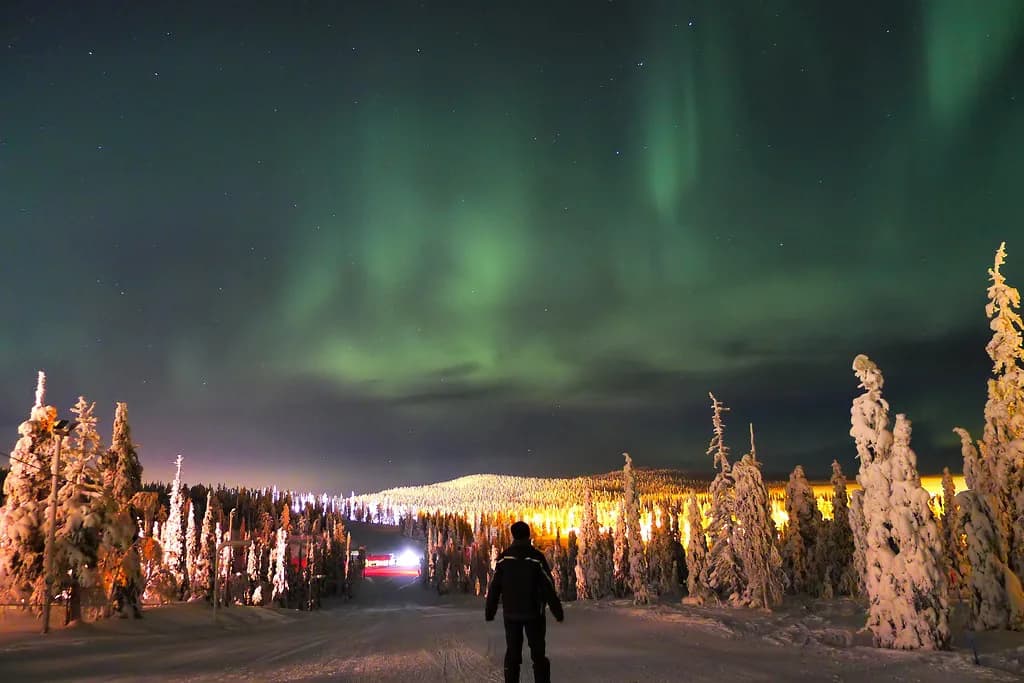
The aurora season in Finnish Lapland runs from late August or September through early April, because those months have dark enough nights. October sits well inside that window, and activity often heightens around the autumn equinox. That does not mean a sighting is likely on any given night, since solar activity and cloud cover decide what you see.
Santa Claus Village calls autumn the season with the highest chances to observe the northern lights at the Arctic Circle. Treat that as a statement about the season rather than a guarantee for your dates. Check the Finnish Lapland aurora forecast before you travel and again on the evening you plan to watch.
Why cloud cover is the main obstacle in October
October tends to bring a lot of cloud to Lapland. The same weather systems that deliver the first snow and rain also block the aurora, so a clear night is the limiting factor more than solar activity. Plan around the possibility of several cloudy evenings in a row.
Because of that, a tour that can drive to clear skies is often more valuable in October than a fixed viewing spot. If you are chasing on your own, keep a rental car and be ready to move an hour or two in search of gaps in the cloud. Either way, allow more nights than you think you need.
Where to watch near Rovaniemi and the Arctic Circle
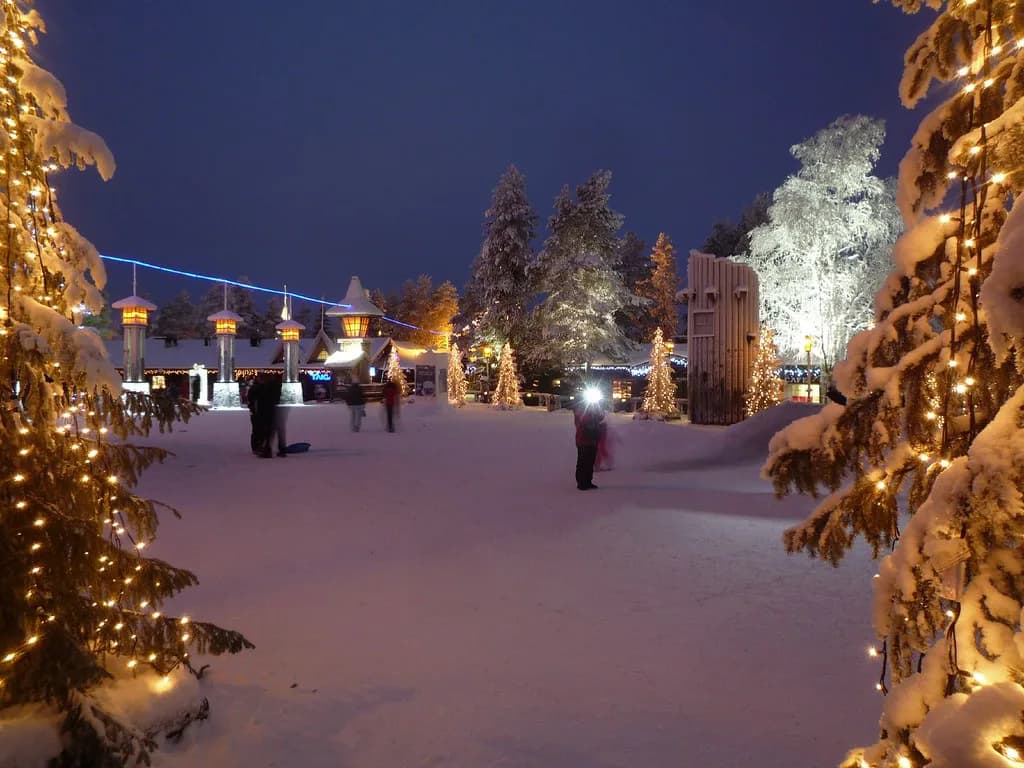
Santa Claus Village sits right on the Arctic Circle and promotes itself as a place to hunt the northern lights, which makes it a convenient base if you want a short drive back to a warm room. The village is a developed site with lighting, so for darker sky you need to move away from the buildings. The Arctic Circle Hiking Area is 15 km, or about a 12-minute drive, northeast of the village and offers marked trails, fire pits and lakes away from the resort lights.
Arktikum, about 8 km and an 8-minute drive from the village, is a museum and science centre where you can learn how the aurora works before you go out. That is a useful daytime stop on a cloudy afternoon. For a full overview of the region's aurora season, see northern lights in finland.
Dark-sky options around Levi and Saariselkä
Levi and Saariselkä both sit far enough north for dark October nights, and both have resort lighting that you need to leave behind. Around Levi, the fell landscape outside the resort centre gives you open horizons; around Saariselkä, the national park boundary is close to town. In both places, a short drive or a snow-free walk away from the village improves the sky.
Saariselkä also sits near the road to Ivalo and Lake Inari, where Aurora Village Ivalo offers a family-owned base with nature around the cabins. That makes it a sensible choice if you want to combine aurora nights with time in the north. For context on the Sámi region around Lake Inari, see Sámi Culture in Finnish Lapland.
Self-guided chasing versus a guided aurora tour
Self-guided chasing gives you the freedom to follow clear sky, but it puts the weather decision on you. In October, with frequent cloud and short notice, that can mean a lot of driving on dark roads. A rental car and a flexible itinerary make it work, and you should plan to move between bases rather than commit to one spot.
Guided tours take that decision away and often drive to where the sky is clearer. In October, most winter tours do not operate yet, so check which aurora operators run that early and what they include. Many lend thermal suits when the weather turns cold, which matters on a long night out.
Glass igloos and aurora cabins in autumn
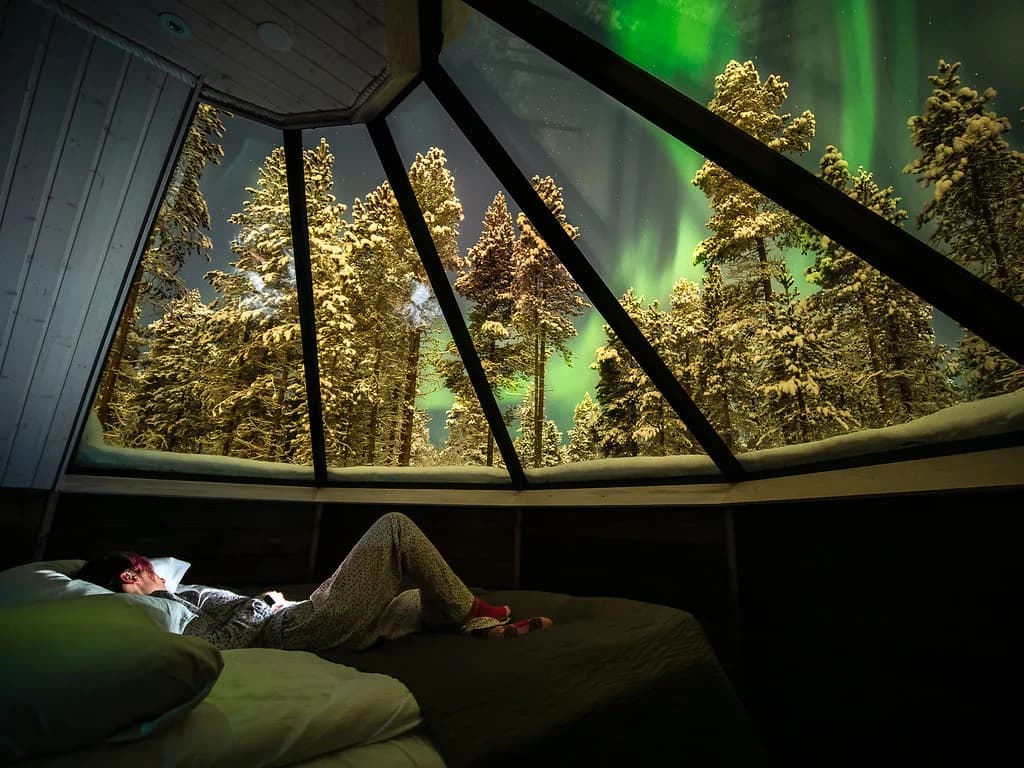
One of the clearest reasons to choose October is that resorts are open and heavily discounted. Glass igloo resorts and northern lights hotels that command winter prices in December are available for a fraction of the cost in autumn, and they are quieter. Apukka Resort near Rovaniemi, Aurora Village Ivalo and Northern Lights Village at Saariselkä and Levi all operate in the autumn season.
Weigh comfort against cost. A glass igloo gives you a warm place to wait for a gap in the clouds, but interior heat, condensation and glare from nearby lighting can limit the view. A cabin with a short walk to a dark spot sometimes gives a better sky for less money, so decide whether you want the igloo experience or the darkest possible view.
Autumn activities: hiking, fat biking and dog-carting
With snow activities generally waiting for December, October is the month for hiking, fat biking, ice floating and dog-carting. The Arctic Circle Hiking Area has marked trails, fire pits and bridges over rapids, and autumn is when the colours are at their best. Santa Claus Holiday Village rents e-fatbikes from the village for forest trails and town rides.
These activities fit neatly around aurora nights: a daytime hike or bike ride leaves you rested for a late evening out. Keep plans flexible, because a clear forecast may pull you away from a booked activity. If you are visiting around 25 October, the Countdown to Christmas at Santa Claus Village marks the start of the winter season.
Ruska colours fading and where to still find them
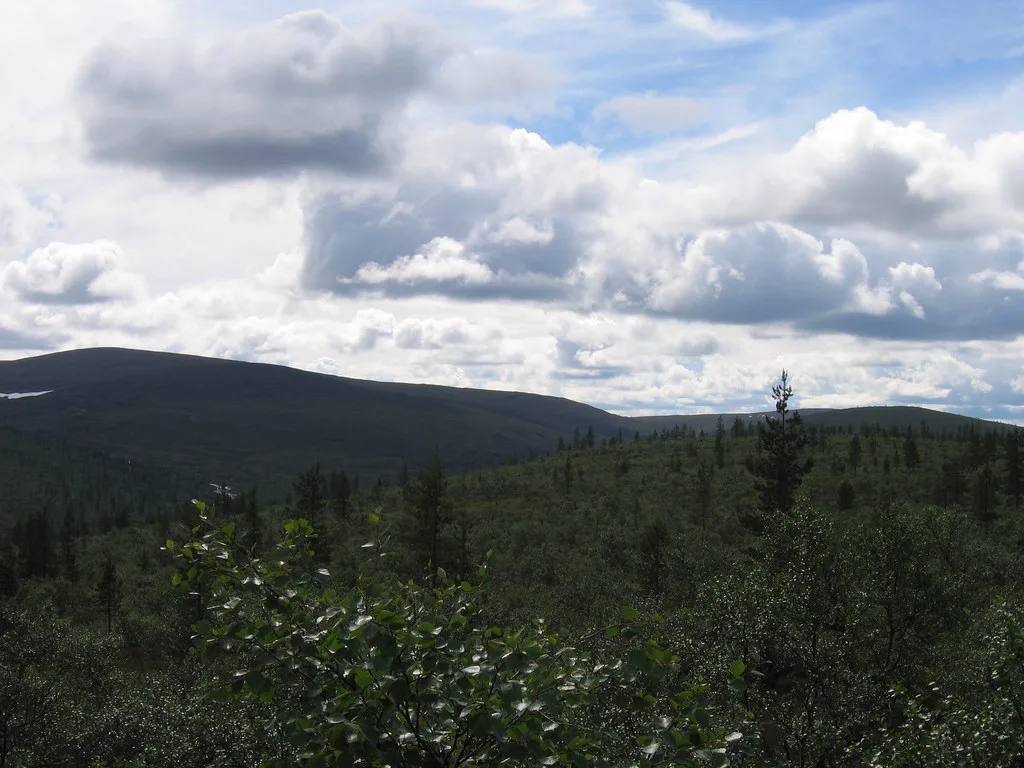
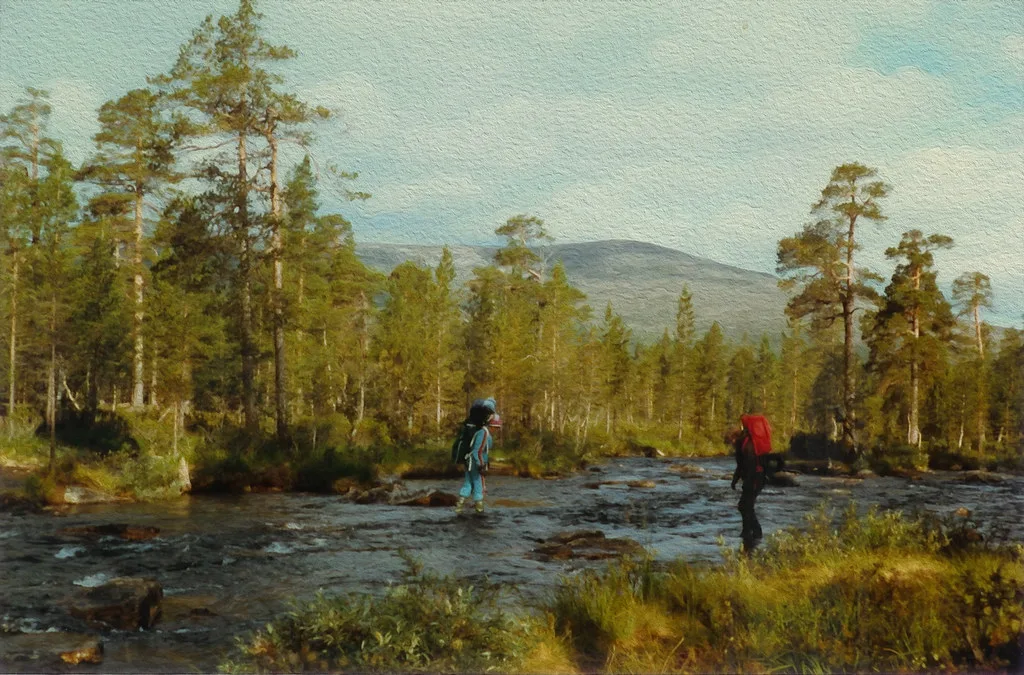
Ruska, the Finnish word for autumn foliage, peaks in September and fades through October. Early October may still show colours if autumn runs late, but by mid-month the leaves have usually fallen. The birches that dominate Lapland turn yellow, red and orange before they drop, so timing your visit early in the month gives you a better chance of seeing them.
For late colours, head to sheltered spots and lower ground. The Arctic Circle Hiking Area near Santa Claus Village keeps its trails and lakes photogenic even after the trees are bare. If foliage is your priority, plan around the last week of September rather than October.
Events worth planning around
October events are fewer than in September as tourism starts up again. Levi Ski Resort has opened its season in early October in past years, and the Jutajaiset folk festival has run in Rovaniemi in late October. Dates change from year to year, so confirm them with the organiser before you book.
The World Cup Levi snow event and the Christmas opening at Santa Claus Village fall in November, so October remains the quieter month before the winter rush. If your trip stretches into November, check the Christmas in Finnish Lapland guide for what opens as the season turns. Otherwise, treat October as a month for the outdoors and the sky rather than for festivals.
Crowds and prices before the winter season
October is the calm before the winter tourism storm. Resorts are open and heavily discounted compared with December and March, and you can often book a glass igloo or northern lights hotel for far less than the winter rate. Flights and rental cars are also usually easier before the winter season begins.
The trade-off is fewer services. Some winter activities and tours are not running yet, and the weather is more volatile than in late winter. You are paying less and facing more uncertainty, so book flexible accommodation and keep your schedule open. If snow and reliable snow activities matter most, late winter is the stronger choice.
How many nights to plan for a fair chance of clear skies
Because October brings frequent cloud, one or two nights is not a fair test. Three to five nights at a single base gives you a reasonable chance of at least one clear evening, and a week improves it further. If you can move between Rovaniemi, Levi or Saariselkä, you add flexibility to chase better weather.
Book a guided tour early in your stay, so you have later nights as backup if the first attempt is cloudy. Check the aurora forecast each morning and evening, and keep at least one night free for a spontaneous drive. That approach gives you a fair shot without promising a sighting.
Making the call between October, November and late winter
October suits travelers who want dark nights, autumn colours, open resorts and lower prices, and who can accept cloud and a lack of snow activities. November is less predictable: it can be foggy and grey, and winter tours are only beginning. Late winter, from February into March, brings reliable snow, longer days and the best conditions for snow activities, at higher prices and with more crowds.
If aurora is your main goal and you can only travel in October, go further north and allow more nights. If you want snow on the ground and husky sledding, wait for late winter. October is a genuine aurora month, not a guarantee, and that distinction should shape your plan.
Plan Your October Trip
October in Finnish Lapland gives you dark aurora nights, open resorts and lower prices, with the trade-off of frequent cloud and little settled snow. Choose your base by temperature and services: Rovaniemi for convenience, Levi for the fell landscape, Saariselkä and Kilpisjärvi for a colder, more northerly feel. Allow several nights, keep a guided tour as your first attempt, and check the forecast before you go.
For the wider aurora season and how the region's nights work, see Northern Lights in Finnish Lapland. If your trip runs into November or December, the Christmas in Finnish Lapland guide covers what opens as the winter season begins.
Frequently Asked Questions
Is it worth going to Lapland in October?
Yes, if you want dark aurora nights, autumn colours and open resorts at lower prices than winter. October suits travelers who can accept frequent cloud, little settled snow and fewer winter activities. If snow and husky sledding are the priority, late winter is the better choice.
Is it snowing in Rovaniemi in October?
October brings the first snowfalls to Rovaniemi, but they rarely stick or accumulate. Snow usually does not settle until around November in southern Lapland. Expect flurries rather than a snow-covered landscape, and plan activities that do not depend on snow.
How cold is Lapland in October?
October averages range from about 5C by day and -1C at night in Rovaniemi to 2C by day and -4C at night in Saariselkä. Kilpisjärvi is colder still at -3C at night with more precipitation days. Night temperatures drop below freezing, so aurora viewing is a cold-weather activity.
Can you see the northern lights in Lapland in October?
The aurora season is under way in October, and activity often heightens around the autumn equinox. Cloud cover is the main obstacle, so a sighting is never guaranteed. Several nights and a tour that can drive to clear sky improve your chances.
How much daylight is there in Lapland in October?
On 15 October, Rovaniemi has about 9 hours 35 minutes of daylight and Saariselkä about 9 hours 22 minutes. Days shorten noticeably toward the end of the month. Early October still feels balanced between day and night, which makes it easier to combine daytime activities with aurora evenings.
How many nights should I plan for aurora viewing in October?
Allow three to five nights at minimum, and a week if you can. October brings frequent cloud, so one or two nights is not a fair test. Book a guided tour early in your stay and keep later nights as backup for a spontaneous drive.
Are glass igloos open in October?
Several glass igloo resorts operate in autumn, including Apukka Resort near Rovaniemi, Aurora Village Ivalo, and Northern Lights Village at Saariselkä and Levi. Autumn rates are typically much lower than winter rates. Check each property's season dates when you book.
Sources
Notes for your Arctic winter trip
Optional updates to our northern lights guides.
You might also like
Continue reading
More guides you'll find useful