Lapland in September: Autumn Colours, Dark Nights and the Aurora
Plan a September trip to Finnish Lapland: ruska colours, darkening nights for the aurora, cool days and quieter trails. Here's when to go and what to do.
On this page
September gives Finnish Lapland a double season: hillsides and birch woods turn yellow, orange and red while the evenings finally darken enough for the aurora to reappear. Days remain mild enough for long walks and photography, and the trails are far quieter than in the snow season. It suits travellers who want landscape colour and a realistic shot at the northern lights without committing to deep-winter cold.
September in Finnish Lapland: ruska colours by day, darkening skies by night
The month sits at the hinge between summer and winter. Autumn foliage, known as ruska, builds through the forests and fells around the Arctic Circle, and the nights lengthen quickly after the bright weeks of midsummer. You get two different reasons to be outside in the same trip, one best in daylight and one that only starts after sunset.
Finnish Lapland lies between roughly 65.5°N and 70°N, directly beneath the auroral oval, which is why the region is one of the most accessible places to watch the northern lights in Finland. Location alone does not deliver a display, though: you still need dark skies and clear weather on the night you are out.
Where Finnish Lapland sits under the auroral oval
The auroral oval is the ring of sky where charged particles from the sun most often collide with the atmosphere and glow. Because the vast majority of Finnish Lapland falls inside the Arctic Circle and under that ring, aurora activity overhead is more frequent here than in southern Finland or central Europe. The trade-off is latitude against weather: the far north gives the strongest geometric advantage, while local cloud decides whether you actually see anything.
Why September works for autumn colour and the aurora's return
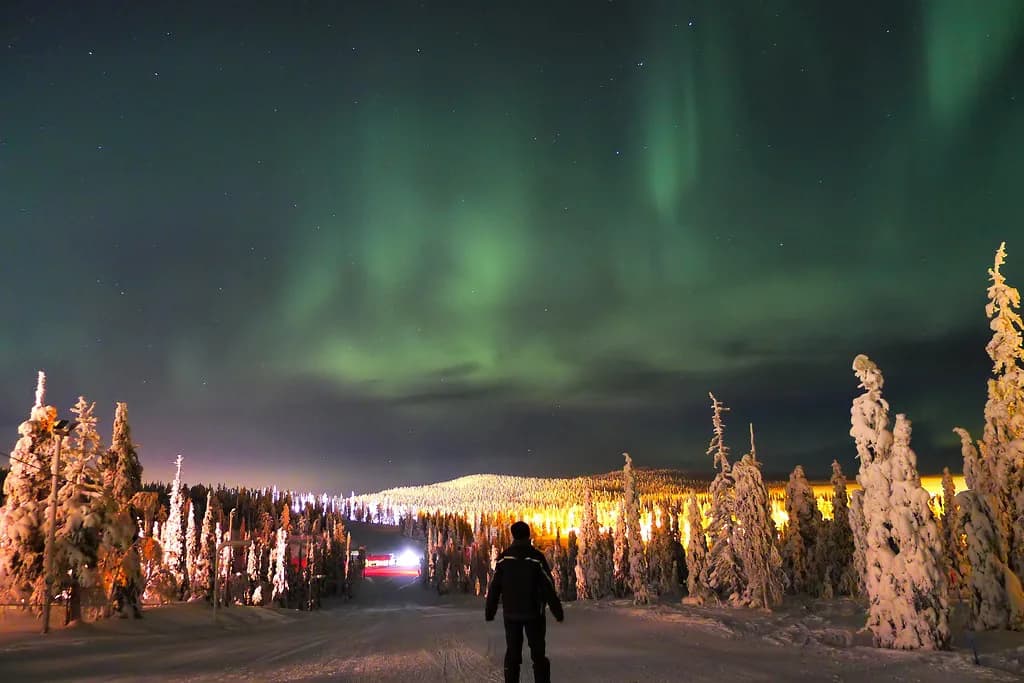
From late August onwards, the darker nights create the right conditions for the northern lights to make their return, and September is widely treated as the start of the aurora season proper. Temperatures are still relatively comfortable and the lakes are not yet frozen, so a display can reflect on open water, doubling the effect. Late September and early October are considered prime time for aurora hunting, partly because the nights are long enough to work with.
The autumn equinox period is often associated with elevated geomagnetic activity, which can produce particularly impressive displays. The same applies around the spring equinox, which is why March has a similar reputation among aurora chasers. Treat this as a reason for better odds during an equinox trip, never as a guarantee for a given night.
Autumn colours: timing the peak across the region
The first signs of autumn may appear towards the end of August, with September generally offering the most vibrant colour and the middle weeks of the month often producing a particularly strong display. October is a transition month, and the beginning of it can still hold beautiful scenery. Nothing about the schedule is fixed, because the trees turn on their own timetable each year.
The change does not happen all at once. Different species shift at different times, so a single hillside can move from bright yellow through warm orange to fiery red over several weeks, with occasional purple in the mix. If colour is your priority, aim your dates at September and accept that the exact peak will be set by the weather in the weeks before you arrive.
Daylight, temperature and the chance of first snow
September days are still long but shortening fast, and the dark window at night grows with every week. The first snowfall tends to arrive in late September or early October and often melts away again before thicker cover builds through November and December. Snow arrives earlier in the north: Ivalo and Levi may already have substantial cover by late October or early November, while Rovaniemi, lying further south, can wait several weeks longer.
For a sense of what full winter feels like, January to March in Finnish Lapland typically runs around minus five to minus twenty degrees Celsius, with occasional swings just above zero or down to minus thirty. September sits well above that range, so plan for cool, changeable days rather than deep cold. Snow-based activities usually become reliable in December; in September the landscape is more likely to be bare ground, wet trails and open water.
When the nights get dark enough for the aurora
The nights become dark enough for the first auroras to be visible in mid-to-late August, but the season really gets going in September. A practical consequence of the equinox timing is that you have to stay up later at night early and late in the season, because the window of true darkness is shorter than in midwinter. November, December and January provide the longest hours of darkness.
Cloud cover is the other half of the equation, and it matters more than any single forecast number. Clear or partially clear sky is the requirement, which is exactly why many travellers book a guided hunt whose guide reads the latest weather and drives towards better conditions. Kp values circulating online are a rough guide to geomagnetic disturbance, not a prediction of what you will see from a particular forest clearing.
How many nights to plan for a fair chance of clear skies
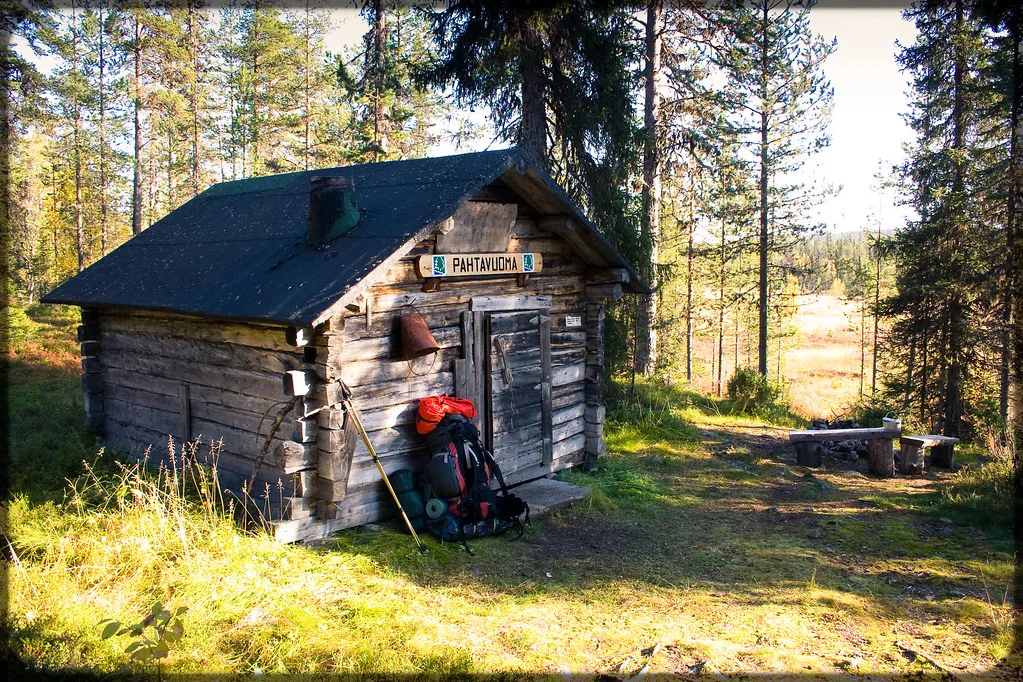
A single night in Lapland is a gamble on cloud, so build in several. Three to four nights in one base gives you repeated attempts and room for a rest day between late outings, while a week lets you combine a northern base with Rovaniemi or Levi. Because September nights still have a relatively short dark window, plan to be out late rather than early.
If the aurora is the main goal, weight your stay towards the darker half of the month and keep some flexibility in your itinerary. A cloudy first night is normal, and having a second and third chance is what turns a hopeful trip into a reasonable one.
Self-guided aurora watching versus a guided hunt
Watching on your own is straightforward if you have a car and a dark spot away from town lights, and it gives you the freedom to move when cloud shifts. The limitation is local knowledge of forest roads and weather patterns, plus the driving after a long day outdoors. A guided hunt removes that burden: the guide checks conditions and drives to a location with the best viewing prospects, which is the standard reason operators recommend it.
Guided nights in Lapland typically include transport and a warm base to wait in, and many outfitters lend thermal suits, gloves, headwear and winter boots for excursions. Group sizes and included extras vary by operator, so the specific details come from the company you book with.
Autumn hiking and photography on marked trails
Autumn is one of the best seasons for hiking and outdoor adventures in Lapland: cooler temperatures make long days outside comfortable, and the forests carry earthy scents and strong colour. It is also prime landscape-photography time, with low, soft light and reflective rivers. Rovaniemi has plenty of nature routes and riverside trails that work well for a half-day outing.
Stay on marked trails, respect wildlife and leave the landscape as you find it. Visit Rovaniemi publishes responsible-visiting tips for the autumn forests and a separate guide to responsible aurora viewing for those heading out after dark.
Husky, reindeer and snowmobile activity before the snow settles
Snow-dependent activities are a December-to-March proposition, so September is not the month for dog-sledding on snow or long snowmobile safaris. What you can do is walk, cycle and photograph, and use the month to see the landscape without the white cover. If a snow experience is essential to your trip, shift your dates later or plan a return visit in winter.
Rovaniemi, Inari and Levi in September: how the bases differ
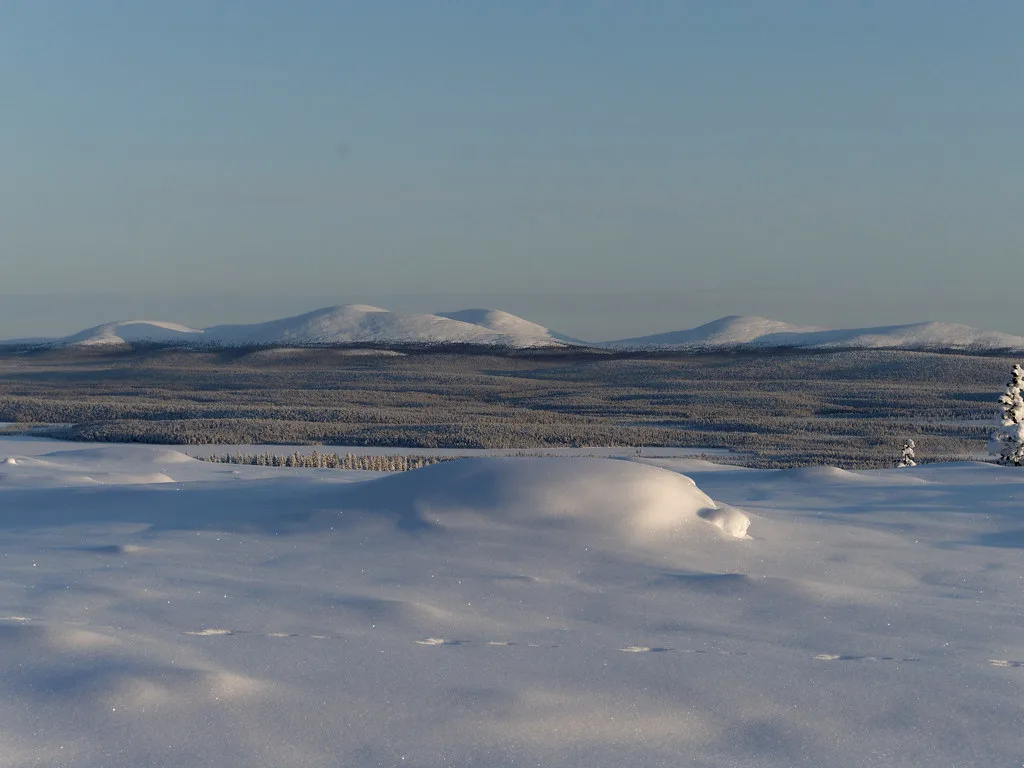
Rovaniemi sits on the Arctic Circle and works as an easy gateway, with urban comforts, many trails and the official hometown of Santa Claus on its doorstep. It is the southern of the main bases, so the first lasting snow tends to arrive later than in the far north. Inari, further north, trades town amenities for darker surroundings and easier access to wilderness; Levi combines fell scenery with resort infrastructure and, like Ivalo, can pick up snow by late October or early November. If you are set on Rovaniemi, rovaniemi in september covers the gateways, trails and aurora chances there in more detail.
Choose Rovaniemi if you want a simple first Arctic trip with services close by, Inari for a quieter northern base, and Levi for fell views and a resort feel. Each is a workable aurora base in September, provided you can get away from artificial light at night.
Crowds and prices before the winter season
Tourism in Finnish Lapland peaks in December, when families arrive for Santa and many hotels fill completely, driving flights and accommodation to their highest levels of the year. September sits well before that surge, with demand and room rates outside the festive peak. For travellers who care about quiet trails, September is one of the more comfortable windows of the year.
If you are weighing a festive trip instead, christmas in finnish lapland explains how the December season works, including the pressure on beds and the trade-off between atmosphere and cost. A September visit and a Christmas visit deliver very different versions of Lapland.
Watching the aurora responsibly
Aurora viewing puts people in fragile places at night, so keep to marked routes, avoid disturbing wildlife and take your waste out with you. Driving with headlights on high beam near other watchers, or trampling sensitive ground for a photo angle, spoils the experience for everyone. Operators in the region publish responsible-viewing guidance, and following it keeps the autumn forests in good shape for the seasons ahead.
What to expect from weather-dependent activities
Almost everything in September is weather-dependent: a clear night can turn cloudy within hours, and a mild day can end in rain. Plan a flexible itinerary with one headline activity per day and a backup that works indoors or in town. That approach protects you from disappointment when the sky does not cooperate.
Plan Your September Trip
September in Finnish Lapland rewards travellers who want colour, quiet trails and a genuine chance at the aurora without deep-winter cold. Aim for the middle of the month, base yourself for at least three or four nights, and mix daytime hikes with a guided or self-driven night out. The links above take you deeper into aurora planning, tours and the festive alternative.
Frequently Asked Questions
What is the weather like in Finnish Lapland in September?
September is cool and changeable rather than cold. The first snow can arrive in late September or early October and often melts again, and lasting cover is more likely in the north around Ivalo and Levi by late October or early November than in Rovaniemi. Expect bare ground, wet trails and open lakes rather than a snow landscape.
Is September a good time to see the Northern Lights in Lapland?
Yes, in the sense that the nights are dark enough again and the aurora season is under way from September. Whether you see a display depends on clear skies and geomagnetic activity on the night, so plan several nights and keep your itinerary flexible. The autumn equinox period is associated with elevated geomagnetic activity, which improves the odds rather than guaranteeing anything.
When do the autumn colours peak in Lapland?
The first signs can appear towards the end of August, and September is generally the most reliable month, with the middle weeks often strongest. October is a transition and early October can still be beautiful. The exact peak shifts each year with the weather, so build in some slack around your dates.
Will there be snow in Lapland in September?
Possibly a first dusting late in the month, but it usually melts. Thicker, lasting cover builds through November and December, and the far north such as Ivalo and Levi often holds snow by late October or early November while Rovaniemi waits longer. Snow-based activities are reliable from December.
How many nights should I plan for aurora watching in September?
Three to four nights in one base gives you repeated attempts if cloud interferes, and a week lets you combine a northern base with Rovaniemi or Levi. September nights have a shorter dark window than midwinter, so plan to be out late rather than early.
Is a guided aurora hunt worth it in autumn?
It helps when you do not know the local roads or weather patterns, because the guide checks conditions and drives to a spot with better prospects. Self-driving gives you freedom to move but leaves the weather decisions to you. Many operators lend thermal suits, gloves, headwear and boots for the outings.
Sources
Notes for your Arctic winter trip
Optional updates to our northern lights guides.
You might also like

Continue reading
More guides you'll find useful