Iceland Ice Caves: Seasons, Tours and How to Choose One
Natural ice caves form under Vatnajökull each winter, while Perlan keeps a real cave in Reykjavík year-round. Compare seasons, tours and age limits.
On this page
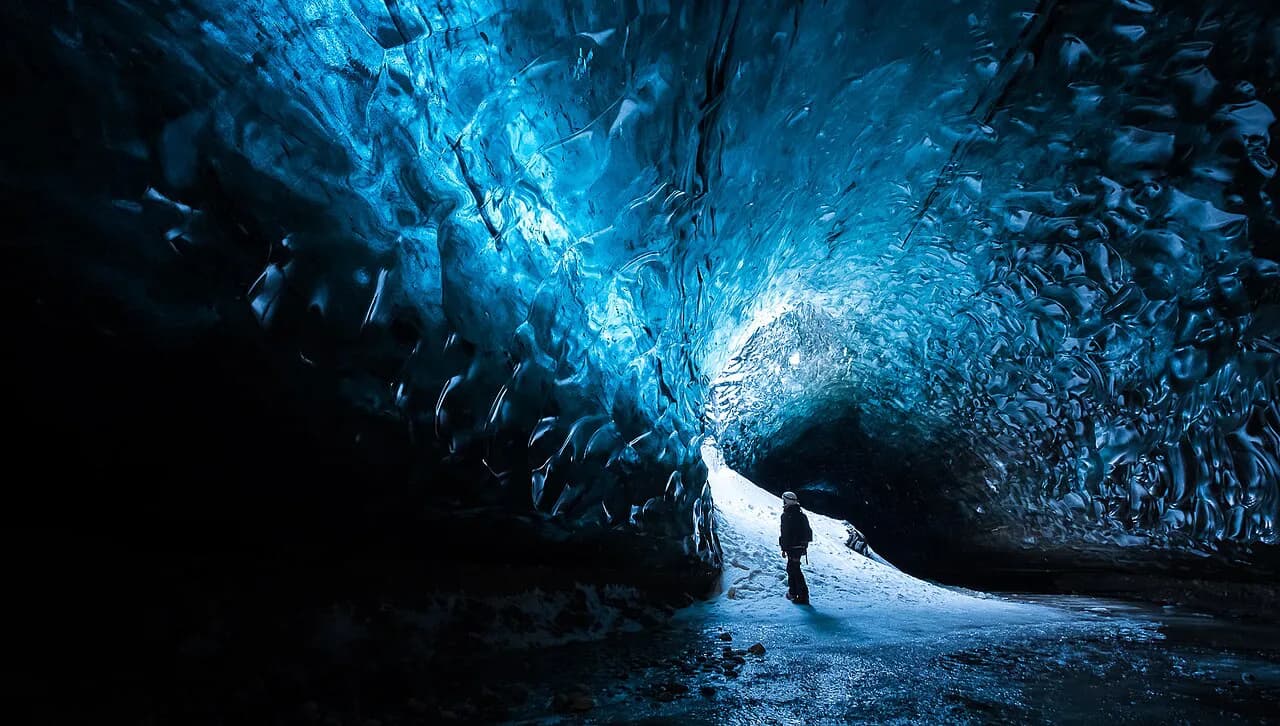
An ice cave gives you a view of a glacier from the inside: translucent blue walls, sculpted ceilings and light filtering through ice that formed over centuries. Iceland sits just under the Arctic Circle, so its glaciers and their winter caves are reachable on a short trip, and the two options are radically different in season, location and effort.
Most travellers who want the wild version base themselves on the south coast near Jökulsárlón and the Vatnajökull ice cap, where guided super-jeep trips run through the dark winter months. Travellers with a Reykjavík-only itinerary, or a summer visit, can instead step into a full-size ice cave at Perlan on Öskjuhlíð hill without leaving the capital.
Why Iceland has ice caves
Ice caves form where water draining through or beneath a glacier, or geothermal heat from the volcanic systems below, melts out a void inside the ice. As meltwater runs and refreezes, the gap widens into a cavern with a ceiling of ice overhead. Iceland's combination of active volcanism and large ice caps is what makes these caves so numerous along the south and southeast coast.
Caves are temporary structures, not fixed attractions. Each summer's melt reshapes the glacier, so the caves that were visited last winter may be gone by the next, and guides spend days before the season scouting the ice edge for new ones and cutting safe paths into them. That is why you book a season's cave, not a specific named chamber, and why the route you walk can differ from any photo you have seen.
The prime ground for natural caves is the vast Vatnajökull ice cap on the southeast edge of the country, with many tours starting from the glacier lagoon area. Man-made alternatives exist too: a tunnel cave excavated into Langjökull in West Iceland since 2015 takes visitors inside Europe's second-largest glacier and suits children of all ages.
When the ice cave season runs
Natural ice cave tours operate in the cold months, when the glacier is stable and the caves hold their shape. Ice Explorers runs its Ice Cave Tour from October to April, which stretches across the dark winter months when the caves are at their most resplendent.
Late autumn through early spring is the core window, and the caves are at their most spectacular in midwinter, when the melt has stopped and the ice is deepest blue. One operator describes the official season as November to March, and demand is high enough that popular dates sell out well ahead.
Summer is a different story. Melting weakens the ice, caves can collapse or vanish, and guided glacier walks replace cave entries; from May to September the same operators switch to ice exploration and glacier walks on Vatnajökull rather than cave tours. If your trip falls outside the winter window, plan on a constructed cave or a glacier walk instead.
Natural caves under Vatnajökull
A typical natural-cave trip starts with a super-jeep transfer across the outwash plains and up toward the glacier edge, followed by a short walk on the ice to the cave entrance. You spend time inside the cave with a guide who explains how it formed that season, then return by jeep. The appeal is authenticity: you are standing in a cavity the glacier made, which will not exist in the same form next year.
Ice Explorers is based at Jökulsárlón near Höfn and has guided in the Vatnajökull region since 2011, using custom super jeeps to reach the season's largest natural cave. That base makes it easy to combine a cave morning with the glacier lagoon and Diamond Beach in the same day.
Cave features vary with the winter, so treat any promise of a particular colour, ceiling shape or chamber size as marketing rather than guarantee. What you can count on is a guided route into the ice, a briefing on how the cave formed, and a schedule built around daylight and driving time rather than a fixed show.
The man-made ice cave at Perlan
Perlan's exhibition on Öskjuhlíð in Reykjavík contains a real ice cave built from more than 350 tons of snow brought down from Icelandic mountains, running about 100 metres through the ice. It is the first construction of its kind in the world, and it lets visitors see and touch glacier ice in a controlled environment rather than on a moving glacier.
The cave sits alongside exhibits and immersive presentations on Iceland's glaciers and their future, so a visit doubles as a primer on the landscapes you will see on the south coast. Because it is indoors, weather, season and daylight do not affect it, which makes it the practical choice for a short Reykjavík stop or a summer trip.
Perlan is at Öskjuhlíð, 105 Reykjavík, on the hill above the city, so it slots into a capital day alongside the city's other indoor attractions. Tickets and daily opening times are published on the Perlan site and vary through the year, so book against your actual date rather than counting on a fixed schedule.
Ice cave tours from the Vatnajökull region
Ice Explorers' standard Ice Cave Tour runs three to four hours, is rated easy to medium, takes up to 12 people per guide and accepts children from age seven. That combination of a short duration and a young age limit makes it the most family-friendly natural-cave option in the region and easy to fit around a longer south-coast drive.
A second option, the Zodiac & Ice Cave Tour, pairs the cave with a boat ride among floating icebergs and runs about six hours with a minimum age of 10. It is listed as an October experience, so it works as an early-season day when the cave is open and the lagoon is still navigable.
Group size is the number that most affects how a cave feels. The standard tour caps at 12 guests per guide, while the longer Ice Cave & Glacier Exploration tour keeps groups to eight per guide, with up to 15 across two guides, and takes guests from 13 years old.
The Ice Cave and Glacier Exploration tour
For travellers who want more than a cave, the Ice Cave & Glacier Exploration tour runs five to six hours and adds a walk on the glacier itself, away from the traffic that only visits the main cave. The route takes in blue canyons and crevasses as well as the season's largest natural cave, and it is rated medium difficulty.
The trade-off is straightforward: you see far more ice, including ground that most cave tours never reach, but you need a higher fitness level and a minimum age of 13 applies. It is the better pick for fit adults and older teenagers, while families with younger children should stay with the three-to-four-hour cave tour.
Combining a cave with a glacier walk or boat trip
Outside the cave season, the same operator runs glacier-focused days from May to September: an Ice Exploration Tour of four to four and a half hours with a minimum age of 10, a six-hour Amphibian & Ice Exploration tour that combines an iceberg boat ride with a walk on Breiðamerkurjökull, and a seven-hour Zodiac version. All three include a super-jeep transfer and a guided glacier walk.
If your dates straddle the seasons, check which product is actually running before you build an itinerary around it. A cave tour in October and a glacier walk in May are different days with different equipment, ages and durations, even when they leave from the same base near Jökulsárlón.
Where tours depart and how to base yourself
Natural-cave trips leave from the Jökulsárlón and Höfn area on the southeast coast, roughly a five-hour drive from Reykjavík along the Ring Road. Most travellers stay one or two nights locally, at guesthouses and hotels between Skaftafell and Höfn, so the cave day does not begin with a dawn drive from the capital.
Skaftafell, inside Vatnajökull National Park, is the other natural base, with park trails, a visitor centre and glacier walks on its doorstep. From either base you can reach the glacier lagoon, the black-sand coast and the cave departure points without long transfers, which matters in winter when daylight is short.
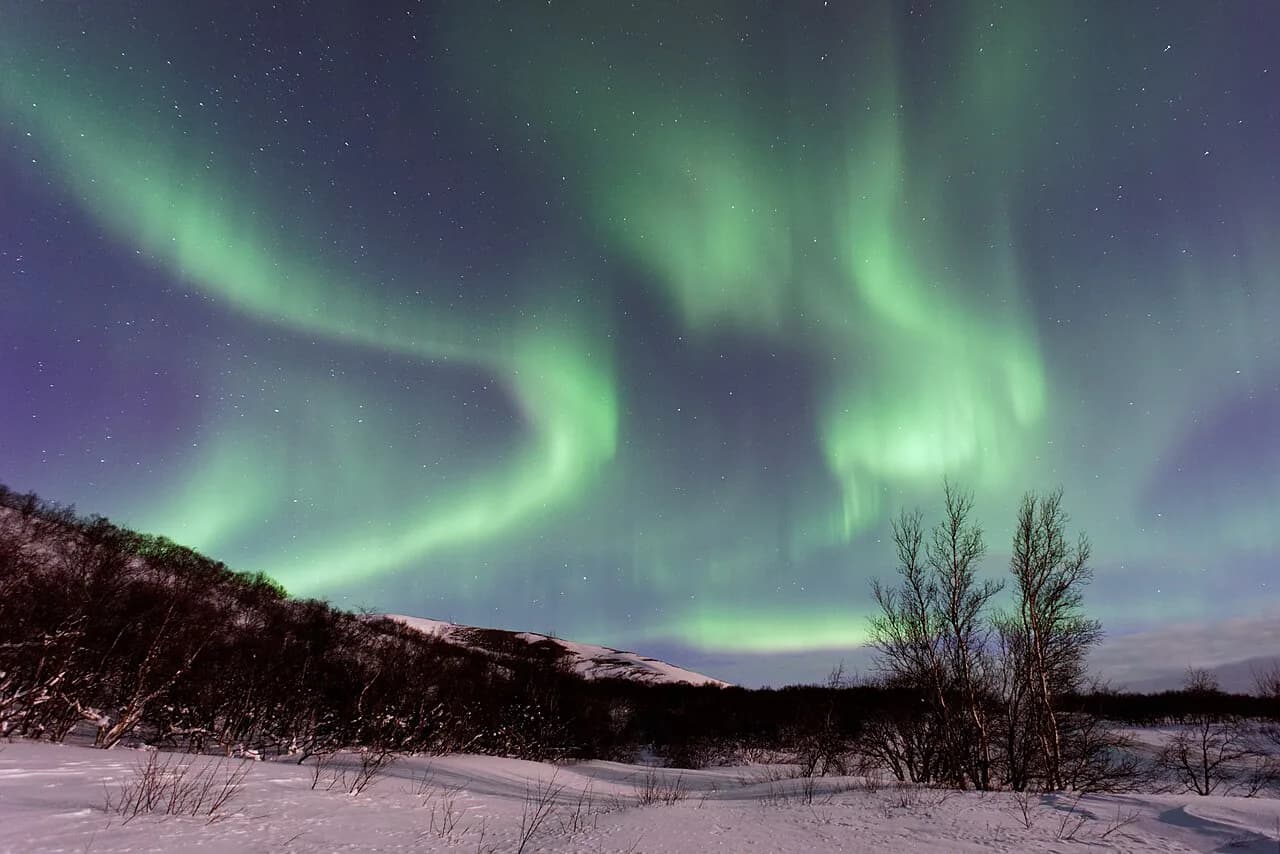
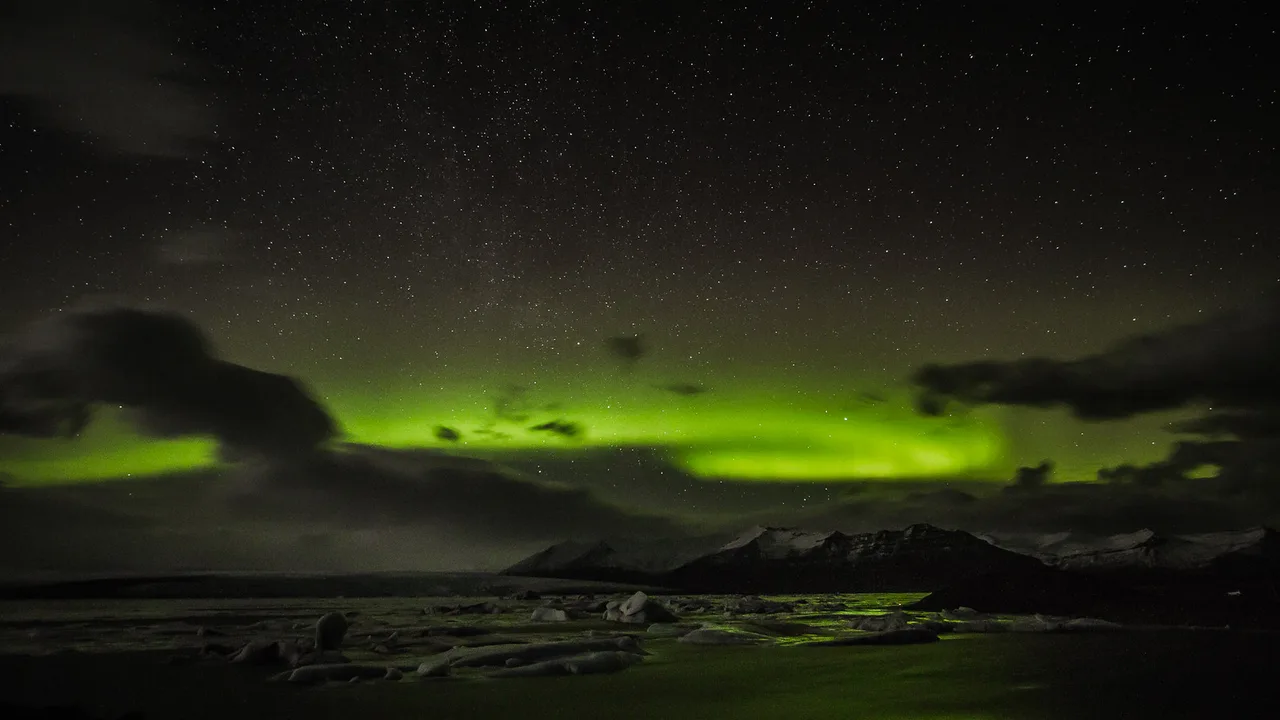
If you are building a wider winter trip around the south coast, the northern lights are a natural evening companion to a cave day, since the same dark skies serve both. Pairing a cave morning with an aurora-focused evening is the classic way to use a short winter stay.
What guides provide on the ice
Operators equip guests with the technical kit for the glacier: crampons, a helmet and a harness on the ice exploration tours, plus headlights and other cave equipment on the winter cave trips. You do not need to own any of it, and the guide fits and checks it before you step onto the ice.
The rest of the day is mostly about transport and timing: super-jeep transfers, a safety briefing and a guide who checks conditions and forecasts daily before committing to a route. If a cave is judged unsafe, the schedule moves rather than the group pushing on.
Prices are set by each company and change with the season and demand, so compare the current quote for your date on the booking page of the tour company you are considering rather than relying on older figures. Add the cost of a night near the glacier to any cave budget, because the drive from Reykjavík makes a same-day return impractical in winter.
Fitness, crampons and the reality of a cave trip
Cave trips are not strenuous in the way a summit hike is, but they involve walking on uneven ice in stiff boots and spending time in cold, damp air. The standard tour is rated easy to medium, and the five-to-six-hour cave-and-glacier day is rated medium, which means sustained time on your feet with a pack.
Age limits reflect that reality: seven on the standard cave tour, 13 on the longer cave-and-glacier day, and 10 on the summer glacier walks. Guides can lend thermal suits where needed, but you still need to be steady on ice and comfortable being cold for several hours.
Conditions on the glacier can shift within a day, so tours may be rerouted or cancelled when the weather turns. Build a spare morning into your south-coast plan rather than scheduling a cave on the same day as a flight or a long drive back to Reykjavík.
Photographing blue ice
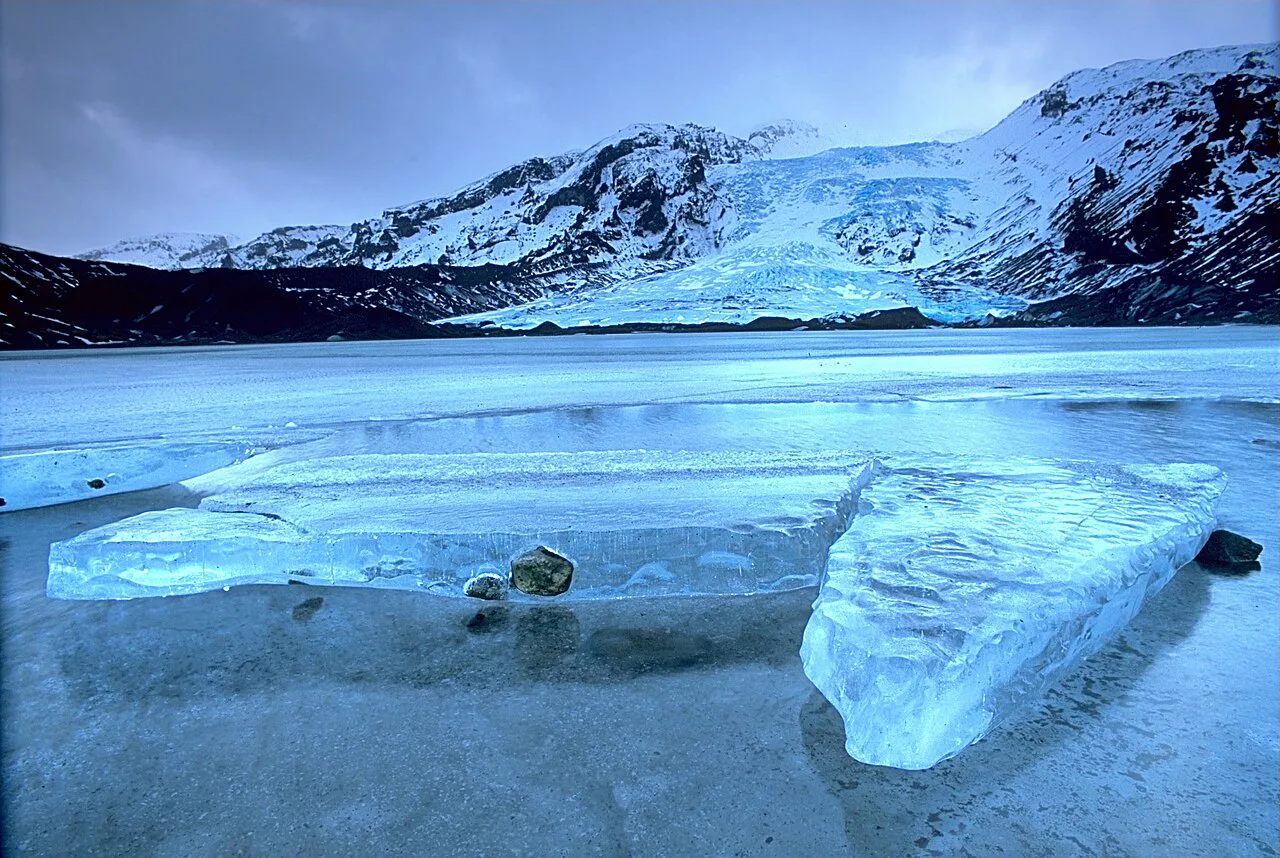
The deep blue that people associate with ice caves comes from dense, compressed ice absorbing red wavelengths and scattering blue light back out. The most saturated colour appears where the ice is thickest and most compacted, which is why guides steer photographers toward particular walls rather than the cave mouth.
Timing matters: on a clear day the best light falls around late morning or noon, when the low winter sun can shine briefly through the cave roof and light the interior. In December and January that window is narrow, so an early departure is worth more than an extra lens.
Why cave locations change every year
A glacier is a river of ice in slow motion, and its snout retreats and advances with each season's melt. Caves close, open and migrate, so the guides who scout in autumn are effectively mapping a new landscape; only a handful of caves persist unchanged from year to year. This is the single biggest reason to book with an operator who knows this winter's ice.
It also means photos, reviews and guidebook descriptions from previous years may describe a cave you will not visit. Judge an operator on their current season's access, group sizes and safety record rather than on a named cave, and expect the route to be confirmed close to your date.
Never walk onto a glacier to find a cave on your own. Crevasses are hidden by snow, the weather can close in within hours, and the people who find caves are trained mountaineers with local knowledge of that season's terrain.
The year-round alternative in Reykjavík
Perlan removes the season from the equation. The ice cave there is inside the building, built from Icelandic mountain snow, and is paired with exhibits on glaciers and their future, so a rainy summer day in the capital still delivers a genuine walk through ice.
It also works as a warm-up for a south-coast trip: see how glaciers form and why they are shrinking, then drive out to see the real thing. For families with toddlers, or travellers who cannot join a guided glacier walk, it is the simplest cave option to fit around a city itinerary.
Reykjavík itself is compact, and a cave visit pairs well with the city's geothermal pools and the Sky Lagoon on the North Atlantic edge of town, both a short drive from Öskjuhlíð. That makes a capital day with an ice cave realistic even on a short winter stopover.
How many nights to allow around Vatnajökull
Two nights near the glacier gives you one full cave day plus a buffer for weather and a second morning at the lagoon. One night works only if you arrive the evening before and leave after the tour, and any delay then puts your onward plan at risk.
Three nights lets you add a glacier walk, a boat trip in the shoulder season and an evening of aurora chasing from a dark base away from town lights. Given that the aurora and the caves are both weather-dependent, the extra night is usually better value than an extra tour.
Who each option suits
Families with children under ten should choose the standard cave tour, which takes guests from age seven, or Perlan if the trip is in summer or the itinerary stays in Reykjavík. Fit adults and older teenagers get more from the cave-and-glacier day, which reaches quieter ice and keeps groups small.
Photographers should aim for a clear late-morning slot and a cave tour that allows time inside rather than a rushed circuit. Travellers on a short Reykjavík break, or visiting between May and September, should treat Perlan as the cave and a glacier walk as the outdoor ice experience.
Plan Your Visit
Decide first whether you want a wild cave under Vatnajökull or the constructed cave in Reykjavík, because the two sit in different seasons, regions and price brackets. Natural caves mean a south-coast base, a winter date and a guided super-jeep day; Perlan means any date and no travel beyond the capital. If you are weighing a second northern base, the Mývatn Ice Caves offer a comparable lava-cave outing in the north.
Once the cave is fixed, book with Ice Explorers or your chosen company for the current season, check the age limit against your group and leave a spare half-day for weather. If your dates fall outside the cave season, switch to a glacier walk or the Perlan exhibition rather than hoping a cave will be open.
Frequently Asked Questions
Can you visit an ice cave in Iceland without a tour?
No. Natural glacier caves are reached across moving ice with hidden crevasses, and guides scout and cut the route each season, check conditions daily and supply crampons, helmets and lights. The exception is the constructed cave inside Perlan in Reykjavík, which you visit on your own with an exhibition ticket.
How long does an ice cave tour take?
Ice Explorers' standard cave tour runs three to four hours including the super-jeep transfer and the walk to the cave. The longer cave-and-glacier day runs five to six hours, and the October Zodiac and cave combination runs about six hours.
What is the minimum age for an ice cave tour?
The standard cave tour takes children from age seven, the cave-and-glacier day from 13, and the summer glacier walks from 10. Perlan's ice cave carries no age limit, which makes it the simplest option for families with very young children.
When is ice cave season in Iceland?
Guided natural-cave tours run in the cold months, with Ice Explorers operating its cave tour from October to April and the traditional core of the season described as November to March. From May to September the same region shifts to glacier walks and ice exploration instead of cave entries.
Is there an ice cave you can visit near Reykjavík?
Yes. Perlan on Öskjuhlíð in Reykjavík holds a real ice cave about 100 metres long, built from over 350 tons of snow from Icelandic mountains, alongside exhibits on glaciers. It is indoors and open regardless of season or weather.
Can you see ice caves in Iceland in summer?
Natural glacier caves are a winter experience, since melting ice makes them unstable and they can disappear between seasons. In summer you can visit the constructed cave at Perlan year-round, or join a guided glacier walk such as the Ice Exploration Tour on Vatnajökull.
What equipment do ice cave tours provide?
Guides supply the technical kit: crampons, a helmet and a harness on glacier walks, and cave equipment including headlights on winter cave trips. Operators can also lend thermal suits where needed, so you do not need to buy specialist gear for a single day.
How fit do you need to be for an ice cave tour?
The standard cave tour is rated easy to medium and suits most people who can walk on uneven ice in cold conditions for a few hours. The cave-and-glacier day is rated medium and involves sustained time on the glacier, so a reasonable level of fitness and comfort in cold, damp air help.
Sources
Notes for your Arctic winter trip
Optional updates to our northern lights guides.
You might also like

Continue reading
More guides you'll find useful