Ice Fishing in Iceland: Which Winter Tour to Choose
Ice fishing in Iceland runs on operator-led trips to frozen lakes from Akureyri, with gear, transport and hot drinks included. Here is what each tour involves.
On this page
Ice fishing in Iceland is not the resort-style sport you might picture from elsewhere: there are no heated shacks on a grid of numbered holes. Instead, a guide drives you out of Akureyri to a frozen lake or onto a high plateau, drills through the ice, clears snow so light draws fish in, and hands you a short rod. It is slow, quiet and often cold, and it suits travellers who want a half-day in real winter landscape rather than another waterfall stop.
The practical catch is geography. The advertised ice fishing day tours leave from Akureyri in North Iceland, not from Reykjavik, so this is an activity you build into a northern loop rather than a city break add-on. If your trip is anchored in the capital and centred on aurora evenings, the northern lights in iceland guide covers where to base yourself instead. Those heading further east along the south coast can compare the options in this northern lights in Vík guide before committing to a base.
Why Iceland's winter lakes freeze and where ice fishing happens
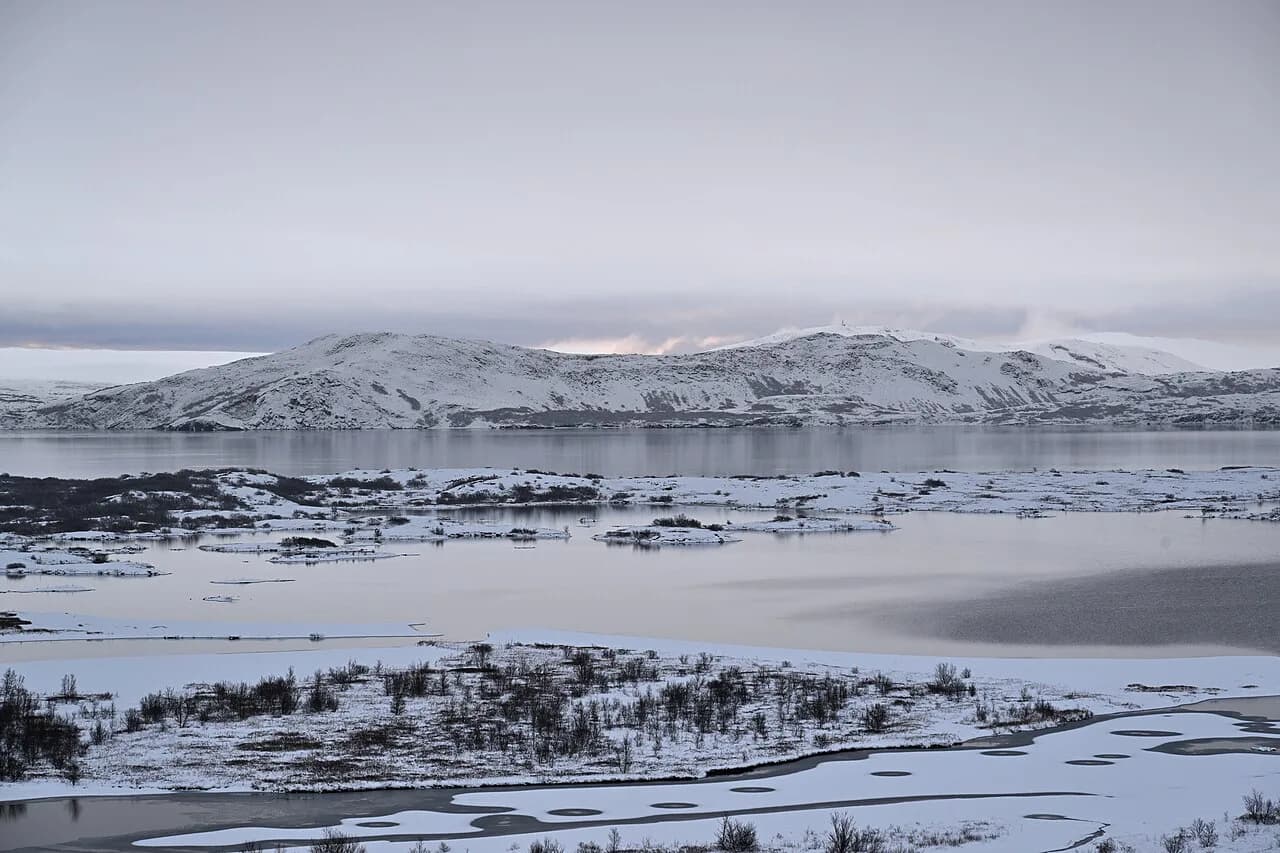
Ice fishing works here because the lakes that operators use sit high enough and far enough inland to hold ice through the coldest months. Lake Langavatn, the water used on the Iceland Fishing Guide day tour, lies on a plateau about an hour's drive from Akureyri and is described as frozen over from December until March or April. That altitude is the whole reason the trip is possible: a lake at sea level beside a mild coast would rarely be safe to stand on.
The Traveling Viking runs its ice fishing trip to a frozen lake reached by minibus, and dates its lake season from December to the end of March. On the ice, the guide clears snow from the chosen area so daylight reaches the water below, which The Traveling Viking says attracts curious, hungry fish, then drills a hole and sets you up with a rod designed for ice fishing.
This is a distinctly northern Icelandic activity. The practical bases are Akureyri on Eyjafjörður and, for longer fishing days, Lake Mývatn and Húsavík, all within reach of the same plateau country. Travellers weighing up a winter circuit around the north should treat ice fishing as a morning commitment and keep the rest of the day loose for the drive and for weather.
Iceland sits just under the Arctic Circle, and northern latitudes are why winter days are short and aurora nights long. A December or January ice fishing morning runs in low, slanting light, and by mid-afternoon the light is going; that same darkness is what makes the northern lights plausible on a clear evening after your day on the lake.
When the ice fishing season runs in North Iceland
Both operators put the frozen-lake window at roughly December to the end of March, with Iceland Fishing Guide extending its Lake Langavatn season into March or April depending on the year's ice. That is a narrow band, and it is dictated by ice thickness and access rather than by tour demand.
February and early March usually give you the best combination of solid ice, dark nights and enough daylight to enjoy the drive out. Early December trips come with very short days, so the fishing itself happens in a compressed window; late March trips can be milder and slushier on the approach. If your only free dates are in November or April, plan on sea angling or a river day instead and keep ice fishing for a future winter.
Because the season hinges on a single lake's condition, dates on a booking page are an intention rather than a promise. The Traveling Viking lists its trip as operating in winter from a 9:00 start, and the honest way to read that is as the planned pattern; the guide decides on the day whether the ice and the road allow it.
Ice fishing tours from Akureyri: durations, prices and inclusions
The Traveling Viking's ice fishing tour starts at 9:00, runs three to four hours and costs 20,000 ISK per person, departing from Hof Culture Center in Akureyri with hotel and harbour pickup available. Expect hot chocolate, a minibus transfer to the lake, drilled holes and rods, and a couple of hours of actual fishing with time to enjoy the quiet.
Iceland Fishing Guide's version is a longer, more fishing-focused day: six hours with a 09:00 pickup from any hotel or guesthouse, priced from 75,000 ISK, with guiding, transport, equipment and bait included and a packed lunch left to you. Guides drive 4x4 vehicles and, when conditions allow, use snowmobiles to reach the fishing spots.
Guide to Iceland also lists a six-hour ice fishing tour from Akureyri aimed at the general market, starting from hotel pickup in Akureyri, alongside sea angling and summer river trips. Comparing those listings side by side is the quickest way to see how much of a day each product actually occupies.
The price gap between the short and long options buys different things rather than better fishing: a three-to-four-hour trip is an easy add-on to an Akureyri stay, while the six-hour day is built for people who want more hours on the ice and a guide with serious tackle. Neither includes a guaranteed catch, and neither should be read that way.
The frozen lake itself: Arctic char, brown trout and how the fishing works
Lake Langavatn holds small Arctic char in numbers and larger brown trout, and Iceland Fishing Guide describes days when 15 to 20 char come out, with the occasional good brown trout as a bonus. Char are the reliable catch; the trout are the story you come home with if you are lucky.
The mechanics are simple. Snow is cleared so light reaches the water, a hole is drilled through the ice with an auger, and you fish a short rod with bait over the opening. On The Traveling Viking's trip you also have the option of grilling your catch afterwards and tasting it fresh, which is the closest thing to a guaranteed reward on a slow day.
Beginners do fine. Both trips are guided, equipment is supplied, and the fishing is stationary rather than technical, so a first-timer can spend the morning learning to read a subtle bite instead of casting. Children and non-angling partners tend to enjoy the lake scenery and the hot drinks as much as the rod, though the cold is the real limiter on how long anyone stays out.
Small-group versus larger ice fishing trips: which suits you
Choose the shorter Akureyri trip if you are fitting fishing around other plans: three to four hours leaves the afternoon free for the drive to Mývatn or a soak. Choose the six-hour Iceland Fishing Guide day if fishing is the reason you came north and you would rather spend the extra hours on a high plateau lake with a specialist angling outfit.
The trade-off is time against flexibility. A half-day product is easier to slot into a winter itinerary where daylight is scarce and roads can slow you down; a full day commits you to the weather, and if a squall closes the plateau you have spent your window. If your trip is short, book the shorter trip and keep a spare morning for a second attempt.
Lake Langavatn and the high plateau lakes near Akureyri
Lake Langavatn's appeal is its position: high, cold and reliably frozen, with the plateau around it giving the trip real winter atmosphere. The same altitude that keeps the ice solid makes access harder, which is why guides use 4x4 vehicles and sometimes snowmobiles to reach the fishing spots rather than a standard minibus.
Iceland Fishing Guide also runs guided fishing days from Akureyri, Húsavík and Lake Mývatn on a six-hour pattern, priced from 79,000 ISK on the river and lake tours, so if the ice is not ready you can fish open water with the same outfit. That is useful in a shoulder season like late November or early April.
For stays, Iceland Fishing Guide offers the Mýrarkvísl lodge as an add-on: the night before the tour for up to eight people at 50,000 ISK regardless of group size, plus full catering at 14,900 ISK per person with dinner on arrival and breakfast before departure. It suits groups who want the lake morning to start without a pre-dawn drive.
Ice fishing versus sea angling from Reykjavik in winter
If you are based in Reykjavik, sea angling is the realistic winter fishing option. Boats leave the old harbour at Geirsgata for Faxaflói Bay on trips of about three hours, fishing for cod, haddock and pollock with views back to Mount Esja and, on clear days, Snæfellsjökull. You can often eat your catch afterwards, which makes it an easy family choice.
Sea angling and ice fishing are different days out, and it is worth being clear about which you are booking. One is a boat trip on open water in whatever weather the North Atlantic sends; the other is a drive inland to stand on a frozen plateau. Reykjavik also has the sky lagoon for a warm finish to a cold afternoon.
For a harbour-side day, pair an afternoon boat with the rest of the city or with an evening out of town; the Secret Lagoon in Flúðir is a realistic add-on if you have a car and a spare afternoon on the Golden Circle loop.
Rivers, lakes and licences: fishing beyond the ice
Ice fishing is a winter-only slice of a much larger fishing scene. Iceland's rivers and lakes hold Atlantic salmon, Arctic char and brown trout, with salmon fishing drawing anglers from abroad in summer, and licensing runs through outfitters and lodges rather than a single national permit. If you want a licence for a specific lake or river, ask the outfitter who runs that water.
One rule catches people out: fishing equipment brought into Iceland must be disinfected on arrival at the airport. Plan for that at the start of the trip rather than discovering it at the lake, and if you are travelling with your own rods and reels, keep the disinfection receipt with your gear.
Travelers can fish here as visitors, and guided trips are the simplest route in: the Iceland Fishing Guide supplies tackle, bait and local knowledge, and you do not need to navigate the beat system or landowner permissions yourself. Check current prices and dates before booking. For most holidaymakers, that is worth more than the saving from going it alone.
Weather, daylight and how tours adapt to winter conditions
Winter in North Iceland means short days, sudden wind and roads that close; the ice fishing operators schedule around that rather than promising a fixed experience. The Traveling Viking runs a 9:00 start and three-to-four-hour format, which puts you back in Akureyri before the light goes even in midwinter.
Iceland Fishing Guide builds flexibility in by using 4x4 vehicles and snowmobiles where needed, which tells you how much the mountain road to Langavatn can vary. If the plateau is unreachable, expect the day to shift to another water or to be rearranged; a guide who cancels for safety is doing the right thing.
Dress for colder than the town forecast, since the lake sits higher and wind on open ice bites harder than in Akureyri's streets; the tours supply fishing gear, and The Traveling Viking provides hot chocolate on the ice. Days around the winter solstice give only a few hours of usable light, so a December booking is best treated as a short, atmospheric outing rather than a full fishing day.
Pairing ice fishing with aurora hunting in North Iceland
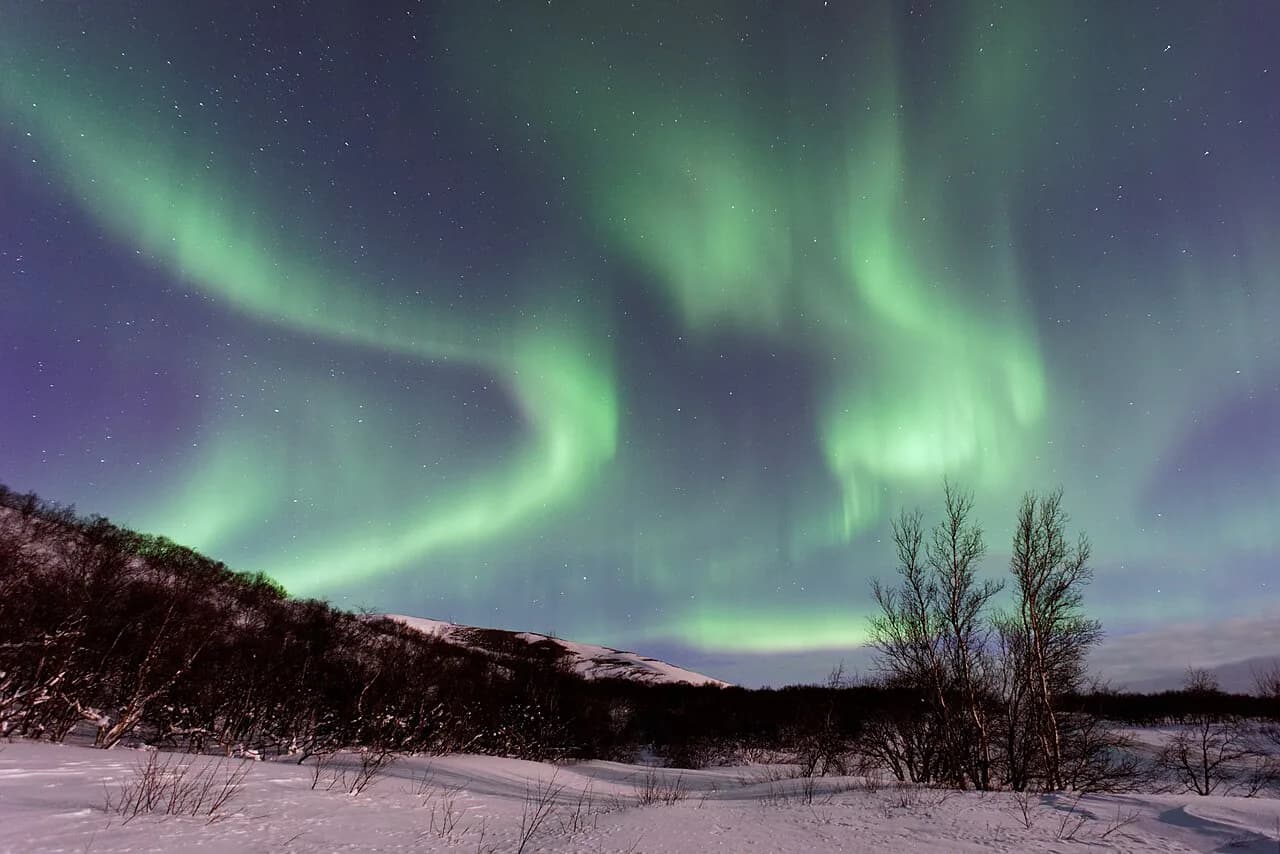
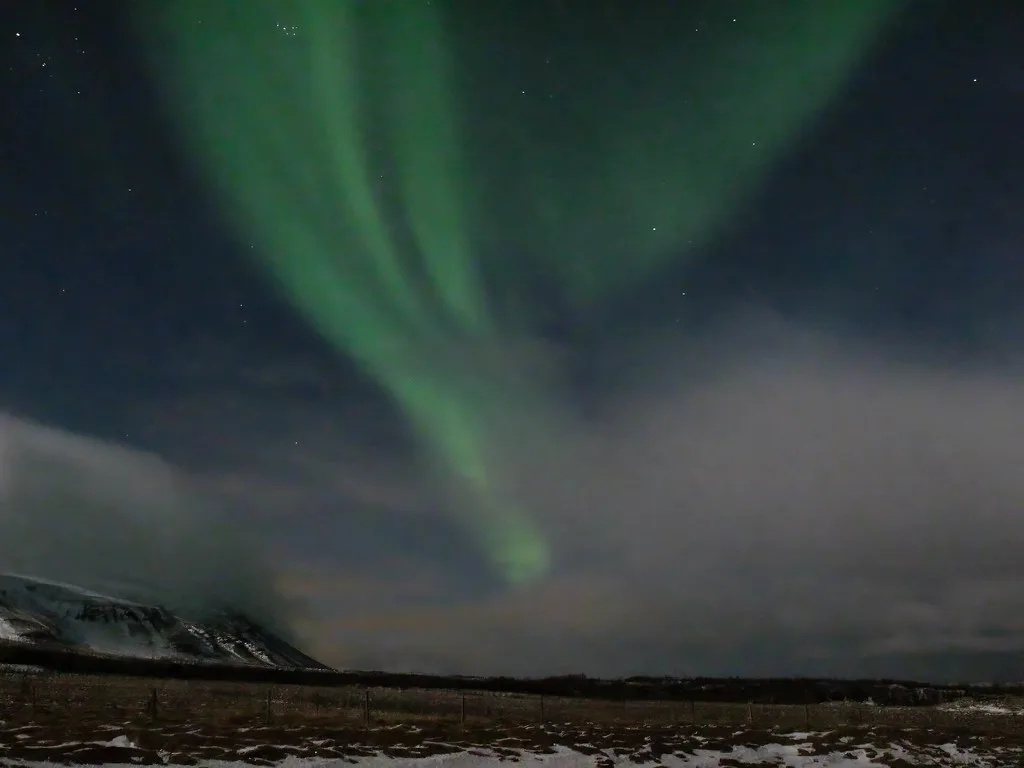
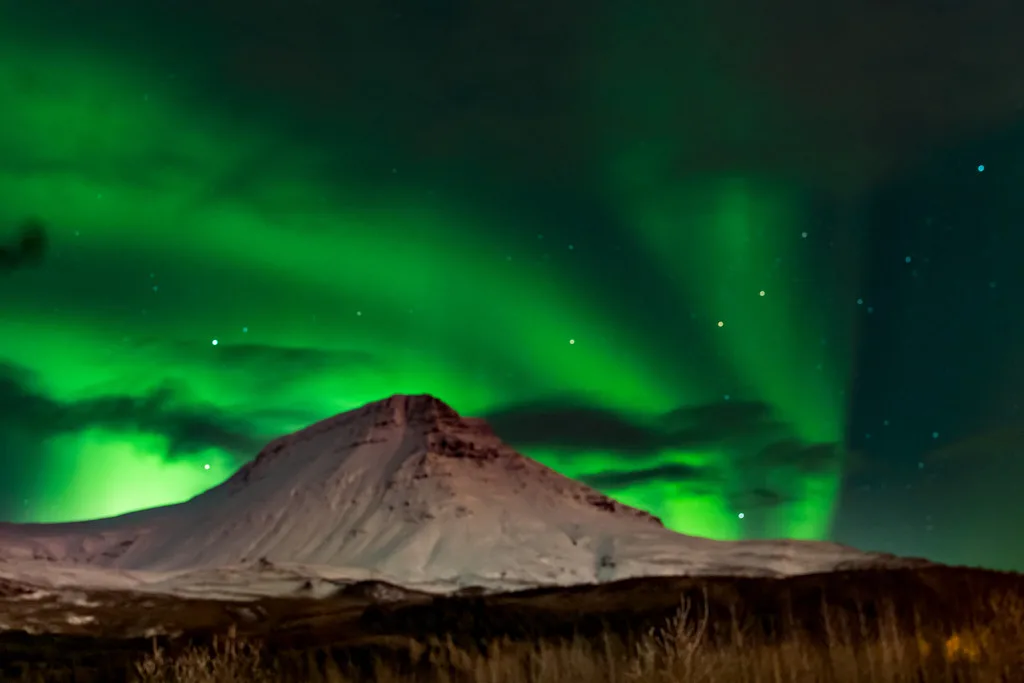
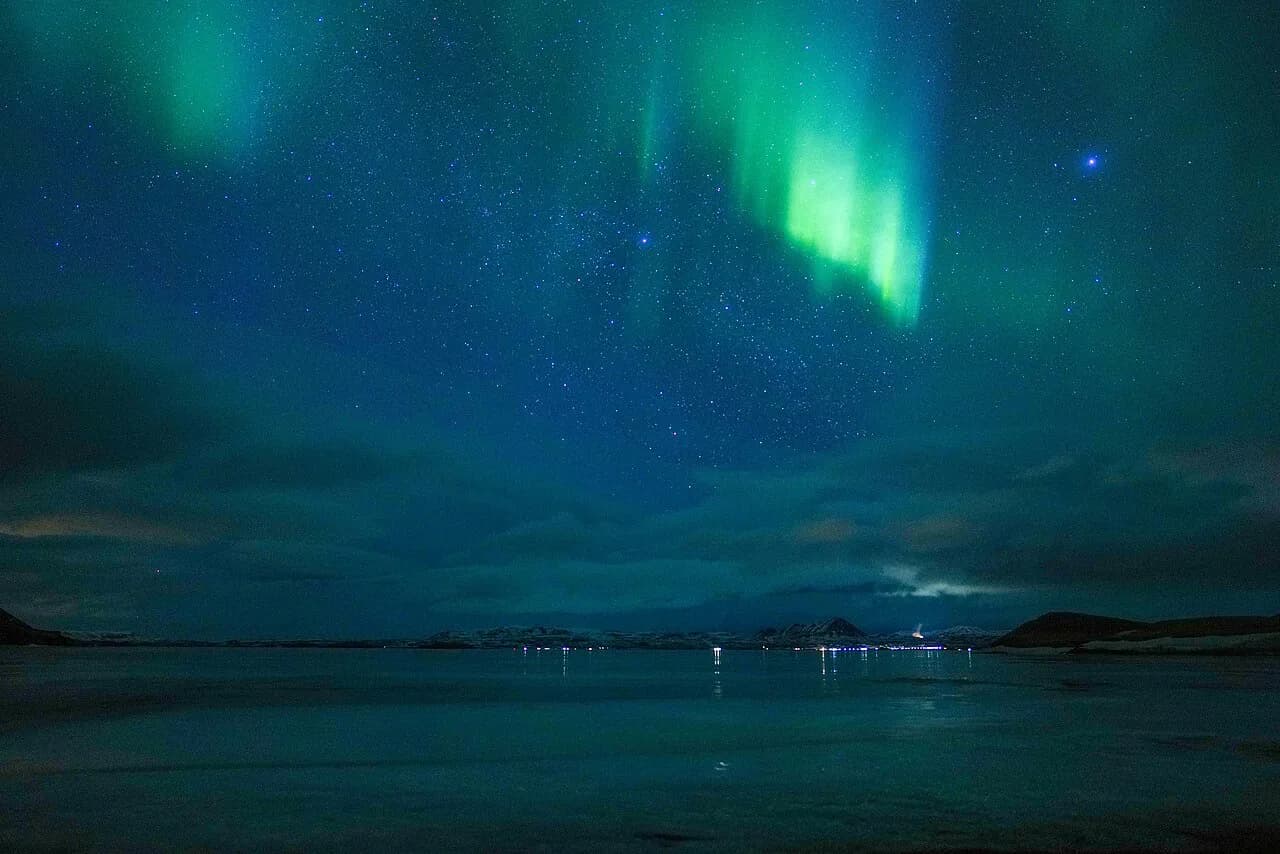
A morning on the ice and an evening under the northern lights fit together naturally in North Iceland, because the same clear, cold weather that makes for a good fishing day often produces a dark, starry night. Nothing is guaranteed, but a stable high-pressure spell is what you are hoping for on both counts.
Base yourself in or near Akureyri for the fishing, then use the evenings for a short drive away from town lights. If you would rather let someone else handle the driving and the forecasting, iceland northern lights tours run out of the region and the capital. Allow at least three nights in the north if aurora is a priority, and treat the fishing as the daytime bonus.
Timing matters as much as location: the best time to see the northern lights in iceland is the dark half of the year, which overlaps neatly with the December-to-March ice fishing window. Book your fishing day early in the stay, so a weather cancellation still leaves room to reschedule before you fly home.
Plan Your Ice Fishing Day
Decide first whether you want a half-day on the ice or a full fishing day, because that choice dictates which operator and which base you need. The Traveling Viking suits travellers staying in Akureyri; Iceland Fishing Guide suits people who want a specialist angling day on Lake Langavatn with the option of a lodge night before.
Book for the middle of the winter, keep a spare morning for weather, and pair the trip with an aurora evening or two in the north. If your plans revolve around the capital, sea angling from the old harbour is the winter alternative, with the Sky Lagoon or the Secret Lagoon as a warm finish.
Frequently Asked Questions
Can you fish in Iceland as a tourist?
Yes. Visitors can join guided fishing trips, which is the simplest route: the guide supplies tackle, bait and transport, and handles local access. Fishing equipment you bring into Iceland yourself must be disinfected on arrival at the airport, so keep that receipt with your gear.
How much does an ice fishing tour in Iceland cost?
The Traveling Viking prices its three-to-four-hour ice fishing tour from Akureyri per person, and Iceland Fishing Guide prices its six-hour Lake Langavatn day per person, with a separate lodge rate for groups who want to stay the night before. Both operators list current rates on their booking pages, so compare there before you commit.
When can you go ice fishing in Iceland?
The advertised frozen-lake season runs from December to the end of March, and Lake Langavatn sometimes holds ice into April. February and early March give the best mix of solid ice and usable daylight. Dates depend on ice and road conditions, so the guide decides on the day.
Where do ice fishing tours leave from in Iceland?
Both advertised ice fishing day tours leave from Akureyri in North Iceland, with hotel pickup available. The Traveling Viking departs from Hof Culture Center in Akureyri, while Iceland Fishing Guide picks up from hotels and guesthouses. Reykjavik is the base for sea angling instead.
Do you need a licence to ice fish in Iceland?
On a guided ice fishing tour, the guide arranges access and equipment, so you do not need to sort out a licence yourself. For rivers and lakes fished independently, licensing runs through the operator or lodge that manages that water, so ask them directly before you travel.
Is ice fishing in Iceland suitable for beginners?
Yes. The fishing is stationary and guided, equipment is supplied, and a first-timer can learn to read a bite within a morning. The real limit is the cold rather than technique, so a shorter trip is a sensible first attempt in midwinter.
Can you combine ice fishing with the northern lights?
The two fit together well in North Iceland: the same clear, cold weather that makes a good fishing day often brings a dark, starry night. Nothing is guaranteed, so allow at least three nights in the region if aurora is a priority and book the fishing early in your stay.
Sources
Notes for your Arctic winter trip
Optional updates to our northern lights guides.
You might also like

Continue reading
More guides you'll find useful