Best Time to See the Northern Lights in Iceland
Iceland's aurora season runs from late August to mid-April. Compare months for darkness, cloud cover and solar activity, plus the best hours to be outside.
On this page
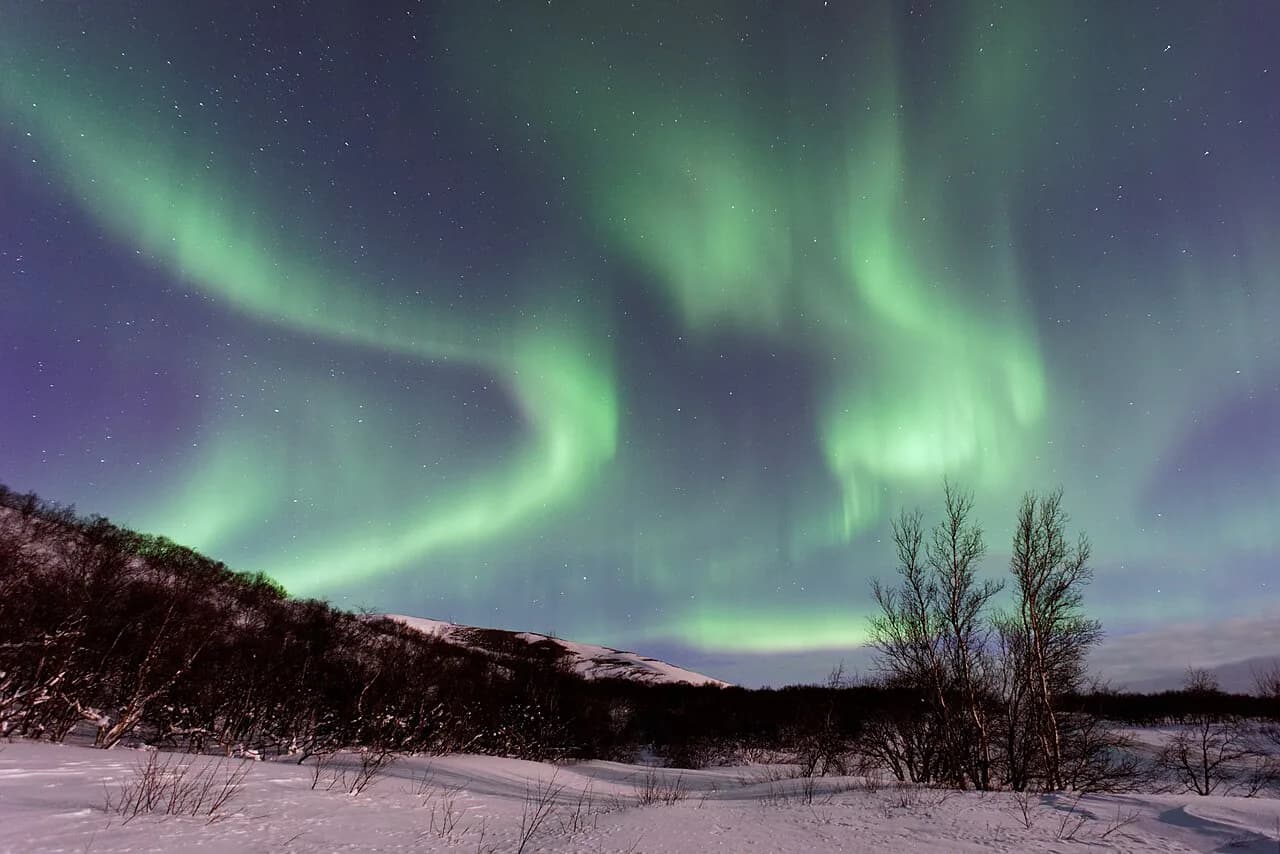
Iceland rewards travelers who treat the aurora as a bonus on a winter trip rather than the sole reason for it. The country sits under the auroral oval, the band of active light that circles the pole, so almost any dark, clear night in season gives you a real chance. Long nights, black-sand coastlines and glacier lagoons fill the days while you wait for the sky to open.
Timing is the one factor you fully control, and it is more nuanced than simply booking the shortest days of December. Solar activity, cloud cover and usable darkness peak at different points in the season, and the months where they overlap best are late February, March and October. This guide walks through the season, the hours that matter and the bases with the darkest, clearest skies.
Why Iceland sits under the auroral oval
The auroral oval is the ring of active aurora that circles the magnetic pole, and Iceland lies beneath it. That position means displays can appear overhead rather than only low on the northern horizon, which is why even modest geomagnetic activity can produce a visible arc on a dark night. Being under the oval also means you do not need a strong solar storm to see something.
Iceland's high latitude and small population work in your favor, but they do not override weather. The deciding factor on most nights is cloud, not solar activity, because a strong storm behind thick cloud shows nothing. Traveling with the forecast and moving to a break in the cloud is often more useful than waiting for a high Kp number.
When the aurora season starts and ends in Iceland
The season runs from roughly late August to mid-April, when nights are dark enough for the aurora to show. Midsummer works against you: between May and August the sky barely darkens, so even a strong display has nowhere to appear. Darkness returns in late August and early September, which is when early-season aurora becomes possible again.
The best viewing falls between late September and late March, when nights are longest and darkest. Unlike the far north of Norway, Iceland has no true polar night, so even midwinter brings a few hours of daylight for sightseeing. That balance suits travelers who want glaciers, waterfalls and ice caves by day and a dark sky after dinner.
April is a transitional month. The aurora is still possible early on, but the sky stops fully darkening as the month progresses, and Reykjavík has only about five hours of usable darkness a night by then. If April is your only window, aim for the first days of the month and accept a shorter hunting window.
Darkness by month and how much night you actually get
In midwinter Iceland gets just four to five daylight hours, leaving a long window for aurora watching. December offers the most darkness of the year, with displays potentially visible from late afternoon until just before the late-morning sunrise. The catch is that aurora activity tends to be at its yearly low around the winter solstice, so long nights do not automatically mean stronger shows.
By March, dark evenings return alongside usable daylight, which is why many travelers find it the most comfortable balance of weather and night length. September offers a similar mix on the autumn side, with milder conditions and open roads. November sits in between: long nights, winter setting in and changeable weather.
Which months balance activity, darkness and clear skies
March is the strongest all-round month for most travelers: dark evenings, returning daylight, an equinox lift in geomagnetic activity and often a better balance of weather. Late February runs close behind, pairing established snow and ice-cave season with lengthening nights. October is a strong early-season pick, with longer nights than September and some of the equinox boost still in play.
The equinox months of March, April, September and October tend to be the most magnetically active. April loses out because of short usable darkness, and September and October are the cloudiest months of the season. Late February and March are where activity, darkness and clearer skies overlap most convincingly.
December is the quietest month for activity despite having the longest nights, so expect longer waits between displays. November pairs long nights with the best chance of an open sky, since it is the clearest month of the season in Iceland. Budget-focused travelers often look at January, the coldest month on the coast, when nearly the full range of aurora tours is bookable.
Solar Cycle 25 peaked in late 2024, and elevated activity has carried into the following winters, which keeps the current seasons favorable for dramatic displays. The years just after a maximum often bring some of the strongest shows of the whole cycle, so 2026-27 and 2027-28 remain good aurora winters even with the peak behind us.
Best hour of the night to be outside
Most sightings cluster between about 21:00 and 02:00, with the sweet spot often falling between 22:30 and 01:00. This is when most northern lights tours set off, which also means you can hunt during the optimal window and still return early enough for the next day's plans. Displays can start earlier on a clear evening, so check the sky from dusk rather than waiting for a set hour.
Allowing your eyes several minutes to adjust to the darkness matters more than most people expect. Stay put at a viewing spot even if the sky looks empty, because displays can begin at any moment and vanish just as quickly. Some hotels offer a wake-up call if the aurora appears overnight, letting you sleep without worrying you will miss it.
If you are self-driving, avoid dawn and dusk, when the bright sky washes out the colors. Temperatures drop noticeably in the early hours, so plan your longest stint for magnetic midnight rather than the small hours.
Where the skies are clearest: south coast versus north and west
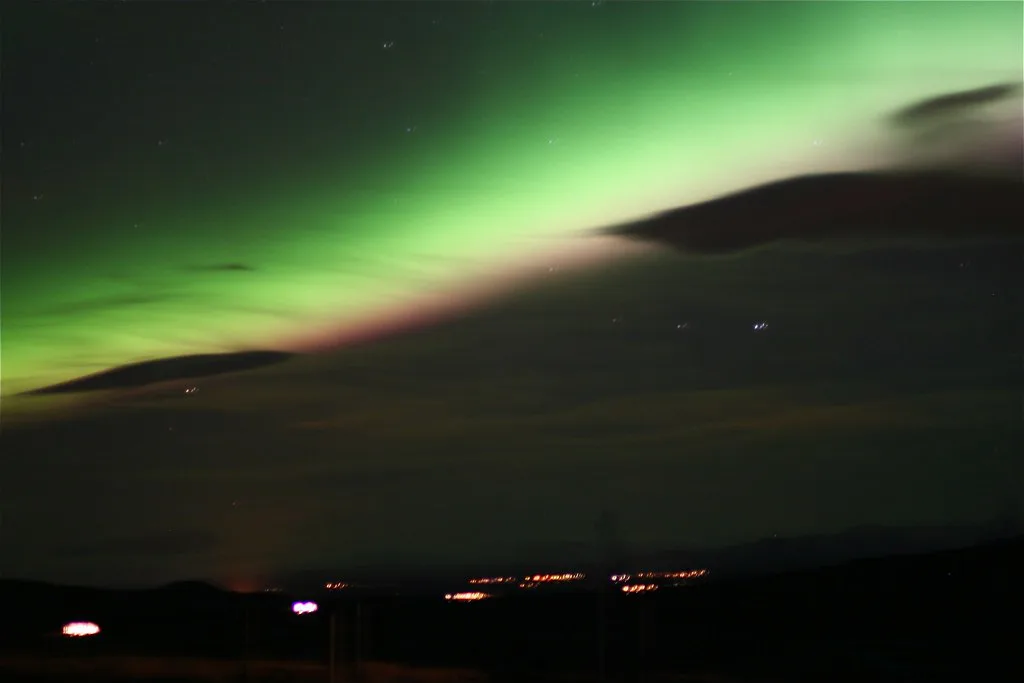
Looking back over decades of cloud records, the stretch from Kirkjubæjarklaustur through Jökulsárlón and Höfn to Djúpivogur has the clearest winter skies in Iceland, with Djúpivogur coming out on top. Jökulsárlón is the standout base on that coast, with icebergs in the foreground and reflected aurora in the lagoon. Vík sits on the way east and makes a good stop before the clearest stretch begins.
Snæfellsnes and the Westfjords are beautiful and genuinely dark, but they are also among the cloudiest parts of Iceland in winter. Treat them as a gamble rather than a safe bet, and build in extra nights if either is central to your itinerary. If you do decide to base yourself on the peninsula, this Snæfellsnes northern lights guide covers the season, spots and stays in detail. The Icelandic Highlands can be spectacular in early autumn or spring, but access depends on road conditions.
In the north, Akureyri is the obvious hub but one of the cloudier towns in the cloud-cover study. Staying around Lake Mývatn instead puts you under the clearest skies in the north, and the area is quieter than the Reykjavík region during aurora season.
Dark-sky bases near Reykjavík: Grótta and Þingvellir
You can sometimes see the aurora from central Reykjavík on an active, clear night, but city light pollution washes out all but the strongest displays. Grótta, out on the Seltjarnarnes peninsula, is one of the darkest spots in the city and has a geothermal hot tub to keep you warm while you wait. The Sun Voyager sculpture on the waterfront is another accessible city viewing point.
Þingvellir National Park, about 28 miles (45 kilometers) from Reykjavík, is the easiest dark-sky spot near the capital, with wide open skies and an easy drive. A short drive or a boat trip out to darker water improves your chances considerably compared with staying in town.
South coast bases: Vík, Jökulsárlón and the southeast
Vík is a small fishing village with black sand beaches and basalt cliffs, a few hours south of Reykjavík along the Ring Road. Spend the day at Reynisfjara with the Reynisdrangar sea stacks and the Dyrhólaey rock arch, then look up after dark, when the green light stands out sharply against the black rock.
Push further east along the Ring Road and you reach Jökulsárlón glacier lagoon, where aurora colors reflect off the floating ice. Pair a night here with a daytime ice cave tour on Vatnajökull, then head back out after dinner under the clear southeast skies. This stretch rewards travelers who build their itinerary around the coast rather than day-tripping from Reykjavík.
Reading the Icelandic Met Office aurora and cloud forecasts
The Icelandic Met Office aurora forecast rates activity from zero to nine, and anything from around three upward is generally promising, though even Kp 2 can look beautiful on a dark, clear night. It shows cloud cover alongside the activity forecast, and in Iceland the cloud layer is often the more useful of the two. Treat it as a nightly guide rather than a trip planner, since forecasts are reliable only a few days ahead.
On the cloud-cover maps, white or light gray areas mean clear skies, and low and mid-level clouds are the ones most likely to block the aurora. Serious chasers also watch for negative Bz, solar wind speeds of about 500 kilometers per second or more, and magnetic field strength above roughly 10 nT, all of which raise aurora potential.
Self-drive chasing versus guided tours
Renting a car gives you the flexibility to move toward clear skies and to search throughout the night, which is a real advantage in a country with such changeable weather. The trade-off is driving on winter roads in the dark and reading the forecasts yourself. A self-drive trip works best when you keep your daily distances modest and stay flexible about which nights you go out.
Guided northern lights tours take the forecasting and route-finding off your hands, with guides who track conditions and choose viewing spots accordingly. Many guided tours let you head out again another evening at no extra cost if the lights do not show, which effectively adds nights to your trip. Some operators offer money-back guarantees, but that is a promise about your money, not the sky.
Minibus, bus and super jeep departures from Reykjavík cover the main formats, and some include photos and refreshments. A boat trip out of the harbor gets you away from city lights quickly on nights when the forecast is marginal. Whichever you choose, confirm the pickup window and cancellation policy when you book, as current prices and dates can change.
How many nights to allow for a fair chance
Three nights is a sensible minimum, and more is better. A single clear night is close to a coin toss, while several nights give the sky far more chances to cooperate. One aurora study suggests booking at least five nights, since a single clouded-over week can wipe out an otherwise well-timed trip.
Extra nights are the single biggest factor within your control. They let you absorb a stormy spell, shift toward the clearest coast or take a second tour departure without rearranging your whole itinerary. Iceland suits this approach well, because a trip is rarely built around the lights alone.
Where to stay for dark skies: countryside hotels and glass lodges
Countryside hotels and cottages outside town lights give you the best of both worlds: a warm room and a dark sky on the doorstep. Some hotels offer aurora wake-up calls so you can sleep until something appears. Staying away from Reykjavík's light pollution also means you spend less time driving to a viewing spot after dinner.
Iceland does not have the large glass igloo resorts you find in Finnish Lapland, but it does have a growing number of glass lodges and bubble stays designed for watching the sky from a warm bed. These work best on clear, forecast-confident nights; on cloudy ones, a countryside hotel with flexible cancellation gives you more room to move.
Basing yourself near a geothermal pool adds a comfortable way to wait out the night, from the Sky Lagoon in Winter close to Reykjavík to the Secret Lagoon in Flúðir on the Golden Circle. The Blue Lagoon is another option on the Reykjavík peninsula side. All three pair naturally with an evening of aurora watching if the cloud breaks.
What winter days look like around the aurora hunt
Winter days in Iceland are short but far from empty. The Golden Circle and the South Coast remain accessible through the season, with waterfalls, geysers and black beaches filling the daylight hours. Glacier hikes and ice cave tours on Vatnajökull run through the colder months, giving you a full day before the evening hunt begins.
In December, the daylight window is narrow enough that you should plan one main activity per day rather than trying to string together distant sights. By March, longer days open up more Driving and sightseeing options before the evening chase. Either way, build in a rest day or two if you plan to be out late repeatedly.
Many operators lend thermal suits and boots for night tours, which helps on long waits in the cold. A soak in a hot pool or a lagoon earlier in the day is a good way to warm up before heading back out after dark.
Plan Around the Sky, Not Just the Calendar
Late February, March and October give you the best overlap of solar activity, usable darkness and reasonable weather, while December offers the most night hours but quieter activity. The southeast coast around Jökulsárlón holds the clearest winter skies, and Þingvellir and Grótta are the easiest dark escapes from Reykjavík.
Book at least three nights, ideally more, and keep your itinerary flexible enough to chase a break in the cloud. Check the Icelandic Met Office aurora and cloud forecast each evening, and treat Kp values as guidance rather than a guarantee. Then enjoy the glaciers, lagoons and hot springs while you wait for the sky to perform.
Frequently Asked Questions
What is the best month to see the northern lights in Iceland?
March is the strongest all-round month, with dark evenings, returning daylight and an equinox lift in geomagnetic activity. Late February and October run close behind, while December has the longest nights but quieter aurora activity.
When does the northern lights season start and end in Iceland?
The season runs from roughly late August to mid-April, when nights are dark enough for the aurora to show. The best viewing falls between late September and late March, when nights are longest and darkest. Midsummer is too bright, even when aurora activity is strong.
Can you see the northern lights from Reykjavík?
Sometimes, on an active and clear night, the aurora can appear over the city. Light pollution washes out weaker displays, so a short drive to Grótta, Þingvellir National Park or a boat trip to darker water improves your chances considerably.
What time of night are the northern lights most active in Iceland?
Most sightings cluster between about 21:00 and 02:00, with the best chance often between 22:30 and 01:00. Strong displays can start earlier on a clear evening, so check the sky from dusk rather than waiting for a set hour.
How many nights should I allow for a northern lights trip in Iceland?
Three nights is a sensible minimum, and more is better because cloud cover is unpredictable. Some aurora studies suggest booking at least five nights so a single stormy spell does not wipe out your whole trip.
Can you see the northern lights in Iceland in August?
Darkness returns in late August, so early-season aurora is possible by the end of the month. The nights are shorter than in midwinter, but the weather is milder and the roads are easier for self-drive touring.
Is November a good time to see the northern lights in Iceland?
November pairs long, dark nights with the clearest skies of the season, which makes it a strong month for an open sky. Aurora activity is moderate rather than at its peak, and the weather is changeable.
Will the aurora be visible in Iceland in 2026 and 2027?
Solar Cycle 25 peaked in late 2024, and the years just after a maximum often bring strong displays, so 2026-27 and 2027-28 shape up as good aurora winters. No one can promise a sighting on any given night, since clear skies and solar activity always have to line up.
Sources
Notes for your Arctic winter trip
Optional updates to our northern lights guides.
You might also like
Continue reading
More guides you'll find useful