Christmas in Iceland: Traditions, Dates and What's Open
Plan Christmas in Iceland around the 26-day Yule season, the Yule Lads, holiday closures on 24–26 December and long dark nights made for aurora watching.
On this page
An Icelandic Christmas pairs the things that draw travelers north in winter with a holiday calendar unlike anywhere else: thirteen mischievous Yule Lads instead of one Santa, a national book flood, and a festive season that runs from 11 December to 6 January. Days are short and nights are long, so the same trip that fills afternoons with markets and geothermal pools leaves whole evenings free for aurora hunting. It suits travelers who want a genuine cultural holiday rather than a resort Christmas, and who are comfortable planning around limited daylight and holiday closures.
Reykjavík is the practical base for most first-time Christmas visits, because the capital holds the biggest concentration of lights, concerts and markets and sits within day-trip range of the Golden Circle, the south coast and glacier country. The trade-off is that the darkest, snowiest corners of the country, the Westfjords and the north around Akureyri, offer a wilder holiday but thinner services and harder winter driving.
Why spend Christmas in Iceland
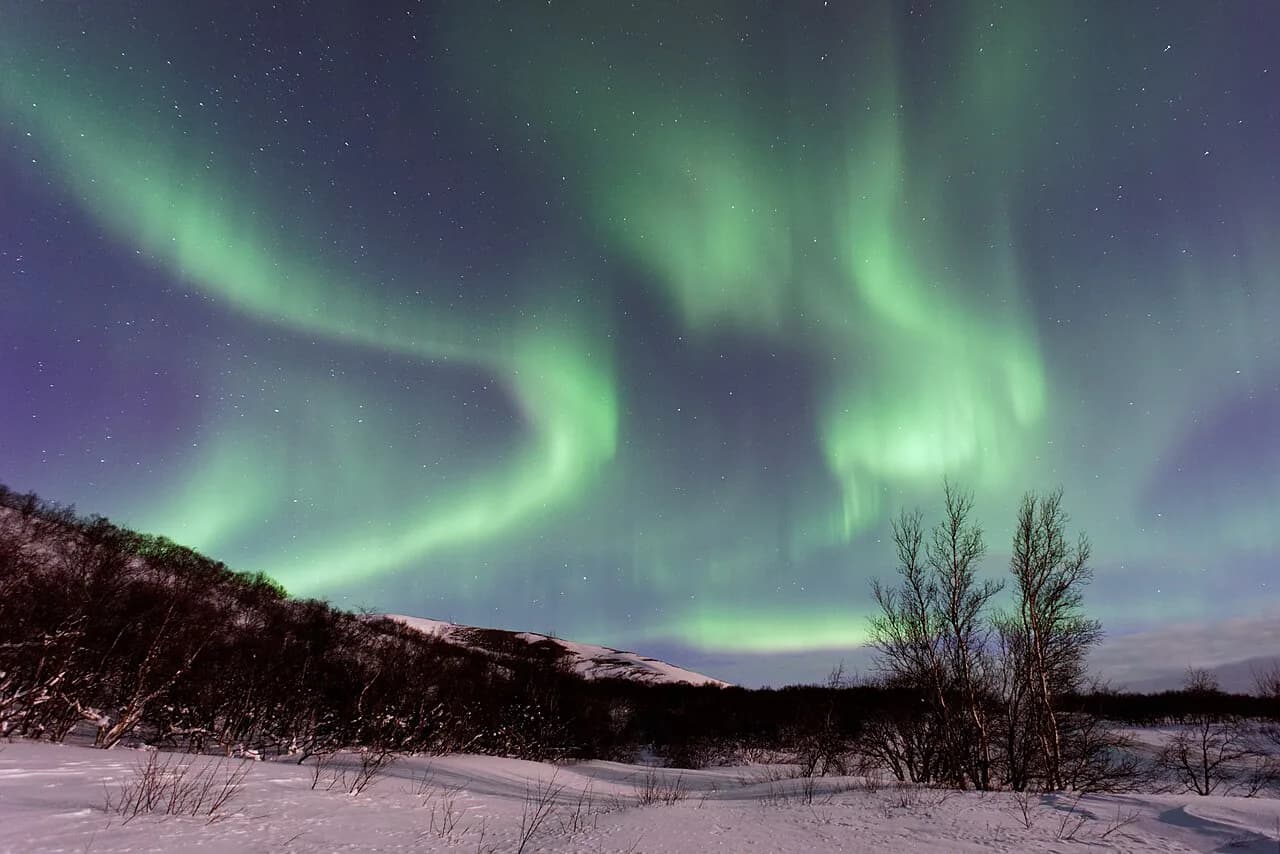
December in Iceland is defined by darkness, and that is precisely the appeal. The sun barely clears the horizon around the winter solstice, giving only about four hours of daylight at the darkest point of the year, which Visit Iceland frames as a month of candlelight, hot chocolate and festive illumination against the long nights. For aurora watchers this is the useful half of the bargain: with darkness falling in mid-afternoon, you have a long window in which clear skies can deliver the northern lights in iceland without losing a day of sightseeing.
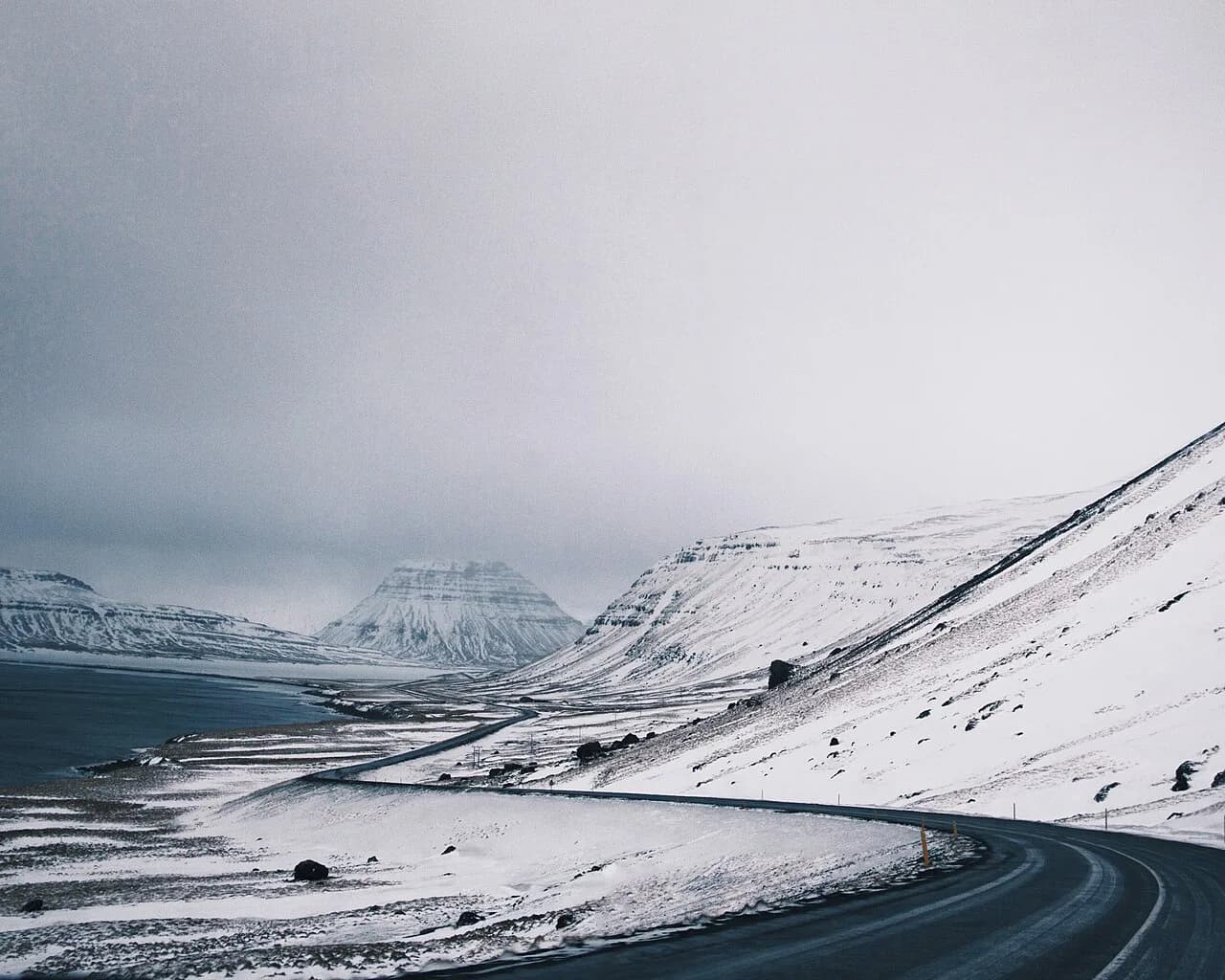
Snow is common but not guaranteed in the capital, and it becomes more reliable the further north or inland you go. Reykjavík typically receives around 17.8 centimetres (7 inches) of snowfall in December according to Reykjavík Excursions, which is enough for a white Christmas in most years but not something to bank on. Travelers who want deep snow should look toward North Iceland or the Westfjords, which Visit Iceland describes as the snow-heaviest and darkest regions.
When the Icelandic Christmas season runs
The Icelandic Yule is a 26-day season running from 11 December to 6 January, not a single long weekend. Traditions like Advent candles and Christmas lights start earlier, with decorations appearing as early as October in Reykjavík as the days shorten, but the Yule Lads themselves arrive on 11 December and the last one leaves on 6 January, which marks the end of the festivities.
For trip planning, that calendar gives you three distinct windows: early-to-mid December, when markets open and crowds are lighter; the Christmas week around 24 to 26 December, when much of the country shuts down for family celebrations; and New Year, when Reykjavík stages its famous fireworks. Each has a different feel and a different set of practical constraints, so pick your dates by what you want to do rather than by the cheapest flight.
The 13 Yule Lads, Grýla and the Christmas Cat
Iceland's Christmas folklore centers on the Jólasveinar, thirteen Yule Lads who come down from the highlands one per night starting on 11 December. Each has a name tied to a mischievous habit, from Spoon Licker and Sausage Stealer to Door Slammer, and children place a shoe in the window for the thirteen nights before Christmas Eve in the hope of a small gift, with a rotten potato the punishment for poor behavior.
Their family is less cuddly: mother Grýla collects naughty children, and the Yule Cat, Jólakötturinn, is said to hunt those who did not receive a new piece of clothing before Christmas. You will see these characters in decorations and events around Reykjavík, including a large Christmas Cat sculpture on Lækjartorg square in the city center, and in North Iceland where the Yule Lads are linked to the Dimmuborgir lava formations and a Christmas house. The folklore is darkly comic rather than frightening for adults, and it makes a good thread to follow with children through the season.
For families, the shoe-in-the-window tradition is the most engaging piece to borrow: it runs from 11 to 24 December and gives children a small daily ritual that mirrors how Icelandic families mark the Yule Lads' arrivals. Just keep expectations modest; the gifts are token-sized and the tradition belongs to households rather than to hotels.
Christmas Eve and the 6 PM bell
Christmas Eve on 24 December is the main event in Iceland, and it begins at six in the evening. At 18:00 the national broadcasting service rings church bells on the radio to mark the start of Christmas, families sit down to a multi-course meal, and presents are opened after dinner. That timing matters for visitors: shops and restaurants wind down through the afternoon, and the evening itself is a family occasion, so plan a quiet dinner at your accommodation rather than expecting a night on the town.
If you want to experience the Icelandic Christmas meal itself, book a restaurant or hotel dinner well ahead for the 24th, because many eateries close or limit hours. Visit Iceland advises booking in advance especially on 24, 25, 26 and 31 December and 1–2 January, when some restaurants shut altogether or run reduced hours.
The 23rd is a different animal. Known as St Thorlac's Mass or Þorláksmessa, it is when Icelanders eat fermented skate and finish their Christmas shopping, and it is widely treated as the most anticipated night of the buildup. Shops stay open late and the bars fill, so if you want one lively December evening in Reykjavík, this is it.
Christmas Day, Boxing Day and the days around New Year
Christmas Day on 25 December is deliberately quiet, spent with family over food, games and films, and 26 December is a public holiday known as the second day of Christmas, when shops begin to reopen and the city nightlife stirs again. Between them, the 24th to 26th form the deepest trough of the holiday, so stock up on groceries before the 24th and treat these days as slow ones.
Grocery stores follow a predictable pattern: they generally open until noon on 24 December, remain closed on the 25th, and reopen on the 26th or 27th. The same rhythm applies at New Year, with shops closing at noon on 31 December, staying shut on 1 January and reopening on the 2nd or 3rd. For restaurants, hours vary across the holidays, so reserve for the 24th, 25th, 26th and 31st and the first days of January.
New Year's Eve is a different spectacle altogether. Reykjavík fills with fireworks, and locals gather around bonfires across the city before the sky above the capital lights up for hours after midnight. Visit Iceland highlights Hallgrímskirkja church, Perlan and any hill in the capital area as vantage points for the display, and getting up high is worth the cold.
Reykjavík at Christmas
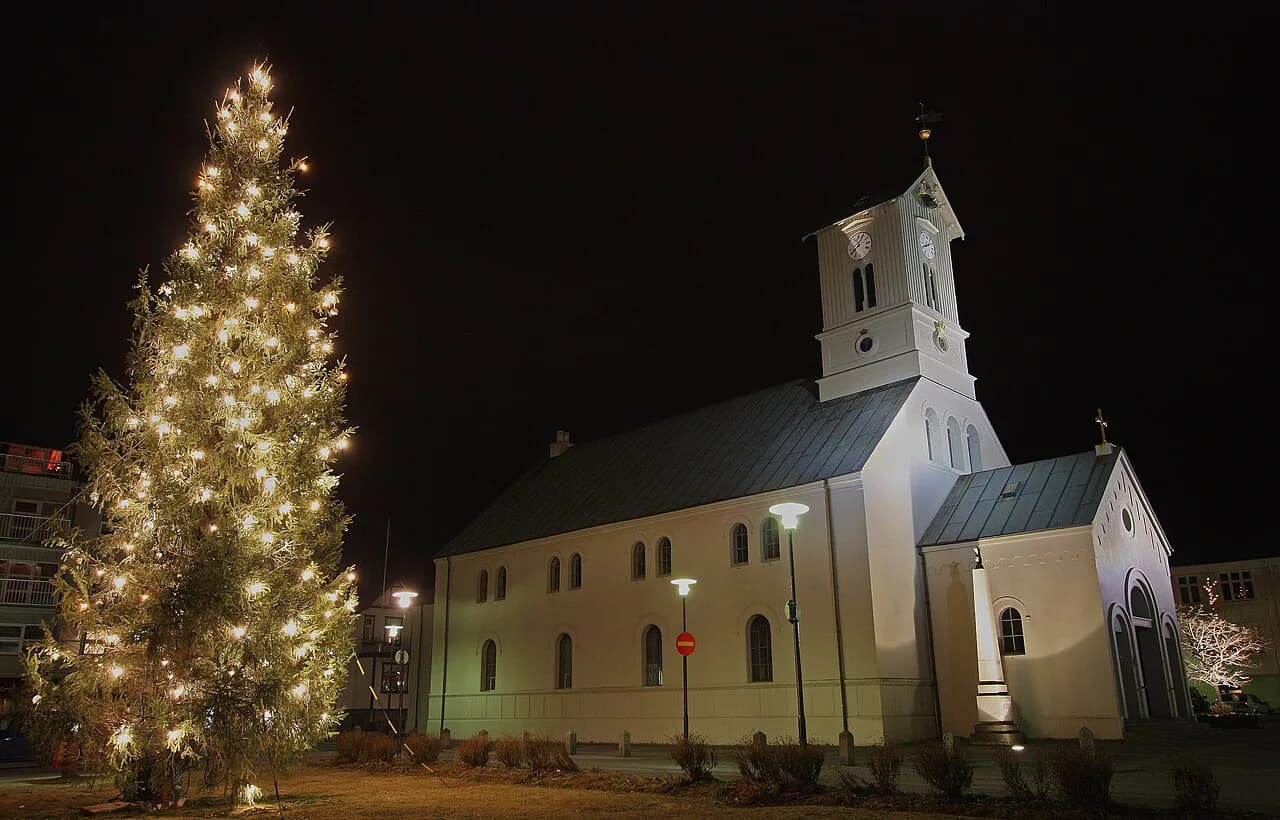
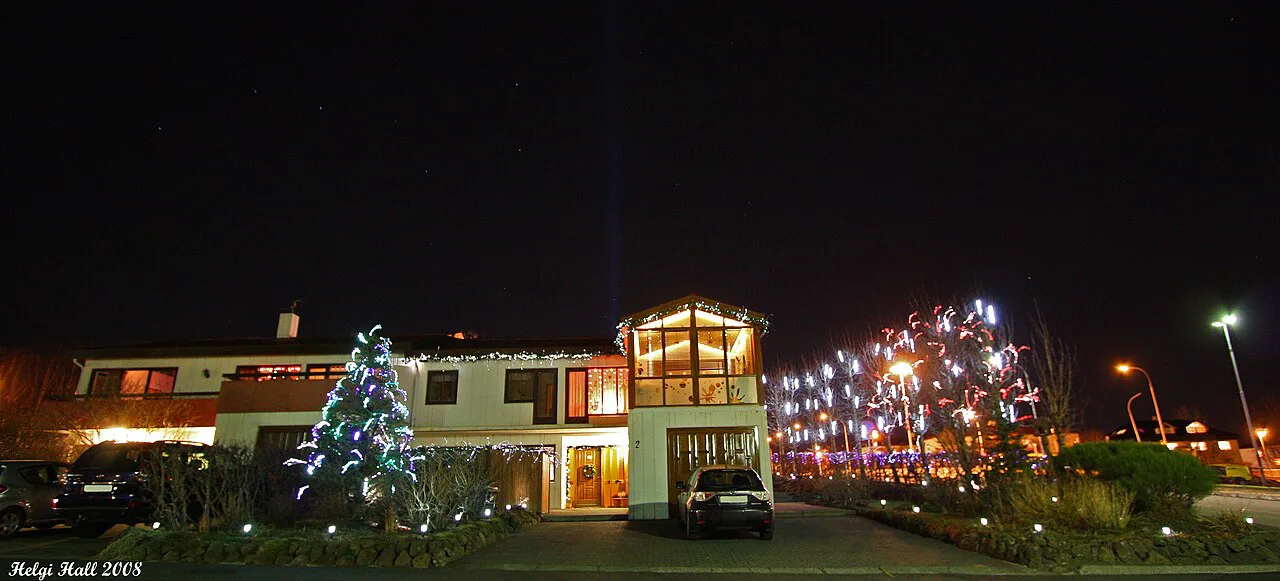
The capital wears its Christmas decorations on Laugavegur and Skólavörðustígur in the city center, where you can shop, find a café and walk between festive lights. Harpa concert hall hosts Christmas concerts, and the city fills with choirs and seasonal music through December; for a specific performance, see Harpa's own program listings. Ice skating may be possible on Tjörnin lake in the city center when it freezes, and there is usually a rink set up on Ingólfstorg square beside the Christmas market, where the entry fee includes skates and a helmet.
The main Christmas market sits between Austurvöllur and Ingólfstorg, with wooden huts, hot drinks and roasted almonds clustered around the ice rink. Opening hours vary by day and by year, and the published schedule for a past season is not a reliable guide to your visit, so confirm dates and times with Visit Reykjavík or the organiser before you plan an evening around it. That said, the general pattern of Advent weekends plus a late run on 23 December holds from year to year.
Christmas markets and villages beyond the capital
Hafnarfjörður, just south of Reykjavík, runs a Christmas village with wooden cabins selling crafts and decorations, a large Christmas tree, horse-drawn carriage rides and live music, plus an ice rink beside the library. It is a 20-year-old fixture of the capital-area calendar and an easy afternoon out that is quieter and more local than the city-center market.
The Heiðmörk Christmas market takes place in the nature reserve about 15 minutes by car from downtown Reykjavík, set among snow-covered woodland with local crafts and, usefully, Christmas trees from the Reykjavík Forest Service. It runs on Advent weekends from 12 PM to 5 PM, which makes it a good pairing with a drive out of the city rather than a destination in itself.
For a sense of how Icelanders marked Christmas a century ago, the Árbær Open Air Museum hosts a traditional Christmas program on the first three Sundays of Advent, with candle-making, leaf bread and tastings of skate and hangikjöt. Beyond the capital, Selfoss has a Christmas center and Akureyri is the hub for the north, while Glerártorg serves shoppers in that region.
Icelandic Christmas food to try
Hangikjöt, smoked lamb, is the centerpiece of most Christmas Eve tables, served cold with a béchamel-style sauce, peas and red cabbage, and accompanied by the crispy leaf bread called laufabrauð that is cut into patterns before frying. Hamborgarhryggur, a glazed roast with a sweet sauce, is the other classic main, with ptarmigan and reindeer appearing on more adventurous tables. Many restaurants offer Christmas buffets where you can sample all of these in one sitting.
On 23 December the traditional dish is fermented skate, an acquired taste served with oat porridge. If it sounds intimidating, pickled herring and the sweet Christmas cookies are easier entry points. The Christmas book flood, Jólabókaflóð, is the other essential tradition: Icelandic publishers release a huge share of the year's books before Christmas, and books are still one of the most common gifts, often read the same evening with chocolate.
Daylight and weather in December
December daylight is short everywhere in Iceland and shortest around the solstice, when the sun climbs only a little above the horizon. Figures vary slightly by source and by location: Visit Iceland cites about four hours at the winter solstice, Reykjavík Excursions says just over four hours, and Visit Iceland elsewhere counts only around five hours of daylight in late December, so plan on roughly four to five hours of usable light and treat the rest as dusk or night. That means sightseeing needs to be deliberate and front-loaded, with afternoon and evening hours handed to thermal pools, museums and aurora outings.
Expect cold, wet or snowy conditions rather than very deep cold in the capital, with snowfall that can accumulate to around 40 centimetres in Reykjavík during December according to Guide to Iceland. Travelers into the highlands or the north should expect more snow and more road disruption, so check the Icelandic Met Office and road authority pages before any long drive.
Northern lights over Christmas
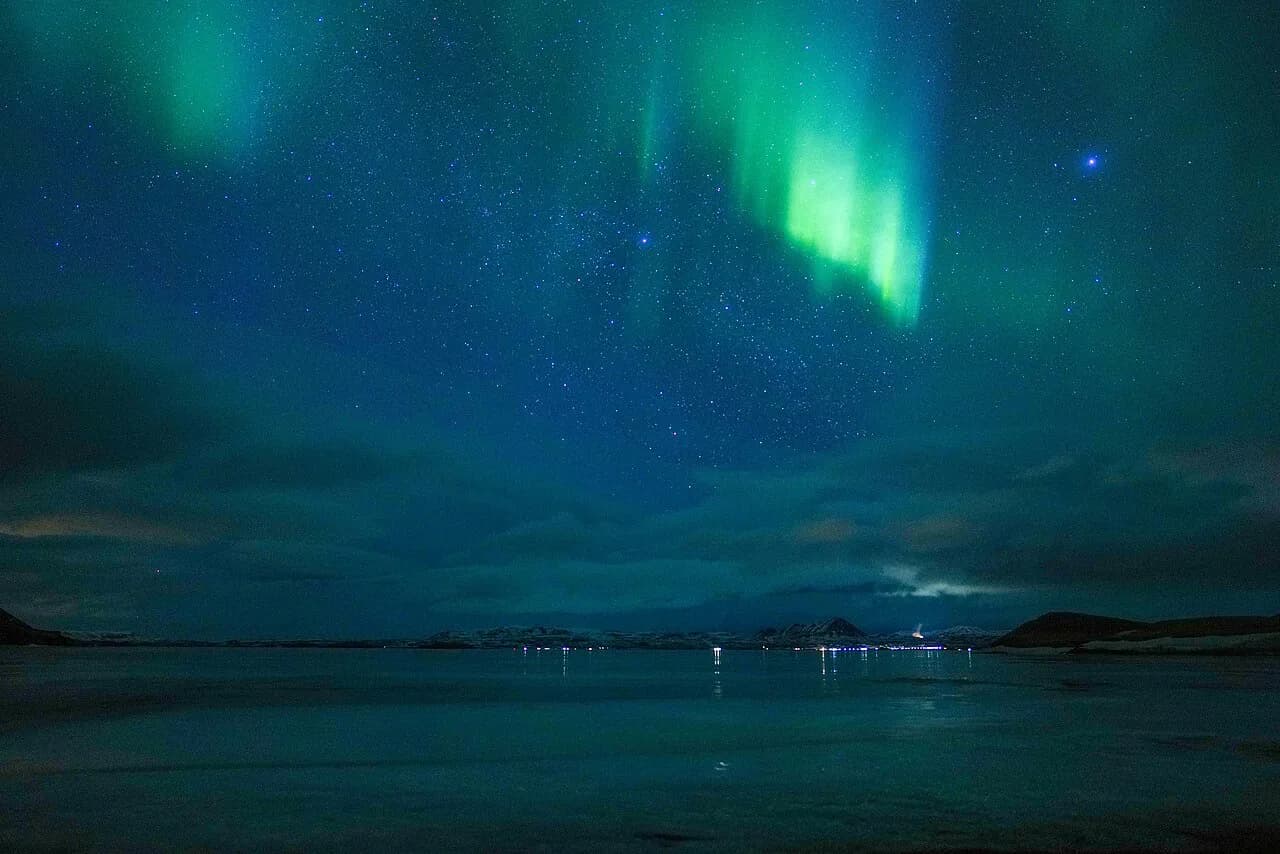
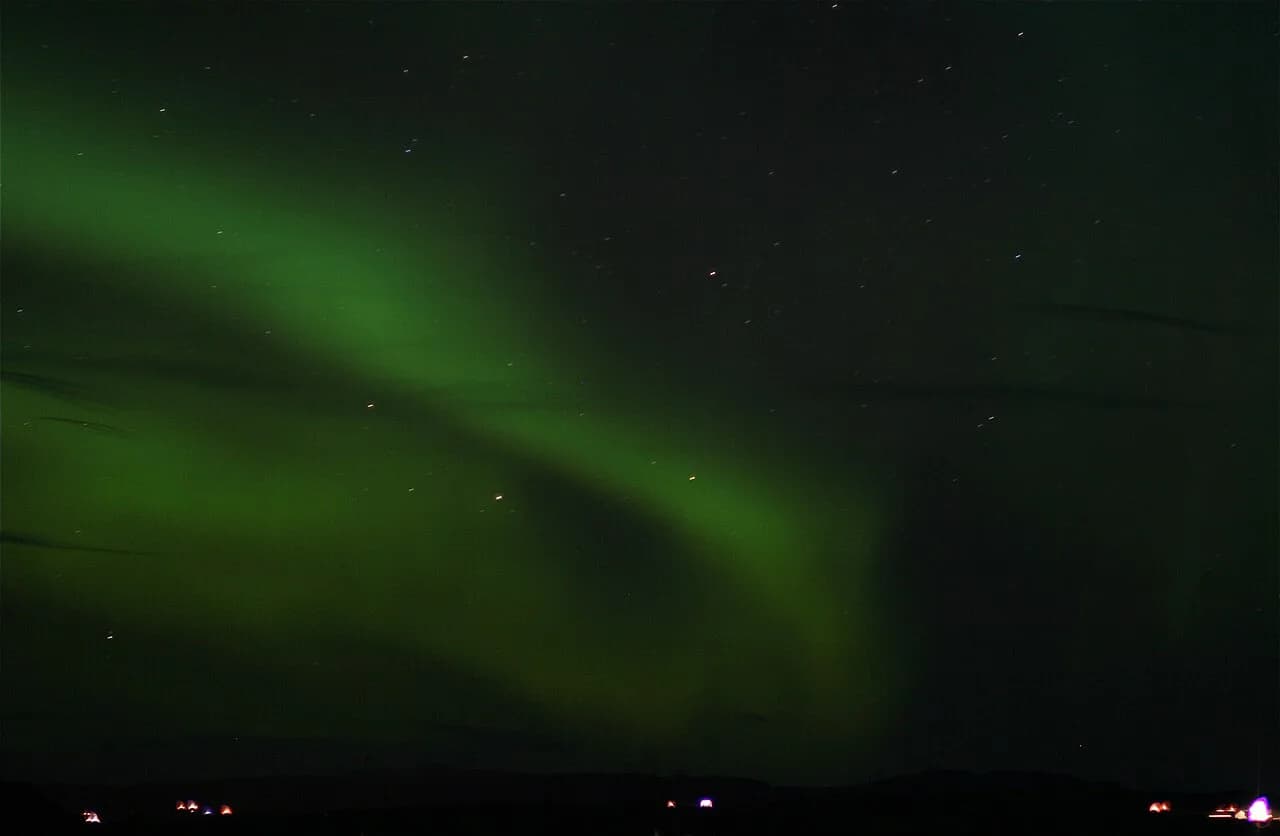
The long December nights are the functional advantage of a Christmas trip: Visit Iceland notes that with only around five hours of daylight, the aurora window stretches far beyond what summer visitors get. On clear evenings, dark skies can deliver a display, but it depends entirely on solar activity and cloud cover. Nothing about December guarantees a sighting, and the practical work is choosing clear-sky nights over cloudy ones, since a bright aurora behind thick cloud shows nothing at all.
From Reykjavík, the west side of the city and the coast road out toward Grótta lighthouse give a short drive to darker sky, and tours routinely leave the city for the Reykjanes peninsula or the Snæfellsnes direction when their guides judge the cloud to be thinner there. Guided outings handle the driving on winter roads and the forecast reading, which is worth the cost if you only have a couple of nights. Self-driving gives flexibility but requires comfort with icy roads and an eye on the forecast.
Winter activities for a Christmas trip
Ice caves are the headline attraction of a December visit. Natural ice caves form under Vatnajökull alongside Jökulsárlón glacier lagoon in the southeast, while Langjökull offers a man-made tunnel and chambers, more accessible but less wild. Glacier walks and snowmobiling on Langjökull or Mýrdalsjökull fill out a short daylight window well, and both operate across the holiday period with advance booking.
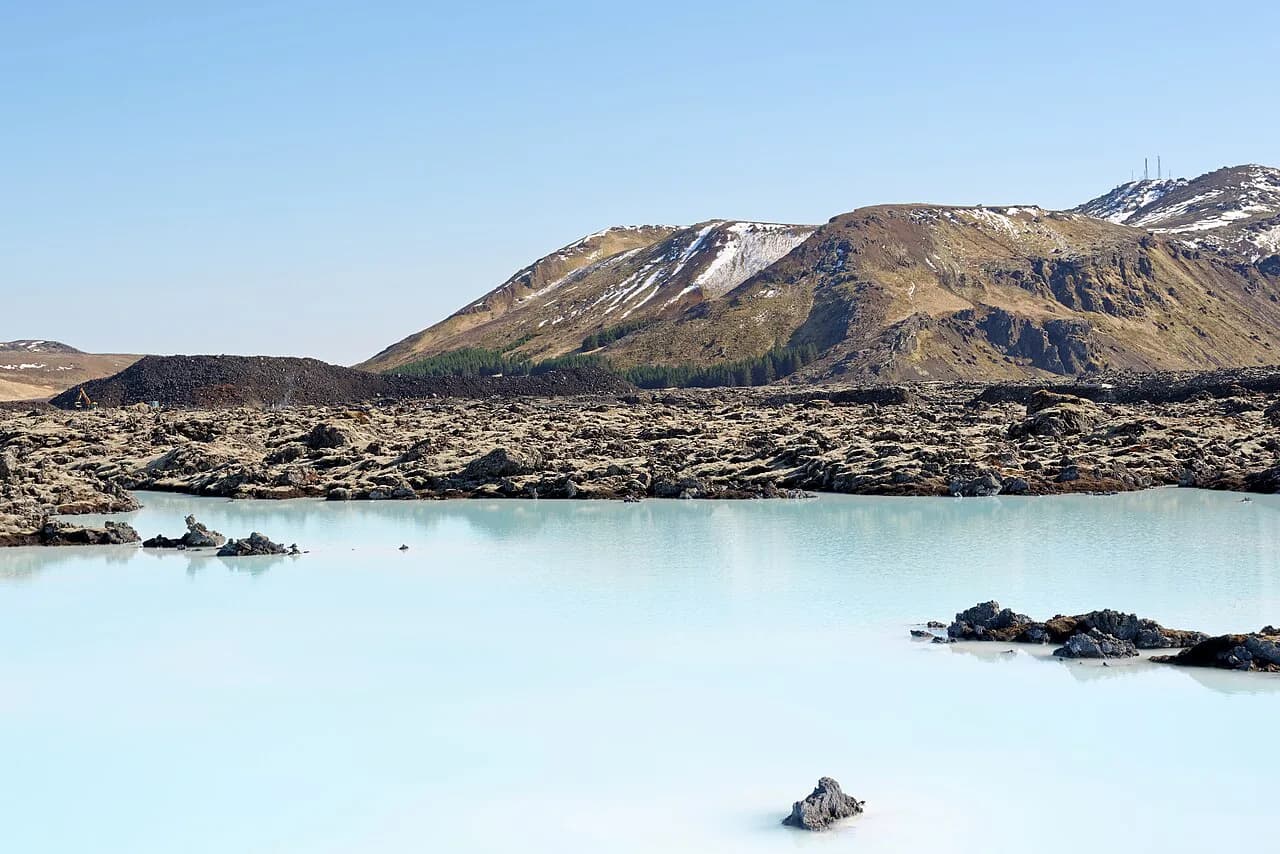
Geothermal water is the best way to end a cold, dark afternoon. Hvammsvík, about 45 minutes from Reykjavík, has eight hot springs by the sea that interact with the tides, while the Sky Lagoon near the capital pairs ocean views with a spa ritual and the Secret Lagoon in Flúðir offers a simpler, more rustic option on the Golden Circle route. If you are choosing between them, the Sky Lagoon is more polished and closer to the city, so read a dedicated Sky Lagoon in Winter guide before committing; the Secret Lagoon is a quieter add-on to a Golden Circle day.
Where to base yourself
Reykjavík makes the most sense for a first Christmas trip, with markets, concerts and restaurants within walking distance and day trips to the Golden Circle, the south coast and Reynisfjara within reach. The south coast in particular stays accessible while highland roads close for weather, so you can enjoy black sand beaches and glaciers by day and return to city festivities in the evening. A car or organised tours are both viable for this base.
For deeper snow and darker skies, North Iceland around Akureyri and the Dimmuborgir area is the alternative base, with the trade-off of shorter usable days, more winter driving and fewer holiday services. It suits travelers who have already done the capital and want the quiet, snowy version of an Icelandic Yule. Before committing to that base, check what actually stays open over the holidays with a guide to christmas in akureyri, since December hours and events there differ from the capital's.
How many nights to allow
There is no way to promise clear skies on a given date, so plan by probability rather than by a single night. For a fair chance of a display, allow at least four to five nights in Iceland during December, and spread your aurora outings across them rather than pinning everything on one evening. Tours often re-run on a following night when the first attempt is clouded out, so ask about that policy when you book.
Daylight hours are the other factor. With four to five hours of light a day, days are short and sightseeing is compressed, so add nights rather than activities if you want time for ice caves, markets and geothermal pools without constant rushing. A Christmas trip with three nights leaves little slack for a clouded-out aurora night or a closed road, while a week lets you absorb the holiday calendar properly.
Plan Your Christmas Trip
Christmas in Iceland is at its best when you treat the Yule calendar as a schedule rather than background noise. Arrive before 24 December for the markets, the book flood and a lively 23rd, accept that the 24th to 26th slows to a family pace, and consider staying into New Year for the fireworks. Those dates decide where you eat, what you can buy and how busy the roads are, so fix them before you book anything else.
Build the aurora side of the trip around several nights, a base that lets you reach dark sky quickly, and a realistic reading of the cloud forecast, and let the short days do the rest: with darkness falling in the afternoon, even a quiet Christmas holiday gives you long evenings to watch the sky. Book restaurants and any holiday meals well ahead, and treat the holiday closures as structure rather than obstacle.
Frequently Asked Questions
Is Iceland good to visit at Christmas?
Yes, if you want a cultural holiday rather than a beach-style break. The Yule season brings markets, concerts, decorations and unusual folklore across Reykjavík and other towns, and the long December nights leave plenty of dark hours for aurora outings. The trade-off is short daylight, holiday closures around 24 to 26 December and cold, changeable weather.
How is Christmas celebrated in Iceland?
The season runs from 11 December to 6 January, when the thirteen Yule Lads arrive one per night and children leave shoes in windows for small gifts. Christmas Eve is the main family evening, opening with church bells on the radio at 18:00, followed by a big dinner and presents. Books are among the most common gifts, a tradition known as the Christmas book flood.
How cold is Iceland during Christmas?
Expect cold, dark and often wet or snowy conditions rather than extreme cold in Reykjavík, with snow that can settle through December. The further north or inland you go, the more snow and the more winter driving you should allow for. Check the Icelandic Met Office forecast before any long drive.
When does the Christmas season start and end in Iceland?
The Yule season itself runs from 11 December, when the first Yule Lad arrives, to 6 January, when the last one leaves. Advent decorations and Christmas lights go up earlier, from late November onward, so early December already feels festive in Reykjavík.
What is open in Iceland on 24, 25 and 26 December?
Grocery stores generally open until noon on 24 December, close on the 25th and reopen on the 26th or 27th. Some restaurants stay open through the holidays but many reduce hours or close, so reserve in advance for 24, 25, 26 and 31 December and the first days of January. Check current details with the specific restaurant before relying on it.
Can you see the northern lights in Iceland at Christmas?
December offers long dark nights, which gives more hours in which a display could appear, but sightings depend on solar activity and clear skies. No date guarantees aurora, so allow several nights and choose clear-sky locations away from town lights. Guided tours read the cloud forecast and drive to wherever conditions look best.
How many hours of daylight does Iceland get in December?
Roughly four to five hours around the winter solstice, depending on location and the source. That leaves a long dusk and night for aurora hunting, but compresses sightseeing into a short window, so plan outdoor day trips for the middle of the day.
What do Icelanders eat for Christmas?
Hangikjöt, smoked lamb, is the usual centerpiece, served with laufabrauð leaf bread, peas and red cabbage. Hamborgarhryggur, a glazed roast, is another classic, and fermented skate is traditionally eaten on 23 December. Christmas buffets in restaurants are a good way to try several dishes at once.
Sources
Notes for your Arctic winter trip
Optional updates to our northern lights guides.
You might also like

Continue reading
More guides you'll find useful