Jökulsárlón in October: Which Tour or Ice Cave to Pick
Plan Jökulsárlón in October: amphibian boat tours, first ice cave trips, dark nights for the aurora and where to stay near the lagoon on Iceland's South Coast.
On this page
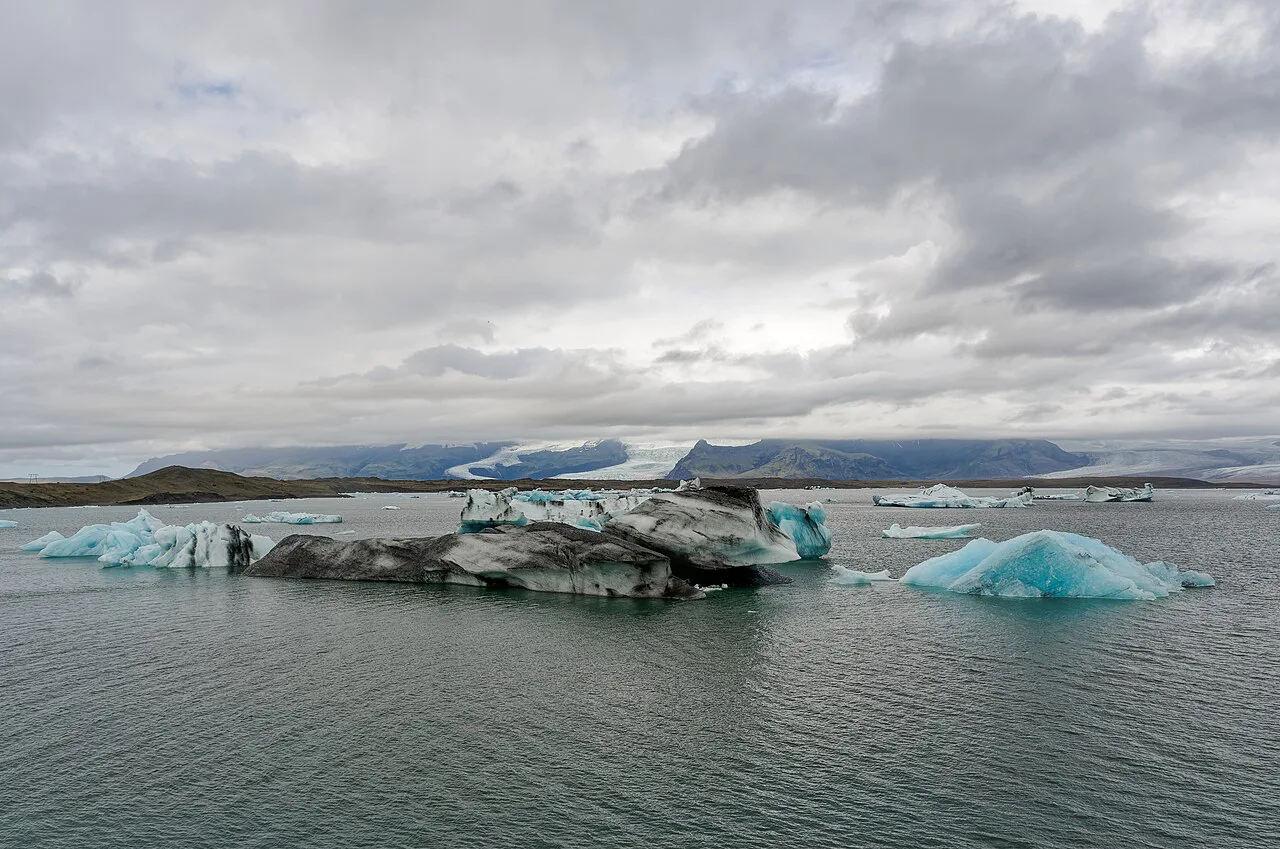
October catches Jökulsárlón between two seasons. The lagoon is still full of drifting icebergs calved from Breiðamerkurjökull, boat tours are in their final weeks, guided ice cave trips into Vatnajökull are just starting, and the nights are long enough for the aurora again. It suits travelers who want the ice without deep winter road conditions, and who accept that the weather will be mixed.
The lagoon sits directly off Route 1 in Southeast Iceland, roughly 370 km east of Reykjavík, and its shoreline lies inside Vatnajökull National Park, so October is a base-and-overnight trip rather than a day out from the capital.
Why October works at Jökulsárlón
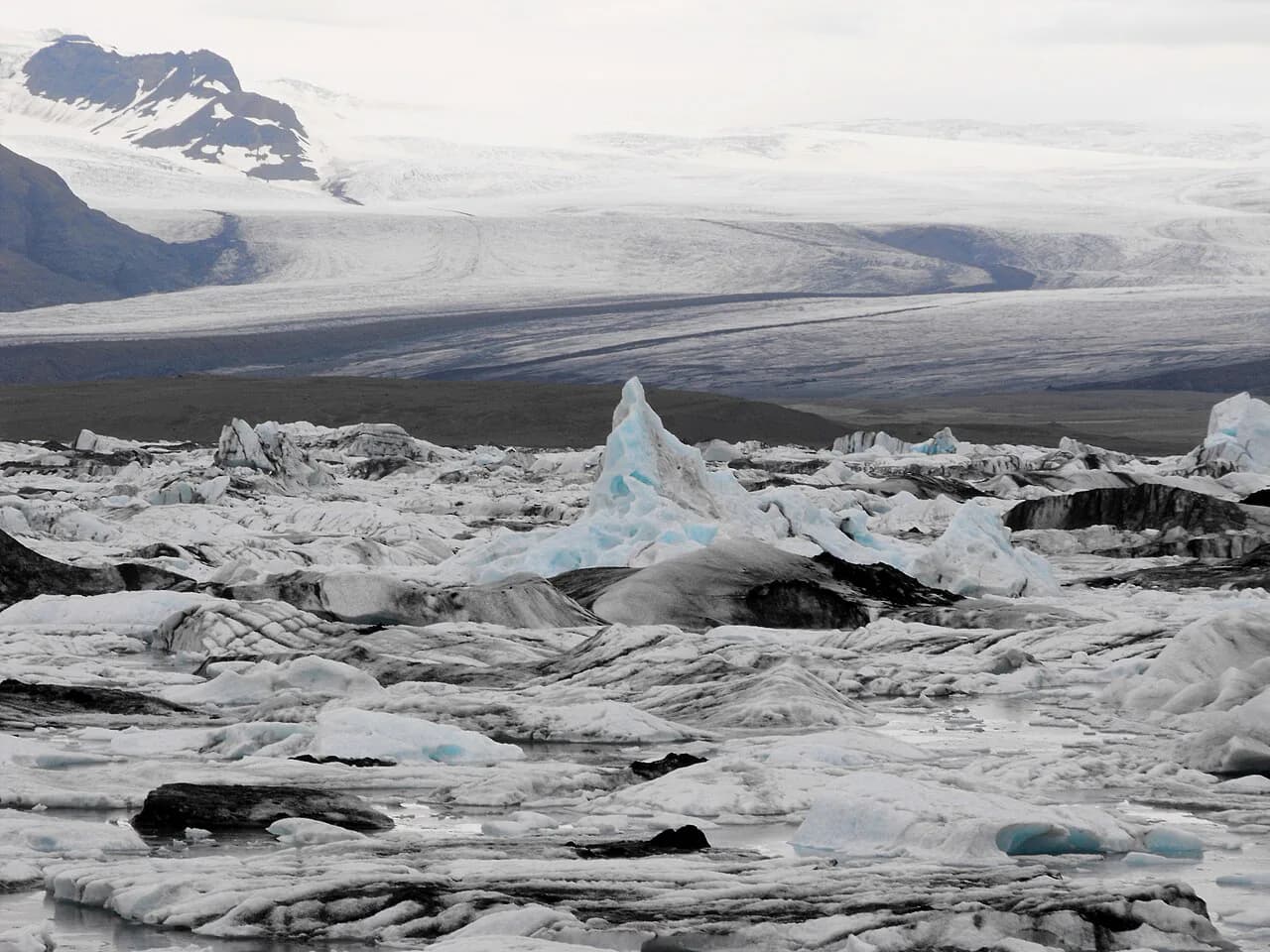
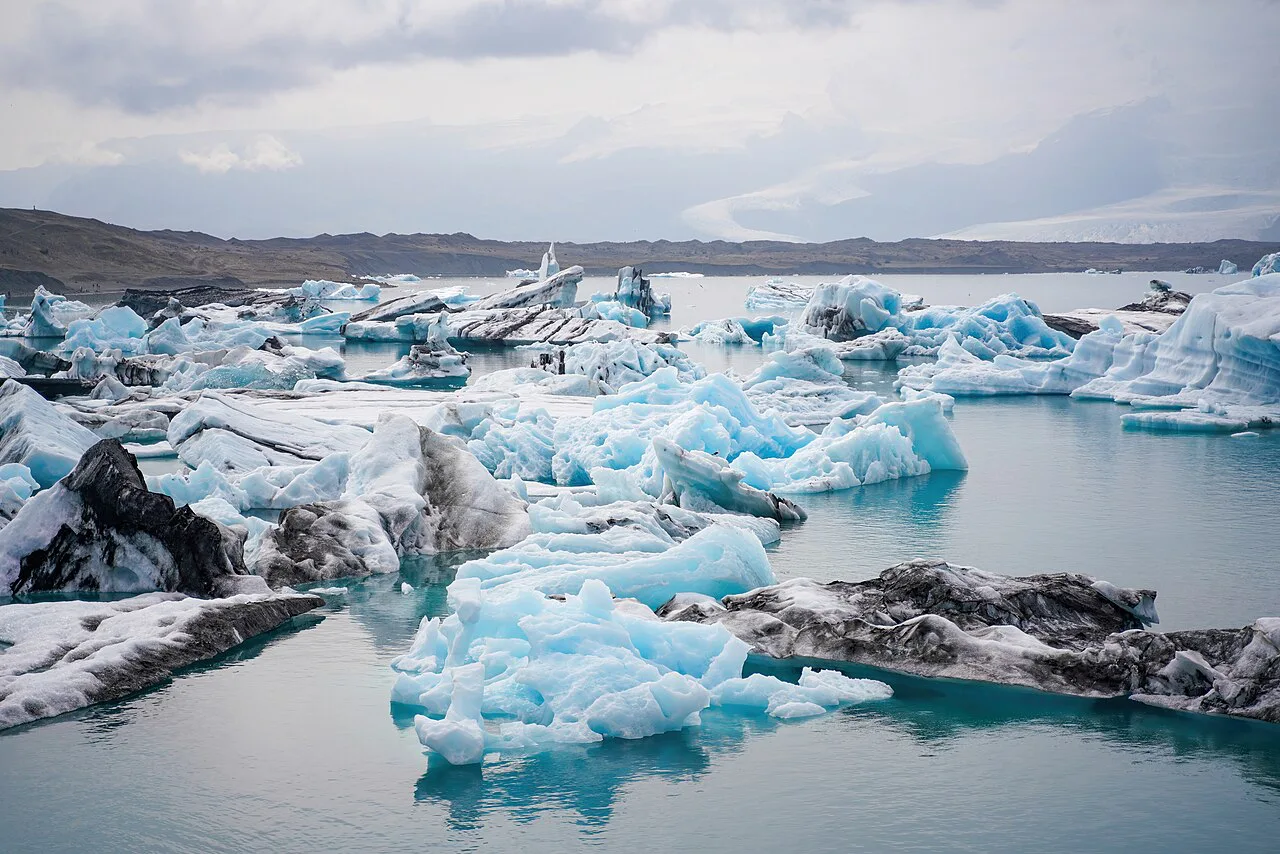
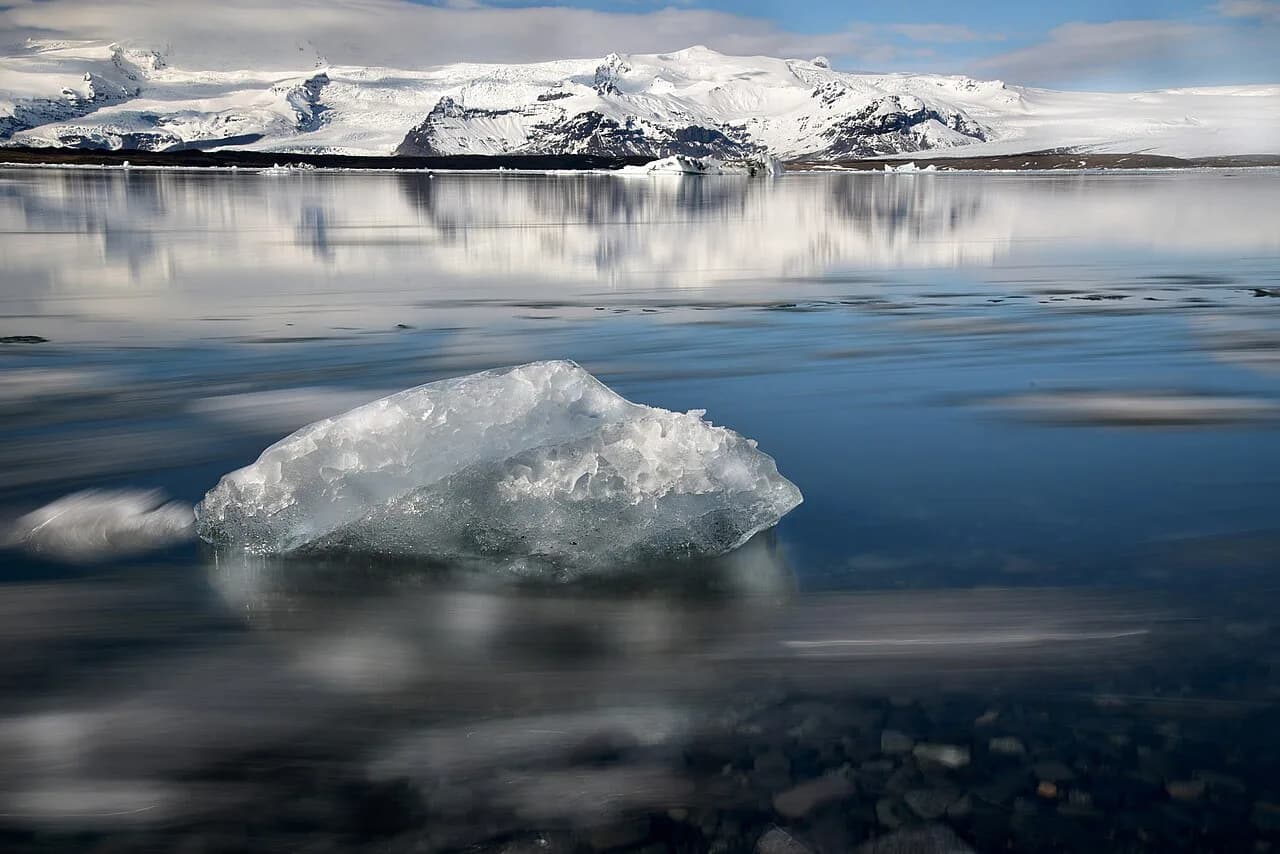
By October the lagoon holds more floating ice than in summer, and the light is low and soft for most of the day, which is exactly what makes the blue and white icebergs photograph well. Crowds thin out after the June-to-August peak, and accommodation near the lagoon becomes easier to secure than in high summer. The trade-off is that daylight is shrinking fast and the weather turns frequently, so you plan around a few hours outside rather than a full sightseeing day.
The lagoon is the deepest lake in Iceland, about 284 m deep, and it began forming in 1934 as Breiðamerkurjökull retreated; the icebergs drifting in it can be over 1,000 years old. That age and density are why the ice looks so blue in flat October light.
Daylight, driving and photography in October
Daylight at the lagoon swings from under four hours in midwinter to nearly 24 hours at midsummer, and October sits on the steep slide between the two, so each week loses noticeable light. Practically, that means you should reach the lagoon by mid-morning and treat late afternoon as your second window, and it means any long drive from Reykjavík should be done in daylight.
The drive from Reykjavík is about 380 km and typically five to six hours along the South Coast, which is too much to combine with lagoon time in a single short October day. From Vík it is about 2.5 hours and from Höfn about one hour, so most travelers overnight somewhere east of Vík.
October temperatures and precipitation at the lagoon
Winter temperatures at Jökulsárlón run roughly from -1°C to 4°C, and the wettest month of the year is December at around 122 mm, which tells you October is wet and changeable rather than deep-frozen. Expect rain, sleet and wind more than settled snow, and expect the lagoon to feel colder than the thermometer because it is exposed to the coast.
Because the lagoon has no mountain shelter and sits close to the shore, conditions shift quickly and snow or ice can make access harder for drivers unused to winter roads. That is the main argument for joining a guided tour in October rather than self-driving the whole South Coast.
Aurora season at Jökulsárlón
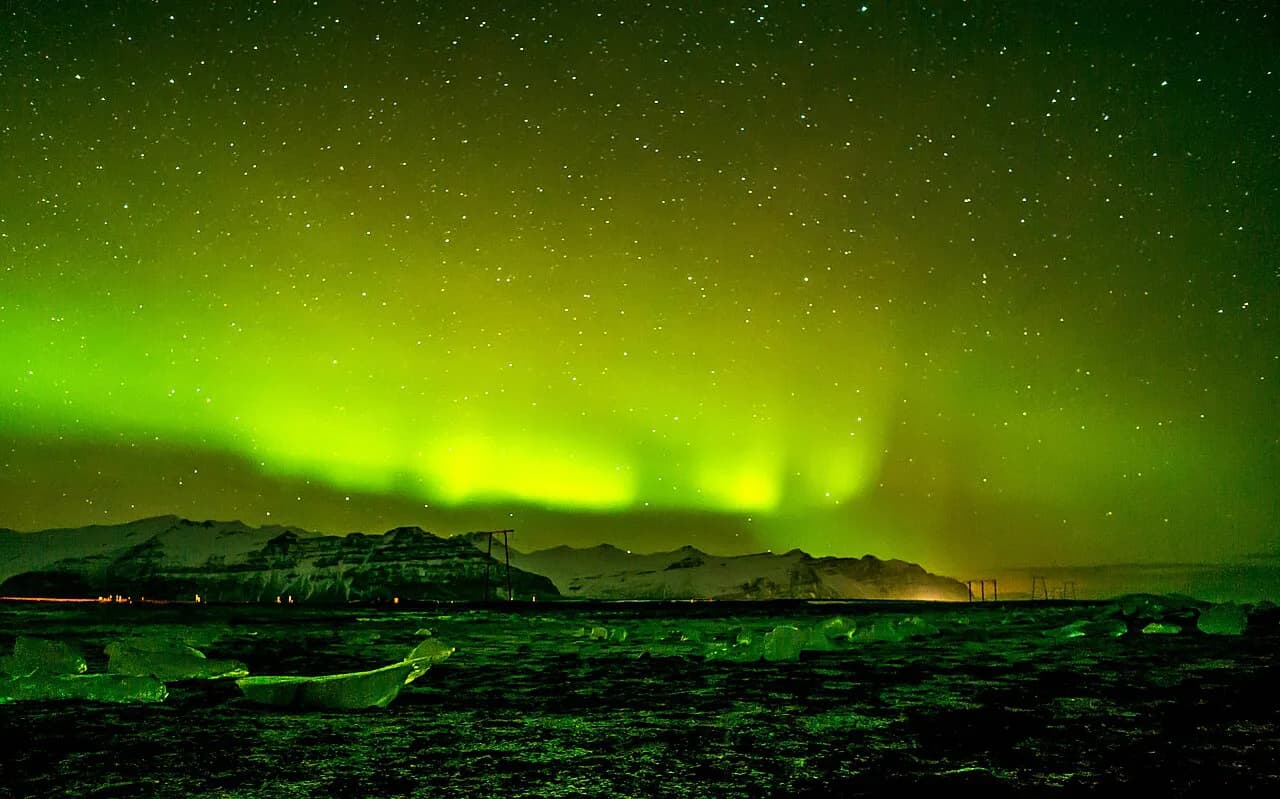
The northern lights are visible in Iceland from early September to mid-April, once nights are dark enough, and October falls inside that window with long dark hours and no need to stay up until the small hours. Activity tends to strengthen in the October-to-November stretch, but cloud is the deciding factor on any given night, so treat forecasts as guidance rather than a promise. For a fuller picture of viewing spots and timing, the guide to jokulsarlon northern lights covers the same ground in more depth.
Jökulsárlón sits in the middle of Iceland's clear-sky corridor, the stretch from Kirkjubæjarklaustur through Skaftafell and Höfn to Djúpivogur that has the least cloud in the country during aurora season. That geography, rather than anything about the lagoon itself, is why the southeast is a stronger aurora base than the south coast around Vík. The open ice and water give the aurora a foreground, but a clear sky is still what you are gambling on.
Self-driving versus a guided South Coast tour
Self-driving gives you the freedom to wait out a cloud band or return to the lagoon at night, and the Ring Road past the lagoon is regularly maintained and accessible in winter. The catch is that October weather can close the decision-making loop fast, and a driver watching road conditions has less attention for the aurora.
Guided South Coast tours fold transport, a guide and often an ice cave or aurora hunt into one plan, which suits travelers who would rather not drive in changeable conditions. Many northern lights tours include Jökulsárlón as part of a South Coast itinerary alongside ice caves and glacier stops.
Amphibian boat tours
The amphibian boats are the all-ages option: large, slow and stable, they sail among the icebergs for 30 to 40 minutes and let you taste 1,000-year-old ice. They are the right choice for families with small children or anyone who wants a relaxed ride rather than speed.
For 2026 the Glacier Lagoon company (Jökulsárlón ehf.) lists amphibian tours at 7,100 ISK for adults 13 and over, 3,500 ISK for children aged 6 to 12, and free for children aged 0 to 5, with groups of 12 or more at 6,800 ISK. The amphibian season runs May to November, so October departures are still scheduled, though the company notes boat tours usually run from early May through October depending on weather and ice.
Zodiac boat tours
Zodiacs are smaller and faster, cover more of the lagoon and get closer to the icebergs than the amphibian boats, sometimes running almost to the glacier edge when conditions allow. The trade-off is a bouncier ride and a height rule instead of an age rule.
Zodiac tours take about 1 hour 15 minutes and, for 2026, cost 16,600 ISK for adults 13 and over and 8,300 ISK for children aged 10 to 12, with a minimum height of 130 cm. The Glacier Lagoon company lists the Zodiac season as May to October, which makes an October visit one of your last chances that year.
Kayaking and glacier hikes
Kayaking on the lagoon runs in the warmer months, typically May to September, with guided small groups and no prior experience required, so October usually falls outside that window. Glacier hikes on Vatnajökull's outlet glaciers run with certified guides and are a summer-to-shoulder-season activity at Skaftafell.
If paddling or a glacier walk is the centrepiece of your trip, October is between seasons for both, and you should build the day around the lagoon, Diamond Beach and a cave instead.
Ice cave tours starting from the lagoon
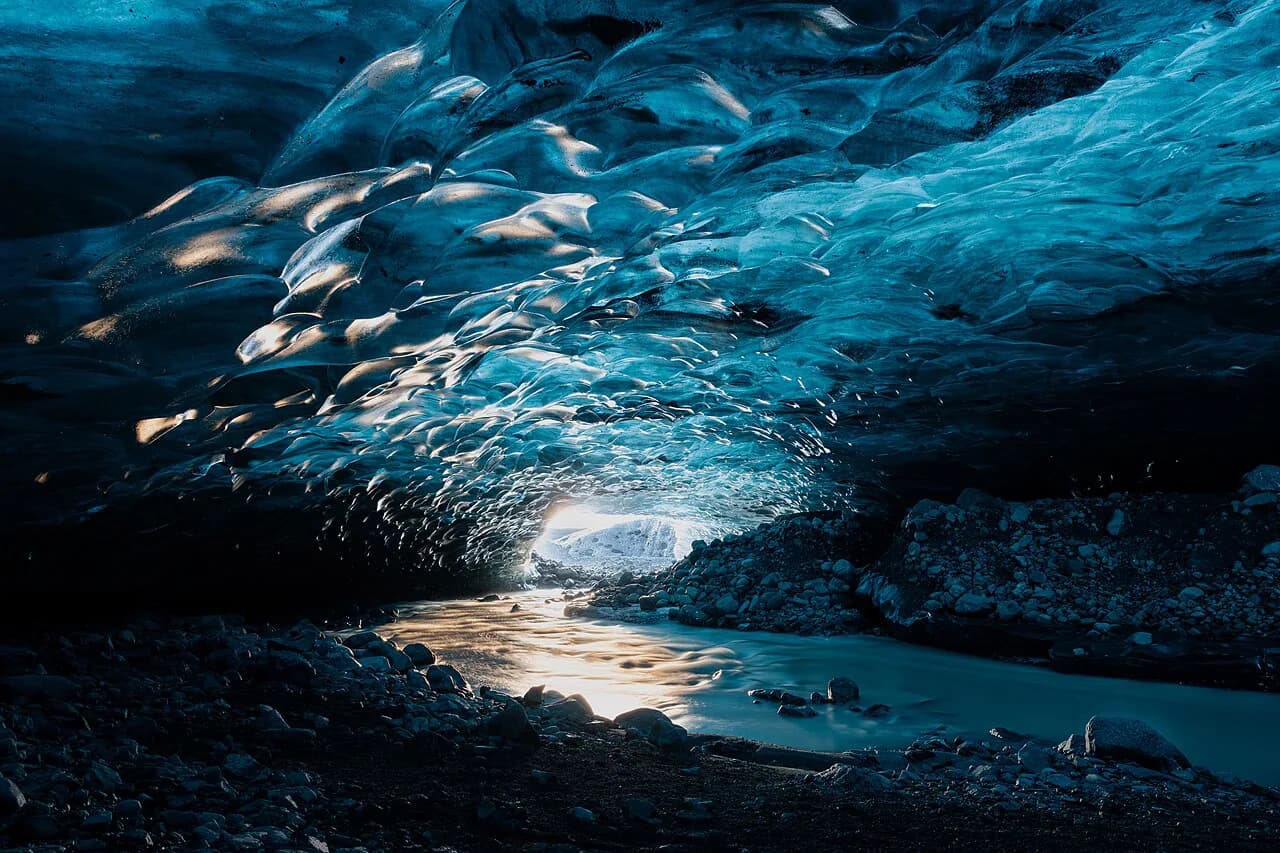
Guided ice cave tours into Vatnajökull run from October to April, when conditions allow safe access, so October is the opening stretch of the cave season rather than its most reliable month. Each year meltwater carves new chambers, and the guide selects the cave that is safest on the day, so you are booking a type of experience rather than a fixed room.
The Crystal Ice Cave at Jökulsárlón is entered on a guided tour from October to April, and most cave trips include transport across the glacier in specially equipped vehicles along with a guide. The crystal ice cave guide on this site explains what the tour involves and how to judge whether a cave day fits a short October visit.
Diamond Beach across the road
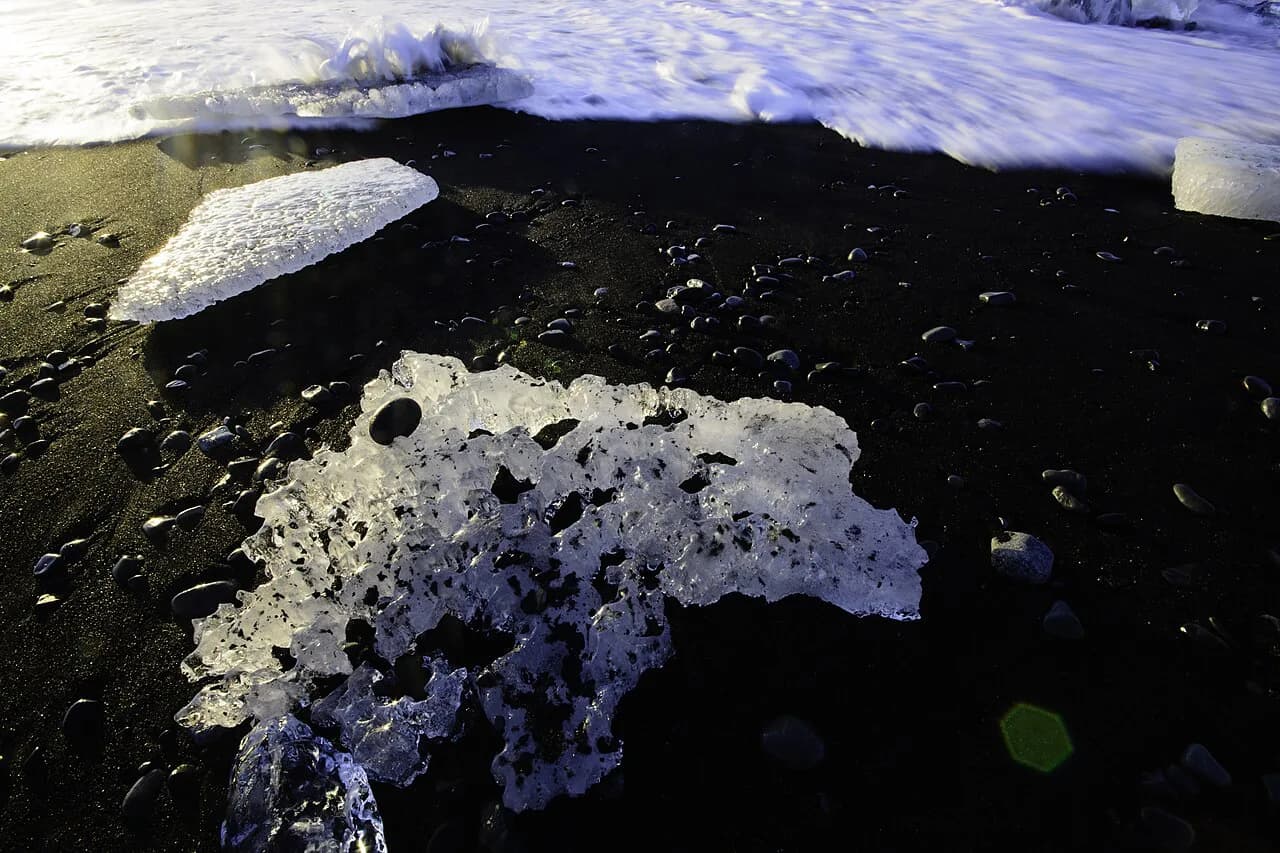
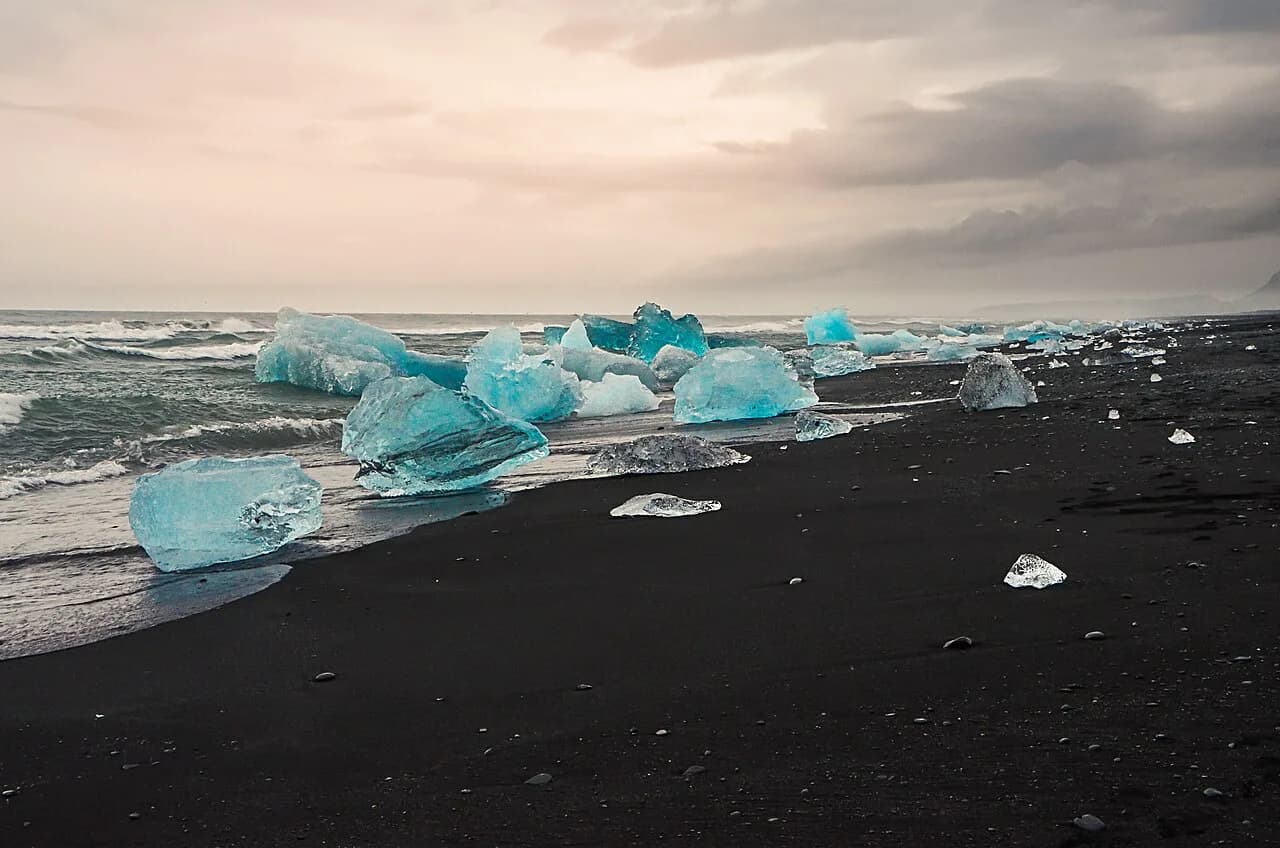
Diamond Beach lies just across Route 1 from the lagoon, where ice fragments from the lagoon wash ashore on black sand. It is a short stop rather than a half-day, and the amount of ice on the sand varies with tides, waves and weather, so it can look very different from the lagoon even on the same afternoon. For a fuller look at the beach and its shifting ice, the diamond beach iceland guide covers what to expect.
In October the beach is often windier and wetter than the lagoon viewpoint, and the ice pieces are smaller and more scattered than in late winter. Walk it as a photography stop on the way to or from the lagoon rather than a separate destination.
Where to watch the aurora near the lagoon
The lagoon's own shoreline is the obvious dark-sky viewpoint, with open water and ice in front of you and no town light between you and the horizon. Park at the lagoon, walk to the designated viewpoints behind the rope fences, and keep away from the water's edge and the icebergs, which is both a safety rule and a condition of visiting.
North of the lagoon, the stretch toward Skaftafell and on to Höfn gives you more open road with low light pollution and a place to pull over when a gap in the cloud appears. Keeping your base east of Vík puts you inside the clearer corridor instead of driving into it after dark.
Where to stay near Jökulsárlón
Hotel Jökulsárlón is the closest comfortable base, about a 12-minute drive from the lagoon, with double, triple and family rooms with glacier views plus a sauna, hot tub and fitness centre. Reynivellir is about 13 minutes away and Skyrhúsið Guesthouse about 14 minutes, both useful budget-leaning alternatives when the closest hotel is full.
If you want more amenities, Fosshotel Glacier Lagoon is a modern four-star hotel with easy access to the lagoon, and Hali Country Hotel sits in quiet countryside nearby with a sauna and outdoor hot tubs facing the mountains. Fosshotel glacier lagoon is the more comfortable, less atmospheric option; Hali trades polish for landscape.
Campers should note Svínafell Campground is about 40 minutes away and open from 1 May to 30 September, so it closes before an October visit, while Skaftafell Camping is open year-round and about 45 minutes from the lagoon. Accommodation close to the lagoon is limited, so book ahead even in a shoulder month.
Getting there and parking
Jökulsárlón sits directly off Route 1 between Vík and Höfn. Parking at the lagoon costs about 1,000 ISK per car, and the bus from Reykjavík's Mjódd terminal takes roughly seven hours for around 15,000 to 22,000 ISK per person, which is slow but removes the winter-driving question.
The café by the lagoon is open year-round apart from 24 to 26 December and 31 December to 2 January, with October hours of 09:00 to 18:00, and tour departures in October run roughly 10:00 to 17:00. Those hours are the Glacier Lagoon company's 2026 listing, so use them to shape your day but confirm times when you book.
How many nights to plan
Allow at least two nights based near the lagoon, which gives you two dark evenings and a spare morning if the first day is washed out by cloud or rain. Three nights is the fair-chance figure in October, when frontal systems move through quickly and a single clear night is far from certain.
If your trip is short, choose the lagoon over a longer Ring Road loop: a two-night stay east of Vík lets you use both evenings for the aurora and one full day for the boat, the beach and a cave. Extending to four or five nights across the southeast improves your odds simply by giving you more dark hours under the same sky.
Nearby stops that fit a short October day
Fjallsárlón, a smaller and quieter glacier lagoon with Zodiac tours to the edge of Fjallsjökull, is about 10 km west of Jökulsárlón and makes an easy second stop. Skaftafell Nature Reserve, with marked trails, glacier viewpoints and a visitor centre, is about 56 km west, and the short trail to Svartifoss and its basalt columns fits a short daylight window.
Höfn, about 80 km east, is the langoustine stop for a late lunch, and Vestrahorn's jagged peak above the Stokksnes black-sand beach is roughly 88 km east for photographers willing to trade lagoon time for a second landscape. Pick two of these, not all of them, in October.
Plan Your October Visit
October at Jökulsárlón rewards a simple plan: sleep east of Vík for two or three nights, book an amphibian or Zodiac tour before the season ends, add a cave trip or Diamond Beach depending on conditions, and keep both evenings free for the aurora. The icebergs will be there; the clear sky is what you are planning around.
Frequently Asked Questions
Is it worth visiting Jökulsárlón in October?
Yes, if you want icebergs, running boat tours, the start of the ice cave season and dark nights for the aurora in one trip. The trade-off is short, changeable daylight and mixed weather, so plan on spending a few hours at the lagoon rather than a full day.
Can you see the northern lights at Jökulsárlón in October?
October falls inside the September-to-mid-April aurora season, and the lagoon sits in Iceland's clearer southeast corridor, so it is a strong base. Sightings still depend on solar activity and clear skies, so allow several nights and watch the cloud forecast.
Are boat tours running at Jökulsárlón in October?
Both boat types are usually still operating in October: amphibian tours run May to November and Zodiac tours May to October, weather and ice permitting. Book ahead and check departure times when you reserve.
What is the difference between the amphibian and Zodiac boat tours?
Amphibian boats are larger, slower and suitable for all ages, lasting 30 to 40 minutes. Zodiacs are faster, get closer to the ice and take about 1 hour 15 minutes, with a minimum height of 130 cm for children.
How long should you spend at Jökulsárlón?
Most visitors spend one to two hours at the lagoon, or three to four hours if they add a boat tour and Diamond Beach. In October, budget for a cave tour or a second aurora evening separately.
How far is Jökulsárlón from Reykjavík?
About 380 km, or five to six hours' drive along the South Coast, which is why most travelers break the journey and overnight near the lagoon. It is roughly 2.5 hours from Vík and one hour from Höfn.
Sources
Notes for your Arctic winter trip
Optional updates to our northern lights guides.
You might also like
Continue reading
More guides you'll find useful